Damien Chazelle | 128 mins | streaming (HD) | 2.55:1 | USA & Hong Kong / English | 12 / PG-13
 2017 Academy Awards
14 nominations —
Nominated: Best Picture, Best Actor, Best Original Screenplay, Best Editing, Best Costume Design, Best Sound Mixing, Best Sound Editing, Best Song (Audition (The Fools Who Dream)).
Yes, I am very, very, exceptionally late to the party here. For example: whenever I watch a film I log it on Letterboxd, then have a scan through the ratings my ‘friends’ have given it, whether that’s just one other person or a few dozen. This had by far the highest number of ‘friends’ who’d already seen it that I’ve ever encountered. And it was on Letterboxd that I first encountered La La Land, in fact, when it started screening at festivals in the latter half of 2016 and everyone was raving about it. It was a must-see long before the Oscar buzz started to build, and obviously that only intensified the film’s reputation. It’s a lot of anticipation to heap upon one movie. Fortunately, La La Land can bear it.
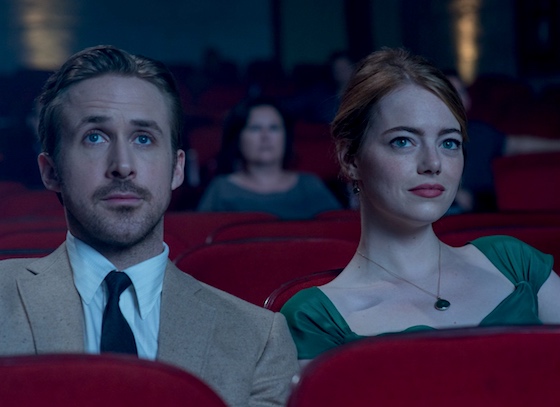
For anyone who’s even later to it than me, it’s the story of aspiring actress Mia (Emma Stone) and aspiring jazz musician Sebastian (Ryan Gosling), who encounter each other randomly, initially hate each other, but fall in love. Don’t worry, I haven’t spoilt the ending — there’s more story beyond that typical romance plotline. And much of it is told through the mediums of song and dance.
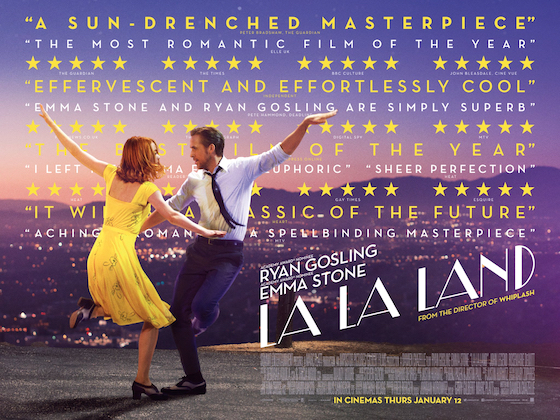
La La Land isn’t “kind of a musical”, or “I suppose you could call it a musical”, or “a film with songs, a bit like a musical” — it is a Musical. And while the leads can’t really sing, that doesn’t stop there being some beltingly good numbers in it — though, for my money, the best either (a) don’t involve the leads at all, or (b) don’t involve singing. Coincidentally, two of those are the set pieces that bookend the film. The opener is a colourful stunner, a bright and breezy singalongathon on a gridlocked freeway, made even more enjoyable by being realised in a (faked) single-take. Related thought: I feel like we need to bring back done-for-real oners — people are faking them too easily and too often nowadays. Though, saying that, another particularly joyful sequence is the dance routine that adorns the poster. Its success lies in part with Gosling and Stone’s well-performed moves, but also, like the opening number, with how well shot it is. I assumed it was done on a set with some CGI’d backgrounds and probably some invisible cuts, but no, it was achieved on location, the shoot squeezed into the real ‘magic hour’ — actually a half-hour window — and is, I believe, a genuine single take.
Now, the other bookend is (obviously) the ending. Well, I think they actually label it an epilogue, because its events occur after the main story; but an epilogue is an addendum, isn’t it?, and I reckon this final sequence is as vital as any other part of the film. It’s how the story really ends, and it’s an all-timer of a finale. That comes both from the tone it takes (no spoilers here, but see my Letterboxd comment) but also the sequence itself, a stunning marriage of visuals, soundtrack, and meaning — and I say this as someone who (for a pertinent example) disliked An American in Paris specifically because of its extended ballet bit at the end. Damien Chazelle well earned his Best Director Oscar.

Speaking of which, I must mention what went down at the Oscars. Well, not so much the snafu itself (though that made for great telly), but the ultimate result. I think there can be little doubt that Moonlight is a more significant film for our times, for all kinds of reasons, and it’s certainly a quality work of filmmaking in its own right, but La La Land is a more purely enjoyable cinematic experience, with just enough grit in the mix to stop it being too sappy. I don’t resent Moonlight its victory, but I’d’ve voted for this.

The 2018 Academy Awards are handed out tonight from 1am GMT.
La La Land placed 4th on my list of The 26 Best Films I Saw For the First Time in 2018.
 There’s an argument to be made that, from a cinematic perspective, mainstream US cinema these days is boring. Look at the kind of films American auteurs were producing in and around the studio system in the ’90s and early ’00s:
  This isn’t a conceit Soderbergh uses for one scene, or wheels out now and then, but an overall approach. Some sequences are more thick with it than others, but it’s always right around the corner. It creates a unique sensation. Not disconcerting, exactly, but mysterious and querying. It has you constantly question what you’re watching — is it a memory? A plan? A fantasy? A delusion? It draws connections back and forth across the timeline of the story, bringing out thematic angles. At its most key, it helps explain what happens at the end (too bluntly for some reviewers, I should add). This collage-like style — which unlike, say, Memento’s back-to-front narrative has no obvious in-story point — will certainly not be to everyone’s taste, but it presents an interesting challenge to our usual ideas of how a film should be constructed.
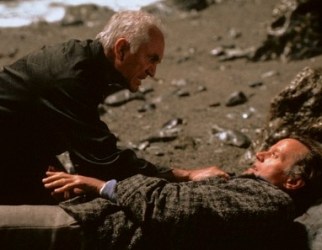 Despite the visual trickery, The Limey still works pretty well as a straightforward thriller. You have to be prepared to accept the slippery editing, because there’s no avoiding it, but the throughline of Stamp tracking down bad men and how he deals with them is still here. Personally, I’ve never much rated Stamp as an actor, but somehow he fits here. He’s a fish out of water, a man out of place — way out of place — and possibly out of time, too, seeming like a ’60s or ’70s British gangster transported to turn-of-the-millennium L.A. It’s no discredit to the supporting cast that they mainly exist to bob around in his wake.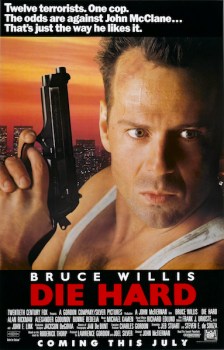

 Score:



 John Singleton became the first African-American Best Director Oscar nominee, as well as the youngest, for this debut. 23 years on, his story of the lives and troubles of young black men in L.A. remains sadly pertinent.
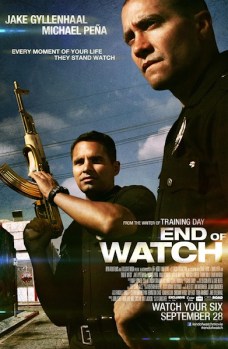 I don’t think anyone paid writer-turned-writer/director David Ayer much heed when he was one of a pack of people penning historically-inaccurate submarine thriller
  it would wash as a stylistic choice; because he attempts a diegetic explanation for why it’s shot this way, but then breaks the rules of that explanation instantly (and continues to do so, with increasing frequency), it turns a valid stylistic choice into an irritating, ill-thought-out distraction. Plus: you want to be innovative and shoot an L.A. cop movie on digital video? Too late! Michael Mann already got there… in 2006.
 Although there are things to commend End of Watch — in particular the performances, and even a couple of tense sequences when the filming style actually pays off — I can’t get on board with it being a best-of-year-type movie. Even if it could’ve been more — and, in spite of that varied CV, isn’t the best thing Ayer’s done (I very much liked his next movie, Brad Pitt WW2 tank movie
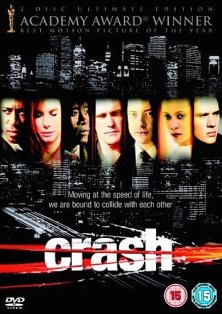 OK, I must confess, this one is something of a cheat — I’ve seen Crash before, and whilst some ‘director’s cuts’ can be vastly different, this one is
  100Films.co.uk