Blindspot 2025

This is my 13th year doing a version of Blindspot, so I’m not sure my customary introduction to the concept is still necessary. But in case there are still people who haven’t heard of it: this is a challenge in which you pick twelve films you’ve never seen but feel you should have (your blindspots) and watch one per month throughout the year.

Regular readers will know that my Blindspot selection process is often tortuously complicated. I don’t just pick twelve films I feel like watching, but compile various “great films” lists and use them to concoct some kind of ranking. Not so this year. I’m still using other people’s opinions, I’ve just made it very simple: every film on the list is the most popular one I’ve not seen (according to Letterboxd) from each decade since the origin of feature films.

In chronological order, they are…


Intolerance

1910s
Intolerance

1920s
Häxan

Häxan
Freaks

1930s
Freaks

1940s
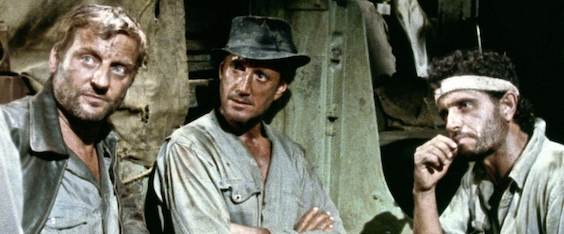
Cat People

Cat People
Rebel Without a Cause

1950s
Rebel Without a Cause

1960s
The Graduate

The Graduate
Eraserhead

1970s
Eraserhead

1980s
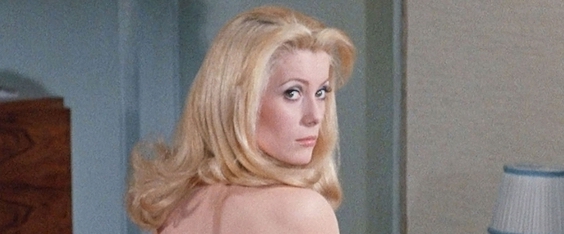
Kiki’s Delivery Service

Kiki's Delivery Service
Girl, Interrupted

1990s
Girl, Interrupted

2000s
The Notebook

The Notebook
Midsommar

2010s
Midsommar

2020s
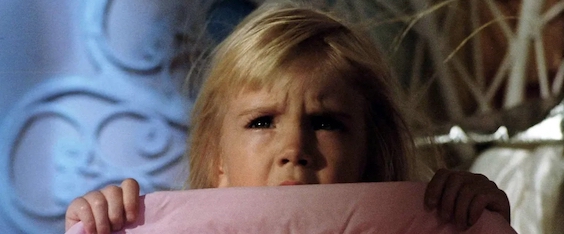
Saltburn

Saltburn

Normally I close out this post with a lengthy explanation of my process, but, um, I’ve already covered that this year. I suppose I should preemptively add that, yes, I’m aware the very first feature-length film was released in 1906; but few followed until the 1910s, so I still feel fine with this basic concept.

To finish, a bit of… trivia? I don’t know. Anyway: I did consider making this year’s selection simply the all-time most popular films I’ve not seen (that’s sort of what Blindspot is, after all), but Letterboxd skews incredibly recent in that regard. I mean, if I’d taken those twelve, two-thirds would have been from 2023–2024, and the oldest would have been from 2012. That’s the kind of thing I have the 50 Unseen category for.


The 100 Films in a Year Challenge 2025

For the 19th year in a row, I’m going to try to watch 100 films in a year. And for the fourth year in a row, I’ve made it much more complicated than that. I don’t know if I can still call it “new-style” at this point, but nonetheless, here I go again with the, er, more-recent-style 100 Films in a Year Challenge.

This year, I feel a renewed sense of confidence in this Challenge actually having a point, thanks to finally completing it in 2024. I mean, if I kept failing it, why keep doing it? Surely that would mean it just doesn’t work? But now I’ve done it, I’ve proved to myself I was right: it’s not an unreasonable exercise. (Talking entirely about myself, here. I’m sure the kind of people who routinely watch 300 or 400 or 500 or more films year after year would have no problem dashing this off in amongst their viewing.)

You might think that, having apparently hit upon the right formula after three years of trying, I wouldn’t make any changes to the Challenge for 2025. And… you’d sort of be right. That wasn’t my motivation, but I have got a balance of categories that I’m happy with. So, no brand-new categories this year, although I have completely changed the rules for one (and another almost got replaced — read on to find out which); plus, a couple of others have changed their specific theme, as always.

But enough of being vague — let’s get into this year’s categories and their rules.


First, the one rule that applies across all categories: a film can only count once. Sounds obvious, but the categories are not mutually exclusive: I could rewatch a film from a series I’m halfway through that’s in this year’s genre, and thus it could qualify in three categories — but it can only be counted in one of them.

New Films

x12. Any film with a general release date (i.e. not festival screenings, etc) in the UK (i.e. not in the US, nor any other country) between 1st January 2025 and 31st December 2025. Maximum one per month (but rolls over if I fail to watch one).

Rewatches

x12. Any film I’ve seen before (unless it’s already been counted in 2025’s Challenge). Maximum one per month (with rollovers, as above).

Blindspot

x12. Twelve films, specifically chosen and named in advance, that I should have already seen. Meant to be watched one per month, but I typically fail at that and have to play catch up. This year’s twelve are discussed in a dedicated post here.

What Do You Mean You Haven’t Seen…?

x12. Similar to Blindspot, these are twelve specifically chosen films meant to be watched one per month, but here my selections are based around a theme. This year’s theme, and the twelve films selected, are discussed in a dedicated post here.

Failures

x12. Every month, I list my “failures”: brand-new releases, additions to streamers, and disc purchases that I failed to watch in the previous month. Sometimes I catch up on some of them the next month. Often I don’t. Making them a Challenge category helps with this. A maximum of one per month counts; if I miss one, I catch up on that specific month later.

50 Unseen

x10. Any unwatched film from one of my year-end ’50 Unseen’ lists. It’s likely to be dominated by films from 2024’s list as I catch up on what I missed last year, but anything from the previous 18 years is eligible. (If you’re interested, there’s a complete list of candidates here.)

Genre

x10. Any films from within a specified genre — or, arguably, a sub-genre: I’m not focusing on anything broad like “Action” or “Comedy” here, but something relatively specific. Previous choices have included film noir, gialli, and martial arts movies. This year, it’s back to Italy for poliziotteschi.

Series Progression

x10. I considered replacing this category (not just for the sake of it — I had a specific idea), but it fills a gap the other categories don’t reach (and my replacement wouldn’t have been so unique). Besides, Letterboxd tells me I still have 33 series underway, so it’s a worthwhile cause. The rules haven’t changed: any instalment of a film series I’m already watching qualifies; if I start a new series, the first film can’t count but any further films can.

Wildcards

x10. For 2025, I’m turning the Wildcard category on its head, because it now has only one rule: films can’t have qualified in any other category. If I watch two brand-new releases in January? Sorry, that second one just doesn’t count. If I’ve filled up Series Progression and then watch an eleventh film? Nope, no doing. This is a way to capture (and encourage) my viewing of anything and everything not covered by the other categories. (With such simple qualification criteria, there’s every chance I’ll burn through these ten slots fairly quickly. I considered introducing a second rule to mitigate that, but decided to see how it goes in 2025 and maybe I’ll tighten it up for 2026, if that would be productive.)


As the year goes on, you can follow my progress on the Challenge Tracker page, and also via my monthly reviews; or there’s always my Letterboxd for the guaranteed most up-to-date status of my film logging.


The 100 Films in a Year Challenge 2024

They say the definition of insanity is doing the same thing over and over again and expecting a different result. Nonetheless, here I go for a third time with the new-style 100 Films in a Year Challenge, despite having failed to complete it the first two times. Hopefully, another hoary old saying will apply: third time lucky.

There are two reasons to be optimistic. First, it’s not exactly the same each year — it’s (mostly) new films, and I’ve also tweaked the categories… although not necessarily to make them easier, because of the second reason: I’ve almost got there both years so far. Okay, in 2022 I stopped pretty far short at #89, but that was because 100 became unattainable and so I didn’t keep trying to close the gap. In 2023, I stuck at it a bit longer, reaching #92. In both cases, better time management earlier in the year could have made a huge difference in terms of completing the challenge. Indeed, in both years I met my old-style challenge (“watch any 100 films I’ve never seen”) with relative ease.

I’m hoping that in 2024 I’ll finally learn from my mistakes and pull my finger out earlier in the year — though I did try to do that in 2023, with limited success, so we’ll have to see how it goes.


Now, this year’s categories and their rules.

First, the one rule that applies across all categories: a film can only count once. Sounds kinda obvious, but the categories are not mutually exclusive: I could rewatch a film from a series I’m halfway through that’s in this year’s genre, and thus it could qualify in three categories — but it can only be counted in one of them.

New Films

x12. Any film that’s general release date (i.e. not festival screenings, etc) in the UK (i.e. not in the US, nor any other country) is between 1st January 2024 and 31st December 2024. Maximum one per month (but rolls over if I fail to watch one).

Rewatches

x12. Any film I’ve seen before (unless it’s already been counted in 2024’s Challenge). Maximum one per month (with rollovers, as above).

Blindspot

x12. Unlike most other categories, these 12 films are specifically chosen and named in advance. They’re all films I feel I should have seen, or that “great movies” lists tell me I should have seen. Designed to be watched one per month, but doesn’t have to be. You can read about this year’s 12 in their own post here.

What Do You Mean You Haven’t Seen…?

x12. Similar to Blindspot, in that these are 12 specifically chosen films to be watched one per month, but my selections here are based around a theme. This year’s theme: the IMDb Top 250. Wait — 250 films?! No, don’t be silly. But it’s not exactly 12, either. For a full explanation, look here.

Failures

x12. Every month, I list my “failures” — brand-new releases, additions to streamers, and disc purchases that I failed to watch in the previous month. Sometimes, I catch up on some of them the next month. Often, I don’t. Making them a Challenge category helps force my hand. A maximum of one per month counts, but rolls over if necessary.

50 Unseen

x10. This year’s only entirely-new category, although it’s broadly similar to “failures” in that it’s an incentive to watch films I missed — in this case, from previous years (my annual “50 Unseen” lists) rather than just the previous month.

50 Unseen replaces Physical Media. It was a nice idea to try to make me watch more DVDs that I’ve owned for decades, or 3D Blu-rays that I simply haven’t got round to, and I still support that as a goal; but, in reality, I foresaw that category in 2024 filling up with Edgar Wallace Mysteries and/or random freshly-purchased 4Ks. I wanted to find space here for my 50 Unseen, and Physical Media seemed the best category to lose for now. If I ever get my series watches in hand, hopefully I can replace Series Progression with a new version of Physical Media sometime in the future.

Genre

x10. Any films from within a specified genre. Unlike most of the above categories, these can be watched at any time — maybe I’ll spread them throughout the year; maybe I’ll binge them all back to back. Most likely it’ll be somewhere between the two. This year’s genre: martial arts.

Series Progression

x10. Any instalment in one of the many film series I’m already watching (there’s a Letterboxd list of them here). If I start a new series, the first film can’t count, but any further films can.

Wildcards

x10. Slots that can be used to add a film or films to any other category, provided the category’s own requirements have already been met (e.g. no 11th Genre film until I’ve filled the original ten, but I could use a wildcard for a second New Film in January).


As the year goes on, you can follow my progress on the Challenge Tracker page, and also via my monthly reviews; or there’s always my Letterboxd for the guaranteed most up-to-date status of my film logging.

The All-New 100 Films in a Year Challenge, Mk.II

Alright, here we go: after spending the first week of 2023 wrapping up 2022, it’s finally time to move on to the new year.

For the 17th year in a row, I’m going to attempt to watch 100 films in a year. But, for the second year in a row, that’s not just any old 100 films: following on from last year’s grand re-envisioning of the challenge, it’s 100 films that fulfil certain categories and criteria. Those categories and criteria have undergone some changes, however — hence Mk.II.

When I conceived of this new-style challenge, it was always my intention to vary the categories somewhat year by year (there was a reason last year’s goal of watching 12 film noirs came in a category called “Genre”, not “Film Noir”), but actually undertaking it for a year has thrown up a few pointers about how it could work better, or cases in which the rules needed to be clearer. Consequently, some of this year’s categories are mere refinements on what went before, while others are the same but with new contents, and a couple have been replaced wholesale for the sake of variety.


The one rule that applies across all categories: a film can only count once. Sounds kinda obvious, but the categories are not mutually exclusive — I could watch a DVD of a film in this year’s genre that’s also part of a series, and technically that could count in any one of three categories. Similarly, if I rewatch a film that I’ve already counted, the rewatch can’t count. As a separate viewing, it sort of still fulfils the criteria, but I feel it’s better to have 100 totally unique films. (It also means I can accurately track my progress in a list on Letterboxd, whereas I couldn’t if repeats were allowed.)

With that said, this year’s categories are…

New Films

x12. Any film that’s general release date (i.e. not festival screenings, etc) in the UK (i.e. not in the US, nor any other country) is between 1st January 2023 and 31st December 2023. Maximum one per month (but rolls over if I fail to watch one).

Rewatches

x12. Any film I’ve seen before (unless it’s already been counted in 2023’s Challenge). Maximum one per month (with rollovers, as above).

Blindspot

x12. Films I feel I should have seen, or that “great movies” lists tell me I should have seen. Not just any old films, but 12 films specifically chosen and named in advance. Designed to be watched one per month, but doesn’t have to be. I’ll name this year’s 12 in their own post soon. Teaser: the recent publication of Sight & Sound’s once-a-decade poll has had a significant bearing on this year’s choices…

What Do You Mean You Haven’t Seen…?

x12. Similar to Blindspot, in that they’re 12 specifically chosen films to be watched one per month, but these are all based around a theme. This year’s theme: film noir. “Hold up,” I hear you say, “wasn’t film noir a different category last year?” Why yes, it was 2022’s Genre. What’s different about it being 2023’s WDYMYHS theme? I’ll explain when I name the 12 specific films in their own post, soon.

Failures

x12. Every month, I list my “failures” — new releases or purchases that I failed to watch in the previous month. Sometimes, I catch up on some of them. Often, I don’t. Making it a Challenge category will hopefully force my hand. As with new films and rewatches, it’s a maximum of one per month, but rolls over if necessary.

Genre

x10. Any films from within a specified genre. Unlike most of the above categories, these can be watched at any time — maybe I’ll spread them throughout the year; maybe I’ll binge them all back to back. Most likely it’ll be somewhere between the two. This year’s genre: giallo.

Series Progression

x10. Any instalment in a film series I’m already watching (there’s a Letterboxd list of them here). If I start a new series, either by accident or choice, the first film can’t count, but any further films can. I thought about replacing this category, but while I’ve still got so many series on the go, I wanted to keep the incentive to push on with them.

Physical Media

x10. Last year, I had a whole category dedicated to DVDs, because I’ve got so many of them that I’ve never watched. Frankly, it’s a category I thought I’d change — but I have so many unwatched discs, it needs to stick around if it’s to make any serious dent in its purpose. However, I’ve widened it this year, because I also have a massive pile of unwatched 3D and UHD Blu-rays. So, not any physical media counts, just those three formats. I know that makes the category title inaccurate, but “DVDs and 3D Blu-rays and 4K Ultra HD Blu-rays” seemed unwieldy. As with genre and series films, these can be watched at any time.

Wildcards

x10. Last year, every category had 12 films, leaving an awkward four spare. My solution was to make them ‘wildcards’ that could be added to any category, thus turning a bug into a feature. That feature had the potential to be so useful that I’ve expanded it.

You see, towards the end of 2022, the Challenge was dictating my viewing more than I would like. I wanted to catch up on recent releases, and also watch some Christmassy fare, but none of those films would have qualified for the Challenge, and I still had a couple of dozen films left to complete it, so I felt forced to watch DVDs and film noirs and so on instead. Okay, that’s partly my own fault for not getting on with them earlier in the year; but this new-style Challenge was always going to be a work in progress, so I thought that, for Year Two, I’d build in a potential fix. Hence: the revised wildcard category.

As you can see, I’ve more than doubled the quotient, and I’m removing the limit of one wildcard per category (as there are only eight other categories, that wouldn’t work anyway). These ‘new’ wildcards still need to be attached to an existing category, but it can happen as often per category as I want (provided the category’s requirements have already been met, e.g. no 11th Genre film until I’ve filled the original ten). I imagine, therefore, that these will mostly get used on additional new films, perhaps rewatches and failures, but who knows? We’ll see how it goes… and change it again for 2024, if needs be.


All that make sense? If not, let me remind you that you don’t really need to worry about any of this — it’s only me who has to work it out.

As the year goes on, you can follow my progress on the Challenge Tracker page, and also via my monthly reviews; or there’s always my Letterboxd for the guaranteed most up-to-date status of my film logging.

Blindspot 2022

There may be numerous changes around here for 2022 & onwards, but one thing that remains the same is the Blindspot challenge, which I’m undertaking for the tenth year running (though I called it “What Do You Mean You Haven’t Seen…?” back at the start. Now, WDYMYHS is a whole additional thing — details of the 2022 version are here).

For those still unfamiliar with it, Blindspot’s premise is simple: choose 12 films you should have seen but haven’t, then watch one a month throughout the year. (Those 12 also contribute to my All-New 100 Films in a Year Challenge.) Below, I’ve listed my selection for this year, and afterwards I’ll talk a bit about how I chose them.

The films are listed alphabetically, using the titles they’ve most recently been released under in the UK. Some of those are different to those used by, say, the Criterion Collection (we don’t automatically translate titles into English over here, what with us being more sophisticated ‘n’ all), but if you have to Google them, hey, at least you’ll have learnt something new.


L’avventura

L'avventura

Come and See

Come and See

Les enfants du paradis

Les enfants du paradis

La grande illusion

La grande illusion

High and Low

High and Low

A Man Escaped

A Man Escaped

Mirror

Mirror

Los olvidados

Los olvidados

Paris, Texas

Paris, Texas

To Be or Not to Be

To Be or Not to Be

A Woman Under
the Influence

A Woman Under the Influence

Yi Yi

Yi Yi


Some people just pull their 12 films out of who-knows-where. Personally, I’ve largely taken a more ‘scientific’ approach, using lists of great and/or popular films to try to shape some or all of my choices each year. This year is no different. But although I’ve made the process fairly complex some years — with lots of different contributing lists, sometimes weighted in different ways, or with additional rules — this year, I’ve kept it pared back.

Just three lists were used: the IMDb Top 250 Movies (they’ve finally put “250” back in its official name, hurrah!); the Letterboxd equivalent, the Official Top 250 Narrative Feature Films; and the mother of all great movie lists, TSPDT’s The 1,000 Greatest Films. I limited the last one to its top 250, for equality. All lists were weighted equally, with a film gaining points inverse to its position on a list — i.e. #1 would get 250 points, #250 would get 1 point, etc. I also factored in how many different lists the films appeared on at iCheckMovies (10 points per list), and gave a little nudge (of 11 points) to anything I already owned. That last one didn’t actually have much impact, merely serving to change the final film that made the cut. Still, it means I already have copies of seven of the films, rather than only half of them.

In fact, ensuring I could reasonably get hold of the films was something I checked before finalising the list, especially as Los olvidados doesn’t have an English-language Blu-ray release (in fact, according to Blu-ray.com, it’s only been released on BD in Japan). The only other factor I implemented was my longstanding “no repeat directors” rule. That took out Edward Yang’s A Brighter Summer Day (in favour of Yi Yi), as you can see in the list below. One previous rule I didn’t enforce this year was that, if I fail to watch a film one year, it’s locked out the next. I failed with Come and See in 2021, but it also topped the chart this year, so I’ve let it back in immediately. I won’t make the mistake of leaving it ’til December this time, though.

So, as promised a moment ago, here are the final 13 films with their points tallies…

  • Come and See — 777 points
  • High and Low — 573 points
  • Yi Yi — 571 points
  • A Brighter Summer Day — 566 points
  • To Be or Not to Be — 533 points
  • Mirror — 524 points
  • Les enfants du paradis — 509 points
  • La grande illusion — 509 points
  • A Man Escaped — 491 points
  • A Woman Under the Influence — 488 points
  • Los olvidados — 450 points
  • L’avventura — 444 points
  • Paris, Texas — 423 points

    Finally, a couple more stats about the films. Last year, many of the films were exceptionally long — the average running time came out at 2 hours 36 minutes, with only three of the films running under 2 hours; but with the shortest being just 1 hour 10 minutes and the longest 7 hours 19 minutes, there was quite a range. Compared to that, 2022’s extremes don’t seem so, well, extreme: the shortest film is Los olvidados at 1 hour 21 minutes, while the longest is Les enfants du paradis at 3 hours 9 minutes, and five films (almost half) are under 2 hours… although there is a half-hour jump between the longest film under 2 hours (La grande illusion, 1 hour 53 minutes) and the shortest over 2 hours (a three-way tie between L’avventura, Come and See, and High and Low, each running 2 hours 23 minutes). Nonetheless, the average is down from last year, to a slightly more reasonable 2 hours 13 minutes.

    Although it wasn’t a conscious decision, the films are quite well spread around this year, both temporally and geographically. For the former, there’s one from the 1930s, two each from the 1940s, 1950s, 1960s, 1970s, and 1980s, and then one from the 2000s. For the latter, France comes out on top with three titles, followed by two each for Russia and the USA, and one apiece from Germany, Italy, Japan, Mexico, and Taiwan. In the latter case, I’m taking (what I believe to be) the primary country of production — several of the films can lay claim to multiples.

    Finally, half of the films are by directors whose work I’ve never seen before. They are Michelangelo Antonioni, Luis Buñuel, Marcel Carné, Elem Klimov, Wim Wenders, and Edward Yang. And with the other films’ directors including the likes of Robert Bresson, John Cassavetes, Akira Kurosawa, Ernst Lubitsch, Jean Renoir, and Andrei Tarkovsky — a real mix of artists whose work that I’ve seen has either struck me as fantastic or… well… — it should be an interesting year.

  • Blindspot 2021: What do you mean you haven’t seen…?

    Now that all my “looking back at 2020” posts are done, it’s time to start the first full week of 2021 wi— sorry, what? Second week? Where did the first one go?! Alright, well, it’ll have to do. So, dragging myself belatedly into the same year as everyone else, it’s time to present my Blindspot picks for 2021.

    The Blindspot challenge (for the benefit of those still unfamiliar with it) involves choosing 12 films you should have seen but haven’t, then watching one a month throughout the year. I started doing this eight years ago, calling it “What Do You Mean You Haven’t Seen…?” (WDYMYHS for short), but then someone else came up with the same idea independently and gave it a much snappier moniker, and that caught on.

    My 12 films for this year are below in alphabetical order. After that there’s a few stats, and then I’ll explain how and why I chose them.


    Aguirre,
    Wrath of God
    Aguirre, Wrath of God


    The Birth of a Nation
    The Birth of a Nation


    Cinema Paradiso
    Cinema Paradiso


    Come and See
    Come and See


    La Dolce Vita
    La Dolce Vita


    Frankenstein
    Frankenstein


    La Haine
    La Haine


    The Life and Death
    of Colonel Blimp
    The Life and Death of Colonel Blimp


    Pather Panchali
    Pather Panchali


    Rain Man
    Rain Man


    Sansho Dayu
    Sansho Dayu


    Sátántangó
    Sátántangó

    Here’s a few stats about this year’s list…

  • The average running time of the films is 2 hours 36 minutes. Yes, that’s the average. While the shortest film, Frankenstein, runs a measly 1 hour 10 minutes, there are only two others below the two-hour mark, and four that run over 2½ hours. And the longest, Sátántangó, is a whopping 7 hours 19 minutes — that’s longer than six Frankensteins.
  • There’s a spread of exactly 80 years between the oldest film (1915’s The Birth of a Nation) and the newest (1995’s La Haine). Of course, that means the most recent film here is over a quarter of a century old…
  • Exactly eight decades are represented, too. The most prolific is, amusingly enough, the ’80s, with three films. The ’50s and ’90s have two each, and there’s one apiece from the 1910s, ’30s, ’40s, ’60s, and ’70s.
  • The films come from nine countries: three from the USA, two from Italy, with the rest being from France, Germany, Hungary, India, Japan, the Soviet Union, and the UK.
  • There are eight different main languages spoken, plus one silent film. English is the most common with three films, two are in Italian, and the rest encompass Bengali, French, German, Hungarian, Japanese, and Russian.
  • Six of the films are from directors who I’ve never seen a feature from before. They are D.W. Griffith, Werner Herzog, Elem Klimov, Satyajit Ray, Béla Tarr, and Giuseppe Tornatore. (I have seen a short by Griffith before, but this is his first feature for me.)

    I tend to mix up my method for choosing films each year, but for 2021 I’ve retained one thing from last year — itself a legacy of the couple of years where I did two 12-film lists — and that’s to have six films ‘chosen for me’ via a consensus ranking of various “greatest movie” lists, and then to choose the other six myself from my massive unwatched disc pile. Inevitably, the latter seems to get influenced by films that piqued my interest in the former, but, eh, why not? (If you fancy a challenge, feel free to guess which six films belong to which selection process. Answers coming up.)

    The lists that contribute to the “poll of polls” selection can only be varied so much. I mean, there are probably thousands of such lists out there, but there are only a handful that are well known and respected (to one degree or another), and so I tend to use a lot of the same ones every year. You might think that makes which films appear a foregone conclusion — surely they’re the ones that narrowly missed out last year? — but things do change on some of these lists. For example, when I chose last year’s selection, Come and See was ranked 7th on Letterboxd; this year, it’s 2nd. That’s not an insignificant change: when I’m combining multiple lists, a jump like that at the top of a list could be the difference between inclusion and not quite making it. Besides, I do vary my lists and how I count them every year, precisely so as to keep things slightly unknowable.

    This year’s contributing lists were:

  • Letterboxd’s Official Top 250 Narrative Feature Films
  • IMDb’s Top Rated Movies (aka the IMDb Top 250)
  • the Reddit Top 250
  • Empire’s The 500 Greatest Movies of All Time (aka the Empire 500)
  • Empire’s The 100 Best Films of World Cinema
  • Sight & Sound’s 2012 poll, using the 250-film version listed on Letterboxd (the official list only goes to 100)

    A notable absentee this year is They Shoot Pictures, Don’t They?’s The 1,000 Greatest Films, itself a “poll of polls” that is therefore one of, if not the, definitive lists of greatest movies. That’s why I normally include it, and that normality is why I didn’t this year: it’s gone just for the sake of a change. In its place (sort of) is the Empire World Cinema list. It’s shorter than the others, so under my scoring system (which I’ll explain in a moment) it contributed somewhat less than the other lists. That means it served to tweak which foreign films got in, rather than acting to wipe out US/UK films — although, as it turns out, no US films made it through that way.

    So, each poll was scored out of 250 (250 points for 1st place, 249 for 2nd, etc), except the Empire World Cinema one, which was out of 100. Any film beyond 251st place on the Empire 500 earnt one point; and there were 10 additional points for each list a film appeared on (i.e. every film got 10 bonus points, because every film had to be on one list; but if it was on two it got 20, etc.) The full chart ended up including 230 films — that’s everything I hadn’t seen from the Letterboxd, IMDb, Reddit, and Empire World Cinema lists, plus those from the top 150 on Sight & Sound and the Empire 500 (by the time I got to those, I figured any films further down that weren’t on another list didn’t stand a chance; of course, I did include their rankings for all films that were on another list). Further to the plain scores, I also applied other rules — “no repeat directors” is the main one. I used to limit myself to films I already own, but not anymore; and I try to ensure variety in the kinds of films included, to get a spread of ages, countries, genres, etc.

    With all that considered, I think this is the first year I’ve simply accepted the films at the top of the chart without having to eliminate any. The only film to appear on all six lists was Come and See, so perhaps it’s no surprise that it came first with 810 points. Mind you, only one film appeared on five lists (Paris, Texas) and that came 17th, so being on fewer lists with higher ranks could beat merely appearing on many lists. In second place was La Dolce Vita with 647 points; third was Cinema Paradiso with 510; fourth was Pather Panchali with 502; fifth was Sátántangó with 461; and in sixth, just behind it with 460, was The Life and Death of Colonel Blimp. Regular readers (or those who’ve clicked and read some of the links in this article) may remember that Come and See and Sátántangó both qualified for the 2020 list, but were removed because new restorations were on the way. Those have now materialised: Come and See on a Criterion disc that I imported, and Sátántangó on very different UK and US discs (it’s also available to rent digitally, which is how I intend to view it).

    As for my ‘free choice’ films, three have a spot on that consensus ranking. They were La Haine (13th, 413 points), Sansho Dayu (16th, 398 points), and Aguirre, Wrath of God (38th, 262 points). You’ll note that none of those films are American, and so my only three picks that are not on the consensus ranking (The Birth of a Nation, Frankenstein, and Rain Man) are also my only three US films. Make of that what you will.

    I’ve spent most of 2021 so far working towards one self-imposed deadline after another, to get all of these end of year/new year posts done, so now I’m looking forward to catching up on other blogs — and actually watching some films!

  • Love on a Leash (2011)

    2020 #173
    Fen Tian | 86 mins | digital (SD) | 16:9 | USA / English

    Love on a Leash

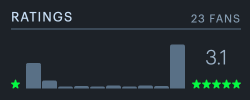
    Love on a Leash first gained a degree of notoriety when some YouTuber happened upon it on Amazon Prime and made a video about it, in which he instructed his followers to rate it 10-out-of-10 on IMDb. Enough of them did that it apparently resulted in his account being banned. (At time of writing, it has a score of 9.2 from almost 6,500 ratings.) I came across it more recently on Letterboxd, where it was featured on a list of divisive films. You only have to look at its ratings spread to see why:

    Love on a Leash Letterboxd ratings

    Are the 1,504 people who’ve rated it 5 stars in on the same joke as those YouTuber’s fans who rated it 10 on IMDb? Or is there in fact something to this movie that makes some people think “this is worth full marks”? You might be surprised to learn that, actually, I think it’s the latter.

    The film tells the story of Prince, a golden retriever who is actually a man turned into a dog (and whose human name may have been Alvin Flang. Or maybe not — I feel like the dog is an unreliable narrator). How has this happened? Why? Who knows? Who cares? (The film has a lot of random shots of ducks for no obvious reason (it’s almost Lynchian), so my guess is they did it to him. Still don’t know why, though.) Prince learns (from a magic rock-pool) that he can only return to human form by finding the true love of a woman. Enter unlucky-in-love shopgirl Lisa (Jana Camp), who meets Prince in a park and eventually takes him home. What unfolds is not as straightforward as the Beauty and the Beast narrative you might imagine, but to describe any more of the craziness would be to ruin half the fun. The plot’s constant twists and developments beggar belief — it’s genuinely imaginative, in its own way. By which I mean I don’t think you’ll have ever seen anything else quite like this.

    Pizza-faced cinder block and Alvin Flang

    I give full credit to Love on a Leash for just going for it. It’s hard to pigeonhole what genre it was even aiming for. The poster and basic concept suggest a cheesy kids’ film or Hallmark movie; the way it initially plays, you kinda assume it wants to be a romcom; but then it gets so fucking dark (suicide attempt! abusive coworkers! dead dog!), and there’s so much fantastical strange stuff… it’s so much weirder, wilder, and more unique than you can imagine. That’s without even mentioning the bizarre production quirks, like the fact Lisa only wears green clothes and lives in a green house with a green phone and green mugs and green plates… Or that it’s shot with a kind of documentary realism… um, maybe; or maybe it was just done quickly on digital video. There’s definitely no music, though. Like, at all. Even though there’s a composer credited.

    Well, except for a couple of songs the dog sings. Prince is constantly chatting away to himself in voiceover, and sometimes sings little childish ditties too (I suspect they weren’t actually composed by anyone). He can be a right snarky little bugger (he describes the love of his life as a “pizza-faced cinder block”), to the point that I suspect it may all have been improvised by the voice actor in post-production — he seems to be taking the piss out of what’s going on as often as we are.

    Love on a Leash was written and directed by Fen Tian, a 64-year-old Chinese woman who came to America in her 40s “with fifty dollars in her pocket, and not one word of English in her possession,” according to her production bio. It asserts that the screenplay won an award and funding from the Taiwan government, and at one point she took an American cast and crew to China to shoot it but funding fell through. After decades of trying, the film was eventually produced “with barely enough money to cover craft services”, and during post-production she “slept on the couches of her editors, dragging around her blanket, toothbrush, pillow and thirty-nine DV cam reels” and “spoiled” her team by “cooking up huge feasts of homemade Chinese food, and fixing her crew’s love lives with a motherly heart and some Chinese wisdom.” I feel like this deserves a Disaster Artist-type biopic…

    What people get up to in the privacy of their own homes...

    So, we come to the issue I touched on at the start: how do you rate a film like this? As an exercise in moviemaking, it’s a 1. The storyline is borderline nonsensical; it’s shot like an amateur using a camcorder for the first time; the sound mix is so unfinished I’m not sure it was ever started… And yet it’s constantly enjoyable, partly through a “so bad it’s good” hilarity (see the aforementioned terrible filmmaking), but also for the barminess with which it conducts itself, the relentless forward momentum of the storyline leading us in unpredictable narrative directions. Like famous cult favourite The Room, it transcends its amateur awfulness to be an artistic experience all of its own. In fact, it achieves a higher level of genuine artistry than The Room for me, because Wisseau’s film sometimes mires itself in wannabe-seriousness and runs out of stuff to laugh at, whereas Love on a Leash is restless in its creativity and consequently almost non-stop entertaining. It transcends its obvious awfulness through a kind of perverse innovation; a commitment to not hewing to any recognisable conventions. And it’s really funny — sometimes deliberately, often not.

    With reservations duly noted, then, I honestly and unequivocally give Love on a Leash full marks.

    5 out of 5

    Blindspot 2020: What do you mean you haven’t seen…?

    The Blindspot challenge (for the benefit of those still unfamiliar with it) is where you pick 12 films you feel you should’ve seen but haven’t, then watch one a month throughout the year. I started doing this in 2013, calling it “What Do You Mean You Haven’t Seen…?” (WDYMYHS for short), but then someone else came up with the same notion independently and gave it a much snappier moniker, and that caught on.

    My fortunes with the Blindspot / WDYMYHS challenge have been up and down over the years. I’ll spare you a full potted history, but last year I set myself two lists of 12 films each and didn’t complete either — although between them I did watch 17 movies. I braved 24 films because for two years before that I’d done 22 and completed it with relative ease. So maybe I should aim for 24 again this year…

    …but I’m not going to. In the same way that the second half of 2019 was a bit unpredictable (leading to my failures), I’m not wholly sure what the future holds, so I’m going to rein it back to the original 12 and see how it goes. And besides, if I find 12 unchallenging then I’ve got the seven remaining films from last year I could move on to; plus one from 2015 that I never got round to. That’s a pretty big ‘buffer’ to work on.

    Now, I’ll jump ahead to the main event: the 12 films I must watch, in alphabetical order. Afterwards, I’ll explain how they were chosen.


    8½


    All Quiet on
    the Western Front
    All Quiet on the Western Front


    An American Werewolf
    in London
    An American Werewolf in London


    Andrei Rublev
    Andrei Rublev


    The Battle of Algiers
    The Battle of Algiers


    Do the Right Thing
    Do the Right Thing


    Fanny and Alexander
    Fanny and Alexander


    The French Connection
    The French Connection


    In the Mood for Love
    In the Mood for Love


    Ordet
    Ordet


    Ugetsu Monogatari
    Ugetsu Monogatari


    Under the Skin
    Under the Skin

    So, some people just pick their 12 films. When I did two lists, that’s what I did for one of them. But the rest of the time I’ve let consensus decide, by compiling “great film” lists in various different combinations to suggest the films other people feel I should’ve seen. I quite like both methods, so for 2020 I’ve picked six with one and half-a-dozen with the other. That said, my ‘free choice’ six were influenced by some of the films that didn’t quite make it into the ‘preselected’ six. (Feel free to guess which films belong in which six. Fun and games! Answers in a mo.)

    This year, the selection process involved the following lists:

  • Letterboxd’s Official Top 250 Narrative Feature Films
  • IMDb’s Top Rated Movies (aka the IMDb Top 250)
  • The 1,000 Greatest Films by They Shoot Pictures, Don’t They? (aka TSPDT)
  • the Reddit Top 250
  • Empire’s The 500 Greatest Movies of All Time (aka the Empire 500)
  • Sight & Sound’s The 100 Greatest Films of All Time (2012 edition)

    Because TSPDT takes Sight & Sound’s voter ballots as its foundation, I counted the Letterboxd scores twice as a way of evening it out a bit and not letting S&S be too dominant. It only worked up to a point. For example, Harakiri is ranked 4th on the Letterboxd list and 33rd on IMDb, but it’s a lowly 647th on TSPDT and nowhere on the other lists. So as I started adding the lists together (in the order I’ve credited them above), Harakiri was right at the top, then gradually fell right back. But that’s kinda the point of counting multiple lists: it’s getting a consensus of consensuses. Letterboxd users clearly think Harakiri is one of the very greatest films of all time; IMDb voters aren’t quite as enthusiastic, but it’s up there; everyone else… not so much.

    But it’s not just about the raw numbers of which films top the list: I have some rules. Chief among them, I’ve previously only selected films I already own on DVD/Blu-ray or have access to on Netflix/Prime/etc. This year, I let the door open to anything, though I did first make sure I could reasonably source a copy. So, top of the list was Andrei Rublev, followed by Federico Fellini’s . Next, in a somewhat ironic turn of events, my new “open door” policy actually led to some high-scoring films being eliminated. While sourcing copies of Come and See and Sátántangó, I discovered that both have recently been restored and are expected to get Blu-ray releases in 2020. You might think that’s perfect timing, but what if one or both slipped to 2021, or were insanely overpriced? So I decided to adopt a “wait and see” approach. Maybe they’ll be on 2021’s list.

    Next in the running was In the Mood for Love, followed by Ordet. Then my only still-standing regular rule came into play: one film per director. That meant the next film — La Dolce Vita, which shares Fellini with — was cut. After that is actually where Sátántangó was ranked (keeping up? I don’t blame you if you’re not), followed by Mirror — but Mirror is directed by Andrei Tarkovsky, the same as Andrei Rublev, so out it went too. But now we do finally reach the end: the next two high-scorers were Fanny and Alexander and The Battle of Algiers, which (as you’ll know from their inclusion in the list above) were fine.

    And with those six settled upon, I turned to picking six more from my DVD/Blu-ray collection. There’s less to say about these: I made a long-list of 127 ‘maybe’s; narrowed it down to 38 ‘very possibly’s; and then picked six, based on a mix of intuition about what I ‘should’ have seen and things I’ve personally been wanting to see for a while. I did also try to keep some variety in terms of the films’ ages, genres, countries, and languages… but almost all the ones that made my short-list were in English, so, er, oops. It meant Ugetsu Monogatari was an easy choice, anyway; and I was sure to include some British films (or British co-productions, at least); and Do the Right Thing may be American, but it’s also the only one of the 12 from a black filmmaker. (No female directors, though, which is an unfortunate oversight.) Still, on balance there are more films not in English (seven vs five), and the B&W/colour split is exactly 50/50.

    Four of my six ‘free choices’ do appear further down the rankings I’d compiled. That’s coincidence rather than design, although I suppose seeing them on the list might’ve helped push them to the forefront of my mind. Those four were Do the Right Thing (18th), Ugetsu Monogatari (23rd), An American Werewolf in London (127th), and The French Connection (162nd). I don’t know about you, but I was a little surprised All Quiet on the Western Front didn’t make it. Well, of the lists I’ve used this year the only one it’s on is TSPDT, at a lowly 742nd. (I’m not surprised Under the Skin wasn’t on any, what with it being so recent. For one thing, it hadn’t even been released when the Empire and Sight & Sound polls were conducted.)

    And that’s all that thoroughly over-explained.

    (Did anyone read all this?) (Hello future-me, who surely will re-read all this at some point, sad egocentric that I am.)

    Finally, if I manage those 12 and want more, the eight left outstanding from 2015 and 2019 are…

  • All About Eve
  • All the President’s Men
  • The Breakfast Club
  • Ikiru
  • The Ipcress File
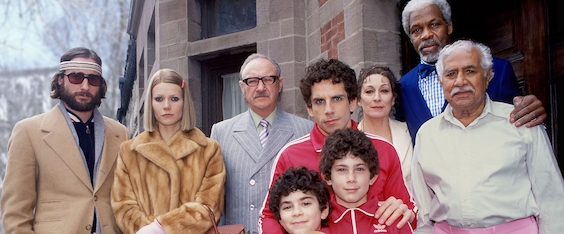
  • The Royal Tenenbaums
  • The Thin Red Line
  • To Kill a Mockingbird

    This is hardly a chore — there are some great-looking movies there — so hopefully I’ll find time for all 20. It would only be fitting, given the year…

  • The Deathly Monthly Update for August 2017

    It’s been a quiet summer here at 100 Films


    #108 Shin Godzilla (2016), aka Shin Gojira
    #109 This is the End (2013)
    #110 Death Note (2006), aka Desu Nôto
    #111 Nashville (1975)
    #112 Death Note: The Last Name (2006), aka Desu Nôto: the Last name
    #113 The Girl on the Train (2016)
    #114 21 (2008)
    #115 Death Note (2017)
    #116 Eddie the Eagle (2016)
    #117 Anvil: The Story of Anvil (2008)
    #118 Into the Woods (2014)
    Shin Godzilla

    Eddie the Eagle

    .


    • With 11 new films, August has the lowest total for any month of 2017 to date.
    • It’s below the August average (previously 11.78, now 11.7), the rolling average of the last 12 months (previously 14.6, now 14.25), and the 2017 average (previously 15.3, now 14.75).
    • With such low numbers, other stats can rack up quickly: over a quarter of films were from Japan, another over-a-quarter were Death Note movies, and just under a fifth starred Emily Blunt.
    • This month’s Blindspot film: the film that established Robert Altman’s trademark ensemble style, Nashville.
    • No WDYMYHS film this month. There are only 10 of them, so two months were always going to go without. August is the first of those.


    The 27th Monthly Arbitrary Awards

    Favourite Film of the Month
    It was kind of an unremarkable month quality-wise as well as numbers-wise this August — plenty of films I liked, some I even liked quite a bit, but few that I loved. The exception would be Shin Godzilla, which seems to have a mixed response generally but I was this close to giving five stars.

    Least Favourite Film of the Month

    To repeat myself: it was kind of an unremarkable month, which also means there was nothing remarkably bad. That said, Netflix’s remake of Death Note was a disappointment. I don’t care about its relocation to America, I don’t even care that it wasn’t especially faithful to the original characters, I just care that it wasn’t very good in its own right.

    Biggest Dick of the Month
    Satan may rock up with a giant schlong in This is the End, but he’s got stiff competition (er, as it were) from James Franco, especially as James Franco is playing James Franco. But they’re both beaten by Light Yagami, who as well as being a cocky little shit (spoilers!) murders his completely innocent and perfectly sweet girlfriend just to prove he’s not a murderous psychopath. What a dick.

    Least-True True Story of the Month
    Eddie the Eagle may’ve invented a character out of thin air to be its hero’s coach, thereby completely changing the story of how he trained to compete in the Olympics — or “the whole story of the film” — but it’s got nothing on 21. The Vegas heist drama makes massive changes to the non-fiction book it’s based on that include simplifying the card counting system (the central point of the film), setting it in the present day (when surveillance technology would prevent them doing what they do), changing the characters’ ethnicities (whitewashing!), and, er, inventing half of the events that happen to them. Compound that with the fact the “non-fiction” book it’s based on is itself half made-up and you’ve got a film that’s roughly as historically accurate as Game of Thrones.

    The Audience Award for Most-Viewed New Post of the Month
    For the third time this year, this film blog’s most-read new post was about TV: The Past Month on TV #21, which covered Top of the Lake: China Girl, Game of Thrones episodes 2-5, Twin Peaks episodes 11-14, Line of Duty series 3, Peaky Blinders series 2, and more. (The highest film review was in (a fairly distant) second, and was something some people would argue is also a TV review: Netflix’s Death Note.)


    My Rewatchathon continues to toddle along at a reasonable pace, but quite far behind where it ought to be — I should be well into the 30s at this point. As my titular goal has flourished for the past few years, this is making me remember the days when it was a struggle…

    #25 The Fugitive (1993)
    #26 Ghost in the Shell 3D (2017)
    #27 Arrival (2016)
    #28 Jaws (1975)

    As well as my full cinema review of Ghost in the Shell (linked above), I posted a few thoughts after my rewatch on Letterboxd.


    2017 moves into my top five best-ever years (probably).