
Bill Condon | 110 mins | streaming (HD) | 2.35:1 | USA / English | 12 / PG-13
I may’ve been pretty quiet for most of October, but it’s Halloween today and that means it’s time to uphold a tradition I’ve had since 2015 — but for the final time! Well, all good things must come to an end. Fortunately, so too must Twilight.

As usual with films this deep into an ongoing story, I won’t bother making much of an effort to set it up for newcomers. Film series like this are more like miniseries, just with feature-length episodes that are released theatrically and years apart. You wouldn’t just watch Episode 5 of a five-part TV series, would you? That goes double here, as the title indicates: it’s also the second half of the final book.
Ah, the title… As regular readers may’ve picked up by now, I’m a stickler for title accuracy (heck, it’s literally my job at the minute). The ‘correct’ title is what’s on the film’s title card… which you’d think is pretty straightforward, but every now and then something challenges that methodology. The Twilight films have consistently been a problem with that. Always promoted as “The Twilight Saga: [Film Title]”, the main title card in the films themselves use just the individual title bit. But Breaking Dawn has decided to be even more irritating, because Part 1 was called Part 1, but Part 2 is called Part Two. No, seriously. Look, I know this kind of thing matters not a joy to most viewers, but I feel like it’s indicative of the amount of effort and attention that was actually spent on these movies. (Despite all that, I’ve gone with Part 2 for the title of this review to match my Part 1 review, because I appreciate consistency, at least.)
Numerical formatting inconsistencies aside, the opening titles are really nice. I mean, they’re not so amazing that you should go seeking them out especially, but they look good. And for once, it’s not all downhill from there!
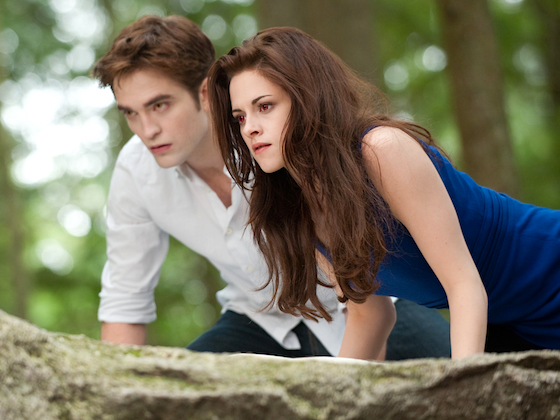
But only because the climax is probably the highlight of the whole saga — unless you’re primarily here for the romance stuff, which was mostly tied up in previous movies. It does make you wonder somewhat who this final part is for, actually. The central couple got married in the last film — that’s the end goal of all conservatively-minded relationship stories. You get married, then you live happily ever after, so naturally there’s no story beyond that point. (Heavy eye roll.) But Twilight isn’t quite an ordinary conservative romance, what with one of the pair being a vampire, so there’s some mythology stuff left to tackle. Well, no spoilers (yet), but Breaking Dawn isn’t ultimately very conclusive in that regard. Maybe author Stephenie Meyer was deliberately leaving room for a further book.
As a commercially-minded theory, that seems a reasonable presumption. But the narrative of Breaking Dawn suggests Meyer was more than ready to move on. Out of almost nowhere, everyone starts developing superpowers (element manipulation, forcefield projection, the ability to deliver electric shocks, etc), which they must then learn how to use. Sound familiar? I can only assume Meyer got bored of writing shitty novels about vampires and werewolves so decided to make this one a shitty version of the X-Men instead.
Further evidence of restlessness comes from the amount of plot we’re treated to. In almost all my Twilight reviews I’ve specifically noted how slow the films are, or that nothing happens; but this time so much happens they have to condense events with montage and voiceover. New characters are introduced at a rate of knots, simply to fill out an ‘army’ for the final battle. Any writer worth their salt would’ve known this was coming and spent time introducing these people earlier — it’s not as if there hasn’t been room for it in the sparsely-plotted earlier instalments. Simply, this saga is exceptionally poorly paced.

It’s certainly not the film’s only technical flaw. Apparently it cost $136 million, so why does it look like it was made for £3.50? Inadequate CGI has always been a feature of these films, so what possessed them to think they could pull off a CGI baby/toddler?! The result is fucking creepy; the very definition of the uncanny valley. Sometimes I think the people who made these movies shouldn’t be allowed to work again. The dialogue, the editing, the obvious green screen, the cheapo effects… it’s not just that it’s a crummy story with dubious morals, it’s that the films are so shittily made.
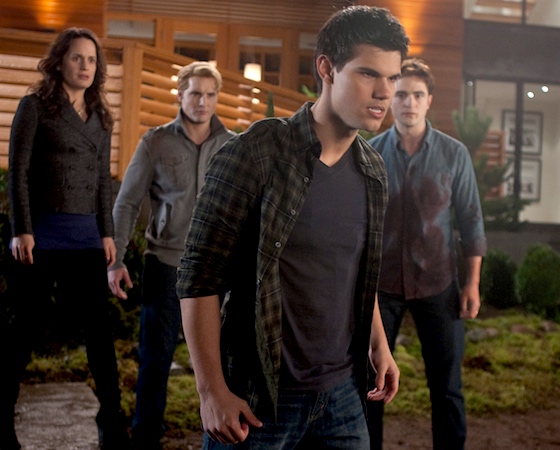
But, as I said earlier, there’s almost some redemption. First, Michael Sheen rocks up as the head of the Volturi, who are the top vampire coven or something (I don’t really remember, it was explained three films ago). I think he’s thoroughly aware it’s all rubbish (I believe I read he only did it because his daughter was a fan), so he gives a delicious performance. It’s not over the top — he’s not just phoning it in for the payday — but it also seems aware that it’s all daft, so why not have some fun? He’s the Big Bad, so his presence enlivens the climax, which also benefits from a good old “two armies face off across the battlefield with rousing music” approach.
And then they fight… and, wow, they should’ve called this The Twilight Saga: Breaking Off People’s Heads. It’s possibly the best of the series simply because of how fucking brutal it is. If you watched the previous films thinking, “I wish most of these characters would just die horrible deaths”, this is the sequel for you. And it’s still rated PG-13! They pull a woman’s head and arms off, and toss the head into a fire, and then they toss a toddler into the fire too… and it’s still rated PG-13! But half a glimpse of a woman’s nipple and you get an R. You’re fucked up, America.
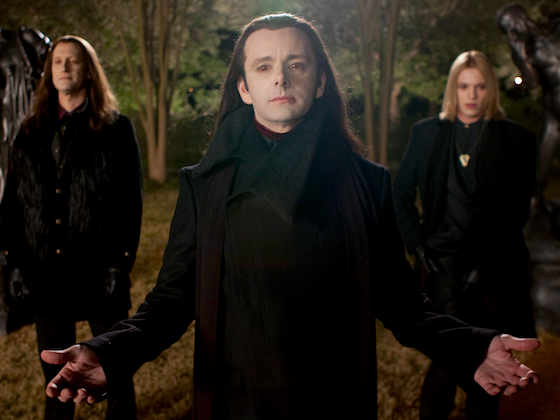
Post-fight, the film has one final good bit. I’m just going to spoil it, because if you’ve got this far I figure you don’t care. It’s revealed that the entire battle — which, note, killed off a slew of major supporting characters — was all a premonition. “It was all a dream” is frowned upon as a rule, but here it’s actually quite a neat twist. I didn’t see it coming, anyway. I guess I didn’t think anyone involved with Twilight was capable of such structural ingenuity. How I wish it was in a better film, more deserving of its effectiveness.
Oh, but it’s not all sunshine and roses. It means the fight never happens, which means the bad guy isn’t actually defeated, he just decides not to bother (because he’d lose). But is he happy about it? Duh, no. So he… just goes home… still in a position of power, still not happy with our heroes… Is that a victory? Or has the villain gone away to cook up a new plan? As I said, it feels open for a further story. A pair of characters who wanted the good guys to win for their own nefarious reasons basically tell the heroes, “you’re all fools, the Volturi might’ve left but they’ll never forgive what happened”… and all the good guys just laugh, because they’ve won, because they’re the good guys. But they haven’t won, have they? They didn’t defeat him. They didn’t convince him. It won’t take much for him to come up with a new, better plan. Fuck it, I was glad this was over, but now I want to see The Twilight Saga Episode 6: The Volturi Slaughter All Those Cocky Bastards.
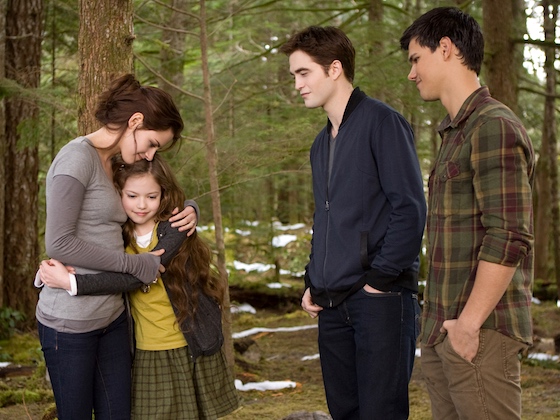
But there isn’t a sixth instalment. This is it. I have completed The Twilight Saga, just over a decade since it first came to the big screen. Back then it was a relatively significant part of pop culture, with a rabid fanbase clamouring for the movies to be recognised, and turning them into major, much-discussed hits. But they were always critically reviled, both in print and on screen, and now it feels like their relevance is waning, presumably as old fans grow up and new ones fail to materialise. Or maybe they still do good numbers in book sales / TV airings / Netflix streams, but we just don’t talk about them widely because they’re not new anymore. Who knows. The only reason I care is because I’m wondering if I’ve spent ten hours of my life watching something I knew would be poor, spurred merely by its cultural significance, only to find that significance has quickly evaporated.
Oh well. At least I’ll always have Face Punch.





 Last Halloween, I reviewed one of the most horrifying movies of all time:
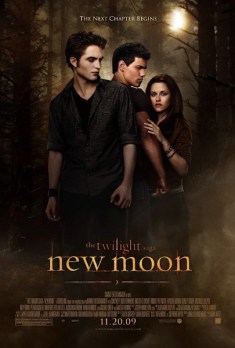
  And they accuse teenage guys of being shallowly obsessed with the opposite sex’s chests. But then Jacob starts acting aggressively, and hanging out with a gang, and there are stories about beasts in the woods killing people, and his tribe leader type guy looks shifty whenever all that’s mentioned, and… wait, could there be a connection between Jacob and his friends and the wolf-like attacks in the woods?! Gasp!
 so that even bits that aren’t bad in isolation (the wolves, for instance) are poorly integrated into the live-action. And at one point the characters go to the cinema to see an action movie… called Face Punch. At this point New Moon slips from ineptitude into genius. It’s the best worst fake action movie title ever. The scene where they discuss it is so hilarious, I actually had to pause the movie to finish laughing.
 Stoner comedies aren’t really my thing, but something about American Ultra — which is often pithily described as “
 really mean it’s funny (there are two or three laughs, tops), just that it has a less serious tone. Even if you want to claim the Bourne similarities are just one facet, the film as a whole feels generally reminiscent of any number of low/medium-budget action flicks. It’s not bad, it passes the time, but original or exceptional? No.
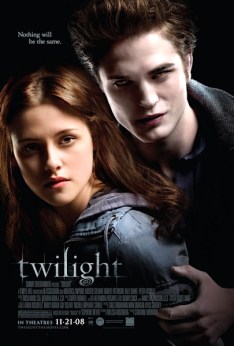 I’m not a big one for Halloween, but I’ve acknowledged the horrific holiday on a couple of occasions now. For 2015, I decided to review one of the most notorious supernatural films of recent times. A movie so horrific, it sent critics cowering behind their sofas. A film so evil, it’s perverted the minds of children — and some adults — the world over. A movie so renowned, it strikes fear into the hearts of even hardened movie lovers.
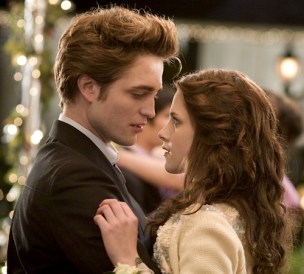
 Edward is an odd, creepy stalker — turning up in Bella’s bedroom and staring at her while she sleeps, that kind of thing — who she then finds out is a century-old man (bit of an age gap) and, literally, a predator… but she instantly unconditionally loves him. What the merry fuck? She’s given no reason to even like the guy, and plenty of reasons to run away scared of him, but no, she falls in love. What message is this sending to young girls? That the guy who follows you around everywhere just staring at you and then confesses he’s having trouble controlling his impulse to murder you (yes, he says that) is the perfect soulmate? Not to mention that he’s 100-and-something years old and dating a 17-year-old. He shouldn’t be pre-teen girls’ idol, he should be Hugh Hefner’s!
 in particular its treatment of female characters. Yet she also wrote this. Even if you allow for her being hamstrung by the novel in story terms, the dialogue is appalling, in every respect. Characters bluntly state their own and each other’s emotions at each other. We’re always being told stuff instead of shown it. Scenes heavy with exposition are shot with frenetic camerawork and underscored with driving music as if that somehow makes it filmic and exciting.
 a little light ogling of someone around my own age pales in comparison.)
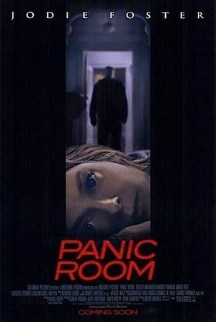 Panic Room stands out as (arguably) Fincher’s most atypical film. Whereas his others are all epic, in one way or another, this is the exact opposite. It’s very contained, virtually the entire running time spent on one night in one house, alleviated only by brief outside bookends and a guided tour of the house at the start. Fortunately, it’s still an outstanding little thriller.
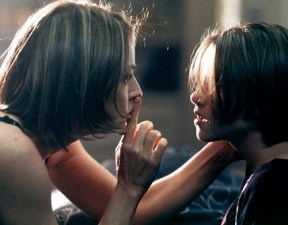 all the way squeezing the camera through banisters, coffee pots, and other assorted obstacles. There are several such shots, the majority early on (though not exclusively — witness the Hitchcockian transparent floor, for instance). This is presumably to help enliven the relatively slow build-up; later, the story’s inherent tension largely takes over.
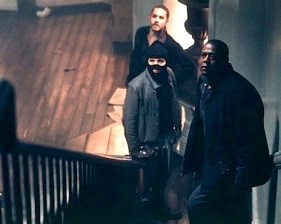 perfectly well staged and suitably tense or exciting as required, but Foster’s slow-mo dash for her mobile, and back into the panic room as the three burglars come pounding up the stairs, is one of those sequences that transcends the film it’s in to become a stand-out example of the form. Any skilled action director could have produced a good sequence at full-speed from that setup, but by switching to slow-motion Fincher stretches out the tension like an elastic band ready to snap, putting us on the edge of our collective seat as we urge Foster on through air that seems as thick as treacle.
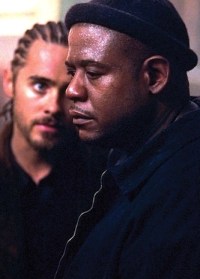 One other particularly interesting element is how we feel about Forest Whitaker’s character. This isn’t
 100Films.co.uk