
Barry Sonnenfeld | 106 mins | Blu-ray | 1.85:1 | USA / English | PG / PG-13
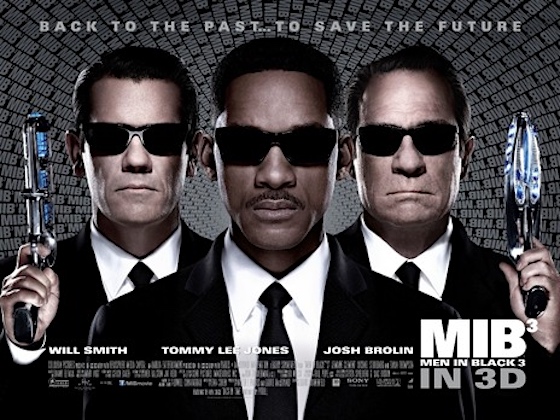
Maybe it’s something to do with my age, but when Men in Black II came out it felt like a bit of a belated sequel to the mega-hit Men in Black — it had been five years, after all, which is quite a long time for a comedy sequel. Well, Men in Black 3 was another ten years after that… As it turns out, MIB2 is a kind of typical first sequel: memorable-but-small characters get massively increased roles; things are referenced just for the sake of referencing them; jokes are repeated or amped up. MIB3 is more like the typical belated sequel: it stands somewhat divorced from the first two, with the minor stuff all gone, and some more significant changes necessitated by the passing of time.
What hasn’t changed are the leads, Agents J (Will Smith) and K (Tommy Lee Jones) — although the latter’s about to, because when an alien criminal he locked up in the ’60s escapes from prison and travels back in time, K is wiped from existence. As the only one who can remember K, it’s up to J to also travel back to the ’60s, rescue the younger K (Josh Brolin), and also save the Earth.
MIB3’s biggest problem is that it’s not funny enough. The first two were sci-fi comedies with the emphasis on the comedy, whereas this is more of a light sci-fi adventure. In some respects it tries to substitute emotional weight for the lack of laughs, aiming for a pay-off that’s designed to put a cap on the whole trilogy. It kind of works, I suppose, but it also feels like a bit of an ill fit. It’s nice that the film’s trying something different, I suppose, but I’d rather the tone was closer to the other movies — more humour, tighter pacing. Director Barry Sonnenfeld used to have an obsession with making his movies shorter (I remember he once said he’d be the only director where a “director’s cut” would actually mean a truncated version of the movie). I don’t know if he’d given up on that notion by 2012, but trimming ten minutes out of this likely wouldn’t hurt.
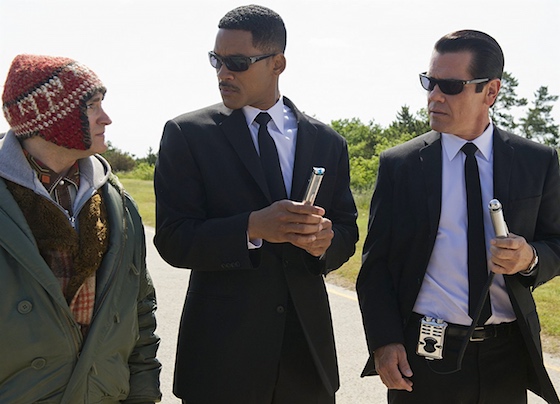
The best bit is definitely Brolin as Young K, doing a bang-on impression of Tommy Lee Jones while also adding enough to make the part his own. As for the rest of the new cast members, Emma Thompson’s role is fine if you consider her appearance no more than a cameo, but Alice Eve is underused as her younger self. Jemaine Clement chews the scenery double-time as the villain, while the always excellent Michael Stuhlbarg has a fun supporting role as a character who can see all possible futures.
MIB3 is not as weak as the much-maligned first sequel (which I don’t hate as much as some, but it isn’t great), but it can’t equal the freshness of the original, either. Little surprise it didn’t lead to a full-blown revival of the franchise… though, as it still did well at the box office and the series’ popularity endures, it’s also no surprise we’ll be getting a spin-off-ish fourth movie next summer.




 Paul Thomas Anderson — the fêted writer-director of
  Anderson chooses to realise the movie mostly in long, unbroken takes, which not only lets the photography shine, but also allows his cast free rein to construct their own performances. I’m not sure how much that pays off, but it’s certainly not a hindrance. Turns from the likes of Josh Brolin and Martin Short border on the memorable, though your mileage will vary on if anyone truly achieves it, with the possible exception of Katherine Waterston, who surely deserves more — and more prominent — roles. Other recognisable faces (Jena Malone, Eric Roberts, Reese Witherspoon) are wasted in one- or two-scene appearances, which I suppose we could kindly call cameos.
 I am in neither of those groups, however. The aforementioned fleeting aspects of quality weren’t enough to swing it for me either. Sadly, I’ll be chalking this up alongside
  Belated sequels can be a
 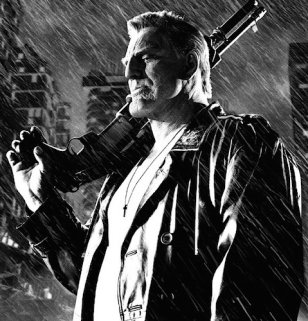 But the comic-book-ness of the first film — moments of almost metaphorical visual representation rather than literal reality, including physically-impossible action beats — has been ramped up. The value of the first film was never in its action, so the sequel’s lengthy punch-ups, crossbow-based guard-slaying, and all the rest, get boring fast. When it slips into this needless excess, A Dame to Kill For loses its way. When it sticks to what it does best — hard-boiled fatalistic crime tales with striking comic book-inspired cinematography — it does as well as the concept ever did.
 The intervening decade has lessened the impact of the first film’s sick ultra-violence, but there’s nothing even that extreme here, aside perhaps from one eyeball-related moment. On the other hand, nearly a decade of tech development means it looks better than the last one, both in terms of the CGI’s quality and the camerawork more generally — it’s less flatly shot; more filmic than the first one’s sometimes-webseries-y composition.
 its predecessor, and that’s exactly what it delivers. I suspect the first benefits from nostalgia because, watching them virtually back to back, I found I liked Sin City less than I remembered, but enjoyed A Dame to Kill For just as much. It’s flawed in several aspects, but for honest-to-themselves fans of the first movie, I think it’s a “more of what you liked”-style success.
 David O. Russell’s second feature sees adoptee Ben Stiller go on a kerazee road trip to find his birth parents, accompanied by dissatisfied wife Patricia Arquette and kooky adoption agency psychologist Téa Leoni, along the way bumping into Arquette’s high school crush (Josh Brolin) and his husband (Richard Jenkins). Cue an almost-PG-13 sex comedy told among sketch-like encounters with quirky people who turn out to not be Stiller’s folks.
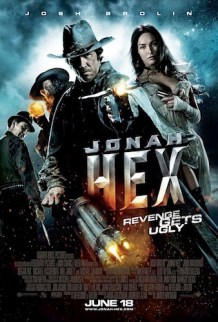 Jonah Hex is not a good film. Let’s just establish that, before I start being nice about it.
 Much of the film rattles on in this way. And rattle it does: 73 minutes before credits. As blockbuster running times spiral out of control, such brevity is almost welcome. It doesn’t feel exceptionally short, mind, except for when the plot occasionally jumps forward.
 — usually improbably — or generally be a female. By “female” I mean “cleavage delivery device”. Considering her acting ability, her lack of presence is no real shame.
 100Films.co.uk