
Ti West | 104 mins | download (HD) | 2.35:1 | USA / English | 15 / R

The spirit of the Spaghetti Western is alive and well in writer-director Ti West’s shoot ’em up; though where they once took inspiration from samurai movies, now Mr West has his sights set on modern-day gun-fu movies — specifically, here he retrofits John Wick into a familiar Old West narrative.
On his way to Mexico with just his horse and dog Abby for company, drifter Paul (Ethan Hawke) passes through an almost-deserted town, where he ends up in a fight with wannabe-tough-guy Gilly (James Ransone). It turns out Gilly is the son of the local Marshal (John Travolta), but he considers the matter settled and lets Paul move on, ordering his son to leave it be. A shamed Gilly has a different opinion, however, leading his gang of friends to assault Paul in the dead of night. But as is the way with halfwit villains, they leave our hero alive, ready for him to ride back into town and exact his vengeance.
If you come to movies looking for an original storyline, you’ll be disappointed here — as I say, it’s basically John Wick in the West (if you’ve seen that Keanu Reeves actioner, you’ll already know the outcome of Gilly’s revenge on Paul). The devil is in the details, however, and in that respect In a Valley of Violence is rather enjoyable. Perhaps the biggest mark in its favour is its sense of humour. It’s not a comedy by any means, but Gilly’s gang are borderline incompetent in a way that’s increasingly laughable.

Travolta gets in on the act as a man who seems very much in control of his own little kingdom, but when things truly kick off he’s somewhat caught in the middle. Thankfully he’s not just the bullying villainous type, instead getting a nicely balanced reaction to events: he knows Gilly’s done wrong, but stands by him because he’s his son; but when Paul’s pushing comes to shoving… well, familial loyalty only gets you so far.
As Paul, Hawke finds some degree of complexity in the (anti-)hero, but this isn’t exactly a movie built for psychological complexity. Taissa Farmiga is positioned as the love interest, but thankfully isn’t entirely reduced to such a thankless role. As her sister, Karen Gillan reminds us that, while she may be best known for brightly-coloured sci-fi on screens both big and small, her roots are in comedy. But the biggest star is, of course, the dog. You can’t help getting attached, even when you know you’re watching John Wick of the West.

The film offers many stylistic nods to remind us of its Spaghetti inspiration, like the starkly animated title sequence, or Jeff Grace’s Morricone-riffing score, which some criticise for its obviousness but I thought was fun. It even comes through in the film’s structure, with a slow-burn first half that reminded me of Leone’s attitude to action. Some complain of the pace there, or lack of it, but I rather liked that. It partly functions as a deliberate delaying of gratification: the main reason we’re here is for the bloody vengeance we know will eventually be coming, but West carefully sets the scene and gradually puts characters in place early on so that the second half can more fully concentrate on the violence. The wit is kept alive even then, with more than one of the deaths provoking at least some laughter.
The more I write about it, the more I wonder if this film is something of an acquired taste. It’s not out-and-out comical enough to be classed as a comedy, but action die-hards may feel the lighter elements undermine the violent thrills they seek. I thought it worked, but experience has taught me that I’m more accepting than most of such tonal mash-ups.
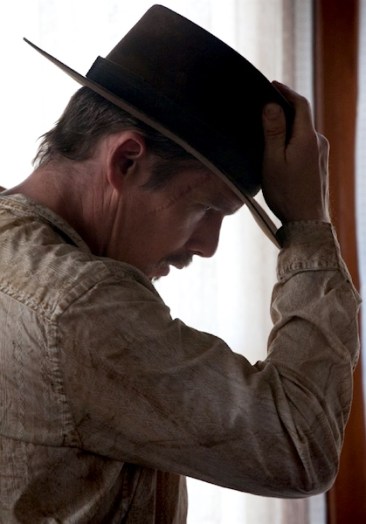
Despite the plot similarities, In a Valley of Violence isn’t going to challenge John Wick for ultra-choreographed action satisfaction, but it has many aspects to recommend it for those who like a chuckle alongside their bloodshed.

In a Valley of Violence is released direct to DVD & Blu-ray in the UK on 6th March.
John Wick: Chapter 2 is in UK cinemas from today.
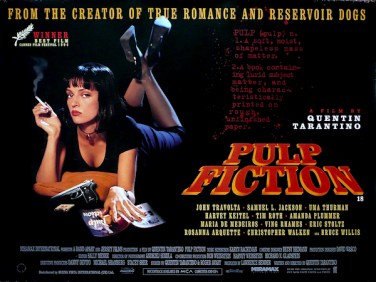

 Score:





 Disgraced national TV journo Dustin Hoffman is slumming it on a local network, covering dull stories like something-or-other going on at the local museum… until a recently-fired security guard from said museum (John Travolta) turns up with a shotgun, accidentally shoots the other security guard, and takes a party of schoolchildren hostage. Suddenly Hoffman finds himself with the inside scoop — literally — as the eyes of the national news turn on the unfolding situation.
 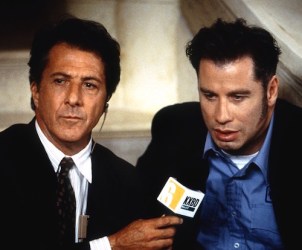 He plays against type as Sam, the nervous, naïve, childlike, and easily-manipulated hostage taker. It’s Travolta’s performance that makes Sam someone you care about, even if you don’t exactly root for him, so that the outcome — which, unusually for this kind of film, remains completely uncertain right until it’s happened — is something you’re fully invested in. There are many better-regarded films than this that don’t achieve that.
 Bolt is the 48th film in Disney’s animated canon (whatever the official name for that is these days), from their CG-only era that filled most of the ’00s. It’s a period already remembered as When Disney Lost Its Way, after the second (or is it third? I forget) ‘golden era’ of the early ’90s; the time that produced flops like
 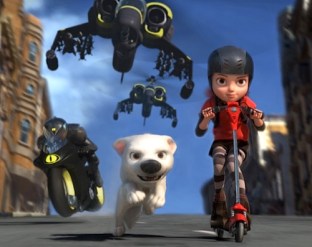 Also noteworthy are the action sequences. Far from being perfunctory attempts at liveliness, these are properly exciting, making full use of 3D CGI to create exciting and dynamic sequences. I’m not just talking about the couple we get from the TV-series-within-the-film either, but also the ‘real world’ ones as Bolt, Mittens and Rhino jump onto trains, out of moving vans, escape from a pound, etc. Of course, the TV-series-within-the-film is completely implausible — like you could film a TV show with massive action sequences in such a way that you only ever do a single take, never mind achieve all those effects on a TV budget. But then this is a film where a talking dog, cat and hamster work together to travel from New York to Hollywood entirely of their own volition — I think it’s safe to say no one’s aiming for documentary levels of realism.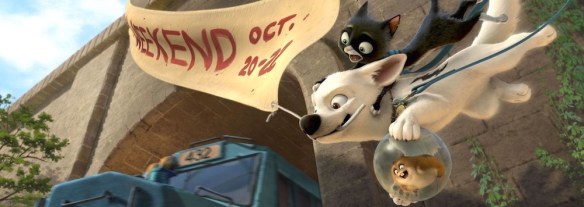
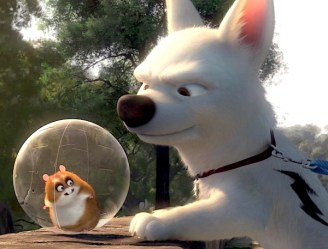 It would be easy to dismiss Bolt as part of Disney’s CG folly, especially as it stars Miley Cyrus and is immediately followed by their return to 2D animation, but I think that would be a mistake. It’s a fast-paced and fun adventure, with accurately-captured animals meaning it’s especially likely to appeal to dog lovers. Disney’s next golden era just might begin here.
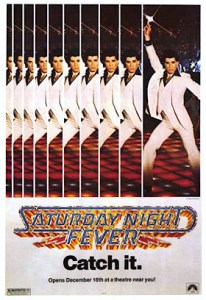 Saturday Night Fever couldn’t be more ’70s if it were made today as a period piece (if you can see how that isn’t a contradiction). From the posters on Tony’s walls, to the fashions, to how it’s shot, it seems to have been designed specifically to exude seventies-ness in a way few other things seem to. It feels natural, then, that some of its original elements have become shorthand definitions for the era: the Bee Gees music, the dancing, and in particular that pose.
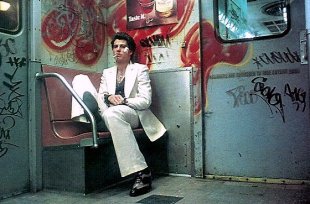 with dead-end jobs, late-night fights, turn-taking back-of-the-car sex, and other unsavoury pursuits. It’s no wonder Tony wants to escape.
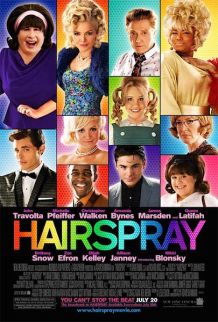 Who’d’ve thought a John Waters film could become a bright and breezy musical? It’s a bit of a surprise but, thanks to a successful Broadway version, that’s exactly what’s happened. But while the key to Hairspray’s success may be its positive attitude and memorable songs, perhaps the key to its quality — and the eventual score of this review — are the issues it tackles around those.
 100Films.co.uk