
W.D. Richter | 103 mins | Blu-ray | 2.35:1 | USA / English | 12 / PG

Buckaroo Banzai seems to have quite the cult following in the US, but, as far as I understand, it never made an impression over here; not until the internet enabled such cults to go global, anyway. It has big-name fans (one, Kevin Smith, was developing a remake for Amazon until legal wrangles got in the way), so of course it’s been noticed in more recent times. I’ve been somehow aware of it for ages, but finally got round to seeing it last year after Arrow put it out on Blu-ray.*
For those equally unfamiliar with the film, it’s an action-adventure sci-fi satirical comedy (kinda), concerning an adventure (one of many, I imagine) of Dr. Buckaroo Banzai (RoboCop’s Peter Weller), the famous physicist, neurosurgeon, test pilot, and rock musician. While testing a device that allows him to pass through solid matter, Banzai briefly travels to another dimension. This kickstarts a series of events that leads to the escape of evil aliens the Red Lectroids, who Banzai must defeat lest it brings about the end of the world. That’s the streamlined version, anyway.
To be perfectly honest, I’ve found it quite hard to tell what I thought of Buckaroo Banzai. On the one hand, I can definitely see where it gets its cult appeal, and I appreciate some of the ways it’s being different and boundary pushing. On the other, there’s been a definite backlash to it and I can appreciate where that comes from too — the criticism that some of that “boundary pushing” is merely sloppy storytelling and crazy overacting. There are parts where it’s hard to tell if it was deliberate and quite clever, or just incompetently done. Part of the problem (but also the appeal) is that it’s played so straight. It’s unquestionably a comedy — it’s too ludicrous to be anything else, and the sheer build-up of comedic lines becomes clear as it goes on — but it’s all played with such a straight face that I can see why you’d think everyone involved believed they were making something serious.
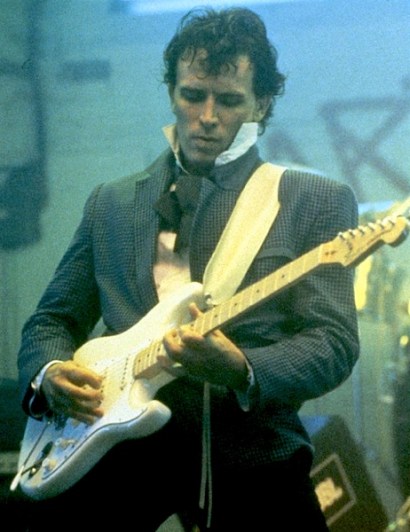
There are ways it could be ‘normal’, too: it contains so many elements that could be used to construct a traditional narrative — a new member being introduced to the gang, a love interest, an inciting incident which kicks off the events of the narrative, and so on — but it chooses to use none of these in a traditional way, instead being batshit crazy and thoroughly unique with it. Interestingly, director W.D. Richter was also one of the writers on Big Trouble in Little China, which is another action-adventure movie featuring a similar loose, crazy, fever-dream style. (Of all things, he also wrote Stealth, the forgotten-as-soon-as-it-was-released jet-pilots-vs-AI action thriller starring Jessica Biel and Jamie Foxx from 2005.) I can see how, after a diet of mainstream adventure cinema, something like this could feel refreshing. It’s almost like counter-culture pulp; like a Rocky Horror for the ’80s, but without the camp. (Or, at least, not the same kind of camp — I mean, have you seen what Jeff Goldblum’s wearing?)
In the booklet accompanying Arrow’s Blu-ray, James Oliver talks about cult movies and their history. “Cult” is sometimes used nowadays as a catch-all term for anything in the broad sci-fi / fantasy / horror realm, or with a dedicated and eager fanbase. It’s almost mainstream. The term’s roots lie in the opposite direction, of course — films that critics and mass moviegoers disliked but that developed a following of people who appreciate and defended them nonetheless. This is a lot easier and quicker than it used to be since VHS came along, and even more so in the era of DVD and Blu-ray. Banzai was possibly the first cult film to benefit in this way. Oliver concludes by reasoning that the film “resists easy assimilation. It plays too many games to be embraced by everyone and is, accordingly, often patronised or even denigrated, even by some of those who usually like cult movies. But such resistance just makes those who love it love it just that little bit harder. So it is a cult movie and, no matter how much the meaning of that phrase may mutate over time, it likely always will be.” Based on the aforementioned backlash — how it’s had a chance to move in a more widely-known direction but hasn’t done so — I think he’s right.

Personally, I’m still conflicted. I sort of didn’t think it was all that great, but also loved it at the same time. “Loved” might be too strong a word. I admired some of the ways it was different from the norm. Plus there are some very quotable lines, and the music that kicks off the end credits is relentlessly hummable. On balance, I really wanted to like it more than I actually did like it. Maybe I’ll get there on repeat viewings (because we know how good I am at getting round to those…)

* Said Blu-ray was actually released two years ago this month — where does time go?! ^
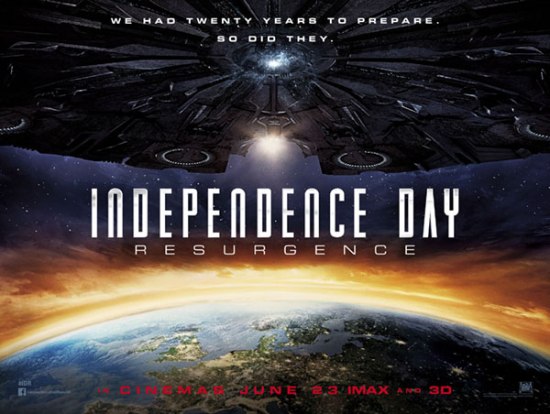




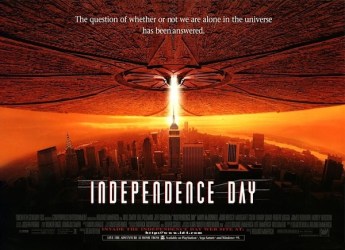 I’m not sure when I last watched ID4 (as it was so often branded and marketed, for only semi-clear reasons — sure, US Independence Day is July 4th, but other than that the “4” has nothing to do with anything), but it’s been a damn long time — my DVD copy, which I know I never watched (I have the shiny new remastered Blu-ray now), has a postcard inside advertising the forthcoming
  because it was all about the spectacle when it came out; but of course, things date, and what counted as sheer cinematic spectacle in 1996 is (it would seem) underwhelmingly run-of-the-mill in 2016. It’s fair to say that not all of the model effects still hold up, but there’s a physicality to them that really works. The best ones are still among the best movie effects ever.
 and some of the blame for it can surely be traced back to the popularity of ID4. However, here the destruction isn’t so unfeeling: the morning after the aliens’ famous landmark obliteration, President Whitmore mulls over how many people died and how many didn’t have to if he’d made different choices. Both Marvel and DC have had to make that kind of reflection a plot point in sequels to retrospectively justify it happening in the first place.
 allowing for a drastically new status quo on Earth when the aliens return, but with blockbusters released all year round now, and CGI meaning every one is overloaded with effects shots that are far more epic than ID4 had, there’s little doubt that the sequel won’t have the same enduring impact on the blockbuster firmament. For its faults, you can’t deny ID4 that.

 Score:



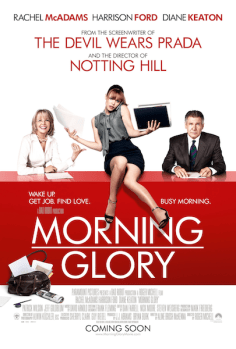 Rachel McAdams takes a break from
  The latest from cult auteur Wes Anderson, which managed that rare feat of enduring from a March release to being an awards season contender, sees the peerless concierge of a magnificent mid-European hotel (Ralph Fiennes) accused of murdering a rich elderly guest (Tilda Swinton, caked in Oscar-winning prosthetics) and attempting to flee across the country to clear his name. More or less, anyway, because this is a Wes Anderson film and so it takes in all kinds of amusing asides, tangents, and recognisable cameos.
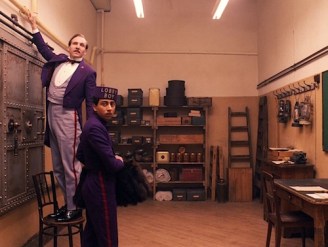 I suppose the kooky idiosyncrasies of Anderson’s brand of storytelling and filmmaking will rub some viewers up the wrong way, looking on it all as vacuous affectations signifying nothing. To each their own, but, whatever the merits (or not) of Anderson’s style as a kind of one-man genre played out across his oeuvre, The Grand Budapest Hotel displays a synthesis of contributing elements that creates a movie that’s ceaselessly inventive, surprising, amusing, and entirely entertaining.
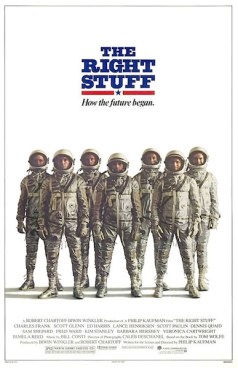 The Right Stuff ostensibly dramatises the story of the ‘Mercury 7’, America’s first group of astronauts, but in fact equally concerns itself with the tale of test pilot Chuck Yeager. But I’ll get to him.
 100Films.co.uk