aka Evangerion shin gekijôban: Jo / Evangelion New Theatrical Version: Prelude
2010 #41
Hideaki Anno, Masayuki & Kazuya Tsurumaki | 101 mins | Blu-ray | 12 / PG-13
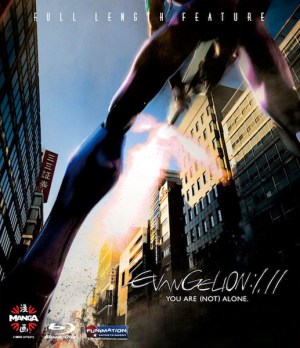 When I (first) reviewed Watchmen, I commented that it was hard to divorce my opinion of the graphic novel from my opinion of the movie, so faithful was the adaptation. That’s as nothing to this, though: Evangelion: 1.11 (also known as Evangelion: 1.0 and Evangelion: 1.01, slightly different versions of the same thing) is a retelling of the first six episodes of the highly-acclaimed anime TV series Neon Genesis Evangelion, using the original animation and voice cast to recreate the story.
To put that another way: as a retelling of the first quarter of the original series, reconstructed from the original animation elements, some may wonder what the point of You Are (Not) Alone is — why not just re-watch the series? And how well can six episodes of a TV series work when stuck back-to-back as a film? To be frank, I’m in no position to accurately compare the content of the film and the original episodes, as I last (and first) watched them about three years ago. I can say that some of this is very familiar — one is certainly aware it’s the original elements re-appropriated — while other bits I suspect may have been drafted in from later in the series, and others I’m certain are actually all-new.
Despite some animation tweaks, other things go unchanged, occasionally making the future-set story seem already dated. A line mentioning cell phones, in an attempt to cover why Shinji is bothering to use a phone box, 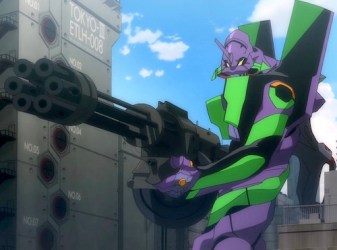 is a new addition I swear, while he also listens to a (digital, at least) cassette player rather than an iPod (other MP3 players are available, naturally). It’s not a major flaw — unlike, perhaps, the fact that the “covert” and top-secret Nerv organisation has great big signs plastered all over town and everyone seems to know about them — but, still, maybe a new bit of animation to replace the tape-playing close-ups would’ve been nice.
The original episodes run around 2 hours 20 minutes total (including all titles, trailers, etc) so edits have been made, but it’s intelligently done. Despite the time since I watched the series I’m aware of where some episode breaks fall, so it’s hard to accurately say how it hangs together as a film to a newbie, but it seems to me that it does rather well. It throws you in at the deep end a bit, but then so does the series. It’s a non-stop opening 25 minutes, a relentless onslaught of information and action, before the pace lets up a little. The pace is surprisingly good throughout, a well-considered balance between action, character and mysteries. Anno and co have retained some of the original’s light and shade — this isn’t just a plot recap, but includes some of the humour and character-based subplots. These elements are still the most trimmed, but there’s enough retained that they work in the context of the film. Indeed, it’s been so skilfully done that an uninformed viewer might even accept it was originally created as a film.
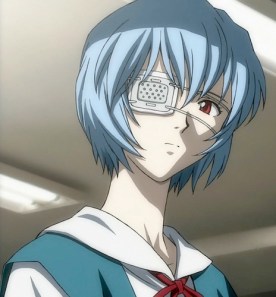 The pros and cons of the series remain. Shinji is alternately interesting, perhaps even complex, and a whiney little irritant. Here he has a character arc at least, suggesting he may be more sufferable next time out. His relationship with Major — sorry, Lieutenant-Colonel — Katsuragi, important in the series, seems to have an even greater focus here, providing a key emotional through-line for the characters. Some of the philosophical bits survive too, feeling as pretentious as ever, but — like the occasionally OTT humour — have been reduced by the need to hit a feature-length and still pack the story in.
As best I can tell the English voice cast is entirely the same as the TV series. Though I presume they’ve all been re-recorded for the film, your opinion of their work is unlikely to be changed. I don’t mean this specifically as either criticism or praise, just that there’s nothing to distinguish between this and the TV version vocally.
One thing that worried me was that this would feel less like a standalone film and more like Part One of a much longer story, primarily because I recalled episode six being ‘just’ another big battle — an action sequence, certainly, but no more of a climax than any of the other fights. I don’t know if I’ve misremembered or if work has been done to place a heavier emphasis on it here, but it is unquestionably a Big Climax — an all-or-nothing finale, bringing together the plot, most of the subplots, and a Threat To The Whole World. There’s still a “To be continued…” — not only literally, but quite clearly in a raft of unresolved subplots — but it fits as an End Of Act One, much as does the end of, say, Fellowship of the Ring.
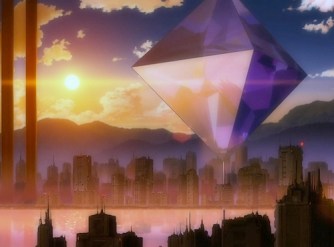 Another factor thrown up by the TV-series-to-feature conversion is the image quality. An HD big screen is a mixed blessing here. On one hand, it looks great on Blu-ray, with crisp lines and solid colours, the result of re-filming, colouring and CGI-ing the original animation elements rather than using the finished TV shots. On the other, such clarity sometimes shows up a lack of detail in the original animation — these elements were created for 4:3 mid-’90s TV, not a hi-def (home) cinema — and the solid colours and money-saving techniques (for example, showing something static rather than a lip-synched (ish) mouth during conversations) can remind the viewer of cheaper TV roots. Perhaps I’m being overly critical though, because much of it does look fabulous; at the very least, the thorough ground-up rebuild means it looks better than the TV series ever will, never mind has.
Ultimately, You Are (Not) Alone works satisfyingly as a film. Arguably it has a slightly unusual narrative structure or slightly unsophisticated animation, but it works much better than you’d expect from six TV episodes stuck together. With introductions, character arcs and a suitably important climax, it even functions as a standalone film, in a similar way to Fellowship or other trilogy/tetralogy/etc first instalments.
Plenty of mysteries remain at the end: who are Seele? What is the Human Instrumentality Project? Why does Shinji’s father hate his son but smile whenever he sees Rei? To mention just a few. They’re not allowed to over-dominate this story, but they let the viewer know that, while You Are (Not) Alone functions as an entertaining standalone tale, there’s a lot left to be revealed and investigated. 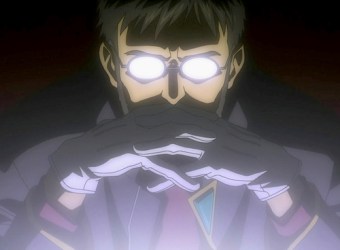 It’s enough to make one scurry back to the series for answers, though the three movies still to come promise whole new characters, plots and a — frankly, much-needed — brand-new ending. After two misfires (one in the series, one in a film), hopefully Anno can provide something truly satisfying this time.
Evangelion 1.11 is out on DVD and Blu-ray today.

 Is 1945-1998 actually a film? Or is it a piece of video Art? Or just another online video?
 attention didn’t already wander, that is). There are ultimately so many flashes and bleeps, and the effect is so lulling, that I had to force myself to remember these represented Big Nasty Bombs that were Not A Good Thing. Perhaps something more aurally grating would’ve been appropriate; the counter argument going that this would cause even more viewers to abandon the work.

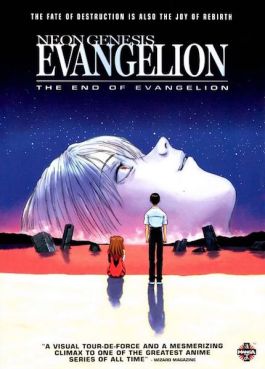 Eight weeks and sixteen films later than I’d’ve liked, I can finally complete the Evangelion story! (For my review of the first film, look
  The genesis of this film is a long story (at least, longer than I’d like for this review!) The anime series Neon Genesis Evangelion ends with bizarre theme-centric episodes that fail to conclude the story; a film was produced to re-tell the end from a story-centric position and/or to provide an alternate ending (depending who you believe). This is not that film, but something that was released a bit before that.
 100Films.co.uk