
Mike Newell | 116 mins | Blu-ray | 2.40:1 | USA / English | 12 / PG-13
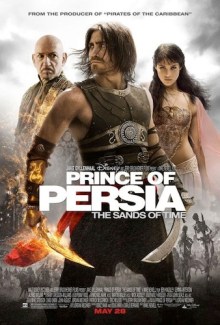 Disney’s attempt to launch a second franchise in the mould of Pirates of the Caribbean, this time based on a long-running series of computer games, seemed to sink without trace last summer. Despite that failure, it’s not all bad.
To give a quick idea of its quality, Prince of Persia is analogous to an average entry in the Pirates series, only without the craziness and humour provided by Johnny Depp’s Captain Jack Sparrow. This probably explains Persia’s relative lack of success: Pirates began with an exceptionally good blockbuster flick, and has since coasted on goodwill and affection for Depp’s character; Persia has neither of these benefits.
There’s not much to get excited about here, however. Like On Stranger Tides, it suffers from a surfeit of ideas that are equally undeveloped. Even though this shares no writing credits with that film, it’s what it most reminded me of. There’s an adventure story that wants to reach an Indiana Jones-esque style but fumbles it. It often feels like the genuinely important bits of plot and character development are quickly brushed over, instead spending inexplicably long stretches on barely-relevant asides. It jumps about like a loon too, feeling like a lot of linking scenes or establishing shots have been excised for whatever reason.
 There are some good action beats, but there’s also plenty of disorientatingly-edited, CGI-enhanced sequences, as per usual for the genre these days. For the former, see for instance Dastan’s climb up the wall into Alamut (or whatever it was called), or the knife-thrower-on-knife-thrower battle near the end. For explosions of CGI, see the massive logic-shattering ‘sand surfing’ sequence in the climax. Visually they’re clearly trying to evoke 300, but without going quite so far in the stylization stakes. Also worthy of note is the opening, the latest CGI-enhanced rendition of the opening sequence from The Thief of Bagdad and Aladdin: Westernised Middle Eastern streetchild-thief chased acrobatically through streets of Middle Eastern Town by Middle Eastern Guards. (None of the above pictured.)
As this is a Hollywood version of the ancient Middle East, naturally everyone is a Westerner with deeply tanned skin who speaks with an English accent. Everyone in the past had an English accent. Jake Gyllenhaal’s accent is actually very good, in my opinion; Gemma Arterton’s voice doesn’t grate as much as it seemed to in the trailer (I have no problem with her in any other film, but there was something about the Persia trailer that made her sound… weird). That’s probably the best that can be said for either of their performances. They’re not bad, just not in anyway endearing. Dastan makes a fairly bland hero — I think he’s meant to be something of a cheeky chappy, but they didn’t get close to achieving that — whereas Arterton has the role Keira Knightley would’ve played five years ago. I think she’s meant to be a Strong Independent Princess but, much like Dastan, we’re told we should be inferring it rather than seeing any evidence of it.
Alfred Molina has the best shot at creating a likeable supporting role, but it’s a part that resurfaces for no good reason, acts inconsistently, and all his best elements are cribbed from better films. Like most of the film, then. An attempt is made to conceal that Ben Kingsley is the villain, and it might have worked if anyone else was in the role — heck, I almost believed it even with him… but only “almost”. Like most of the story, it’s all a bit stock-in-trade. It’s good to take inspiration from other action-adventure classics, but it also means that it all feels very familiar. The time travelling dagger, the film’s truly unique point, is too powerful as a plot point, meaning rules have to be established that limit its use… which means that the one unique element doesn’t actually turn up very often.
Prince of Persia is riddled with flaws, it would seem. Its characters are unmemorable, their relationships unbelievable; its plot is disjointed and, while always followable, still half nonsensical; the other half is by-the-numbers predictable; its action sequences occasionally shine, but are largely whizzily edited or CGI burnished (though, in fairness, they’re far from the worst example of either problem). I should probably dislike it quite a lot, yet while part of me says I should rank it lower than even the Pirates sequels (owing to the lack of charming characters or any trace of humour), looking back I kind of liked it. It’s not Good, but it is sort of Fine, and it’s by no means bad enough to inspire genuine hatred.
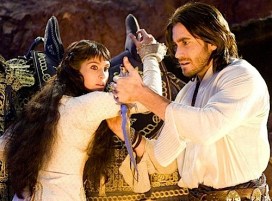 Plus, the sword-and-sandals milieu makes a bit of a change. I know we’ve had plenty of swords-and-sandals-flavoured movies in the wake of Gladiator, suggesting this is hardly unique, but whereas they’ve all unsurprisingly shot at the Gladiator mould, Persia is aiming for the PG-13 adventure-blockbusters style. It’s a shame that it’s not better, because said milieu and some of the talent involved could have produced a film in the vein of quality of, say, The Mummy, if we’d been lucky.
If you’re less forgiving than me, knock a star off. Or if you think you’d like the Pirates films better without Depp’s silly captain, maybe leave that star on.

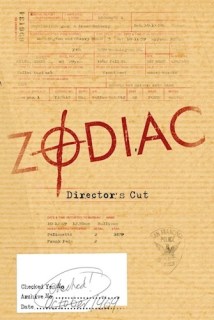 How time flies — I’ve been meaning to re-watch Zodiac ever since I
 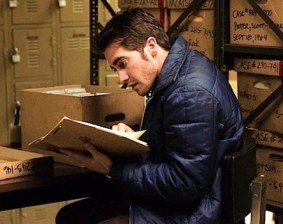 As the changes have little impact on the film’s fundamental quality, the points in
 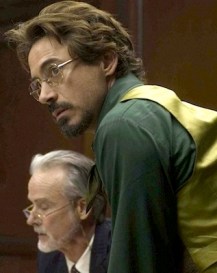 but the sheer weight of evidence the other way seems to leave little room for doubt. More so, then, is that the murders are done with before the halfway mark. That’s because it’s still following the story of the investigation, true, but a lesser filmmaker could have weighted it differently, rushing through Graysmith’s later enquiries in a speedy third act. Instead, Fincher’s focus throughout is on the people looking into the crime, and it’s as much the tale of their obsession — and what it takes to break their obsession, be it weariness or pushing through ’til the final answer — as it is the tale of a serial killer.
 and place-and-time subtitles too, but hey, sometimes you need specificity.
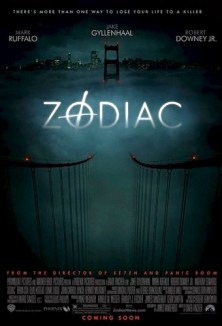 Context time: I’m a David Fincher fan.
  100Films.co.uk