
Jon Watts | 129 mins | Blu-ray (3D) | 2.39:1 | USA / English | 12 / PG-13
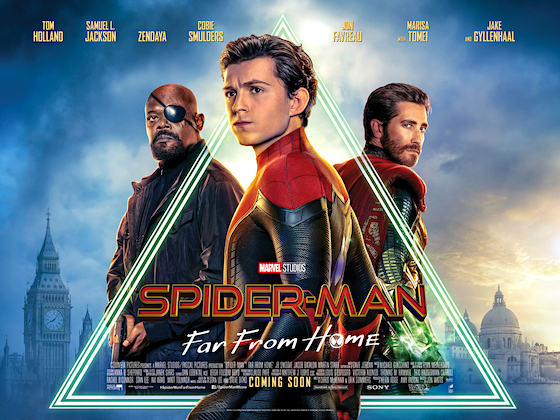
For those not keeping track (who can blame you?), Far from Home is the third Spider-Man 2. It follows in the footsteps of Sam Raimi’s Spider-Man 2 from 2004, widely regarded as one of the topmost examples of the superhero genre, and Marc Webb’s The Amazing Spider-Man 2 from 2014, widely regarded as one of the poorest examples of the superhero genre. (As you can see, they’ve ditched the numbers. Probably wise at this point.) Personally, while I agree with the accepted view of Raimi’s film, I actually rather enjoyed Webb’s sequel. That’s important to know when I say that I think Far from Home is my least favourite Spider-Man 2 so far.
This one is the sequel to 2017’s Spider-Man: Homecoming… except Spidey’s in the MCU now, so it’s also a sequel to Avengers: Infinity War and Avengers: Endgame. And that’s not just a checklist of “other Spider-Man appearances”, either: the events of Endgame are absolutely vital to the storyline of this movie. It may be another Spider-Man 2, but more than that it’s Marvel Cinematic Universe: Episode XXIII.
Some people criticised Homecoming for having too much Iron Man and going too far in making Spider-Man into Iron Man Jr. I felt they got the balance about right, all things considered — it’s not very true to comic book canon, but, as the third big-screen iteration of Spidey in the modern era, it made a reasonable change. Far from Home is where it becomes overpowering. It has to lean heavily on the overall continuity of the MCU, which means all the business of The Blip (as what we call The Snap is called in-universe) and Iron Man’s death is front-loaded into the movie. The former is waived away as quickly as they can; the latter weighs heavy on the entire rest of the plot.
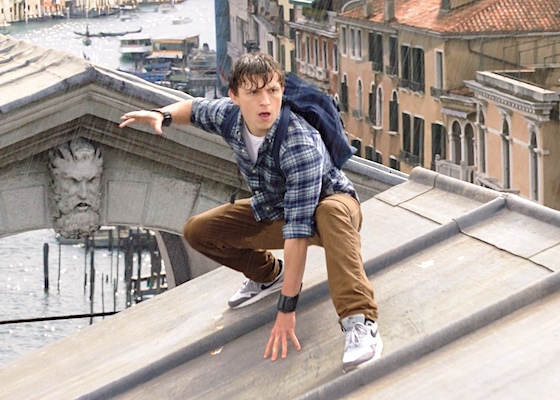
Meanwhile, Nick Fury is trying to get in touch with Peter Parker, who isn’t interested in the big world-saving antics that implies. He’s more concerned with going on a school summer trip around Europe. How a poor kid from Queens is supposed to afford a weeks-long vacation around Europe isn’t even one of my issues with the film, but if you’re a Spidey devotee it might be. But go on this vacation he does, only to have it interrupted in Venice by a giant water man/monster thing, which is battled by a new hero Peter’s classmates reckon is a cross between Iron Man and Thor, and name Mysterio. Turns out he’s working with Fury, and Fury wants Mysterio and Spider-Man to team up to fight the possibly world-ending threat. But Peter doesn’t want to because he’s on holiday goddammit and he has a plan to woo MJ.
So far, so Spider-Man — the conflict between his personal and ‘professional’ life is a regular feature of the character. But it’s the way this story unspools that didn’t work for me, as it drags its heels through every storyline it’s got going at once, indulging in comedic asides from a whole range of characters. Having a comic relief character or double act is fine, but four or five of them? It just eats up screen time. The lack of focus robs the film of impetus or tension, as the characters and plot both meander around Europe and from set piece to set piece.
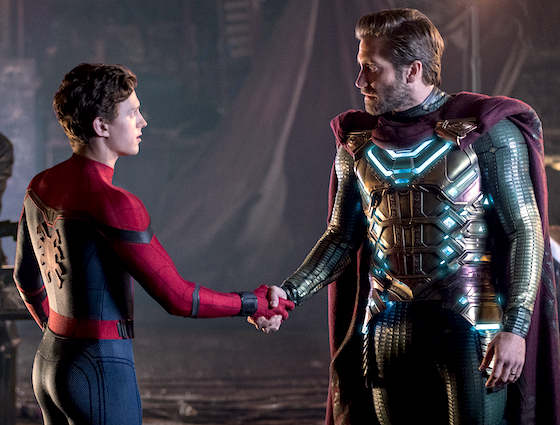
At least some of those set pieces are quite good. The Venice one is a nice change of pace, because Mysterio is off doing the main fighting bit, so Spidey’s left to tidy up around him. It’s something a bit different in a blockbuster action sequence. The real highlight, though, is an illusion trap Spidey endures, which is imaginative and creatively realised. Tom Holland gives the title role his all, but Jake Gyllenhaal is the standout as Mysterio, waltzing into the film and stealing it out from under everyone else’s noses. His real-life alter ego, Quentin Beck, has a really nice relationship with Peter, pitched as a kind of mentoring, older brother type role, admiring of the kid’s ability but not blind to his flaws. Even better, if you watch the gag reel you get the impression Gyllenhaal is kinda treating Holland like Beck treats Parker, which is… amusing.
Like every other MCU film, Far from Home is competently made with occasional flashes of inspiration, so manages to dodge being an outright disaster. But, speaking as someone who thinks Homecoming is pretty great and saw a lot of promise in this sequel’s trailers, I was disappointed by the end result. Future Spidey appearances in the MCU are assured (naturally there’s a post-credits tease for them), so I hope they can recapture more of that Homecoming spark next time.

Spider-Man: Far from Home is available on Sky Cinema from this weekend.
As Far from Home is officially the final film of the Infinity Saga (I guess it works as an epilogue; or perhaps the saga’s very own feature-length post-credit tease), here are links to my reviews of every other MCU film so far… except for one, which this has reminded me I’ve forgotten to write.
- Iron Man
- The Incredible Hulk
- Iron Man 2
- Thor
- Captain America: The First Avenger
- Avengers Assemble
- Iron Man 3
- Thor: The Dark World
- Captain America: The Winter Soldier
- Guardians of the Galaxy
- Avengers: Age of Ultron
- Ant-Man
- Captain America: Civil War
- Doctor Strange
- Guardians of the Galaxy Vol. 2
- Spider-Man: Homecoming
- Thor: Ragnarok
- Black Panther
- Avengers: Infinity War
- Ant-Man and the Wasp
- Captain Marvel
- Avengers: Endgame
- this one!
I’ve also reviewed a bunch of the shorts and (sorta-)tie-in TV series, but I’ll let you track those down if you’re interested.
…and, in keeping with the style of the MCU, here’s a surprise post-‘credits’ mini-review!
(2019)
Jon Watts | 3 mins | Blu-ray | 2.39:1 | USA / English | 12

Sony chose to bill this as a short film on Far from Home‘s Blu-ray release, so I’m going to treat it like one and review it. Let’s begin with a dictionary definition (from, er, a very real dictionary, honest) of “short film”…
short film
noun1. an original motion picture that has a running time of 40 minutes or less, including all credits. “The Silent Child won the Oscar for best short film.”
2. a deleted scene long enough that someone thought they could get away with pretending it was conceived and created as an original motion picture. “The Spider-Man: Far from Home Blu-ray includes a short film called Peter’s To-Do List.”
That pretty much sums up my reaction to this — it’s a glorified deleted scene. To be precise, it’s several deleted scenes, so really it’s a deleted sequence — Peter running various errands before his trip to Europe. If you watched any of Far from Home‘s trailers then you’ll have seen almost all of this already because it’s footage that was used extensively to advertise the movie. I believe they also did some kind of special re-release of Far from Home with this bit cut back into the feature (an option not available on the home release).
So, it’s not a short film, but it is a fun-enough deleted scene. It wouldn’t’ve been out of place left in the movie, but considering the first act is already too long and a trudge as it is, I see why they wanted to lose some stuff.


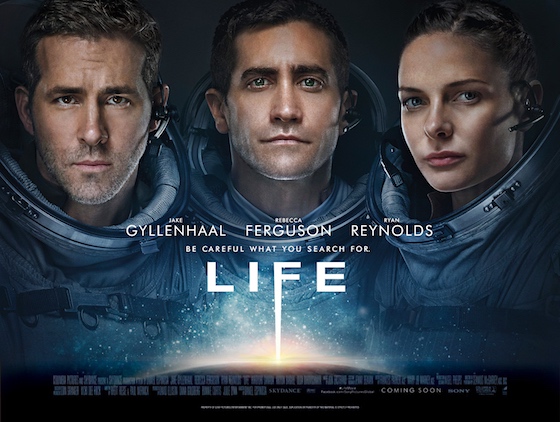

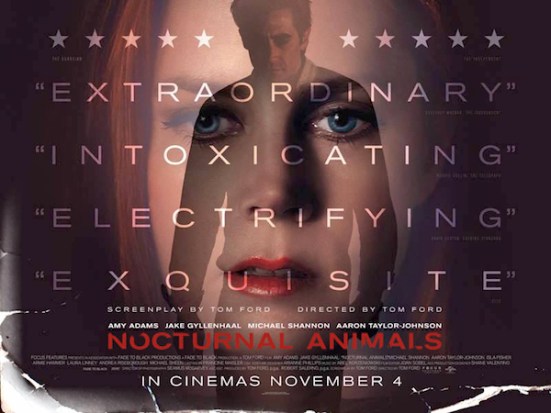



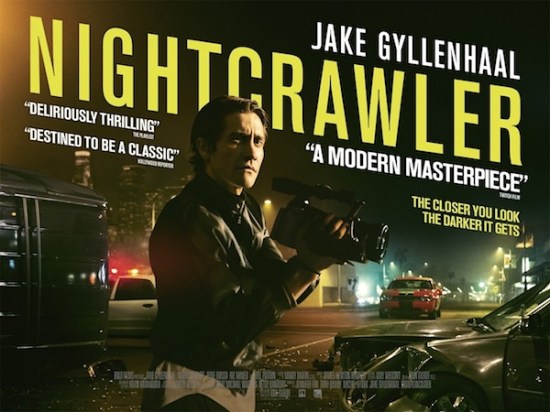
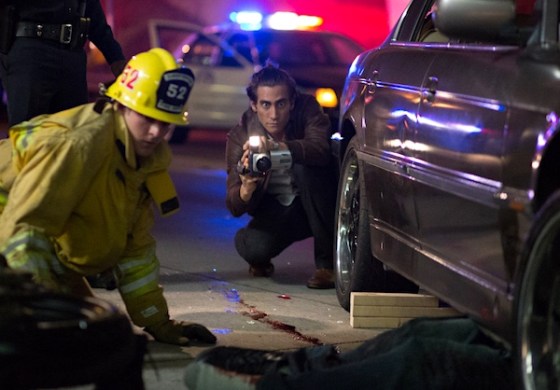

 Between his popular English-language debut
 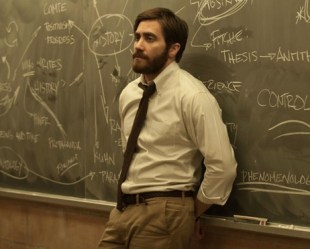 While looking up those various explanations, I read at least one review that asserted it’s a good thing that the film doesn’t provide a clear answer at the end. Well, I think that’s a debatable point. I mean, there is an answer — Villeneuve & co clearly know what they’re doing, to the point where they made the actors sign contracts that forbade them from revealing too much to the press. So why is it “a good thing” that they choose to not explain that answer in the film? This isn’t just a point about Enemy, it’s one we can apply more widely. There’s a certain kind of film critic/fan who seems to look down on any movie that ends with an explanation for all the mysteries you’ve seen, but if you give them a movie where those mysteries do have a definite answer but it’s not actually provided as part of the film, they’re in seventh heaven. (And no one likes a movie where there are mysteries but no one has an answer for them, do they? That’d just be being mysterious for precisely no purpose.) But why is this a good thing? Why is it good for there to be answers but not to give them, and bad for there to be answers and to provide them too? If the answers the filmmakers intended are too simplistic or too pat or too well-worn or too familiar, then they’re poor for that reason, and surely they’re still just as poor if you don’t readily provide them? I rather like films that have mysteries and also give me the answers to those mysteries. Is that laziness on my part? Could be. But I come back to this: if, as a filmmaker (or novelist or whatever) you have an answer for your mystery and you don’t give it in the text itself, what is your reason for not giving it in the text? Because I think perhaps you need one.
 Fortunately, Enemy has much to commend aside from its confounding plot. Gyllenhaal’s dual performance is great, making Adam and Anthony distinct in more ways than just their clothing (which is a help for the viewer, but not for the whole film), and conveying the pair’s mental unease really well. It would seem he errs towards this kind of role, from his name-making turn in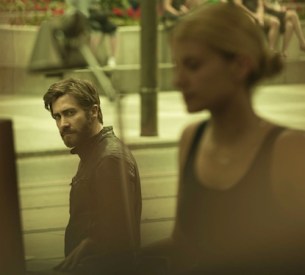

 Score:




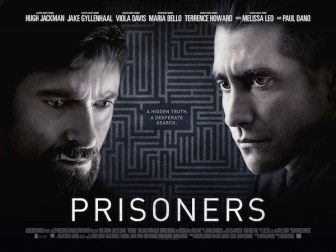 Yesterday I wrote about
 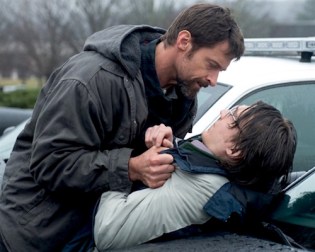 There’s a lot going on in Prisoners. While the basic format is straightforward, it’s realised in the form of a multi-stranded narrative full of well-drawn characters with complications of their own. Jackman and Gyllenhaal may be top billed and on the poster (well, an air-brushed waxwork vague approximation of Jackman was on
 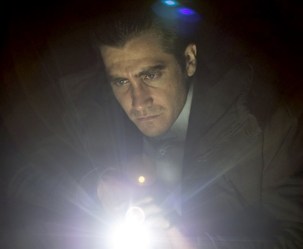 He’s not a bad detective, just not the usual genius-level investigator you normally find in thrillers, and at times you feel he’s muddling his way through the investigation as best he can. Aside from giving Loki the slightly-affected tic of blinking too much, Gyllenhaal offers a reasonably restrained performance. (I’d love to know what the blinking was in aid of, but the film is woefully understocked with special features.)
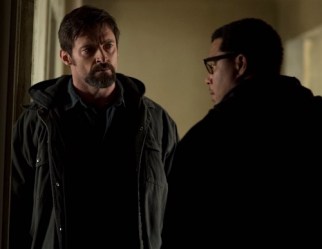 Denis Villeneuve’s direction gives the sense of a non-Hollywood background with the occasional arty shot choice or composition, though not to a distracting extent. He’s aided by serial Oscar loser Roger Deakins on DP duty, who once again demonstrates why he shouldn’t have a golden man already, he should have a cupboard full. The photography here doesn’t flaunt itself with hyper-grading or endless visual trickery, but is consistently rich and varied. Deakins may also be the best action cinematographer working — pair what he brought to
  As a thriller that is also a drama about people caught up in those events, and the lengths to which some of them may be prepared to go, Prisoners is a must-see for anyone with the stomach for some dark material (though don’t let me overemphasise that point — it’s not as bleak as, say,
 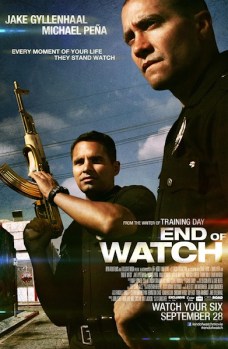 I don’t think anyone paid writer-turned-writer/director David Ayer much heed when he was one of a pack of people penning historically-inaccurate submarine thriller
  it would wash as a stylistic choice; because he attempts a diegetic explanation for why it’s shot this way, but then breaks the rules of that explanation instantly (and continues to do so, with increasing frequency), it turns a valid stylistic choice into an irritating, ill-thought-out distraction. Plus: you want to be innovative and shoot an L.A. cop movie on digital video? Too late! Michael Mann already got there… in 2006.
 Although there are things to commend End of Watch — in particular the performances, and even a couple of tense sequences when the filming style actually pays off — I can’t get on board with it being a best-of-year-type movie. Even if it could’ve been more — and, in spite of that varied CV, isn’t the best thing Ayer’s done (I very much liked his next movie, Brad Pitt WW2 tank movie
  100Films.co.uk