2024 Statistics!

When Andy Williams sang “it’s the most wonderful time of the year”, he was on about Christmastime; but ’round these parts, the real most wonderful time of the year comes a little later: in early January, with the annual statistics post. And, friends, that time is here again.

Before the onslaught of numbers and graphs begin, a couple of quick reminders. Primarily: these stats cover my first-time feature film watches from 2024, as listed here. Shorts and rewatches are only factored in when expressly mentioned.

Secondly, and finally: as a Letterboxd Patron member, I get a yearly stats page there too, which can be found here. The numbers will look a bit different, because I also log whatever TV I can, plus it factors in shorts and rewatches more thoroughly, but that’s part of what makes it interesting as an addition/alternative to this post. It also breaks down some interesting things not covered here, like my most-watched and highest-rated stars and directors.

Now, without further ado, here’s what you came for…


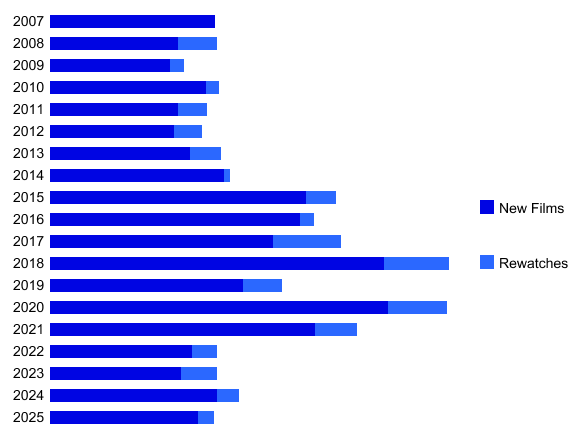
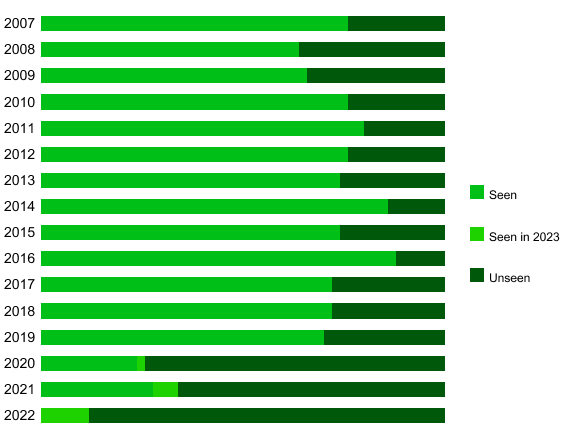
I watched 131 feature films for the first time in 2024. That puts it right in the middle of the history of 100 Films: out of 18 years, it ranks ninth largest (or tenth smallest).

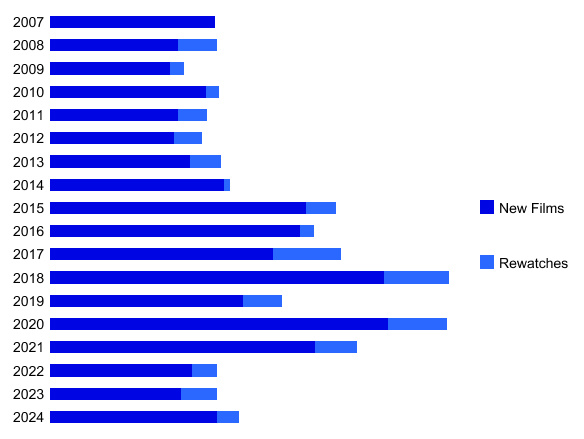
Of those 131 films, 85 counted towards my 100 Films in a Year Challenge. Alongside 15 rewatches, that means I finally reached all 100 films for my Challenge for the first time in its new form. More thoughts about that in the Final Standing and December review posts.

Outside of the Challenge, I rewatched only two further films for a total of 17 rewatches. That’s my lowest number since 2016, which was the last year before I started to make a concerted effort to up my rewatches (first with the Rewatchathon from 2017 to 2020, then by including them as a category in my Challenge). Any number going down is a shame, but there are always going to be compromises somewhere — if I’d rewatched more, I likely would’ve watched fewer new films.


NB: I have no rewatch data for 2007 and only incomplete numbers for 2008.

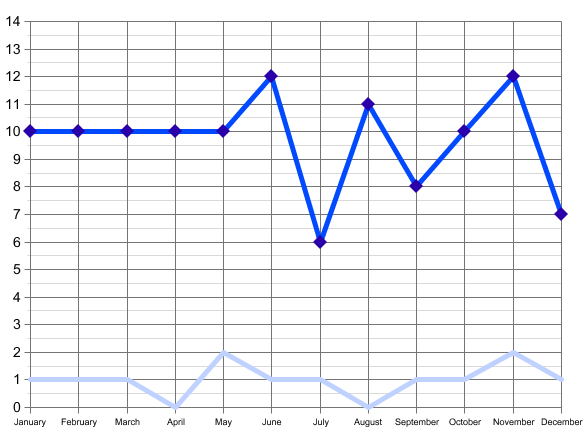
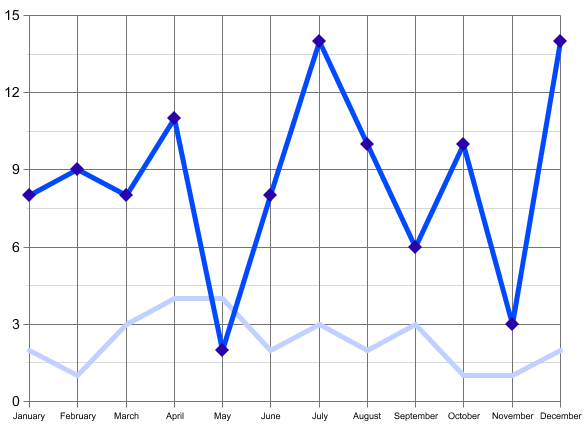
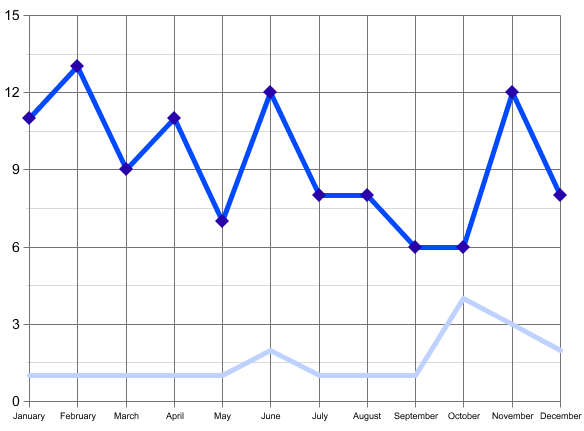
Here’s how that viewing played out across the year, month by month. The dark blue line is my first-time watches and the pale blue is rewatches. Both lines are much flatter than normal (I mean, look at 2023’s), which is because I was consistently hitting my “ten films per month minimum” goal but rarely managing to exceed it (the spikes in April and December being notable exceptions).

I also watched 16 short films. That might not sound like a lot, but it’s actually my third highest total ever, behind only 2019’s 20 and 2020’s 65 (which was so high thanks to watching many for film festivals I was working on), and just ahead of last year’s 15. On the other hand, only 11 were ones I’d never seen before, down marginally from 12 last year. (For some reason I didn’t make that distinction in last year’s stats, but it does affect the total running time, because only the new ones count.)

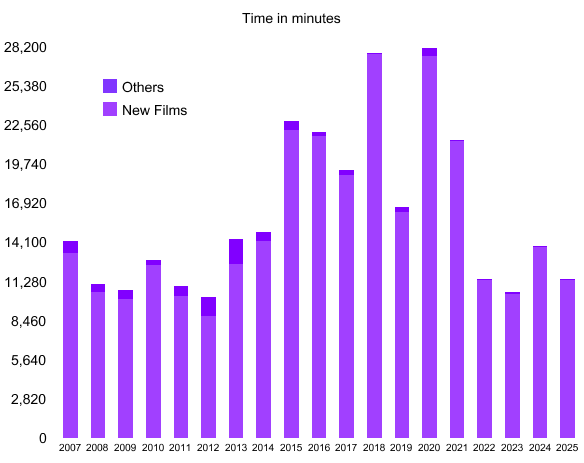
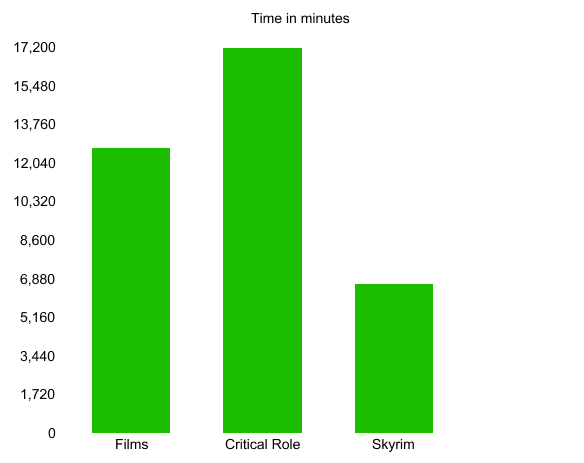
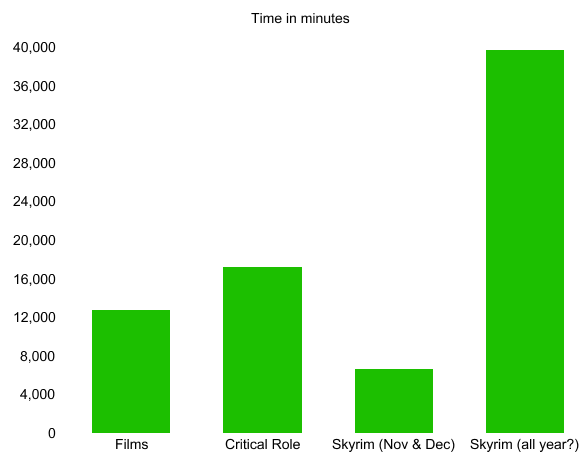
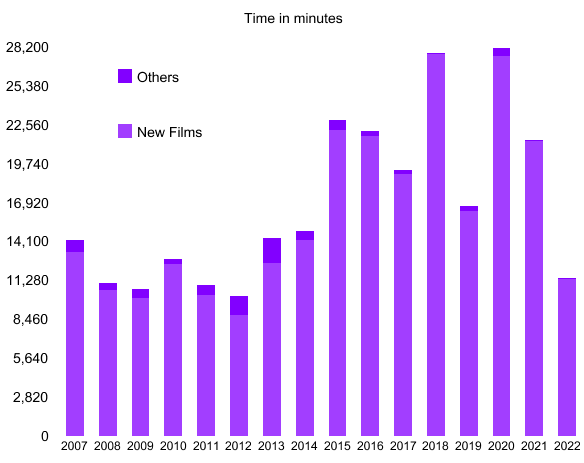
The total running time of my first-watch features was 229 hours and 3 minutes. That’s my highest since I revamped the site for 2022, but only ninth overall. The same ranking as for the film count? It’s almost as if there’s a correlation! I jest, but what it does suggest is that I rarely, if ever, watch a disproportionate number of especially-short or especially-long films. Talking of short things, add in the (new) short films and that total rises by only just over an hour to 230 hours and 14 minutes. (The additional bit is labelled as “other” on the graph because it would also include any alternate cuts of features that I watched for the first time, but there weren’t any this year. In fact, it’s been five years since there were.)

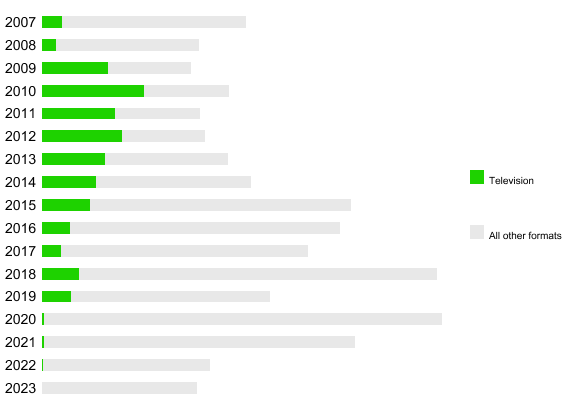
Formats next, and after disappearing last year, TV is back! Okay, it’s only got one film to its name (thanks to the BBC for premiering a new Wallace & Gromit feature on Christmas Day), but it’s something, I guess. Unless there’s another similar must-watch-live event in 2025 (doubtful), I imagine it will drop off again next year.

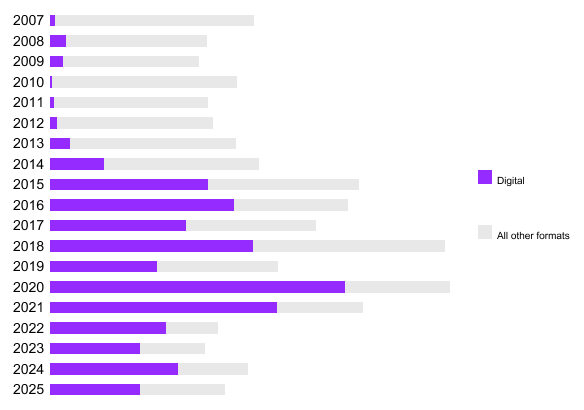
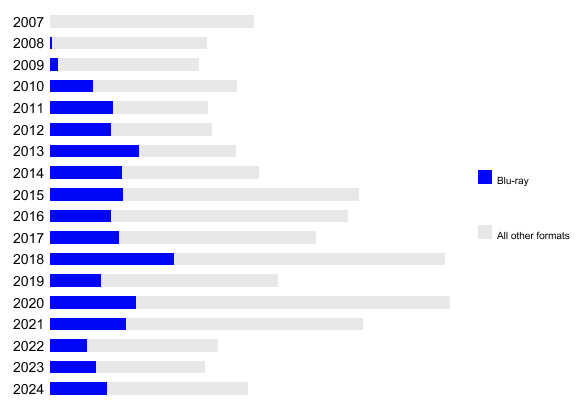
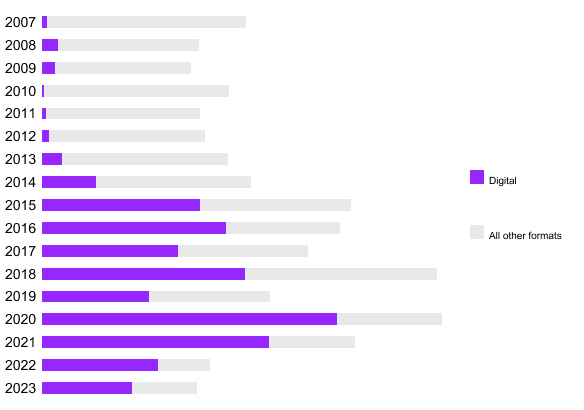
It will come as no surprise that the year’s most prolific viewing format was digital with 85 films. At 64.9% of my viewing, it’s an increase on last year, though still below the peak of 2020–2022. It was below 50% in 2019, and I’d like to get it back down there in favour of Blu-rays.

“Digital” encompasses a multitude of different platforms and viewing methods, and this year it was downloads that topped them with 20 films (23.5% of digital). Of the streamers, it was actually NOW that emerged victorious for the first time, with 18 films (21.2%), knocking Netflix and Amazon Prime into shared third place with 16 films (18.8%) each. Surging slightly ahead of the “also ran”s, iPlayer accounted for eight films (9.4%), while bringing up the rear were Apple TV+ on three (3.5), Disney+ and MUBI each on two (2.4%), and newcomer Crunchyroll with one (1.2%). Crunchyroll is all about TV and has hardly any films (I think I found a grand total of four), so don’t expect to see them return (although it’s not an impossibility).

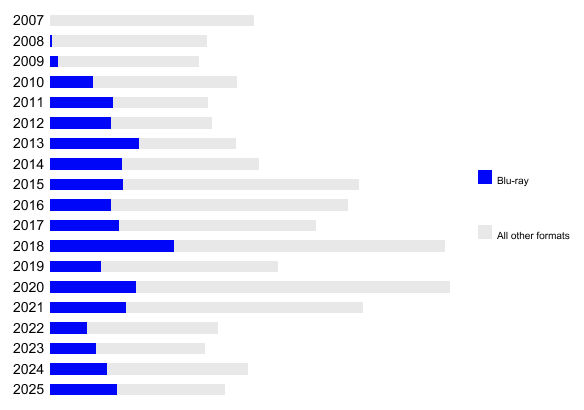
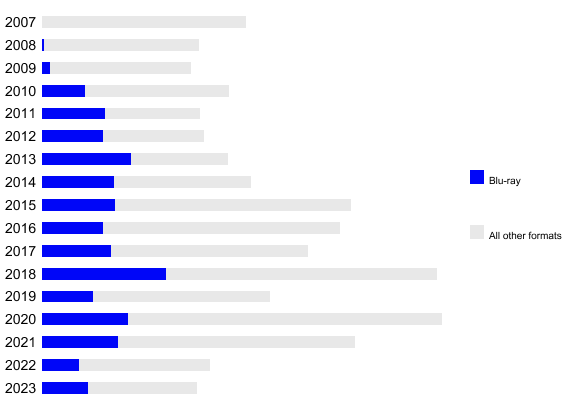
Back to the main ranking, Blu-ray did come second with 38 films (29.0%), a raise in number but drop in percentage from last year.

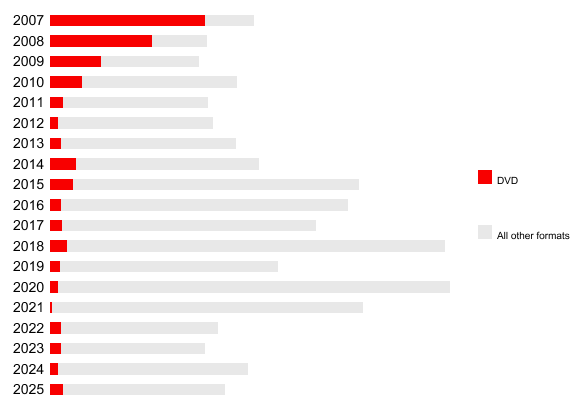
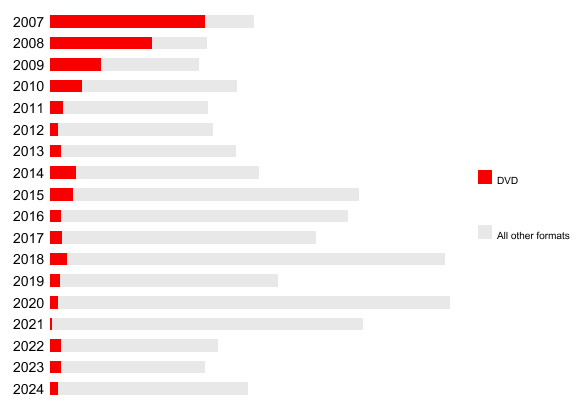
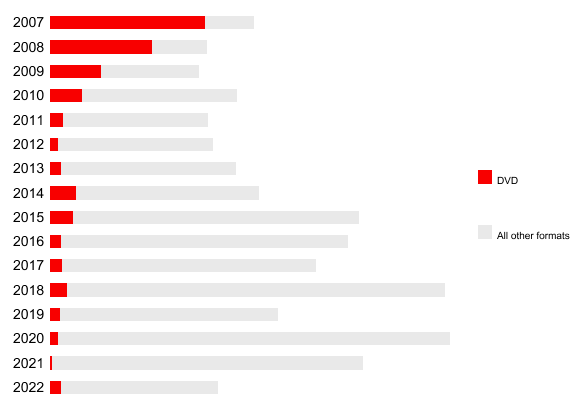
Last year I noted that the addition of a Physical Media category to my Challenge hadn’t actually done much to boost the number of DVDs I watched. This year I took that category away, and DVD did drop slightly, down to six (4.6%); but, considered over a longer timescale, it’s held pretty steady — just look at the graph:

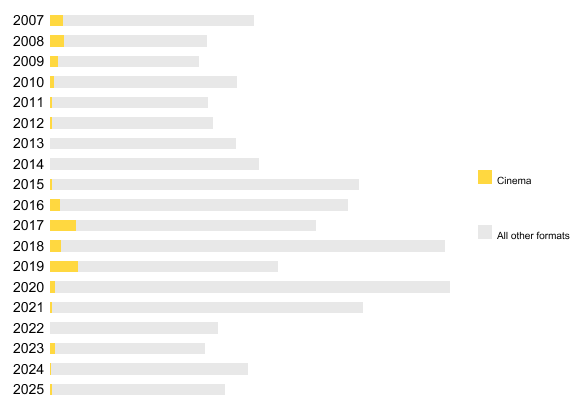
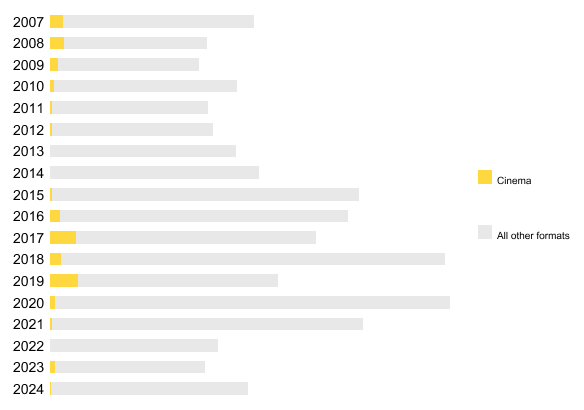
Finally, I made just one trip to the cinema this year (for Dune: Part Two). Other things piqued my interest, but nothing else panned out. Will 2025 fare any better? Well, I’ll be sure to catch the next Mission: Impossible, at least. Hey, one is still better than I managed some years (2013, 2014, and 2022, I’m looking at you).

Looking at formats from a different angle, now. First: in 2024, I watched as many new films in 3D as I did in 2021–2023 combined. Okay, that was still only four, but it’s an improvement. Looking at my Blu-ray collection, I own 63 films in 3D that I’ve never seen (plus about the same again that I’ve seen but not in 3D), so this number should be significantly higher. Maybe I’ll finally boost it up in 2025. (The first number to beat is 2020’s 13. The best ever is 2018’s 18.)

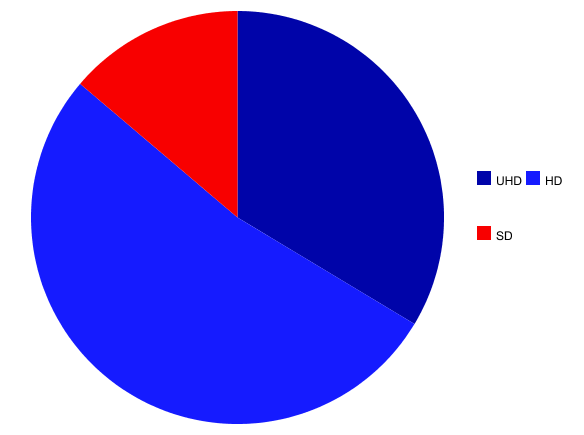
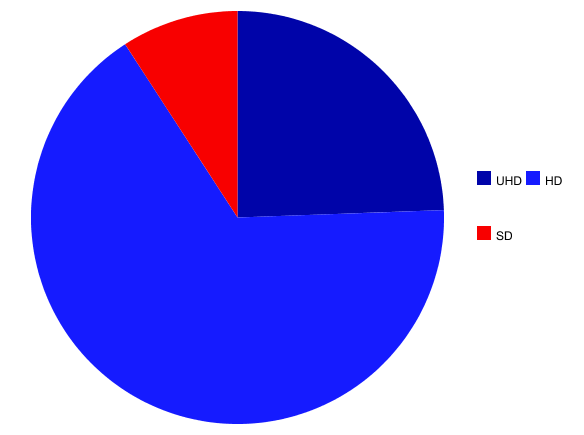
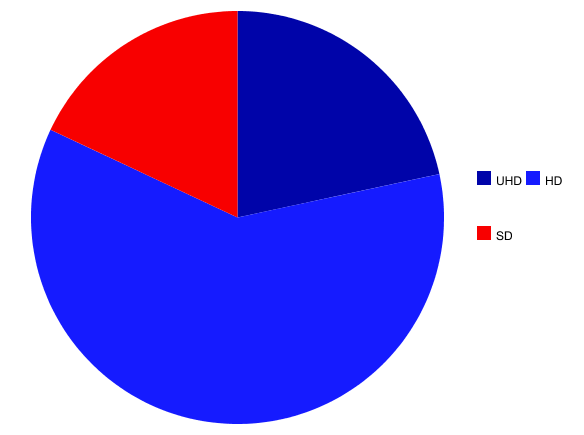
Next, the format du jour, 4K Ultra HD (it still feels pretty new to me, though 4K discs are about to hit their 9th anniversary). I watched 32 films in UHD in 2024, which is a numerical increase from 2023’s 27, but a percentage drop: 24.4% vs last year’s 26.2%. Still, it’s my second best percentage ever, so that’s not nothing. 1080p HD remains the standard, of course, representing a sliver under two-thirds of my viewing at 66.4%. Meanwhile, SD lingers on with 12 films — a hold from last year, but a percentage drop to 9.2%, only the second year it’s been under 10%. Will it ever go away entirely? It would be nice, but there remain plenty of films without even a DVD-quality SD copy out there, never mind all the DVDs that have never received an HD release.

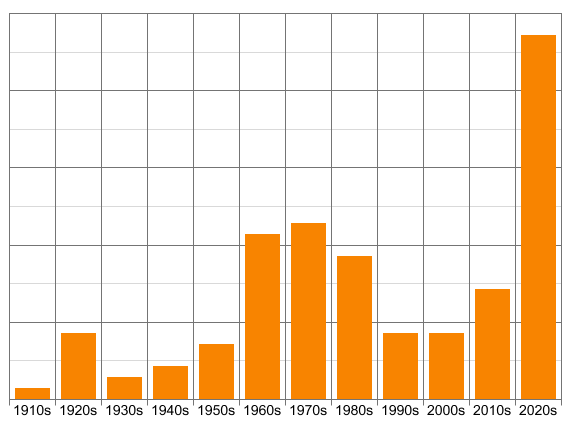
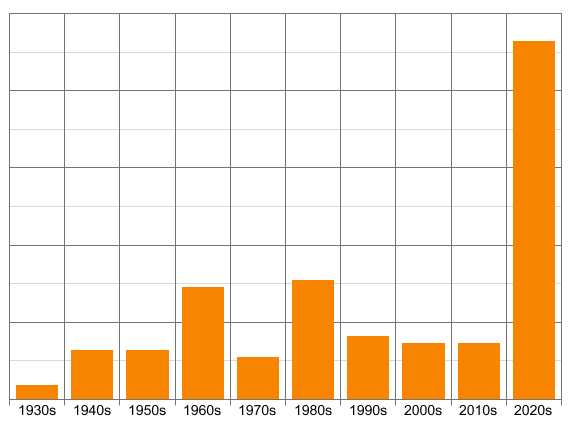
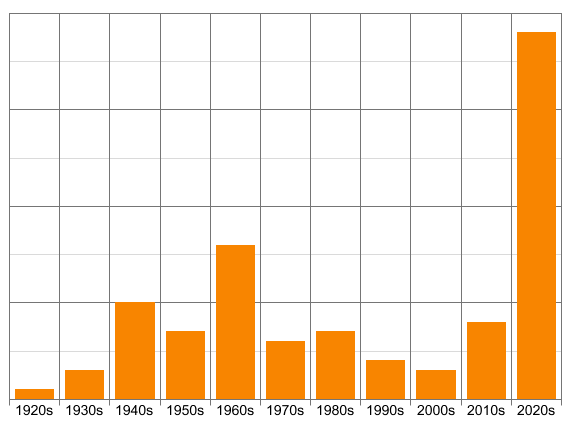
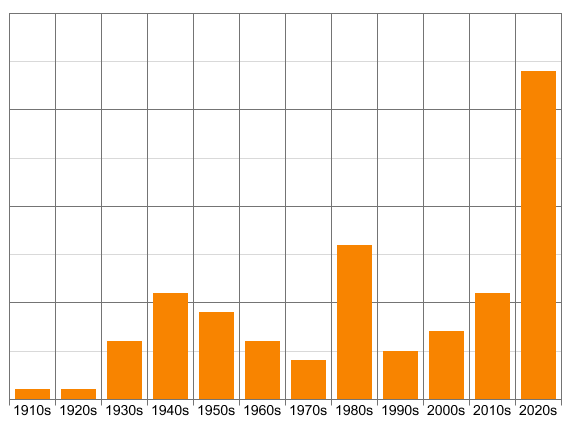
Some people would think that the fact I’m watching so many films in high quality means I’m mostly watching new stuff, but those people are misinformed. Okay, so the the 2020s remains my top decade with 51 films (38.9%), its highest total yet; but other recent decades fare less well, with the 2000s and the 2010s in joint fifth with just eight films (6.1%) each. That’s the third year in a row that my top two decades haven’t been the most recent two; before that, it only happened in 2010 (understandably) and 2019.

The decade that actually landed second place was the 1980s with 17 films (12.98%), closely followed by the ’60s on 16 (12.2%), while the ’90s took fourth with on nine (6.9%). After the first two decades of this century, we come to another tie: the ’40s and the ’50s on seven (5.3%) each. Things are rounded out by the ’70s on six (4.6%) and the ’30s on two (1.5%). No features from before 1932 this year, although I did watch two shorts from the 1920s, five from the 1900s, and even one from the 1890s.

You might think no films from before 1932 would mean no silent films, but there was actually one. At this point I think we’re all aware they still make technically-silent films sometimes, and this year the qualifier was Robot Dreams. I still need to watch more genuine silents from the actual era though, and (minor spoiler alert!) some are almost guaranteed to feature in 2025.

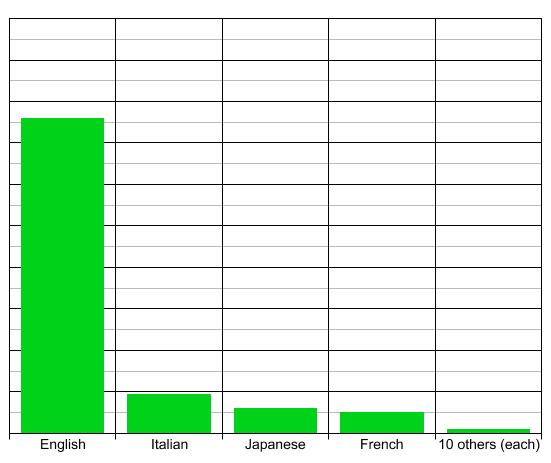
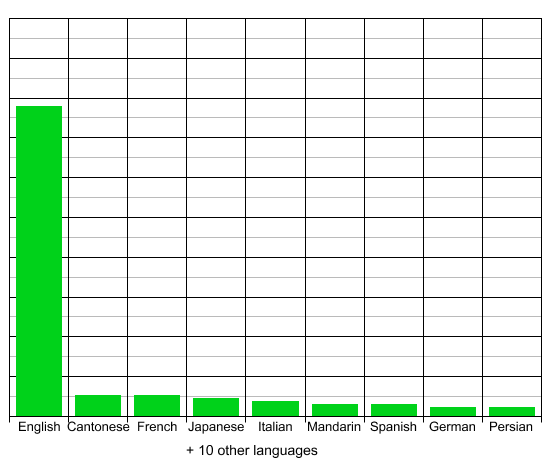
As for spoken languages, English dominated as always, with 102 films wholly or significantly in my mother tongue. At 77.9%, it’s a couple of points up on last year, but still below any previous year. Nonetheless, second place is a distant tie between French and Cantonese in seven films (5.3%) each. They’re closely followed by Japanese in six (4.6%), Italian in five (3.8%), Mandarin and Spanish each in four (3.1%) each, and German and Persian in three (2.3%) apiece. In total, 19 languages were spoken in 2024’s viewing, including Czech and Telugu for the first time on record, and Swedish for the first time since 2020. That tally is better than 2022 or 2023, but still below 2015–2021.

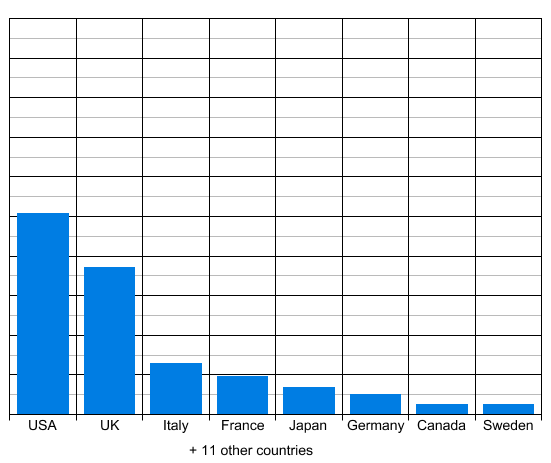
In terms of countries of production, the USA drops below 50% for the first time ever, its 64 films accounting for just 48.85%. Meanwhile, the UK reaches a new percentage high, with 43 films coming out at 32.8%. Lest you think I’m going to brag about being worldly, I’ll note that only 29.0% of films didn’t feature either the US or UK among their listed production countries. Still, there were 31 countries in total in 2024, which is among the better years since I started recording this stat (the highest is 2020’s 40). France were third for the fourth year in a row with 17 films (12.98%), followed by Japan with 11 (8.4%), Hong Kong with nine (6.9%), Italy with eight (6.1%), then a three-way tie between Australia, Canada, and Germany each with five (3.8%).
A total of 114 directors plus eight directing partnerships helmed the feature films I watched in 2024, with a further six directors and four partnerships behind my short film viewing. For the second year in a row, no one was responsible for more than two features, but those with a duo on the list were Abbas Kiarostami, Denis Villeneuve, Joseph Kuo, Joseph L. Mankiewicz, Oliver Parker (not to be confused with Ol Parker, who also had one), Robert Tronson, Sammo Hung, W.S. Van Dyke, and Wellson Chin. Plus I watched three shorts credited to British cinema pioneer Cecil Hepworth.

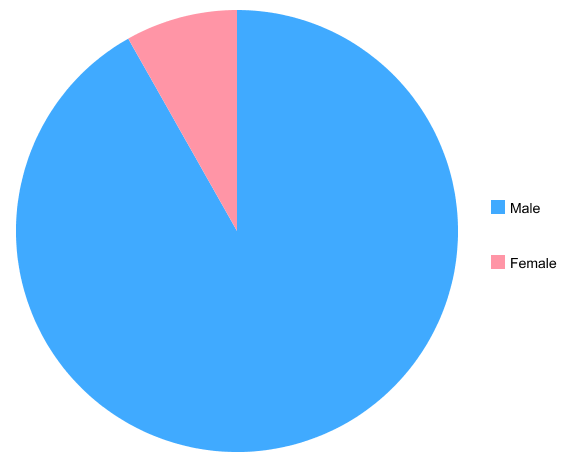
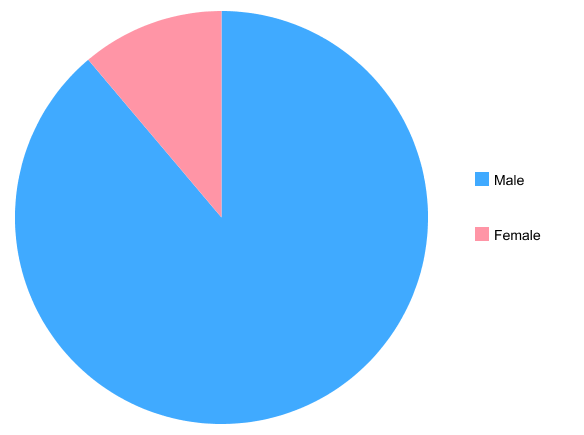
This is my tenth year charting the number of female directors whose work I’ve watched each year. I’d love to say the number and percentage of women-directed films I watch has steadily grown in that time, but it’s actually fluctuated wildly. The low point was 2016, at just 1.66%; the high was 2020, at a still-measly 11.4%; last year, it was 11.2%. In 2024, I watched 10 films with a female director, though two of those were a shared credit (one as part of a duo, one a trio). Counting those shared credits as the appropriate fractions means those 10 films represent 6.74% of my viewing. As terrible as that sounds, it’s still my third best year — so, even worse, then. As I’ve said before, I neither avoid nor especially seek out female directors — arguably I should do more of the latter, but the fact I just watch what I watch and this is how low the percentage is suggests that it’s the industry who really need to do more. That said, as revealed earlier, I watch a relatively high percentage of older films, and you can’t change the past. I hope this graph will improve further in the future, but I doubt it will ever come close to 50/50.


Every year, I track my progress at completing the IMDb Top 250, but this year it’s a bit special because I made it a whole category in my 2024 Challenge. When I made that decision, it wasn’t guaranteed I’d finish the Top 250: the category only required 12 films to complete it and I had a few more than that left on the list. My thinking was: at the very least it will be significant progress; at best, maybe I’d watch a couple more than the prescribed 12 and get the list close to done. Well, I didn’t specifically watch any ‘extra’ films, but titles do come and go (Godzilla Minus One was on the list when I announced my plans in January, but was gone by the time I watched it in September) so maaaybe… but no, I’m still 10 films away from completing it. Goddammit. Comings and goings aside, at the time of writing this article there were 13 films from my 2024 viewing still on the Top 250 — the 12 I watched for the Challenge (listed here) plus Dune: Part Two. Their current positions range from 41st (Spider-Man: Across the Spider-Verse) to 237th (My Father and My Son). Well, there’s always next year…

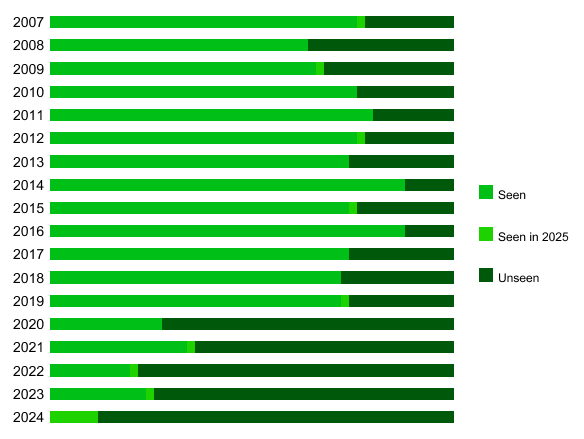
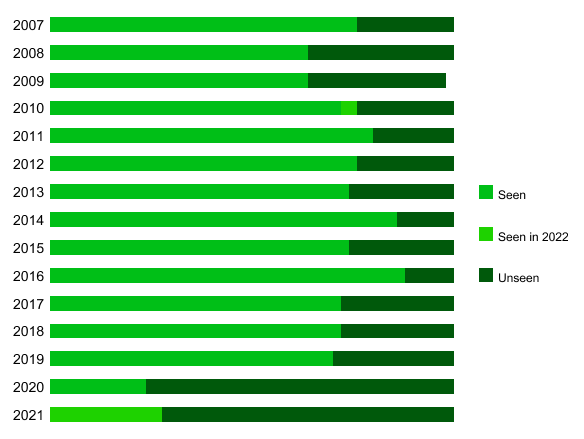
As I’m sure you’re aware, at the end of every year I publish a list of 50 notable films I missed from that year’s new releases, which I call my “50 Unseen”. I’ve tracked my progress at watching those ‘misses’ down the years — progress that has been very variable: I didn’t watch too many of them at the start, then went through a period of several years where I made serious inroads, but recently I’ve dropped off again. Put in more practical terms: I hit a high of 68 watched from all previous lists during 2018, but only watched 10 during 2023. There’s a nice bounce in 2024, doubling to 20 films across all 17 lists, although it’s still one of my weaker years (only four were worse). That’s dominated by 12 from 2023’s 50 — a big improvement on the six from 2022 I watched last year, but still my fourth-worst ‘first year’ (historically, I’ve watched the most from any given list in its first year of existence).

In total, I’ve now seen 543 out of 850 ‘missed’ movies. That’s 63.9%, a further drop from last year, though still a little above 2017 (2018 was the first year I got it above 70%). I’d like to get it above 70% again, but to do it by the end of 2025 I’d have to watch 87 films, which is almost double the number I watched in 2022 to 2024 combined. To even hold the percentage steady I’d have to watch 32 films, which is still more than 2023 and 2024 combined, so it’s not looking great. (As usual, 2024’s 50 will be listed in my “best of” post.)

And so we reach the finale of every review; a fitting climax to these statistics: the scores.

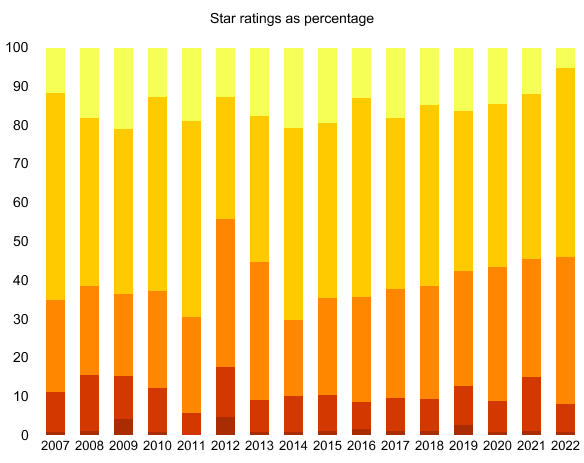
For the avoidance of doubt, this stat factors in every new film I watched in 2024, including those I’ve not yet reviewed (this year, that’s 92% of them — an improvement on last year’s 95%, albeit not by much). That does mean there are some where I’m still flexible on my final score; usually films I’ve awarded 3.5 or 4.5 on Letterboxd, but which I insist on rounding to a whole star here. For the sake of completing these stats, I’ve assigned a whole-star rating to every film, but I reserve the right to change my mind when I eventually post a review (it’s happened before). It only applies to a small handful of films, so hopefully this section will remain broadly accurate.

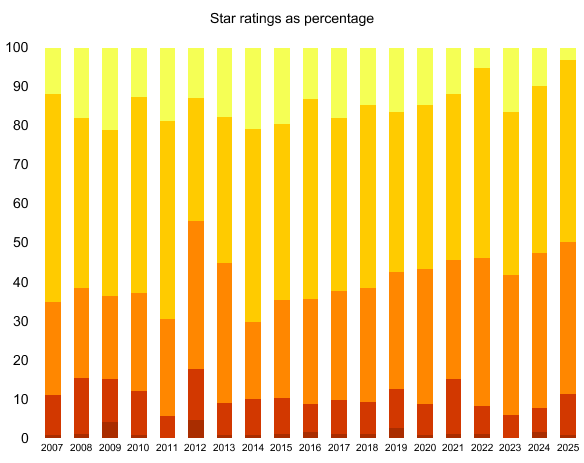
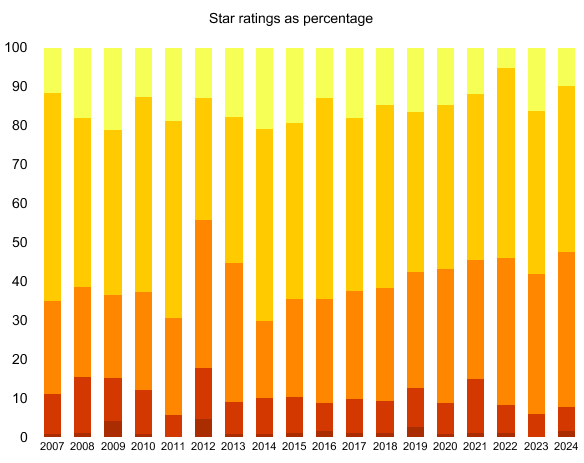
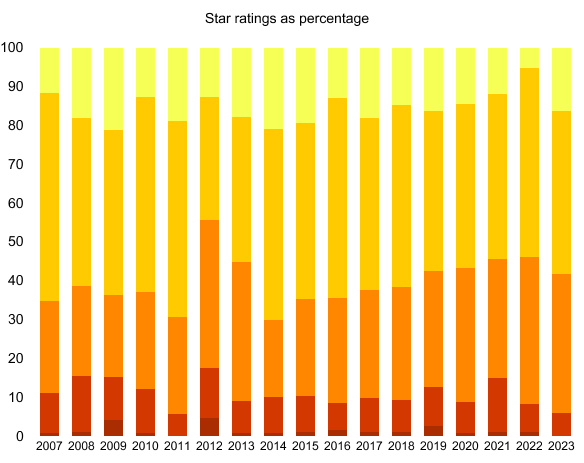
At the top end of the scale, in 2024 I awarded 13 five-star ratings (9.92% of my viewing). That’s down slightly from last year, though not close to as low as 2022. (I’d make comparisons to all other years, but that’s only down fairly as a percentage and I don’t have that to hand. I should compile a list of them, really.) At the scale’s other end, I gave two one-star ratings (1.53%), which is more or less normal for me — indeed, my all-time average is 1.94 per year. Even when I watch more films, it doesn’t change much, because I avoid giving it to all but the most terrible rubbish, and I try to avoid watching such things, on the whole.

The largest group this year was four-stars, given to 56 films (42.75%). Three-stars has only been the majority awarded once (in 2012), but it came pretty close this year, as there were 52 three-star films (39.69%). Finally, there were only eight two-star films (6.11%), which is roughly in-keeping with the last couple of years (before that there were a lot more, but then I watched a lot more in general. I really ought to get those percentages ready for comparison…)

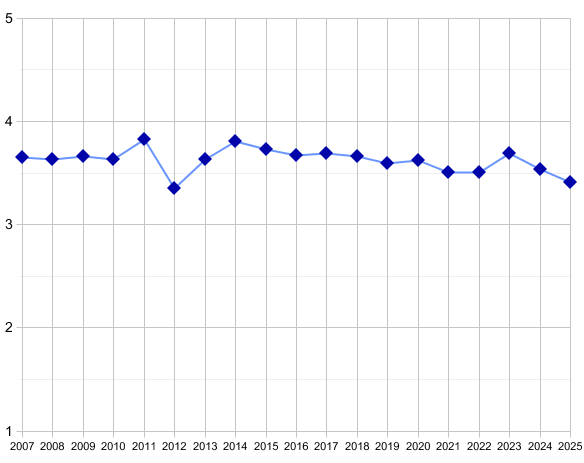
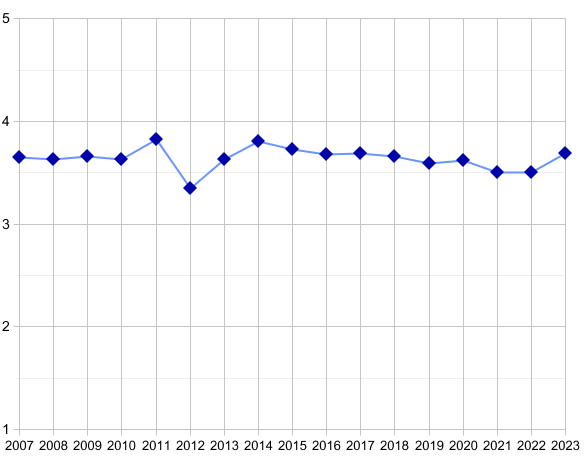
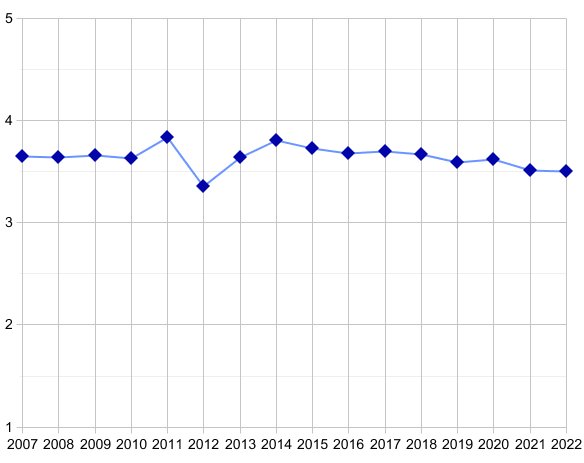
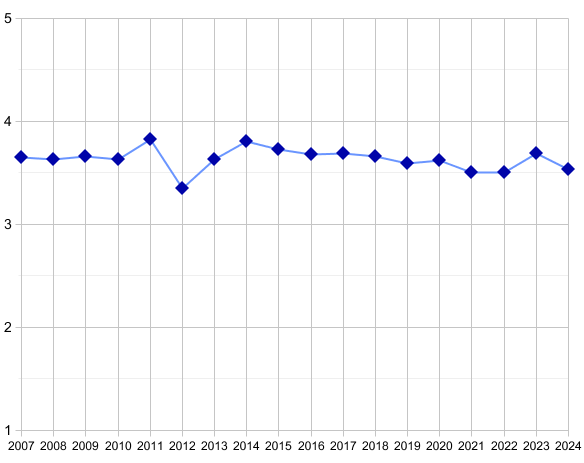
And so to the big final number: the average score for 2024. Oo-ooh! The short version is 3.5 out of 5 — down from last year, but the same as the two years before that. To get more precise (for the sake of comparison, as all of my years fall within a spread of 0.4), at three decimal places the score is 3.534 — that’s above 2021 and 2022, then, but the only other year it bests is 2012 (a real outlier, as you can see on the below chart). As my fourth lowest-scoring year, it’s almost the antithesis to last year, which was fifth highest.

What can we conclude from all that? Nothing much, really. The fact that line is pretty flat (a few oddities aside) suggests both my film choosing and my scoring have remained consistent over the years, for good or ill. Should I choose better films? Should I score more leniently? Or more harshly? To be honest, I don’t really think about such questions. I take these stats as an indication of what’s happened, not as a learning exercise in what I should or shouldn’t change.


Talking of scores and finales, next up is the finale of the 2024 review: my pick of the best from my 131 first-time watches.

What Do You Mean You Haven’t Seen All of the IMDb Top 250?

Ever since I began my 100 Films in a Year Challenge all the way back in 2007, I’ve kept track of my progress in completing one of the best-known “best of” lists on the internet: the IMDb Top 250. At first, I just noted how many I’d seen from the list as it stood at the end of December (21 in my first year, for example). Later, I began to monitor how many that meant I had left (I first noted in 2012 that there were 119 to go — i.e. almost half). Ultimately, over the first 17 years of this blog, my annual statistics say I’ve watched 211 films from the Top 250 — but films come and go from the list, and many of those 211 won’t even be on there anymore. For example: since I had 119 films left to go, I’ve watched 145 more, but I still have 19 outstanding.

That’s why I’ve made the IMDb Top 250 the subject of 2024’s WDYMYHS: to push myself closer to completing the list. I’ve thought about doing this for several years, but WDYMYHS requires only 12 films and I’ve always had more than that left to go. But the chances of landing on exactly 12 at exactly the right time (i.e. in December/January) are moderately remote. It could probably be done, but it would require specific effort, and always carry the risk of a new film entering or one dropping out. Indeed, as if to prove my point, when I made the decision to do this in mid-December there were 17 films I’d not seen on the list and had been for many months. A couple of weeks later, almost out of nowhere, two more have popped on. If I’d managed to get my unseen count to exactly 12, it would now be 14 and I’d have to abandon the idea again. So that’s why I’ve decided to just go for it with 17 19 remaining.

All of them are listed below, in the order they appeared on the Top 250 last Sunday, from highest to lowest ranked. (The films and their ranking may well still be the same on the day I post this, but it’s already changed since New Year’s Day so nothing is guaranteed.) “But WDYMYHS is a 12 film category!”, I hear you cry (um, maybe). “How can you do it with 19 films?!” More on that post-list.


Spider-Man: Across the Spider-Verse

Spider-Man: Across
the Spider-Verse

12th Fail

12th Fail
Incendies

Incendies

To Kill a Mockingbird

To Kill a Mockingbird
A Separation

A Separation

Like Stars on Earth

Like Stars on Earth
The Great Escape

The Great Escape

Godzilla Minus One

Godzilla Minus One
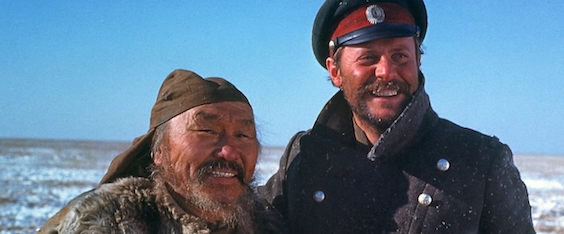
In the Name of the Father

In the Name
of the Father

Wild Tales

Wild Tales
The Wages of Fear

The Wages of Fear

Mr. Smith Goes
to Washington

Mr. Smith Goes to Washington
Hotel Rwanda

Hotel Rwanda

Jai Bhim

Jai Bhim
The Best Years of Our Lives

The Best Years
of Our Lives

The Handmaiden

The Handmaiden
My Father and My Son

My Father and My Son

The Grapes of Wrath

The Grapes of Wrath
Amores Perros

Amores Perros


So, 19 films, eh?

Well, the rules of WDYMYHS haven’t changed — to complete the category, I still need to watch 12 films, preferably one per month — but this year it’s from a list of 19, not just a specific 12. I could have chosen 12 of those 19, but it seemed silly to specify them when any of the 19 contributes towards my ultimate aim of completing the Top 250. I don’t know if I’d bend the rules that much for Blindspot, but as WDYMYHS is my own thing (albeit created with the same intent (and, *ahem*, first)), well, I can do what I want (not that the Blindspot Police are going to come and arrest me if I did start messing with that too. But I digress…)

Plus, IMDb’s list is an ever-changing beast. It was quite stable for most of 2023, but there’s always the possibility an older film will suddenly gain enough votes to chart, or a new release will be so well-received it shoots right in — as we’ve seen in the past couple of weeks. So if I did specify 12 films, one or more of them could become outdated as the year went on.

Relatedly, therefore, even the 19 films listed above may not be the ones I watch to actually complete the category. Any film that is on the Top 250 at the time I watch it will count for WDYMYHS. So, it’ll probably be 12 of these 19, but possibly not. (If a film drops off after viewing, it will still count towards my challenge. Putting myself in the position of having to retrospectively rule out films that previously counted would be madness.)

And that’s that. Which of the 19 will make the final 12? Or maybe I’ll watch them all and finally finish that bloody list? Or could 2024 be a year of cinematic brilliance and upend the whole lot? We’ll see in (just under) a year’s time…


2023 Statistics!

Here we are again: the best bit of the year — the statistics!

As was the case last year (and will surely remain so going forward), these haven’t been fiddled with to fit with my new-format Challenge, but instead continue to encompass all of my first-time watches from the past year (as listed here). That’s just the way I like it (in part because it means I can compare across the years, whereas switching to a Challenge focus would basically be starting again).

Before the onslaught of numbers and graphs, I’ll just mention that, because I’m a Letterboxd Patron member, I get a yearly stats page over there too, which can be found here. In some places that’ll look a bit different to this one, because I also log whatever TV I’m allowed there; but it does have some interesting additional and alternative stats, like my most-watched and highest-rated stars and directors. So, if you love this stuff as much as I do, be sure to check out the extra goodies there at some point.

And with that said, it’s on to the main event…


I watched 103 feature films for the first time in 2023, which is my lowest final tally in over a decade (you have to go back to 2012’s 97 for less). It snuggles in between the handful of years in which I reached exactly 100 and 2013’s 110 as my all-time 5th lowest year (out of 17).

Of those 103 films, 67 counted towards my 100 Films in a Year Challenge. Alongside 25 rewatches, that means I totalled 92 films for my Challenge — sadly falling short of the goal of 100 for the second year running.

Outside of the Challenge, I rewatched a further three films, for a total of 28 rewatches. That’s somewhere in the middle of the pack — my 7th best year ever for rewatches, which also makes it my 10th worst.


NB: I have no rewatch data for 2007 and only incomplete numbers for 2008.

Here’s how that viewing played out across the year, month by month. The dark blue line is my first-time watches and the pale blue is rewatches. As is usually the case, my viewing month to month is wildly unpredictable.

I also watched 15 short films in 2023. (Those don’t count in any statistics, with the sole exception of the version of the total running time that expressly mentions them.) That’s only the third time my shorts count has been in double figures, sitting behind 2019’s 20 and 2020’s festivals-driven whopper of 65.

The total running time of my first-watch features was 173 hours and 11 minutes. That’s my lowest since 2012, which makes sense when you remember the stat from the first paragraph. Add in the shorts and the figure rises almost 2½ hours to 175 hours and 33 minutes, though you still won’t find lower since 2012. (In the graph, I would also include any alternate cuts I watched for the first time in that “others” block, but there weren’t any this year.)

On to formats now, and the big news (if you can call it that) isn’t what’s #1, but what isn’t here: I didn’t watch a single film on TV in 2023, the first time that’s happened in the history of the blog. TV was once my dominant format, making up over half my viewing in 2010, and the largest portion in 2009, 2011, and 2012, but tailed off thanks to the rise in streaming. It’s also a personal thing: its number of films was still in the 20s as recently as 2019, but then I got rid of Virgin Media and its easy recordability, and the number went off a cliff. But I won’t lament it too much, because there’s always a chance it’ll return — unlike, say, VHS, which still accounted for five films back in 2007 and two in 2008 before disappearing entirely.

As for what is #1, that’s not really news at all: it’s digital again, with 60 films — though at 58.25% of my viewing, that’s its lowest percentage since 2019. My streaming viewing had been hovering around 50% from 2015 to 2019, but then suddenly darted up to almost 74% in 2020. I know most would blame the pandemic for that kind of thing, but during lockdown I still had all my many, many Blu-rays, so I don’t really know why that happened. It dropped marginally to 72.5% in 2021, then a little more to 69.4% last year, but a fall of over 10% is… well, I approve. Maybe it’s silly to look at it that way — I mean, this is my own viewing: I could ban myself from streaming anything if I wanted to — but I kind of just watch what I want to or feel like, then look at these numbers in retrospect. With that in mind, I continue to want to see Blu-ray do better, and this is a step in the right direction.

Of course, “digital” is actually made up of multiple streamers, plus downloads. This year was a tight one, with Netflix’s 16 films (26.7% of digital) narrowly claiming the crown from Amazon Prime on 15 (25%). Next were downloads on 13 (21.7%), before a small handful of other streamers filled out the rest: Disney+ with six (10%), MUBI with five (8.3%), Now on three (5%), and Apple TV+ on two (3.3%). That’s right, nothing in 2023 for iPlayer, nor ITVX, nor Channel 4, nor YouTube, nor any of the multitudinous other streamers that are available nowadays.

Overall second went, also as usual, to Blu-ray, with 31 films (30.1%). That’s up on last year, though doesn’t by itself totally cover the drop in digital.

So where else have those lost digital percentage points gone? Well, DVD held steady on eight films. With my overall viewing down, that means it accounts for a slightly higher percentage — 7.8% in 2023 vs 7.2% in 2022. Hardly making the world of difference, that, is it? DVD has theoretically enjoyed a boost these last couple of years thanks to the Physical Media category of my Challenge, although in fact it hasn’t made that much of a difference (looking at the graph, the two Challenge years aren’t notably different to pre-Challenge years like 2016, 2017, 2019, and 2020). Spoilers: the Physical Media category is going away in 2024, so it’ll be interesting to see how DVD charts next year.

Our search for those lost digital percentage points finds perhaps its biggest culprit in cinema. I went four times this year — less than I’d hoped, but tied with 2020. It’s only 3.9% of my viewing, but if we’re talking about how percentage points have moved around, I guess those are all nabbed from digital. (For those who want the full maths: add cinema’s 3.9% to DVD’s 0.6% increase for 4.5% of streaming’s lost 11.1%. That leaves 6.6%, and Blu-ray went up by 8.6%, so… um, wait, what? Oh, I’m just confused now. Let’s abandon the pretence I know what I’m talking about, have a graph, and then on to something else.)

In 2022 I only watched one new film in 3D. I’d hoped to improve on that in 2023 (the general public may think 3D is dead, but it still has its fans — like me — and I’ve still got a 3D TV and plenty of unwatched discs), but I didn’t — in fact, I watched no films in 3D. Oh. Well, at least that’s an easy figure to improve upon… (In overall terms, I did watch two 3D titles this year, both Doctor Who ones. That too is the same as 2022, when my one new 3D film was supplemented by a 3D rewatch.)

As for the new high PQ standard, 4K Ultra HD, that fared significantly better, with 27 films in 2023 — up from 24 in 2022, even though I watched fewer films overall. Indeed, at 26.2% of my viewing, you could argue it’s 4K’s strongest year yet. (I watched 40 back in 2020, but that was only 15.2%.) Still, 1080p HD remains the standard overall, accounting for 62.1% of my viewing. Of course, sometimes the only option is lower quality, and so I still watched 12 films in SD. That’s my lowest raw number yet, and even as a percentage — 11.65% — it’s down on the last two years.

In terms of the age of films watched, it’s normally the present decade that tops the chart, although it typically takes a couple of years to assert that position. The 2020s got there for the first time last year, matching the 2010s record of doing it in the decade’s third year. No surprise, then, to find the 2020s in first place again, with 38 films (36.9%). Normally you’d then find the preceding decade in second place, but — for the second time in a row, and only the fifth time ever — that’s not the case. In fact, two decades bested it: for no immediately obvious reason, the ’60s are second with 15 films (15.5%); and, boosted by my noir-focused WDYMYHS selection, the ’40s are third with 10 films (9.7%). That leaves the 2010s in fourth place with just eight films (7.8%).

Every decade since the 1920s cropped up in my feature film viewing this year. That means the 1910s miss out for the first time since 2019, but the 1900s & earlier were represented by shorts, as they have been every year since 2020. I specify “and earlier” because one even came from the 1890s. Counting down the remaining decades, in joint fifth place we have last year’s #2, the ’80s, tied with the ’50s on seven films (6.8%) apiece. From there we’ve got the ’70s with six (5.8%), the ’90s with four (3.9%), the ’30s and 2000s each with three (2.9%), and finally the 1920s with just one (0.97%).

As well as watching older films, I’ve also tried to watch more films from around the world — in a relatively “hands off” way, that is. By which I mean, it’s not like I’ve disqualified US/UK productions from my Challenge, nor anything else particularly radical or concerted; I’ve just tried to, y’know, vary things. That approach means that, while the USA remains clearly the dominant country of production, with 60 films this year, its percentage has dropped significantly, to 58.3% — down from almost 73% last year, and well below the previous low, 67.6% in 2021. Meanwhile, the UK has actually gone up, with 33 films equating to 32.04%, its highest ever, over 2013’s 29.3%.

In total, there were 23 production countries in 2023 — up from 17 in 2022, which is good considering I watched roughly the same number of films. It’s fewer than in any year from 2014 to 2021, but I did watch a lot more films in that period. France came third for the third year in a row with 12 films (11.7%), Germany were fourth with 10 films (9.7%), Italy were fifth with nine films (8.7%), and Mexico had an uncommonly strong showing to reach sixth place with five films (4.9%). There were three each for Canada and Hong Kong, and two apiece for China, Cuba, Ireland, and Sweden. That leaves eleven other countries with one film each, including Japan, who I mention because they built up to a huge spike a few years ago, culminating in third place in 2018, but have tailed off again since, for no readily discernible reason.

Unsurprisingly, it’s a similar story with languages — although the UK and US combine here (along with various other countries, including foreign films where it’s spoken a significant amount) to leave me with 77 films in English. It remains by far the highest single language, but features in less than three-quarters of films in 2023 — 74.8%, to be precise — which is far down on last year’s obscene 92.8%, and well below the previous low, 2020’s 84.5%. Nonetheless, it’s a long drop to second placed French, featured in nine films (8.7%), which is only just ahead of Italian in eight films (7.8%) and Spanish in seven films (6.8%). In all, 16 languages were spoken in 2023’s viewing, slightly up from last year, but you’d have to go back to 2014 to find lower again. But, as I’ve said, I watched far more films per year in those years, so of course the number of countries and languages represented was higher.

A total of 89 directors plus seven directing partnerships helmed the feature films I watched in 2023, with a further seven directors and one partnership added by my short film viewing (one feature director also directed a short, as we shall see in a moment). No director had more than two features to their name this year, but those with two were Allan Davis (both from the Edgar Wallace Mysteries series), Dario Argento (if things had gone as planned, he would’ve had at least four), Eric Appel, Joselito Rodríguez, Kenneth Branagh (if rewatches counted, he’d have more), Mario Bava, and Roger Michell. It was Danny Boyle who was behind one feature and one short, while Dean Fleischer Camp helmed three shorts (the original Marcel the Shell with Shoes On trio) and George Albert Smith is credited with two.

For a few years now I’ve been charting the number of female directors whose work I’ve watched each year. This had been steadily improving, but fell back considerably in 2022, unfortunately. In 2023, I watched 12 films with a female director (11 with a woman directing solo, one where she was part of a duo with a man). Counting the shared credit as half a film, that comes out as 11.17% of my viewing. That’s actually my second highest percentage since I started monitoring this, but remains shockingly low considering that women make up a little over 50% of the population. I say that’s an industry problem, primarily — if more women were allowed to direct movies as a matter of course, I’d see more movies directed by women.

At the time of writing, just one film from my 2023 viewing appears on the IMDb Top 250 — that would be Oppenheimer at 68th. However, because that list is ever-changing, the number I have left to see has actually gone up, from 18 at the end of 2022 to 19 now — the first time that’s happened since I started tracking this a decade ago. One of those 19 films has only just inserted itself into the list though, so I presume it will speedily drop off (that tends to be what happens to new entrants). Still, even that would leave me with a net change of zero. Maybe my 2024 viewing will have more of an impact…

Talking of minimal impact, let’s move on to the disaster zone that is my progress with my “50 Unseen” lists — you know, the list I publish at the end of every year of 50 notable new films I missed that year, which I’ve continued to track my progress watching down the years. I went through a period where they helped to decide a lot of my viewing, and consequently I was constantly chipping away at every old list. Not so much nowadays. In fact, “not at all” might be more accurate: in 2023, I only watched 10 films across all 16 lists. I haven’t even watched that few from just the previous year (i.e. in this case, 2022) since I only watched eight from 2009’s list in 2010. To be precise, I watched six from 2022’s 50. That’s my second-worst ‘first year’ ever, beating only the four from 2008’s list that I watched in 2009. Eesh. The only reasoning I can offer for such a drop off is that I’m watching far fewer films than I used to, and more of them are older.

In total, I’ve now seen 523 out of 800 ‘missed’ movies. That’s 65.4%, the lowest it’s been since 2017. I was pleased to get it above 70% for the first time in 2018 and my aim had been to keep it up there, which I managed for the next few years. I’d like to get back there, but it’s unlikely to happen in 2024: I’d have to watch 72 films (from across all 17 years), which would be a new record. Considering I watch at least 100 (ish) films every year, hitting 72 seems theoretically possible, but only if I were to devote most of my viewing to only films from these lists. I won’t be doing that. Maybe I can achieve 70% in 2025… or 2026… Of course, the goal posts keep moving because the list increases by 50 titles every year (speaking of which, 2023’s 50 will be listed in my forthcoming “best of” post).

And so we reach the finale of every review, and thus a fitting climax to these statistics: the scores.

For the avoidance of doubt, this stat factors in every new film I watched in 2023, even those for which I’ve yet to publish a review (this year, that’s a ludicrous 95% of them — it was just 27% last year, although it was 98% in 2021). That means there are some where I’m still flexible on my precise score; usually films I’ve awarded 3.5 or 4.5 on Letterboxd, but which I insist on rounding to a whole star here. For the sake of completing these stats, I’ve assigned a whole-star rating to every film, but it’s possible I’ll change my mind when I eventually post a review (it’s happened before). Still, hopefully this section will remain broadly accurate (because I’m not going to come back to modify it!)

At the top end of the spectrum, in 2023 I awarded 17 five-star ratings (16.5% of my viewing) — a massive increase on 2022’s six (5.4%). Having last year asserted that my marking has become harsher as I’ve got older / more experienced, this year suggests that, eh, maybe not; although, historically, 16.5% is slap bang in the middle of the board (by which I mean: eight years had a higher percentage and eight years had a lower percentage). I’ve always been a relatively lenient grader and, to be honest, I see no reason why that should change — I just like films, ok?

At the other end of the spectrum, though perhaps indicative of the same thing, I gave zero one-star ratings — only the second time that’s ever happened, after 2011. I’m always stingy with them, feeling that the lowest-of-the-low should be reserved for things that are truly execrable, so in many respects it’s nice to have gone a whole year without watching anything so meritless.

My most commonly awarded rating was, as usual, four stars, which I gave to 43 films (41.7%). That’s down from last year, although together the top two ratings add up to 60 films in both 2022 and 2023 (and, remember, I only watched slightly more films last year, so it’s broadly equal). Slightly behind were the 37 three-star films (35.9%), while only having six two-star films means their percentage — 5.8% — is the lowest since 2011 (a year you may remember for its similar lack of one-star films).

So, from all that we can calculate the final stat of the year: the average score for 2023. The short version is 3.7 out of 5 — the highest it’s been since 2018, which was the fourth year in a run of 3.7s. It bucks the trend, too, as 2019 and 2020 both averaged 3.6 before 2021 and 2022 hit 3.5. If we want to get more precise (and we do), we can add a few more decimal places and see the score comes out at 3.689. That makes 2023 the fifth highest scoring year ever — again, quite the turnaround from the last two years, which were both my second-lowest year ever at the time.

All of which said, as you can see from the graph above, my average score has remained pretty consistent across the years. There are no truly bad years, just weaker ones — or, in 2023’s case, stronger ones. Hurrah.


All that remains now for my review of 2023: which of those 103 films were my favourites?

2022 Statistics!

It’s time once again for the highlight of the year (my highlight, at least) — the statistics! And because I love them so much, I’ve not really messed around with them. That’s to say, these are still based on my first-time watches from 2022 (as listed here), not only films I watched for the new-style Challenge.

Before the onslaught of numbers and graphs begin, I’ll just mention that, because I’m a Letterboxd Pro member, I get a yearly stats page over there too, which can be found here. In some places that’ll look a bit different to this one, because I also log whatever TV I’m allowed there; but it does have some interesting additional and alternative stats, like my most watched and highest rated stars and directors.

With that plugged, it’s time for the main event…


I watched 111 feature films for the first time in 2022. That’s my lowest total since 2013, when I watched 110, and my 6th lowest ever (out of 16 years).

Previously that still would’ve been “a success”, because my goal was to simply watch 100 new films. But this year I changed things up a bit. Unfortunately, as I’ve already discussed (a couple of times), I failed. Nonetheless, I watched 89 films towards my Challenge, including 71 of those new feature films, 17 rewatches, and one short film.

Outside of the strictures of the Challenge, I rewatched three further films, for a total of 20 rewatches. That, too, ranks as my 6th weakest year. Not ideal, but — in a very literal sense — it could be worse.


NB: I have no rewatch data for 2007 and only incomplete numbers for 2008.

I also watched seven short films, which may not sound like many but is still my 5th best year for the form. These won’t be counted in most of the stats that follow, except where they’re noted alongside the features’ running time.

The total running time of my first-watch features was 189 hours and 21 minutes. Add in the shorts and that rises by over an hour to 190 hours and 33 minutes. (I would also factor any alternate cuts I watched for the first time into that “others” block, but there weren’t any this year.) Unsurprisingly, that lines up with the lesser number of films watched to be one of my lowest totals ever.

Here’s how that viewing played out across the year, month by month. The dark blue line is my first-time watches and the pale blue is rewatches. This is the fifth year I’ve been including this particular graph, and when you look back over them all, the main thing you can learn is that I really have no consistency. The only common factor I can spot is a relative drop in the September/October region each year, often dragging August or November in with it.

Next, the ways in which I watched those films. Despite including a specific DVDs category in my Challenge, I couldn’t turn things round for physical media: digital is once again the year’s most prolific viewing format, with 77 films, or 69.37% of my viewing. That’s actually down on the last two years (both over 72%), but still up on every year before that. One day I’ll do the right thing and get this down below Blu-ray… or so I keep telling myself…

Digital does have a slight advantage in that several different formats and services contribute to it, though the reason I lump them together is that there’s fundamentally no difference quality-wise between downloading and streaming a film nowadays (most of the time). This year, downloads beat any of the individual streamers, accounting for 26 films (33.8% of the digital total). A number of factors contribute to my wanton piracy, primarily getting hold of specific films in a reliably-accessible format for the sake of my Challenge, as well as acquiring various obscurities. Following on, the top streamer was Netflix, unseating regular victor Amazon Prime, with 14 films (18.2%). Amazon was close behind, though, with 12 films (15.6%). Both are lower than last year, unsurprisingly, but Disney+ actually saw a slight gain in raw numbers, from seven to nine films, which more than doubled its percentage, from 4.7% to 11.7%. Not too far behind was Now on seven (9.1%), with the category rounded out by half-a-dozen others: iPlayer and All 4 each with three (3.9%), MUBI with two (2.6%), and one each (1.3%) for Apple TV+, Talking Pictures TV Encore, and YouTube.

As usual, it was a distant second place for Blu-ray with 25 films (22.5%) — half of last year’s total in raw numbers, and a slight drop in percentage too.

That’s slightly tempered by an increase in my DVD viewing, the result of forcing my hand by making it a category in my Challenge. It should’ve resulted in at least 12 DVDs watched, but I ended up bending the rules and counting some rewatches. Anyway, the format still rallied to eight films — four times as many as last year, and increasing its representation from 0.97% to 7.2%. I imagine the DVD category will remain for 2023’s Challenge.

There was just one other format represented in 2022’s viewing: TV, with only one film (0.9%). The bigger news there is that, in the end, I didn’t make it to the cinema in the whole of 2022, the first time that’s happened since 2014. Funny kind of film fan I am, eh? I imagine it’ll be back in 2023: I’m still hoping to make time to see Avatar 2, and there are multiple big-screen-benefitting films out later in the year (not least a new Mission: Impossible). For now, here’s TV’s graph, showing how the once-mighty (look at it in 2010) have fallen…

Looking at formats from a different angle, I only watched one film in 3D in the whole of 2022. That might sound natural — 3D TVs have been phased out; disc releases in the format are almost nonexistent — but I’ve still got my 3D TV, and the releases are still coming, and I’ve got a large backlog of them to get through, anyway. So, I really should’ve watched more than one! Well, it would’ve been two, if I’d been able to find a genuine copy of Jackass 3D. I’ve managed to source most of the recent Marvel films in 3D (even though they only get a disc release in Japan nowadays), so if I finally catch up on those in 2023, the figure might be healthier next year.

As for the cutting-edge format du jour, 4K Ultra HD, that fared better, with 24 films — the exact same figure as last year, which in percentage terms is almost a doubling, from 11.6% to 21.6%. At the other end of the spectrum, the increase in DVDs, plus some harder-to-find SD downloads and streams, meant I watched 20 films in SD — the lowest raw number since 2017, but the highest percentage (18.0%) since 2015. Watching a lot in SD is nothing to be proud of (HD is usually so much nicer), but some stuff is simply only available in that format. Better than not being viewable at all. Meanwhile, ‘regular’ HD has been decreasing as a share of my viewing since UHD came along in 2017, but this year it tumbles to its lowest figure yet, just 60.4%

Unsurprisingly, it’s mostly older films that are only available in SD, and so an increase in one reflects an increase in the other. To wit, when it comes to the age of films I watched, the two most recent decades are not my two most-watched, for only the second time ever. Number 1 belies this fact: the 2020s top the chart for the first time, with 34 films (30.6%). But where you’d expect to find the 2010s in second place (having been the #1 decade from 2012 to 2021), it was actually the 1980s with 16 films (14.4%). That’s another side effect of my Challenge, where one category required me to watch 12 films from 1986 (even though I only got through ten of them in the end). It’s in joint third that we find the 2010s, sharing a place with the the 1940s (no doubt boosted by my Challenge’s noir category), each with 11 films (9.9%).

Every decade since the 1900s was represented in my viewing this year, as they were in 2020 and 2021; although, as with those years, the 1900s themselves only feature via shorts, so don’t ‘count’ here. Counting down the years in size order, in fifth place was the 1950s with nine films (8.1%), followed by the 2000s on seven (6.3%), the ’30s and ’60s both on six (5.4%), the ’90s on five (4.5%), the ’70s on four (3.6%), and one (0.9%) each for the 1910s and 1920s.

In recent years, I’ve been pleased to see an increasing variety in the production countries and languages of the films I’ve been watching. Unfortunately, watching so many fewer this year has wiped out some of those gains. So, while the USA has always been the dominant country of production, the 81 films it had a hand in this year represent 72.97% of my viewing, up from the sub-70% figures of the last two years. That said, I’ve been counting this figure since 2012, and that percentage is still the fourth lowest ever, so things could certainly be worse.

On the other hand, there were only 17 production countries this year, half of last year’s 35, and the lowest number since 2012. As ever, second place went to the UK with 26 films (23.4%). France was third for the second year in a row (and the seventh time in eleven years), with 11 films (9.9%). Tied for fourth were Canada and Japan with four apiece (3.6%), while Germany had three (2.7%), and on two (1.8%) each were Australia, Belgium, Israel, Italy, and Russia (provided the latter also includes the Soviet Union). That leaves six other countries with one film apiece. Countries that often feature but didn’t this year included China, India, Ireland, New Zealand, Spain, and Sweden.

It’s a similar story with languages, naturally: there were only 12 spoken languages (plus American Sign Language and some silent films), my lowest total since 2013. Top of the pile by an obscene amount was English, featuring in 103 films (92.8%). For context, in second place was French, spoken in just five films (4.5%). Normally I’d list more uncommonly-heard languages here, but there weren’t really any this year… except, for the second year in a row, Klingon.

A total of 99 directors plus eight directing partnerships helmed the feature films I watched in 2022, with a further three directors and two partnerships making my short film viewing. Only three directors were behind multiple features, the lowest number of repeat offenders ever (tied with 2012). The most came from Jeff Tremaine with three (the first three Jackass movies), while the other two were Stanley Kubrick (his pair of early-career noirs) and Alfred Werker (another couple of noirs). Additionally, two of the shorts I watched were masterminded by the great Georges Méliès.

For a while now I’ve been specifically charting the number of female directors whose work I’ve watched each year. This was steadily improving, but 2022 has seen an about-face in fortunes, dropping to my lowest level since 2017. My viewing this year included four films with a female director — three credited solo (Siân Heder’s CODA, Maggie Gyllenhaal’s The Lost Daughter, and Carrie Cracknell’s Persuasion), and one as part of a duo with a chap (Vanessa Yuille co-directing Doctor Who Am I). Counting the latter as half a film, that works out as just 3.15% of my viewing, which is sandwiched between 2017’s 2.84% and 2018’s 3.26%, but a long way off 2020’s high of 11.44%. As I’ve said before, I neither avoid nor seek out female directors — maybe I should do more of the latter, but I generally just watch the films I watch and see what comes out in the wash. The industry, undoubtedly, still needs to do more. As ever, I hope this graph will improve again in the future, though I doubt it will ever reach 50/50.

Before I dig into 2022’s star ratings, let’s take a look at a couple of viewing projects I always have on the go. First, the IMDb Top 250, which I’ve been vaguely working on since before this blog even began. At the time of writing, five films from my 2022 viewing appear on the list. However, because it’s ever-changing, the number I have left to see has actually gone down this year by 10, to 18 films. I’m so close to the end now, before long I may end up making it part of my Challenge to help finish it off. The current positions of the ones I saw this year range from 87th (High and Low) to 227th (To Be or Not to Be).

Next, my “50 Unseen” — the list I publish at the end of every year of 50 notable new films I missed that year. I’ve continued to track those ‘misses’ down the years, and went through a period where they helped decide a lot of my viewing. Recently, though, not so much. Last year was weak for continuing to complete these, and 2022 has been even weaker: in 2021, I watched a measly 21 films across all 14 lists; in 2022, I watched just 16 films across all 15 lists. Nearly all of those — 14 — were from 2021’s 50. That’s a better ‘first year’ than last year (when I only watched 12 from 2020’s 50), but is otherwise poor. Randomly, the other two both came from 2010’s list.

In total, I’ve now seen 513 out of 750 ‘missed’ movies. That’s 68.4%, a big drop from recent years — the last time my completion rate was below 70% was back in 2017. It’s not as if there aren’t still plenty of movies I want to see on those lists (and there’ll be 50 more from 2022 added soon), so I need to pull my finger out there.

And so, we reach the finale of every review, and thus the climax of 2022’s statistics: the scores.

Before we begin, I’m going to repeat the caveat I gave last year: this stat factors in every new film I watched in 2022, even those for which I’ve yet to publish a review (this year, that’s 27% of them — it was 98% last year). That means there are some where I’m still flexible on my precise score — usually films I’ve awarded 3.5 or 4.5 on Letterboxd, but which I insist on rounding to a whole star here. For the sake of completing these stats, I’ve assigned a whole-star rating to every film, but it’s possible I’ll change my mind when I eventually post a review (it’s happened before). Still, this section should remain broadly accurate.

The headline fact here is that I award a mere six five-star ratings in 2022. At just 5.4% of my first-time watches, that’s by far my lowest ever — the next worst was 2012, when I gave more than double (14 films, 13%). Was it that bad a year? Well, yes and no — I do feel like I didn’t watch many great films this year, but I did watch a lot of very good ones. Has my marking got harsher as I’ve got older / more experienced? I think it has, which is probably only right. But I’m still a relatively lenient grader overall.

For example, the most prolific rating I handed out remained four stars, which in 2022 I gave to 54 films (48.7%). That’s the highest percentage of four-star ratings I’ve given since 2016. Maybe a couple more would’ve found their way up into the five-star bracket in the past, but — as I said — I think I generally watched films that were good-but-not-great in 2022.

Continuing down the chart, there were 42 three-star films (37.8%). These three “good” ratings therefore make up 91.9% of my first-time watches in 2022, showing it certainly wasn’t a bad year. Well, it never is, really — but more on that in a minute, when I get to the overall average score.

In the negative pile, then, we find eight two-star films (7.2%) and just one one-star film (0.9%). As I said, I’m still a lenient marker overall — films have to be truly bad to receive a negative rating from me, and absolutely dreadful to sink to the depths of a single-star rating — in the entire history of 100 Films, just 1.32% of films have received that ignominy.

So, finally, the average score for 2022. The short version is 3.5 out of 5 — the same as last year, and only the third time the average has been below 3.6. I refer you to my earlier comments about how, if 2022 is “not a bad year”, then no year has ever really been bad. To get a few decimal places deeper (and thus provide a more accurate comparison), 2022 scored 3.505. That’s slightly down on 2021’s 3.507, meaning 2022 takes its place as my second-lowest scoring year ever, ahead of 2012’s egregiously poor 3.352. They’re all clearly above 3.0, though, so — I reiterate — no truly bad years, just weaker ones.

And that’s a good thing. Who wants to deliberately watch more bad films to get a ‘truer’ average? Or you could start hating on films to adjust your ratings curve down, but that’s self-defeating — just accept that, if you like films, you will like more films. I get annoyed with people who claim to be “film fans” but give most of their viewing low scores — are you sure you actually like films? At the other end of the scale, maybe it would be nice to watch even more even better films and pull my average up. It certainly wouldn’t hurt. But I think it’s simply the luck of the draw — I’ve seen many an acclaimed film that didn’t work for me, as well as plenty of stuff that’s been widely dismissed that I love. As long as the majority of my viewing is at least “good”, that’s good enough for me.


Talking of good and great films, next I’ll be finishing off my review of the year with my pick of the top 10% of films I watched for the first time in 2022.

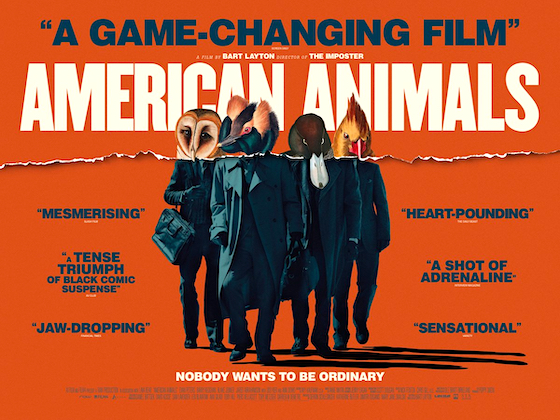
American Animals (2018)

Bart Layton | 117 mins | digital (HD) | 2.39:1 | UK & USA / English | 15 / R

American Animals

I don’t want this to turn into a rant about IMDb — there’s a time and a place for those, certainly, but what’s meant to be a short review of one film is not one of them — but the way they’ve devalued the documentary in recent years is not also depressing but also inaccurate. Because anything that has the genre Documentary is now marked as “(documentary)” on someone’s filmography, and therefore IMDb, and/or its contributors, are reluctant to use it about anything that isn’t 100% a documentary. Something like, say, American Animals.

To be clear: American Animals is unquestionably a documentary. It tells a true story, about some students who plan to rob a library of its rare books. It features interviews with the real people involved, both the students and others. But it’s mostly told via reenactments starring actors, several of them fairly recognisable faces. The real people appear as talking heads scattered throughout, particularly at key moments. So, it’s also unquestionably a hybrid of documentary and fiction. On the surface, it can look a lot like any fictionalised adaptation of a true story; but it’s hidebound to be more accurate than those often are, because it’s also got all these interviews. IMDb isn’t built for nuance such as this.

Prior planning prevents piss-poor performance... possibly

The film’s director, Bart Layton, previously made widely-praised definitely-a-documentary The Imposter. In my review of that, I described his style as “flashy” and “over-eager”, wondering if “perhaps he better belongs in fiction filmmaking? Perhaps that’s where he wants to go in future”. Here, I guess he’s moving to bridge that divide; but the blurred line means that, when the film says “here’s the real [person X]”, you kind of question it. Especially as, if a crime was committed, how come they’re interviewing the criminals?

That latter thought contributes to a genuine tension and suspense throughout the film. How far will this plot go? Do they even actually attempt it? One of the guys keeps saying, “I expected there to be something to stop us”, and you think maybe something will stop them… but the fact this film exists, and there’s all the chat about how the boys let their parents down and whatever, shows something happened. (No spoilers!) Yet it’s also surprisingly funny, like a bit where we’re shown the “Ocean’s Eleven version” of the robbery, complete with Elvis song on the soundtrack.

Some have criticised these kinds of flights of fancy, or the whole hybrid form, for inviting us to sympathise with these guys rather than condemn their actions. I think there’s room for both. The film seeks to explore what led these pretty normal guys to do such a thing, and (to an extent) how it has affected them since. I think you can both disapprove of what they did and seek to sympathise with them — to understand how it happened is not to condone it.

4 out of 5

American Animals was #107 in my 100 Films in a Year Challenge 2020.
It is streaming on All 4 until 10th February.

Blindspot 2022

There may be numerous changes around here for 2022 & onwards, but one thing that remains the same is the Blindspot challenge, which I’m undertaking for the tenth year running (though I called it “What Do You Mean You Haven’t Seen…?” back at the start. Now, WDYMYHS is a whole additional thing — details of the 2022 version are here).

For those still unfamiliar with it, Blindspot’s premise is simple: choose 12 films you should have seen but haven’t, then watch one a month throughout the year. (Those 12 also contribute to my All-New 100 Films in a Year Challenge.) Below, I’ve listed my selection for this year, and afterwards I’ll talk a bit about how I chose them.

The films are listed alphabetically, using the titles they’ve most recently been released under in the UK. Some of those are different to those used by, say, the Criterion Collection (we don’t automatically translate titles into English over here, what with us being more sophisticated ‘n’ all), but if you have to Google them, hey, at least you’ll have learnt something new.


L’avventura

L'avventura

Come and See

Come and See

Les enfants du paradis

Les enfants du paradis

La grande illusion

La grande illusion

High and Low

High and Low

A Man Escaped

A Man Escaped

Mirror

Mirror

Los olvidados

Los olvidados

Paris, Texas

Paris, Texas

To Be or Not to Be

To Be or Not to Be

A Woman Under
the Influence

A Woman Under the Influence

Yi Yi

Yi Yi


Some people just pull their 12 films out of who-knows-where. Personally, I’ve largely taken a more ‘scientific’ approach, using lists of great and/or popular films to try to shape some or all of my choices each year. This year is no different. But although I’ve made the process fairly complex some years — with lots of different contributing lists, sometimes weighted in different ways, or with additional rules — this year, I’ve kept it pared back.

Just three lists were used: the IMDb Top 250 Movies (they’ve finally put “250” back in its official name, hurrah!); the Letterboxd equivalent, the Official Top 250 Narrative Feature Films; and the mother of all great movie lists, TSPDT’s The 1,000 Greatest Films. I limited the last one to its top 250, for equality. All lists were weighted equally, with a film gaining points inverse to its position on a list — i.e. #1 would get 250 points, #250 would get 1 point, etc. I also factored in how many different lists the films appeared on at iCheckMovies (10 points per list), and gave a little nudge (of 11 points) to anything I already owned. That last one didn’t actually have much impact, merely serving to change the final film that made the cut. Still, it means I already have copies of seven of the films, rather than only half of them.

In fact, ensuring I could reasonably get hold of the films was something I checked before finalising the list, especially as Los olvidados doesn’t have an English-language Blu-ray release (in fact, according to Blu-ray.com, it’s only been released on BD in Japan). The only other factor I implemented was my longstanding “no repeat directors” rule. That took out Edward Yang’s A Brighter Summer Day (in favour of Yi Yi), as you can see in the list below. One previous rule I didn’t enforce this year was that, if I fail to watch a film one year, it’s locked out the next. I failed with Come and See in 2021, but it also topped the chart this year, so I’ve let it back in immediately. I won’t make the mistake of leaving it ’til December this time, though.

So, as promised a moment ago, here are the final 13 films with their points tallies…

  • Come and See — 777 points
  • High and Low — 573 points
  • Yi Yi — 571 points
  • A Brighter Summer Day — 566 points
  • To Be or Not to Be — 533 points
  • Mirror — 524 points
  • Les enfants du paradis — 509 points
  • La grande illusion — 509 points
  • A Man Escaped — 491 points
  • A Woman Under the Influence — 488 points
  • Los olvidados — 450 points
  • L’avventura — 444 points
  • Paris, Texas — 423 points

    Finally, a couple more stats about the films. Last year, many of the films were exceptionally long — the average running time came out at 2 hours 36 minutes, with only three of the films running under 2 hours; but with the shortest being just 1 hour 10 minutes and the longest 7 hours 19 minutes, there was quite a range. Compared to that, 2022’s extremes don’t seem so, well, extreme: the shortest film is Los olvidados at 1 hour 21 minutes, while the longest is Les enfants du paradis at 3 hours 9 minutes, and five films (almost half) are under 2 hours… although there is a half-hour jump between the longest film under 2 hours (La grande illusion, 1 hour 53 minutes) and the shortest over 2 hours (a three-way tie between L’avventura, Come and See, and High and Low, each running 2 hours 23 minutes). Nonetheless, the average is down from last year, to a slightly more reasonable 2 hours 13 minutes.

    Although it wasn’t a conscious decision, the films are quite well spread around this year, both temporally and geographically. For the former, there’s one from the 1930s, two each from the 1940s, 1950s, 1960s, 1970s, and 1980s, and then one from the 2000s. For the latter, France comes out on top with three titles, followed by two each for Russia and the USA, and one apiece from Germany, Italy, Japan, Mexico, and Taiwan. In the latter case, I’m taking (what I believe to be) the primary country of production — several of the films can lay claim to multiples.

    Finally, half of the films are by directors whose work I’ve never seen before. They are Michelangelo Antonioni, Luis Buñuel, Marcel Carné, Elem Klimov, Wim Wenders, and Edward Yang. And with the other films’ directors including the likes of Robert Bresson, John Cassavetes, Akira Kurosawa, Ernst Lubitsch, Jean Renoir, and Andrei Tarkovsky — a real mix of artists whose work that I’ve seen has either struck me as fantastic or… well… — it should be an interesting year.

  • Blindspot 2021: What do you mean you haven’t seen…?

    Now that all my “looking back at 2020” posts are done, it’s time to start the first full week of 2021 wi— sorry, what? Second week? Where did the first one go?! Alright, well, it’ll have to do. So, dragging myself belatedly into the same year as everyone else, it’s time to present my Blindspot picks for 2021.

    The Blindspot challenge (for the benefit of those still unfamiliar with it) involves choosing 12 films you should have seen but haven’t, then watching one a month throughout the year. I started doing this eight years ago, calling it “What Do You Mean You Haven’t Seen…?” (WDYMYHS for short), but then someone else came up with the same idea independently and gave it a much snappier moniker, and that caught on.

    My 12 films for this year are below in alphabetical order. After that there’s a few stats, and then I’ll explain how and why I chose them.


    Aguirre,
    Wrath of God
    Aguirre, Wrath of God


    The Birth of a Nation
    The Birth of a Nation


    Cinema Paradiso
    Cinema Paradiso


    Come and See
    Come and See


    La Dolce Vita
    La Dolce Vita


    Frankenstein
    Frankenstein


    La Haine
    La Haine


    The Life and Death
    of Colonel Blimp
    The Life and Death of Colonel Blimp


    Pather Panchali
    Pather Panchali


    Rain Man
    Rain Man


    Sansho Dayu
    Sansho Dayu


    Sátántangó
    Sátántangó

    Here’s a few stats about this year’s list…

  • The average running time of the films is 2 hours 36 minutes. Yes, that’s the average. While the shortest film, Frankenstein, runs a measly 1 hour 10 minutes, there are only two others below the two-hour mark, and four that run over 2½ hours. And the longest, Sátántangó, is a whopping 7 hours 19 minutes — that’s longer than six Frankensteins.
  • There’s a spread of exactly 80 years between the oldest film (1915’s The Birth of a Nation) and the newest (1995’s La Haine). Of course, that means the most recent film here is over a quarter of a century old…
  • Exactly eight decades are represented, too. The most prolific is, amusingly enough, the ’80s, with three films. The ’50s and ’90s have two each, and there’s one apiece from the 1910s, ’30s, ’40s, ’60s, and ’70s.
  • The films come from nine countries: three from the USA, two from Italy, with the rest being from France, Germany, Hungary, India, Japan, the Soviet Union, and the UK.
  • There are eight different main languages spoken, plus one silent film. English is the most common with three films, two are in Italian, and the rest encompass Bengali, French, German, Hungarian, Japanese, and Russian.
  • Six of the films are from directors who I’ve never seen a feature from before. They are D.W. Griffith, Werner Herzog, Elem Klimov, Satyajit Ray, Béla Tarr, and Giuseppe Tornatore. (I have seen a short by Griffith before, but this is his first feature for me.)

    I tend to mix up my method for choosing films each year, but for 2021 I’ve retained one thing from last year — itself a legacy of the couple of years where I did two 12-film lists — and that’s to have six films ‘chosen for me’ via a consensus ranking of various “greatest movie” lists, and then to choose the other six myself from my massive unwatched disc pile. Inevitably, the latter seems to get influenced by films that piqued my interest in the former, but, eh, why not? (If you fancy a challenge, feel free to guess which six films belong to which selection process. Answers coming up.)

    The lists that contribute to the “poll of polls” selection can only be varied so much. I mean, there are probably thousands of such lists out there, but there are only a handful that are well known and respected (to one degree or another), and so I tend to use a lot of the same ones every year. You might think that makes which films appear a foregone conclusion — surely they’re the ones that narrowly missed out last year? — but things do change on some of these lists. For example, when I chose last year’s selection, Come and See was ranked 7th on Letterboxd; this year, it’s 2nd. That’s not an insignificant change: when I’m combining multiple lists, a jump like that at the top of a list could be the difference between inclusion and not quite making it. Besides, I do vary my lists and how I count them every year, precisely so as to keep things slightly unknowable.

    This year’s contributing lists were:

  • Letterboxd’s Official Top 250 Narrative Feature Films
  • IMDb’s Top Rated Movies (aka the IMDb Top 250)
  • the Reddit Top 250
  • Empire’s The 500 Greatest Movies of All Time (aka the Empire 500)
  • Empire’s The 100 Best Films of World Cinema
  • Sight & Sound’s 2012 poll, using the 250-film version listed on Letterboxd (the official list only goes to 100)

    A notable absentee this year is They Shoot Pictures, Don’t They?’s The 1,000 Greatest Films, itself a “poll of polls” that is therefore one of, if not the, definitive lists of greatest movies. That’s why I normally include it, and that normality is why I didn’t this year: it’s gone just for the sake of a change. In its place (sort of) is the Empire World Cinema list. It’s shorter than the others, so under my scoring system (which I’ll explain in a moment) it contributed somewhat less than the other lists. That means it served to tweak which foreign films got in, rather than acting to wipe out US/UK films — although, as it turns out, no US films made it through that way.

    So, each poll was scored out of 250 (250 points for 1st place, 249 for 2nd, etc), except the Empire World Cinema one, which was out of 100. Any film beyond 251st place on the Empire 500 earnt one point; and there were 10 additional points for each list a film appeared on (i.e. every film got 10 bonus points, because every film had to be on one list; but if it was on two it got 20, etc.) The full chart ended up including 230 films — that’s everything I hadn’t seen from the Letterboxd, IMDb, Reddit, and Empire World Cinema lists, plus those from the top 150 on Sight & Sound and the Empire 500 (by the time I got to those, I figured any films further down that weren’t on another list didn’t stand a chance; of course, I did include their rankings for all films that were on another list). Further to the plain scores, I also applied other rules — “no repeat directors” is the main one. I used to limit myself to films I already own, but not anymore; and I try to ensure variety in the kinds of films included, to get a spread of ages, countries, genres, etc.

    With all that considered, I think this is the first year I’ve simply accepted the films at the top of the chart without having to eliminate any. The only film to appear on all six lists was Come and See, so perhaps it’s no surprise that it came first with 810 points. Mind you, only one film appeared on five lists (Paris, Texas) and that came 17th, so being on fewer lists with higher ranks could beat merely appearing on many lists. In second place was La Dolce Vita with 647 points; third was Cinema Paradiso with 510; fourth was Pather Panchali with 502; fifth was Sátántangó with 461; and in sixth, just behind it with 460, was The Life and Death of Colonel Blimp. Regular readers (or those who’ve clicked and read some of the links in this article) may remember that Come and See and Sátántangó both qualified for the 2020 list, but were removed because new restorations were on the way. Those have now materialised: Come and See on a Criterion disc that I imported, and Sátántangó on very different UK and US discs (it’s also available to rent digitally, which is how I intend to view it).

    As for my ‘free choice’ films, three have a spot on that consensus ranking. They were La Haine (13th, 413 points), Sansho Dayu (16th, 398 points), and Aguirre, Wrath of God (38th, 262 points). You’ll note that none of those films are American, and so my only three picks that are not on the consensus ranking (The Birth of a Nation, Frankenstein, and Rain Man) are also my only three US films. Make of that what you will.

    I’ve spent most of 2021 so far working towards one self-imposed deadline after another, to get all of these end of year/new year posts done, so now I’m looking forward to catching up on other blogs — and actually watching some films!

  • The IMDb New Filmmaker Award 2020

    Last night on AMPLIFY!, FilmBath presented the 9th annual IMDb New Filmmaker Award, in which a trio of industry judges choose the best short film by a new filmmaker (clue’s in the name). The winner gets £1,000 cash, £1,000 in gear hire for their next project, a natty trophy, and an IMDb pin badge (normally only given to IMDb employees). If you missed the evening, never fear: the whole 90-minute event is available to rewatch for free, worldwide, here.

    Why would you watch an awards show after it’s happened? Well, in this case, you get to hear the judges’ musings on what makes a good film — and when those judges are BAFTA-nominated director Coky Giedroyc (The Virgin Queen, How to Build a Girl), Oscar-nominated and BAFTA-winning producer Amanda Posey (An Education, Brooklyn), and the CEO of IMDb, Col Needham, those are opinions worth listening to. Even better, you get to watch the five nominated shorts in full, and they’re good a bunch.

    But don’t just take my word for it: take my, er, word for it, in the form of these reviews…

    If you do intend to watch the awards, fair warning: I’m going to ‘spoil’ who won.

    Under the Full Moon

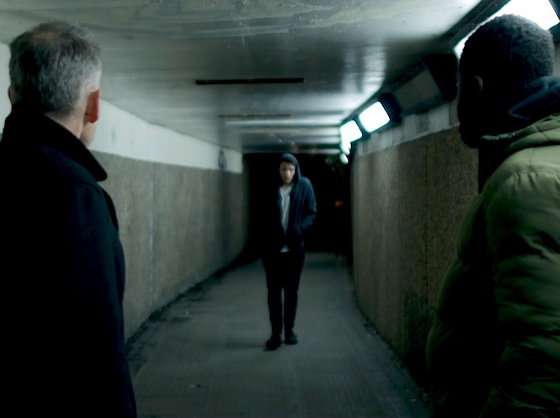
    Taking the films in the order they were shown, first up is Under the Full Moon (2020, Ziyang Liu, UK, English, 9 mins, ★★★★☆), about a guy who has his phone pickpocketed and decides to confront the mugger. The most noteworthy aspect here is the whole short is achieved in a single unbroken eight-minute take. I love stuff done in single long takes; at this point it’s a bit of a cliché to enjoy such things — a real film nerd kind of obsession — but, sod it, it’s still cool. To do a thriller storyline like that — something which requires management of tension and suspense, and of information being revealed at the right time in the right way — is even more impressive. You might say, “well, that’s what theatre is — a drama performed in ‘one take’”, but theatre doesn’t have to factor in camerawork; making sure we’re seeing the right stuff at the right time, framed in the right ways. Under the Full Moon manages every different element almost perfectly, the only real flaw coming right near the end, when the camera fails to clearly capture a phone screen with an incoming call, so the director resorts to a subtitle to make sure we get this final ironic twist. And that’s the other thing: this isn’t just a technical stunt, or an exercise in escalating suspense, but a dramatic work with some neatly-drawn character parts and a sense of dramatic irony. Really strong work.

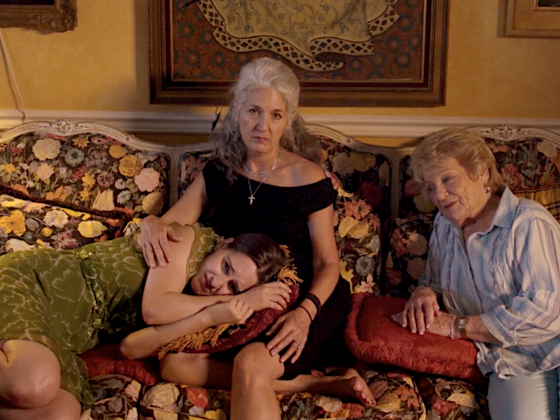
    The winner (told you I’d spoil it) was Flush Lou (2020, Madison Leonard, USA, English, 9 mins, ★★★★★), and I entirely agree. It’s a black comedy about the reaction of three women to the death of a man: his daughter (who narrates), his wife, and his mother. It’s got a quirkiness that could be inappropriate, but the tone is juggled just right that it remains hilarious rather than at all distasteful. It’s there in the performances, the shot choices, the editing — the piece really works as a whole to hit precisely the right note. It might call to mind the work of someone like Wes Anderson, but it’s far from a rip-off; it also reminded me of certain just-off-reality American-suburbia-skewering TV shows, like The Riches or Suburgatory (I’m sure there are some more mainstream examples that are eluding my reach right now). Also, it manages to pack eight chapters into its eight minutes, without ever feeling like that’s an unnecessary affectation; if anything, it helps clarify the structure, which is exactly the kind of thing chapters are good for. A huge success all round.

    Flush Lou

    At the other end of the seriousness spectrum was the winner of the audience vote, The Monkeys on Our Backs (2020, Hunter Williams, New Zealand, English, 8 mins, ★★★★★), a documentary about the mental health of farmers in New Zealand. I think we often have a very positive view of New Zealand — they seem like nice people; their government is doing awesomely well; they make great movies; they’re good at rugby; and so on. But the country has one of the highest suicide rates in the developed world, and mental health problems disproportionately affect those living and working in isolated rural communities. This is not only a succinct explanation of the problems, with real-life examples as well as expert opinions, but also talks about the solutions, what help is out there and how it’s working. Plus it’s a beautifully shot film (some outtakes in black & white at the beginning show the fundamental quality underlying the colour photography in the rest of the film), with lovely views of countryside life, as if to help remind you that the world is a wonderful place. A wholly different film to Flush Lou, but an equally deserving winner.

    The shortest of this year’s five is Players (2020, Ava Bounds, UK, English, 3 mins, ★★★★☆), but that’s not the most noteworthy thing about it. This is: it was made by a 14-year-old. But you’d never guess, because it has a competency and, more strikingly, a surrealism that belies someone much more experienced. Heck, the sound design most reminded me of David Lynch! And the comparison goes beyond the sound work, with an ending that calls to mind some of Lynch’s work where nature and technology clash. Subtitled “a clearly confused film”, I think that was somewhat how the judges felt about its mix of retro costumes and music, computer-generated vocals, and a sci-fi sting in the tail. It’s the kind of film that clearly doesn’t work for everyone — just another way it’s a natural successor to Lynch, then. A 14-year-old making a competition-worthy short film is incredible in itself, but that it also merits so many comparisons to David fucking Lynch? Remarkable.

    The Monkeys on Our Backs

    The final film was Home (2020, Hsieh Meng Han, UK, English, 10 mins, ★★★☆☆), in which a girl living with her mother in a single room in a dingy apartment block finds the communal toilet locked, but then hears music coming from a nearby ventilation grill. Climbing through, she finds herself in a brightly-lit world of opulence, with people in elegant clothes dancing to genteel music, and an array of luscious food on offer. She even makes a friend. But then uptight officiousness arrives in the form of a stuffy manager, who refuses to let her use the toilet. It’s like a modern socially-conscious take on Alice in Wonderland, though I’m not sure what point it was ultimately making — kindness is nice and everyone deserves to be allowed to use the toilet?

    If any of that tickles your fancy, don’t forget you can still watch the whole event, free, here.

    Disclosure: I’m working for AMPLIFY! as part of FilmBath. However, all opinions are my own, and I benefit in no way (financial or otherwise) from you following the links in this post or making purchases.

    Blindspot 2020: What do you mean you haven’t seen…?

    The Blindspot challenge (for the benefit of those still unfamiliar with it) is where you pick 12 films you feel you should’ve seen but haven’t, then watch one a month throughout the year. I started doing this in 2013, calling it “What Do You Mean You Haven’t Seen…?” (WDYMYHS for short), but then someone else came up with the same notion independently and gave it a much snappier moniker, and that caught on.

    My fortunes with the Blindspot / WDYMYHS challenge have been up and down over the years. I’ll spare you a full potted history, but last year I set myself two lists of 12 films each and didn’t complete either — although between them I did watch 17 movies. I braved 24 films because for two years before that I’d done 22 and completed it with relative ease. So maybe I should aim for 24 again this year…

    …but I’m not going to. In the same way that the second half of 2019 was a bit unpredictable (leading to my failures), I’m not wholly sure what the future holds, so I’m going to rein it back to the original 12 and see how it goes. And besides, if I find 12 unchallenging then I’ve got the seven remaining films from last year I could move on to; plus one from 2015 that I never got round to. That’s a pretty big ‘buffer’ to work on.

    Now, I’ll jump ahead to the main event: the 12 films I must watch, in alphabetical order. Afterwards, I’ll explain how they were chosen.


    8½


    All Quiet on
    the Western Front
    All Quiet on the Western Front


    An American Werewolf
    in London
    An American Werewolf in London


    Andrei Rublev
    Andrei Rublev


    The Battle of Algiers
    The Battle of Algiers


    Do the Right Thing
    Do the Right Thing


    Fanny and Alexander
    Fanny and Alexander


    The French Connection
    The French Connection


    In the Mood for Love
    In the Mood for Love


    Ordet
    Ordet


    Ugetsu Monogatari
    Ugetsu Monogatari


    Under the Skin
    Under the Skin

    So, some people just pick their 12 films. When I did two lists, that’s what I did for one of them. But the rest of the time I’ve let consensus decide, by compiling “great film” lists in various different combinations to suggest the films other people feel I should’ve seen. I quite like both methods, so for 2020 I’ve picked six with one and half-a-dozen with the other. That said, my ‘free choice’ six were influenced by some of the films that didn’t quite make it into the ‘preselected’ six. (Feel free to guess which films belong in which six. Fun and games! Answers in a mo.)

    This year, the selection process involved the following lists:

  • Letterboxd’s Official Top 250 Narrative Feature Films
  • IMDb’s Top Rated Movies (aka the IMDb Top 250)
  • The 1,000 Greatest Films by They Shoot Pictures, Don’t They? (aka TSPDT)
  • the Reddit Top 250
  • Empire’s The 500 Greatest Movies of All Time (aka the Empire 500)
  • Sight & Sound’s The 100 Greatest Films of All Time (2012 edition)

    Because TSPDT takes Sight & Sound’s voter ballots as its foundation, I counted the Letterboxd scores twice as a way of evening it out a bit and not letting S&S be too dominant. It only worked up to a point. For example, Harakiri is ranked 4th on the Letterboxd list and 33rd on IMDb, but it’s a lowly 647th on TSPDT and nowhere on the other lists. So as I started adding the lists together (in the order I’ve credited them above), Harakiri was right at the top, then gradually fell right back. But that’s kinda the point of counting multiple lists: it’s getting a consensus of consensuses. Letterboxd users clearly think Harakiri is one of the very greatest films of all time; IMDb voters aren’t quite as enthusiastic, but it’s up there; everyone else… not so much.

    But it’s not just about the raw numbers of which films top the list: I have some rules. Chief among them, I’ve previously only selected films I already own on DVD/Blu-ray or have access to on Netflix/Prime/etc. This year, I let the door open to anything, though I did first make sure I could reasonably source a copy. So, top of the list was Andrei Rublev, followed by Federico Fellini’s . Next, in a somewhat ironic turn of events, my new “open door” policy actually led to some high-scoring films being eliminated. While sourcing copies of Come and See and Sátántangó, I discovered that both have recently been restored and are expected to get Blu-ray releases in 2020. You might think that’s perfect timing, but what if one or both slipped to 2021, or were insanely overpriced? So I decided to adopt a “wait and see” approach. Maybe they’ll be on 2021’s list.

    Next in the running was In the Mood for Love, followed by Ordet. Then my only still-standing regular rule came into play: one film per director. That meant the next film — La Dolce Vita, which shares Fellini with — was cut. After that is actually where Sátántangó was ranked (keeping up? I don’t blame you if you’re not), followed by Mirror — but Mirror is directed by Andrei Tarkovsky, the same as Andrei Rublev, so out it went too. But now we do finally reach the end: the next two high-scorers were Fanny and Alexander and The Battle of Algiers, which (as you’ll know from their inclusion in the list above) were fine.

    And with those six settled upon, I turned to picking six more from my DVD/Blu-ray collection. There’s less to say about these: I made a long-list of 127 ‘maybe’s; narrowed it down to 38 ‘very possibly’s; and then picked six, based on a mix of intuition about what I ‘should’ have seen and things I’ve personally been wanting to see for a while. I did also try to keep some variety in terms of the films’ ages, genres, countries, and languages… but almost all the ones that made my short-list were in English, so, er, oops. It meant Ugetsu Monogatari was an easy choice, anyway; and I was sure to include some British films (or British co-productions, at least); and Do the Right Thing may be American, but it’s also the only one of the 12 from a black filmmaker. (No female directors, though, which is an unfortunate oversight.) Still, on balance there are more films not in English (seven vs five), and the B&W/colour split is exactly 50/50.

    Four of my six ‘free choices’ do appear further down the rankings I’d compiled. That’s coincidence rather than design, although I suppose seeing them on the list might’ve helped push them to the forefront of my mind. Those four were Do the Right Thing (18th), Ugetsu Monogatari (23rd), An American Werewolf in London (127th), and The French Connection (162nd). I don’t know about you, but I was a little surprised All Quiet on the Western Front didn’t make it. Well, of the lists I’ve used this year the only one it’s on is TSPDT, at a lowly 742nd. (I’m not surprised Under the Skin wasn’t on any, what with it being so recent. For one thing, it hadn’t even been released when the Empire and Sight & Sound polls were conducted.)

    And that’s all that thoroughly over-explained.

    (Did anyone read all this?) (Hello future-me, who surely will re-read all this at some point, sad egocentric that I am.)

    Finally, if I manage those 12 and want more, the eight left outstanding from 2015 and 2019 are…

  • All About Eve
  • All the President’s Men
  • The Breakfast Club
  • Ikiru
  • The Ipcress File
  • The Royal Tenenbaums
  • The Thin Red Line
  • To Kill a Mockingbird

    This is hardly a chore — there are some great-looking movies there — so hopefully I’ll find time for all 20. It would only be fitting, given the year…

  • Shorts of FilmBath Festival 2019

    Across the 2019 FilmBath Festival programme, 46 short films were screened — 23 attached to feature films, 17 at a dedicated ‘Shorts Showcase’, and six at the IMDb New Filmmaker Award ceremony (five in competition, one the film made from the winning screenplay of the IMDb Script to Screen Award). I saw 14 of these, one way or another, and have compiled my reviews into this (commensurately long) post.

    First, the five films that competed for the IMDb New Filmmaker Award.

    Gladiators on Wheels

    The winner chosen by the judges was Gladiators on Wheels (2019, Souvid Datta, UK & India, Hindi, 6 mins, ★★★★☆), a documentary about the ‘Well of Death’ — an attraction at Indian circuses where daredevils ride motorbikes and drive cars around 60ft vertical walls, literally defying gravity. It’s both impressive and terrifying, especially considering they’re doing it without any kind of safety gear — no helmets or padded suits here, never mind nets or something. But the film isn’t just about the actual act, also touching on the way of life, and how it’s fading. It’s a well-shot bit of filmmaking, especially impressive when you learn it was all filmed in a single day. The script was compiled from interviews with the drivers, then voiced by actors, but if anything it’s a little cliché — lots of talk of “living on the edge” and how dangerous it is but how they wouldn’t have it any other way, etc. Still, like many of the best documentaries, it’s a fascinating glimpse at another world.

    The audience at the ceremony also got a say, favouring Hey You (2019, Jared Watmuff, UK, English, 5 mins, ★★★★★), which is about gay men hooking up via text messaging. At first it feels like a lightly comedic bit of fun, possibly with some drama in that one of the men is closeted, but then it develops into something more serious. It’s a very well made short, in particular the shot choices and editing at the climax, which combine to produce some incredibly striking imagery. It’s tricky to say why it’s such an effective and vital film without spoiling where it goes in that finale, but it’s a meaningful piece that’s worth seeing if you can. It would’ve been a worthy winner.

    Facing It

    The three other finalists were … Tight Spot (2018, Kevin Haefelin, USA & Switzerland, English, 4 mins, ★★★★☆), a comedy bit about a shoe shiner and a suspicious customer, which was amusing albeit a little predictable; although it did, again, look nice … When Voices Unite (2017, Lewis Coates, UK, English, 4 mins, ★★★☆☆), a mini tech thriller that was suitably tense in places, but really needed some kind of twist or final development to give it a reason to exist … and Facing It (2018, Sam Gainsborough, UK, 8 mins, ★★★★★), which presented an imaginative visualisation of a relatable social difficulty. Rendered in a mix of live-action and stop-motion animation, it’s by far the most technically impressive short here, but all in service of telling its story and conveying the requisite emotion. Another one that would’ve been a more than worthy winner.

    (You can watch Gladiators on Wheels and When Voices Unite on Vimeo. Sadly the others aren’t publicly available, although there is a short making-of for Facing It which I recommend for appreciating the filmmaking skill on display there.)

    Of the other shorts I saw, my favourite was definitely Pleased to Eat You! (2019, Adrian Hedgecock, UK, English, 7 mins, ★★★★★). It’s a beautifully designed and hilariously funny musical comedy short… about cannibalism! Its colourful and clever staging evokes the handmade movie-reality worlds seen in films by the likes of Michel Gondry or Charlie Kaufman, while the full-blown song-and-dance number is like the best of old-fashioned Hollywood musicals, albeit twinned with a pun-filled cheekiness in its subject matter. An absolute delight from beginning to end.

    Pleased to Eat You!

    If I were to rank all the other shorts too, I’d probably put Woman in Stall (2018, Dusty Mancinelli & Madeleine Sims-Fewer, Canada & UK, English, 10 mins, ★★★★☆) in second place. A very timely thriller, it sees a woman innocently enter a public bathroom cubicle to get changed, only for a man to turn up outside and start chatting, her wariness of him trapping her inside. Is he a predator she’s right to fear? Or is she just being paranoid? Part of the short’s cleverness lies in the way it plays with our emotions and expectations, swinging us back and forth into where our trust should lie. Working with a limited setting, it’s neatly shot — never dull, but without going OTT to try to jazz things up — and gets edge-of-your-seat tense as it goes on. Regular readers will know how much I love a “single location thriller”, and this is a perfect mini example of the form.

    Quince: Fifteen (2018, Peiman Zekavat, UK & Peru, Spanish, 10 mins, ★★★★☆) is a real-time single-shot drama about a 15-year-old Peruvian schoolgirl whose carefree PE lesson turns into a tumult of life-upending dismay in just a few minutes following an unexpected discovery on social media. It’s another timely issue, and this is mostly a well-made short — I do love a single take, and the real-time aspect puts you in her shoes quite effectively. Unfortunately, it’s a bit inconclusive — it just stops, with no hint of how she’s going to deal with her new problem longer term, or what’s going to happen to her beyond a handful of initial reactions. It’s not bad as it is, but there’s also more to be told here.

    Quince: Fifteen

    On a snowy winter’s day, a postie makes his rounds on a London estate. Meanwhile, one woman anxiously awaits his arrival… With its brief running time, Special Delivery (2018, Robert Hackett, UK, 4 mins, ★★★★☆) almost feels like an extended edit of one of those soppy commercials the big retailers always put out at Christmas — you know, the ones that have just started to pop up on the telly. Nicely shot in 2.35:1, it evokes a Christmassy feel without being overtly festive, and manages to avoid becoming quite as saccharine as those adverts, instead earning the story’s sentimentality. A sweet little slice of romance.

    Coming just behind those frontrunners would be Spooning (2019, Rebecca Applebaum, Canada, English, 6 mins, ★★★★☆), a one-woman-show of a mockumentary about a theatre actress who specialises in playing spoons. Not “playing the spoons”, like a musical instrument, but anthropomorphised spoons, like in Beauty and the Beast. It’s basically a comedy sketch as a short film, but it was largely funny so I don’t begrudge it that.

    I’m six films deep into this loose ranking now, but that’s not to discredit Allan + Waspy (2019, James Miller, UK, English, 8 mins, ★★★★☆). It’s about two working class schoolboys who hang out in the woods on their way to school each day, observing a bird’s nest full of chicks hatching and maturing — but one of the lads clearly has problems at home, and it all takes a very dark turn. Initially it’s a likeable slice-of-modern-life tale, managing to find an element of old-fashioned bucolic childhood even in a modern inner-city setting, and unfurling at a gentle pace by mixing shots of the surrounding world into the boys’ activities. But then there’s a thoroughly glum ending. It kinda ruined my day, but I liked it as a film nonetheless.

    Cumulus

    A young Welsh girl runs off from her dad and encounters a talking gull who’s worried about his kids leaving home in animation Cumulus (2018, Ioan Holland, UK, English, 9 mins, ★★★☆☆). Naturally, they both learn something from each other. It’s always nice to see 2D animation nowadays, especially when it’s as prettily designed as this, though it’s a shame that some of the movement is a little stilted and animatic-y. It’s also a bit longer/slower than it needs to be, but it’s still mostly charming.

    Perhaps the most disappointing short was My Theatre (2019, Kazuya Ashizawa, Japan, 5 mins, ★★★☆☆), a documentary about an 81-year-old in Fukushima who closed his cinema 55 years ago but keeps it alive as a kind of museum. That’s mainly what I gathered from reading blurbs before viewing, though, because the short itself lacks any real context or conclusion, just presenting vignettes of life in this rundown old movie house. It’s perfectly pleasant, but ultimately unenlightening. My Theatre is listed on other festivals’ websites as running 20 minutes, so perhaps the five-minute version submitted to FilmBath is just an excerpt — that’s certainly what it felt like. A longer edit, with more of a sense of why this is a place and person worth observing, would’ve been better.

    Finally, Terra (2019, Daniel Fickle, USA, English, 6 mins, ★★☆☆☆), which received some very negative feedback from a few audience members who didn’t feel it was appropriate for the film it was screened before, Honeyland. That’s a documentary about a traditional European way of beekeeping on the wane, whereas Terra is ostensibly about the tumultuous romantic relationship between two young Americans. The clue is in the title, though: it’s a metaphor for humankind’s relationship with Earth. Personally, I thought the analogy was a bit on the nose, but it seems others missed it entirely. The photography is quite pretty, in a no-budget-indie-drama kinda way, but other than that I didn’t think there was much to it. Other members of the FilmBath team were more impressed, so I think it’s fair to say it’s a divisive little number.

    Terra

    As I said at the start, there were 46 shorts screened at the festival, so this is just a small sampling of what was on offer (less than a third, to be precise). Although I didn’t love them all, I did enjoy most — and considering they would have entirely passed me by were it not for the festival, I’ll definitely take the handful of letdowns as part of the parcel for getting the good stuff.