Quentin Tarantino | 161 mins | cinema | 2.39:1 | USA, UK & China / English | 18 / R
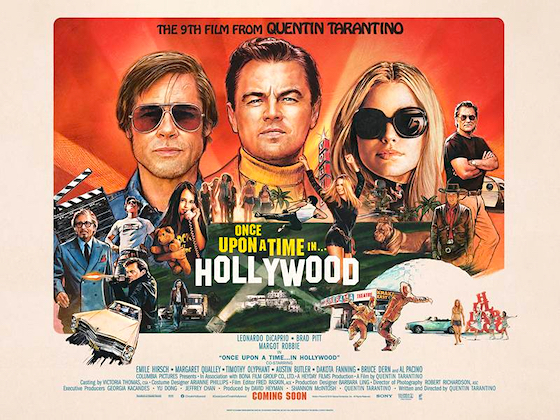
The 9th film by Quentin Tarantino follows the fortunes of struggling actor Rick Dalton (Leonardo DiCaprio) and his stuntman and best mate Cliff Booth (an Oscar-winning Brad Pitt) over a couple of days in Los Angeles, 1969, when they were next-door neighbours to one Sharon Tate (Margot Robbie)…
I haven’t reviewed Once Upon a Time until now because I didn’t have much to say about it (even my Letterboxd ‘review’ was just a comment on its variable title presentation). Even after reflecting on it, and reading other’s critical reactions, then reflecting on it some more (for over eight months at this point), I didn’t have much to contribute. Why was that? And I’ve kind of realised it’s because the film didn’t make me feel very much.
Sure, there are moments where it did. There are plenty of scenes that are amusing, to varying degrees. The tension as Cliff explores the house of an old friend that’s been occupied by a bunch of hippies. The catharsis and humour of the ultra-violent climax, and the attendant cognitive dissonance of whether we should be revelling so in this historically-revisionist execution of real people — not to mention the factors that further complicate that (you know what they are by now).
And overall I didn’t dislike the film. I wasn’t bored, despite the length; if anything, that helps suck you into the world of 1969. You can certainly feel Tarantino’s love for the era, his desire to recreate — and, indeed, improve — it. (It’s also clear that he really wants to make another Western. The excerpted scenes from Rick’s TV pilot go on for ages, ultimately contributing nothing to the overall story, other than getting to hang out in a ’60s TV Western.) The three main performances are all very good, DiCaprio and Pitt great both as a double act and in their own storylines, and Robbie off in her own little world in a role that arguably offers little on the page but she breathes so much life into.

It’s all these successes that mean I do consider Once Upon a Time to be a very good film. But at the same time, I didn’t leave the cinema feeling moved or wowed. I expected the history-changing ending ever since the film’s plot was announced, that expectation only cemented further as I learnt of Tarantino’s love for Tate, so I certainly didn’t leave feeling surprised. It ended, and that was that, and I went home.
Tarantino has talked in the past about how Jackie Brown is a “hangout movie”, where the point is not the story but spending time with the characters, and getting to re-spend that time when you watch the movie again, so that you enjoy it more and more with each viewing. I didn’t really get that feeling from Jackie Brown (I didn’t dislike it, but I was underwhelmed and in no rush to revisit it), but I wonder if that’s how Once Upon a Time will work best. The way it wanders through its loose narrative, before arriving at a climax that is, really, only tangentially related to everything else we’ve been watching, does suggest that’s the goal Tarantino had in mind. I can certainly believe he would like to just hang out in the world of Hollywood, 1969. I suspect that’s the driving factor behind why he even made this movie — getting to imagine an alternate history and career for his characters (I’ve seen interviews where he fills in way more backstory than is actually in the film), and using his clout to literally recreate that time and place in real-life rather than through CGI fill-ins.
So, it’s a movie I’ll surely revisit at some point, which is more than can be said for many a film. Perhaps then I’ll have something to say about it.

Once Upon a Time in Hollywood is available on Sky Cinema and Now TV from this weekend.

 Score:



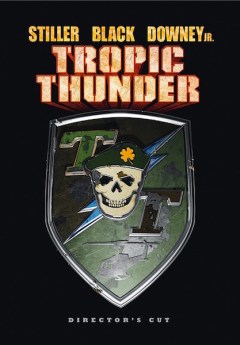 A bunch of obstreperous actors are too much to handle for the director of a Vietnam war movie, so he dumps them in the jungle to shoot it with hidden cameras. Things go awry; hilarity ensues.
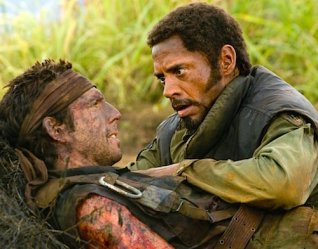 The film may run a little long in the middle, though I don’t think that’s the fault of this extended cut. It adds just over 17 minutes across many little changes and extensions
 2013 Academy Awards
 Argo is probably the most traditionally entertaining from 2012’s crop of Best Picture nominees. I know a lot of people awarded that honour to
 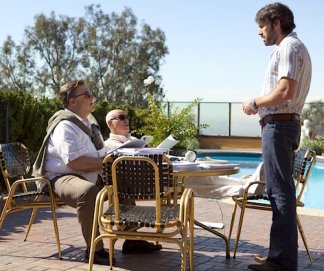 This is where we get the humour, mainly directed at the movie industry. Some say this is why it won the big awards: Hollywood loves a look at itself, and here it’s both satirical (“So you want to come to Hollywood, act like a big shot, without actually doing anything? You’ll fit right in!”) and congratulatory — after all, the plan goes ahead and so (spoilers) Hollywood saves the day. The film creates just the right balance between taking the mick out of Hollywood and bigging-up its role in saving some lives, while also not spending too long on this section that we forget the perilous situation on the other side of the world. After all, once all the fun and games in Tinseltown are over, it’s back to the serious business in Iran.
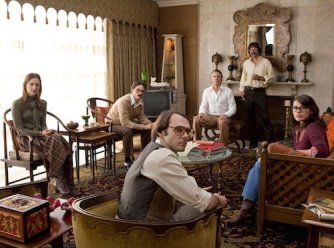 That’s just artistic licence, really — it’s not as if these people were safe, they just had a damn good plan; and, as I said, you need a dramatic ending for a thriller. However, all the “chasing them down the runaway” stuff is a bit full-on and action-movie-ish. It’s not even accurate to how it would go in real life, if it had happened, because the militia’s cars would need to be travelling phenomenally fast to keep up with the plane, and they aren’t seen to be affected by its jets either. For me, the rest of the climax — the guards checking the ‘crew’ out, phoning the LA office, later running up to the control tower, etc — all works; assuming you accept the film is still a Hollywood thriller, not a fact-bound documentary, and so needs a suitably dramatic climax. It’s a shame they didn’t leave it at that, but not a deal breaker either.
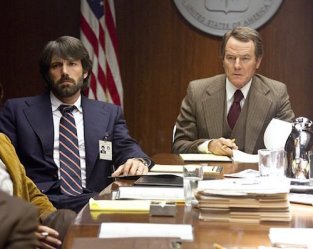 That was in the ’70s — adjusted for inflation, it comes to over $350 million. For a drama about a couple divorcing and arguing over custody of their kid! Today, it’d be lucky to earn a tenth of that, even if it was up for Oscars. But I digress.) It’s a surprising Oscar pick these days because it’s a genuinely enjoyable watch, rather than a gruelling look at something-or-other serious.
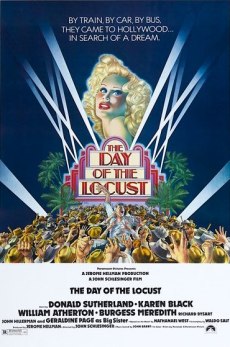 Adapted from the novel by Nathanael West, The Day of the Locust is a slightly scrappy film about the seedy underside of Hollywood’s golden age. The plot is neither here nor there in many respects — the film is about the grotesques who are attracted to Hollywood, and that being exactly what it feeds on. The bizarre, surreal ending definitely makes more sense if you’re already thinking about the film in this way.
 Also brilliantly staged is the collapse of a Waterloo battle set. Appropriate as it’s one of the novel’s most memorable moments.
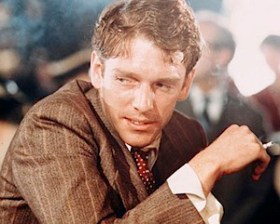 The Day of the Locust may be a mess, or it may be a flawed masterpiece. It may very well be both. For much of it’s running time it pootled along at 3 stars, pushing down toward 2 the more diluted it began to feel. But seeing the completion of Donald Sutherland’s performance in the final scenes, plus the way those scenes seem to draw together the whole film, revealing and fulfilling themes I hadn’t even noticed developing until that point, in a spectacular orgy of apocalyptic violence… well, the stars suddenly ratchet back up.
 Documentary, based on the best-selling acclaimed book by Peter Biskind, about the decade in Hollywood between the death and effective re-birth of the studio system.
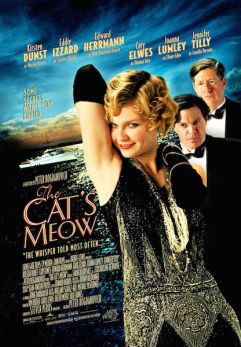 Possibly-true ‘murder mystery’ set in 1920s Hollywood.
 100Films.co.uk