
Hayao Miyazaki | 125 mins | Blu-ray | 1.85:1 | Japan / English | PG / PG
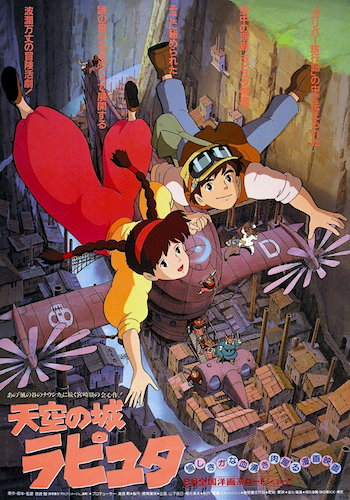
The names Hayao Miyazaki and Studio Ghibli go hand-in-hand (I wouldn’t be a bit surprised if quite a few people think they’re synonymous, i.e. that all Ghibli films are directed by Miyazaki), but his first two features (The Castle of Cagliostro and Nausicaä of the Valley of the Wind) were produced before Ghibli’s formation. So it’s Laputa, his third film, that is actually Ghibli’s first — which makes it appropriate to look at today, as it’s also one of the first titles being made available under Netflix’s new deal with Ghibli.* (Though if you search Netflix for “Laputa”, you won’t find it.)
Acclaimed as one of the first major works in the steampunk subgenre, Laputa takes place in a Mitteleuropean alternate past — the architecture is inspired by Welsh mining villages; the uniforms and hardware by historical German military; there are steam-powered automobiles and flying machines; but there’s also magic-like stuff, so it’s not just tech-based. In this world we meet Sheeta (voiced in Disney’s English dub by Anna Paquin, retaining her New Zealand accent), a young girl wanted by both the military and sky pirates for a necklace she wears. When she falls from an aircraft, the necklace glows and lowers her gently to the ground — and into the life of Pazu (James “Dawson’s Creek” Van Der Beek), a young orphan who immediately resolves to help her. And so off they go on an adventure to find out just what’s so desirable about Sheeta’s necklace, and what it has to do with the legendary flying city of Laputa.
If you watched Miyazaki’s first three movies ignorant of the knowledge they came from the same writer-director, I’m sure you’d work it out for yourself. It’s an action-packed adventure laced with humour and morally grey characters, like Cagliostro, with a well-imagined fantasy world populated by flying machines and brave young heroines, like Nausicaä. But it’s no act of self-plagiarism — Miyazaki is too inventive for that. His world-building is first rate, sketching in the details of this alternate reality in between character building scenes and thrilling action sequences. If this were live-action, it would make an exemplary action/adventure blockbuster, so well paced and structured is it.
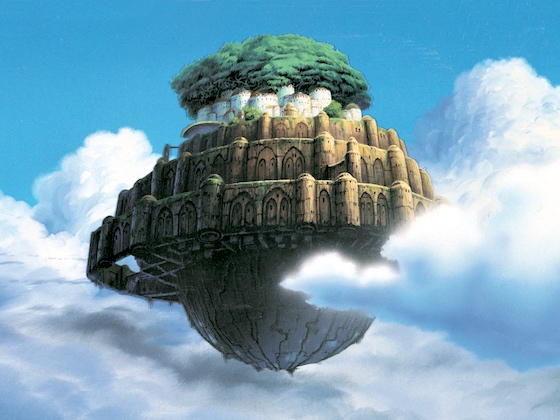
That’s why it immediately clicked with me as an instant favourite among both Miyazaki’s and Ghibli’s oeuvre. It’s unquestionably an adventure movie, so it lacks the heartfelt depths of something like My Neighbour Totoro, but it’s at least the equal of Cagliostro in terms of how wildly exciting the set pieces are. And it’s not as if it’s totally empty headed, touching on longstanding universal themes like the corruption of power, and with a minor-key ecological message too (another Miyazaki staple).
I always feel like I should watch anime in Japanese, and I often do, but when the English voice cast includes Mark Hamill, well, that’s good enough for me. He’s the villain, channeling a certain amount of his Joker (but not too much) into a government secret agent in pursuit of Sheeta and in search of Laputa. He’s just one of a memorable cast of characters — I mean, did I mention there were sky pirates? They’re as awesome as they sound, bringing both broad humour and fuelling several action scenes (you’d expect nothing less of frickin’ sky pirates, right?) One of the most memorable characters transcends the language barrier: a giant speechless robot, questionably friend or foe, who leaves a mark almost as great as the Iron Giant’s but in considerably less screen time. (Considering how much Pixar are renowned fans of Miyazaki, and that Brad Bird made Iron Giant over a decade after Laputa’s debut, I wouldn’t be surprised if there was at least a little cross-pollination.)
Like any good blockbuster, Laputa has it all: thrills, humour, emotion, wonder… It’s the complete package. Plus, that level of broad familiarity (it wouldn’t take too many steps to imagine this remade as a Hollywood blockbuster, although they’d inevitably mess it up somehow) probably makes it the perfect starting point for any newbies to anime or Ghibli.

Laputa: Castle in the Sky is available on Netflix from today. It placed 11th on my list of The Best Films I Saw in 2020.
* If the news passed you by: Netflix have acquired the rights to 21 Studio Ghibli films (that is, their whole back catalogue of features except Grave of the Fireflies, which has separate rights issues, plus Nausicaä) for most of the world (the USA, Canada, and Japan are excluded). They’re being released in three batches of seven — the first lot today, the next on March 1st, and the final ones on April 1st. As well as Laputa, today’s selection includes My Neighbour Totoro, which I reviewed here, plus Kiki’s Delivery Service, Only Yesterday, Porco Rosso, Ocean Waves, and Tales from Earthsea. ^
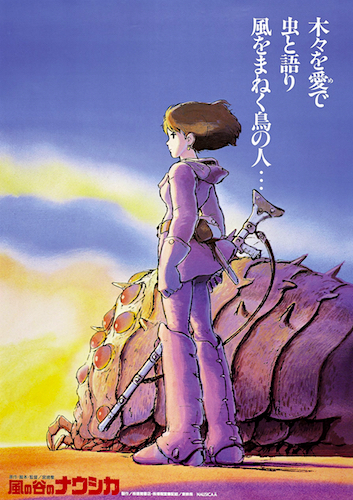

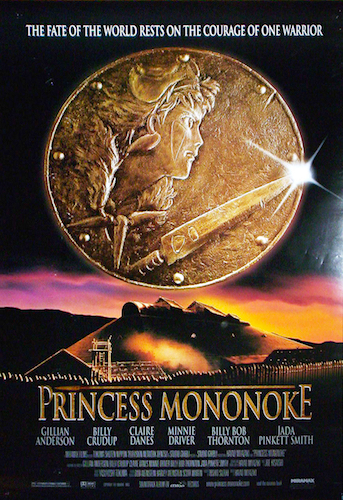
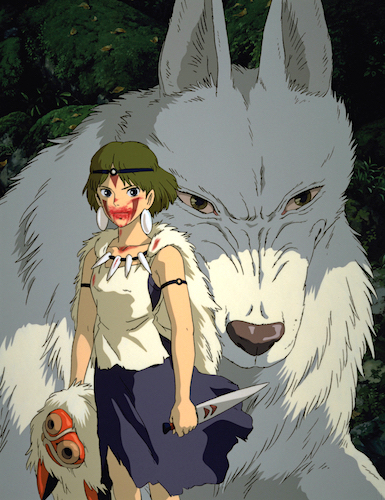
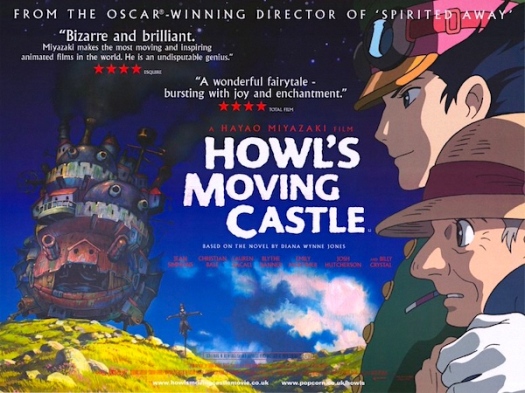

 Once, a few years ago, SFX published an anime special (it was their first, I think) with a rundown of the Best Ever Anime Films. You’d expect it to be topped by something regularly cited and, considering the source magazine, science-fiction/fantasy-y —
  It’s not scary in the slightest (well, maybe in the slightest, for some kids, but note the U and G ratings), but in terms of how it balances real-life dramas with the fantasy element. Only in both the real and fantasy worlds it’s a lot nicer, friendlier and cheerier than del Toro’s acclaimed fantasy-horror. To put it more succinctly, they share a similar structure and balance, but a completely different tone.
 The English-friendly version has advantages too: I love any subtitles which use semicolons. It’s not inundated with them, but there was at least one. Semicolons are so underused. I love a good semicolon.
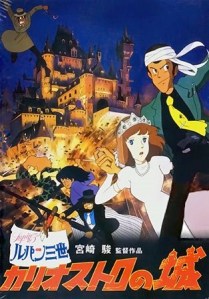 The Castle of Cagliostro, the second animated big-screen spin-off from manga-inspired anime TV series
 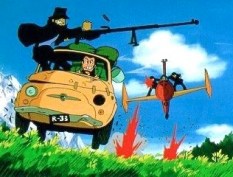 As I mentioned, this is the second spin-off film from a TV series, and at times it does feel like it: characters turn up under the impression the audience already knows who they are and what their connection is to the others. It’s not a major problem — most are introduced well enough within the context of the film that it can still be easily followed — but it’s there.
 Um, where was I? Oh yes: Indiana Jones; Roger Moore-era James Bond — it’s that kind of tone, more or less, and if you enjoy that kind of film then I don’t see why you wouldn’t enjoy this. Unless you think cartoons are for kiddies only (in which case, see the long sentence at the end of the last paragraph).
 100Films.co.uk