
Mike Newell | 157 mins | Blu-ray | 2.40:1 | UK & USA / English | 12 / PG-13
 The fourth Harry Potter film is the pivot around which the series revolves, in oh so many ways. Most obviously, it’s book 4 of 7 — the halfway point. It’s also where the books switch from short ‘children’s novel’ lengths to the huge tomes they eventually became. More importantly, it’s the instalment on which the overarching plot of the entire series hangs. Although each previous entry in the Potter canon contributed something to the mythology (even if sometimes its significance wouldn’t become apparent until much later), they’re still viewable as discrete adventures. So too is Goblet of Fire, for the most part — the exception being its final act, which kicks off the story that will consume the rest of the series.
The film is no less of a turning point, for its own reasons. Note that this is when the films’ marketing began to emphasise the ageing of the actors: the teaser trailer begins with shots of Harry, Ron and Hermione from each of the four films; the promotional TV specials go behind the scenes not only on the new film but also its predecessors; clearly substantial retrospective interviews were conducted too: watch the Creating the World of Harry Potter: The Magic Begins documentary on the Philosopher’s Stone Ultimate Edition and it tells the story of the films’ birth by mixing interviews not only from the sets of the first film and the ‘now’ of the final film’s production, but also in costumes and on sets from the fourth movie.
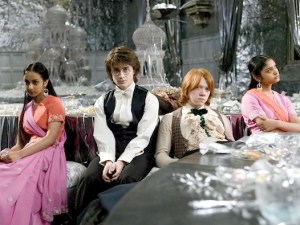 It makes sense: at this point the series was moving beyond your stock franchise length of “trilogy” and into less frequently charted waters, amid speculation that the leads would be recast. With Goblet of Fire being the last point you could reasonably pull that off, I imagine it paid to emphasise that these were the same kids — that we see a cast age in more-or-less real time throughout their childhood, including many small supporting roles as well as the leads, is one of the Potter films’ more unique highlights.
The other big behind-the-scenes decision was one of length. As noted, this is the first Potter story to explode from a short children’s tale, which could be adapted in full in two-and-a-half to three hours, to a lengthy novel that would require masses of time to cover in full. Considerations of spreading it across two films were reportedly dismissed when director Mike Newell promised he could do it in one, essentially by cutting subplots and extraneous material — much as Alfonso Cuarón had on Prisoner of Azkaban, but on a grander scale. (Imagine if they hadn’t made that choice: instead of eight films, the Potter series would have sprawled to 11 instalments!) The result of such editing here is a very direct film, rattling through its plot — even with stuff cut, there’s still a lot of story to cover.
Said story concerns two foreign schools visiting Hogwarts for the Triwizard Tournament, a series of dangerous challenges, into which someone enters Harry against his will. It’s a nice clear through-line: a series of tasks, interspersed with investigations into who forced Harry to participate and why. It all comes to a head in one of the series’ most famous moments, the murder of Cedric Diggory. 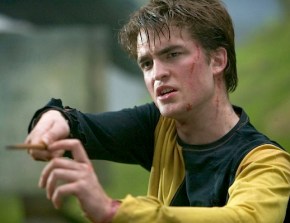 I can’t remember if Diggory’s meant to be a nice guy or an irritating jock, but here he’s played by Robert Pattinson, proving it’s not only his involvement with the Twilight franchise that makes him smug and annoying. Still, the impact of Diggory’s demise is still shocking and effective for those who don’t know it’s coming — this isn’t just a light series of children’s adventures any more. Of course, the death of a single-book supporting character is less impactful with an awareness of the franchise as a whole — there’s much worse to come, leaving this a mere opening move.
The other element that begins to creep in from this point is all the teenage romance stuff. Provoked mainly by the Yule Ball, with the guys having to pluck up courage to ask girls and dance lessons with teachers, the characters’ love lives start to become a notable factor. For all the plausibility and humour with which it’s depicted, there are times later when it will become a bit tiresome, especially in the novels. Fortunately, much of that’s internal monologue and subplot, and so goes astray here. Extra thanks to Mr Newell for that.
One of the more overlooked facets of Rowling’s work is her penchant for allegory and gentle satire. That’s understandable — they’re just Kids’ Books about magic, after all, and occasionally thuddingly written ones at that. Allegory you can take or leave (who’s really going to gain a perspective on HIV from Lupin’s struggle with lycanthropy?), but the satire is nice. Here it’s the press under fire. Rita Skeeter may have a greatly reduced role compared to the novel, 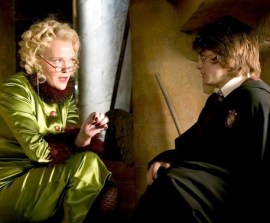 but her Quick-Quotes Quill — which, essentially, just makes stuff up — is present and correct. The next tale, Order of the Phoenix, carries on this motif (the press demonise Harry), as well as setting its sights on blinkered and ineffectual government, and the evils of exam-focused impractical teachers. It’s all rather pleasing, actually, and you have to hope Potter’s millions of readers took it in and learnt something.
It’s easy to let certain events overshadow the entirety of Goblet of Fire; to subsume it into the single long narrative that arguably takes over the later stories. But though it puts broader events in motion, this is still a self-contained tale all its own — and one of the series’ most exciting at that, between storming action sequences and some effective twists. There’s a fair argument to be made that it’s the film series’ best entry.

In about a month, as I’ve already joined the Order of the Phoenix, uncovered the Half-Blood-Prince, and found both parts of the Deathly Hallows, I’ll offer an overview of the David Yates films…
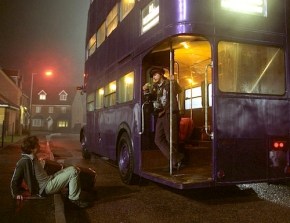
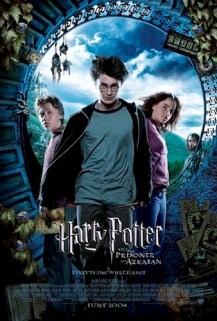 Prisoner of Azkaban marks a significant turning point for the Harry Potter film series. Viewed now, it’s easy to see it as just Episode 3 of 8; a saga still getting underway. At the time, coming off the back of two incredibly successful films, it felt like a grand shake-up of an established formula.
 Cuarón and screenwriter Steve Kloves (who would pen every Potter film bar
 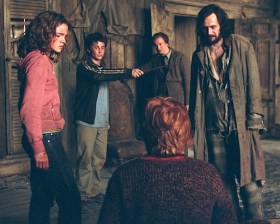 The film series doesn’t treat either of them particularly well compared to the books, but then supporting characters and subplots are the first things to go (quite rightly).
 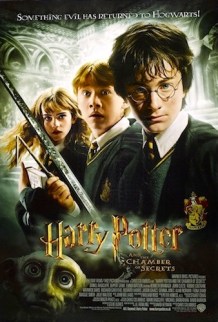 This extended cut takes the already-lengthy second instalment in the Harry Potter franchise and pushes it to nearly three hours (though if you lop off the extensive end credits it’s more like two-and-three-quarters). As with the extended version of
 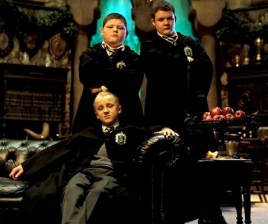 The longest extension comes near the start, when Harry misspeaks while using Floo powder and ends up in the nasty part of Diagon Alley. In the theatrical version he just walks out of the creepy shop, but here he has to hide as Malfoys Senior and Junior enter to sell some items. Though it has the advantage of showing us how Lucius treats his son when out of sight of more respectable wizards, and possibly seeds something for later films (what is the one item Malfoy isn’t prepared to sell?), it dilutes the introduction of Jason Isaacs’ villain, which in the theatrical version came slightly later in the bookshop, where he bumps into Harry, Hermione and the Weasleys as they’re leaving Lockhart’s signing. It’s a more effective, more dramatic introduction to someone who will become a major character as the series progresses.
 There are, arguably, three notable additions to the cast this time out. The first is Lucius Malfoy who, as discussed, will come into his own later. Then there’s Gilderoy Lockhart, a preening wizard celebrity played with relish by Kenneth Branagh. He’s often very amusing and there’s not enough of him. And then there’s Dobby. Apparently Dobby is a beloved character; apparently kids really like him. I’ve always found him intensely irritating, and was surprised how much Rowling made me warm to him in
 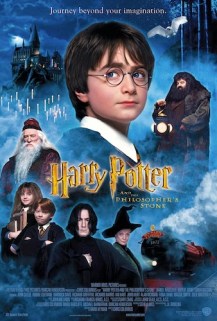 Originally created for the film’s US TV premiere in May 2004, then later released on the film’s Ultimate Edition in 2009 (and not making it to the UK in HD until the Wizard’s Collection last September), this Extended Version of the first Harry Potter film adds six-and-a-half minutes of new bits and bobs to the already lengthy adaptation.
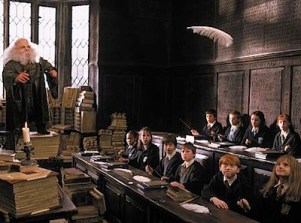 (See all of that with pictures
 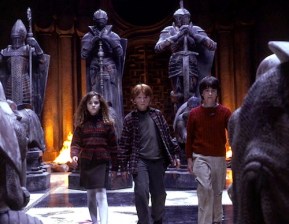 that wasn’t common practice back at the turn of the millennium (unless your name was Ridley Scott), so the filmmakers can’t be blamed for not doing it. As it stands, I think they mostly struck a fair balance between fidelity and the fact it’s an adaptation. Similarly, Columbus’ direction is rarely exemplary, but it’s competent with some memorable moments.
 After a decade on screen, the fantasy series comes to an action-packed conclusion. Adapting the final novel’s second half, it’s mostly finale, to both
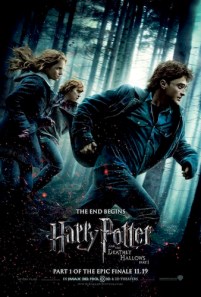 While the final Harry Potter film continues to obliterate records at box offices around the world, I finally caught up on the penultimate instalment in the phenomenal fantasy series. It’s Part 1 of
 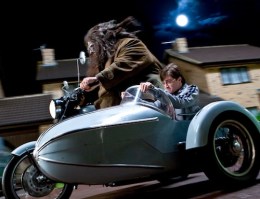 of having seven books each covering a school year, but hush, let’s overlook that (everyone else seems to).
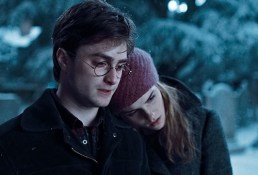 Talking of exceptional sequences, the animated one can’t go unmentioned. It’s wonderfully done, inspired by old silhouette animations, though achieved in 3D animation here, which is a pity. It’s still beautiful to look at, and it’s very fluid, but I can’t help but feel it would’ve been even more effective if they’d gone all out and done it in 2D.
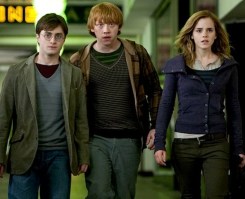 Themes of Nazi/Stalinist-style oppression are played up in the story (trials of those whose “blood status” is in doubt; listening to the radio for news of loved ones; Bellatrix’s torture of Hermione) and production design (the muggle-crushing new statue in the Ministry; the art style of anti-mudblood propaganda leaflets; the uniforms of the Ministry guards), but it’s subtle enough that it doesn’t batter you around the head.
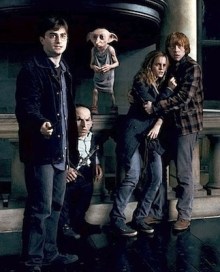 And so, the ending — which isn’t, because we’re in the middle of the book. So how well does it work as, y’know, an ending? Quite well, as it turns out — indeed, one might even compare it to something like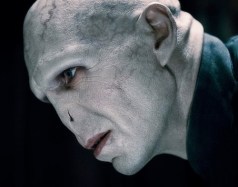
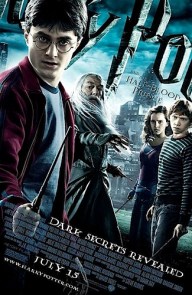 By this point I imagine everyone has a pretty clear idea what they think of Harry Potter, and this latest film certainly isn’t going to change that. That’s not to say it’s bad — in fact, it’s rather good — but Harry Potter is what it is, and nothing’s going to change that, least of all these thoroughly faithful adaptations.
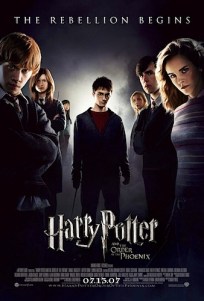 The main problem here lies in trying to condense a 600+ page novel into a bit over two hours. While the book feels padded, watching the film it becomes apparent that this actually builds mystery and suspense, most of which is lost in what feels like a series of extended montages that create an abridged version of the book. The direction is stylish and there are still some neat action sequences, but it lacks much of the fun or flowing coherence of the previous two entries.
 100Films.co.uk