
And so, we reach the end of 2020.
I don’t know about you, but this feels like a, “what, already?!” moment to me. Putting my year-in-review posts together used to seem to take ages, but this year it feels like I’ve barely begun and now it’s over. But that’s enough about my subjective perception of time — let’s talk about movies in 2020, like Tenet, which is partly about… um, never mind.
This final year-in-review post does what it says on the tin: it’s a list of my favourite films that I saw in 2020 (normally my least-favourites would be here too, but I did those already). A note for newcomers and/or reminder to the forgetful: rather than just 2020 releases, I select my list from all 264 movies I saw for the first time during 2020. That’s partly because there are tonnes of new releases that I never see in time — which is also why this post contains a list of 50 significant films I missed.
Compiling this year’s lists has taken a lot of thinking, rearranging, cutting, reflecting, re-adding, re-rearranging, and a certain amount of “oh, that’ll do, what does it matter anyway” to actually get them out the door. Here’s what I ended up with…

Since 2016, I’ve replaced the usual “top ten” with a “top 10%”. As I watched 264 films in 2020, that means this year’s list has 26 films. (If you think that’s too many, feel free to scroll down and start from wherever you like.)
Although all the movies I watched for the first time in 2020 are eligible, I did watch 57 films that had their UK release in 2020, so I’ve noted the ‘2020 rank’ of the eight that made it in. (I also saw a couple of 2020-UK-release films at FilmBath Festival in 2019. As they were already ranked as 2019, I’ve not factored them in here.)
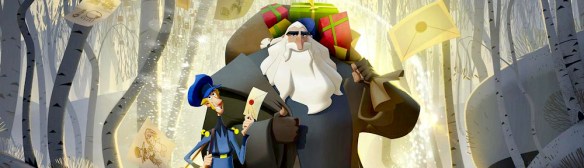
The animation is absolutely gorgeous in this Oscar-nominated BAFTA-winning Netflix original about a disaffected postman who helps originate the legend of Santa.
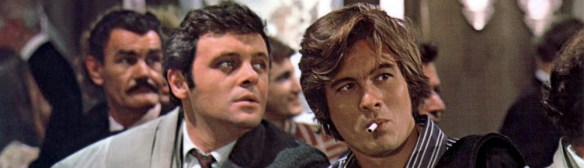
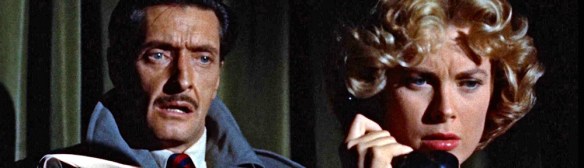
As intelligent and tense a thriller as you’d expect from Hitchcock; so good it even manages to make you overlook its obvious stage-bound roots. Superb in 3D, too.
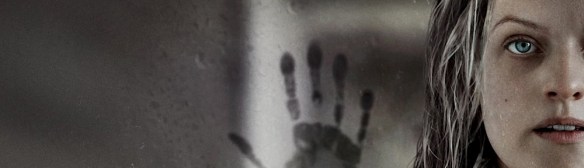

From its astounding opening to its hard-hitting final act, Last Black Man is an astonishing cinematic experience about the stories we tell ourselves about ourselves. [Full review.]

William Holden and Audrey Hepburn are clearly having a whale of a time in this marvellously cine-literate ’60s romp about a struggling screenwriter. [Full review.]


Ingmar Bergman described this as “the sum total of [his] life as a filmmaker”. Blending familial drama with a dash of magical realism and the supernatural, it’s a masterful work.


2020 #7 It’s “Agatha Christie meets the Coen brothers in a nudist camp” as the eponymous handyman searches for his missing hammer in a world full of wobbly bits, where anyone might’ve taken it. [Full review.]
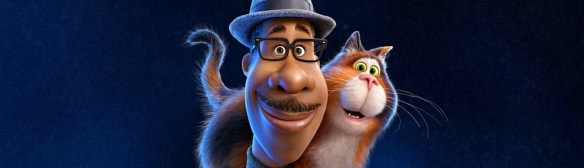
2020 #5 Pixar have often been praised for making films for grown-ups. That’s not something I’d wholly agree with, until now. Not as cutesy as the rest of their output (largely), Soul asks big questions about what makes us who we are. All wrapped up in a buddy-quest storyline, of course.
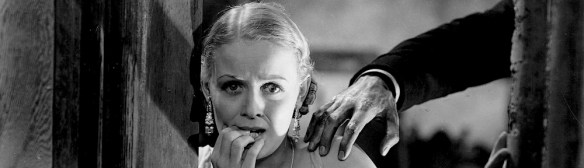
As amusing as a droll comedy and as atmospheric as a creepy old-school horror, James “director of Frankenstein” Whale’s genre classic is just a lot of fun.
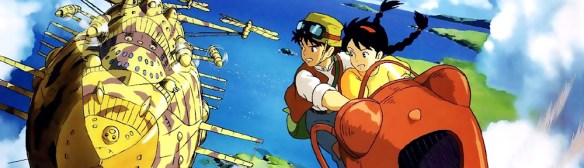
Rocketman
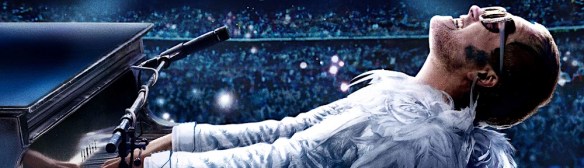
Taron Egerton stars as Elton John for this unusual biopic of the singer. Part traditional musician biopic, part jukebox musical, director Dexter Fletcher remixes John’s music into some imaginatively staged sequences, while Egerton and his supporting cast (in particular Jamie Bell) give thoughtful, nuanced performances. The cumulative effect is a movie that is highly enjoyable but not without depth. [Full review.]
The Lady Vanishes

Alfred Hitchcock is probably most renowned for his Hollywood movies (Pyscho, Vertigo, Rear Window, etc), but we shouldn’t forget his British output — these are the films that got him Hollywood’s attention, after all. The director’s second appearance on this year’s list is one of the last films he made before that jump across the pond. It’s a mystery thriller about an old lady who somehow disappears from a moving train, and a couple of youngsters who try to find out how and why. It’s witty, it’s clever, and it’s exciting — all the things for which Hitch is best known.
Judgment at Nuremberg

This fictionalised account of the military tribunals that took place following the Second World War sets its sights not on the trials of major Nazi leaders, but on the subsequent trials that assessed the guilt of people further down the chain — here, four judges and prosecutors who helped facilitate the Nazi’s crimes. For such weighty material, this is an appropriately weighty film — a long, complex, methodical, harrowing account. Boldly directed by Stanley Kramer, and with an incredible cast all giving first-rate performances, this remains a powerful, brilliant film.
Tim’s Vermeer

Computer graphics pioneer and inventor Tim Jenison is an art enthusiast, fascinated by the work of Dutch master Johannes Vermeer, in whose work his engineer’s brain sees a near-impossible photographic accuracy. So, he sets out to prove and expound upon existing theories that Vermeer painted with the aid of some kind of optical device. What unfolds is an astonishing story of obsession, dedication, and art historiography, which challenges your idea of where the line lies between art and technology.
1917

2020 #4 Sam Mendes’s single-take(-kinda) World War One adventure ended up losing many of the big prizes to Parasite last awards season (FYI, they both count as 2020 films here due to UK release dates in January and February, respectively). But that doesn’t mean it’s any less of an extraordinary experience. I love a long single take (fake or not), and I love stories that unfold in real-time, and I feel World War One has been under-represented on screen — so when Mendes takes all of those things and executes them brilliantly (having Roger Deakins on cinematography helps), you get a film that’s right up my street. [Full review.]
Bait
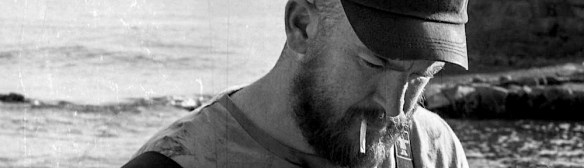
If 1917 uses all the skills of modern tech to craft an almost old-fashioned epic, Bait is practically the polar opposite: old-school techniques (a wind-up camera; hand-developed 16mm film; post-sync sound) to tell a very modern story (broadly, about the economic plight of Cornish fishermen). It could be pretentiously arthouse or an insufferable polemic, but it’s neither. Instead, the story is told with genuine heart, drama, and humour, and the handmade aesthetic adds an appreciable, beautiful texture. [Full review.]
Parasite

2020 #3 If you use Letterboxd, the latest film from acclaimed South Korean director Bong Joon Ho comes with a heavy millstone round its neck: according to that site’s users, it’s the greatest film ever made. Like Citizen Kane before it, such a label can be a distraction, and makes some people want to push back against it (is that why I’ve only ranked it at #4? You decide). “Best film ever” or not, the first non-English-language film to win the Best Picture Oscar is a timely deconstruction of class systems — just who are the eponymous parasites, actually? Even aside from big societal questions, it’s a thrilling piece of filmmaking; tense, exciting, and surprising.
Hamilton
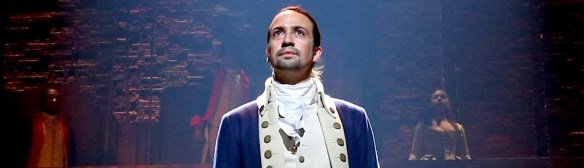
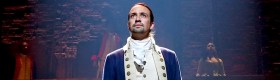
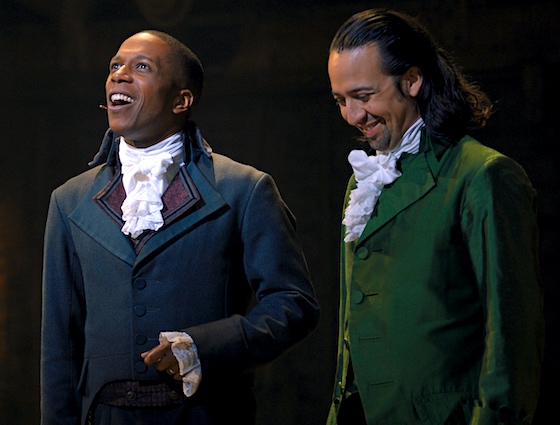
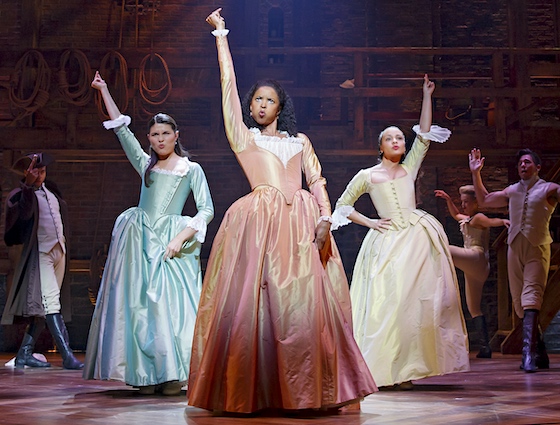
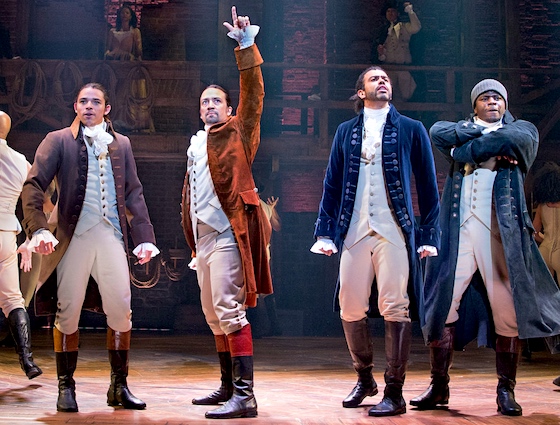
2020 #2 Can a filmed stage production be the year’s best film? Um… Well, that’s a major reason why Hamilton is in 3rd place for my 2020 viewing and 2nd place for 2020 releases: it’s not really a film, right? Well, it’s definitely some kind of historical record — not of the life of Alexander Hamilton, but of a theatre production that took the world by storm. Here we get to witness the original Broadway cast in the show’s original staging, allowing us all the chance to witness a genuine cultural phenomenon first-hand. But this is not merely a couple of cameras plonked into the audience for the sake of posterity: director Thomas Kail users multiple cinematic techniques to make a film that truly feels like a film. Yes, it’s still theatrical, but it feels like this is how this story is meant to be (cf. something like Dogville: also very theatrical; also definitely a film). Theatres will reopen and we’ll be able to see Hamilton in the flesh again; and someday they’ll inevitably make a ‘real’ movie adaptation; and even still, this film will stand as a legitimate, magnificent experience in its own right. [Full review.]

2020 #1 Writer-director Eliza Hittman’s story of a Pennsylvanian teenager forced to travel to New York for an abortion is told with documentary-like subtlety and understatement, but the result is incredibly moving and powerful. Without ever explicitly stating it, the film is an eloquent condemnation of US systems that force poor and struggling individuals to jump through hoops to access care that those of us in the rest of the developed world might consider basic rights. It’s a potent reminder that, for all its claims of being a highly-developed world-leader, for many of its citizens the US is as regressive, prejudiced, and unequal as the ‘Third World’ countries it so often seeks to demonise. [Full review.]
Do the Right Thing

If there’s one feature that links many films on this year’s list, it’s timeliness: films that connect with some of the big sociopolitical issues of our day. Do the Right Thing was made over 30 years ago, but in its subject matter — a stiflingly hot day in a Brooklyn neighbourhood causes tensions to boil over into white-on-black violence — it could scarcely be more 2020. But this is not about “which film best encapsulates the year”, and so Spike Lee’s film tops my list because of all its other qualities, too. It’s a portrait of a place; a day-in-the-life hangout movie, where we follow myriad characters as they go about their business; 90-or-so minutes in which we get to understand the neighbourhood, to know its inhabitants… before the powder keg explodes and everything changes. Except, as we now know, nothing’s really changed at all.

As usual, I’d just like to highlight a few other films.
First, the cinematic masterpiece that is Love on a Leash. If you’re unfamiliar with this feat of cinematic excellence, may I recommend my review. It’s not exactly #27, because at various points while curating my list I had it in the top ten, the top twenty, in 26th place… but, eventually, not in the list at all. As I discussed in my review, it’s a film that’s hard to categorise: it’s simultaneously a one-star disaster and a five-star artistic experience. It’s an object lesson in why criticism of art can never be objective, because it’s unquestionable that it’s terribly made in every respect, and yet it’s nonstop entertaining, even thought-provoking, and certainly unique. (Of course, some people would say it’s objectively bad. Those people are wrong.)
I’m someone who believes “best” and “favourite” can be different things: in 2020, I saw some movies I would acknowledge as great but that didn’t make the Top 26 because they didn’t really entertain me; equally, some films got in that are indeed great but I may never rewatch, whereas I left out simpler fare that I’m sure I’ll revisit. In a ranking of the “best” films I saw this year, no way does Love on a Leash get close; but in terms of my “favourite” films, it might’ve been pretty damn high. My final Top 26 falls somewhere between those two stools, but does carry the “best of” name, and so it felt insulting to any other film in the list (or, indeed, to those that tried but failed to squeeze in) to rank Love on a Leash above them. So here it is instead: first among my “honourable mentions”, with two solid paragraphs dedicated to it — more than any film in the actual list. So who’s the real winner, eh?
Next, let’s recap the 12 films that won Favourite Film of the Month at the Arbies, some of which have already been mentioned and some of which haven’t. In chronological order, with links to the relevant awards, they were Laputa: Castle in the Sky, All Quiet on the Western Front, The Lady Vanishes, Aniara, Belladonna of Sadness, Paris When It Sizzles, Hamilton, Bad Boys for Life, Fanny and Alexander, Tim’s Vermeer, An American Werewolf in London, and Klaus.
Finally, I always list every film that earned a 5-star rating this year. It’s especially pertinent this year, given how few reviews I’ve actually posted; although, as I noted in my stats post, it’s possible some of these ratings will be revised when I come to write a full review. But, for now, the 39 films with full marks are 1917, All About Eve, All Quiet on the Western Front, An American Werewolf in London, Anand, Aniara, Bait, Belladonna of Sadness, Dial M for Murder, Do the Right Thing, E.T. the Extra-Terrestrial, Fanny and Alexander, The French Connection, Hamilton, Harakiri, I Am a Fugitive from a Chain Gang, In the Mood for Love, The Invisible Guest, Judgment at Nuremberg, Knives Out, Lady Bird, The Lady Vanishes, Laputa: Castle in the Sky, The Last Black Man in San Francisco, Little Women, The Looking Glass War, Love on a Leash, The Lunchbox, A Man for All Seasons, Man on Wire, Marriage Story, Never Rarely Sometimes Always, Parasite, Paris When It Sizzles, Philomena, Rocketman, Safety Last!, Soul, and Tim’s Vermeer. Plus, this year I also gave five stars to Mission: Impossible – Fallout in 3D, and (earmarked for the ‘Guide To’ treatment at some point) Tim Burton’s Batman and Monty Python’s Life of Brian. There were also several short films that merited the accolade, namely Flush Lou, The Last Video Store, The Monkeys on Our Backs, and The Starey Bampire.

It may have felt like 2020 was a year bereft of movies, as blockbuster after blockbuster got kicked into 2021, but plenty of stuff still came out — both major releases that took the streaming plunge, and smaller titles that probably wouldn’t’ve seen huge theatrical box office anyway; not to mention stuff that’s going to count as 2020 due to festival screenings but won’t really be released anywhere until 2021; and, of course, all the streamers’ own original movies.
Even though I did watch 57 movies that had a UK release in 2020, there were a considerable number I missed. So, as always, here’s an alphabetical list of 50 films from 2020 that I’ve not yet seen. (I normally use IMDb’s dating to decide what’s eligible for inclusion, but I’ve allowed a handful that are listed as 2019 only because of festival screenings.) These have been chosen for a variety of reasons, from box office success to critical acclaim via simple notoriety. There are many more I want to see that I could have included, but I always attempt to feature a spread of styles and genres, successes and failures.






Ammonite
Another Round
Artemis Fowl
Bill & Ted Face the Music
The Call of the Wild
Da 5 Bloods
David Byrne’s American Utopia
The Devil All the Time
Dolittle
The Eight Hundred
The Father
The Gentlemen
The Half of It
Happiest Season
Hillbilly Elegy
Host
The Hunt
I’m Thinking of Ending Things
Kajillionaire
The King of Staten Island
Ma Rainey’s Black Bottom
Mank
The Midnight Sky
Military Wives
Minari
Miss Juneteenth
Mulan
My Spy
The New Mutants
News of the World
Nomadland
One Night in Miami…
Onward
Peninsula
Possessor
Promising Young Woman
Rebecca
Saint Maud
Scoob!
The Secret Garden
Shirley
The Social Dilemma
Sonic the Hedgehog
Supernova
The Trial of the Chicago 7
True History of the Kelly Gang
The Witches
WolfWalkers
Wonder Woman 1984

And that is 2020 over and done with — hurrah!
Ignoring for a moment all the news that’s currently telling us how 2021 will be just as bad, if not worse, one thing to look forward to is that it’s my 15th year writing this blog. 15 years! I feel old… The actual date of the blog’s 15th birthday is at the end of February 2022, so I’ve got a little time yet to prepare some kind of celebration.
In the meantime, let’s watch some more films…





 Favourite Film of the Month











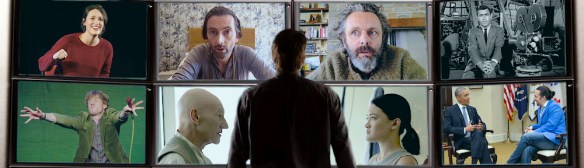



 This filmed-in-lockdown comedy stars David Tennant and Michael Sheen as they attempt to rehearse a play over the internet, the goal being they’ll be ready to put it on as soon as theatres reopen. Naturally, there’s much more to it than two actors practising a play — indeed, I’m not sure they ever actually get round to any proper rehearsing. Conflicts abound, both broadly relatable (Sheen is blackmailed into helping look after his elderly neighbour, but develops genuine concern for her) and actorly (a running debate/gag about which of the pair should get top billing), and there are a couple of big-name surprise cameos along the way (no spoilers — the surprises are worth it). With all episodes in the 15- to 20-minute range, the series is hardly a big time commitment (it runs well under two hours in total), but it’s well worth it and consistently funny. Indeed, I wish there was going to be more. Well, a second lockdown isn’t out of the question yet, is it…
 This documentary first aired back in 2016, in the wake of Hamilton’s success on stage. I’m not sure if it’s ever been screened in the UK, but I tracked down a copy after watching
 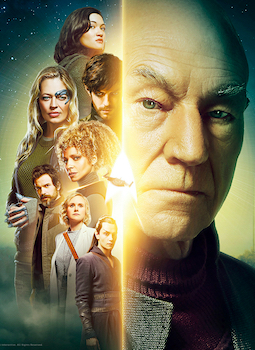 I started this when it began in January, and have been slowly trekking through it ever since — it’s taken me six whole months to get through just ten episodes. That’s a commentary in itself as to what I thought of it, I suppose, though if you asked me I’d say it’s “not bad”.
 I’ve never got round to Phoebe Waller-Bridge’s much-acclaimed sitcom, but, during lockdown, Amazon offered the original one-woman-show stage version (recorded last year during a live cinema broadcast) as a charity rental, so I thought I’d see what the fuss was about. My reaction was… muted, to be honest. I can certainly see how it pushes at boundaries, both of the depiction of women in fiction and of taste in general, and for that reason it’s significant, but I only found it sporadically funny, which makes it somewhat unsatisfying as a comedy. Also, I wasn’t expecting it to get so dark — if you’re a lover of small furry animals, beware.
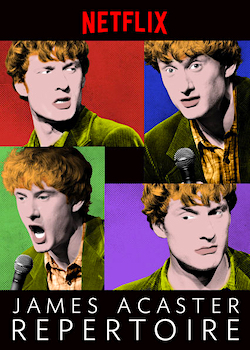 Another filmed stage comedy that left me somewhat underwhelmed. This is more straightforward stand-up, however, and as that it was more often amusing — whether you find Acaster’s “wacky” style (his word) to your taste will dictate exactly how funny. For me, he’s not the most consistently hilarious standup I’ve seen, but provoked laughs regularly enough. The real selling point here, however, is that it’s a four-parter. Ever heard of a multi-part stand-up gig before? Me either. These aren’t just four entirely independent gigs box-set-ed up either, but were conceived and shot as four connected sets.
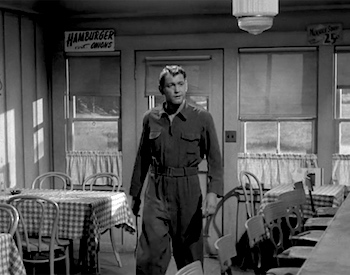 This month’s selection begins at the very beginning: the first-ever Twilight Zone episode, Where is Everybody? The title alone is a pretty succinct pitch of the episode’s theme, and the episode is as one-note as its premise. This is an exciting story in which a bloke… gets himself coffee, and… talks to a mannequin, and… tries to phone the operator but can’t get through, and… has an ice cream, and… yeeeaaah. The twist ending isn’t much cop either, 50% “it was all a dream”, 50% a thin moral about humans’ need for companionship. It could’ve been better: Rod Serling’s original pitch for episode one was a tale about a society where people were executed when they turned 60, which I think is a better concept, but it was deemed too depressing (imagine what they would’ve made of Logan’s Run, where the executions happen at 30!) That said, “everybody’s gone” is a reasonable starting idea, but the episode needs (a) more places to go with it, and (b) a more interesting reveal. (See
  I’ve written before that some episodes suffer from the series’ own influence, or just from an ensuing 60 years of sophistication on the part of the viewer, and Nightmare as a Child is a case in point. It has two reveals, and they’re both not so much guessable as obvious and inevitable. There’s even a bit of a coda to thoroughly explain it all again in case you didn’t get it. Maybe that was necessary back in 1960, when stories like this were breaking new ground in the audience’s minds, but today it feels like overkill. However, I wouldn’t say it’s a bad episode — indeed, the story of a woman meeting a strange little girl who seems to know an impossible amount about her life is still suitably eerie and tense in places — but it is one that plays less effectively today. That said, if you engage with it not as a mystery with a surprise but as simply a story, it has more to offer — Kozak compares it to “a tightly wound Hitchcockian thriller/murder mystery”, while Scott Beggs of
 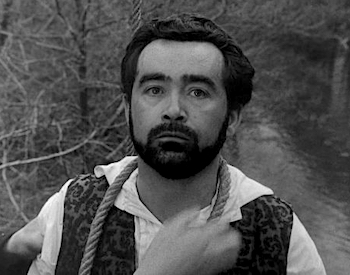 Having begun today with Twilight Zone’s first episode, we end with the last one produced — although they didn’t actually produce it. An Occurrence at Owl Creek Bridge is an award-winning French short film that Serling saw and liked so much he bought the TV rights (saving so much money on the cost of producing another episode that he brought season five in on budget). Even if Serling didn’t point out its alternate origin in his introduction, it’s immediately clear this came from somewhere else, because it doesn’t look or feel at all like a normal TZ episode. So what made Serling think it would fit the show? Why, it has an ironic last-minute twist, of course! This is regularly one of the best-regarded episodes of the series, and the short film itself has a pretty strong rep too, but I don’t get it. There’s some pretty photography and the beginning is fairly atmospheric, but it quickly starts to drag — the story is thin and slow, ending with a twist that I found inevitable from early on.
 Last month, I didn’t include this section because I couldn’t think of anything to put in it. Naturally I then spent the next couple of days remembering things, like the recent re-adaptations of Alex Rider on Amazon and Snowpiercer on Netflix. Obviously, I still haven’t watched either of those. More recently, Netflix launched Cursed, a young adult (I think) take on Arthurian legend from the point of view of the Lady of the Lake. I’m not wholly convinced by the trailers or buzz, but I do love a bit of Arthurian whatnot so it’s on my radar. Also passingly of note is that Amazon just released season three of Absentia. I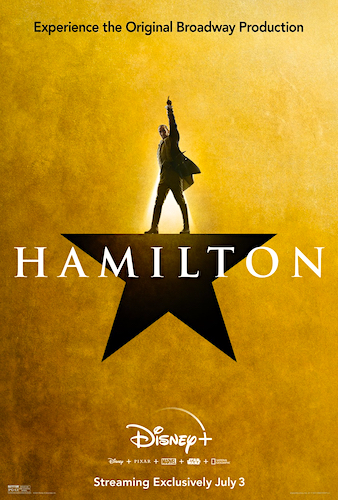

 100Films.co.uk