
Between trips away and rotten colds, my posting (and viewing) this month has been in rather short supply. That explains both why this TV column is later than normal and why it covers series that the constantly-churning “Netflix new releases” discussion cycle has already moved on from. (Next month: belated commentary on The Umbrella Academy, maybe.)
As well as Netflix shows that came out a while ago, there’s a BBC show that finished a while ago, an Amazon series that isn’t really out yet, and some thoughts on last weekend’s Academy Awards.

The Punisher Season 2
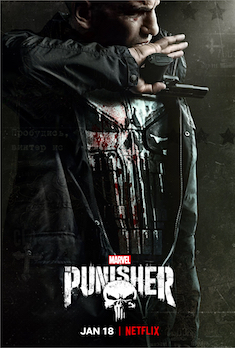 Earlier this month the news everyone had been expecting was finally made official: Netflix was cancelling The Punisher and Jessica Jones, thereby bringing to an end the era of the MCU on the streamer. Altogether it will have produced 13 seasons and 161 hours of television, ending with the release of Jessica Jones season three sometime later this year — which will be a more appropriate time to get into this, I guess. For now, there’s just the second — and, as it turned out, final — season of The Punisher.
Picking up a year after the first season, initially it seems like this will be an all-new tale for the eponymous antihero (Jon Bernthal) when he finds himself protecting an ungrateful teenager, Rachel (Giorgia Whigham), from a group of highly-trained assassins who want to kill her for reasons she and they won’t divulge. There’s plenty of mystery around the girl, the villain hunting her (a religious fundamentalist type who goes by the name Pilgrim (Josh Stewart)), what everyone’s motives are, and what the bigger picture might be. At one point our heroes get arrested by small-town sheriffs and the series gives over a whole episode to an Assault on Precinct 13 homage. It’s all good.
But then stuff left hanging from season one begins to creep in. No surprise, really: that first run did the usual Marvel/Netflix thing of introducing us to a character destined to become a more famous character, then spent the whole season getting there. In this case its Punisher nemesis Jigsaw (also the villain of Punisher: War Zone, FYI), aka Billy Russo (Ben Barnes), Frank Castle’s friend-turned-enemy whose face he lacerated in the season one finale. So, they were due a rematch. Unfortunately, here Russo’s storyline plays out with that other regular fault of Marvel/Netflix series: it… takes… ages… to… get… anywhere… And as we keep cutting away from Frank and his new ward to spend time on Russo, it’s slow pace is even more distracting.
 The two plots do converge somewhat, naturally, with Frank having to deal with the machinations of Russo/Jigsaw at the same time as Pilgrim is coming after him. That means the series has to juggle the two stories as well, and it does that less than effectively, swinging back and forth between which it wants to focus on. For me, the problem remained the same: the new plot is interesting with a lot of potential, while the season one hangovers feel like little more than unfinished business. The latter become stretched out to fill the season, going round in circles, rather than being dealt with succinctly. Conversely, with that stealing so much space, the Pilgrim and Rachel story doesn’t get the screen time it needs or deserves. It seems like there’s a half decent balance at first, but that ultimately goes awry, and the ins and outs of the new storyline (I keep wanting to call it the “main” story, but that’s only true in a couple of early episodes) aren’t as explored as much as they should be. Considering there’s some interesting potential in there (Frank and Rachel have great chemistry, and the plot shapes up as a kind of political thriller, in a 24-esque way), it’s a shame it goes under utilised. It also comes to a great conclusion, showing it’s the real star element of the season. That said, the ending to the Russo story is good too (and so, combined, they make for an exciting finale), it just shouldn’t‘ve taken up so much time.
I wouldn’t go so far as to call The Punisher’s second season a disappointment — there’s a lot to like here for fans of the character and the series — but its lack of focus is a drawback. On the bright side, it wraps things up enough that this is an okay place to leave it. It’s open-ended for more adventures, of course (the across-the-board cancellations came so late in the day that none of the shows had planned for them), but there aren’t direct “what happens next?” questions like in Luke Cage or Iron Fist. Considering the chances of a revival on a Disney-owned platform seem to be 50/50 at best, at least there’s that.
Russian Doll Season 1
 You spend years wondering if anyone could re-do the premise behind Groundhog Day in a different way (well, maybe you don’t, but the thought has crossed my mind), and then several come along… not exactly at once, but in relatively close succession. So, following Happy Death Day, which saw a college student having to repeatedly relive her birthday which was also the day of her murder, now we have Russian Doll, which casts co-creator Natasha Lyonne as a thirtysomething New Yorker having to repeatedly relive her birthday which is also the day she dies. Well, she’s not being murdered, at least. Indeed, the series has a few tweaks and additions to the basic premise up its sleeve, but to say too much would spoil it — although the trailer gives away at least one biggie. Of course, as this is a streaming series, it takes three whole episodes before it reaches that major game-changer.
Fortunately, the show has other things to commend it, primarily the characters. Well, one character, and a bunch of quirky funny types. But hey, this is a comedy, so we can let that slide. And as for that one actually fleshed-out character, Lyonne’s heroine, the series really makes itself about her, her attitude to life, and how the situation affects her. It’s all good stuff. Plus, if you’re here for the plot, although it takes a little while to reveal its unique twists on the formula, once they’re out in the open they build up into an intriguing mystery. And, though it starts out looking like just a comedy in the vein of those other films that have used this concept before, it actually evolves into something more psychological, darker and more complex.
Frankly, one of the main reasons I started watching Russian Doll was because I expected it to be just Groundhog Day / Happy Death Day rehashed as a TV series — that’s what it looked like from the trailers, and I was partly expecting to be able to justifiably complain about that if I’d actually watched it. But, at the same time, I do like both those films, and Russian Doll’s trailer promised at least one new twist on the formula, so I was prepared to give it a fair shout to prove itself. In the end, it deserved the latter. Sure, of course the basic premise is similar to those previous films, but it reimagines it with a dark and foul-mouthed wit that’s distinctly its own, plus it takes the concept down some entirely new avenues. I don’t know how they’d do future seasons (it was originally pitched as three seasons, but it sounds like that evolved during production, so maybe they don’t have as clear an idea as they once did), but I’ll be here for them if they come along.
Hanna Season 1 Episode 1
 Amazon are adapting Joe Wright’s 2011 film Hanna into a TV series. Apparently that was commissioned back in 2017, which I don’t recall hearing about, and I feel like I would’ve remembered because I loved the film (never did get round to writing a fuller review, though). Anyway, the first I did hear of it was when they made the first episode available for 24 hours as a preview (the whole first season will be released at the end of March).
Unsurprisingly, the story has been extended to fit its new TV format — this first hour only covers the first act of the film. At this pace, it’s very plausible it’ll take the rest of the season to get through the rest of the movie’s plot (and I’m sure they’ve got some tricks up their sleeve to extended it beyond that). But, surprisingly, it doesn’t feel horrendously slow or artificially drawn-out. This isn’t a mile-a-minute action show, but its pacing is no worse than most other streaming series, here with the added excuse that it’s setting the scene. Indeed, that’s arguably the episode’s biggest problem when viewed in isolation: it feels a bit like the real plot will kick off in episode two, and this is all prologue. On the other hand, in that sense it works all the better when released as tease ahead of the main series. Either way, it grabbed my attention enough that I’ll continue with it when the rest is released.
Les Misérables Episodes 4-6
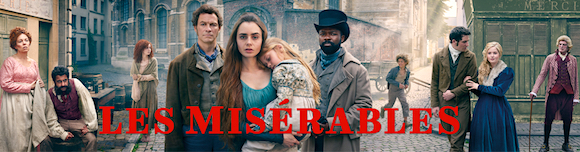
The second half of the BBC’s new adaptation of Victor Hugo’s novel (gotta be careful to be clear about that, apparently) is all set in the story’s final time period — Cosette is now a young woman, desperate to see the outside world; Marius is now a young man, whose friends seem desperate to die for a revolution; and Javert is still Javert, still desperate to catch Valjean, presumably out of sheer spite and/or pride. All the characters, connected as much by coincidence and chance as by choice or action, come together around the June Rebellion of 1832, and… well, you either know the plot or you don’t want me to spoil it for you. This remains a handsomely mounted production until the last, however, including pulling off the action at the barricades with suitable scale and impact.
That stuff always feels like it should be the climax to me. In a literal sense, it’s the big action set piece, and is the end of the road for several major characters. But no, there’s plenty left after it, for good (the final confrontations between Javert and Valjean) or ill (Thenardier in the sewers; the unearned redemption of Marius’ grandfather). I rewatched the film of the musical when I was exactly halfway through this series, and by comparison most of the movie felt like a long “previously on” montage. The exception is this post-barricade stuff, where the BBC version, conversely, feels drawn-out compared to the economy of the musical’s telling. The final part was almost quarter-of-an-hour longer than the first five, and I couldn’t help but feel a little more streamlining would’ve helped. Still, it’s a relatively minor complaint amidst what has been a typically excellent adaptation by the Beeb.
In the UK, the whole series remains available on iPlayer for the foreseeable future, while in the US it will air on PBS from April 14th.
The 91st Academy Awards
 The run-up to this year’s Oscars seemed to be mired in a mix of controversy and disinterest. The former was provoked by a variety of poor decisions by the Academy, including fiascoes around a Best Popular Film award, over who would host (it was Kevin Hart, then it wasn’t, then it was no one), and over the decision to present some awards during the ad breaks (which was scrapped, thankfully). This whole palaver is part of what fed the disinterest, along with a slate of nominees that was regarded to be generally uninspiring. As it turned out, plenty of people still tuned in (US viewing figures were slightly up from last year) and plenty of conversation was sparked. Other people can dig into it in more depth than me (and have, of course, considering the ceremony was days ago), but I will say I was overjoyed for Olivia Colman (definitely the best speech, although a couple of others were quite good too) and Spider-Verse, was quite pleased Black Panther won Best Score (I don’t know if it was actually the best overall, but I really liked it), and its other two victories (costumes and production design) were also welcome, and Spike Lee’s ecstatic win was another top moment. It wasn’t all sunshine and roses, obviously, with Best Picture in particular being an underwhelming result; though I’m not as miffed about Bohemian Rhapsody’s multiple wins as some people (even if its awards for sound editing and mixing were more about “most” than “best”).
The big takeaway from the night should probably be that going host-less worked. Queen’s opening performance was great (because Queen), and the non-monologue monologue from Maya Rudolph, Tina Fey, and Amy Poehler was another highlight of the ceremony. Things still ran smoothly, and there were no stupid asides like bringing normal people into the auditorium or whatever — cutting those time wasters was a much better idea than cutting actual awards. Maybe being host-free is the way forward, though I think they’ll need to continue finding ways to handle the monologue section going forward — the show needs some kind of intro, and a gentle ribbing of the nominees is an appropriate way to do it, I think.
Things to Catch Up On
 This month, I have mostly been missing The Umbrella Academy, as I mentioned at the start. The trailers look good (love a bit of Hazy Shade of Winter), and it seems like critical and audience reaction has been positive, so it’s definitely on my watchlist. I’m also yet to start the new series of Scottish crime drama Shetland, or The Missing’s much-anticipated spin-off Baptiste. I expect I’ll be saving those up for a little while yet.
Next month… HBO have set the Deadwood revival/finale movie to air this spring, which is, y’know, soon. I watched season one when it first aired, thought it was great, but when season two came around I found myself thoroughly lost and eventually gave up. I imported the US Blu-ray box set years ago (it’s bursting with special features vs. the UK’s completely bare bones release), and it’s been sat on my shelf waiting ever since, like so many non-pressing TV series nowadays. Well, I guess now is its time…
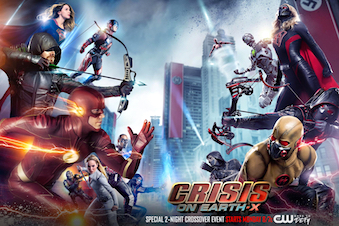
 The most recent season of Doctor Who went out, not with a bang, but with a whimper, in perhaps the most underwhelming “finale” the show has ever done. It wasn’t really a dramatic and exciting culmination of this year’s run of episodes, which is what a true “finale” is. Rather, it was just the last episode shown before the season… stopped. Fortunately, before that were two more episodes that proved this new era’s best stuff comes from its guest writers rather than its showrunner.
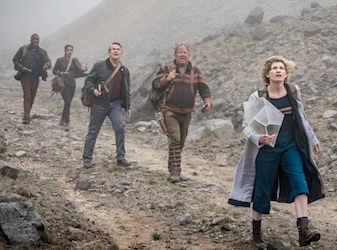 Typically for showrunner Chris Chibnall, it was a half-thought-through tale, with regular logic gaps and narrative dead ends, and none of the impact you expect from a season-ender. Kinder viewers may say that’s because there’s a New Year’s Day special imminent which is the real finale, but I think that’s just being optimistic. Certainly, the BBC haven’t seen fit to include the special in the season box set (even though it’s released a fortnight after the special airs), which I’m sure is partly a shameless cash grab, but also indicates its separate status.
 Whereas
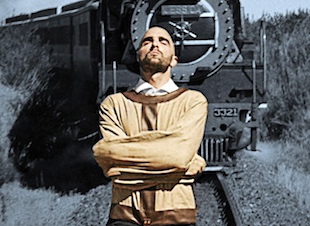
  One day I’m going to watch all of Poirot from the start, but I happened to see these few episodes this month. They’re from the series’ early days (obviously), when episodes were an hour long and based on short stories (as opposed to the feature-length novel adaptations they did later). What’s remarkable is how different they are, structurally and tonally, from those later episodes, with which I’m more familiar. The feature-length ones each feel like a standalone movie, whereas these early episodes do feel like a TV series, with “case of the week” plots. For example, there’s a regular recurring cast (alongside the titular detective there’s his sidekick Captain Hastings, his housekeeper Miss Lemon, and trusty Inspector Japp), who all appear every week and each get some kind of subplot, even if it’s not tied to the main storyline — in one episode, while the other three are away solving a jewel theft, Miss Lemon has to hunt for her missing keys. And that’s another thing: there’s not always a murder. And there’s not always a pile of suspects, either — none of these episodes feature the famous “gather all the suspects in one room and explain what happened”-style finale, so synonymous with the series. So, in many ways it feels quite strange, but still entertaining.
 This month, I have mostly been missing Death by Magic — not a high-profile show, maybe, but a new Netflix thing that seems up my street. Other than that, I’ve been conspicuously failing to get around to a bunch of “box sets” (I hate calling digital collections “box sets” — there’s no “box” involved) that I’ve been meaning to get to for varying amounts of time: The Little Drummer Girl, Killing Eve, The Haunting of Hill House, Lost in Space, the Netflix years of Black Mirror, Ash vs Evil Dead, Chilling Adventures of Sabrina (which even added a new Christmas episode), Riverdale, Mindhunter, Inside No.9… Not to mention everything that’s on my long-term back-burner, like Breaking Bad, The Wire, The Sopranos, The Shield, The X Files, things that don’t begin with a definitive article… There’s no doubt many more that are currently slipping my mind, anyway. With an abundance of Christmas specials incoming, I guess whichever series I dive into next will have to wait until January.
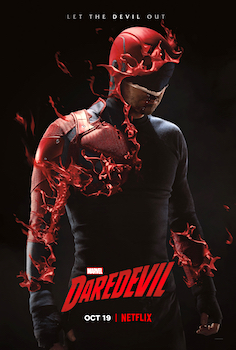 For the 11th season of Marvel Cinematic Universe TV shows on Netflix, we make a long-awaited return to the hero who started it all: the Man Without Fear… the Devil of Hell’s Kitchen… Matt Murdock, Attorney at Law… Daredevil.
 There’s a lot more to this season than that, though. New showrunner Erik Oleson has crafted a narrative for his 13 episodes that is better formed than most Marvel Netflix shows — heck, than most streaming series fullstop. It doesn’t seem to drag things out or go round in circles just to fill its episode count, but has a clear sense of pace and purpose. Okay, it’s still a streaming series — it still feels it can afford to devote entire episodes to things a network show might dash through in one sequence — but often that works to add depth. Spending a whole episode on Matt’s convalescence at the start of the season might seem indulgent, but it’s also important to his mindset for the rest of the season, which makes a big point of his morality, his religion, and his relationship with God — always a key aspect of the character, and foregrounded here without becoming objectionable to those of us with a less Catholicly inclined view of the world. The structural accomplishment really pays off in the final few episodes, too, with an array of surprising and game-changing twists and developments. My notes for later episodes were full of things like “shocking climax” and “oooh, twist!” and “ohhh shit!” At times Fisk feels genuinely unbeatable and you actually wonder how the heroes can win this one.
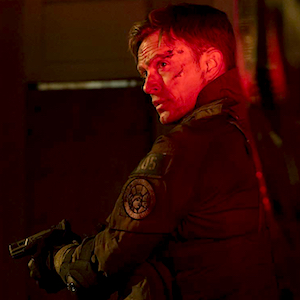 A good example of this is FBI Agent Benjamin Poindexter, who will turn out to be the villain Bullseye. Sorry if you think that’s a spoiler, but one of his first scenes shows off his mind-blowing marksmanship, so you ought to guess, really. In the comics, Bullseye has no backstory — he’s just a psychopathic killer — which is the kind of shit you can get away with if you’re being cartoonish. In the interests of psychological realism, however, Oleson wanted to give him one, to explore his origins, and they were basically free to do what they liked. They even spoke to psychiatrists and the like to make it genuinely realistic. I guess some may think this is unnecessary detail for what is still fundamentally a superhero-action show, but it has its rewards. It’s the same with giving the season a thematic weight to consider. According to Oleson, that was “fear” — how we’re all constrained by our fears and can’t be free until we face and overcome them. This applies to every character, hero and villain alike. Well, it’s a particularly pertinent choice for Daredevil, considering his sobriquet of “the man without fear”.
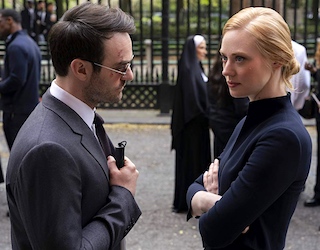 well-told story shouldn’t have to bear, and one that could have been easily remedied.” With Punisher season two on the way it’s possible this apparent plot hole could still be explained and/or retconned (whether they’ll bother is another matter, although Karen was a major character in Punisher season one so they ought to at least reference it), but it’s a shame it went unexplained in Daredevil itself.
 I let this post slip a week, so there are five episodes of Doctor Who to look back over. First up, the new team’s first historical adventure, Rosa (whew, it feels like more than a month since this aired!) I wrote
 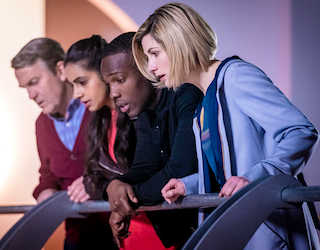 Episode six and seven say “no”. Well, a bit — the actual villain did survive the first. I still hope they’re going somewhere with this, because otherwise it’s very sloppy. Anyway, episode six itself, Demons of the Punjab, was one of the highlights of the season. Like Rosa, it sees the Doctor and co going into history and facing up to the real issues of the day, with the aliens popping in to add some spice rather than properly drive the story — like Rosa, you can imagine a not-that-different version of this episode without them. Preventing the Doctor from interfering and being ultra-heroic is certainly a change of pace from the “heroic god” version of the character we’ve had since the 2005 revival, but it’s not an unheard of vision — again, it harks back to the Hartnell era.
 I’ve never watched Inside No. 9 before, though I’ve always meant to get round to it. For those equally in the dark, it’s a comedy-horror anthology series from writers Steve Pemberton and Reece Shearsmith, aka half of the League of Gentlemen, with each half-hour episode a self-contained tale. The reason I’ve jumped in here was because this was a live Halloween special. For some reason I’m always intrigued by live TV drama (I even watched episodes of Eastenders and Coronation Street just because they were going out live), and Inside No. 9’s standalone nature made just dropping in feasible. Anyway, the episode itself was a typically playful endeavour — many fans switched off halfway through, genuinely duped by one of the episode’s tricks. The episode also managed to genuinely integrate the fact it was live, roping in a news broadcast from another channel and having one of the characters tweet. That means it played better live than it would, say, on iPlayer (where
  I always wondered if this day would come. As many (though I would guess not all) viewers must know, Shakespeare’s son Hamnet died in childhood. Not exactly traditional material for a multi-camera sitcom, so I wondered if the series would just never go there; equally, it’s by Ben Elton, co-writer of the famously tragic final episode of Blackadder Goes Forth, a work of unequivocal genius. And so in the final episode of this series, Go On and I Will Follow, Upstart Crow does go there… eventually, in the final moments of an episode that’s mostly fluff about theatre awards. It makes for a somewhat bizarre ending. Hamnet was never much of a character in the show, so while his passing’s effect on the characters is obvious, it has little meaning to us viewers. Then there’s the dedication to him at the end, which just reads like a spoof. The only bit that truly worked for me was the final lines: read in solemn voiceover, a passage by Shakespeare himself about grief. Perhaps that’s fitting. Perhaps if the whole episode had been about it in some way, then it would’ve worked — it’s part of why that Blackadder finale is so effective: the whole episode is about going “over the top”, or trying to avoid it, and so the unity of plot and theme and character and historical fact builds to an emotional gut punch of an ending. But rather than do that, Hamnet’s untimely end is just one scene tacked onto the end of some achingly obvious satire about something inherently vacuous. Well, maybe that was Elton’s point, but I don’t think the contrast was sharply enough drawn if so. Without that consistency across the whole episode, the ending just feels… odd. Ah well, at least we know there’s definitely a Christmas special to look forward to.
 This month, I have mostly been missing The Little Drummer Girl, the BBC’s new John le Carré adaptation from the makers of The Night Manager, their last (and very successful) John le Carré adaptation. As regular readers may know, I have a proclivity for saving series like this up and watching them back-to-back over about a week once they’re done — truly, I am of the Netflix generation. Dammit. Anyway, I’m looking forward to it, so expect me to get right on it and review it next month.
 100Films.co.uk