
Christmas is properly over now: adults are back at work; kids are back at sch— wait, what? Another lockdown?
Well, the festive season is over either way, isn’t it? So it’s time for my annual look back at some of the TV highlights. Or what was on, anyway.

Doctor Who Revolution of the Daleks
 This year’s Doctor Who special felt like a bid by showrunner Chris Chibnall to keep fans happy. Popular character Captain Jack Harkness is back, properly this time — after a cameo-ish appearance last season, this is his first major role in the show since 2008. And the proper Daleks are back, too — we got a sort-of-Dalek two years ago in the last special, but, after that’s used as the model for an army of “security drones”, the real Daleks turn up to exterminate them, with the 2005-style bronze Daleks making their first full appearance since 2015 (yes, it’s been that long).
Of course, the one thing most fans would really like Chibnall to do is bugger off and let someone better write the show. He hasn’t given us that gift yet, sadly, but at least this is one of his better episodes. It’s suitably romp-ish for a seasonal special, with plenty of running down corridors, exploding enemies, and the odd gag or two. There’s even some political satire, albeit fairly familiar, heavy-handed, and underdeveloped. Well, that’s Chibnall’s whole style, isn’t it? He can’t seem to escape it, or doesn’t want to (there are surely other writers or script editors he could employ to help point him in the right direction).
The other big news this episode is the departure of regulars Ryan (Tosin Cole) and Graham (Bradley Walsh). The latter has been one of the highlights of this era, but is given short shrift here. He barely has anything to do all episode — with a cast this big there’s no time for everyone to get emotional subplots (or what Chibnall thinks passes for them), and here they’re shared between the Doctor, Ryan, and Yaz… plus returning villain Robertson, of all people, who is arguably the episode’s main character. What a shitty way to write out two of your leads. And when it comes down to it, Graham only decides to leave the TARDIS because Ryan wants to go, and he wants to spend time with Ryan. Walsh is a fine actor when given the chance, and he deserved better. Ryan’s reasons for leaving aren’t quite as underwritten, but Cole does most of the heavy lifting, injecting a lot into unspoken moments to convey what Ryan’s feeling. A bit of screenwriting advice I once read asserted that, if you don’t bother to give your characters subtext, a good actor will invent their own regardless — it feels like that’s what’s happened here; or, at least, Cole has expanded well on the thin material Chibnall gave him.
In any other recent era, Revolution of the Daleks (an inaccurate title — it should’ve been called something like Purity of the Daleks, or even Security of the Daleks) would be a middle-of-the-road episode, at best. At present, it’s probably going to be remembered as of the highlights of the era. There are now rumours that Jodie Whittaker is planning to leave the show after her next run, having completed the more-or-less standard three series. Well, the wrong person is going: she’s a fine Doctor let down by poor writing, and we’d all be better off if Chibnall would go and let someone else have a crack at giving Whittaker the material she deserves.
Cinderella A Comic Relief Pantomime for Christmas
 With theatres mostly shut this November and December due to Covid restrictions, the UK’s traditional pantomime season was a write-off. But where there’s a will there’s a way, and so an all-star bunch of actors and entertainers (including the likes of Olivia Colman, Helena Bonham Carter, Tom Hollander, and Anya Taylor-Joy, plus multiple surprise cameos) came together over Zoom to record this hour-long panto in aid of Comic Relief. (FYI, there are two versions available: a 60-minute one that aired on BBC Two, and a slightly extended 63-minute cut available on iPlayer.)
I imagine it would’ve been easier logistically to film everyone separately (and would we have been any the wiser?), but instead they seem to have wrangled all these stars together on the same Zoom call and performed it in more-or-less real-time. That ‘almost live’ aspect adds an element of unpredictability to proceedings — there’s the occasional tech issue, and a fair degree of corpsing and improvisation. Looking at other reviews, I guess this wasn’t to everyone’s taste (“a poor effort when better productions were hidden online”), but I thought it added to the do-it-yourself charm. It’s not a slick production by a bunch of pros, but has an air of fun similar to a bunch of mates doing their best and having a ball. The end result is very silly, of course, but all in the right spirit.
Roald & Beatrix: The Tail of the Curious Mouse
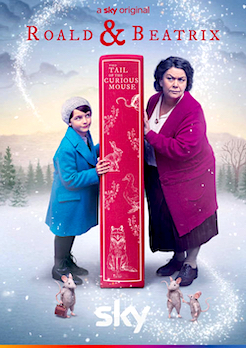 Sky’s big special this year was this based-on-a-true-story tale of when a young, bereaved Roald Dahl went on a trip to meet an ageing Beatrix Potter. Two of the great British children’s authors meeting up at very different points in their lives? It’s a wonder no one’s thought to film this before. Although, based on the evidence here, the meeting was fairly short and inconsequential — that they met is an interesting bit of trivia, not a defining moment in either’s life. To get this anecdote up to barely-feature-length (it’s just over an hour without ads), there’s a lot of expanded backstory on both sides. The Roald side feels like it must be broadly true — it’s all about him (and his mother) struggling to cope with the deaths of both his sister and father — but the Beatrix side feels dreamt up to balance it out — it’s just about her arguing with an agent about the contents of her latest book. Eventually, these threads converge on the eponymous pair’s brief meeting… and that’s the end. It’s a slight and gentle film, but it made for moderately charming Christmas Eve fare.
Comedy Specials
 As usual, the schedules were full of sitcoms and panel shows offering half-hour doses of festivals merriment. Highlights included a fourth Christmassy edition of The Goes Wrong Show, in which the accident-prone Cornley Polytechnic Drama Society turned their attention to The Nativity, with predictably disastrous — and hilarious — results. I get that Goes Wrong is too silly for some, but it hits just the right note for me. A more heartwarming tone was struck by the Ghosts special, in which Mike’s overbearing family coming to stay (clearly not set this Christmas, then). In keeping with the style of the recent second series, their presence prompted flashbacks to the life of horny MP Julian, which, via a series of kinky sex parties, delivered a message about appreciating your family while you can.
Meanwhile, Shakespearean sitcom Upstart Crow very much engaged with the current situation in an episode entitled Lockdown Christmas 1603, which imagined Will and his landlady Kate stuck at home during a plague-induced lockdown. Naturally this was a vehicle for observations about present-day life. It would be too kind to call it satire, but it was moderately amusing. After several years of Christmas specials, Not Going Out instead turned its attention to that other major end-of-December event: New Year. A show already fond of gathering its whole cast in a single location for basically a one-act play was perfect fodder for lockdown-constrained filming, and that’s what we get here: everyone gather for New Year’s Eve. Cue their inevitable sniping at one another — but when that gets too much, the assignation of New Year’s resolutions turns into some kind of group therapy session. It’s quite bold of a sitcom to deconstruct its characters’ defining foibles so explicitly, especially when there are more series on the way. One suspects the life lessons learnt won’t last…
Things to Catch Up On
 This Christmas, I have mostly been missing Black Narcissus, the BBC’s three-part re-adaptation of a novel most famous for being adapted into a film by Powell & Pressburger. It’s on iPlayer in UHD now, which is usually an incentive for me to catch it. Talking of three-part re-adaptations, I also didn’t watch Steven Knight’s version of A Christmas Carol — that was on last year, when I didn’t have time for it until after Christmas had passed. “Guess I’ll have to try to remember to watch it next year, then,” I said. Oops.
Next month… Perhaps Cobra Kai. After loving season one, I deliberately didn’t rush on to season two so that I didn’t burn through it too fast before season three. Then Netflix announced season three for early January, and then moved it forward to January 1st, and now instead of nicely spacing it out I just feel very far behind. Must resist the urge to burn through two seasons now instead…
 The Good Place ended forever ago, right? Well, the series finale originally aired back in January, so… this year, yeah, forever ago.
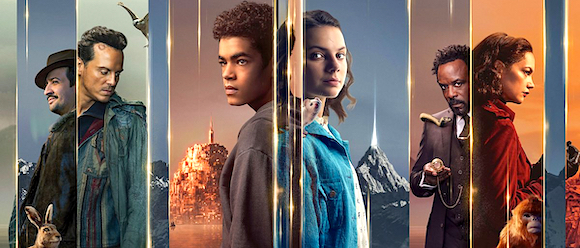
 The breakout star of BBC drama The Missing here gets his own spinoff series. Julien Baptiste is a retired police detective who specialises in finding missing people, which is exactly what he did across two series of The Missing (I reviewed the second
 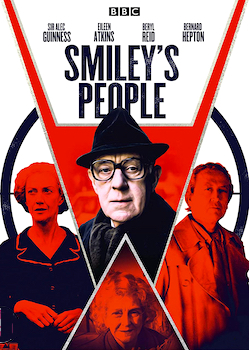 John le Carré’s spy mystery Tinker Tailor Soldier Spy is one of the most acclaimed works of the genre, and the 1979 TV adaptation is justly fêted as one of the great miniseries. But Tinker Tailor is actually the first book in a loose trilogy, and in 1982 they also adapted the third book (they skipped the second because its overseas settings were deemed too expensive; as I understand it, the plot also doesn’t have that much bearing on the overall events — this isn’t “one story in three parts” like many a trilogy). Smiley’s People doesn’t enjoy quite the same reputation as its forebear, and I’m afraid I’m not going to challenge that position. Like Baptiste, it’s not bad, it just lacks that je ne sais quoi that makes its predecessor a solid-gold classic. One thing they do share is a damnably complicated plot — I struggled to follow the narrative watching it one episode per day back to back, so goodness knows how anyone kept up with it once a week over a month and a half back in the ’80s.
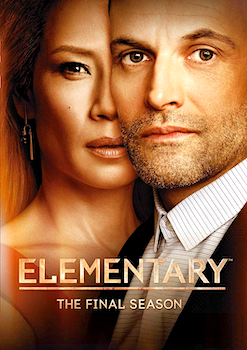 The other “Sherlock Holmes in the modern day” show finally came to an end last year, though I suspect its finishing shall remain more final: whereas Sherlock always had a stop-start “we could make more anytime” production, accompanied with cast & crew chatter about wanting to sporadically do make new episodes forever, Elementary is much more traditional US network TV show — and the diminishing episode orders of the final couple of seasons and summertime broadcasts of the last couple of seasons don’t suggest an enduring hit poised for a revival.
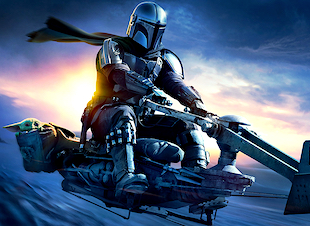 This month, I have mostly been missing The Mandalorian season 2. Well, as regular readers will know, I never even got round to season 1. Naturally, it’s been basically impossible to avoid spoilers — though as those amount to “look which legacy character has turned up this week” rather than actual plot stuff, perhaps it will be okay. Or maybe the series doesn’t really have any plot to spoil, it’s just endless fan service — that would certainly seem to tally with some people’s view of the show. Others love it though, so I’ll see for myself… someday…
 Ripper Street gets a comedic makeover in Channel 4’s recent comedy series, which stars Matt Berry (of Toast of London fame, and also recently seen starring in the series version of What We Do in the Shadows) as a Victorian detective by the name of Rabbit. He investigates murders and other nefarious goings-on amid the scum of the East End accompanied by a rookie posh-boy sidekick (Freddie Fox) and the force’s first female officer (Susan Wokoma).
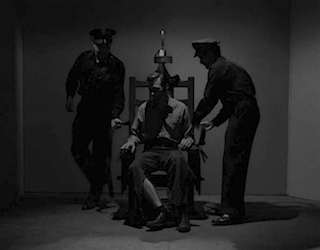 Having exhausted the top tens of both IMDb’s and ScreenCrush’s Twilight Zone episode rankings in my
 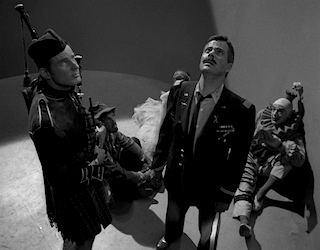 There’s closer agreement about Paste’s 6th choice, season three’s Five Characters in Search of an Exit, which ranks 14th on IMDb and 32nd on ScreenCrush. Singer writes that “if you enjoy the movie
 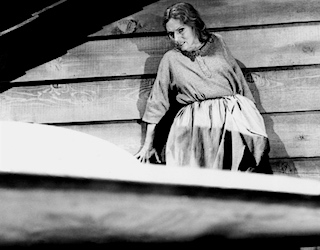 One of the series’ more famous episodes is in 7th place for Paste (IMDb #28, ScreenCrush #58): The Invaders, starring Agnes Moorehead as the lone inhabitant of a remote shack, who must suddenly deal with hostile six-inch spacemen landing their saucer on her roof. It’s a near-silent drama, as Moorehead is terrorised by the miniature monsters and struggles to fend them off. And, obviously, there’s a twist. I don’t want to sound boastful, but, yeah, I saw it coming. I’ve said this many times now, but I really do suspect the series is a victim of its own success in this regard — it’s 60 years old and highly influential, so of course all the media a modern viewer has experienced leaves us ready to guess the outcomes. Actually, I bet it’d be a great show for kids — a formative experience; and, with less media exposure, the twists might retain the appropriate level of mind-blowing-ness. Anyway, at least The Invaders has more going for it than just the final reveal, with the woman vs the mini-spacemen playing like a tense horror movie. There’s a lot of praise for Moorehead’s performance, but I thought she was overacting somewhat in compensation for her lack of dialogue. In fairness, though, this was made for 1961 TV sets — with no speech to work with, the performance needed to be ‘big’ to come over on those tiny tellies. Unfortunately, it’s another mark against the episode when watched in HD on a modern setup.
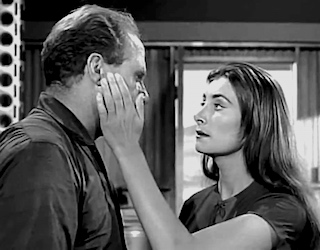 Finally for now is The Lonely, which is ranked 10th on Paste (obv.) but only 105th on ScreenCrush (IMDb is much closer at 27th). Sorry to harp on about this, but here’s another episode that may’ve been great once but recent years have seen other films and TV series tackle similar themes in much greater depth, far surpassing the mere 20-odd minutes it’s afforded here. Indeed, this is the rarest of things in my experience: a Twilight Zone episode where 25 minutes isn’t enough to explore its concept. It’s about a man imprisoned in solitary confinement. His cell? An entire asteroid (filmed on location in Death Valley, which adds a magnificent grit and desolation to the visuals). He’s visited quarterly by a supply ship, and after a few years the captain takes pity on him and brings a robot woman to be his companion. It’s as good a setup as any, but the episode simply doesn’t have the time to dig into the questions and musings it throws up — though it’s not helped by wasting most of the first half on chatter between the prisoner and the captain, establishing their relationship more fully than the one between the prisoner and his robo-woman; a relationship the episode supposedly hinges on.
 This month, I have mostly been missing Stranger Things season 3, which seems to have provoked controversy with some of its character decisions (I’ve been avoiding spoilers, but have seen news headlines that imply as much); and Veronica Mars season 4, which, er, seems to have provoked controversy with some of its character decisions (I’ve been avoiding spoilers, but have also seen news headlines that imply as much). As they’re only eight episodes apiece, hopefully I’ll have found time for them before next month’s column. (Veronica Mars still doesn’t have a UK broadcaster (in fact, I don’t think it has one anywhere outside of the US and Canada, I guess thanks to it being on Hulu (though other Hulu shows have international carriers, so who knows what’s going on here)), but where there’s a will there’s a way.) And if that wasn’t enough, Amazon also recently released subversive comic book adaptation The Boys, which also looks right within my wheelhouse. That’s also eight episodes, incidentally. I seem to remember reading a while ago that Netflix’s research suggested eight was the optimum number of episodes to have in a season nowadays. I guess everyone took that to heart.
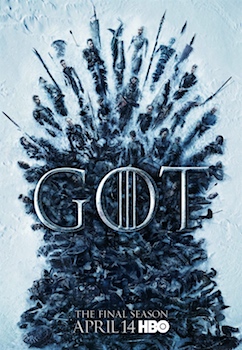 Almost two years ago, just hours after Game of Thrones’ seventh season finale aired,
 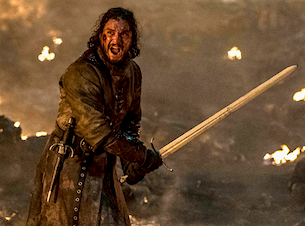 Content-wise, the episode was one long battle — the longest ever in film or TV history, apparently. More isn’t always more, mind. While I didn’t find it boring or drawn-out, it also wasn’t perfect. The battle tactics left a lot to be desired, something spotted by lay-viewers, never mind the “how it should’ve been done” articles by professional military tacticians that followed the broadcast. And the way things played out, a lot more deaths were warranted. Quite a few key characters did fall, and even more faceless masses, but the way it was staged made it a miracle that so many people escaped unscathed. There are three episodes left — you need characters to fuel the story, and major characters left to be sacrificed later too — but that doesn’t mean you have to stage it so everyone effects an improbable escape. There’s a balance to be found between “it looks like they’re all about to die” and “it seems literally impossible everyone would’ve survived those last-minute odds”. But hey, this isn’t the first time the show has succumbed to this, and there was a lot else to like: lots of effective individual sequences within the battle, great callbacks to previous lines and events, some heroic sacrifices, and a perfect ending. (I’m really not going to talk about some dickheads’ reaction to that.)
 It’s frustrating because I liked the tone of the episode overall — as I said, the return to human conflict and schemes; also a lot of the individual scenes between characters and so on. But it needs more room to breathe. It’s especially galling after the exceptionally spacious
 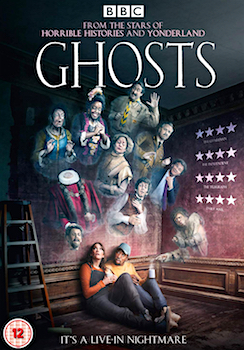 This new sitcom from the writing and performing troupe behind the original TV iteration of Horrible Histories and the Sky One fantasy comedy Yonderland is pitched as a more adult-focused series, but it’s not exactly 18-rated stuff, just a little cheekier than they might’ve done before. Anyway, it’s about a young couple who inherit a crumbling old mansion, which is home to the ghosts of various people who’ve died there down the centuries. As the couple attempt to make a life for themselves and restore the place on a budget of nothing, the ghosts cause various issues, while also having problems of their own — turns out being dead isn’t the end of your emotional woes. I wouldn’t say Ghosts is the most hilarious sitcom you’ve ever seen, but it has a definite charm. It also surprises with genuine emotion, particularly in the third episode, where we learn about the death and family of one of the more recent ghosts.
 I’ve never seen Columbo before, and despite this being the first episode (er, kind of — I believe it was preceded by two other pilots) this isn’t the start of me watching it regularly. No, I watched this for one simple reason: the director was a certain Mr Steven Spielberg, in his pre-movie days when he directed a handful of TV episodes. Unsurprisingly, such an early work contains little about its style that screams “Spielberg”, but it’s still a classily staged production, with a lot more going for its visuals than the point-and-shoot style we associate with old TV. The story’s not a bad one either, about a crime novelist who murders his co-writer following the methodology from an unused plot. He thinks he’s a clever bugger who’s got away with it easily, but Columbo seems to see through him right from the start. Well, I’m not sure dumping the corpse on your own front lawn is the best way to go about claiming “it wasn’t me.”
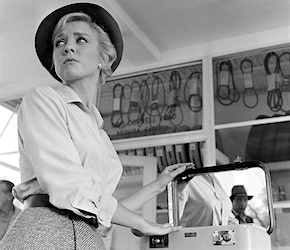 First up, season one’s The Hitch-Hiker is another Twilight Zone tale where we can’t be sure if the protagonist is experiencing paranoia or the supernatural — undoubtedly a recurring theme for the series, almost to the point where it’s less a “theme” more just a fact of its format. Anyway, this particular reiteration is effectively unnerving, with a scenario that’s relatable — you can just imagine how it would feel if you kept seeing the same hitchhiker by the side of the road, always somehow ahead of you, always staring at you with a despondent look… it gives me chills just thinking about it. Director Alvin Ganzer gets good mileage out of that element too, creating some effective shocks. Aside from that the execution isn’t top notch though, with Rod Serling seeming to have taken too much inspiration from the original radio play (by Lucille Fletcher) in his inclusion of some over-explanatory narration. The trademark twist ending is both altogether guessable for the savvy viewer, but also doesn’t really explain a whole lot.
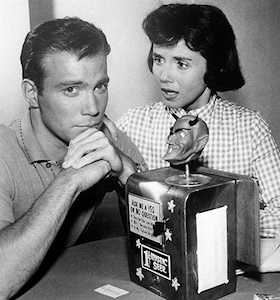 I was more taken with Nick of Time, written by the reliably superb Richard Matheson. Starring William Shatner as a superstitious honeymooner, it’s a neat little tale about a cheap fortune telling machine that might actually predict the future. As well as a genre tale about the perils such a machine might pose, it’s really about superstition and belief in fate vs. self determination — a strong moral life lesson bundled in a quirky supernatural fable. That’s Twilight Zone at its best, really. Similarly, season five’s Living Doll is another of the series’ most genuinely unnerving episodes. Telly Savalas stars as a man whose own insecurities make him paranoid and abusive towards his wife and stepdaughter. When the kid gets a new talking doll, it begins to taunt and threaten him, but only when no one else is around to hear. Again, it’s very creepy, but has a point to make beyond that.
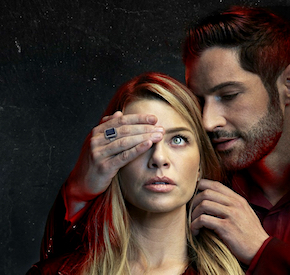 This fortnight, I have mostly been missing the fourth season of Lucifer, which just returned as a Netflix exclusive. I’ve not watched season three yet, though, so that’ll be a little while off. I’ve also successfully managed to avoid any spoilers about Line of Duty’s recently-concluded series (touch wood). I’ve got a plan to binge it in a few weeks’ time (so, not in my next TV roundup, but should be the one after) — hopefully nothing will blow its secrets between now and then!
 Score:



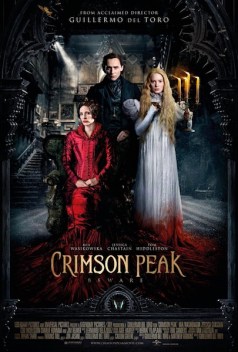 Mia Wasikowska stars opposite a British thesp best known for playing a comic book villain and a red-headed repeat-Oscar-nominee, in a Gothic drama-thriller from an acclaimed non-Anglo director? That’s a description of
 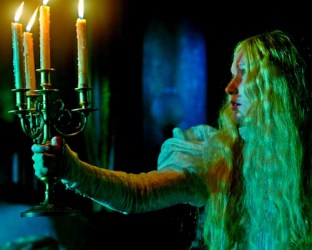 The story actually concerns Edith Cushing (Wasikowska), a well-to-do businessman’s daughter in upstate New York who is occasionally haunted by ghosts. She falls for visiting English gent Sir Thomas Sharpe (Hiddleston) and, long story short, moves with him and his haughty sister Lucille (Chastain) back to their crumbling — literally — pile in the English countryside. The house hides many secrets, and ghosts, too. Having said it’s not a horror movie, it would be unfair to class Crimson Peak as simply a tame drama — as you’d expect from writer-director Guillermo del Toro, those ghosts can be bleedin’ scary, and there are certainly a smattering of good old fashioned jumps to boot.
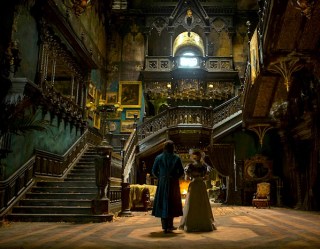 Whatever one’s thoughts on the story and tone of the film, it can’t be denied that its technical merits are extraordinary. Every inch of the design work is gloriously imagined, and the cinematography — the lighting in particular — is spectacular. And that gigantic house set…! And the climactic ‘limbo’ set, too — incredible work. (That’s not a spoiler, incidentally: it was the set’s nickname, not its literal location.) The ghost effects are excellent too — original, creepy, and executed in a way that blurs the lines between make-up, animatronics, and CGI. It’s a shame the film as a whole wasn’t better received, because I imagine that’s all that held it back from numerous awards-season nods.
 100Films.co.uk