The other half’s love of tennis preempted a fair bit of TV watching this past month — but with an incredible Game of Thrones finale, and some stuff we’ve had time for since Wimbledon ended, there’s still plenty to talk about.

Game of Thrones (Season 6 Episodes 9-10)
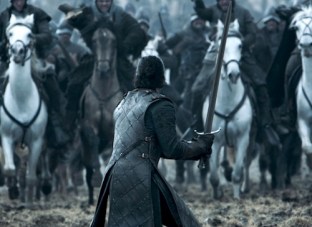 GoT produced two of its greatest-ever episodes to conclude this season. Actually, that’s arguably an understatement: based on IMDb votes, if nothing else, Thrones produced two of the best episodes of TV ever made. But what do IMDb voters know? Well, more than some people give them credit for. Obviously everyone has different tastes, but for the genres Thrones operates in — and, in some instances, even transcending those — these are incredible hours of TV. Episode 9, Battle of the Bastards, is surely one of the most thoroughly-realised medieval-style battles ever depicted on screen: the scale is epic, the strategy is clear, the feeling of what it’s like to be in the thick of that environment is palpable. How it turns out may have been predictable, but something being predictable is not the same as it being bad — not everything needs to be a twist.
Then that finale, The Winds of Winter, was full of long-awaited decisions and reveals, and stunning for different reasons. Perhaps the biggest star across both episodes was director Miguel Sapochnik (who also helmed last year’s remarkable Hardhome) and the variety of directorial inventiveness he displayed — not only bringing all that realism to the aforementioned battle, but the classically-scored opening sequence/montage of the finale is incredible moviemaking. Presumably the only reason he’s not one of the directors for season seven is because he’s been tapped for bigger things.
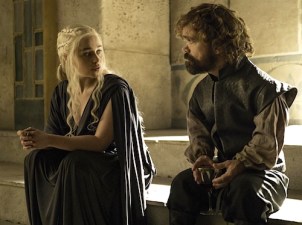 As for the forthcoming seventh season, it’s pretty clear we’re now entering the show’s endgame — though we’re going to have to wait even longer for it, with the next season set to have a later-than-normal premiere and the final end not coming until the season after that. It’s going to be an excruciating wait, but if they can maintain the form displayed throughout season six, it’ll be worth it.
Person of Interest (Season 5 Episodes 1-4)
 This is done and dusted Stateside now, but goodness knows when Channel 5 will choose to ‘officially’ air it over here, so I’m just getting on with it. I used to despise most of PoI’s arc plots and often wished it would stick to being just a pretty cool vigilante procedural; but at this point, it’s so invested in the epic Super-AI vs. Super-AI sci-fi storyline that any attempts at case-of-the-week episodes feel like a waste of time — especially when this truncated season is fast approaching the show’s final end. I really hope it comes to a proper conclusion, because there’s too much going on here to let it end forever on a cliffhanger. (Obviously that answer’s now out there, but naturally I’m avoiding spoilers.)
Preacher (Season 1 Episodes 4-5)
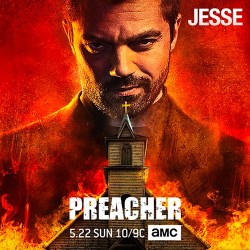 I’m a bit behind on this at the minute (the latest episode was the eighth), but, as of the halfway point, it’s definitely settled into its own skin — or maybe it was always settled there, but it’s taken time for viewers (or this viewer) to get past the expectations brought as a reader of the comic books. It’s still far from being a literally faithful adaptation, carving out its own path from some of the comic’s building blocks, which makes it an odd and hard-to-judge work if you have read any of the original. Still, it’s an entertaining series, and people involved keep talking about this season being something of a prequel to what we saw in the comic, so maybe the already-commissioned season two will feel more recognisable.
Things to Catch Up On
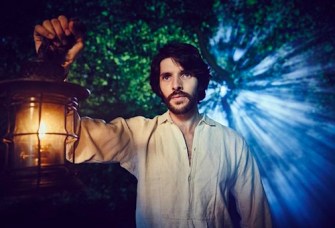 This month, I have mostly been missing stuff I don’t even know I’m missing. By which I mean, I haven’t been paying enough attention to the TV schedules to know what I’ve missed. The BBC’s supernatural drama The Living and the Dead sounds kind of interesting; I know Mr Robot is back, not that I ever got round to season one; plus The Musketeers continues (though I hear it’s gone off the rails this season); and I keep hearing vaguely good things about Netflix’s new series, Stranger Things, like that it’s a cross between Steven Spielberg and Stephen King, or The Goonies mixed with The X Files… which just reminds me that I need to get round to seeing The Goonies someday.
Next month… it’s about time to get started on season four of The Most Underrated Show On Television™, The Americans. So. Excited.
 Finally done with most of these (still need to find time for the last two Legends of Tomorrows). One shouldn’t have that attitude to something one is choosing to watch, should one? I have a certain loyalty to Arrow, because they did a good job for seasons one and two, even if it’s waxed and waned since; but I’ve never really got on board with the adulation The Flash has received, and Legends of Tomorrow is mediocre to poor with regularity… though now and then they all exhibit flashes of worthwhileness. I rarely make the conscious choice to give up on a series (do it all the time by accident, though), but I’d consider abandoning a couple of these before the start of their next seasons… were it not for the ‘promise’ that they’re all about to be completely interconnected, at least for one almighty four-way crossover (with moving-to-the-same-network Supergirl).
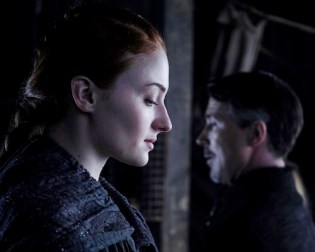 First up: The Door, surely one of Thrones’ best-ever episodes. That ending rather overshadows everything else (because wow, in so many ways), but before that there was Sansa being badass, proper development of Arya’s storyline, the hilarious play-within-a-play, a marvellous scene between Dany and Jorah, and a great moment for Varys, too. The week after’s Blood of My Blood was more about setting things up the second half of the season, which is an important role to fulfil but less dramatic in itself. A couple of surprise returns, though, including a big reveal for book readers (maybe).
 Sometimes it’s hard to separate what one might count as story development versus mere place-setting in Thrones, but at its best they can be one and the same, and episode seven managed that. Finally for now, No One did actually bring some storylines to a head, including some very long-awaited developments, particularly in Braavos. Throw in an equally-long-awaited reunion and a couple more unexpected returns, and you have a pretty satisfying episode.
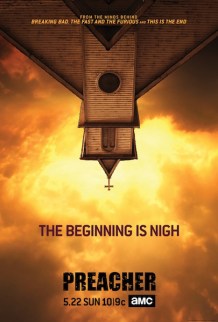 Sam Catlin of Breaking Bad and Seth Rogen & Evan Goldberg of… all those films Seth Rogen & Evan Goldberg have made (you know
  This month, I have mostly been missing anything I watch with my other half. It’s prime tennis season — eight weeks that starts with Geneva and flows through the French Open, Stuttgart, Nottingham, Birmingham, Queen’s, Eastbourne, and ends with the crowning jewel of all tennisdom, Wimbledon; all with near wall-to-wall coverage thanks to Eurosport, ITV4, and the BBC. It largely takes over the time we normally spend watching stuff together, so no room yet for the final seasons of Wallander or The Musketeers (not that we’ve watched season two yet, actually — oops), nor the just-finished fourth season of The Most Underrated Show On Television™, The Americans. Apparently it ended with “the Best Episode of TV So Far This Year”, according to one review’s headline (which obviously I can’t read because spoilers). Maybe in July.
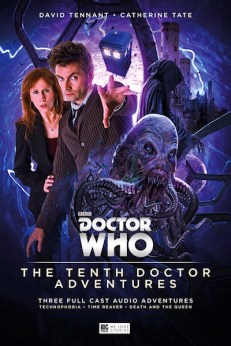 One of Doctor Who’s most popular eras is revived this week, as David Tennant returns to the headline role for the first time since
  The first is Technophobia by Matt Fitton, which is set in our recent past (and therefore Donna’s near-future) when the new M-Pad tablet computer seems to be causing the populace to forget how to use technology. Tennant and Tate hit the ground running — it’s a cliché, but it really does sound like they’ve never been away. Their sprightly performances contain little of the stilted “I’m reading this script aloud for the first time” acting that sometimes plagues audio drama. Fitton captures the style and tone of their single TV season to a tee — if they’d done a second year together, you can well believe this as its first episode. Even Howard Carter’s incidental music is a mostly-fitting substitute for Murray Gold’s iconic work.
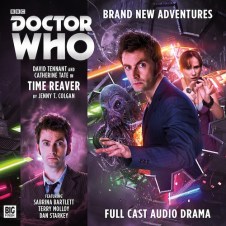 The middle tale is sci-fi adventure Time Reaver by Jenny T. Colgan, a best-selling romantic novelist who’s turned her hand to multiple Who projects (including a 10th Doctor and Donna novel published last week to tie-in with these dramas). For me, this was the weak link of the trilogy, though it’s by no means bad. There are some fantastic ideas, but at times their inspirations show through too clearly, and the execution is sometimes lacking. This was Colgan’s first audio drama, and dare I say it shows. Sequences like an action-packed barroom brawl are a little too ambitious to convey in an audio-only medium, and the dialogue is regularly forced to describe what’s going on. On the bright side, Mr Carter offers more magnificent sound design — the noises made by cephalopod villain Gully are immensely evocative.
 The final episode is the group’s historical outing, Death and the Queen by James Goss, and it may be the best of the lot. Our intrepid duo find themselves in the kingdom of Goritania in 1780, when it comes under siege from a destructive cloud that contains Death himself. Goss mixes comedy with peril in just the right quantities to create a story that is an entertaining romp but also manages to expose different facets of the Doctor and Donna’s relationship. If Fitton has bottled the essence of RTD, here Goss evokes Steven Moffat, with a time-jumping opening ten minutes that you can well imagine on TV, but which also work perfectly in audio. Things slow a bit later on, with the dialogue sometimes going in circles — a fault of all three of these plays, actually. They could’ve benefited from a trim to fit within the TV series’ 45-minute slot, rather than allowing the freedom of not having to conform to a schedule let them to slide to 55-ish.
 Ah, love a bit of Eurovision, even if the songs weren’t as good this year. Ok, you might say they never are, but there’s often one or two half-decent ones (I still listen to Conchita Wurst’s Rise Like a Phoenix sometimes, mainly because it’s the best Bond theme released in the last decade). Even then, the winner wasn’t the best of that middling bunch, though it probably had the best message. In fact, the best song of the night was the Swedish hosts’ half-time number, Eurovision-spoofing Love Love Peace Peace (watch it
 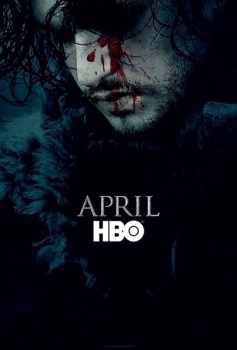 Good luck to you if you’re not watching Game of Thrones but still trying to avoid spoilers this year, with the huge and widely-covered news that [REDACTED] was [REDACTED], or that [REDACTED] killed [REDACTED], or when [REDACTED] and [REDACTED] were [REDACTED] for the first time since [REDACTED], or when [REDACTED] was [REDACTED] but [REDACTED] the [REDACTED] and [REDACTED] of [REDACTED] in the process — even if more people seemed interested in discussing her [REDACTED]s.
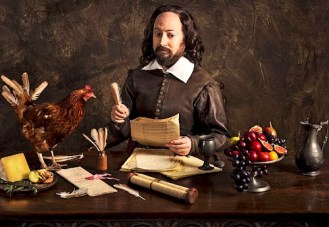 I can’t remember the last time I saw a new multi-camera sitcom that wasn’t either, a) a bit meta (like Miranda or Mrs Brown’s Boys), or b) a revival (like Red Dwarf X). I don’t know if that says more about the current TV landscape or the kind of things I watch, but either way it surprised me when that was the form Upstart Crow took. It’s just one element that gives it the feel of Blackadder, which I don’t mean as a criticism. Even if it feels a little dated in its execution, there are plenty of laughs — some easy, some clever — and, really, what more do you want from a comedy than to laugh? It may not be up to Blackadder’s highest highs (yet — there’s still time; you never know), but I’d wager it stands fair comparison to the classic’s comparatively-lesser instalments… which I mean to be a less critical assessment than it sounds.
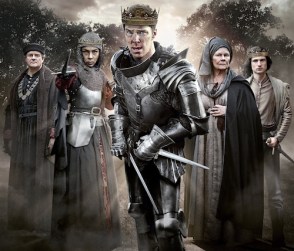 This month, I have mostly been missing the second run of The Hollow Crown, the BBC’s all-star adaptation of Shakespeare’s War of the Roses plays… though as I still haven’t got round to watching the first run from 2012, that’s no real surprise. In fact, Upstart Crow aside, I’ve not yet watched any of their still-running
 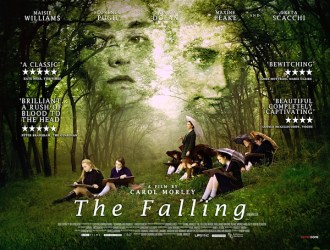 Inspired by real events, The Falling stars
  Writer-director Carol Morley has kept the pace and tone slow, in an enchanting rather than ponderous fashion, but it’s a “not for everyone” pace nonetheless. For me, it only really lost its way as it moved into its final stages. Without wanting to spoil where it goes, in my opinion too much was explained, but at the same time it explained nothing.
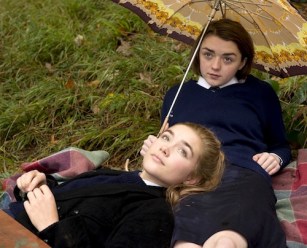 An element I do think was at the forefront of consideration is sensuality and sexuality, which plays a large and significant part in the film. Pretty much any movie bar “bawdy high school comedies starring obvious twentysomethings” seems to veer away from schoolgirl sexuality these days, wary of inevitable “OMG u a pedo” reactions, I guess. Sexuality does not equal pornography, though; and, as I alluded, here it’s played out as much through a heightened, tactile sensuality. It does probably ‘help’ that it’s a film written and directed by a woman — it would carry a very different, more Lolita-ish air if it had been written or directed by a man. What exactly it’s saying with all this is arguably as mysterious as the cause of the fainting epidemic, but then it’s all tied together: teenage years are a period of sexual awakening, of course, and if you’re in an environment where nearly everyone is of the same gender, and where such things are massively repressed… well, how is it going to manifest itself? If “sex” is somehow the cause of the fainting, it’s not because sex is bad, it’s because there’s no other appropriate outlet for it.
 Best of the lot, however, is Florence Pugh. Reportedly discovered when The Falling’s casting directors visited her school, you can see why she’s quickly been snapped up for a leading role. I wouldn’t be surprised if Hollywood come knocking looking to make her the next Kate Winslet/Keira Knightley/Gemma Arterton/etc “English rose”-type lead in some blockbuster or other.
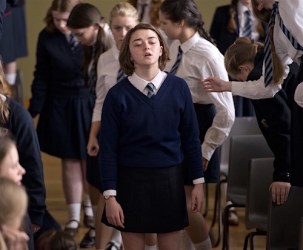 For me, it’s the kind of film that, with time and subconscious reflection, I may come to remember more fondly and be keen to see again, or all but forget. It’s the kind of film I could, without even re-watching it, re-evaluate and want on my year-end top ten, or could see on my top ten contenders long-list come January 1st and wonder, “dear God, what was I thinking?!” It’s the kind of film I’m not sure I wholly liked, but I’m glad I’ve seen.
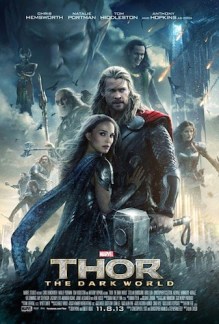
 Good will towards the participants counts for a lot, though. Tom Hiddleston’s Loki steals pretty much any scene he’s in, but Chris Hemsworth’s Thor is not an unlikeable hero, building further on the responsibility-and-honour story arc of the first film. Idris Elba also benefits from an expanded role, but others are less lucky: one of the Warriors Three is ditched as soon as we’re reacquainted with him; more criminally, Christopher Eccleston’s villain has nought to do but stomp around spouting exposition in a made-up language. Anyone could play that role, you don’t need an actor of Eccleston’s ability. Maybe something got cut (though it’s not in the Blu-ray’s deleted scenes), because I don’t see why else he’d’ve taken the part. Well, possibly the payday.
 Despite the title, there’s much fun to be had with The Dark World. It can’t deliver on all of its aims — the equally-promised expansion of Thor and Jane’s relationship is equally sidelined — but there’s enough entertainment value to make it a worthwhile proposition. Perhaps the longer lead-in that the third film seems to be getting (there’s no announced slot for it among Marvel’s numerous future release dates, meaning it’s unlikely to arrive before 2017) will allow them to round everything out a little better.
 100Films.co.uk