
So, for the benefit of those who don’t know, the header image at the top of my Reviews by Director listings page features the top 20 directors featured on this blog — not my 20 favourites, but the 20 with the most films I’ve reviewed — pictured in alphabetical order. Obviously, sometimes the lineup changes; but rather than modify the image every time it does, I’ve always intended to update it about once a year. The last time I did was May 2020, so a new one has been overdue for about two-and-a-half years — or 936 days (as I expect you’d already realised).
For what it’s worth, this is now the 8th version of the image — which, when you add in the skipped years, makes it the 10th anniversary of the first. How exciting. This time, there are five changes — or ten, depending how you count it. What I mean is, five directors have been removed, replaced by five different ones.
There were 21 directors who qualified for the 20 slots, with a four-way tie for the last three places. For such occasions, I have an informal rule that I should make as many changes as possible, so out went the only one of the four who was already on there, Bryan Singer. Also dropping out of qualification were the Coen brothers, Ron Howard, George Miller, and Robert Zemeckis.
Joining in their place, we have three filmmakers who were on the list sometime before, but dropped off, and have now returned: Woody Allen, Stanley Kubrick, and Fritz Lang. They’re joined by two first-timers who seem likely to stick around, Kenneth Branagh and Denis Villeneuve.
And that’s that for… well, I would say “another year”, but we’ll see.
 Le Mépris establishes its two main themes with its two opening shots. First, a static shot of the film’s cinematographer, Raoul Coutard, filming a scene from the film, over which writer-director Jean-Luc Godard reads out the credits, which never appear on screen. This is a movie about moviemaking, and its inherent artifice. Second, a shot of Brigitte Bardot’s naked bottom. This is a movie about a man being in love with Bardot (well, the character she plays), and another man lusting after her, and what happens when the first man pats a different bottom. Maybe.
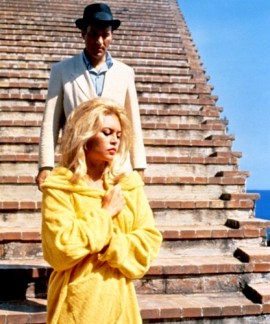 They go round in circles about staying together or being apart. The point? Your guess is as good as mine. Perhaps it’s the unknowableness of the other gender (whichever gender you are). Perhaps it’s just the unknowableness of other people fullstop. Perhaps it’s the unknowableness of our own emotions — eventually Bardot decides she does want to leave the playwright to run off with the producer, but no one seems to know why.
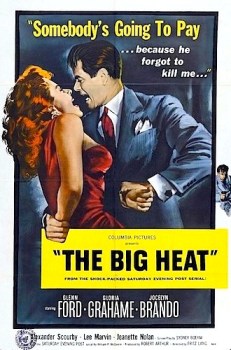 Fritz Lang is probably best remembered for the films he made in Germany; medium-defining classics like
 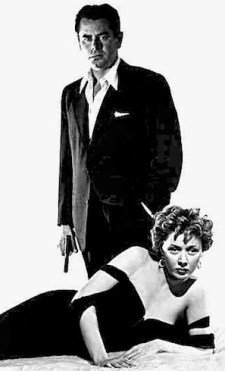 but it does manage what might be described as twists in how far it’s willing to go — mainly, who gets killed and how.
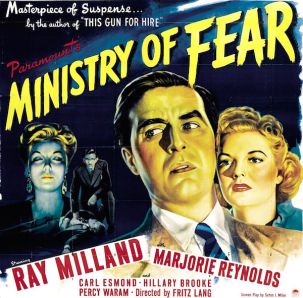 I like cake. It’s all soft and sweet and tasty. But I don’t like cake as much as Stephen Neale, the protagonist of Ministry of Fear.
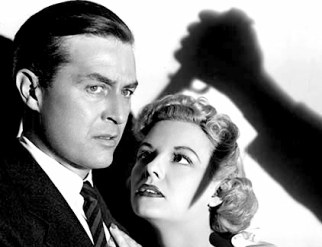 Ministry of Fear isn’t really about cake, but the opening 20 minutes or so plays out more or less as above and it is rather amusing. Less amusing — and, in fact, part of the film’s biggest problem — is a ‘humorous’ epilogue that returns to the cake theme. I found it hilariously funny, but unfortunately for all the wrong reasons. The other part of the problem is the abrupt ending that immediately precedes this brief coda. On the bright side, everything is resolved and you can imagine the post-climax resolution scene for yourself, but it still leaves the tale’s telling cut short.
 The train cake theft and chase, for instance, could be thoroughly laughable thanks to the cake element and what’s clearly a studio-built wood/wasteland, but it’s atmospherically shot and, in its main burst of genius, scored only by the drone of a Nazi air raid taking place overhead. It makes for a more tense and effective soundtrack than most musical scores manage.
 100Films.co.uk