
Vincente Minnelli | 108 mins | TV (HD) | U
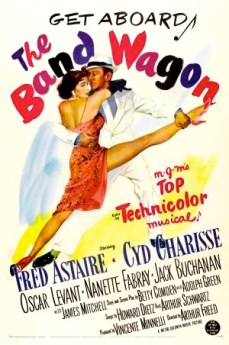 In this behind-the-scenes musical, Fred Astaire plays Tony Hunter, a slightly washed-up star of stage and screen. One can’t help but wonder if his performance has an autobiographical edge. It’s of no concern to the viewer though, because he’s as wonderful as ever.
The plot sees respected musical writers the Martons (Nanette Fabray and Oscar Levant) penning a new production for Hunter to star in. They hire famed Theatre director Jeffrey Cordova (Jack Buchanan), who slowly turns the production into a rather serious version of Faust, starring ballet star Gabrielle Gerard (Cyd Charisse). She doesn’t get on with Hunter (thanks, of course, to a series of silly misunderstandings), while his role is slowly squeezed away. No one is happy. On the bright side, hilarity ensues. Everything turns out OK in the end, naturally, but along the way we get plenty of comedy and plenty of song & dance.
There are several great numbers: Astaire dancing his way around an amusement arcade; That’s Entertainment, written for the film and easily demonstrating why it quickly became a standard; a bizarre number with Astaire, Fabray and Buchanan dressed up as babies, dancing around on their knees (memorable, if nothing else); and a big closing dance routine… that I actually liked! It’s a hard-boiled crime thriller told through the medium of dance (obviously; plus voiceover). It’s different to the norm — the voiceover adds a discernible story, and rather than showcase ballet it reinterprets noir-ish tropes — and it works marvellously.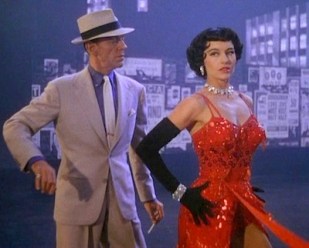
Minnelli shoots the dances in wide shots with long takes, using few if any cuts mid-sequence, which is of course the perfect way to watch Astaire in action. Every frame shows everything he’s doing, which is frequently essential, and there are no cuts to spoil his natural rhythm or shatter the illusion of a seamless routine.
I always feel like a four-star review should justify why there’s no fifth star — there must be something at fault, otherwise why not full marks? Perhaps this is a simplistic philosophy though, because I’ve not got a bad word to say about The Band Wagon, but it’s still:

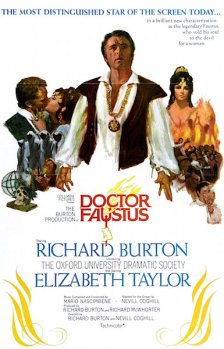 Despite the numerous film versions of the Faust story, this is the only one that adapts Christopher Marlowe’s A-level-favourite 1588 play. It’s a shame, then, that it’s heavily edited from the original text and, despite also being a filmed version of the Oxford University Dramatic Society’s 1966 stage production, has clearly been inappropriately chosen as a vehicle for then-couple Richard Burton and Elizabeth Taylor.
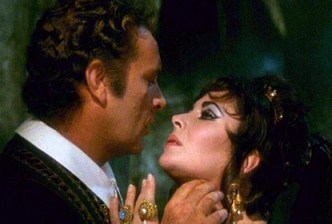 Elsewhere, Burton and Coghill’s vision of Faustus is stylistically reminiscent of a Gothic Hammer Horror, which is either wholly inappropriate or an ingenious genre mash-up — after all, such a genre-mashing trick has been pulled many a time with Shakespeare over the years. There are repulsively horrific corpses, a harem of naked ladies, an array of special effects, plus a medieval-styled gothic atmosphere to all the sets and costumes, though the scene where Faustus mucks about with the Pope feels more Carry On. Using inanimate objects in the roles of the Good and Evil Angels — respectively, a statue of Christ and a skull — is a small but inspired touch.
 perhaps just to heighten the presence of Helen by losing scenes she couldn’t have been shoehorned into; but in the process it both loses some of the best material and destroys any hope the film had of being a definitive filmed version of the play. Ultimately, such oversights proved to be the final straw for the film’s already-tenuous grip on a three-star rating.
 100Films.co.uk