
There’s much to see in this month’s packed overview, including a pair of BBC miniseries (as promised last month), a couple of comedies, the camp joy of Eurovision, and the return of Westworld. Plus, a word about the bloodbath that was the recent US renewal/cancellation season.

The City and the City
 The first screen adaptation of a novel by acclaimed British sci-fi/fantasy author China Miéville, The City & the City is a police procedural set in the unique location of twin cities Besźel and Ul Qoma, which occupy the same geographical space but inhabitants (and visitors) are forbidden from seeing the city they’re not in. When I first heard the pitch I assumed it was a Doctor Who-y sci-fi thing — that the cities were slightly out of step in time or something, and literally existed in the exact same space. Instead, they’re side by side, sometimes overlapping — there are places where the left-hand side of a road is in Besźel, the right-hand side in Ul Qoma. Residents are trained from birth not to see the other city. Apparently it’s partly an analogy for how we mentally block out unsavoury things in our own cities, but that doesn’t really come across in the screen adaptation, which is more focused on the murder mystery and its implications — it’s connected to a mythical third city, Orciny. In this respect it reminded me of Thomas Pynchon’s The Crying of Lot 49: our hero ends up investigating a very-secret, potentially dangerous organisation that may or may not exist, and whether or not they find it… well…
This production makes for a dense, demanding drama, throwing you in at the deep end with all sorts of terms and jargon that treats the world as real, challenging you to keep up and work it all out as it goes. There’s no hand-holding here. I guess that explains its low ratings on IMDb and the raft of “people were, like, totes confused by David Morrissey’s new drama!” articles that accompanied its airing. In terms of what it is “about”, the visual style very much evokes ’80s Soviet countries in Besźel, with secret police and dated, rundown cars and gloomy yellow-brown palette; while Ul Qoma is characterised by blues, glass and steel, LCD screens — a modern metropolis, but with different kinds of oppression. It’s very timely in its depiction of far-right nationalist groups being ascendent vs those seeking unification and tolerance being crushed — I wonder if that’s why it got made now, or if it’s just a fortunate coincidence.
Not everyone’s going to get on with The City and the City’s challenges, but there’s something here for those prepared to attempt the trip. Put it this way: after it finished, I popped on Amazon and ordered the book.
Ordeal by Innocence
 The BBC’s latest Agatha Christie adaptation finally reached our screens after a delay for extensive reshoots (to remove a cast member accused of sexual misconduct, not on this production). It’s a grim tale of abuse and, of course, murder, but classy work by director Sandra Goldbacher kept it more in the tone of the Beeb’s excellent And Then There Were None and away from the dirge of their Witness for the Prosecution. It’s buoyed further by strong work from a star-studded ensemble cast — there are many names here who could (and, indeed, do) headline their own series or movie. (Nothing against Luke Treadaway, who’s very good, but why he’s in the key art (pictured right) when they could’ve included, say, Alice Eve, Eleanor Tomlinson, or Matthew Goode, I don’t know.)
I’m only really familiar with Christie from screen adaptations, but it seems to me her rep for writing fundamentally-lightweight game-like murder mysteries comes from her ‘series’ — the books starring Poirot, Miss Marple, and Tommy and Tuppence — because her other work seems to be serious and quite dark. Maybe that’s just the route these recent adaptations have gone down, I don’t know, but it certainly differentiates them from the jolly tone of the next-most-recent Christie adaptations (2015’s Partners in Crime and ITV’s Marple, which ended in 2013). Though they also adapted Ordeal by Innocence as an episode of Marple back in 2007, so what do I know?
Westworld Season 2 Episodes 1-4
 Last month I wrote a mostly praise-filled review of Westworld’s first season, but if I’d been reviewing it in smaller chunks then my comments on the first four episodes would’ve been very, very different — I know, because after episode four I happened to draft a paragraph about how, while it wasn’t bad, it was kind of a slog (most of that paragraph survived into my published review, actually). I’ve been trying to bear that in mind as season two gets underway, because once again it exhibits flashes of greatness amid a feeling that it’s really going nowhere fast. But in season one this was the setup phase, introducing characters and places and concepts and threads that would begin to come together and pay dividends as their purpose was revealed in the season’s second half. Hopefully they’re playing a similar game here. Equally, I hope they haven’t overcooked it — Westworld became notorious for the it-was-under-your-nose-the-whole-time reveals it pulled in the final few episodes, and if they’re trying to do that again but without as good a set of ideas, well, we’re all just going to be disappointed.
Episodes Season 5
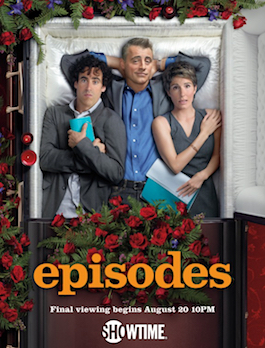 A whole seven months after its US airing (and nearly three years since we saw the last series), the final run of this UK-made UK/US-coproduced sitcom finally reached British screens (a far cry from the days when that took less than 24 hours). Originally about a pair of UK sitcom writers struggling to remake their successful British series for the US market, Episodes is fairly removed from that format at this point — it’s just about the characters now, and mainly their trials and tribulations with each other rather than the whims of the US network TV system.
I’m not sure that this was the funniest season, but at this point it seemed mainly concerned with wrapping up the lives of its characters, at least as far as we’re concerned (I mean, it didn’t kill them all off or something). So, unsurprisingly, the final season isn’t a great jumping-on point, as it mainly continues and resolves storylines and relationships hanging over from previous seasons. The final instalment even indulges in a series of time jumps to get us to an endpoint that is so predictable (but not unpleasant) that I reckon writers David Crane and Jeffrey Klarik probably had it planned from the outset. Whether all that time-hopping was economical storytelling or because they didn’t leave themselves enough episodes to let it play out in full, you be the judge. Anyway, Episodes at its best was almost sneakily great, and remains very good to the end.
Eurovision Song Contest Lisbon 2018
 There was drama to spare at this year’s Eurovision. Firstly, China were banned from showing it due to messing around with the semi-final broadcast (they censored tattoos, homosexual dancing, and Pride flags); then, on the big night itself, the jury voting was neck-and-neck right to the final country… before being completely upended when the public votes were added.
But most talked about of all was a stage invasion halfway through the UK’s performance. In case you didn’t see it, a protestor ran on stage, grabbed the mic off the singer, tried to blurt out a message of some kind, before being hustled off stage, and then our act carried on with the rest of the song. Everyone was duly impressed by her fortitude, the UK’s odds of winning surged… and then we did crap in the voting anyway, because the rest of Europe still hates us. They also hate Russia, as evidenced by the crowd once again booing the nation for merely appearing during the voting. Apparently they’ve no such problems with Israel, though — their song may’ve had a popular feminist message, but it was also mired in accusations of cultural appropriation, and then there’s the whole Palestine thing too. We’ll see how much handwringing there is about that this time next year…
Across it all was Graham Norton’s sassy commentary, which is the one benefit of being a UK Eurovision fan. Here are some of his best bits from this year — my favourite was #27.
Cancellation season
 Cancellation season has been and, I think, gone in the US, and this year was a particularly bloody one. The big news as far as Twitter was concerned was Brooklyn Nine-Nine, which caused such a ruckus that multiple other networks were interested and it found a new home within 24 hours. Lucifer also caused a bit of a stir, though there’s no sign of hope for that yet. Similarly afflicted were Designated Survivor (which was decently addictive enough that I binged through season one in just ten days and have been holding back on season two to do the same; apparently Netflix, who have the rights outside of the US and Canada, are contemplating a continuation) and The Expanse (which I haven’t started yet but has been on my radar thanks to Ghost of 82’s review), as well as a couple of other moderately-high-profile shows that I don’t personally watch. I guess the networks must have some really good pilots in the offing for next season… or, more likely, not. Well, you never know.
Next month… time to say do svidaniya to The Americans.
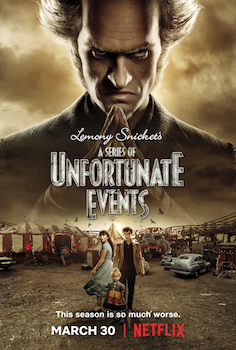 Abandon your vapid, facile distractions and set aside your very fine dramas, because it’s time to indulge in some vicarious fearsome disaster with the return of Netflix’s venerable family delight — a phrase which here means: A Series of Unfortunate Events is back.
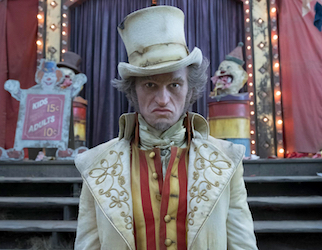 Neil Patrick Harris is having a whale of a time as Olaf and all his varied aliases, while the apparent earnestness of child actors Malina Weissman and Louis Hynes is clearly well measured for effect rather than poor work. There’s an array of memorable guest performances this season as well, from Kitana Turnbull, fantastically horrid as Carmelita, a little-goody-two-shoes teacher’s-pet bully the Baudelaires encounter in the opening two-parter; to Lucy Punch as an obsessive fashionista; to Sara Rue as a new inductee into the secret organisation trying to help the Baudelaires. Best of all is Nathan Fillion, born to play the fast-talking dashing hero who gets a ton of the best lines. If there’s a downside, it’s that we don’t see enough of some people. Unlike most kids’ fare (and, let’s be honest, some stuff made for adults), this isn’t a show where good is always rewarded and bad behaviour always punished, and that means some people may be shuffling out before we’ve had as much as we’d like. I guess the clue was in the title…
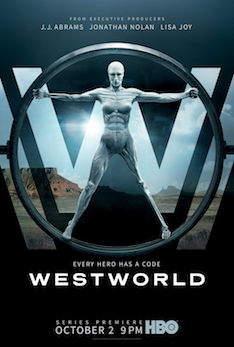 With season two imminent (it begins tomorrow, people!) I finally got my behind in gear (it’s only taken 18 months) and missioned my way through the first season of HBO’s reimagining of
  During its production Westworld hit the headlines because they shut down production for a while to retool the scripts and hone the story. Maybe this was why. If so, it paid off, because from the fifth episode things pick up considerably. Developments and twists really kick the mysteries into gear. Scenes between characters begin to carry more meaningful dialogue and affecting emotion. There’s even some action to give it a nice adrenaline kick at times. Rather than feeling like it’s ambling nowhere in particular, you feel like showrunners Jonathan Nolan and Lisa Joy have some very particular things in mind, but good luck guessing what they are because there are many surprises in store: however close you think you are to uncovering Westworld’s games, someone always has something else up their sleeve. It develops an almost
  The other most striking thing about the show are the performances. It’s like an acting masterclass: there are numerous fine performers here, and they’re all doing their best work. Ed Harris, Anthony Hopkins, Thandie Newton, Evan Rachel Wood, Jeffrey Wright… they’re all so magnificent that I don’t know who to single out without going on forever. And that’s not to undersell the rest of the cast either, many of whom would be said to excel in most other shows, but here there’s just so much raw talent on display.
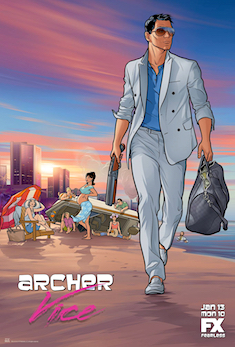 Here in the UK, animated spy-comedy Archer originally aired on Channel 5, until they started really titting about with the scheduling, which is what led me to drop off watching. It’s all on Netflix nowadays though, so I’m finally getting back into it.
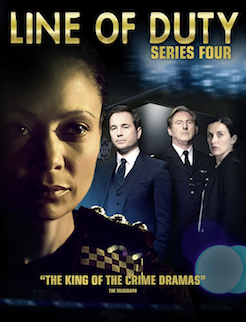 Another superb performance from Thandie Newton here, as the subject of AC-12’s latest internal affairs investigation. She’s convinced she’s arrested a notorious serial killer known as “Balaclava Man”; our faithful heroes reckon she’s cut corners, overlooking serious concerns about the evidence; the higher-ups who were exerting pressure on her to close the case would rather it all just went away. And as is the Line of Duty way, some shocking early developments send things spiralling in different directions. After the programme had become increasingly mired in its multi-season meta-arc
  While I very much enjoyed
 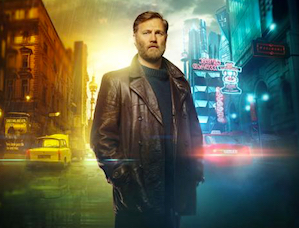 This month, I have mostly been missing the BBC’s miniseries adaptations of China Miéville’s The City and the City and Agatha Christie’s Ordeal by Innocence, both of which I’ve been saving up to watch in a more condensed fashion once they’re finished. The Christie ended on Sunday but the Miéville is only halfway through. Anyway, I imagine I’ll cover both next month. Also released this past month was Netflix’s big-budget reboot of Lost in Space, which I would’ve watched if I hadn’t been missioning my way through Westworld this past week. That might be here next month also. And finally, the last-ever season of The Best Show On TV™, The Americans, is underway in the US. Again, I’m saving it all up ’til it’s done, but I do intend to watch it promptly so as to avoid finale spoilers — my real hope is to time it just right so that I can watch the finale the day after it airs in the US, but we’ll see. Said finale isn’t until May 30th, so whatever happens I won’t be reviewing that until June.
 100Films.co.uk