

Did you know The Exorcist was based on a true story? I didn’t, until I watched some of the special features on the Blu-ray release. “Based on” is a bit of a stretch, to be honest. “Inspired by” would be more accurate. But you get the sense from author and screenwriter William Peter Blatty that he believes all this stuff so much that he thinks “based on” would be fine.
The Exorcist does start out very plausibly. It’s about Regan MacNeil (Linda Blair), a sweet 12-year-old kid living with her mother Chris (Ellen Burstyn) in Washington, D.C. But one day Regan begins to act oddly: delivering insults and soiling herself at a party; yelling obscenities; slapping her beloved mother; somehow causing her bed to shake uncontrollably… Doctors run tests, but they reveal nothing. The only suggestion they’ve left to give is that Regan may believe she’s possessed by an evil spirit, and that she might be tricked into believing she’s cured if the church will perform a little-known procedure called an exorcism.
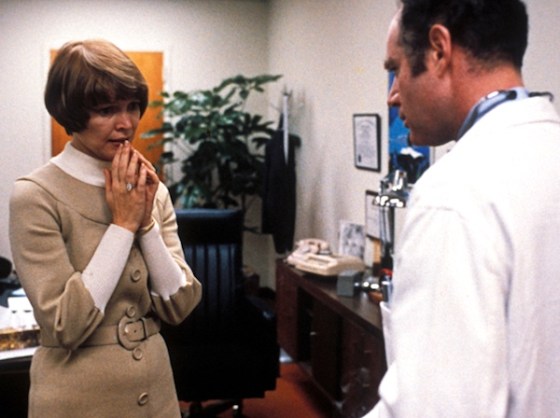
Everyone’s so busy talking about The Scary Stuff when it comes to The Exorcist, no one ever tells you how low-key and grounded a lot of it is. Okay, the talking in voices and spinning heads and vomiting green gunk and bloody crucifix masturbation are pretty memorable, so fair enough. Before that, though, it’s more of a character drama, about a single mother struggling to handle what appears to be her daughter’s out-of-control mental health problems. Meanwhile, a priest, Father Karras (Jason Miller), struggles with a crisis of faith brought on in part by his ailing mother. Naturally these two threads align when Chris calls on Karras to investigate Regan’s condition.
Another thing I’ve never heard about The Exorcist is how good Miller is. This is his film debut, before which he was a stage actor, but he delivers a very naturalistic performance as a man of the cloth who also has his head screwed on — his training in psychology keeps him suitably skeptical of what’s going on with Regan. Events conspire to challenge his point of view, of course. Karras has the clearest arc of anyone in the film, giving Miller the most scope to develop his role. I’d venture he’s the film’s most interesting character.
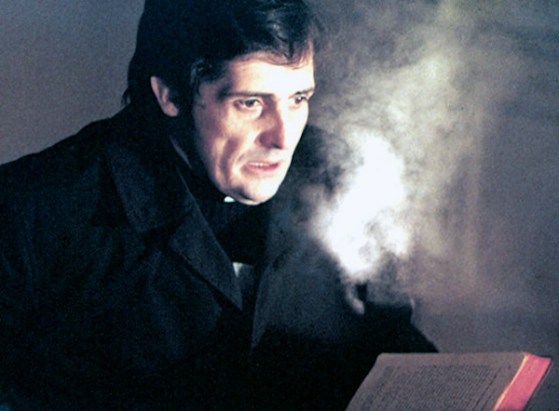
That’s not to dismiss Burstyn, who’s also excellent as the very together mom who begins to crack under the increasing strain of her daughter’s worsening, inexplicable condition. As said daughter, Blair’s performance is certainly memorable, though the potency of Regan is aided by special effects and voice work from another actress. Although second billed, Max von Sydow only pops in at the beginning and end in the titular role of Father Merrin. It’s no wonder someone later thought Merrin’s past was ripe for a prequel, because there’s a backstory there that’s only hinted at.
And no one ever says how little Tubular Bells is in it, either.
The thing people do say about The Exorcist is how scary it is. Tales of audiences fainting and running out during its initial theatrical run are the stuff of movie legend. Today its releases are branded as “the scariest film ever made”, with the justification of several polls that have named it thus. I can well believe that, in the early ’70s, it was indeed the most shocking film most people had ever seen, certainly from a major studio. The extreme bad language, the gruesome special effects, the morally depraved acts, and all of it happening to a child…
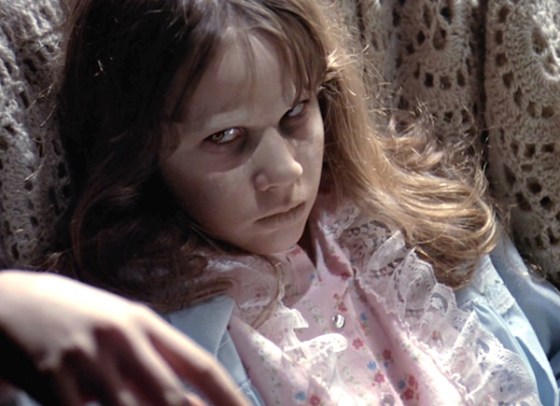
It was surely an element of sensibilities being offended (especially in America), as much as it was actual horror, that provoked such radical reactions from audiences back in the day. Nowadays we’re a bit more deadened to those things — the last 40+ years have served up plenty of elaborate gore, and potty-mouthed pre-teen girls are more likely to be found in comedies (Hit-Girl is even younger than Regan when she utters the C word in Kick-Ass, for example). I also thought it frequently undermined its own intensity by cutting away from the scary scenes to more mundane stuff. Maybe the goal was to never give those scenes an ‘out’ — we always seem to leave them when supernatural stuff is still going on — but for me it killed the momentum that was building.
That’s not to say the horrific and shocking stuff is no longer powerful. What really works in its favour is how long the film spends being grounded and plausible — most of the first hour is a ’70s social drama about a child with a mental health problem. That level of realism helps the later horror scenes be all the more effective. They quite quickly transcend the realms of the plausible (unless you’re some kind of religious fanatic, I guess), but the grounded setup lends weight to them nonetheless. The climax in particular — the actual exorcism — might just be silly without the realistic world it’s been placed in. Instead, it’s a suitably tense climax.
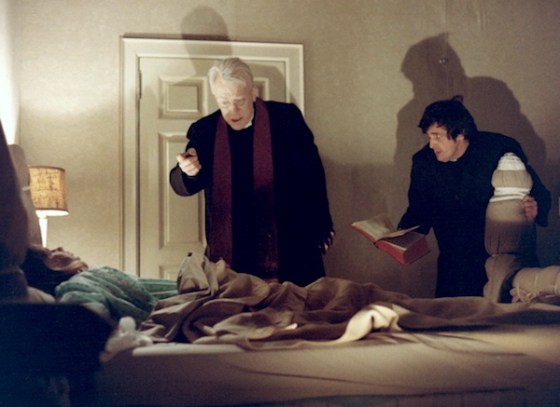
Obviously it was the extreme stuff that caught people’s attention and earnt The Exorcist a reputation that it still trades off to this day. However, I’d say it’s best regarded, not as a fright-fest, but as a film about characters: the mother who’ll do anything for her child; the priest battling with a crisis of faith. It’s a drama about real people in extreme circumstances, it’s just that these extreme circumstances happen to be horror movie fodder. In this respect it’s such a film of the ‘70s, which I mean in the best possible way.

The Exorcist was viewed as part of my Blindspot 2017 project, which you can read more about here.
* IMDb lists half a dozen other languages, but Arabic’s the only one I remember being significant enough to earn subtitles. ^
 Nine months on from its theatrical debut, I’ve managed to remain remarkably spoiler-free about Interstellar, the ninth feature from director Christopher Nolan. “Matthew McConaughey lives on a farm and somehow ends up in space with Anne Hathaway,” is about all I knew going in. That and the somewhat divisive critical reception it had received, leaving what many had assumed could be an Oscar favourite with a disappointing tally of nominations (and its studio to have backed the wrong horse, resulting in
  More plot happens. Interstellar is the kind of film where you could get an awful long way through the story just trying to explain the setup. That’s a certain style of storytelling, and in its own way a positive one — a plot that is constantly moving and updating, rather than one that presents a basic setup, runs on the spot with it for a while, then wraps it up. The latter is how most narratives unfold, which is why reviews can so often summarise said setup and that’s fine. Nonetheless, Interstellar’s first act goes on too long, and could do with a good trim. (For an alternative view on why the first act is in some respects the best part of the film and needed more development, read
  Based on a skim through online reaction, some viewers would indeed love even more, while others would despise it. One thing I find interesting about this apparently diverse reaction is that you can find an abundance of negative/semi-negative comments and reviews by people who write such things, but nonetheless the average user scores on the likes of
 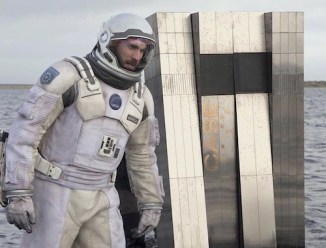 From a filmmaking perspective, there is surely nothing to fault. The visuals are incredible. As you’d expect, the IMAX footage looks absolutely stunning. Every time the Blu-ray reverted back to 2.40:1 I was a little disappointed. A sneaky part of me thinks Warner deliberately make these sequences look less good to ramp up the quality of the IMAX footage (I felt the same about
 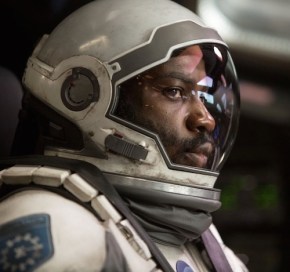 Anne Hathaway is largely understated, but slivers of emotion seep through when appropriate; and Michael Caine actually gets to do a bit of Acting in a Nolan film for a change, rather than just turning up as a wise old dispenser of exposition — though don’t worry, he does that too. One of the stand-outs for me was David Gyasi, getting a role that was subtly stronger and more thought-provoking than several of his more famous colleagues, and executing it with aplomb too. Similarly, the voices of semi-sentient robots TARS and CASE — Bill Irwin and Josh “he’ll always be ‘that guy from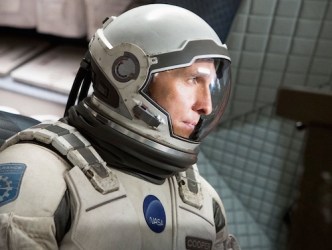
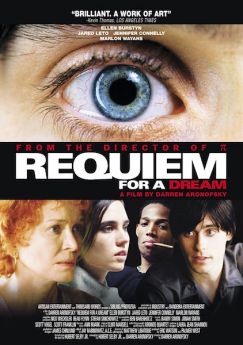 On Coney Island, the faded and decrepit one-time pleasure place of New York City, four people — Harry (Jared Leto), his girlfriend Marion (Jennifer Connelly), his best friend Tyrone (Marlon Wayans), and his mother Sara (Oscar-nominated Ellen Burstyn) — find themselves accidentally drawn into a whirlwind of drug addiction. Not to put too fine a point on it.
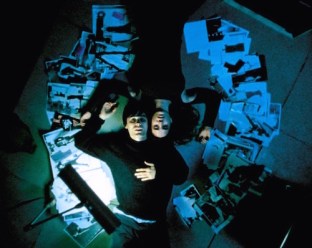 Harry and Tyrone by getting rich through selling drugs — and it all goes horrible awry.
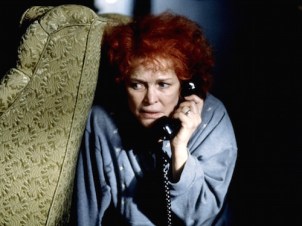 Requiem for a Dream may have a bit of a reputation at this point; one that might put you off viewing it, or possibly only deigning to attempt it in a certain frame of mind. While there is an element of truth to that, it is a brilliant film — not “enjoyable” in the easily-digested blockbuster sense, but as a mind-boggling and awe-inspiring feat of filmmaking, yes. Incredible.
 100Films.co.uk