
Christmas TV is already underway in the UK (I believe the first things that were explicitly a “Christmas special” aired over the weekend) — so, before my usual Christmassy roundup, here’s one final regular TV column for 2020.

His Dark Materials Series 2
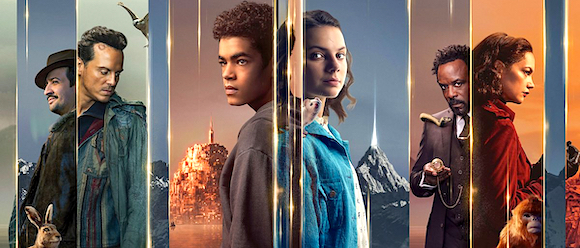
In a world where innumerable film and TV productions have been affected by Covid and its associated lockdowns, His Dark Materials got lucky: by hurrying on to produce their second series before the young cast aged too much, they’d virtually wrapped filming before the first UK lockdown hit. The only casualty: a standalone episode detailing what one character was up to during the rest of the season. That’s frustrating for fans (as I understand it, the events intended for that episode aren’t actually in the original novel, but were dreamt up afresh by the show’s writers in collaboration with original author Philip Pullman), and if you know there’s an episode missing then you can spot its absence (there are some scenes and references in the season finale that I wager would make more sense had we seen the missing episode), but the series mostly survives without it.
So, picking up from series one’s massive cliffhanger, this second run adapts the trilogy’s second novel, The Subtle Knife — a mysterious item of arguably even greater value than the Golden Compass that (sort of) lends its name to (the US version of) book one. Despite tackling a whole novel, I’ve seen some describe this season as boring, with too little incident. I guess that’s the advantage of waiting until the end and watching it all in just six days: I was suitably engrossed, and it moved, if not at a fair old lick, then certainly at a reasonable pace. But it’s not a show that’s always big on action — instead, it’s big on ideas, with underpinning concepts on the boundaries of science and fantasy that have to be explained and understood by the viewer. Nonetheless, there’s still plenty of conflict between our heroes and villains; and while it may seem clear who’s on which side, there are enough shades of grey, and emerging uncertainties about who’s really got the right motives, to keep it pleasantly complicated, engrossing, and believable.
I’m sure I once read that the original plan was to adapt the trilogy of novels over five seasons — one for book one, two each for books two and three. Now, they’ve reached the point where book two has been done in a single season, and now book three is plotted out to be completed in one more run of eight episodes too. But, shockingly, it hasn’t been commissioned yet. I bloody hope the BBC (and HBO) do the right thing, because I think overall this is an excellent show, with still-timely issues of freedom and control, that merits completion on screen. And, simply, I’m excitedly looking forward to the next (final) series already.
Update: This afternoon, while I was too busy writing this post to notice the news, the BBC and HBO officially recommissioned His Dark Materials for its third and final series. Hurrah!
The Good Place Season 4
 The Good Place ended forever ago, right? Well, the series finale originally aired back in January, so… this year, yeah, forever ago.
As with every previous season of the show, this one noodles around in a new setup for the first half-dozen-or-so episodes, before swinging into one long multi-part story through to the end of the season — and, in this case, the end of the series. In that respect, it’s always been kind of an odd show, structurally, and season four is no different. Most of the jeopardy and drama is resolved a couple of episodes before the end, leaving us to watch events play out for these characters we’ve come to love, rather than trying to keep us hooked primarily by plot, unlike pretty much every other programme ever. To be clear, this is not a criticism: it absolutely works. Rather than shooting for a series finale that has the big climax of the plot plus a bunch of rushed wrap-ups, here the more-than-double-length finale is like a coda to the entire show. It’s the series’ highest rated episode on IMDb, so I’m not alone in liking this approach.
The Good Place did, actually, start out as a show that seemed to be primarily about its plot — it’s name was mostly made off the back of one plot point in season one — but along the way it’s really developed a care for its ragtag gang of heroes, and taken us along for a once-in-an-afterlifetime ride with them, to the point where I’m actually kinda sad to see them go… but I loved watching them leave.
Baptiste Series 1
 The breakout star of BBC drama The Missing here gets his own spinoff series. Julien Baptiste is a retired police detective who specialises in finding missing people, which is exactly what he did across two series of The Missing (I reviewed the second here). But instead of a third series, he gets a spinoff, in which he… has to search for a missing person. Hm. But that’s just the inciting incident: before long, Julien finds himself embroiled in the affairs of an Eastern European criminal empire, with his family under threat. Okay, fair enough. Unfortunately, although Baptiste shares the same main creatives as its parent show — sibling screenwriters Harry and Jack Williams — what they’ve cooked up here just isn’t as inventive or captivating as their two seasons of The Missing, both of which were fantastic. Sure, they still conjure up plenty of unexpected twists and developments, but it lacks the same spark that was there before. But let’s not get carried away: it’s not a bad serial, just not as high-quality as the two seasons that preceded it. It’s been recommissioned, so perhaps next time they’ll recapture the magic.
Smiley’s People
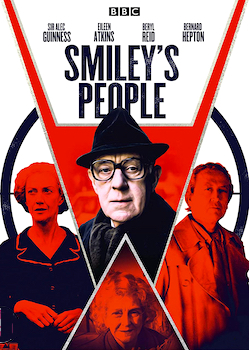 John le Carré’s spy mystery Tinker Tailor Soldier Spy is one of the most acclaimed works of the genre, and the 1979 TV adaptation is justly fêted as one of the great miniseries. But Tinker Tailor is actually the first book in a loose trilogy, and in 1982 they also adapted the third book (they skipped the second because its overseas settings were deemed too expensive; as I understand it, the plot also doesn’t have that much bearing on the overall events — this isn’t “one story in three parts” like many a trilogy). Smiley’s People doesn’t enjoy quite the same reputation as its forebear, and I’m afraid I’m not going to challenge that position. Like Baptiste, it’s not bad, it just lacks that je ne sais quoi that makes its predecessor a solid-gold classic. One thing they do share is a damnably complicated plot — I struggled to follow the narrative watching it one episode per day back to back, so goodness knows how anyone kept up with it once a week over a month and a half back in the ’80s.
I watched it on the BBC’s recently-released Blu-ray, which is a tough one to recommend it. It’s clearly been mastered from the original film (where possible — some negatives were missing so they had to resort to less-good elements), but then it’s been slathered in digital noise reduction (DNR) as if in some misguided attempt to hide that it was actually shot on grainy film stock as opposed to weirdly-soft HD video. It’s so rare for things to be over-DNRed these days that you’d think we were finally past it, but obviously not. And yet, while the series never looks as good as it could, the fact it has been restored means it’s a lot better than the old DVDs, and the chances of anyone ever doing it again and getting it right are basically non-existent. Sometimes, we just have to settle for what we can get. That certainly sounds like a le Carré moral, doesn’t it?
Elementary Season 7 Episodes 9-13
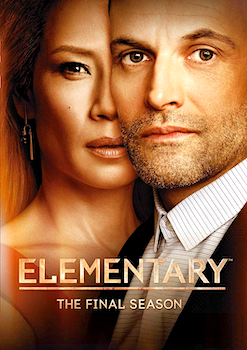 The other “Sherlock Holmes in the modern day” show finally came to an end last year, though I suspect its finishing shall remain more final: whereas Sherlock always had a stop-start “we could make more anytime” production, accompanied with cast & crew chatter about wanting to sporadically do make new episodes forever, Elementary is much more traditional US network TV show — and the diminishing episode orders of the final couple of seasons and summertime broadcasts of the last couple of seasons don’t suggest an enduring hit poised for a revival.
Despite that, the finale itself left things open for more, imitating Sherlock’s “Holmes and Watson continue” final beat. This kind of open-ended ‘ending’ fits a show like Sherlock, where there’s a realistic chance it will return someday. For a show like Elementary, where the chance it might ever return is infinitesimally small, it just feels inconclusive. Like, if you want it to be a true finale, you need to give some closure; an actual ending. As it is, despite a narrative that condenses several years and major life events (Joan gets cancer then goes into remission across a single cut), the episode fails to truly answer why this is the point at which we stop following Sherlock and Joan’s adventures.
There are some people who’ll tell you Elementary is better than Sherlock. I’m not one of them. I’ve warmed to it down the years, but I’ve never thought it was a particularly good realisation of Holmes and Watson — whatever its faults, Sherlock feels like it’s an attempt to adapt Arthur Conan Doyle’s work, whereas Elementary has taken a few names and basic character points and then gone its own way. I’ll concede that there are some things Elementary has done better, although that’s an almost-inevitable side effect of having c.22 episodes a year to play with instead of Sherlock’s three TV movies every couple of years. But it’s also an almost-standard US network procedural — I can remember every single episode of Sherlock, for good or ill, whereas very few of Elementary’s 154 instalments stick in my memory.
Things to Catch Up On
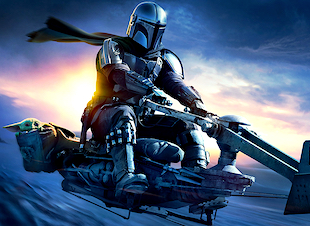 This month, I have mostly been missing The Mandalorian season 2. Well, as regular readers will know, I never even got round to season 1. Naturally, it’s been basically impossible to avoid spoilers — though as those amount to “look which legacy character has turned up this week” rather than actual plot stuff, perhaps it will be okay. Or maybe the series doesn’t really have any plot to spoil, it’s just endless fan service — that would certainly seem to tally with some people’s view of the show. Others love it though, so I’ll see for myself… someday…
Next month… will come after my regular Christmas TV roundup, which will likely include a bunch of seasonal sitcom specials, plus the New Year’s Day Doctor Who.
 A belated sequel/spin-off to the Karate Kid movies, Cobra Kai was one of the first series to be released when YouTube decided to get in on the Netflix game. It was a hit for them, too, attracting tens of millions of viewers and very strong reviews. And yet it feels like no one talked about it, so where those 90 million people were hiding, who knows. Anyway, with YouTube wrapping up their series production (they were a bit late to a market already saturated by Netflix, Amazon, and a dozen other TV and film studios), existing and future seasons of Cobra Kai have been passed onto Netflix — and now everyone’s talking about it. Are more people watching it, or is the Venn diagram between “people who primarily watch stuff via Netflix” and “people who use social media” just a perfect circle? We’ll never know. I guess I’m one of those people who only started talking about the show after it moved to Netflix. I did mean to get to it sooner, but no way was I paying for YouTube, and I missed the couple of times they made it all available for free.
 A four-part adaptation of the fourth Cormoran Strike novel by
  Remember when Netflix first launched Criminal and made a big deal of how it was one format filmed by four different countries? Does no one else remember that? Because I swear it was one of the key USPs, but it’s gone entirely unmentioned in the (surprisingly large amount of) press about the second season — which I presume suits Netflix just fine, because three of the countries have been quietly dropped, so only the UK version remains. (What’s the betting the UK one did better simply because its anglophone cast are more widely known around the world?)
 I’d found the last few Derren Brown live shows relatively underwhelming (not to mention his
  Recently, I’ve been unwinding with some of Netflix’s standup specials. The most noteworthy / widely discussed of those is certainly Hannah Gadsby’s Douglas, her followup show to the massively successful Nanette (which I commented on
 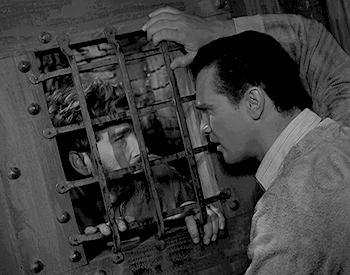 This is my tenth and final selection of the best episodes of the original Twilight Zone, which gets me to the end of the top third of episodes on
 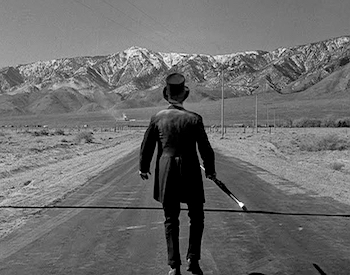 On the other hand, a common feature of The Twilight Zone is “man out of time” stories. The show did a lot of those, and A Hundred Yards Over the Rim is certainly one of them. In 1847, a pioneer at the head of a wagon train heads over a nearby rim to scout for water, and finds himself in 1961. There’s reasonable potential in that, but what follows offers no remarkable features or moral messages. If the pioneer was on the verge of giving up, and seeing that people like him did bring civilisation to those barren places motivated him to carry on, that would be effective. In fact, he’s pretty much the only one in his party who’s already certain they’re on the right path, so all his trip through time represents is a brief obstacle in his path. Similarly, he discovers evidence that his dying son will actually survive and achieve great things, but he didn’t seem to doubt his son’s chances before that, so what did he really gain? Apparently this is JJ Abrams’ favourite episode, which I feel explains a few things…
 One for the Angels is another feel-good episode, in which a two-bit street salesman manages to outwit Death… twice! Once for himself, once for a little girl who lives in his block. Ed Wynn embodies the friend-to-children type persona most familiar from his later appearance in
  This month, I have mostly been missing The Haunting of Bly Manor, the followup to The Haunting of Hill House, which I also never got round to watching. This is the perfect month for that kind of thing, obviously, so I ought to make the effort. Not sure I will, mind. Same goes for Lovecraft Country, which I heard a lot of good things about, and then heard less good things about, and now I’m just not sure. I mean, there’s so much TV to watch nowadays, you gotta be careful not to waste that precious viewing time. And I’m sure there’s been a bunch of other stuff, but God, never mind watching it, I can’t even keep up with remembering it all.
 This filmed-in-lockdown comedy stars David Tennant and Michael Sheen as they attempt to rehearse a play over the internet, the goal being they’ll be ready to put it on as soon as theatres reopen. Naturally, there’s much more to it than two actors practising a play — indeed, I’m not sure they ever actually get round to any proper rehearsing. Conflicts abound, both broadly relatable (Sheen is blackmailed into helping look after his elderly neighbour, but develops genuine concern for her) and actorly (a running debate/gag about which of the pair should get top billing), and there are a couple of big-name surprise cameos along the way (no spoilers — the surprises are worth it). With all episodes in the 15- to 20-minute range, the series is hardly a big time commitment (it runs well under two hours in total), but it’s well worth it and consistently funny. Indeed, I wish there was going to be more. Well, a second lockdown isn’t out of the question yet, is it…
 This documentary first aired back in 2016, in the wake of Hamilton’s success on stage. I’m not sure if it’s ever been screened in the UK, but I tracked down a copy after watching
  I started this when it began in January, and have been slowly trekking through it ever since — it’s taken me six whole months to get through just ten episodes. That’s a commentary in itself as to what I thought of it, I suppose, though if you asked me I’d say it’s “not bad”.
 I’ve never got round to Phoebe Waller-Bridge’s much-acclaimed sitcom, but, during lockdown, Amazon offered the original one-woman-show stage version (recorded last year during a live cinema broadcast) as a charity rental, so I thought I’d see what the fuss was about. My reaction was… muted, to be honest. I can certainly see how it pushes at boundaries, both of the depiction of women in fiction and of taste in general, and for that reason it’s significant, but I only found it sporadically funny, which makes it somewhat unsatisfying as a comedy. Also, I wasn’t expecting it to get so dark — if you’re a lover of small furry animals, beware.
 Another filmed stage comedy that left me somewhat underwhelmed. This is more straightforward stand-up, however, and as that it was more often amusing — whether you find Acaster’s “wacky” style (his word) to your taste will dictate exactly how funny. For me, he’s not the most consistently hilarious standup I’ve seen, but provoked laughs regularly enough. The real selling point here, however, is that it’s a four-parter. Ever heard of a multi-part stand-up gig before? Me either. These aren’t just four entirely independent gigs box-set-ed up either, but were conceived and shot as four connected sets.
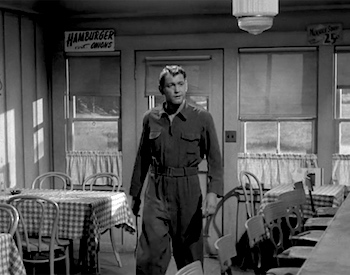 This month’s selection begins at the very beginning: the first-ever Twilight Zone episode, Where is Everybody? The title alone is a pretty succinct pitch of the episode’s theme, and the episode is as one-note as its premise. This is an exciting story in which a bloke… gets himself coffee, and… talks to a mannequin, and… tries to phone the operator but can’t get through, and… has an ice cream, and… yeeeaaah. The twist ending isn’t much cop either, 50% “it was all a dream”, 50% a thin moral about humans’ need for companionship. It could’ve been better: Rod Serling’s original pitch for episode one was a tale about a society where people were executed when they turned 60, which I think is a better concept, but it was deemed too depressing (imagine what they would’ve made of Logan’s Run, where the executions happen at 30!) That said, “everybody’s gone” is a reasonable starting idea, but the episode needs (a) more places to go with it, and (b) a more interesting reveal. (See
  I’ve written before that some episodes suffer from the series’ own influence, or just from an ensuing 60 years of sophistication on the part of the viewer, and Nightmare as a Child is a case in point. It has two reveals, and they’re both not so much guessable as obvious and inevitable. There’s even a bit of a coda to thoroughly explain it all again in case you didn’t get it. Maybe that was necessary back in 1960, when stories like this were breaking new ground in the audience’s minds, but today it feels like overkill. However, I wouldn’t say it’s a bad episode — indeed, the story of a woman meeting a strange little girl who seems to know an impossible amount about her life is still suitably eerie and tense in places — but it is one that plays less effectively today. That said, if you engage with it not as a mystery with a surprise but as simply a story, it has more to offer — Kozak compares it to “a tightly wound Hitchcockian thriller/murder mystery”, while Scott Beggs of
 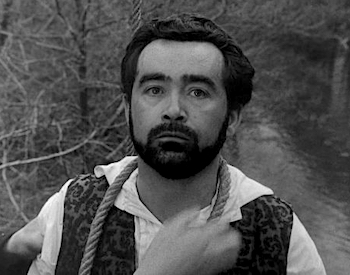 Having begun today with Twilight Zone’s first episode, we end with the last one produced — although they didn’t actually produce it. An Occurrence at Owl Creek Bridge is an award-winning French short film that Serling saw and liked so much he bought the TV rights (saving so much money on the cost of producing another episode that he brought season five in on budget). Even if Serling didn’t point out its alternate origin in his introduction, it’s immediately clear this came from somewhere else, because it doesn’t look or feel at all like a normal TZ episode. So what made Serling think it would fit the show? Why, it has an ironic last-minute twist, of course! This is regularly one of the best-regarded episodes of the series, and the short film itself has a pretty strong rep too, but I don’t get it. There’s some pretty photography and the beginning is fairly atmospheric, but it quickly starts to drag — the story is thin and slow, ending with a twist that I found inevitable from early on.
 Last month, I didn’t include this section because I couldn’t think of anything to put in it. Naturally I then spent the next couple of days remembering things, like the recent re-adaptations of Alex Rider on Amazon and Snowpiercer on Netflix. Obviously, I still haven’t watched either of those. More recently, Netflix launched Cursed, a young adult (I think) take on Arthurian legend from the point of view of the Lady of the Lake. I’m not wholly convinced by the trailers or buzz, but I do love a bit of Arthurian whatnot so it’s on my radar. Also passingly of note is that Amazon just released season three of Absentia. I
 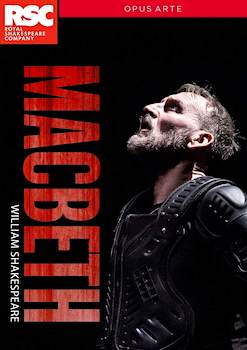 This Royal Shakespeare Company production from 2018, starring Christopher Eccleston and Niamh Cusack, has apparently been
  Having really enjoyed Sloss’s two Netflix specials
  After three seasons on network TV (or Amazon Prime Video here in the UK), Lucifer fell prey to
  I used to love Jonathan Creek back in the day. It was a huge hit, too, gaining high viewing figures and a BAFTA award. On the surface it doesn’t look so special: two mismatched individuals solve murders. But it’s the execution that’s different: these are all “locked room” mysteries, and rather than interview a small array of suspects to guess who did it, they must work out how the murder was even physically possible. Creek is a magician’s trick designer, and the stories kind of work like magic tricks: something seemingly impossible that has a hidden rational explanation. Personally, that’s right up my street, and while some elements of the show are obviously dated (the hairstyles; the cars; the pace is leisurely by modern standards), I think it holds up pretty well.
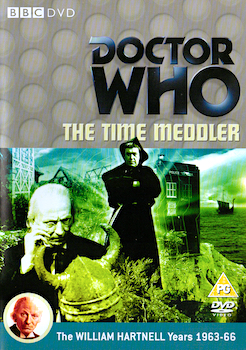 Last month, Doctor Who Magazine ran a Twitter ‘world cup’ to find the most popular stories starring the First Doctor. Many of the usual suspects did well, but I was surprised to see The Time Meddler wind up
 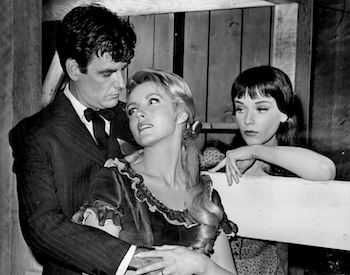 This third selection of episodes deemed the series’ worst (according to
 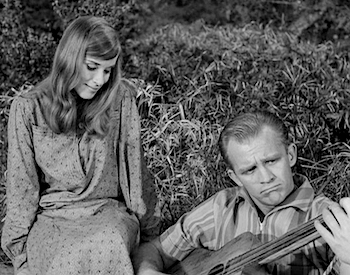 The next episode in our rundown is also based around a song: Come Wander with Me, in which a wandering singer attempts to buy a folksong from a young woman, only to find he might be living the lyrics… maybe. It’s a bit unclear what’s really happening, or why. It’s got some nice ideas, with mysterious characters, the haunting song, and some atmospheric direction by Richard Donner, but it comes to no kind of conclusion. How has this happened before? Has it happened before? Why is it happening again now? The episode barely even begins to ask those questions, never mind answer them; and not in a Lynchian “it’s up to your interpretation” way, which would be fine, but it doesn’t even seem to be aware those questions exist. Frustrating.
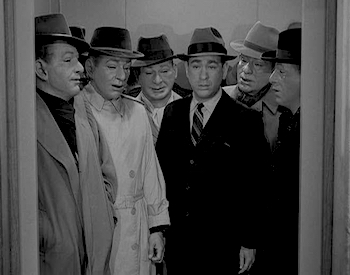 The ‘hero’ of The Mind and the Matter hates people. They bump into him on the subway; they squish against him in the elevator; they accidentally pour coffee over him at work. If he had his way, all the people would just disappear. After he reads a book about the power of the mind, he instantly gains the power to make his thoughts real (no practice required, apparently), and so immediately does away with everyone else. Hurrah! But after a morning’s work in peace and quiet, he’s bored, with no idea what to do. So the first thing he imagines to enliven his world is… an earthquake. Um, what? Unsatisfied with imagining different weather phenomena, and apparently unable to conceive of anything else whatsoever to occupy his interest, he decides to fill the world with people just like him. That results in a world full of grumblers and moaners, which he finds even more distasteful than how it was before — so he just puts it all back. It’s almost a lesson in what happens if you give unlimited power to unimaginative people… except that’s not the point the episode actually wants to make, so it doesn’t really make it. Instead it’s going for “this world isn’t perfect, but it’s better than the alternative and there’s a lot to like”. But it doesn’t make us feel that, it just tells us it. Heck, even the character doesn’t feel it — he’s just as miserable at the end as he was at the start. The whole affair is sort of an infinitely stupider rehash of the classic
  Previously on Twenny-Four… There may be no Jack Bauer, the new font for the clock may be bizarrely wrong, and the on-screen text may have abandoned the familiar golden yellow for a soft blue, but everything else about Legacy is same old, same old. If you remember it from
 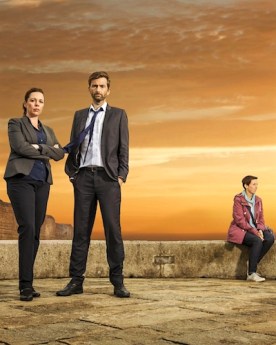 DI David Tennant and DS Olivia Colman (or whatever their characters are called) return after the much-criticised second series for a third run that represents a blazing return to form. Nearly every police drama on TV is always about murder, but here our committed coppers are faced with something that seems harder to prove, and all the more distressing and divisive for those involved: a sexual assault. The series was apparently put together with extensive advice from expert organisations, which means on occasion it almost tips a little too far into factual territory, like a “this is how it’s done in real life” dramatisation. Fortunately screenwriter Chris Chibnall is better than that, quickly focusing on how it affects the characters, and on building the mysteries that will fuel eight whole episodes. Suspicion abounds, but if Broadchurch’s first series proved anything it was that everyone can guess the culprit before the end without it undermining the effectiveness of the drama. I think we’re a ways from that point yet, though…
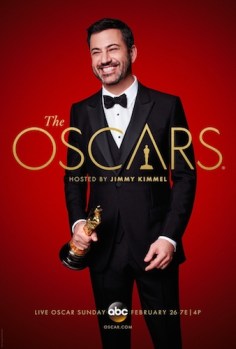 Best. Oscars. Ever! Oh, I bet it was horrendous actually being there having to deal with that ending, but my goodness, as a viewer it was fantastic. It couldn’t’ve been more dramatic if you’d scripted it. Imagine how terrible it could have been, though — if Moonlight had been forced to cede the win to La La Land, for instance (that would’ve sent #OscarSoWhite into overdrive), or if it had been in a category with a sole winner, who in the middle of their no-doubt-tearful acceptance speech was informed they hadn’t won after all and had to embarrassedly hand the statuette over to someone else… But no, it turned out OK. Well, not so for the La La Land guys, but for everyone else, yeah. And the rest of the ceremony wasn’t half bad either. Jimmy Kimmel was the most confident and capable host for bloody ages (and I say that as someone who enjoyed the likes of Neil Patrick Harris and Hugh Jackman) — if the show’s producers know what’s good for them, he’ll be the new regular host.
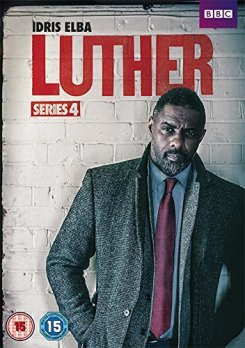 The recent news that Fox have scrapped plans for a US remake of Luther (because they couldn’t find a lead actor good enough to replace Idris Elba) reminded me that I never got round to watching the original version’s last series, this two-parter that aired back in December 2015. I can see why feeling unable to cast anyone as engaging as Elba would lead them to abandon their remake, because there’s not all that much special about Luther outside of its lead. Some people talk about it as if it’s among the forefront of the Quality TV era that we’re currently blessed with, but that’s just a bit daft — much like the programme itself. It doesn’t know it’s daft — it’s all very serious — but it is daft, really. Sure it’s dark, and sometimes kinda scary, and certainly grim, but its realism quotient is way low. It has much more in common with the overblown heightened world of, say,
 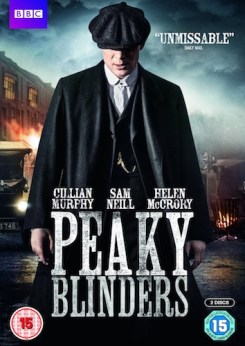 I’ve been meaning to get round to this since it first aired back in 2013, and for whatever reason now was the time (partly it was brought to mind by writer Steven Knight’s new dark period drama,
 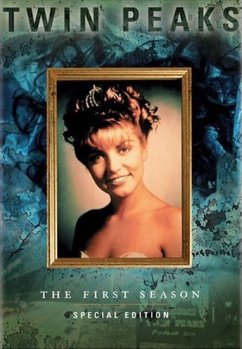 “She’s dead… wrapped in plastic!” With those immortal words (not the first lines, but never mind) a TV phenomenon was born, and a whole new era of television slowly began.
  This month, I have mostly been missing the penultimate season of The Americans, which is two episodes in Stateside (no idea if there’s still a UK broadcaster; at this point I’m not sure it matters). Long-time readers may recall I like to save up The Americans and watch it binge-ish-ly once the season ends, which is a very rewarding way to watch such an intricately-constructed programme. The downside is that means I’m still a couple of months away from getting to find out what happens this year in “
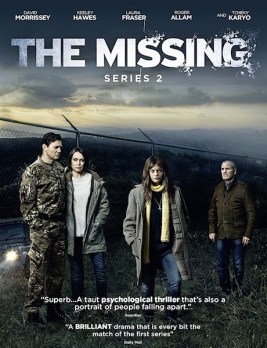 While everybody’s busy fawning over Happy Valley (never watched it) and Line of Duty (series one was quite good; I need to catch up), I reckon The Missing is one of the best dramas British TV has produced in a good long while. The second series (which aired towards the end of last year over here and, coincidentally, started last Sunday in the US) is every bit the equal of the first, and possibly even better — and considering how good the first was, that really is an achievement.
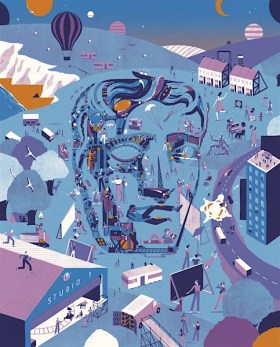 aka the BAFTAs, obv. I have to say, I thought it was a pretty dull show this year. For starters, Cirque du Soleil — impressive, but what’s it got to do with the last year in film? Why did no one write Stephen Fry some good material for his opening monologue? Then there were the awards themselves. Short on surprises — the big prizes went where expected, the smaller ones erred British. None of the American winners are committed to giving a decent speech here because they’re saving it all for the Oscars. Well, apart from the
  It must be a slow time for TV — I don’t even feel like I’ve been missing all that much. Well, X-Men spin-off Legion recently started and I haven’t got round to that yet, and 24 spin-off / sequel / continuation 24: Legacy started in the UK last night, so I’ve barely had a chance to watch it (I’ll have something to say about that next month, then). So I really have no excuse for not watching Westworld yet. Oh, and I need to get on with starting my long-planned re-watch of Twin Peaks, because there are only…
 It’s certainly the summer of good-guy-on-good-guy dust-ups in the superhero subgenre this year, with Batman v Superman
 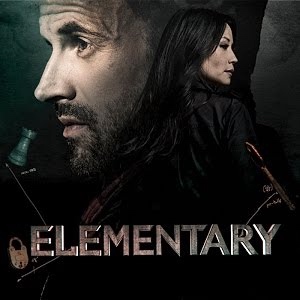 I’m a little surprised I’m still with this “Sherlock Holmes in modern day America with a female Dr Watson” series, because it was never a particularly good version of Sherlock Holmes and it still isn’t. What it has turned out to be is a decent show in its own right (for a US network procedural, anyway), with sometimes-interesting characters who happen to share the names and the odd characteristic of Sir Arthur Conan Doyle’s famed creations. It’s so much its own show that it’s never really bothered adapting the canon, so it was very odd when episode 16, Hounded, didn’t just use a few names from The Hound of the Baskervilles (as the series has in the past), but actually had a passable swing at modernising the entire plot. It doesn’t seem to have gone down too well with critics and viewers, though for my money it did a much better job than
 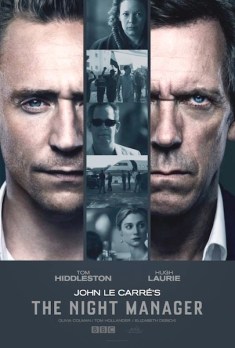 A lavish, all-star, ultra-hyped John le Carré adaptation that, thank goodness, lives up to its reputation. Although it wrapped up in the UK a couple of weeks ago, it only started in the US last night, and I recommend any America-based readers who enjoy a good thriller to get on board tout suite. The Night Manager doesn’t have a
  This month, I have mostly been missing season four of The Americans, aka the most underrated drama on television. Well, apart from with critics, that is, who’ve given this run
  100Films.co.uk