
Michael Bay | 124 mins | streaming (HD) | 2.35:1 | USA / English | 15 / R
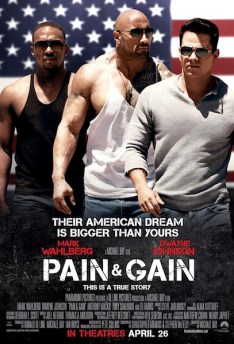 For his first non-sci-fi movie in a decade, divisive action director Michael Bay channels Tarantino (kinda) for this based-on-a-true-story crime comedy. Dwayne “The Rock” Johnson, Mark “Marky Mark” Wahlberg and Anthony “The Falcon” Mackie star as a gang of dimwitted Florida bodybuilders who come up with a ‘foolproof’ plan to rob a rich gym client.
That comparison to Tarantino is lifted from Now TV’s description of the film, and I don’t quite agree with it. Pain & Gain is certainly a comedic crime movie, the kind of thing Tarantino was known for before he got diverted into genre B-movie homage/parodies, but it doesn’t feel like a Tarantino movie — which, considering the innumerable films that do rip-off his ’90s style (even today), is only a good thing. I wouldn’t say Bay’s movie feels wholly unique or original, but I don’t think it’s Tarantino he’s riffing off.
Nonetheless, the film’s best asset is its humour, much of it derived from dialogue. Proceedings take a little while to warm up, with some character backstory flashbacks that aren’t always necessary and seem to befuddle the narrative, but once it settles down into the crime spree, it’s consistently hilarious. Bay has pitched the tone exactly right, playing it straight but with an OTT edge that betrays awareness of the ludicrousness of it all. Towards the end, when events have reached a point of total ridiculousness, he throws up an onscreen caption to announce, “This is still a true story.” That’s witty. (Though, ironically, it appears during one of the few bits the filmmakers did actually make up!)
 Bay is aided by leads who are surprisingly adept at comedy. Johnson is the best thing in it, consistently hilarious as his conscience battles former addictions and newfound religious convictions. I noted down some of his best lines to quote in the review, but they lose something without his delivery.
I suppose there is a question of whether this tone really is appropriate: as these are real-life events, should we be finding them so funny? It is kind of tasteless. I suppose you could parlay that into a discussion about the comedic crime sub-genre on the whole: is it okay to laugh at this kind of behaviour so long as it’s been dreamt up in the mind of some (wannabe-)auteur, but as soon as someone actually did it for real, a film of those events has crossed the line. Is that a sound argument? If you’re going to find a fictionalised account of the real-life version abhorrent, shouldn’t we similarly find the wholly-fictional version similarly poor? It’s a moral quandary I don’t really have an answer for because, when all is said and done, what the real guys did was horrendous, but the way they went about it was ludicrous and is almost unavoidably darkly funny in the re-telling. I certainly laughed.
 After he’s become so sidetracked making the awful Transformers movies, it’s easy to forget that Bay was once a quality action filmmaker. His works may not have class, but they had style and panache befitting the genre — The Rock, in particular, is a ’90s action classic. Pain & Gain isn’t exactly a return to form because it’s not the same kind of movie, but it is the first Bay movie for at least a decade that’s really worth your time.

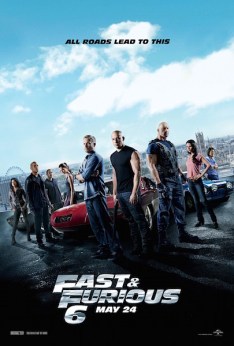
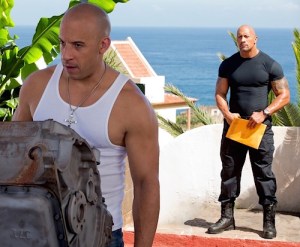 For all the intent of this being “Part 2 of 2”, there’s a post-credits tease which sets up
  There’s plenty of backstreet, underground, grim-and-gritty bits on display here — entirely appropriate given the characters’ street-racing roots and criminal know-how. Still, these are little more than cosmetic bonuses.
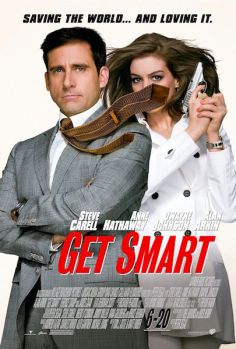 Get Smart, as you likely know, was a TV series in the ’60s, which makes one wonder how it’s taken so long to get to the big screen. I guess it didn’t have the same fanbase or perceived relaunchability that led to an endless array of big-screen versions of ’60s/’70s series in the last decade or two —
 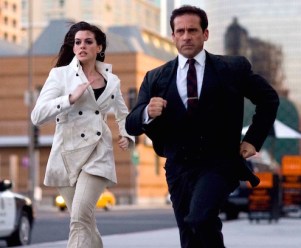 there’s a few action sequences that are surprisingly decent too, considering this is still primarily a comedy.
 to be the smarmy big shot who either ignores or specifically brings down a character like Carrell’s, but instead he’s one of his biggest supporters. (That he turns out to have been A Bad Guy All Along, Gasp! is beside the point.) The office bullies don’t actually have any power at all and are frequently brought down to size. It makes a nice change from the stock sitcom clumsy-hero-who-eventually-comes-good with irritating-and-condescending-higher-ups on the side, the pedestrian and unenjoyable fallback of too many comedy writers.
 but it’s asking a little too much from not necessarily sympathetic viewers.

 100Films.co.uk