The Eggy Monthly Review of March 2024

In case you somehow missed it, it’s Easter weekend. That’s the only reason for the title. There are no eggs involved anywhere else in this post.

In terms of observations actually related to the blog, I only managed to keep one of my two main viewing goals ticking over — that is to say, I hit my “ten new films per month” target, but fell short of keeping my 100 Films Challenge on track (more detail in Viewing Notes, as usual). That said, I’m pleased to have achieved even that much in March, when films have found themselves competing with an uncommon amount of other stuff for my entertainment time. To be specific, I’ve started a rewatch of the ’90s X-Men animated series (I’m ten episodes in, which adds up to 3½ hours); finally been playing point-and-click adventure classic Broken Sword: The Shadow of the Templars (for about 11 hours); and, most consumingly of all, found myself somewhat obsessed with cult-phenomenon actual-play Dungeons & Dragons series Critical Role (I’ve watched 26½ hours, plus untold more spent reading around it, and barely made a start on it); and that’s without counting up sundry other bits and pieces, like reading books and comics, or slowly rewatching Blackadder.

Anyway, to get back to the films (though there’s always the comment section if you’d like to talk about the other stuff), here’s, um, the films…


This month’s viewing towards my yearly challenge

#17 Dune: Part Two (2024) — New Film #3
#18 Maestro (2023) — 50 Unseen #4
#19 The Inspector Wears Skirts (1988) — Genre #2
#20 Black Tight Killers (1966) — Failures #3
#21 My Darling Clementine (1946) — Blindspot #3
#22 My Father and My Son (2005) — WDYMYHS #3


  • I watched 11 feature films I’d never seen before in March.
  • Just six of them counted towards my 100 Films in a Year Challenge.
  • That means (as I said at the start) that I exceeded my “ten films per month” minimum target — for the first time this year; also, that’s the fourth month in a row, which is the most consecutive ten-film months since a pandemic-aided run of 21 months in 2020/21. (The all-time record remains 60 months, aka five solid years.)
  • But (as also mentioned at the start) I fell short of where I should be in my Challenge — but only by two films. I’ve got the rest of the year to catch that up, so it’s far from a disaster. Yet.
  • This is also the first month of 2024 without any rewatches; although I did still manage two short films (I don’t think I’ve mentioned it, but I’m aiming to watch at least one of those each month too. That’s sort of an “unofficial” goal, though, in that I’m not exactly tracking it… except I am, because I keep records of all these things).
  • In terms of history and percentages and stuff, this is the best March since 2021, but because it’s still below March’s all-time average of 14.9, it brings it down to 14.6.
  • Conversely, being higher than last March means it does increase the rolling monthly average of the last 12 months, bringing it from 8.8 to 9.1. If I can continue my ten-films-per-month streak, eventually it’ll get above 10.0 again…
  • I posted my Dune: Part One review right at the end of February, fully intending to quickly follow it with my Dune: Part Two review in early March. That didn’t happen, obviously.
  • I’ve been buying Radiance releases since they sprung into existence back in mid-2022 (indeed, I’ve got 30 of the 37 titles they’ve released to date, plus several of their “partner label” releases too), but Black Tight Killers is the first one I’ve actually watched. I’m not one of those collectors who buys stuff just to keep on his self unopened… but I do have a bunch of stuff on my shelf unopened, because I am one of those collectors who’s interested in almost everything but can’t find the time to watch it all.
  • This month’s Blindspot film was John Ford’s version of the Wyatt Earp / gunfight at the O.K. Corral legend, My Darling Clementine.
  • Letterboxd informs me that My Darling Clementine was the first film I watched on a Tuesday this year. So there you go.
  • This month’s WDYMYHS film was Turkish intergenerational family drama My Father and My Son.
  • From last month’s “failures” I watched Black Tight Killers.


The 106th Monthly Arbitrary Awards

Favourite Film of the Month
I confess, I didn’t have any particular expectations of John Ford Western My Darling Clementine. Not that I thought it would be bad, but — despite it clearly having enough acclaim to get onto my Blindspot list — I didn’t sit down expecting a masterpiece or something either. Perhaps that’s what allowed it to blow me away, first from a visual standpoint (this is a film where even the day-for-night photography looks good) and then by… well, everything else.

Least Favourite Film of the Month
This has to be Alan Bennett adaptation Allelujah, which for much of its running time is an amiable-enough pro-NHS / anti-cutbacks polemic, before a final-reel twist threatens to undermine the whole thing. What a way to mangle your own point.

The Audience Award for Most-Viewed New Post of the Month
Now, technically — technically — the winner for this month was February’s Failures, which was way down the overall chart. I stress technically because I’m going to say the award actually goes to something I posted in February… but I posted it on February 29th, so it didn’t have much of a chance last month; and February 29th isn’t a real day anyway, so it’s sort of part of March. Very tenuously sort of. Anyway, that makes the winner my review of Dune: Part One, which actually cracked the overall top ten (at #8).


Every review posted this month, including new titles and the Archive 5


What balance will my entertainment choices level out at in April? Find out next month!

The Leaping Monthly Review of February 2024

It’s coming up to nine years since I started naming these monthly progress reports, which means this is the third leap year they’ve existed in, and yet it’s the first time I’ve thought to reference that in the name of February’s update. I don’t know if I should be ashamed of that because I didn’t do it sooner, or because it suggests I’m running out of fresh ideas. Either way, clearly it’s not good. Or maybe it just doesn’t matter. (Yeah, that’s the one.)

Anyway, on to the films…


This month’s viewing towards my yearly challenge

#10 The Kitchen (2023) — New Film #2
#11 Despicable Me 3 3D (2017) — Series Progression #2
#12 RRR (2022) — 50 Unseen #3
#13 Ambulancen (2005) — Failures #2
#14 Dune: Part One 3D (2021) — Rewatch #2
#15 The Innocents (1961) — Blindspot #2
#16 Wild Tales (2014) — WDYMYHS #2


  • I watched 10 feature films I’d never seen before in February.
  • That makes this the third month in a row with ten new films. Compared to my history, it’s baby steps (the record is 60 months), but it’s two years since I last managed three consecutive months, so it is worth noting.
  • Six of the ten counted towards my 100 Films in a Year Challenge, along with one rewatch.
  • The usual monthly average for the Challenge is eight, but February being short (even with the extra leap day) means it only needs seven, so I remain on target.
  • This month’s Blindspot film was classic British Gothic (in the true sense) horror The Innocents. Maybe I should have tried to save that for October, but any intentions I have to watch horror movies in October usually fail to pan out. To be honest, I chose it now because it’s the only film on this year’s Blindspot that I don’t own on disc, so I thought I’d free up some space on my TV hard drive for other stuff I’ve downloaded. Sometimes my viewing decisions are as pragmatic as that.
  • This month’s WDYMYHS film was Argentinian revenge anthology Wild Tales. That’s another one deleted off the hard drive.
  • From last month’s “failures” I watched Ambulancen and The Kitchen.
  • Also this month, in aid of my Genre category, I compiled a list of all the martial arts titles I own that I haven’t seen (it’s on Letterboxd here) and it came to… 213 films! And I’ve got more on preorder, and even more that are coming out soon that I will order; and I even left some off that I wasn’t sure counted (although I also included some I wasn’t sure about, so maybe that part balances out). Anyway, my point is: setting a target of “ten” barely scratches the surface here — even less than it did last year with giallo, where my similar list featured just 50 titles. Maybe, rather than try to think of more genres for that Challenge category, I’ll just set it on a triennial loop of noir, giallo, martial arts…


The 105th Monthly Arbitrary Awards

Favourite Film of the Month
I enjoyed most of the films I watched this month, some very much, but nothing came close to the marvel that is RRR.

Least Favourite Film of the Month
Proving that star ratings aren’t everything (or possibly that I need to rethink mine), I rated My Son two stars, but its three-star The Kitchen that I feel I enjoyed least from this month’s viewing. I’ve been assigning ratings to films solidly for over a decade-and-a-half now (the blog passed its 17th anniversary this week, by-the-by) and yet how many stars I should give a film, and how my ratings compare to one another, still regularly gives me pause for thought.

The Audience Award for Most-Viewed New Post of the Month
Now that I’m getting back into the swing of reviewing (touch wood), there’s more stuff to compete in this category — that makes a nice change from most of last year. And yet, despite that, it’s my monthly review of January that comes out on top here. It even cracked the overall top ten for the month, which is an uncommon achievement for a new post. (In second place, the highest charting film review was Barbie.)


Every review posted this month, including new titles and the Archive 5


Returning to the cinema* to return to Arrakis.

* shockingly, it’ll be my first visit since Oppenheimer last July.

Dune: Part One (2021)

aka Dune

Denis Villeneuve | 155 mins | cinema | 2.39:1 | USA & Canada / English | 12A / PG-13

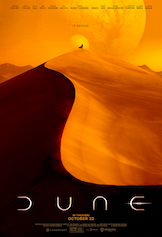
Dune: Part One

Trying to write about a film like Dune in a critical context over two years after it was released feels a bit… pointless. I mean, the film was a hit (albeit by mid-pandemic standards); and if you did miss it first time round, the hype around the sequel has surely already piqued your interest and/or left you cold, in which case what I say isn’t likely to be a deciding factor. Of course, yay/nay recommendations are not the only reason for critical writing — far from it — but, if you’re looking to do more than that, you better have something to say. So I confess here and now, for the sake of any readers looking for that kind of article, that I don’t think I have a unique or revelatory or even particularly insightful take on Dune — or Dune: Part One, as I’ve insisted on calling it ever since the wonderful surprise of seeing its opening title card (and sites like IMDb have finally got on board with too). All I can offer is how the film struck me personally, from my particular perspective; which is not nothing, but is what it is.

So what is my perspective? Well, I’m far from a newbie to the world of Arrakis, though I can’t now remember in what order I first encountered the various texts related to it that I’ve experienced. So, going chronologically, I have read Frank Herbert’s original novel. Famously, it’s a doorstop of a tome, so I must have been relatively young because, for whatever reason, I’ve struggled to get through long books for the past couple of decades (I’ve tried Lord of the Rings two or three times and never got much further than Tom Bombadil; I started Shogun over four years ago and my bookmark still sits about halfway through it — and I did enjoy both of those! I just don’t have the staying power to get to the end). But I can’t have been that young, given the book’s subject matter and style, and the fact I enjoyed it. Indeed, I’d go so far as to say it’s one of my favourite novels. I’ve never read the sequels. I’ve long intended to (see: previous comments about lack of staying power when reading).

I’ve also seen the 1984 David Lynch film, naturally — an interesting but fundamentally flawed endeavour — and the 2000 miniseries (and its 2003 sequel), which I remember being widely acclaimed — and I would have agreed with that sentiment — but it does look rather dated now, and so I’m somewhat wary of rewatching it (though I recently bought an expensive Blu-ray edition imported from Australia, so I certainly intend to at some point). The point of listing all that is this: I do not approach Dune free of expectation. Quite the opposite. And yet, I also didn’t have a specific vision in mind. And when you’ve got a director like Denis Villeneuve in charge — a director with a very definite and particular style — you know you’re going to get his interpretation of the material, so the more open-minded and receptive you are to that, the better. I mean, unless you’re on his exact wavelength, your imaginings are not likely to be the same as his, especially if you’ve allowed them to be shaped by one of the previous films, or even the concepts from unmade versions, like the one so interestingly documented in Jodorowsky’s Dune.

Moody Messiah

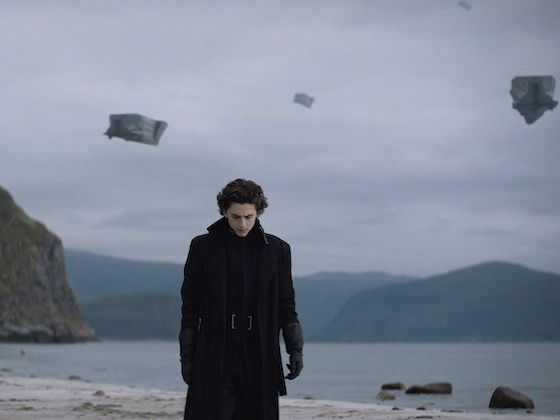
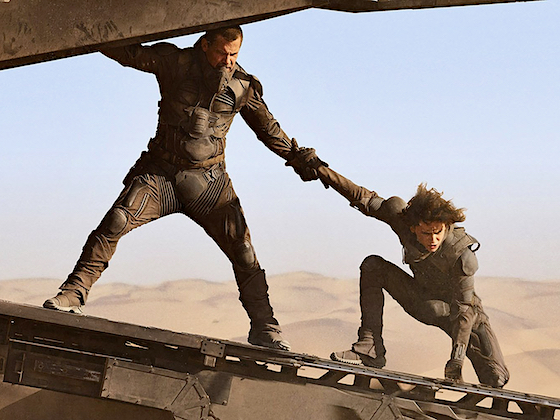
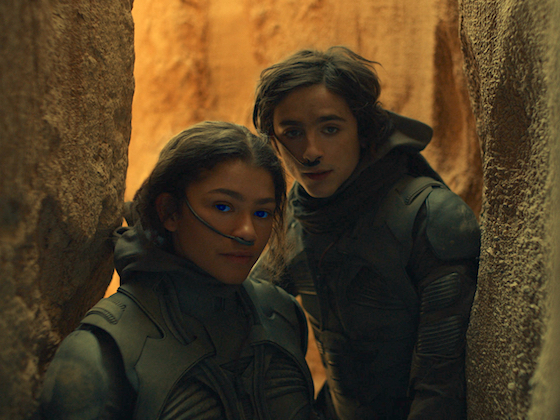
All of this a very long-winded and self-centred way of arriving at my point that, on first viewing, Villeneuve’s Dune took some adjusting to, because it wasn’t quite… right. Having said I went in with no expectations, clearly I had some, buried somewhere in my mind. And yet, the film also felt like exactly what one should have expected from Villeneuve if you’d seen his previous work, not least the sci-fi film he made immediately before this, Blade Runner 2049. The worlds of Blade Runner and Dune are very different, but, as filtered through the mind of Denis Villeneuve, there are distinct aesthetic similarities, most apparent in the brutalist influence in much of the world design. That starkness is quite at odds with the fanciful, sometimes even downright weird, takes on the material that came from the minds of creatives like David Lynch and Alejandro Jodorowsky; or even the miniseries, which, while I little more staid and constrained by a TV budget, is seemingly as influenced by fantasy TV of the period as by its science-fiction stablemates. With most previous visualisations of Dune leaning into such fantastical choices, Villeneuve’s (for want of a better word) realist take was, initially, a shock to the system.

That’s a slightly disorientating feeling to be dealing with when watching a film for the first time. Thanks to the story and characters and scenes being so familiar, the mind is freed up to focus more on the surrounding decisions. Even when trying to be open-minded about them, there’s then some kind of disjunct between things that are very recognisable being presented in a very unrecognisable way. There’s also a kind of tug-of-war going on between the feeling that Villeneuve has been allowed to interpret the text exactly as he sees fit, and that’s a good thing because we’re getting his vision across the project, and the sense that it’s something of a shame to miss out on the craziness present in previous interpretations. After all, Dune is set 20,000 years in the future (you may recall it’s set in the year 10,191, but that’s not AD, it’s numbered from an in-universe event — look, let’s not get into the backstory here; but when you see articles mindlessly parrot “Dune is set 20,000 years in the future in the year 10,191”, know that the article writer is mindless because they haven’t bothered to query the maths, not because they’ve done the maths dramatically wrong) — think how different technology has made our world from three or four thousand years ago, so how much wilder and weirder could things get if you multiply that by a factor of five or six? None of which is to say Villeneuve’s choices are wrong, or even that I don’t like them, but they took some getting used to. On my recent second viewing, with the benefit of awareness of what I was about to see, I was able to enjoy the overall experience much more; it settled the qualms I had from my initial viewing and made it easier for me to appreciate the magnificence of the achievement.

Desert power

Another point of contention (if we can go as far as calling it that) was where the film broke off. I’ve read some retrospective reviews recently that expressed their disappointment when the film suddenly ended mid-story, which I guess goes to show how not all marketing and information reaches all people — I thought it was well-known that this was to be Part One, and that a followup conclusion was dependent on its box office success (hence my pleasant surprise when the film so brazenly declared it was just Part One on its opening title card, not even saving that fact for a ‘surprise’ reveal on a closing title card, a la It), but there were definitely people who went in not knowing that and found it frustrating. Should it have been made even clearer? Should the film have formally been titled Part One in its marketing? Well, the reaction to various “Part Ones” released this year (like Mission: Impossible – Dead Reckoning, Fast X, and Across the Spider-Verse) suggests that audiences don’t really like only getting “Part One” ever; but, conversely, their acceptance of it depends on how it’s handled — how satisfying the movie leading up to the break is, and how the moment it stops is handled. But this is a whole side debate that I’ve stumbled into without adequate preparation (I’ve not even seen two of the three films I just mentioned), so I’m going to swiftly redirect us to Dune.

Where Dune: Part One ends is, frankly, where I always thought it would. Other fans were more surprised by its choice, so perhaps it’s just too long since I’ve read the novel or watched another version and I just couldn’t remember a better break-point at approximately the halfway mark. The screenwriters could, though, because apparently the film originally carried on a little further in the story, before the endpoint was moved in the edit. It’s not the most dramatic place to pause the story or end a film — it doesn’t come after some big action sequence or major plot twist, nor on a cliffhanger of any kind — but I think it largely works. It reminded me of The Fellowship of the Ring, possibly the greatest “Part One” film of all time, in that in no way whatsoever does it feel like the end of the story — we’re definitely only in the middle somewhere, and there’s clearly a whole lot more to come — but it feels like a solid place to pause; like we’ve experienced the whole of a part, if that makes sense.

There was some minor brouhaha the other day during the press for Part Two when someone asked Villeneuve about telling the story over two films — I didn’t pay it too much heed and it didn’t really blow up, so I forget the precise question and answer — but, as many pointed out, adapting Dune in a single film has been attempted before and famously didn’t work out, so doing it in two on this re-attempt shouldn’t really come as a surprise. Certainly, as a fan, I’d rather a two-part adaptation that gives the story the necessary screen time, even if that means a somewhat limp end to Part One, rather than have the whole book in a rushed three-hour single shot. And if early reviews of Part Two are to be believed, it’s paid off overall.

Visions of the future

But more on that ‘next time’, when I see Part Two myself and offer my verdict — hopefully in a more timely fashion than this, rather than waiting several years until the hoped-for Dune: Part Three, aka Dune Messiah (I’m not sure which title I’d rather they go with if/when it happens…)

5 out of 5

Dune: Part One was #176 in my 100 Films in a Year Challenge 2021. It placed 5th on my list of The Best Films I Saw in 2021.

Dune: Part Two is in cinemas worldwide from tomorrow and will be reviewed in due course.

The Best of 2021

Finally, for the last time (not really the last time): what I consider to be the best (or, more accurately, my favourite) films I saw for the first time in 2021 (that bit’s correct).

This year, I tried to make a start on my list early (I began pondering it and pruning my long-list back in November, whereas normally I don’t even start that until January 1st), all so I could post it fairly promptly once we reached the new year. Well, it’s now the 9th, which is one of the latest dates I’ve ever posted my ‘best of’ list, so that didn’t really work, did it?

Anyway…



The 21 Best Films I Saw For the First Time in 2021

No, it’s not 21 for ’21 — it’s 10% of whatever my final total is (as it has been since 2016). This year that total was 207, of which the appropriate percentage is 20.7, but I can’t very well include seven-tenths of a film, can I, so it rounds up to 21. (If you think that’s too many for a list like this, feel free to scroll down and start wherever you like.)

As always, all the movies I watched for the first time in 2021 are eligible, not just brand-new releases. However, I did watch 31 films that had their general UK release in 2021, and five of them made it into this list, so I’ve noted their ‘2021 rank’ too.

21=
Holiday Affair
Happiest Season
Anna and the Apocalypse

Reader, I have cheated! After 15 years of sticking to (my own self-imposed set of) The Rules, I have caved and broken the proscribed number of films allowed on this list, and also allowed a tie (I don’t think I’ve allowed a tie before, although one year I did comment that the top 4 were all effectively in first place — but I still sorted them). Why has this happened? As I’ll talk more about in the Honourable Mentions, I got stuck at 32 films for the longest time. I managed to whittle it down to 23, but after days of being stuck there I just gave in. If I could have decided which of these were #22 and #23, they could’ve been taken off the list; but as I can’t, here are all three, tied. At least they’re connected, by being overtly Christmassy films, which is kinda why they’ve all got stuck together — “which of the many Christmassy films I watched this year did I like the most?” Turns out, that’s a three-way tie (unless you also include the one that’s at #9…)

20 Carol

Okay, this one’s quite Christmassy too. Indeed, it’s practically “Holiday Affair but with lesbians”, a comparison I’m sure would’ve come up more if Holiday Affair was better known.

19 Spontaneous
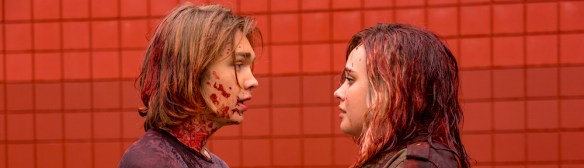
High schoolers begin mysteriously exploding in this sort-of-horror cum comedy cum teen romance, which I found both hilarious and surprisingly emotional.

18 Daughters of Darkness

An erotic horror movie — sounds like schlocky trash, but mixed through a European arthouse sensibility it comes out the other side as a dreamy, surreal experience.

17 Who?
This is a pretty obscure sci-fi spy flick: it has under 700 ratings on IMDb; I hadn’t heard of it before Indicator’s Blu-ray release — but it deserves more. It’s almost like a Le Carré thriller in its slow-burn intellectual depiction of Cold War plotting, but with a dose of just-beyond-the-possible SF mixed in.

16 Futureworld
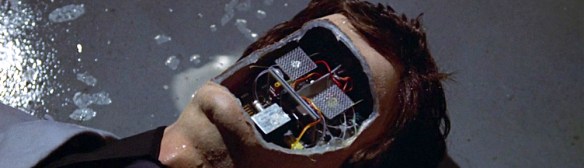
Another ’70s sci-fi thriller that I think deserves better. This widely disparaged sequel to Westworld is very in keeping with other films of its era: it’s a paranoid thriller about a pair of journalists investigating a corporate conspiracy — in this case, Delos’s attempt to rehabilitate their robot theme park after the disaster in the last film.

15 Love Affair

A prototypically romantic melodrama (it’s been explicitly remade twice, not to mention the other films that have borrowed from it), I was expecting a bit of fluff but ended up finding it surprisingly affecting. It dodges the clichés I thought it was bound for, in addition to being beautifully shot.

14 Strictly Ballroom
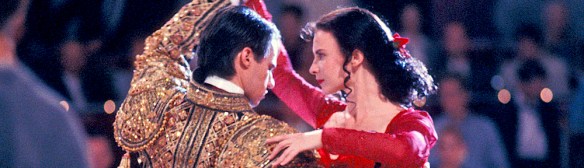
Another one that confounded my expectations. As Baz Luhrmann’s debut feature, I expected a dry run for where he’d go stylistically in Romeo + Juliet and Moulin Rouge! But to regard Strictly Ballroom as anything less than a fully-fledged member of the Red Curtain Trilogy is to do it a disservice. Its ludicrous, over-the-top treatment of a ludicrous, over-the-top world is both absurdly hilarious and totally captivating.

13 Godzilla vs. Kong
2021 #5 Big monkey punch giant lizard! No one’s going to call this movie high art, but goddamn if it isn’t entertaining pulp-SF gubbins with giant-size fights thrown in for good measure. Honestly, I don’t know what some people expect from movies like this when they go about criticising them. If giant animals having a brawl isn’t to your taste, fair enough, but if you were expecting a meditative character-driven insight into the human condition or something, more fool you.

12 The Invisible Man

The fourth feature from Universal’s genre- and studio-defining run of horror films in the early 1930s. Dracula and Frankenstein may have become more iconic, but, for my money, this is the best movie from the bunch (and I’d rank The Mummy second). The special effects are more extensive than you might expect for the era, and even hold up pretty well today, while Claude Rains is superb as the cackling villain, James Whale’s direction is highly effective, and there’s a nice vein of humour to balance the darkness.

11 Captain Phillips
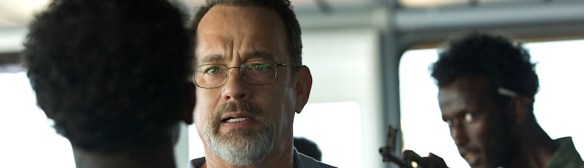
That Tom Hanks wasn’t even nominated for most major awards for his performance here is a crime against cinema. He’s extraordinary as the eponymous captain of a cargo ship hijacked by Somali pirates. Paul Greengrass brings his usual edgy tension to proceedings, but it’s Hanks’s humanity that ultimately elevates the piece. The final scene is one of the greatest single pieces of acting we will ever see.

10
The Hound of the Baskervilles
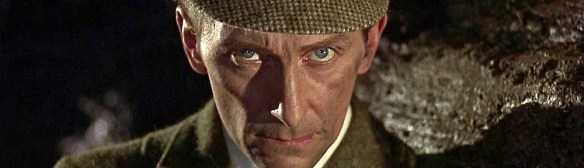
Hammer does Holmes. Peter Cushing is a note-perfect incarnation of Sir Arthur Conan Doyle’s Great Detective in what was, sadly, the famed horror studio’s only attempt at filming Sherlock. Personally, I’ve never thought The Hound of the Baskervilles was a particularly good detective mystery novel — but it is quite a good gothic adventure, which makes Hammer the perfect studio to have brought it to the screen. As that, this version doesn’t disappoint, with Terence Fisher’s direction leaning hard into the appropriate atmosphere, plus a superb cast — alongside Cushing, André Morell is a peerless Watson. I wish they’d done a whole series with the pair.

9
The Green Knight

2021 #4 Some people seemed surprised when this film delivered exactly what its trailers had promised: an arty-yet-fantastical interpretation of the Arthurian myth. It’s a moody, earthy take on the material, but one that also has room for magical realism, fairytale-esque fantasy, and flights of inexplicable oddness. The measured pace and off-kilter tone (plus the pitch-dark cinematography) was never going to be to everyone’s taste, but for those on its level, it’s intoxicating. And if you think Die Hard counts as a ‘different’ Christmas movie…

2021 #3 I was worried that I’d find Nomadland a bit boring and “not my kind of thing”. It seemed like the kind of film where you hang out with the characters and their landscapes, rather than a piece of clear narrative storytelling. And it is that — but, for once, it worked for me. It’s almost like a TV travelogue, visiting places worth seeing and unusual people worth meeting. You watch to appreciate the scenery, to understand the people, to experience a different way of life. It’s a film to escape with — to get away from ordinary life and spend time in these captivating places. Within and alongside that, it creates a beautiful, deeply humane, quite powerful experience. [Full review.]

7
Star Trek: The Motion Picture
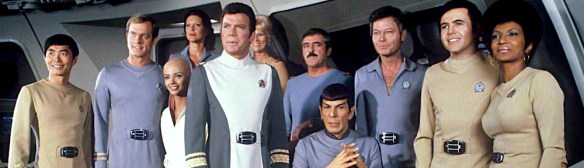
Having grown up reading sci-fi magazines, I’m very aware that, when it comes to Star Trek movies, “even ones good, odd ones bad”. And this first one has a particularly poor rep — “slow” and “boring” seem to be commonly-attached adjectives (which I can’t help but feel stems back to expectations on its original release, which came in the wake of the success of Star Wars, so presumably people expected a fast-paced action-adventure). But as I settled down to begin watching all the Trek movies from the beginning, I found myself in for a very pleasant surprise. It’s not even trying to be a Star Wars-style adventure, but something different entirely; almost more akin to 2001 in its sense of wonder and exploration, digging into an imagining of a genuinely alien lifeform rather than running about blasting rubber suits with laser guns. Engaged with on the right terms, I enjoyed every minute of it.

6
WolfWalkers
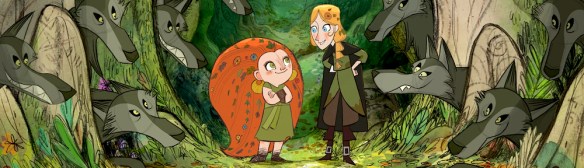
The third film in Irish animation outfit Cartoon Saloon’s Folklore Trilogy — and Wolfwalkers really does feel like an authentically-told folktale, not a Disneyfied modern reimagining. A big part of that is the animation style. Even if you think you’re becoming inured to it from the studio’s previous work, it has surprises in store; moments of additional innovation or beauty. It’s constantly impressive and regularly breathtaking. Combined with the magical story, the result is a simply gorgeous film.

2021 #2 Frank Herbert’s Dune is probably one of my favourite novels, and previous attempts to film it have either been interesting but fundamentally flawed (the 1984 film) or faithful but limited by format (the 2000 miniseries), so when it was announced a new version would be masterminded by Denis Villeneuve — one of only two directors to top my year-end best-of list twice, once with another tricky-to-pull-off re-envisioning of a sci-fi masterpiece — well, my hopes were high. Suffice to say, he delivered, albeit in a film that is ‘very Villeneuve’. That is to say, it’s a rather brutalist take on the material, lacking the fanciful, weird interpretations of Lynch, Jodorowsky, or even (to a lesser extent) the TV version. In some ways that’s a shame, but it’s also true to the filmmaker. That the film has to abandon the story halfway through, forced into a rather low-key cliffhanger, is merely a factor of the length of the material rather than a fault of the filmmaker — some have taken serious issue with it, but, personally, the film ended where I always expected it to. And, as a fan, I’d rather this two-part adaptation, giving the story the necessary screentime, even if that means a limp end to Part One, rather than have the whole book in a rushed three-hour single shot. That said, this might be why it’s at #5 on my list rather than becoming Villeneuve’s third #1. I’m optimistic that, once we get Part Two (and, possibly, a Part Three adapting Herbert’s first sequel), the whole will be even greater. [Full review.]

This is one of those high concepts you wonder why someone hasn’t thought of sooner: what would a ‘kid detective’ (you know, like the Hardy Boys or the Famous Five or whatever) be like grown up? One answer to that would likely fuel a CW-esque YA series, but here we get a more real-world treatment: the detective who was exalted as a kid, a quirky story for the local paper and whatnot, is now a washed-up has-been as he tries to follow the same career as an adult. Like several other films on this year’s list, here was a film that looked like it would tickle a particular itch of mine, and delivered — it was everything I expected it to be and more. It’s both an amusing extrapolation of its central premise and a solid mystery in its own right, with a surprisingly moving conclusion. One part in particular gave me goosebumps, and you’ve got to love anything that can elicit such a physical reaction. [Full review.]

3
Joint Security Area

Before Oldboy or The Handmaiden, director Park Chan-wook gained international attention for this 2000 military thriller about a shooting in the DMZ between North and South Korea. After a South Korean border guard apparently kills two North Korean soldiers and wounds a third on their side of the border before fleeing back to the South, heightened tensions between the nations rest on an investigation by a neutral investigator. As the Swiss Army major tries to find the truth of what happened amidst conflicting accounts, the obvious point of comparison is A Few Good Men, but JSA also made me think of Paths of Glory in its ultimately-tragic message about the wasteful futility of war. But although these point towards its tone and effect on the viewer, it outshines simple comparisons to be its own magnificent thing.

2
David Byrne’s American Utopia
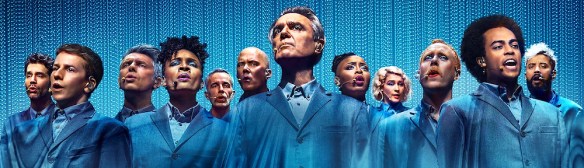
I’m not a music critic — heck, I don’t even listen to all that much music on a regular basis, if I’m honest — and yet what is essentially a concert film has made it almost to the top of my favourite movies this year. What gives? I wish I could explain it properly, but, I confess, I don’t quite understand why I loved American Utopia, all I can say is that I did. It had an almost profound impact on me that I can’t quite account for. Of course that’s mostly down to the music and staging by Byrne and his fellow performers, but Spike Lee’s direction and editing transform the theatrical show into a near-perfect cinema version. My only unfulfilled wish is that this had been made during the world’s 3D phase, because movement in a three-dimensional space is a key part of the show’s staging, and I’d love to be able to watch that in 3D.

1
The Matrix Resurrections

2021 #1 This belated return to and continuation of the Matrix trilogy has divided critics and audiences alike. You’ll find plenty of people online prepared to slag it off at the slightest prompt. But for others of us, it’s a borderline masterpiece. Personally, it’s not just a film I enjoyed, but something I’ve almost been waiting for — and by “almost” I mean that I never expected to actually get it. This isn’t a by-the-numbers attempt to recreate the adrenaline highs of an enduringly popular action movie. Instead, it’s the kind of wild-swing hyper-meta self-deconstructing take on a popular franchise that I’ve always longed for a legacy sequel to attempt, but no one has been bold enough to try (or, possibly, no one’s ever been able to convince the suits to allow it). Sure, if all you want from a Matrix movie is people looking cool in sunglasses while they engage in precisely-designed epic action sequences, then Resurrections will leave you disappointed. If you appreciate a film that has something pertinent and meaningful to say about our current entertainment culture, there’s a lot to like.


As usual, I’d just like to highlight a few other films.

Normally I’m loathe to mention any films that just missed out on the top list — it is what it is, and if I wanted it to be longer I should just find an excuse to make it longer. That said, this year my “top 21” was stuck at 32 films for the longest time — as I mentioned back at #21, you may remember. So, it feels like those 11 almost-rans deserve a mention; except it’s nine almost-rans, because I couldn’t even get it all the way down to 21. I’m not sure these are truly #24–32 (for that distinction, I’d have to properly reconsider some others from my 89-film long list that I’d eliminated earlier), but, nonetheless, there were (in alphabetical order) The Father, Festen, The Mummy (1932), My Fair Lady, My Man Godfrey, Official Secrets, The Pinchcliffe Grand Prix, Psycho Goreman, and The Quatermass Xperiment. In other years, maybe they would’ve been luckier.

That said, they’re not the only films that might feel aggrieved to have missed out (if films had feelings), because, while there are 4-star films in my top 21 (even in my top ten), there are 5-star films that didn’t make the cut. I awarded 25 films full marks in 2021, and 13 of them made it into my top list — namely Captain Phillips, Carol, David Byrne’s American Utopia, Dune: Part One, The Green Knight, Joint Security Area, The Kid Detective, Love Affair, The Matrix Resurrections, Nomadland, Star Trek: The Motion Picture, Strictly Ballroom, and WolfWalkers. The less fortunate (but still great) ones were The Adventures of Prince Achmed, Cinema Paradiso, The Father, Festen, Kind Hearts and Coronets, My Fair Lady, My Man Godfrey, Official Secrets, Sansho Dayu, A Single Man, When the Wind Blows, and Who’s Afraid of Virginia Woolf? There were also full marks for the original King Kong when I gave it the Guide To treatment.

Additionally, let’s recap the 12 films that won Favourite Film of the Month at the Arbies, some of which have already been mentioned in this post and some of which haven’t. In chronological order (with links to the relevant awards): WolfWalkers, Star Trek: The Motion Picture, David Byrne’s American Utopia, Captain Phillips, Official Secrets, The Invisible Man (1933), Strictly Ballroom, The Kid Detective, The Green Knight, Dune: Part One, Nobody, and The Matrix Resurrections.


This year I watched 31 movies that had their general UK release in 2021, but that means there were a considerable number I missed. So, here’s my annual alphabetical list of 50 films from last year that I’ve not yet seen. In the past I’ve used IMDb’s dating to settle what was eligible for inclusion as “a 2021 film”, but nowadays I’ll allow in something that’s listed as 2020 if it’s only due to festival screenings or (as was the case with one film this year) its own premiere.

The main downside to watching so few big new movies is that there’s not much room here for the stuff that’s smaller but still significant, which is a shame. And where I did make space for those films, some of the year’s big-but-not-huge movies lost out. That said, in some ways it made selection easier: normally I begin with a long-list of something like 120 titles, in which I typically find 20 to 30 ‘must includes’, then I weed through the rest to choose the remainder. This year, the ‘must includes’ numbered 46. I could easily have doubled this list and still been featuring films everyone’s heard about, not least because I did leave out some multiplex fillers in favour of artier-but-acclaimed films. Maybe next year I’ll finally go all-out and make this a list of 100. That would fit the site’s name, after all.

For now, it’s 50 once again. As ever, the included films were chosen for a variety of reasons, from box office success to critical acclaim via simple notoriety, and designed to include a spread of styles and genres, successes and failures.

Army of the Dead
Free Guy
The Last Duel
Luca
Shiva Baby
The Tragedy of Macbeth
Candyman
Ghostbusters: Afterlife
Last Night in Soho
Old
Spencer
Venom: Let There Be Carnage
Army of the Dead
Belfast
Candyman
Censor
CODA
Cruella
Dear Evan Hansen
Don’t Look Up
Drive My Car
Encanto
Eternals
Fast & Furious 9
Finch
Free Guy
The French Dispatch
Ghostbusters: Afterlife
House of Gucci
In the Heights
Judas and the Black Messiah
King Richard
The King’s Man
The Last Duel
Last Night in Soho
Licorice Pizza
The Lost Daughter
Luca
Malignant
The Many Saints of Newark
The Mitchells vs the Machines
Mortal Kombat
Nightmare Alley
Old
Petite Maman
Pig
The Power of the Dog
A Quiet Place Part II
Raya and the Last Dragon
Shang-Chi and the Legend of the Ten Rings
Shiva Baby
The Sparks Brothers
Spencer
Spider-Man: No Way Home
The Suicide Squad
tick, tick…BOOM!
Titane
The Tragedy of Macbeth
Venom: Let There Be Carnage
West Side Story
The Worst Person in the World
Wrath of Man


And that, ladies and gents, is officially the end of 100 Films in a Year — not just for 2021, but for ever.

Well, you already know that’s not exactly true. But it’s the end of the challenge as I’ve been attempting it for 15 years, replaced by a new take. In 12 months’ time, when a new “best of year” list is due, it won’t be drawing from ‘the challenge’ in the same way… though, that technicality aside, I rather suspect it won’t be too different from this post. And if, once again, I’m so spoilt for choice that I struggle to get it down to whatever number I decide the list should include, well, is that actually such a bad thing?

The Below Par Monthly Review of October 2021

As you attentive readers will no doubt already be aware, during October I posted my first new review for almost five months — whoop whoop! Only the one, though. Indeed, if you wanted to read new writing by me, you’d be better off attending FilmBath Festival and trying to guess which of the Film Notes handouts I completely rewrote (if they appear online this year, I’ll let you know and you can indulge in this fun game).

Yes, despite having a day job, I also served as Copy Editor for FilmBath once again — so at least this month I have an excuse for not writing anything here. It’s also the reason why this month’s viewing is way down, as you will now see…


#171 Appointment with Death (1988)
#172 Everybody’s Talking About Jamie (2021)
#173 Raffles (1939)
#174 A Little Chaos (2014)
#174a Sherlock Holmes Baffled (1900)
#175 Capernaum (2018), aka Capharnaüm
#176 Dune: Part One (2021), aka Dune
#177 Sylvia Scarlett (1935)
#178 Going in Style (2017)
#179 Search for Danger (1949)
Dune: Part One
.


  • I watched 9 feature films I’d never seen before in October.
  • It’s the first month in which I’ve fallen short of 10 films since December 2019.
  • That means last month concluded a 21-month 10+ streak — not even close to the longest (60 months, from June 2014 to May 2019), but well beyond the previous second best (just seven, from September 2009 to March 2010).
  • As for averages, obviously it brings everything down. The worst affected is the average for 2021 to date, which falls a whole film from 18.9 to 17.9. The rolling average of the last 12 months drops from 18.00 to 17.25, while October’s average shifts slightly from 13.21 to 13.54.
  • I should’ve saved Frankenstein to be this month’s Blindspot film (for hopefully-obvious reasons). As it was, I didn’t watch any of the remaining three, meaning I need to watch two next month. That’s okay: I also missed one in August and managed to catch it up in September, so I’ve got form.
  • From last month’s “failures” I watched Everybody’s Talking About Jamie… twice (see Rewatchathon).


The 77th Monthly Arbitrary Awards

Favourite Film of the Month

I liked a few films this month, but there’s no real debate that this belongs to Dune: Part One (as I was insisting on calling it even before the sequel was greenlit, a piece of good news that has only made me more insistent).

Least Favourite Film of the Month

The pairing of Katharine Hepburn and Cary Grant should be a great one — it gave us the likes of Bringing Up Baby and Holiday, after all — but their first film together, Sylvia Scarlett, just doesn’t work, on the whole.

Worst Accent of the Month
Dick Van Dyke gets a lot of stick for his Cockney in Mary Poppins, but perhaps he just watched Cary Grant in Sylvia Scarlett for research. Yes, it is comparably poor… but that also means it has the same kind of perverse entertainment value.

Completed Film Series of the Month
Just over nine years since I watched the first one, I finally finished off The Falcon series of ’40s detective mysteries with Search for Danger. Well, it depends how you count it. Really, I think there are 13 films, ending with 1946’s The Falcon’s Adventure; but some say there are 16 films, bundling in the three made a few years later by a different studio with a different star. I’d argue those are more of a ‘reboot’ series than a true continuation. They’re also trickier to track down — while I saw the first 13 thanks to the BBC airing them, the later three most assuredly weren’t included — but I finally bothered to find them, and so now, whichever way you cut it, I’m done.

The Audience Award for Most-Viewed New Post of the Month
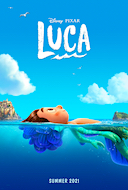
For the first time in a while there were actually two new posts this month, although it wasn’t much of a battle — No Time to Die romped away with the victory, besting even my ever-popular old TV reviews to be the month’s most-viewed post overall. It’s already in the top five new posts for the entire year, too, although its chances of overtaking the most popular TV posts are slim.


So, I think it’s now pretty clear I’m not going to make my goal of 50 rewatches in 2021 — I’d need to watch ten a month to get there, which isn’t impossible (I normally watch more new films than that… though not this month, obviously), but I know I just won’t do that (I’ll focus on the unseen stuff). Ah well, it’s only a target. Maybe next year… or maybe next year I’ll have a new goal…

Anyway, this month’s sole rewatch was…

#30 Everybody’s Talking About Jamie (2021)

…which I’d only first seen earlier in the month! When I rewatched it I knew I’d only recently seen it, but I didn’t realise it was within the same month until afterwards. That had more to do with watching it with different people than rushing to rewatch it quickly. I do like it quite a bit, though.


Anyone would think the pandemic was over, the way cinemas are back in full flow (and doing fairly good business, based on my personal experience on the two trips I’ve made so far). Films hitting the big screen this past month that I’ve skipped ‘til disc or streaming include Ridley Scott’s acclaimed The Last Duel, Edgar Wright’s divisive Last Night in Soho, Wes Anderson’s The French Dispatch, plus franchise sequels Venom: Let There Be Carnage, Halloween Kills, and The Addams Family 2. Also the sequel to The Boss Baby (I enjoyed the first one a surprising amount, so maybe I’ll make time for the sequel one day) and Dear Evan Hansen, which I’ll have to watch just to see how much of a train wreck it actually is.

Talking of the big screen, FilmBath Festival is currently mid-flow. I don’t think I’m going to be able to make any screenings this year, unfortunately, and films I’ve already missed include Mothering Sunday, Céline Sciamma’s Petite Maman, Lamb, and Palme d’Or winner and French Oscar contender Titane.

The streamers continued to premiere new movies too, of course. Sky Cinema got UK exclusivity for sci-fi Voyagers (which suggests it’s not very good); Netflix had the English-language remake of thriller The Guilty (I watched the original back in February and it’s currently on All 4 again, FYI); MUBI had a Halloween premiere for BBFC-themed horror movie Censor (which I’ve heard good things about); and earlier in the month Amazon offered Bingo Hell (I like the sound of the concept, but I don’t think it’s been well reviewed). I guess Amazon’s big film was meant to be Infinite starring Mark Wahlberg, though I heard nothing about it until a big promo image popped up on Prime Video’s front page. Low marks on Letterboxd suggest it isn’t worth investigating.

Elsewhere on streaming, if I ever decide to embark on the Conjuring franchise, they’ve got me covered: the first two are on BBC iPlayer, while the third has arrived on Sky Cinema already (I’ve no idea about the spinoffs). Older titles bulking out my various watchlists included period lesbian drama Ammonite, Amsterdamned, David Cronenberg’s Fast Company, anime Mirai, and the 1990 Witches on Amazon Prime; Judas and the Black Messiah, The Little Things, Billie Piper’s Rare Beasts, and Nic Cage in Willy’s Wonderland on Sky Cinema; Halloween I to V (in particular, I want to see III), Honey Boy, Kung Fu Hustle, and Last Christmas on Netflix; The Arbor, The Love Witch, intriguing new animation Cryptozoo, and The Reluctant Fundamentalist on MUBI; and, on iPlayer, Barry Jenkins’s If Beale Street Could Talk, Daniel Craig and Anne Reid in The Mother, Horrible Histories: The Movie, and one I’d never heard of before: A Woman’s Secret, which is apparently a noir-style melodrama starring Gloria Grahame. Whew.

Of course, that’s as nothing to my ever-growing pile of new purchases. Where to begin? How about my latest 4K acquisitions: M. Night Shyamalan’s newest, Old, and his best, Unbreakable; Second Sight’s luxurious new edition of The Guest (which you may remember was my sort-of-joint-first favourite film of 2015); StudioCanal’s latest swish 4K box set, for Joe Dante’s The Howling; plus Arrow’s edition of Oldboy, and The Shining, which features the longer US cut that I’ve not seen. New or recent releases in good ol’ 1080p included Another Round, Masters of Cinema’s second volume of Early Universal silents, Eureka’s release of the Sabata trilogy of Spaghetti Westerns, and Edgar Wright’s documentary The Sparks Brothers. I also finally got hold of Shout’s release of David Cronenberg’s The Dead Zone, and another Eureka release of a Spaghetti Western, Sergio Corbucci’s The Specialists.

And to round things off, I tried to limit my purchases in Arrow’s Shocktober sale… and failed spectacularly. Some of them were recent-ish titles (Sam Peckinpah’s Major Dundee, still available as a multi-disc special edition, and Japanese corporate thriller Giants and Toys), and some they released so long ago they’re dual-format editions with DVDs (remember those?), like 52 Pick-Up and Howling II (which for some reason doesn’t feature its fab subtitle on the cover: Your Sister is a Werewolf). Rounding things out: more Japanese crime in Detective Bureau 2-3: Go to Hell Bastards!; another Spaghetti Western, The Grand Duel; a couple of gialli (The Forbidden Photos of a Lady Above Suspicion and The Pyjama Girl Case); and, released by Second Run but in Arrow’s sale, one of Letterboxd’s 250 greatest films of all time, The Shop on the High Street. Whew, again.


2021’s on the home stretch now — perhaps it’s time to start thinking about where my final tally will end up…

Jodorowsky’s Dune (2013)

2018 #228
Frank Pavich | 90 mins | Blu-ray | 1.78:1 | France & USA / English, French, German & Spanish | 12A / PG-13

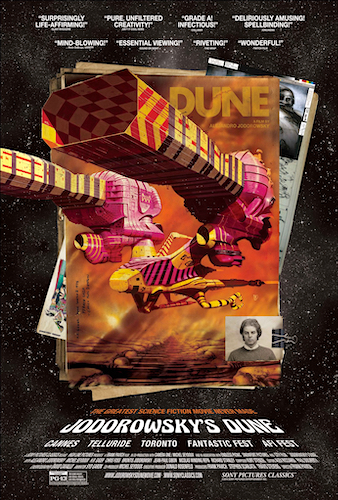
Jodorowsky's Dune

In 1974, director Alejandro Jodorowsky was hot off a pair of psychedelic projects — “acid Western” El Topo and surrealist fantasy The Holy Mountain — that had brought some cult attention and success (El Topo was the original “midnight movie”, while The Holy Mountain was apparently second only to that year’s Bond film at the Italian box office). Consequently, his French distributor, Michel Seydoux, offered to produce whatever he wanted to do next. Jodorowsky’s answer was Dune. He’d never read it, but he had a friend who said it was fantastic.

So begins the crazy story of how a director of surrealist Mexican art-films came this close to making an epic space opera out of one of the most acclaimed science-fiction novels ever written, but, in his failure, accidentally helped give birth to Star Wars (sort of), Alien (indirectly), and possibly the entire history of screen science-fiction that did actually get made in the ensuing 40 years. Sounds like a bit of a stretch? Um, well, yeah… but that doesn’t stop some of this documentary’s contributors from asserting it, and they do kind of have evidence.

Mind you, Jodorowsky’s Dune is full of interviewees making grand assertions, not least the eponymous filmmaker himself. He unironically describes his Dune as “the most important picture in the history of humanity”. He pitches himself as a prophet, thinks of his crew as spiritual warriors, and is convinced the film was going to be a great message for humanity; that it would literally change the world. The lack of self-awareness when he considers Douglas Trumbull to be full of his own importance is palpable. Jodorowsky’s regard for himself and the project may seem deluded, but at least he was committed. They spent two-and-a-half years developing this movie, including storyboarding every shot and getting exactly the right kind of people for the cast and crew — he pursued Dalí literally around the world to persuade him to play the Emperor; he rejected Trumbull, not because of an ego clash, but because he felt he was a technician rather than a spiritual person. He’s a bit barmy, but Jodorowsky definitely believed what he was doing was some grand transcendent enterprise.

A Chris Foss spaceship design for Dune

Such an attitude might get you far with arty types, but it doesn’t wash with the moneymen of Hollywood. The film had a projected budget of $15 million, and they went to the Hollywood studios seeking the last $5 million. In hand they had a giant tome containing all the storyboards, the costume and production designs, and so on. The book convinced them — it was well planned out and reasonably costed — but this barmy director — whose only previous films were weird psychedelic experiences; whose response to “make it under two hours” was, “why? If it needs be, it’ll be 12 hours, or 20!” — he didn’t fill them with confidence. And so they didn’t get the money, and the film fell through. Well, duh. Surely they could see how that was going to go? Maybe people just weren’t as savvy in the ’70s, especially these optimistic, committed artists.

All the documentary’s interviewees act like this was a problem with Hollywood moneymen having no vision, but c’mon, it’s easy to see where they were coming from. Plus, the fact that “the book convinced them” is just the word of Seydoux. Maybe Jodorowsky’s history and attitude was just a convenient excuse, because a lot of the stuff that was designed and planned is quite out there, especially to the mind of a ’70s Hollywood suit. It brings us back to how everyone’s making grand assertions: they all act like the film was going to be an unquestionable masterpiece, but it seems to me there’s a much higher chance it would’ve been terrible. For one thing, there’s doubt over if they even could have made it. It was an insanely ambitious project, with plans to do things George Lucas wouldn’t even attempt in the prequel trilogy, never mind what he struggled to get done in 1977. But there’s a first time for everything — 2001 still holds up, after all, and that was made seven years earlier. Still, I don’t know how successful Jodorowsky’s surrealist mindset would’ve made it as a movie — it probably would’ve been even less palatable to a mainstream audience than the Lynch version.

Dune storyboards

That said, there seems little doubt Jodorowsky was ahead of his time here. For starters, the idea of making a 12-hour film isn’t so ludicrous anymore. In the deleted scenes (there’s a hefty 46 minutes of them on the Blu-ray), he acknowledges people wouldn’t sit through that, saying he was prepared to release it in chunks if necessary — so, just like Lord of the Rings would do to huge success 25 years later? Jump forward another 20 years, and it’s even how they’re doing Dune, in two parts! Of course, it was unprecedented in 1975; and, decades later, Rings was still seen as a gamble, but it paid off and Hollywood is now littered with franchises where instalments connect up as closely as TV series. And what of TV series, where you’re also seeing 12-hour (or longer) single narratives.

Aside from general questions of form, when you look at some of Dune’s storyboards and plans you can see mirrors to stuff that wouldn’t be done until later. This is where the claim that Jodorowsky’s work on Dune led to Star Wars, Alien, et al, comes from, because you can see parallels between what he did and what would come after. His film was never made, but they produced 20 copies of that book I mentioned, and only two are known to exist (one with Jodorowsky, one with Seydoux). The rest were left with Hollywood studios. Were they passed around behind-the-scenes? Did the likes of Lucas and Spielberg and Ridley Scott and Mike Hodges and James Cameron really see them and pilfer ideas? Or is it just coincidence — Jodorowsky thought of them first but couldn’t execute them, then others thought of them independently and pulled it off. Pick your own side.

However, the claim that Dune led almost directly to Alien is less dubious. After he rejected Trumbull, Jodorowsky saw John Carpenter’s Dark Star and was impressed enough to hunt down its visual effects guy, Dan O’Bannon. Concept artists he hired included Chris Foss (painter of sci-fi book covers, mainly spaceships); Moebius (French comic book artist, for costume designs and storyboards); and H.R. Giger (German artist, who designed the dark and twisted world of the film’s villains). Those who know their Alien history might recognise all of those names: after Dune fell through, O’Bannon went on to write Alien, and all three of those designers followed on to the project. Maybe Alien would have come together just as well without the lead-in from Dune, we’ll never know, but those connections are pretty striking.

Giger at work on Dune

Lest you feel bad for everyone just ripping Jodorowsky off, he was able to recycle some of the ideas himself. His vision for Dune was only broadly faithful (one of the better deleted scenes is about his attitude to adaptation, which it seems Frank Herbert agreed with; i.e. that it’s not about being faithful, but reimagining something as a new, different work of art), and so he had plenty of fresh ideas that, presumably, weren’t tied up in the rights to Dune. Jodorowsky and Moebius piled some of these directly into later comic book collaborations, like The Incal and The Metabarons. A good idea never dies, I guess. Well, whether they were good ideas or just good in Jodorowsky’s mind, I don’t know. It does make me interested to read those books, though.

Jodorowsky’s Dune is an interesting “what if” in the history of science-fiction cinema, and this documentary does a good job of being a making-of for a movie that was never made. (If you think this review reads like I’ve just regurgitated the entire story, I promise, there’s a lot more in the film; not to mention the unique benefits of hearing it from the horses’ mouths, rather than my abridgement for the sake of appending my own opinions.) Some critics assert the documentary does more than just recount interesting anecdotes; that it offers some kind of transcendent viewpoint about the creation of art. Maybe if you’re of a similarly spiritual disposition to Jodorowsky himself, that’s what you’ll take from it. For me, it’s most interesting as a window into what might have been. If it had been made, would Jodorowsky’s Dune occupy the place of Star Wars in our culture? Its devotees think so. I don’t, to be honest. But it’s fun to think about.

4 out of 5

The trailer for Denis Villeneuve’s new adaptation of Dune will be released later today.