
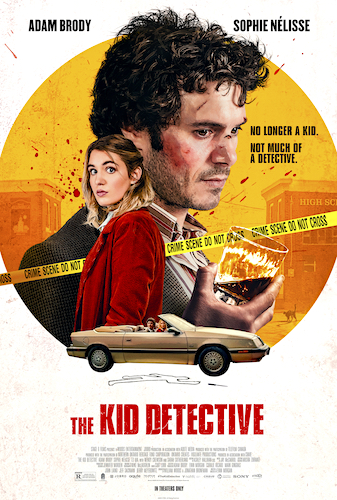
Sometimes a movie (or a book, or a series, or whatever) comes along with a premise that you wonder why someone hasn’t thought of sooner (with the inevitable caveat that, sometimes, someone has and you’re just not aware of it). The Kid Detective is one of those occasions (or was for me, at any rate) — what would a ‘kid detective’ (you know, like the Hardy Boys or the Famous Five or whatever) be like when they grew up?
There’s a few different ways you could spin a setup like that, and here writer-director Evan Morgan takes a fairly realist approach: the “kid detective” in question, Abe Applebaum, was a quirky story for the local paper when he was a child, investigating “mysteries” of the schoolyard variety; but when a real crime takes place and he (unsurprisingly) fails to solve it, that’s the end of the fun and games. Nonetheless, as a 32-year-old adult (played by Adam Brody), Abe has tried to keep his childhood fantasy going, running a real detective agency. Except there’s not much to actually investigate in a small town, and the fact he’s never grown up leads to derision from all around, rendering him a miserable washed-up has-been. So when a high schooler (Sophie Nélisse) asks him to investigate the murder of her boyfriend, Abe sees a chance to finally prove himself.
When I say “a premise you wonder why someone hasn’t thought of sooner”, I suppose what I also implicitly mean is “something I am interested in”; something that scratches an itch I didn’t even know I had. Of course, that automatically creates expectations — even if you can’t state them exactly, you now have a notion of what you want out of this thing; of the itch that needs to be scratched. Fortunately, The Kid Detective was everything I expected it to be and more. It’s a successfully amusing extrapolation of its premise. It kind of has to be a comedy, because the basic idea is too silly to take seriously in the ‘real world’, and it manages that without tipping over into farce. But, somewhat remarkably, it’s also a solid mystery in its own right, with a surprisingly moving conclusion. It’s a balancing act that shows the validity of comedy-drama (aka dramedy) as a tone. It’s a mode that’s sometimes dismissed as “not funny enough to be a comedy, not affecting enough to be a drama”, but when it works, it’s arguably more like real life than either of those extremes.

It also doesn’t mean the film has to play broad. Take Brody’s performance, for example: he balances the sardonic humour and introspection just right, rendering Abe believable as someone who is actually pretty darn clever but has lost his way and self-belief. Or there’s the ‘big denouement’, which is just two characters sat at a table talking. It’s both relatively understated and means the finale arrived at a point where I (at least) wasn’t quite expecting it, making it all the more effective and powerful. With hindsight, maybe I should have seen where it was going, and so maybe you could argue the film suckered me. But, you know what, I’m glad it did. It’s nice to be surprised by a mystery’s resolution. It happens too rarely as you get older and become narrative-savvy and everything’s predictable. One moment even gave me goosebumps, and you’ve got to love anything that can elicit such a physical reaction.
Clearly, I was the target audience for this. I couldn’t have told you I wanted it, but when I heard about it I was eager to see it. As I said, that has both pros and cons: to the former, I’m ready to be won over; to the latter, raised expectations can lead to disappointment. Fortunately, The Kid Detective aces it and I loved it.

The UK TV premiere of The Kid Detective is on Film4 tonight at 9pm, and available to stream on Channel 4’s catchup service for 30 days afterwards.
It was #147 in my 100 Films in a Year Challenge 2021, and placed 4th on my list of The Best Films I Saw in 2021.
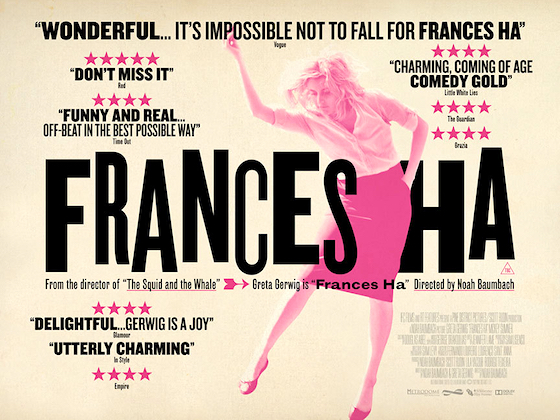







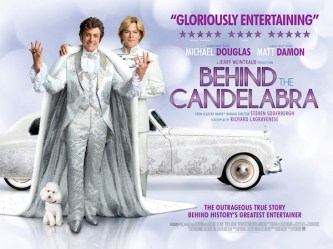 Steven Soderbergh’s supposed last-ever film (or, if you’re American, Steven Soderbergh’s first project after he supposedly quit film) is the story of Scott Thorson (Matt Damon), a young bisexual man in the ’70s who encounters famed flamboyant pianist Liberace (Michael Douglas) and ends up becoming his lover, which is just the start of a strange, tempestuous relationship.
 It looks great, too. The film, that is, not Rob Lowe’s face. The design teams have realised an excellent recreation of the period, which is then lensed with spot-on glossy cinematography by DP
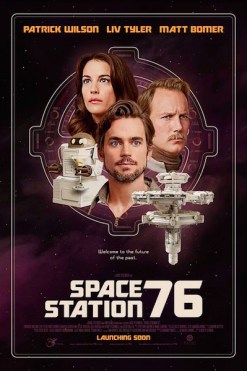 Liv Tyler is the new first officer on a space station commanded by Patrick Wilson in this retro-future-styled film, which is both a spoof of/riff on ’70s genre movies, and a character drama about people’s relationships. No, really.
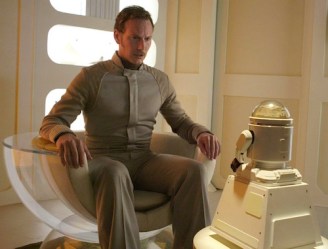 used to feed into the humour, that’s simply what makes it, a) a period movie (just a period movie set in the future), and b) a comedy-drama (as opposed to a drama). I think this is the real reason for its lowly regard on sites like IMDb: those expecting Anchorman in Space are going to be disappointed; but you can’t blame anyone for such expectations when that’s more-or-less how it’s trailed.
 The characters and their relations are well enough drawn to make it passably engrossing, even if not a stand-out contribution to any such genre, while the comedy pays off handsomely at times.
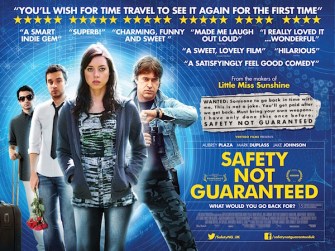 The debut feature from the director of all-conquering box office behemoth
  Maybe I’m missing something, I don’t know, but where other directors currently making a similar transition (Gareth Edwards, Josh Trank, Duncan Jones) showed some signs of a reason for the upgrade in their debut and/or sophomore features, I can’t fathom what singled Trevorrow out. He seems to have done alright with it though, so never mind.
 Will Smith is the eponymous drunken vagrant, who also has the powers of Superman, in this under-appreciated superhero comedy-drama. Hated by the public for the destruction he causes while ‘helping’, and wanted by the authorities for the same — though they can’t catch him because, you know, superpowers — he gets an image makeover when he saves wannabe entrepreneur Jason Bateman. Bateman’s wife, Charlize Theron, is less sure of Hancock’s merits.
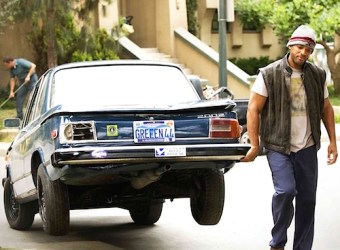 but it rubs against comedy stuff that feels like it’s from a Comedy. The extended cut includes an early sex/ejaculation joke/sequence that wasn’t in the theatrical cut because Berg thought it wasn’t funny and test audiences agreed. Goodness knows why it got put back, other than because of length — it accounts for over half of the extensions (more details
  Why indeed, because a) she’s not a supervillain, and b) even if she were, why get changed?! It’s a kind of bait-and-switch: she’s made to look like a villain because we think that’s what she’s about to be revealed as, and a big hero-vs-villain fight follows too… but she isn’t. It’s not quite up there with the magically-changing Batsuits of
  The film would work a lot better on the whole if the tone had been settled on as definitively as Smith’s performance, rather than trying to have its cake and eat it by mining both the “what if this were real?” and “haha, an unlikeable drunk superhero!” versions concurrently. For my money, however, if you treat Hancock as a fairly seriously-intended movie that was forced to contain more (half-arsed) action and (misjudged) comedy for the sake of box office, it’s not a bad experience at all.
 After winning the Best Adapted Screenplay Oscar for
 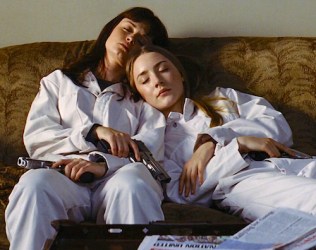 Here, Fletcher either needs to settle on one or the other, or clearly signal his intentions earlier.
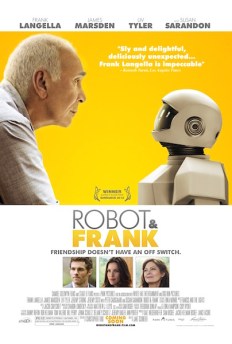 In “the near future”, Frank (Frank Langella) is an ageing jewel thief in denial about his dementia, contenting himself with visits to the local library, which is being taken over by a bunch of yuppies to turn into “the library experience”, and shoplifting from the beauty store that used to be his favourite restaurant. Concerned for his wellbeing, his son (James Marsden) gets him some home help in the form of a humanoid robot (voiced by Peter Sarsgaard). Initially reluctant to accept its presence, when the robot attempts to help by also shoplifting from the beauty store, Frank senses an opportunity…
 (part of a half-realised almost-subplot about robot rights, or something), we not only feel Frank’s (temporary) loss of his friend, but also urge the film to turn the robot back on and get back to what’s really making the movie work. The event serves a purpose (it’s the point Frank realises he’s stopped just putting up with the damn robot and actually come to appreciate its presence), but still.
 Equally, this is of a branch of science-fiction we see all too rarely on the big screen, but which is fertile ground for those wishing to explore it: using fantastical concepts to explore and enlighten our own world. Even if you learn nothing revelatory about old age and the rigours of dementia, the friendship between the robot and Frank is reason enough to enjoy.
 100Films.co.uk