
Pete Docter | 95 mins | Blu-ray | 1.78:1 | USA / English | U / PG
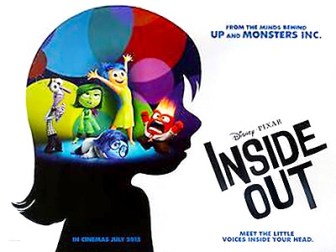 Pixar haven’t had the greatest start to the second decade of the 21st Century. After somehow managing to get lightning to strike thrice with Toy Story 3, they released two mediocre sequels (Cars 2 and Monsters University), and their only original film of the period, Brave, endured a mixed-to-poor reception also (I’ve still not got round to seeing it). This might go some way towards explaining why their release for this year has attracted such acclaim, despite it offering a pretty rote storyline dressed up in some fancy ‘original idea’ clothing (not that it is a truly original idea) and a modicum of genuine emotional resonance.
You see, this is the story of Riley (Kaitlyn Dias), an 11-year-old kid who moves from her small home town to San Francisco and struggles to cope. That’s because the anthropomorphised emotions who live in her head and control her moods and memories are thrown for six, especially when de facto leader Joy (Amy Poehler) and the accidentally-ruinous Sadness (Phyllis Smith) get sucked out of the control room and in to the depths of Riley’s memory, from where they have to find their way back in time to sort everything out. Fancy idea: anthropomorphised emotions. Rote storyline: mismatched pair get lost, have to find way back in time to fix things. Genuine emotional resonance: once-happy 11-year-old kid rendered miserable and struggling to find her place.
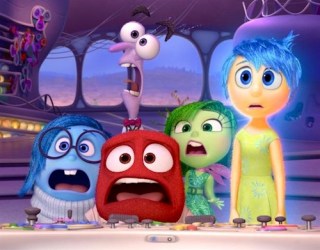 It surprises me not a jot that a Pixar film has been over-praised by critics and initial viewers. That’s pretty much my view of the their last couple of efforts before the recent doldrums, too. Those were, specifically, WALL-E and Up, both of which feature incredible, innovative, boundary-pushing openings followed by rote, familiar, genre-bound second halves. They’re both good films, but the five-star bits are contained within the first 10 to 30 minutes, followed by three- or four-star entertainments for the rest of the running time. Inside Out isn’t quite the same, because the super-high-quality bits aren’t concentrated anywhere. Instead they’re sprinkled here and there, moments of cleverness (though not genius — as I said, the concepts aren’t exactly original) hung on an easy, well-worn formula.
You don’t have to dig very deep into the Blu-ray’s special features to get an idea of how this happened. The story went through many, many, many iterations over the years and years it was in development. No wonder they wound up beating it into such a familiar shape as the quest narrative. It may also explain why some events don’t quite seem explained. I could’ve missed something, of course, but I was wondering why they were demolishing stuff in Riley’s Imagination Land until a deleted scene (culled from a very different take on the story) explained it. Many of the characters are just built from archetypes, too, like a sports-minded dad who doesn’t actually listen to mom — never seen that anywhere before!
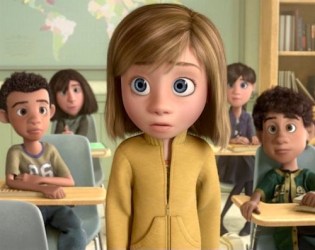 It certainly isn’t as clever or meaningful as some people have tried to make it out to be. For example, a whole internet discussion was sparked by the fact that Riley (an 11-year-old girl, remember) has emotions that are personified as a mix of male and female. When we get a glimpse inside other characters’ heads, their emotions are all of a single gender. ‘What is this saying?’, the internet wonders. Is it to do with the fact that all gender is fluid? That gender is fluid pre-puberty? As Riley is the only one with these mixed genders, are we meant to infer she’s transgender? Fertile ground for discussion. In fact, the answers are: no, no, and no. Director Pete Docter has said he just felt some emotions were more masculine (Anger in particular) and so that’s why they’re male in Riley’s head. Why the single genders in other characters? Shorthand. We only meet them briefly, after all.
Of course, now we’re touching on the issue of the relevance of authorial intent versus consumers’ reading of the final work, which isn’t a discussion I have much interest in engaging with right now. Suffice to say, whatever anyone’s readings of gender issues in Inside Out, none were intended by the filmmakers, and so you’re projecting something on to it rather than being able to unearth a coherent statement.
In other matters, there are some nice jokes and nods aimed squarely at adult viewers, the best being a passing reference to a ’70s noir. (Yes, really. Don’t worry, you’ll spot it.) Meanwhile, the animation and design is fine. I feel that’s the best I can say about it, 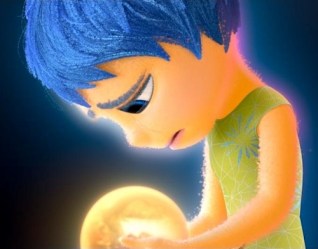 other than that the loose, floating, ‘bubbly’ edges of the emotion characters are quite neat. Apparently the effect was originally meant only for Joy and was immensely difficult to animate, but just as it was to be scrapped John Lasseter commented on how great it was and asked for it to be added to all the characters. Well done Mr Lasseter, though apparently it was an absolute headache for the technical team.
I do wonder if it’s just because this is the first really good original Pixar film for quite a long time (six years and five films on from Up, to be precise) that it’s gone down so well. It is good — there are some neat ideas and a strong moral lesson (even if, as with everything else, it’s not a totally original one; though from the way it’s discussed in some circles (not least the film’s own special features), you’d think it was a philosophical revelation of Nobel-winning proportions). In some respects, these qualities makes it almost a return to Pixar’s early praise-magnet form, which is enough for some to go wild for it. For me, the style and shape of the story those elements are airlifted into is so familiar that there’s little room for surprise (one highly emotional moment excepted). Maybe clearer heads will eventually prevail and people will rein it in a little.

Inside Out is released on DVD and Blu-ray in the UK tomorrow.
 From the heart of Disney’s most recent poor period, Lilo & Stitch is possibly the only film that comes out of that era with any affection. Certainly, it spawned several sequels and a relatively-long-running TV series. By the standards of the films that surround it, it’s a good’un; in the grand scope of all Disney films, however, I didn’t care for it that much.
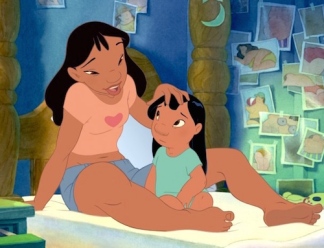 The story is something and nothing. Despite strong and relatively mature thematic notes, it doesn’t quite break free of the family-movie trappings to achieve the kind of insight or age-group transcendence that, say, Pixar movies routinely manage. For kids, though, especially ones who are feeling like misunderstood outsiders, there might be a lot to take from it. The zany antics of the heroes might also work for them in a way they didn’t for me — the ‘craziness’ comes across as a series of vignettes to bide time until the climax, and I didn’t find it massively engaging either. This is also the stage at which Disney had decided musicals were a Bad Idea, so there’s only a couple of non-diegetic songs to keep things ticking over, and… well, your mileage may vary.
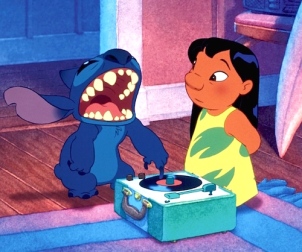 that might be missed by many a viewer, but it gives a subtly different feel. It’s a little more classical, which sits nicely against the very modern zany-aliens storyline.
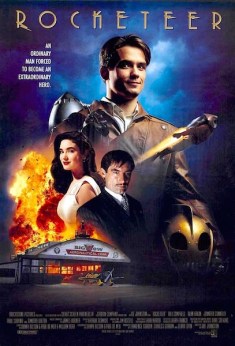 Based on an ’80s-created superhero modelled on the matinee serials of the ’30s and ’40s, The Rocketeer sets its scene in 1938, when stunt pilot Cliff Secord (Billy Campbell) winds up in possession of an experimental rocket pack. Initially donning it as part of the stunt show, when Cliff uses it to rescue another pilot he, a) attracts the attention of the hoods who originally stole it, and b) discovers his true calling as a hero, etc. Throw in a love interest (Jennifer Connelly) who’s a Hollywood extra with connections to the swashbuckling film star (Timothy Dalton) who’s really behind the theft, and you’ve got yourself an adventure!
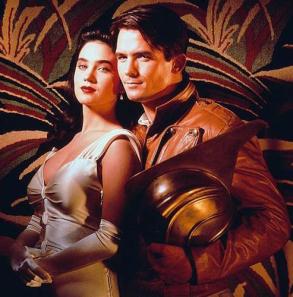 We all know effects alone do not make a good movie, but equally trying to make an effects-y movie when you can’t achieve said effects is a fool’s errand. Fortunately there’s some other derring-do to make up for it, and the climax atop a zeppelin isn’t at all bad.
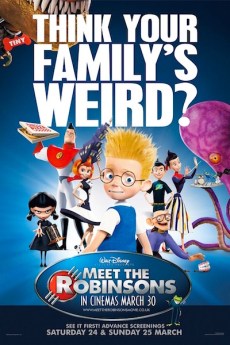 Disney’s 47th Animated Classic comes from their weak ’00s period, after the end of the so-called Renaissance and before what’s apparently been dubbed the neo-Renaissance (presumably no one could think of a synonym). This hails from the tail end of that lamentable era, though, so there are signs of recovery: Meet the Robinsons isn’t bad, just mediocre.
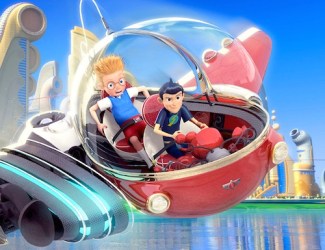 The time travel element of the plot is weakly thought-through. It’s not the point of the film, which is more about family ‘n’ stuff, but it’s central enough that it robs the already-underpowered climax of much weight — you’re too busy thinking “wait, does that make sense?” to be invested in events. Finally, the animation style has aged badly, now looking plain and under-detailed.
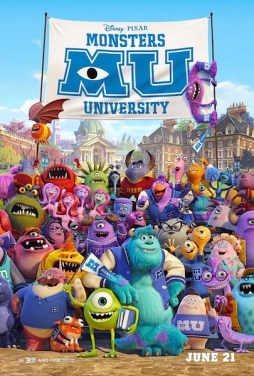 Pixar’s fourth sequel is more
 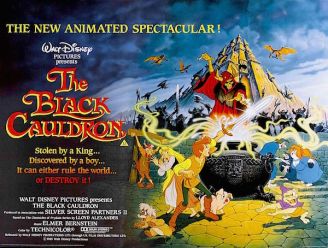 The Black Cauldron is best remembered as an intriguing footnote in the history of Disney animation. Their 25th ‘official’ film, it was the first with no songs, the first to earn a PG (after being cut — twice — to avoid a PG-13), and flopped so badly they disowned it for over a decade. Fully-animated sequences were cut after disastrous test screenings for parents, and famed exec Jeffrey Katzenberg, who came into Disney management during the film’s production, reportedly ordered 12 minutes cut, muddling the film’s story. What a mess.
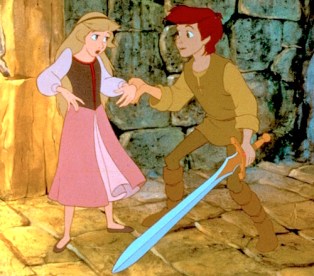 It’s always interesting when a company like Disney break outside of the norm, and it’s certainly brought them some degree of success in recent years with the likes of
  This year’s Best Animated Short Oscar winner is a charming little tale of a dog and his owner. I absolutely adored it, though there’s little doubt that it was helped to victory by being produced by Disney and released theatrically alongside Best Animated Film winner
  but nonetheless packs an emotional punch. Viewers have been known to shed a little tear (though fear not, dear reader: it doesn’t come via a
 Disney’s ’80s/’90s renaissance more-or-less came to an end with this adaptation of Edgar Rice Burrough’s jungle hero.
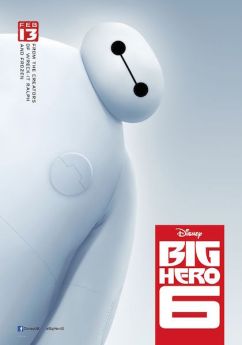 This year’s Best Animated Film Oscar winner is not this year’s best animated film. Not by a long stroke. What it is is one great character, one great emotional plot/subplot, and a lot of stuff that feels like every other big-budget action-orientated CGI animation of the past few years. Most succinctly, this is little more than (as
  The element that is an unequivocal success is Baymax. A soft robot — made of inflated vinyl so as to be genuinely huggable — he’s sweet, funny, and always entertaining. Memorable moments abound, in particular a sequence where his batteries run low, and his interpretation of a fist-bump (a recording booth improvisation by Adsit that was worked into the film). The movie truly comes alive whenever he’s on screen, but conversely loses some magic whenever he’s pushed into the background.
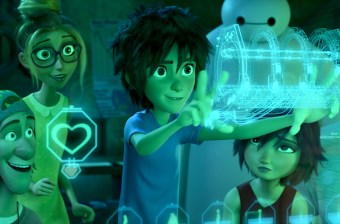 Big Hero 6 is by no means a bad film. It will certainly entertain its target age group, especially if they haven’t seen the other CG spectacles it nabs from. That aside, the entire thing is worth a look purely for Baymax and a few stand out moments — all of them involving the aforementioned vinyl robot, of course. Otherwise, it’s pretty by-the-book. The five-star-level praise it’s attracted in some quarters is completely unwarranted.
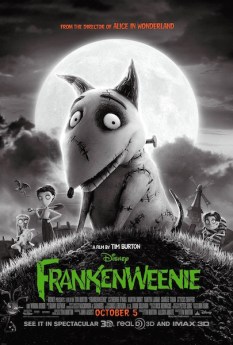 Inspired by two of Burton’s early-’80s shorts (which are most commonly found on
  Some say it doesn’t have enough of an edge. Well, maybe; but I thought it was surprisingly dark in places. Not so considering it’s a Tim Burton film based on resurrecting the dead, but for a Disney-branded animation, yes. Those edgier bits are here and there rather than consistent, but still, I’m not sure what those critics were expecting from a PG-rated Disney animation. I guess there’s an argument that Burton should have pushed it further and aimed for an adult audience, but can you imagine an American studio agreeing to finance an animation primarily targeted at anyone who’s entered their teens? Because I can’t.
 100Films.co.uk