September’s Failures

Arguably my true failings his month were not watching any Blindspot or “What Do You Mean You Haven’t Seen” films, plus all the other 100 Films Challenge categories I’m behind on. But, as usual, this column will focus on all the new releases and purchases of interest that I didn’t see either.

The season for big-name blockbusters may have ended at cinemas, but that doesn’t mean there weren’t films worth mentioning — like George “Mad Max” Miller’s latest, Three Thousand Years of Longing; or a limited UK release for David Cronenberg’s Crimes of the Future; or Kevin Smith’s return to the milieu that made his name in Clerks III — and there were certainly films that generated blockbuster-sized numbers of column inches, like Don’t Worry Darling and its endless behind-the-scenes controversies. In and around those were the likes of starry whodunnit comedy See How They Run; George Clooney / Julia Roberts romcom Ticket to Paradise. Also, a bunch of horror and/or horror-adjacent movies that seem to have accidentally released a month early: Fall; Bodies Bodies Bodies; Smile… Plus, horrific in a different way, the belated debut of Michael Flatley’s Blackbird.

And yet, for all that, the biggest of them all was arguably a re-release: James Cameron’s Avatar returned to the big screen for its… fourth? fifth? (I forget, but it’s had a fair few re-releases at this point) go-round at box office glory. I don’t think it topped the chart, but it certainly kickstarted conversation about the film’s merits (or lack thereof) and enduring influence (or lack thereof). I haven’t seen it since it was first in cinemas almost 13 years ago, so I probably ought to revisit it before the sequel arrives in a couple of months. The only question is, which version? Even without finding a cinema showing, I can choose from the theatrical cut in 3D, or two different extended cuts…

And talking of social media chatter, the only thing with even more than Avatar was Netflix’s Marilyn Monroe kinda-biopic Blonde, which some people would have you believe you’re an evil degenerate for even considering watching it. I’m 50/50 on its director, Andrew Dominik (I adored The Assassination of Jesse James; Killing Them Softly bored me), and, to be honest, he’s given some spectacularly tin-eared interviews in promotion of his new work. I don’t morally object to it, I’m jus not sure I care enough to give it nearly three hours of my time. We’ll see.

Other Netflix premieres included Lou, which I only heard about due to the Netflix Twitter account sharing some behind-the-scenes footage of Allison Janney’s fight training. But that day it was #1 in their films category, so maybe I missed some other promo. I also didn’t see any official promo for Athena, but I did see a couple of critics saying it was very good (while expressing their disappointment about it going direct to streaming — it was worth seeing on the big screen, apparently. Oh well, we’ll never know). Meanwhile, seemingly the best Amazon could offer was another mistimed horror remake, Goodnight Mommy with Naomi Watts, and horror-comedy My Best Friend’s Exorcism, which I just happened to see advertised on their app last night, hardly a ringing endorsement. (I call all of these horror movies “mistimed”, but there are people who spend the entirety of October just watching horror movies, so it’s a boon for them.)

Disney+ were getting in on the act too, with the debut of Hocus Pocus 2. I’ve never had any interest in the original, so I doubt I’ll be watching this either. Earlier in the month, discussion focused around the Robert Zemeckis-helmed live-action remake of Pinocchio. Even the best reviews couldn’t drum up much enthusiasm for it, but it goes on my watchlist — alongside the various other Disney live-action remakes I still haven’t got round to (Lady and the Tramp, Beauty and the Beast, etc), so who knows when, if ever, I’ll actually watch it… As for new-to-streaming titles, I think Disney+ also had the most noteworthy of the month with the latest divisive MCU instalment, Thor: Love and Thunder. Also catching my eye were a variety of short films — something streamers could do a lot more with in general, I feel — including Hard Way: The Action Musical (sounds… interesting) and The Devil’s Harmony, which I actually watched back in 2020 when it was Short of the Week someplace online, but I never got round to reviewing it. It was quite good.

Actually, maybe beating that Thor flick was Amazon bringing Everything Everywhere All at Once to the UK (it did have something of a theatrical release here, but Amazon are pushing it as an “Exclusive” as if it didn’t), which I only didn’t note more prominently because I’d already imported the 4K disc (see July’s failures). Other streaming debuts or re-appearances filling out my various watchlists included, on Amazon, Cyrano (the new one with Peter Dinklage, directed by Joe Wright), Chopping Mall, and Selma; on Netflix, Kajillionaire and Alejandro Jodorowsky’s Santa Sangre (which has already been removed again); on MUBI, Olivier Assayas’s Demonlover and Pedro Almodóvar’s Parallel Mothers (do you know, I don’t think I’ve ever seen an Almodóvar film? Ought to correct that); on BBC iPlayer, Journey’s End, The Sisters Brothers, Stan & Ollie, and Blazing Saddles (which I’ve seen but owe a reconsideration); and on All 4, Bacurau, Terrence Malick’s A Hidden Life, Monos, and True History of the Kelly Gang. I think some of these are available on other streamers already (especially when it comes to stuff on the TV-tied ones like iPlayer and All 4), but them getting added (or removed) does help remind me of their existence.

As ever, that’s just a few selected highlights — stuff comes and goes from these guys all the time, and I follow it all because I like to have an awareness of what’s available to me, but if I listed it all we’d be here forever (and these columns are long enough as it is). One streamer I haven’t mentioned is NOW, aka Sky Cinema, which I’ve just resubscribed to. I was supposed to be cutting down on streamers but I’ve ended up back on MUBI, Apple TV+, and now NOW! But they offered me two months (with their Boost add-on, which is essential because it’s how you get HD) for a total of £7 (vs £30 at regular rates), so I took it. I’m sure there’s a whole load of stuff on there I need to catch up on (I noticed they added Belfast at the beginning of the month), but I’ll look into that for next month.

Finally, as always, new additions to my disc collection. Almost all were brand-new releases this month, because the boutique labels just keep putting out interesting stuff, and there are more of those guys than ever — I remember when we basically just had Eureka/Masters of Cinema in the UK, and then Arrow came along, and now we’ve also got Criterion over here, and Indicator, and 88 Films and Second Sight have stepped up their games, and Radiance is on the way… Whew!

Anyhow, let’s begin with 4K. The highlight of the month there is surely Eureka’s first foray into the format, a box set of Jackie Chan’s Police Story Trilogy. I got my copy early, even, but unfortunately haven’t had a chance to watch any of it yet. 88 Films also made their 4K debut with Drive — not the Nicolas Winding Refn / Ryan Gosling cult fave (that came from Second Sight earlier in the year, you’ll remember), but the 1997 actioner. I remember the DVD cover; it was the kind of cheap-looking title I used to avoid that nowadays I kinda revel in. As for major label 4K titles, there was a nice box set for The Lost Boys (a film I’ve been meaning to revisit for years, and what better time?) and the regular release of Jurassic World Dominion (which I’ve not heard anything good about from anyone, but, hey, gotta complete the set).

No other brand-new films made their way into my collection this month, but plenty of other new releases from the boutiques did. To go label by label, from Arrow there was a pair of films with superb titles: Japanese epic crime drama A Fugitive from the Past and Indonesian action throwback Vengeance is Mine, All Others Pay Cash. Another title I love is All Deceased… Except the Dead (what does it even mean?), billed as a “mid ’70s Italian horror combining the aesthetics of Giallo with an Agatha Christie-style murder mystery” (sounds like my idea of a good time), which came from 88 Films, along with Yeun Biao thriller On the Run and Sherlock Holmes drama The Seven-Per-Cent Solution (which, I’m ashamed to say, I’ve never seen but am now buying for the third time. Anyone want the US Blu-ray? I think it might even still be sealed…) Indicator finally brought The Swimmer to the UK (if you don’t know, their releases are numbered, Criterion-style, and while some of their new titles are into the 300s now, this is #46, suggesting they’ve been working on it for a looong time). It’s missing the feature-length documentary from the US release, but I managed to, er, find a copy of that elsewhere. They also put out a two-film Robin Hood at Hammer set, which seemed worth a punt (I enjoy Hammer films; I enjoy Robin Hood films), and Madigan, which I confess I only bought to get the bundle discount (and because it sounded potentially up my street — believe it or not, I don’t buy just anything).

As for labels who only put out one title of interest this month (or where I mentioned the other title(s) already)… more martial arts action from Eureka in an Angela Mao double-bill of Hapkido (aka Lady Kung Fu) and Lady Whirlwind (aka Deep Thrust); Tom Hanks-starring ‘satanic panic’ Dungeons & Dragons-aping TV movie Mazes & Monsters, a worldwide HD premiere from Plumeria Pictures; Katsuhiro “Akira” Otomo-led anime anthology Memories from All the Anime; and 101 Film’s clone of Severin’s AGFA release Smut Without Smut, Volume 1, featuring two X-rated genre movies with the good naughty bits removed, to better allow you to focus on the genre stuff. They also include the uncut versions, fortunately.

And that’s it for another month! I say “that’s it” as if I haven’t just listed about as many movies for one month as I’ve watched in the entire year to date…

Prey (2022)

Dan Trachtenberg | 99 mins | digital (UHD) | 2.39:1 | USA / English | NR* / R

Prey

In the seemingly-endless cycle of “trying to reboot popular ’70s/’80s sci-fi franchises”, it is once again the turn of Predator, following in the wake of 2018’s disappointingly messy The Predator and 2010’s apparently-disliked Predators (I enjoyed it, but everyone seems to write it off nowadays). Where both of those tried to go bigger — either with more or larger versions of the eponymous aliens — Prey strips things back to basics, as per the one entry in the series everyone can agree is good, the first.

Set around 300 years ago, when indigenous people still lived freely on the plains of North America, the film introduces us to a member of the Comanche tribe, Naru (Amber Midthunder, who genre fans might recognise from X-Men-adjacent TV series Legion), a young woman who wants to prove herself as a hunter like the tribe’s menfolk, including her exalted brother (Dakota Beavers). Long story short, she’s about to get her chance when an alien Predator rocks up.

Plot-wise, Prey is pretty straightforward. And therein lies a big part of its success, because what more do we want from a Predator movie than “a hero has to fight a technologically-superior Predator”? If you do want more than that, I think you’ve come to the wrong franchise. Of course, simply rehashing what’s gone before is just another path to failure, and so what Prey does is take those basic bones and dress them up with fresh settings, ideas, and perspectives. In this case, that’s the period setting and Native American heroes. How do you defeat a Predator using weapons no more technologically advanced than bows and arrows? With intelligence, of course, and the film does a nice job of showing Naru gather information and formulate plans without ever needing to spell them out for us.

The prey becomes the predator

That it can pull that off is also to the credit of star Amber Midthunder, who conveys so much of Naru’s thought processes through only looks and expressions. All round she makes for an appealing heroine: she’s capable and brave, but not foolishly so, sometimes hanging back to assess the situation, or even running away when the odds aren’t in her favour, rather than diving in mindlessly. As action heroes go, I think that counts as nuance. I saw one critic tweet that she’s so good she needs to be given a Marvel superhero role ASAP, which is more a depressing indication of the state of cinema (appealing action lead? The highest honour would be a Marvel role!) than an indication of Midthunder’s ability (please, Hollywood, don’t just waste her on Marvel filler).

This may be a straight-up humans vs aliens action movie, but it still treats its audience with a degree of respect. It knows we’re capable of joining dots ourselves, especially when we can see characters doing the same. Naturally, Prey has some developments and moments derived from previous Predator movies — it wouldn’t really be part of the same franchise if it wiped the slate wholly clean — but they feel recontextualised or come into play naturally, rather than the filmmakers over-eagerly forcing them on us as a plea to nostalgia.

Quite aside from the plot and action, this is a beautifully made film. The first half-hour almost evokes the work of Terence Malick, with its relatively slow pace and photography that showcases nature and gorgeous scenery. This would’ve been a stunner on the big screen. Most big-budget theatrically-released films don’t look this much like A Movie nowadays, never mind streaming churn. I say it only “almost evokes Malick” because it’s not actually Malick-speed slow, but what it’s doing is quite deliberate: establishing the characters, the environment they live in, the things they know and the tools they have access to, and so on — as well as building up the looming threat of the alien hunter — so that we understand the world and the stakes when things kick off later.

They're going on a bear hunt (no, really, at this point they think it's a bear)

One thing I sort of want to pull the filmmakers up on is the language(s) used for dialogue. During promotion, they’ve talked about how some of the film is actually in the Comanche language, a selling point because of diversity and inclusion. Well, not much of the dialogue is Comanche — the primary language is unquestionably English — and it’s not subtitled, which means the vast majority of viewers can’t understand it, so they could be saying anything. I don’t think a film is ‘in’ a language if you can’t understand it (it’s why I’ve not listed Comanche as a language at the top of this review, nor the European languages spoken by the settlers who come into the plot, which also aren’t subtitled). That said, there is the option to watch the entire film dubbed in Comanche — a first, apparently. That would be more historically authentic, but it’s also a dub, i.e. not how the film was ‘intended’. Nonetheless, I’ve already seen some argue it’s a better version, so it may well be worth a look.

That minor point aside (it’s not something I’m holding against the film, just the filmmakers’ boastfulness), Prey is a resounding success at what it sets out to be: an action movie in which humans and Predators have a fight. It’s the Predator film fans have long been waiting for. And it hopefully indicates to the studio bigwigs what the future of this franchise should be: pick a different era, with different technology and/or attitudes to combat, drop a Predator into it, and see how the humans get on against it. Honestly, with the right creatives, you could milk that simple premise for another half-dozen or more enjoyable movies, I reckon.

4 out of 5

Prey was the 49th film in my 100 Films in a Year Challenge 2022. It placed 10th on my list of The Best Films I Saw in 2022.

* There was no certificate listed on the BBFC website at time of review; Disney+ continuing to take advantage of the fact there’s no legal requirement for streaming content to be certified. Some press ads listed the film as 18+, but they’ve gone with 16+ on the service itself. So, it’s either a 15 or an 18. I guess we’ll never know (unless it gets a disc release). ^

March’s Failures

A quieter month in theory means more failures… but, who am I kidding, there are always tonnes of these. I’d probably have to watch ten times as many films to leave this column blank.

The most noteworthy oversight this month is undoubtedly The Batman. I’m a fan of the character anyway, and now they’ve made a version that sounds even more up my street — it’s regularly been compared to films like Se7en, my favourite movie ever. But life has conspired against me, and so I’ve not yet found a time to see it on the big screen. I still might, though I’ve already got the 4K Blu-ray on preorder anyway. That wasn’t the only new film at the cinema this month, although the likes of The Nan Movie and Morbius haven’t received the strongest notices. The new Michael Bay effort, Ambulance, sounds somewhat promising, though definitely something I’ll leave ’til streaming.

Even before that, the list of movies I’ve left to streaming that have now turned up on streaming is beginning to grow. It was a relatively strong month for Sky Cinema (which has ailed a bit over the last couple of years, between a dearth of new theatrical releases and distributors wanting to snaffle exclusivity for their own streamers), adding the likes of Fast & Furious 9, Reminiscence, Malignant, and Don’t Breathe 2; plus M. Night Shyamalan’s latest, Old, although I already own that on an (unwatched, natch) 4K disc. Sky are also the UK-exclusive home for Liam Neeson’s latest action trash, Blacklight, upending my previously-expressed notion that he had some kind of Amazon Prime exclusivity deal going on.

Talking of streaming premieres and Amazon Prime, the best they could offer this month was Deep Water, the Ben Affleck / Ana de Armas erotic thriller that’s had some kind of behind-the-scenes woes I haven’t bothered to follow. On the other hand, they’re also the streaming home for acclaimed Princess Diana biopic Spencer. You win some, you lose some. Netflix’s brand-new offerings were somewhat short on widely-discussed titles (no Oscar noms or headline-grabbing production issues here), but looked like a stronger slate overall. I’ve heard good things about Ryan Reynolds-starring sci-fi The Adam Project; post-apocalyptic Swedish thriller Black Crab seemed to shoot up their viewing chart; Nightride is billed as a “real-time crime thriller”, which sounds up my street; and I also spotted The Pirates: The Last Royal Treasure, which looks like a Korean Pirates of the Caribbean. If it lives up to that vibe, which I got from its trailer, then it could be fun. Also not to be overlooked is Boiling Point, another real-time thriller — set in, er, a restaurant kitchen at Christmas — that I’ve heard is very good.

But for all that, the biggest streaming premiere of the month was surely the new Pixar on Disney+, Turning Red. If we ignore the empty-headed ‘controversy’ it generated (essentially, some middle-aged white men struggling with a story that wasn’t about a middle-aged white man), it’s meant to be very good — but I’m way behind on my Disney / Pixar viewing, so it just has to go on the list with Luca, Raya, Encanto, and probably a few others. In a very different mode, they were also the UK home for Fresh, a film which everyone has been talking about while trying to avoid the ‘surprise reveal’. If it’s not about cannibalism, the marketing has done a good job misdirecting my expectations. If it is about cannibalism, I’m not sure why everyone’s pretending it’s such a big secret. Maybe they’re just overly optimistic about what can be kept a surprise these days (the poster’s a dismembered hand packaged like a supermarket steak, c’mon!) Sticking with the big D, they also belatedly (it came out in the US back in January) debuted a belated (the last one was six years ago) continuation for the Ice Age franchise with The Ice Age Adventures of Buck Wild; plus, streaming debuts for Guillermo del Toro’s Nightmare Alley; Jessica Chastain’s Oscar winner, The Eyes of Tammy Faye; and the second pandemic-delayed Kenneth Branagh Poirot mystery, Death on the Nile — it slipped in there on the 30th, just in time to make this the second month in a row I’ve mentioned it (after its theatrical debut just last month). I’m inclined to jump straight to buying it on disc, to go with its predecessor (which I enjoyed), and that’s out in April — so it may end up mentioned in my failures three months on the trot. Or maybe I’ll actually watch it — stranger things have happened.

Once the home to deep cuts from the arthouse archive, MUBI increasingly have dibs on new arthouse (read: foreign) hits, at least in the UK. This month that boiled down to the streaming premiere of Cannes winner Titane, but they’ve got a big couple of months ahead, with Oscar nominees Drive My Car and The Worst Person in the World likely to feature in future editions of this column. All 4 do the same kind of thing later and freer, albeit with ads, recently including Bacurau, Rita, Sue and Bob Too (both their viewing windows now expired, unfortunately), Her Smell, and Ninjababy. There wasn’t so much noteworthy on the BBC iPlayer this month, although they’ve got back a couple of films I’ve been meaning to get round to for years, like If Beale Street Could Talk and Molly’s Game. I’m also going to mention La Belle Époque, which appeared on there just days after I posted my 5-star review, and is still available.

As always, we end with the place my disposable income goes to die: Blu-ray purchases… although the list doesn’t look so long this month. Indeed, day-one purchases were relatively thin on the ground: I picked up The Matrix Resurrections, because I loved it (and, er, didn’t pay for it first time round…), plus I imported Nightmare Alley on 4K (no UK release seems forthcoming, not even a retailer-exclusive Steelbook), and at the same time nabbed the new 4K release of The Sword and the Sorcerer — never seen it, no idea if I’ll like it, but I do sometimes enjoy a bit of ’80s-style Fantasy, so it’s the kind of thing that’s worth a punt to me. Rounding out my US order was a film I didn’t even know existed until Warner Archive put it out recently, the 1948 adaptation of The Three Musketeers, with a starry cast that includes Gene Kelly, Lana Turner, Angela Lansbury, and Vincent Price. Other new releases of older titles that I’ve never included Hong Kong take on Nikita, Black Cat, and Eureka’s latest classic martial arts title, Odd Couple. And then, of course, there were sales and offers: my 4K collection continues to bulge out with Halloween Kills and Venom: Let There Be Carnage from a chart 2-for-whatever; and a bunny-themed double (sort of) in a Disney 2-for-whatever, with Jojo Rabbit and Who Framed Roger Rabbit. A UK Criterion 2-for-whatever brought me Investigation of a Citizen Above Suspicion and Topsy-Turvy (I used to love Gilbert and Sullivan’s work as a kid, but I haven’t listened to or seen any of it for ages). Finally-finally, a couple of limited editions I bought belatedly at near-as-damn-it full price before they disappeared forever: the HMV-exclusive edition of Almost Famous (it has both cuts in 4K, which the cheaper regular UK release does not) and Arrow’s Yokai Monsters set — the standard edition of which is already out, at a higher price point than the limited edition. What is the world coming to…

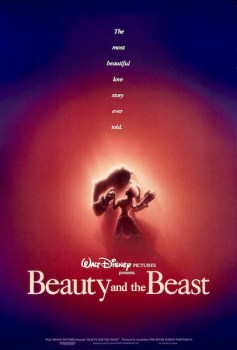
Beauty and the Beast (1991)

100 Films’ 100 Favourites #10

The most beautiful love story ever told.

Country: USA
Language: English
Runtime: 84 minutes | 92 minutes (special edition)
BBFC: U
MPAA: G

Original Release: 15th November 1991 (USA)
UK Release: 9th October 1992
First Seen: VHS, c.1993

Stars
Paige O’Hara (Beauty and the Beast: The Enchanted Christmas, Enchanted)
Robby Benson (Ice Castles, Dragonheart: A New Beginning)
Angela Lansbury (The Manchurian Candidate, Bedknobs and Broomsticks)

Directors
Gary Trousdale (The Hunchback of Notre Dame, Atlantis: The Lost Empire)
Kirk Wise (The Hunchback of Notre Dame, Atlantis: The Lost Empire)

Screenwriter
Linda Woolverton (Alice in Wonderland, Maleficent)

Story by
Deep breath… Roger Allers, Brenda Chapman, Burny Mattinson, Brian Pimental, Joe Ranft, Kelly Asbury, Christopher Sanders, Kevin Harkey, Bruce Woodside & Robert Lence.

Based on
La Belle et la Bête, a French fairy tale originally by Gabrielle-Suzanne Barbot de Villeneuve, but in this case (and most others) adapted from the retelling by Jeanne-Marie Leprince de Beaumont.

Music
Alan Menken (Aladdin, Hercules)

Lyrics
Howard Ashman (Little Shop of Horrors, Aladdin)

The Story
An arrogant prince is transformed into a beast, with one hope of redemption: someone must fall in love with him before his 21st birthday; if not, the curse’s effects become permanent. When elderly inventor Maurice is imprisoned by this Beast, his bookworm daughter Belle offers to take his place. Spying a chance to alleviate the curse, the Beast agrees. With only a short time until his 21st birthday, could a girl ever learn to love a beast?

Our Hero
A girl who’s strange but special — a most peculiar mademoiselle. With a dreamy far-off look, and her nose stuck in a book, she really is a funny girl, a beauty but a funny girl, that Belle.

Our Villain?
The Beast’s got fangs, razor sharp ones; massive paws, killer claws, for the feast. He was mean and he was coarse and unrefined, but now he’s dear and so unsure. Perhaps there’s something there that wasn’t there before…

Our Villain!
No one’s slick as Gaston, no one’s quick as Gaston, no one’s got a swell cleft in his chin like Gaston. Uses antlers in all of his decorating, my what a guy, that Gaston.

Best Supporting Character
The comedy double act of French candlestick Lumiere and English clock Cogsworth, voiced (respectively) by Law & Order’s Jerry Orbach and M*A*S*H’s David Ogden Stiers. Funny old business, acting.

Memorable Quote
“Try the grey stuff, it’s delicious / Don’t believe me? Ask the dishes / They can sing, they can dance / After all, miss, this is France / And a dinner here is never second best.” — Be Our Guest

Quote Most Likely To Be Used in Everyday Conversation
“It’s not right for a woman to read. Soon she starts getting ideas, and thinking…” — Gaston. (I didn’t say it should be used.)

Memorable Scene
The film’s prologue tells the story of how the Prince became the Beast through the medium of stained glass windows. It’s a beautifully realised fairy tale within a fairy tale.

Best Song
Titular Beauty and the Beast may’ve won the Oscar (“Tale as old as time, song as old as rhyme” — that one), but the actual best song is clearly Be Our Guest. A toe-tapping tune married with fun lyrics, fantastic choreography and superb animation combine to make it, for me, one of the greatest numbers in any musical, animated or otherwise.

Making of
Be Our Guest was originally to be sung to Belle’s father, Maurice, when he’s trapped in the castle. It was writer Bruce Woodside who pointed out that it was in the wrong place because such a key song shouldn’t be performed to a secondary character, so it was moved later to be sung to Belle. This is why you should always listen to writers.

Previously on…
Beauty and the Beast is Disney’s 30th Animated Classic, their official canon of animated movies. It’s the third film in the “Disney Renaissance”, the decade-long period (starting with The Little Mermaid and ending with Tarzan) when the studio enjoyed revived creative and financial success. In terms of this particular retelling of the tale, it owes a clear debt to Jean Cocteau’s La Belle et la Bête.

Next time…
Two direct-to-video animated sequels and a spin-off educational live-action TV series. In 1994, it was the first Disney animated film to become a Broadway musical. In 2002, it was extended with a new song, and in 2012 was re-released in 3D. An all-star live-action remake is out next year.

Awards
2 Oscars (Original Song (Beauty and the Beast), Original Score)
4 Oscar nominations (Picture, Sound, Original Song (both Belle and Be Our Guest))
2 BAFTA nominations (Original Score, Special Effects)
2 Saturn nominations (Fantasy Film, Music)
2 Annie Awards (Animated Feature, Individual Achievement in the Field of Animation)
Nominated for the Hugo for Best Dramatic Presentation.

What the Critics Said
“A lovely film that ranks with the best of Disney’s animated classics, Beauty and the Beast is a tale freshly retold. Darker-hued than the usual animated feature, with a predominant brownish-gray color scheme balanced by Belle’s blue dress and radiant features, Beauty engages the emotions with an unabashed sincerity.” — Variety

Score: 93%

What the Public Say
“The voice cast are perfectly suited to their roles and imbue them with dexterity and flair. Paige O’Hara splendidly combines strength and touching bravery as Belle. Her singing voice is a marvel as well, singing with clarity and loving kindness. Robby Benson’s deep but engaging voice is ideally suited to the Beast, and gives him depth and mournful sorrow that subsides into happiness as he develops feelings for Belle.” — vinnieh

Elsewhere on 100 Films
Back in 2010 I reviewed The Special Edition of Beauty and the Beast (to give its full on-screen title), describing it as “impossible to fault in any significant way. The design and animation are beautiful, the voice acting spot-on, the score exquisite, the story fast-paced and enthralling […] It’s hilariously funny, remarkably exciting, surprisingly scary, relentlessly romantic […] Every [song] bursts with memorable tunes, witty rhymes, genuine emotion — even the Soppy Girly Song is a good one!” Beat that, verdict section…

Verdict

Beauty and the Beast was, famously, the first (and, for a long time, only) animated movie to be nominated for Best Picture at the Oscars, and you could hardly think of a more deserving candidate. Every element of it displays artistry, from the the witty dialogue and lyrics, to the likeable and engaging characters, to the fluid and detailed animation, to the songs which help the film to run the gamut of emotions. In the field of Broadway-style Disney musicals, Beauty and the Beast is animation perfection.

#11 will be… a long nap.

The Lone Ranger (2013)

2015 #177
Gore Verbinski | 149 mins | streaming (HD) | 2.35:1 | USA / English | 12 / PG-13

Hated by Americans and loved (well, ok, “liked”) by everyone else (well, ok, “by lots, but by no means all, of people who reside outside America”), Disney’s attempt to pull a Pirates of the Caribbean on Western adventure IP The Lone Ranger is by no means as successful as the first instalment in their piratical franchise, but is at least the equal of its sequels — and, in some cases, their better.

The convoluted plot sees us arrive with John Reid (Armie Hammer) in the frontier town where he grew up, where his brother Dan (James Badge Dale) is now sheriff. Construction of the railroad is running by the town, spearheaded by Latham Cole (Tom Wilkinson), who letches after Dan’s wife (Ruth Wilson); but work is plagued by a band of outlaws led by Butch Cavendish (William Fichtner). Receiving information on his whereabouts, Dan rounds up a posse and heads out to tackle him, with John insisting on tagging along. Unfortunately it’s an ambush and they’re all slaughtered (oh dear)… except John just about survives, and is found and nursed back to life by a Native American, Tonto (Johnny Depp). He has his own grievances, and together they set out on a mission of revenge.

And if you’re wondering where Helena Bonham Carter is in all that: despite her prominence on many of the posters, her role is really just a cameo. That’s marketing, folks.

I know some people complain about simplistic stories that are used to just string action sequences together, and that’s a perfectly valid thing to get annoyed about, but The Lone Ranger swings to the other extreme and uses an over-complicated story to string together its action sequences. All it actually needs is a little streamlining, because the film is allowed to swing off into too many sideplots. This makes the middle of the film a slog, and you feel every minute of its excessive two-and-a-half-hour running time.
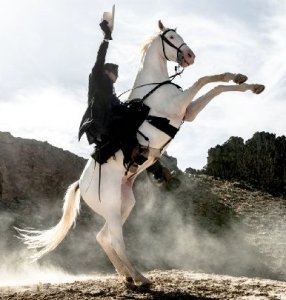
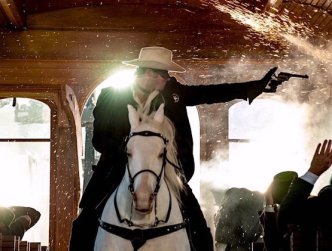
That slog is made worthwhile by what comes before and after said middle: a pair of train-based action sequences that are each truly fantastic. The second, in particular, is arguably amongst the grandest climaxes ever put on screen (providing you don’t feel it’s tipped too far into being overblown, of course). It’s inventively choreographed, fluidly shot, and perfectly scored with just an extended barnstorming version of the Lone Ranger’s theme music (aka the William Tell Overture). It’s an adrenaline-pumping action sequence that single-handedly justifies the entire film’s existence, if you’re into that kind of thing.

With multiple trains, horses, actors, guns, stunts, and copious CGI to tie it together, that sequence must’ve cost a bomb. Notoriously, the whole film was deemed too expensive and Disney insisted the budget be slashed, resulting in delays… and it still cost a fortune. That, quite apart from the negative critical response in the US, is a big part of why it flopped at the box office — a recurring problem for Disney at the minute. To be frank, I’m not convinced anyone made a truly concerted effort to stem the overspend. When a gaggle of CG rabbits hopped on screen, all I could think was, “who allowed this?!” You’ve got a massively over-budgeted film that the studio want cut back, and one reason for that is CG bunnies that have almost no bearing on anything whatsoever! The amount of time and effort that must’ve gone into creating those fairly-realistic rabbits for such a short amount of screen time… it cost millions, surely. Millions that could’ve been saved with a simple snip during the writing stage if only someone had said, “well, those bunnies don’t add anything and they’ll be bloody expensive, so let’s lose them.”
So criticism is not unfounded, but the film doesn’t deserve the level of vitriolic scorn poured on it by the US press and, consequently, public. Discussing this, the “critical response” section on the film’s Wikipedia page is interesting, and this part pretty much nails it:

Mark Hughes of Forbes, analyzing what he felt was a “flop-hungry” press desiring to “control the narrative and render the outcome they insisted was unavoidable” for a highly expensive movie with much-publicized production troubles, found the film “about a hundred times better than you think it is … [a] well-written, well-acted, superbly directed adventure story.”

I’m not quite as effusive as Hughes, but The Lone Ranger is worth the time of anyone who enjoys an action-adventure blockbuster. It’s a three-star adventure-comedy bookended by a pair of five-star railroad action sequences, which make the trudge through the film’s middle hour-or-so feel worthwhile. There was a better movie to be made here — one that was half-an-hour shorter, more focused, and probably several tens of millions of dollars cheaper to make — but that doesn’t mean the one we got is meritless.
4 out of 5

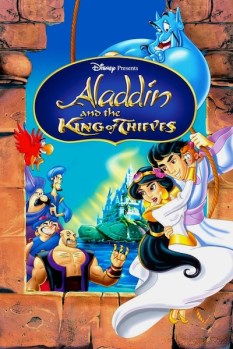
Aladdin and the King of Thieves (1996)

2015 #196
Tad Stones | 82 mins | streaming (HD) | 16:9* | USA / English | U

For most of the ’90s and ’00s, Disney churned out direct-to-video sequels to many of their most beloved animated classics. They have a reputation for being unremittingly awful, hence why Pixar’s John Lasseter put a stop to their production after he became Disney’s Chief Creative Officer in 2006. Despite that reputation, however, there are those who say one or two are actually quite good. One of those (and the only one I’ve previously seen) is The Lion King 1½ (released as The Lion King 3 in the UK), which is a sort of a Rosencrantz and Guildenstern Are Dead to the original film’s Hamlet, re-telling the story from the perspective of Timon and Pumbaa. I saw it years ago but would vouch for its relative quality — when I first re-watched The Lion King after, I briefly thought some scenes were missing, which I guess is testament to how well it fits.

Another such-praised sequel is this follow-up to Disney’s 1992 Animated Classic. It’s actually the second sequel (the first was also the first of those Disney DTV sequels) and also follows an 86-episode TV series. Fortunately, the makers dropped an early idea to use one of the series’ main villains as the film’s antagonist, and so it functions perfectly as a direct sequel to the original movie. Which is nice, because that first sequel isn’t meant to be very good and I imagine the TV series is hard to come by nowadays. Plus, neither of those can claim an ever-so-important distinction that this can: it features the return of Robin Williams as the Genie.

The film begins on the wedding day of Aladdin (Scott Weinger) and Jasmine (Linda Larkin), which is interrupted by the mysterious Cassim, the King of Thieves (John Rhys-Davies), and his gang of forty thieves seeking to steal an oracle from among the wedding gifts. Although they fail, the oracle informs Aladdin that the answers he seeks about his long-departed father are to be found with the forty thieves… I expect you can guess where that’s going. Fortunately the film gets there pretty quickly, then transitions into a story about the possible redemption (or not) of Cassim alongside the quest for the Hand of Midas, capable of turning whatever it touches into gold (natch).
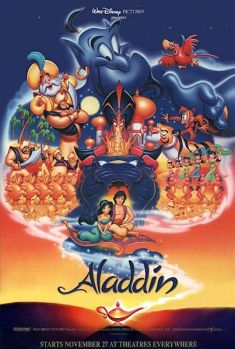
The King of Thieves has a few things in its favour. It’ll come as no surprise that the biggest and best is Williams reprising his iconic performance, and consequently being responsible for most of the film’s humour. There are a couple of fun nods to some of Williams’ other best-remembered roles, and plenty to other Disney films too. The rest of the film offers a fast-paced, action-packed narrative, with a few musical numbers to boot. The songs are certainly not as memorable as those found in proper Disney movies, but most are decent while they last. Jasmine gets somewhat short shrift, but this is really a story about father and son.

Those who dislike Disney’s Aladdin won’t find anything to enjoy here, but for fans of the original, Aladdin and the King of Thieves is a solid, fun follow-up.

4 out of 5

* The film was made for release on VHS, so it’s no surprise that the OAR is 1.33:1. The HD version is cropped for 16:9. It’s mostly alright, though anyone with an eye for composition will find it obvious at times. ^

Aladdin (1992)

100 Films’ 100 Favourites #1

Imagine if you had three wishes,
three hopes, three dreams
and they all could come true.

Country: USA
Language: English
Runtime: 90 minutes
BBFC: U
MPAA: G

Original Release: 25th November 1992 (USA)
UK Release: 18th November 1993
First Seen: VHS, c.1993

Stars
Scott Weinger (Aladdin and the King of Thieves, Shredder)
Robin Williams (Good Will Hunting, Insomnia)
Linda Larkin (The Return of Jafar, Joshua)
Jonathan Freeman (The Return of Jafar, The Ice Storm)

Directors
Ron Clements (Basil the Great Mouse Detective, Hercules)
John Musker (The Little Mermaid, The Princess and the Frog)

Screenwriters
Ron Clements (The Little Mermaid, The Princess and the Frog)
John Musker (Basil the Great Mouse Detective, Hercules)
Ted Elliott (The Mask of Zorro, Pirates of the Caribbean: The Curse of the Black Pearl)
Terry Rossio (Shrek, Pirates of the Caribbean: At World’s End)

Story by
Deep breath… Burny Mattinson and Roger Allers, Daan Jippes, Kevin Harkey, Sue Nichols, Francis Glebas, Darrell Rooney, Larry Leker, James Fujii, Kirk Hanson, Kevin Lima, Rebecca Rees, David S. Smith, Chris Sanders, Brian Pimental & Patrick A. Ventura.

Based on
The folktale of Aladdin and the magic lamp from One Thousand and One Nights, aka The Arabian Nights.

Music
Alan Menken (Little Shop of Horrors, Tangled)

Lyrics
Howard Ashman (Little Shop of Horrors, Beauty and the Beast)
Tim Rice (The Lion King, Evita)

The Story
Street urchin Aladdin falls for bored Princess Jasmine when she sneaks out of her palace one day, leading him to the clutches of evil vizier Jafar, who needs Aladdin to retrieve a magic lamp as part of his scheme to rule the land. When Aladdin accidentally discovers the lamp’s inhabitant, a wish-granting Genie, he uses his wishes to set about wooing the princess. Jafar, of course, has other ideas…

Our Hero
One jump ahead of the bread line, one swing ahead of the sword, steals only what he can’t afford (that’s everything). Riffraff, street rat, scoundrel. It’s Aladdin, of course.

Our Villain
Grand Vizier Jafar, a plotting underling — the kind of role that has strong precedent in fiction, I’m sure, though Conrad Veidt as villainous Grand Vizier Jaffar in The Thief of Bagdad is rather clearly the direct inspiration.

Best Supporting Character
Oh, I don’t know, maybe… the Genie! Fantastically voiced by a heavily-improvising Robin Williams, praise is also deserved for Eric Goldberg’s character animation, which matches him every step of the way. In fact, it was an animation Goldberg created using one of Williams’ stand-up routines that convinced the comic to take the part.

Memorable Quote
Aladdin: “You’re a prisoner?”
Genie: “It’s all part and parcel, the whole genie gig. Phenomenal cosmic powers! Itty bitty living space.”

Memorable Scene
Trapped in a desert cave, Aladdin accidentally rubs a lamp and unleashes the Genie — and with it, Robin Williams’ all-time-great hilarious performance.

Best Song
For me, it’s Prince Ali, the huge Genie-led number as a disguised Aladdin arrives back in town in grandiose style. The Genie’s big solo number, Friend Like Me, is an incredibly close second. Soppy A Whole New World won all the awards, because of course it did.

Truly Special Effect
Only the second time Disney used CGI with 2D character animation. In Beauty and the Beast, it built a room for the characters to dance in; here, there’s a character (the entrance to the cave) and a whole action sequence (the flying carpet escape from said cave). It earnt the team a BAFTA nomination. There’s no shame in what they lost to: Jurassic Park.

Making of
Robin Williams ad-libbed so much of his role as the Genie — generating almost 16 hours worth of material, in fact — that the film was rejected for a Best Adapted Screenplay Oscar nomination.

Previously on…
Aladdin is Disney’s 31st Animated Classic, their official canon of animated movies. It’s the fourth film in the “Disney Renaissance”, the decade-long period (starting with The Little Mermaid and ending with Tarzan) when they had a run of films that were critically and financially successful (unlike those before and after said period).

Next time…
Two direct-to-video sequels, the second of which is quite good; in between those, a TV series ran for 86 episodes(!); a Broadway adaptation debuted in 2014 (it’s coming to the West End in May); not to mention numerous video games and appearances in other works, almost all still voiced by the less-starry names among the original cast. The go-to new voice for the Genie? Dan “Homer Simpson” Castellaneta.

Awards
2 Oscars (Original Song (A Whole New World), Original Score)
3 Oscar nominations (Sound, Sound Effects Editing, Original Song (Friend Like Me))
2 BAFTA nominations (Score, Special Effects)
1 Annie Award (Animated Feature)
3 Saturn Awards (Fantasy Film, Supporting Actor (Robin Williams), Younger Actor (Scott Weinger))
1 Saturn nomination (Music)
Nominated for the Hugo for Best Dramatic Presentation.

What the Critics Said
“What will children make of a film whose main attraction — the Genie himself — has such obvious parent appeal? They needn’t know precisely what Mr. Williams is evoking to understand how funny he is. […] What will come through clearly to audiences of any age is the breathless euphoria of Mr. Williams’s free associations, in which no subject is off-limits, not even Disney itself.” — Janet Maslin, The New York Times

Score: 94%

What the Public Say
“the perfect Disney film, one that cleverly combines the sensibilities of classic and modern audiences, one that matches toe to toe with many of the studio’s greatest films. You may prefer the emotional heart-ache of The Lion King or the romantic magic from Beauty and the Beast, but I would always prefer the witty and charming Aladdin.” — feedingbrett @ Letterboxd

Verdict

Hailing from slap-bang in the middle of the Disney Renaissance, Aladdin may not be quite as strong as the films either side of it (Beauty and the Beast and The Lion King), but it’s the next best thing. Buoyed by Robin Williams’ top-drawer performance (have I mentioned that yet?), multiple toe-tapping musical numbers, and a dastardly villain who’s among Disney’s best — and is just one of several great supporting characters here, actually — Aladdin is an A-grade animated Arabian adventure.

In #2 no one can hear you scream.

Tomorrowland: A World Beyond (2015)

aka: just Tomorrowland

2015 #187
Brad Bird | 125 mins | streaming (HD) | 2.20:1 | USA & Spain / English | 12 / PG

TomorrowlandAfter making his live-action directorial debut with the unlikely sidestep of Mission: Impossible – Ghost Protocol, Pixar alumni Brad Bird heads back in a familiar family-friendly direction for this Disney sci-fi action-adventure. One of several movies lambasted by critics this past summer, I actually thought it was a lot of fun.
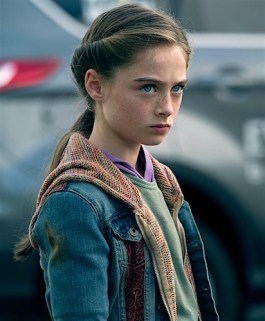
The story concerns a future city created by scientists and dreamers; a place of wonder and innovation not constrained by the short-term goals of politicians or moneymen. Boy inventor Frank is delighted to be invited along there by recruiter Athena (Raffey Cassidy); years later, teenager Casey (Britt Robertson) receives similar treatment… only it turns out something is wrong, and Casey and Athena must track down a grizzled and disillusioned Frank (George Clooney) so they can head back to Tomorrowland and convince its leader (Hugh Laurie) of the way to make things right.

Something along those lines, anyway, because Tomorrowland’s storytelling can get a little muddled. It doesn’t quite conform to your usual action-adventure narrative shape — we spend quite a long time with boy-Frank, before the story essentially restarts with Casey, and eventually those two threads join up. The thing this makes me wonder is, is the storytelling actually muddled (this is not an uncommon criticism of the film), or does it just take an atypical shape, with the consequent lack of comforting familiarity making us think it’s poorly done? A counterargument might be that it helps foster some of the film’s mysteries, which might be reveals without setup if you restructured. I think if you just go along with it, the only real bump is in that restart; otherwise, it’s a pretty smooth action-adventure.

And that’s why I don’t really understand the negative response to it. Sure, the plot may have the odd hole, but there are worse in better-regarded movies; Raffey Cassidy, a findand there’s a moral lesson that’s arguably a little heavy-handed, but as it’s a moral lesson some people aren’t bloody listening to, I can’t say I blame Bird for that. The characters and performances are likeable, with Raffey Cassidy standing out as a marvellous young find, though Laurie is a little undersold. There are some suitably entertaining action scenes, some moments of visual splendour thanks to the future city, and one long take that is exquisite. I know I’m a sucker for a long take, but this is a really exceptional one, that deserves to be mentioned alongside the year’s more-praised unbroken shot, the opening of Spectre.
It’s such a shame when original blockbusters like this get pissed all over by critics and an audience who are sometimes too keen to re-parrot critics’ opinions as if they’re their own (see also the Stateside response to Lone Ranger vs. how the rest of us received it). I’m not arguing movies should get a free pass just because they’re not adapted from something else, but really, when decent adventures like this get slated and consequently flop, what incentive do the studios have to try something new, when they know producing fifth Transformers or Pirates of the Caribbean instalments will make shedloads whatever the reviews say?

For anyone who enjoys a good sci-fi action-adventure movie, I urge you to ignore the critics and give Tomorrowland a go. It’s not exactly a revelation, but it’s a fun time with more than a few points to commend it.

4 out of 5

This review is part of the 100 Films Advent Calendar 2015. Read more here.

Escape from Tomorrow (2013)

2015 #189
Randy Moore | 90 mins | streaming (HD) | 16:9 | USA / English | 15

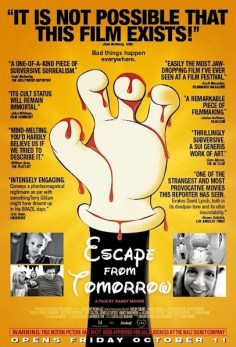
Escape from TomorrowDisney meets David Lynch in this arthouse-y psychological thriller, best known for being shot on the QT (i.e. illegally) in DisneyWorld.

The high-contrast black-and-white cinematography is stunning, quite apart from the marvel of how it was captured. It depicts a “not for everyone” experience: a freshly unemployed dad starts to ignore his family, stalk two jailbait teens, get into bizarre scrapes, and possibly lose his mind.

Some find it aimless. Perhaps. The end certainly sinks to gross-out-comedy-level depravity. Others say it’s poorly made. I disagree. It’s at least a strong technical achievement… even if it’s a slightly-too-long, thoroughly peculiar one.

3 out of 5

This drabble review is part of the 100 Films Advent Calendar 2015. Read more here.

An inside out pair of shorts

Pixar’s latest opus, Inside Out, was naturally accompanied by a short film in cinemas. On Blu-ray (out today in the UK), it’s accompanied by two. These are they, reviewed in nice quick drabbles.


Riley’s First Date?
2015 #179a
Josh Cooley | 5 mins | Blu-ray | 1.78:1 | USA / English | U / G

In this ‘sequel’ to Inside Out, Riley is going to hang out with a friend… who turns out to be a boy, which sends her mum and dad — and their anthropomorphised emotions — into paroxysms of worry. Is this the 12-year-old’s first date?
The straightforward story is built on clichés of male and female parental reactions to their kid growing up and encountering the opposite sex (mum tries to be cool, dad gets protective), but then it’s only got four minutes so needs that shorthand. Nonetheless, it manages roughly as many laughs as the feature, even if they are easy targets.

4 out of 5


Lava
2015 #179b
James Ford Murphy | 7 mins | Blu-ray | 2.35:1 | USA / English | U / G

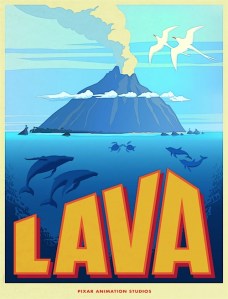
The short that accompanied Inside Out in cinemas is essentially a music video for a folksy ballad about a pair of volcanoes who are in ‘lava’ (read: love) with each other.

It’s quite beautifully animated, with realistic CGI (apart from, you know, singing volcanoes) that eschews stylisation without giving in to the urge to shallowly emphasise its photorealism, but other than that I didn’t much care for it. The story and song — inspired by an underwater volcano that will one day merge with Hawaii — are a little too twee. It’s not really sweet, nor sickly, just kind of uninspiringly quaint.

3 out of 5