
Luc Besson | 137 mins | Blu-ray (3D) | 2.40:1 | France, China, Belgium, Germany, UAE, USA, UK & Canada / English | 12 / PG-13

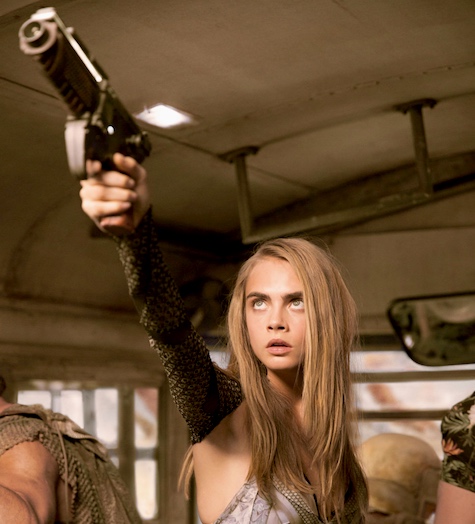
Luc Besson returns to the sci-fi genre that he so memorably visited 20 years ago in The Fifth Element for another colourful, crazy, adventure romp. Based on the French comic book series Valerian et Laureline, it sees special agents Major Valerian (Dane DeHaan) and Sergeant Laureline (Cara Delevingne) on a mission to protect Alpha, the titular city, from forces that threaten to destroy it.
Valerian got a pasting from critics and was a flop at the US box office, a particular problem when it’s apparently the most expensive independent movie ever made. Fortunately for it, it did alright internationally, to the point where home video sales could still secure a sequel (Besson has already written a second and has moved on to developing a third!) While it’s far from a perfect movie, it deserves to find an audience. It’s probably a bit too barmy — a bit too European, even — for mainstream US tastes, but there’s a lot to like here for those who are so inclined.
The main selling point is the imagery. Simply put, it’s incredible. There’s so much going on, all the time. There’s background detail galore. It whizzes through worlds that could be the entire setting for some other story. There are dozens, probably hundreds, of alien species thrown around. It’s so casually inventive, as if it’s got imagination to spare. And it’s mostly vibrantly colourful too, a real comic book of a movie in the traditional sense. All that depth and detail looks particularly amazing in 3D, it must be said, especially during the action sequences that whoosh though intricate, layered environments at breakneck speed.

This visual exuberance sometimes comes at the expense of the plot. The main storyline is pretty straightforward — for example, there’s a third-act twist that’s obvious from the moment the character it concerns first appears on screen — but it keeps getting distracted by total asides, as Besson meanders off course to showcase some other species or environment or set piece he and his army of designers have cooked up. If that kind of shaggy storytelling annoys you then Valerian is set to get up your nose, but if you go along for the ride then Besson’s showing off can be delightful.
Some of the other screenwriting details suffer even more, however. It almost engages in some interesting themes about colonialism and that kind of stuff, but instead more nods its head in their direction than actually says anything about them. More overtly, a lot of the dialogue is atrocious. In fact, it’s so bad that you begin to wonder if it’s deliberately ultra-mannered and you’ve just missed some kind of joke. It doesn’t help that DeHaan feels at least somewhat miscast as the cocky heroic lead. Or possibly that’s the point — that Valerian isn’t as irresistibly attractive and amazingly competent as he thinks he is. Model-turned-actress Delevingne, on the other hand, is surprisingly good.
You’ll notice that Valerian and Laureline are (a) co-leads, and (b) both in the name of the original books, and yet the female half of the duo has been ditched from the film’s title. Unfortunately, that does indicate the film’s sometimes-dated attitude towards gender politics. On the bright side, Delevingne manages to imbue Laureline with a feistiness that allows her to mostly hold her own against the men, and — despite the old-fashioned shape of a romantic subplot — Besson’s screenplay lets her be a capable agent in her own right as well. Still, Laureline vs. the Space Patriarchy would not be a wholly unapt alternative title for the film.
These less-good aspects of Valerian glare out at one rather, and make me want to declare that much of it is kind of rubbish, really… and yet I rather enjoyed the whole shebang. Perhaps it just takes a rewatch or two to settle into the film’s own particular rhythm? Even if that’s not the case, I’d still rather have the messy ambition of a Valerian than another dozen run-of-the-mill Hollywood CGI extravaganzas. Fingers crossed for those sequels.

Valerian and the City of a Thousand Planets is released on disc in the UK today.
It placed 17th on my list of The 17 Best Films I Saw For the First Time in 2017, which can be read in full here.
 Despite the fact that
  Then we have the much-maligned backstory about just what Peter Parker’s parents did all those years ago, before they abandoned him with Uncle Ben and Aunt May. There are pros and cons to this: it’s all new, which at least makes it interesting and unpredictable because it has no forebear in comics or films; but it’s also a pretty stock set of circumstances. Worse still, it robs Spidey of a major defining trait: Peter Parker is bitten by a spider by accident — it could’ve been anyone. In this version, it could only have been him. Boo. Sony clearly want an arc plot they can run across a trilogy (or more), so presumably this thread will rumble on… though whisperings that they’re considering some kind of soft-reboot may see it cut short. I wouldn’t complain.
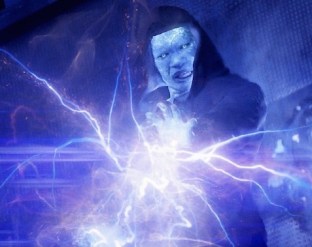 but it’s more textured, at least. Then there’s Electro, who (as mentioned) may have a familiar story, but is nonetheless perfectly pitched by Foxx. His powers lead to some excellent sequences, including but not limited to the aforementioned Times Square duel. He also contributes to the music, in a way, as Electro’s whispered/sung thoughts ‘bleed out’ into the score. It’s creepy, especially as it’s so subtle in the mix — I wondered what the hell was going on at first. I thought it was a fantastic score all round, in fact, bringing in a modern music element that fits the notion of Spidey as a young character perfectly.
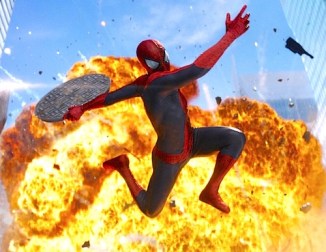 It lacks the confidence, heart and flair that mark out Spider-Man 2, and the bold originality and clarity of purpose that define
 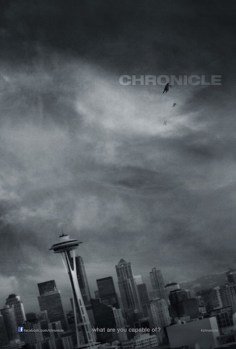 The birth of the “found footage” sub-genre and the resurgence of the superhero movie began around the same time, the former with
 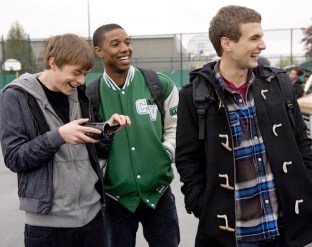 The story sees high school senior Andrew (Dane DeHaan) decide to start filming everything in his life, thanks to his borderline-abusive alcoholic father (Michael Kelly) and terminally ill mother (Bo Petersen). The same day (what a coincidence!), his cousin and only friend, Matt (Alex Russell), takes him to a party where, along with most-popular-kid-in-school Steve (Michael B. Jordan), they discover a hole in the woods with mysteries inside… Days later, all three begin to develop telekinetic powers, which they learn they can levy in various incredible ways — those ways being super, but largely without the heroic…
 This is even more pronounced in the extended version (“extended director’s cut” in the US), which includes over five minutes of extra bits that, in my opinion, make it a superior edit. Some are minor in impact, true, but there are a couple of short sequences with Andrew and Steve that deepen their relationship further, which enriches events at the end of act two. There’s also a moment that subtly prefigures the climax, and an extra bit in said finale that seems nigh-on essential to me. Considering the film still runs (just under) 90 minutes even with these additions, it’s difficult to see why they were cut in the first place. “Pace” is usually the rational for that, but if this is indeed a Director’s Cut then clearly Trank didn’t think they were an issue; equally, I can’t see why Fox would have objected. Still, they’re here to enjoy on Blu-ray…. though not on DVD… and I guess they’re not in TV screenings… Tsk.
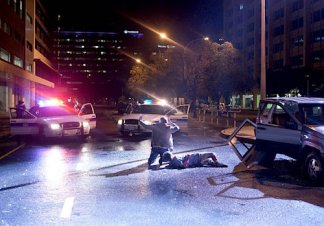 That said, spectacle it has. You wouldn’t expect that from a $12 million found-footage movie, but an epic duel through the streets of Seattle is one of the strongest climaxes to any superhero movie I can remember. It’s kind of like
  In the hands of many a desperate-to-get-noticed filmmaker, a found-footage superhero movie would likely have been a straight-to-DVD affair that could at best be described as “mediocre”. In Chronicle, however, Trank and co have crafted one of the best movies produced in either sub-genre. Most of the people involved — as well as the film they’ve all come from — can be classed as “one to watch”.
 100Films.co.uk