
Christmas is properly over now: adults are back at work; kids are back at sch— wait, what? Another lockdown?
Well, the festive season is over either way, isn’t it? So it’s time for my annual look back at some of the TV highlights. Or what was on, anyway.

Doctor Who Revolution of the Daleks
 This year’s Doctor Who special felt like a bid by showrunner Chris Chibnall to keep fans happy. Popular character Captain Jack Harkness is back, properly this time — after a cameo-ish appearance last season, this is his first major role in the show since 2008. And the proper Daleks are back, too — we got a sort-of-Dalek two years ago in the last special, but, after that’s used as the model for an army of “security drones”, the real Daleks turn up to exterminate them, with the 2005-style bronze Daleks making their first full appearance since 2015 (yes, it’s been that long).
Of course, the one thing most fans would really like Chibnall to do is bugger off and let someone better write the show. He hasn’t given us that gift yet, sadly, but at least this is one of his better episodes. It’s suitably romp-ish for a seasonal special, with plenty of running down corridors, exploding enemies, and the odd gag or two. There’s even some political satire, albeit fairly familiar, heavy-handed, and underdeveloped. Well, that’s Chibnall’s whole style, isn’t it? He can’t seem to escape it, or doesn’t want to (there are surely other writers or script editors he could employ to help point him in the right direction).
The other big news this episode is the departure of regulars Ryan (Tosin Cole) and Graham (Bradley Walsh). The latter has been one of the highlights of this era, but is given short shrift here. He barely has anything to do all episode — with a cast this big there’s no time for everyone to get emotional subplots (or what Chibnall thinks passes for them), and here they’re shared between the Doctor, Ryan, and Yaz… plus returning villain Robertson, of all people, who is arguably the episode’s main character. What a shitty way to write out two of your leads. And when it comes down to it, Graham only decides to leave the TARDIS because Ryan wants to go, and he wants to spend time with Ryan. Walsh is a fine actor when given the chance, and he deserved better. Ryan’s reasons for leaving aren’t quite as underwritten, but Cole does most of the heavy lifting, injecting a lot into unspoken moments to convey what Ryan’s feeling. A bit of screenwriting advice I once read asserted that, if you don’t bother to give your characters subtext, a good actor will invent their own regardless — it feels like that’s what’s happened here; or, at least, Cole has expanded well on the thin material Chibnall gave him.
In any other recent era, Revolution of the Daleks (an inaccurate title — it should’ve been called something like Purity of the Daleks, or even Security of the Daleks) would be a middle-of-the-road episode, at best. At present, it’s probably going to be remembered as of the highlights of the era. There are now rumours that Jodie Whittaker is planning to leave the show after her next run, having completed the more-or-less standard three series. Well, the wrong person is going: she’s a fine Doctor let down by poor writing, and we’d all be better off if Chibnall would go and let someone else have a crack at giving Whittaker the material she deserves.
Cinderella A Comic Relief Pantomime for Christmas
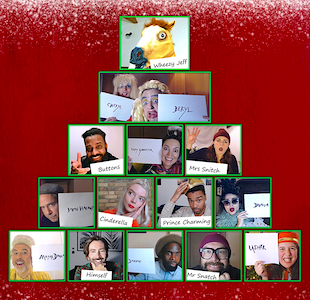 With theatres mostly shut this November and December due to Covid restrictions, the UK’s traditional pantomime season was a write-off. But where there’s a will there’s a way, and so an all-star bunch of actors and entertainers (including the likes of Olivia Colman, Helena Bonham Carter, Tom Hollander, and Anya Taylor-Joy, plus multiple surprise cameos) came together over Zoom to record this hour-long panto in aid of Comic Relief. (FYI, there are two versions available: a 60-minute one that aired on BBC Two, and a slightly extended 63-minute cut available on iPlayer.)
I imagine it would’ve been easier logistically to film everyone separately (and would we have been any the wiser?), but instead they seem to have wrangled all these stars together on the same Zoom call and performed it in more-or-less real-time. That ‘almost live’ aspect adds an element of unpredictability to proceedings — there’s the occasional tech issue, and a fair degree of corpsing and improvisation. Looking at other reviews, I guess this wasn’t to everyone’s taste (“a poor effort when better productions were hidden online”), but I thought it added to the do-it-yourself charm. It’s not a slick production by a bunch of pros, but has an air of fun similar to a bunch of mates doing their best and having a ball. The end result is very silly, of course, but all in the right spirit.
Roald & Beatrix: The Tail of the Curious Mouse
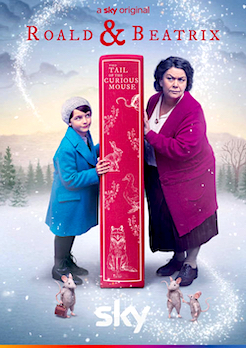 Sky’s big special this year was this based-on-a-true-story tale of when a young, bereaved Roald Dahl went on a trip to meet an ageing Beatrix Potter. Two of the great British children’s authors meeting up at very different points in their lives? It’s a wonder no one’s thought to film this before. Although, based on the evidence here, the meeting was fairly short and inconsequential — that they met is an interesting bit of trivia, not a defining moment in either’s life. To get this anecdote up to barely-feature-length (it’s just over an hour without ads), there’s a lot of expanded backstory on both sides. The Roald side feels like it must be broadly true — it’s all about him (and his mother) struggling to cope with the deaths of both his sister and father — but the Beatrix side feels dreamt up to balance it out — it’s just about her arguing with an agent about the contents of her latest book. Eventually, these threads converge on the eponymous pair’s brief meeting… and that’s the end. It’s a slight and gentle film, but it made for moderately charming Christmas Eve fare.
Comedy Specials
 As usual, the schedules were full of sitcoms and panel shows offering half-hour doses of festivals merriment. Highlights included a fourth Christmassy edition of The Goes Wrong Show, in which the accident-prone Cornley Polytechnic Drama Society turned their attention to The Nativity, with predictably disastrous — and hilarious — results. I get that Goes Wrong is too silly for some, but it hits just the right note for me. A more heartwarming tone was struck by the Ghosts special, in which Mike’s overbearing family coming to stay (clearly not set this Christmas, then). In keeping with the style of the recent second series, their presence prompted flashbacks to the life of horny MP Julian, which, via a series of kinky sex parties, delivered a message about appreciating your family while you can.
Meanwhile, Shakespearean sitcom Upstart Crow very much engaged with the current situation in an episode entitled Lockdown Christmas 1603, which imagined Will and his landlady Kate stuck at home during a plague-induced lockdown. Naturally this was a vehicle for observations about present-day life. It would be too kind to call it satire, but it was moderately amusing. After several years of Christmas specials, Not Going Out instead turned its attention to that other major end-of-December event: New Year. A show already fond of gathering its whole cast in a single location for basically a one-act play was perfect fodder for lockdown-constrained filming, and that’s what we get here: everyone gather for New Year’s Eve. Cue their inevitable sniping at one another — but when that gets too much, the assignation of New Year’s resolutions turns into some kind of group therapy session. It’s quite bold of a sitcom to deconstruct its characters’ defining foibles so explicitly, especially when there are more series on the way. One suspects the life lessons learnt won’t last…
Things to Catch Up On
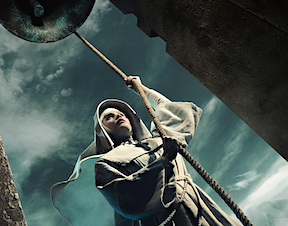 This Christmas, I have mostly been missing Black Narcissus, the BBC’s three-part re-adaptation of a novel most famous for being adapted into a film by Powell & Pressburger. It’s on iPlayer in UHD now, which is usually an incentive for me to catch it. Talking of three-part re-adaptations, I also didn’t watch Steven Knight’s version of A Christmas Carol — that was on last year, when I didn’t have time for it until after Christmas had passed. “Guess I’ll have to try to remember to watch it next year, then,” I said. Oops.
Next month… Perhaps Cobra Kai. After loving season one, I deliberately didn’t rush on to season two so that I didn’t burn through it too fast before season three. Then Netflix announced season three for early January, and then moved it forward to January 1st, and now instead of nicely spacing it out I just feel very far behind. Must resist the urge to burn through two seasons now instead…
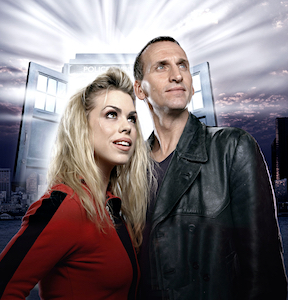 If you’re active (or looking in the right places) on social media, you may have noticed that there have been a bunch of Doctor Who watchalongs happening recently — you know, where people from around the world all watch the same thing at the same time and tweet about it. Organised by Doctor Who Magazine’s Emily Cook to provide something nice for Whovians in these trying times, they’ve been rather a big success — they’re always all over the trending topics on Twitter, and big names from the show have been persuaded to sign up and join in. The most recent one, to mark the 10th anniversary of Matt Smith’s debut episode, saw all three of its stars (Smith, Karen Gillan, and Arthur Darvill), plus writer/showrunner Steven Moffat and director Adam Smith, sharing thoughts and memories during the episode. Plus some of them have been accompanied by new fiction or stuff dug out from the archive.
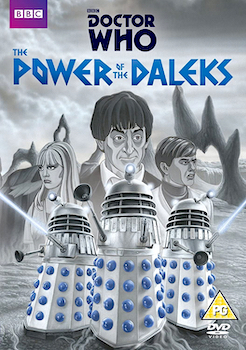 The first of the current wave of animations was The Power of the Daleks — a good place to start anyhow because it’s Patrick Troughton’s debut serial in the lead role. As he was just the second (canonical) Doctor, that makes the serial significant for the ground it was breaking — it’s the first time we’re introduced to a new actor taking over the series, something that’s become a staple of the programme (to the extent that the major plot lines and revelations of the most recent series were about the Doctor’s ability to regenerate). Sensibly, the production team paired their new leading man with the thing that had ensured the series’ popularity: the Daleks. And while the Doctor is dealing with a change of face and attitude, so are his enemies: these Daleks are keen to act as subservient aids to a human colony who have discovered their long-buried space capsule. Surely the evil fiends can’t’ve turned good?! (Spoiler alert: of course they haven’t.)
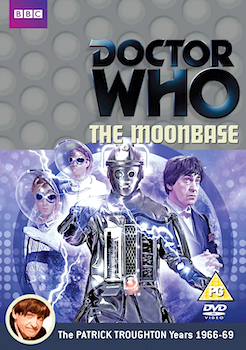 Next up by the series’ original chronology is The Moonbase — in terms of animation, Power was released in 2016 while The Moonbase was done in 2013; and half the serial survives, so it’s only half animated. It’s actually this older effort that looks better, the animation feeling much smoother and more realistic than Power, and making that look even more stilted and Flash-y by comparison. Apparently production on Power was incredibly rushed, and obviously they had to complete six episodes vs just two for The Moonbase, but the visual style is also slightly different; less obviously cartoonish.
 Much more successful in that department is The Macra Terror. No full episodes survive of this serial, so it’s back to 100% animation, and once again we have a change in style. It’s in widescreen, and it’s in colour, and the locations are bigger and more varied than they would’ve been on ‘60s TV, and the audio is so clean and clear it could’ve been recorded yesterday. It makes for a surreal viewing experience at first — are we sure this is a genuine Second Doctor story from over 50 years ago, not some recreation with perfect impressionists? After the previous animations tried to emulate the style of the original episodes, it’s a definite change of pace, but why not? It certainly brings some added dynamism to a few of the scenes — like Power, there are some all-but-silent sections; unlike Power, many of them now have some interesting visuals, which is most welcome. They had to make some trims here and there, I think for budget reasons (stuff that is inessential to the main narrative and would’ve been time consuming to animate), which is a shame (it would’ve been particularly fun to see the whole TARDIS crew dance a jig to escape at the end), but it is what it is.
 There’s probably a worthwhile biopic to be made about Verity Lambert. In 1963, she became not only the youngest-ever producer of a BBC television programme, but the first female one too; the programme she was charged with launching was
  Before I set off really critiquing the film, let’s just remember this: it’s a student effort. In that context, I’ve seen far worse — heck, I’ve been involved in the production of worse. Cowell and Guy have set themselves an almost Herculean task by choosing a period tale, which obviously necessitates all sorts of extra effort in terms of costumes, locations, dialogue… And to make it worse, they’ve chosen the ’60s, evoked so faultlessly in almost 40 hours (and counting) of
  which he accepts with merely a muttered “damn” when she leaves. Sorry, what? There’s nothing believable in that scene, never mind accurate.
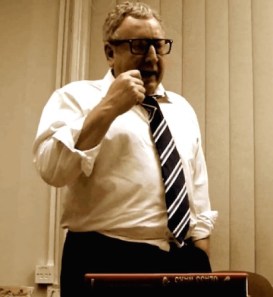 Technically, the piece is just as much a mixed bag. Stephen Cheung’s direction picks out some decent angles, avoiding the flat point-and-shoot trap some student filmmakers are apt to fall into, while the sepia-ish wash helps the period tone and adds a small amount of welcome gloss. The editing is a little rough around the edges, particularly at scene changes and toward the end. YouTube claims it’s viewable in 1080p — whether something went wrong in shooting, editing or at YouTube’s end I don’t know, but it isn’t that high quality. (This last point doesn’t impact on my score at all, it’s just an observation.)
 100Films.co.uk