
Bryan Singer | 144 mins | cinema | 2.35:1 | USA / English, German, Arabic, Polish & Ancient Egyptian | 12A / PG-13
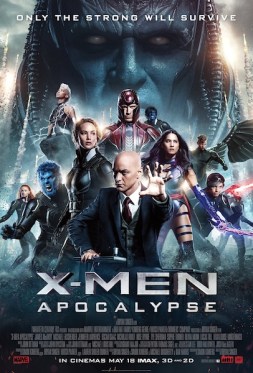 Despite fathering the modern superhero movie genre, the X-Men series always seems to punch under its weight at the box office (a point the recent Deadpool Honest Trailer makes succinctly, if blink-and-you’ll-miss-it-ly). They’re always movies of massive anticipation for me, though, because it’s a franchise I have particular fondness for. The ’90s animated series was a ‘key text’ of my childhood, and the tie-in magazine was the first comic book I consciously bought (as opposed to all the Ghostbusters / ThunderCats / Thunderbirds / etc ones I had when I was wee). The first X-Men movie was the first movie I bothered to see twice at the cinema, and remains one of only a handful to have provoked that added expense from me. So even in a summer full to bursting with ensemble superhero (and supervillain) dramatics, a new X-Men movie is easily one of my most anticipated.
Following on from the excellent double bill of First Class and Days of Future Past, Age of Apocalypse picks up in the 1980s. It’s a decade on from Magneto (Michael Fassbender) almost killing the President — and, in the process, revealing the existence of mutants to the world. Mystique (Jennifer Lawrence) is hailed as a hero for stopping him, so travels the world incognito, helping other mutants. Xavier (James McAvoy) has properly established his School for Gifted Youngsters (aka Mutants), with Hank McCoy (Nicholas Hoult) as a teacher. And Magneto is living under an assumed name in Poland, a quiet domestic life complete with wife and daughter. When CIA agent Moira MacTaggert (Rose Byrne, returning after sitting out Days of Future Past) accidentally helps a cult resurrect the centuries-dead mutant Apocalypse (Oscar Isaac), who believes he’s a god, it sets in motion a chain of events that will bring our disparate compatriots back together — and possibly bring about the end of the world.
 That’s only the half of it, though. This is an X-Men movie, which not only means there’s an ensemble cast, but that it’s dedicated to constantly adding new members to it. This time around, we’re re-introduced to the ‘original’ team as teenagers: Scott Summers (Tye Sheridan) is the viewer’s “way in” to Xavier’s school after he suddenly starts shooting laser beams from his eyes; there he meets Jean Grey (Sophie Turner), a powerful telepath the other students are scared of because sometimes her dreams shake the school at night; Mystique rescues blue-skinned German teleporter Nightcrawler (Kodi Smit-McPhee) from a cage fight in Berlin, where he was up against Angel (Ben Hardy), who becomes one of Apocalypse’s Four Horsemen, alongside weather controlling street kid Storm (Alexandra Shipp) and Psylocke (Olivia Munn), who can create blades of energy with her hands. And there’s also Jubilee (Lana Condor), who has bugger all to do. Jubilee was a major character in the animated series, and the filmmakers seem obsessed with getting her into the movies (she had cameos in the first trilogy) without ever actually giving her anything to do.
With so many characters to deal with, the film becomes a little overburdened with subplots. It’s trying to be a trilogy-former for the remnants of the First Class cast, resolving the fractured relationship between Charles, Erik, and Raven before those three actors fulfil their contracts and decide they don’t want to do a fourth movie; but it’s also trying to introduce the new-old gang of X-Men, and establish their characters to head-up future movies; and it also has to deal with establishing its villain and his plans. It’s a big ask, and while director Bryan Singer and screenwriter Simon Kinberg do manage to keep all the plates spinning and achieve something with most of them — helped no end by actors of McAvoy and Fassbender’s quality being able to flesh out their underwritten parts — some plot threads do feel perfunctory, their events and resolutions a bit skin-deep.
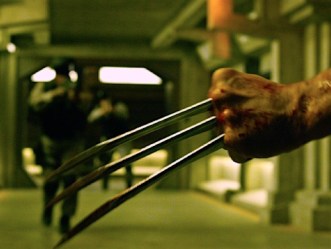 It doesn’t help that they feel the need to shoehorn a Wolverine cameo in there, an underwhelming action sequence that becomes a massive aside from the main storyline. It feels like setup for something more next time, but Hugh Jackman has stated the next Wolverine solo film will be his last outing as the character, so presumably it isn’t. That said, the post-credits scene, showing some Essex Corp suits collecting Weapon X blood, suggests a possibility for how they’ll recast Jackman without Logan magically getting a new face. For those not in the know, Essex Corp is the company of villain Nathaniel Essex, aka Mr Sinister, a cloner who created female Wolverine clone X-23. Naturally commenters are predicting she might turn up in the next X-film, which is not illogical, but I wonder if Sinister might instead use Wolverine’s blood to create a new, younger Wolverine — played by a new, younger actor, of course. We’ll see.
The one thing the Wolverine sequence does do is place him broadly in the right place (i.e. freed from the Weapon X programme) to link back up with the first X-Men movie. That’s a connection Singer also attempts to make elsewhere (Charles and Erik’s final dialogue is very similar to their final exchange in the first X-Men), even though we’re now in a new timeline that doesn’t perfectly marry up to the first three movies. Indeed, depending how you count it, Apocalypse can be seen as a second, third, fourth, sixth, or ninth X-Men movie. Yes, really. It’s the second for director Bryan Singer since he took back the reins with Days of Future Past; it’s the third in a prequel trilogy that can began with First Class; it’s Singer’s fourth X-film overall; overall, it’s the the sixth in the X-Men series; and it’s the ninth movie in the X-Men universe (which also encompasses two Wolverine spin-offs and this year’s primary comic book movie success story, Deadpool). Some of these have greater relevance than others, but they all inform the film in one way or another. For example, it’s the second second-Singer movie to introduce Nightcrawler and not know quite what to do with him outside of action sequences.
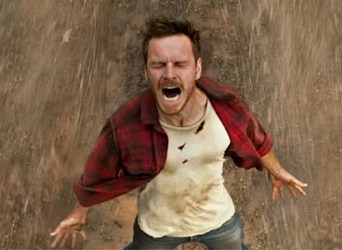 Another element lost in the mix is the real-world resonance contained in the best X-films. There’s a lot of to be said for the spectacle that’s present in all the movies, but Days of Future Past (for the most recent example) anchored it in the human conflicts between the heroes, and in their relation to the rest of the world. Apocalypse nods in that direction, with Mystique invoking Magneto’s metaphorical family to get him to stop destroying the world, but it’s not as well integrated, not as effective as previous outings. Said destruction is on a massive scale, but it’s too massive — the film doesn’t sell it; it’s just another city being destroyed somehow, emotionless computer-generated effects that are overfamiliar in these megablockbusters now (and not helped when you’ve seen similar sights two or three times right before the film in trailers for the likes of Teenage Mutant Ninja Turtles 2 and Independence Day 2).
Elsewhere, sacrificial character deaths have little weight — one of the main ones is Havok (Lucas Till), whose presence in the movie I haven’t even felt the need to mention up to this point. There’s a new Quicksilver sequence, but it feels like an attempt to recreate the last film’s magic. It’s a fun scene, no doubt, and it does have some new ideas within it, but it’s primarily a variation on a theme and feels shoehorned in to the movie, rather than an organic or wholly original element. Immediately before this, a trip to the mall for a single joke (the Return of the Jedi one you’ll have heard about if you’ve read any other review) screams “deleted scenes!”, even without having seen Sophie Turner tweet a Dazzler-referencing photo. Will we be seeing X-Men: Apocalypse – The Dazzler Cut on Blu-ray this time next year? Well, I doubt it’ll actually be named that (more’s the pity), but maybe we will. I’d certainly expect a chunky selection of deleted scenes (some of which have already been teased).
 In fact, the film as a whole feels a draft or two away from being truly ready. Some of the dialogue clunks hard, especially when characters speak in exposition to one another. The plot needs streamlining and focusing, especially early on, and some events need appropriate weight added to them. Other things just need smoothing out — that trip to the mall happens Just Because, with no real sense of why the characters are doing it (other than some handwaving dialogue about needing to get out of the school for a change), and, as I said, in the final cut only leads to one single joke. Yet for all that, some things do work beautifully: Storm’s hero-worship of Mystique comes up almost in passing early in the film, establishing/emphasising Mystique’s place in the mutant world now; but then it becomes a key point in the climax without the need for any explanatory dialogue, as Storm wordlessly realises that her hero is fighting on the other side. It is, in a way, the best bit of the movie.
The other very best bit is a great title sequence, which almost makes me wish I’d seen the film in 3D. It’s best seen rather than described, but do pay attention because it swirls a lot of detail into a very short space of time. It also uses the title theme that Singer’s regular composer John Ottman wrote for X2, which Singer revived for Days of Future Past (I’m pretty sure it wasn’t used in The Last Stand or First Class, to their shame), and seems intent on making the series’ regular main theme. He’ll hear no objection from me, because I think it’s a fantastic piece, almost as good as the classic one from the ’90s animated series (see: the animated series’ Honest Trailer).
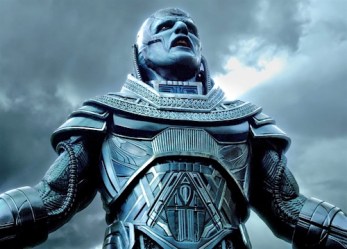 Despite being a negative nelly for much of this review (like so many others, which has given it a lowly 47% on Rotten Tomatoes, which is ridiculous), I actually enjoyed Apocalypse a great deal; it’s just that these critical observations flow forth when you think about and analyse it afterwards. In spite of them, I think the film does enough right to be an entertaining action-adventure sci-fi blockbuster. It’s not the epitome of the X-franchise — there are at least four movies in the franchise better than it, in my estimation — but I’d still argue it’s closer to those better films (all of which I’d number among my favourite movies, incidentally) than it is to the doldrums of The Last Stand or X-Men Origins: Wolverine. The X-Men movies will continue (a brand-new young cast and a post-credits tease confirm that much), and a minor blip in quality should do nothing to derail that train.

X-Men: Apocalypse is released in the US and Canada today, and is still playing everywhere else that it’s still playing.
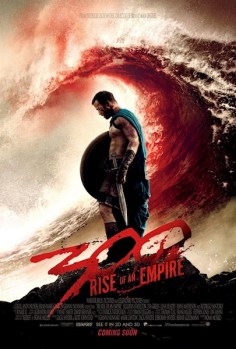 Taking place before, during, and after the events of Zack Snyder’s surprise-hit graphic novel adaptation
  It’s also terribly obvious that it was shot for 3D. I’m not normally one to criticise a film for that — I think when some critics know a film is being released in 3D they see that in its shot choices, even if they’re perfectly valid choices for 2D. But Rise of an Empire screams that it was made for 3D from the start, with all manner of things thrust towards the camera, usually in slow motion, and the constant explosions of blood (to call them squirts or sprays implies a more liquid-like quality than they actually possess) which go nowhere else but camerawards. Presumably the only reason it’s not an 18 for violence is because it’s all so bloody silly.

 Score:






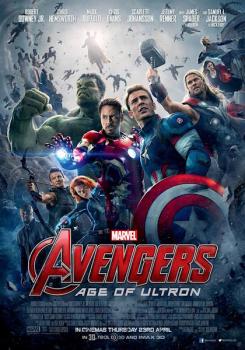 It feels kind of pointless reviewing Avengers: Age of Ultron, the written-and-directed-by Joss Whedon (and, infamously, reshaped-in-the-edit-by committee) follow-up to 2012’s “third most successful film of all time” mega-hit
 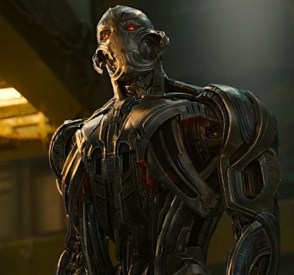 Even though the first half of that is still three years away, we’re still very much on the road to it. Heck, we have been practically since the MCU began, thanks to those frickin’ stones (if you don’t know already, don’t expect me to explain it to you), but now it’s overt as well as laid in fan-friendly easter eggs. The titular threat may rise and be put down within the confines of Age of Ultron’s near-two-and-a-half-hour running time, but no such kindness is afforded to the myriad subplots.
 (not just obvious stuff like the Hulk, but digital set extensions, fake location work, even modifying Stark’s normal Audi on a normal road because it was a future model that wasn’t physically built when filming) that stuff they genuinely did for real looks computer generated too. All that time, all that effort, all that epic logistical nightmare stuff like shutting down a capital city’s major roads for several days… and everyone’s going to assume some tech guys did it in an office, because that’s what it looks like. If you’re going to go to so much trouble to do it for real, make sure it still looks real by the time you get to the final cut. I’ll give you one specific example: Black Widow weaving through traffic on a motorbike in Seoul. I thought it was one of the film’s less-polished effects shots. Nope — done for real, and at great difficulty because it’s tough to pull off a fast-moving bike speeding through fast-moving cars. What a waste of effort!
 The really daft thing is, Whedon specifically added Scarlet Witch and Quicksilver… wait, are Marvel allowed to call them that? I forget. Anyway, Whedon added the Maximoff twins because, as he said himself, “their powers are very visually interesting. One of the problems I had on the first one was everybody basically had punchy powers.” I know Hawkeye’s power is more shoot-y than punchy, and we all know
  At the end of the day, what does it matter? Age of Ultron isn’t so remarkably good — nor did it go down so remarkably poorly — that it deserves a reevaluation someday. It just is what it is: an overstuffed superhero epic, which has too much to do to be able to compete with its comparatively-simple contributing films on quality grounds, but is entertaining enough as fast-food cinema. Blockbusterdom certainly has worse experiences to offer.
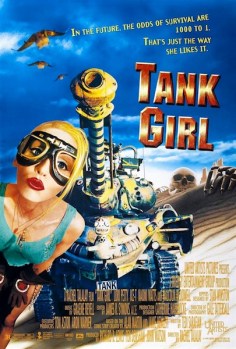 Critically derided, this anarchic adaptation of the rebellious comic has become a cult fave. You can see why: a ramshackle plot allows for plenty of outré zaniness, including a big musical number to a punky Cole Porter cover, and surely no one predicted the bizarre truth about the Rippers!
 This informative documentary uses interviews with all the key players to tell the story of how a small indie comic, created incidentally and published almost on a whim, became a true cultural phenomenon.
 As for this documentary, it nonetheless finds an almost emotional conclusion with Eastman and Laird today talking about the chain of chance and coincidence that brought them together three decades ago to accidentally create something that transformed their lives, and which continues to endure in all kinds of media (no one liked
 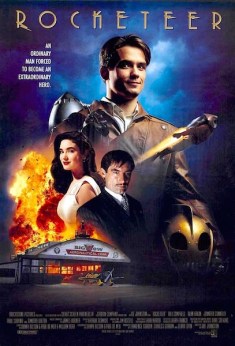 Based on an ’80s-created superhero modelled on the matinee serials of the ’30s and ’40s, The Rocketeer sets its scene in 1938, when stunt pilot Cliff Secord (Billy Campbell) winds up in possession of an experimental rocket pack. Initially donning it as part of the stunt show, when Cliff uses it to rescue another pilot he, a) attracts the attention of the hoods who originally stole it, and b) discovers his true calling as a hero, etc. Throw in a love interest (Jennifer Connelly) who’s a Hollywood extra with connections to the swashbuckling film star (Timothy Dalton) who’s really behind the theft, and you’ve got yourself an adventure!
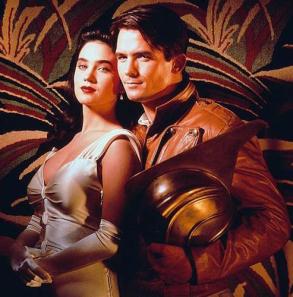 We all know effects alone do not make a good movie, but equally trying to make an effects-y movie when you can’t achieve said effects is a fool’s errand. Fortunately there’s some other derring-do to make up for it, and the climax atop a zeppelin isn’t at all bad.
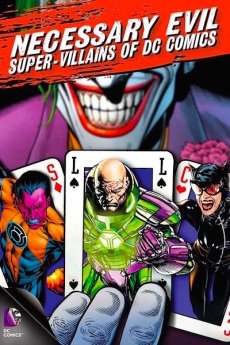 Christopher Lee narrates as a bunch of talking heads (writers, actors, psychologists) discuss the titular. The topics are quite universal — the psychological underpinnings apply not just to DC, not even just to comics, but to all fiction. Side effect: DC’s villains don’t always look so special.
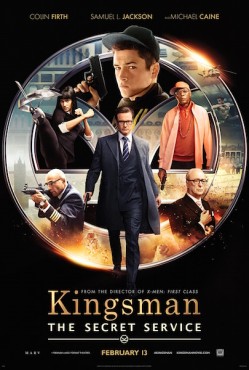 The team behind
  An even bigger part of the film’s triumph, and what likely led it to over $400 million worldwide in spite of its higher-than-PG-13 classifications (it’s Vaughn’s highest-grossing film to date, incidentally; even more so than
 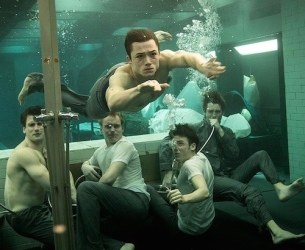 rather than the supposed real-world universe of spy movies. What the worldwide success of Kingsman proves is that audiences don’t need the set-dressing of superpowers to accept an action movie that’s less than deadly serious. It’s a place I don’t think the Bond movies could go anymore — not without accusations of returning to the disliked Moore or late-Brosnan films — but it’s one many people clearly like, and Kingsman fulfils it.
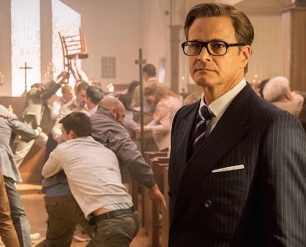 Criticisms of the film tend to pan out to nought, in my opinion. Is there too much violence? There’s a lot, certainly, but part of the point of that church sequence (for instance) is just how long it goes on. Other excellent action sequences (the pub fight you might’ve seen in clips; the car chase in reverse gear; the skydiving) aren’t predicated on killing. Similarly, Samuel L. Jackson’s baseball-capped lisping billionaire is a perfect modern riff on the traditional Bond villain, not some kind of attack on Americans or people with speech impediments. Some have even attempted a political reading of the film, arguing it’s fundamentally conservative and right-wing because the villain is an environmentalist. Again, I don’t think the film really supports such an interpretation. In fact, I think it’s completely apolitical — just like its titular organisation, in fact — and such perspectives are being entirely read into it by the kind of people who read too much of this kind of thing into everything.
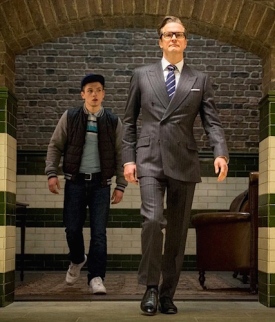 Not everything hinges on being wall-to-wall groundbreaking, though, and Kingsman has so much to recommend it. It ticks all the requisite boxes of being exciting and funny, and some of its sequences are executed breathtakingly. The plot may move along familiar tracks — deliberately so — but it pulls out a few mysteries and surprises along the way. There’s an array of likeable performances, particularly from Firth, Egerton (sure to get a lot of work off the back of this), Jackson and Strong, and Sofia Boutella’s blade-legged henchwoman is yet another why-has-no-one-done-that great idea.
 100Films.co.uk