
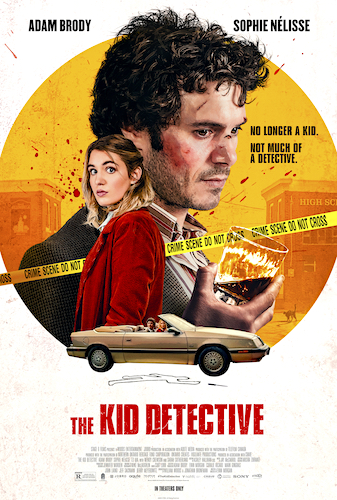
Sometimes a movie (or a book, or a series, or whatever) comes along with a premise that you wonder why someone hasn’t thought of sooner (with the inevitable caveat that, sometimes, someone has and you’re just not aware of it). The Kid Detective is one of those occasions (or was for me, at any rate) — what would a ‘kid detective’ (you know, like the Hardy Boys or the Famous Five or whatever) be like when they grew up?
There’s a few different ways you could spin a setup like that, and here writer-director Evan Morgan takes a fairly realist approach: the “kid detective” in question, Abe Applebaum, was a quirky story for the local paper when he was a child, investigating “mysteries” of the schoolyard variety; but when a real crime takes place and he (unsurprisingly) fails to solve it, that’s the end of the fun and games. Nonetheless, as a 32-year-old adult (played by Adam Brody), Abe has tried to keep his childhood fantasy going, running a real detective agency. Except there’s not much to actually investigate in a small town, and the fact he’s never grown up leads to derision from all around, rendering him a miserable washed-up has-been. So when a high schooler (Sophie Nélisse) asks him to investigate the murder of her boyfriend, Abe sees a chance to finally prove himself.
When I say “a premise you wonder why someone hasn’t thought of sooner”, I suppose what I also implicitly mean is “something I am interested in”; something that scratches an itch I didn’t even know I had. Of course, that automatically creates expectations — even if you can’t state them exactly, you now have a notion of what you want out of this thing; of the itch that needs to be scratched. Fortunately, The Kid Detective was everything I expected it to be and more. It’s a successfully amusing extrapolation of its premise. It kind of has to be a comedy, because the basic idea is too silly to take seriously in the ‘real world’, and it manages that without tipping over into farce. But, somewhat remarkably, it’s also a solid mystery in its own right, with a surprisingly moving conclusion. It’s a balancing act that shows the validity of comedy-drama (aka dramedy) as a tone. It’s a mode that’s sometimes dismissed as “not funny enough to be a comedy, not affecting enough to be a drama”, but when it works, it’s arguably more like real life than either of those extremes.

It also doesn’t mean the film has to play broad. Take Brody’s performance, for example: he balances the sardonic humour and introspection just right, rendering Abe believable as someone who is actually pretty darn clever but has lost his way and self-belief. Or there’s the ‘big denouement’, which is just two characters sat at a table talking. It’s both relatively understated and means the finale arrived at a point where I (at least) wasn’t quite expecting it, making it all the more effective and powerful. With hindsight, maybe I should have seen where it was going, and so maybe you could argue the film suckered me. But, you know what, I’m glad it did. It’s nice to be surprised by a mystery’s resolution. It happens too rarely as you get older and become narrative-savvy and everything’s predictable. One moment even gave me goosebumps, and you’ve got to love anything that can elicit such a physical reaction.
Clearly, I was the target audience for this. I couldn’t have told you I wanted it, but when I heard about it I was eager to see it. As I said, that has both pros and cons: to the former, I’m ready to be won over; to the latter, raised expectations can lead to disappointment. Fortunately, The Kid Detective aces it and I loved it.

The UK TV premiere of The Kid Detective is on Film4 tonight at 9pm, and available to stream on Channel 4’s catchup service for 30 days afterwards.
It was #147 in my 100 Films in a Year Challenge 2021, and placed 4th on my list of The Best Films I Saw in 2021.



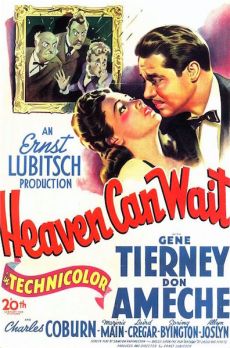 My first experience of Lubitsch’s US output concerns a man who arrives on Hell’s doorstep and reflects on his life to explain why he’s there.
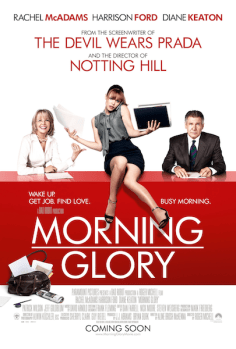 Rachel McAdams takes a break from
  Matt Damon turns whistleblower (or does he?) in this amusing romp based on a true story of complicated corporate fraud.
 2015 Academy Awards
 I started the week by reviewing
 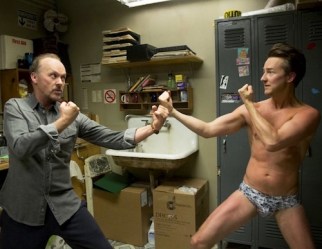 In part this is thanks to Keaton, who gives quite an immersive performance as the numbed, self-deluded star. Some people were very much behind him for the Best Actor gong, but I think it found its rightful home: Eddie Redmayne’s performance
 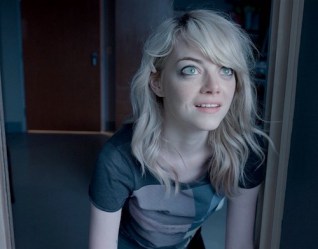 Famously, almost the entire film takes place in a single take. A fake one, of course. Well, I say of course —
 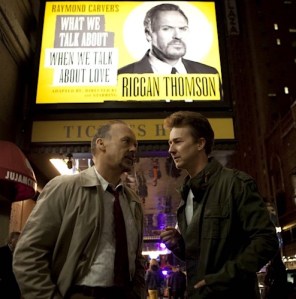 Birdman is an entertaining film, both funny enough to keep the spirits up and dramatic enough to feel there’s some depth there. It’s also a mightily impressive feat of technical moviemaking, but then I do love a long single take (even a fake one). Is it the Best Picture of 2014? Well, from the nominees, it’s not the funniest (
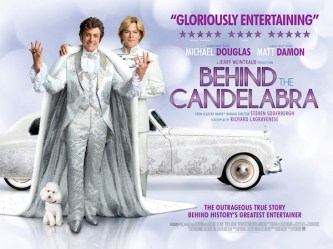 Steven Soderbergh’s supposed last-ever film (or, if you’re American, Steven Soderbergh’s first project after he supposedly quit film) is the story of Scott Thorson (Matt Damon), a young bisexual man in the ’70s who encounters famed flamboyant pianist Liberace (Michael Douglas) and ends up becoming his lover, which is just the start of a strange, tempestuous relationship.
 It looks great, too. The film, that is, not Rob Lowe’s face. The design teams have realised an excellent recreation of the period, which is then lensed with spot-on glossy cinematography by DP
 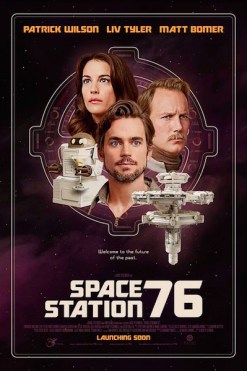 Liv Tyler is the new first officer on a space station commanded by Patrick Wilson in this retro-future-styled film, which is both a spoof of/riff on ’70s genre movies, and a character drama about people’s relationships. No, really.
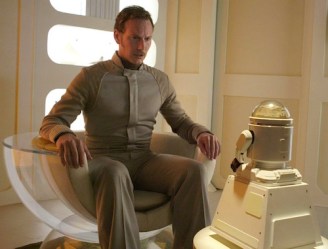 used to feed into the humour, that’s simply what makes it, a) a period movie (just a period movie set in the future), and b) a comedy-drama (as opposed to a drama). I think this is the real reason for its lowly regard on sites like IMDb: those expecting Anchorman in Space are going to be disappointed; but you can’t blame anyone for such expectations when that’s more-or-less how it’s trailed.
 The characters and their relations are well enough drawn to make it passably engrossing, even if not a stand-out contribution to any such genre, while the comedy pays off handsomely at times.
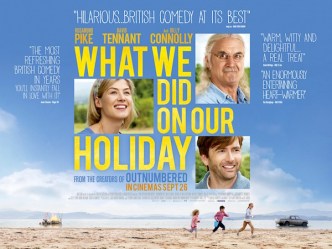 “
“ For some, the shift may scupper things. For me, it only makes it better: the story’s pathos and emotion are brought into focus, and the humour becomes all the funnier for punching in as tonal relief. It often seems to me that movies struggle to stay amusing for a full feature running time (there’s surely a reason all TV comedy comes in 30 minute chunks), but this story allows Hamilton and Jenkin to spread the laughs out a little without them feeling few or far between.
 including the likes of Ben Miller, Amelia Bullmore (getting the best subplot), Annette Crosbie and Celia Imrie. The real grown-up star, however, is Connolly. You get the sense he’s as scriptless as the kids are, improvising away with a mischievous twinkle in his eye, like some kind of idealised fun granddad. The scenes with just him and the kids are certainly one of the highlights, among the most amusing and the most affecting.
 100Films.co.uk