

Country: USA
Language: English
Runtime: 81 minutes
BBFC: 15
MPAA: R

Original Release: 4th April 2003 (USA)
UK Release: 18th April 2003
First Seen: cinema, 2003
Stars
Colin Farrell (The Recruit, Total Recall)
Kiefer Sutherland (Flatliners, Dark City)
Forest Whitaker (Ghost Dog: The Way of the Samurai, The Last King of Scotland)
Radha Mitchell (Pitch Black, Silent Hill)
Katie Holmes (Wonder Boys, Batman Begins)
Director
Joel Schumacher (The Lost Boys, Batman & Robin)
Screenwriter
Larry Cohen (Maniac Cop, Cellular)
The Story
Slick, smarmy Stu uses the last remaining phone booth in New York City to call the young woman he’s trying to cheat on his wife with. Then the phone rings: there’s a sniper rifle trained on him, and if Stu doesn’t follow the caller’s instructions, he’ll die.
Our Hero
Stuart “Stu” Shepard, a slimy publicist who’s trying to cheat on his wife, strings along a kid with hopes of getting in the game, wears Italian clothes to make himself look better than he is, and is generally a dick to everyone. So not a very nice guy, really… but does he deserve to be shot by a sniper, hm?
Our Villain
A mysterious voice on the other end of the phone, The Caller has some kind of moral code, has demands of Stu to fit that code, and also has a high-powered sniper rifle that he’s not afraid to use on just about anybody. Surprisingly witty, too.
Best Supporting Character
Captain Ramey, the cop in charge of the situation once the police get involved, who is at least bright enough to realise there’s more going on than meets the eye.
Memorable Quote
(After cocking his gun) “Now doesn’t that just torque your jaws? I love that. You know like in the movies just as the good guy is about to kill the bad guy, he cocks his gun. Now why didn’t he have it cocked? Because that sound is scary. It’s cool, isn’t it?” — The Caller
Memorable Scene
With both his wife and mistress on the scene, and surrounded by police and news cameras, Stu finally makes his confession. A heartfelt monologue that is definitely a showpiece for Farrell.
Making of
The whole film was shot in just 12 days: ten days inside the phone booth and two to shoot the surroundings. To do this the crew worked “French hours”, which involves not shutting down the entire production for lunch (which just sounds logical to me), and was aided further by Farrell nailing some big scenes in one take.
Awards
1 MTV Movie Awards Mexico nomination (Best Colin Farrell in a Movie — see also: Daredevil)
What the Critics Said
“The triumph of director Joel Schumacher and screenwriter Larry Cohen in Phone Booth is not just that they pull off the central gimmick but also that they fashion from it a creditable thriller. The result is a movie that combines a seriousness of purpose with a delight in craft in a way Hitchcock would have appreciated.” — Mick LaSalle, San Francisco Chronicle
 Score:
 71%
71%What the Public Say
“It’s the kind of pulpy potboiler that is often wrecked by unnecessary padding, but the brisk no-nonsense approach here combines with its short length to make quite an entertaining off-beat thriller. Kiefer Sutherland’s vengeful psychopath who is only represented by a voice-over and a red dot for the majority of the film is the stand-out performance, but everyone involved acquits themselves admirably.” — Gary Anthony Cross, Film Noird

Regular readers will know of my fondness for the single-location thriller, and this is one of the films that helped define that love. And events occur in real-time, which is just a bonus. Colin Farrell and Kiefer Sutherland are both on excellent form as the hostage who maybe has it coming and the hostage taker who maybe has a point. Larry Cohen’s screenplay takes a simple setup and follows it through, keeping it engrossing but still relatively plausible (something other such films struggle with in order to extend their concept), with some killer dialogue to boot. It all adds up to an immensely effective thriller.

Next time… yo-ho, yo-ho, a pirate’s life for #70.



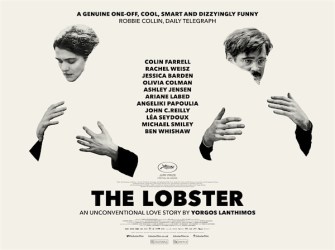 The first English language feature from Greek writer-director Yorgos Lanthimos (of
  Even if you accept these goals, Lanthimos’ film eventually goes off the rails. Without meaning to spoil too much, David eventually falls in with the loners, who have their own very specific social rules designed to inhibit partnering up. Revelation: the outsiders are fundamentally the same, just with different rules! That’s about the extent of what I got from this portion of the film; unfortunately, it goes on for a really, really long time. Among this group David meets ‘Short Sighted Woman’ (everyone aside from David is similarly named) and falls in love with her — I mean, of course he does, she’s played by Rachel Weisz. They develop a secret mode of communicating, but will be harshly punished if caught. This storyline is what the film uses to occupy its remaining time, but what it lacks in the offbeat humour of the time in The Hotel it makes up for with… nothing.



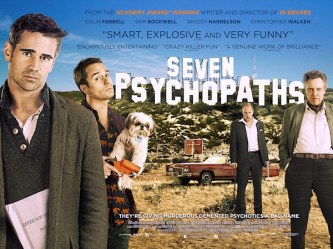 The writer-director and star of
  mainly via references to Farrell’s endeavours to pen a movie called, you guessed it, Seven Psychopaths. One wonders if there’s a hefty dose of autobiography in the writer’s struggle…
 Tom Hanks is Walt Disney and Emma Thompson is author P.L. Travers in “The Making of Mary Poppins: The Movie”. Disney has been desperate to turn Travers’ fictional nanny into a movie for years after he made a promise to his daughter; Travers has resisted, but now needs the money. She’s brought to LA to consult on the script, and proceeds to make life miserable for screenwriter Don DaGradi (Bradley Whitford) and songsmiths Robert and Richard Sherman (B.J. Novak and Jason Schwartzman). At the same time, we see the story of a family in Australia from the eyes of a little girl Ginty (Annie Rose Buckley), as they struggle with the whims of her father (Colin Farrell), a bank manager who’s a little too fond of the bottle. Guess what the connection is!
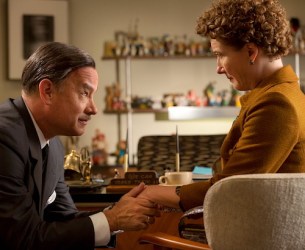 Similarly, Hanks’ part seems to be little more than a cameo at first, but he steadily appears often enough to make it a supporting role. Reportedly he has perfectly captured many of Disney’s real traits and idiosyncrasies, and who are we to doubt the word of people who knew the man? His performance is not just a shallow, simple impersonation, but there’s not that much meat to Disney’s character arc either.
 Some will find the story lacking in dirt, particularly when it comes to the portrayal of Disney. But it’s not whitewashed either, and do you really think the Disney Corporation would have allowed a movie to go ahead that depicts their founding father in a negative light? For that, I don’t think it’s as twee as it could have been — there’s definite conflict over what’s being done with Poppins, and, even with the film having turned out to be a solid-gold classic, we often find ourselves sympathising with Travers.
 100Films.co.uk