Archive 5, Vol.3

I have a backlog of 437 unreviewed feature films from my 2018 to 2021 viewing. This is where I give those films their day, five at a time, selected by a random number generator.

Today, everything from silent comedies to afterlife comedies to toy-licence-based adventure comedies (a burgeoning genre we’re sure to see more of in years to come). Plus a revisionist Arthurian legend for good measure.

This week’s Archive 5 are…

  • Guinevere (1994)
  • The Kid (1921/1972)
  • Defending Your Life (1991)
  • The LEGO Movie 2: The Second Part (2019)
  • Sherlock Jr. (1924)


    Guinevere

    (1994)

    Jud Taylor | 91 mins | digital (SD) | 4:3 | USA & Lithuania / English

    Guinevere

    This Lifetime TV movie is like an American Renaissance faire cosplay version of Arthurian legend. Its attempt at a feminist take on the famed stories is interesting, but deserves better writing, filmmaking, and accents.

    Most of Guinevere’s flaws come from its low-rent made-for-US-TV-in-the-’90s roots (the mediocre direction; the tacky music score), but that’s also its biggest asset, because when and for whom it was made means it was shot on film, which gives it a certain gloss (even when downgraded to SD) that taped or digital productions simply lack.

    Story-wise, the love triangle stuff from legend is there, but given a YA spin — it’s practically Arthurian Twilight. Are you Team Arthur or Team Jacob? The feminist bent is not subtle either, which, given changes in attitudes over the past few decades, makes you wonder if it’s ripe for a re-adaptation (it’s based on a trilogy of novels with magnificently florid titles like Child of the Northern Spring and Queen of the Summer Stars).

    You see, despite everything, I didn’t hate it. Maybe I should — it’s not good, by any means — but I liked what it was trying to do, even while it didn’t do it well (at all). It’s a concept someone should definitely take another run at.

    2 out of 5

    Guinevere was #209 in my 100 Films in a Year Challenge 2020.


    The Kid

    (1921/1972)

    Charlie Chaplin | 50 mins | DVD | 4:3 | USA / silent | U

    The Kid

    Charlie Chaplin’s first feature-length work as star and director sees his Tramp character caring for an abandoned child (Jackie Coogan). I say “feature length”, but when you combine a re-edit Chaplin performed in 1972 with PAL speedup, it runs just 50 minutes. I’ve gotta say, I appreciated that. I’ve felt some of Chaplin’s other films have gone on a bit, whereas this didn’t outstay its welcome. That said, I did feel the Dreamland sequence near the end was filler. That aside, it’s quite a nice film. Coogan is particularly effective — he has just the right look for the role, and was obviously very good at imitation and/or taking direction.

    Regarding the length, the original 1921 release was 68 minutes, but for a 1972 reissue Chaplin cut some footage, appears to have sped up the frame rate of the rest, and added a score and some sound effects too. It’s only this cut that gets released on disc nowadays (often with the excised footage included as deleted scenes). The original cut clearly still exists, and yet everyone just seems to overlook it — it’s only if you bother to read up on the film that you discover what most people are watching and reviewing as “a 1921 film” is actually a 50-years-later director’s cut. Imagine if we all just ignored, say, Blade Runner’s original version and just treated The Final Cut as— oh, wait. Never mind.

    4 out of 5

    The Kid was #60 in my 100 Films in a Year Challenge 2020.


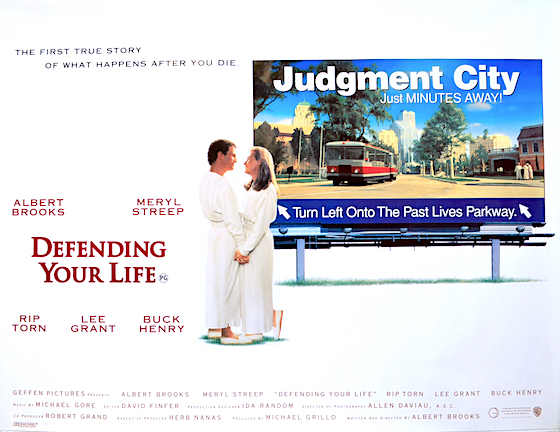
    Defending Your Life

    (1991)

    Albert Brooks | 111 mins | Blu-ray | 1.85:1 | USA / English | PG / PG

    Defending Your Life

    Writer-director Albert Brooks stars as a loner advertising exec who dies and finds himself in a bureaucratic afterlife where he has to prove that he overcame his fears. While he awaits his trial, he finally meets the love of his (after)life, Julia (Meryl Streep).

    For a film that’s literally about life and death, Defending Your Life is rather gentle. Like, it’s rarely laugh-out-loud funny, but it’s often slightly amusing. And it’s unhurried, too: its 111 minutes aren’t tedious by any means, but it doesn’t rush anywhere. A fun side effect of this is how casual its world-building is. This is a very specific vision of the afterlife, an entire world with its own rules, and while that’s all explained, it’s not laid out in minute detail like a how-to guide. I feel like this is something movies used to happily do but has been eroded by the need for everything to be over-explained and -analysed.

    I liked Defending Your Life a good deal (I’ve picked up a couple more of Brooks’s films on Blu-ray off the back of it), and part of that is certainly its laidback style. Nonetheless, perhaps if it were snappier — quicker witted and paced — it might be a better-remembered film, comparable to something roughly contemporaneous like Groundhog Day.

    4 out of 5

    Defending Your Life was #113 in my 100 Films in a Year Challenge 2021.


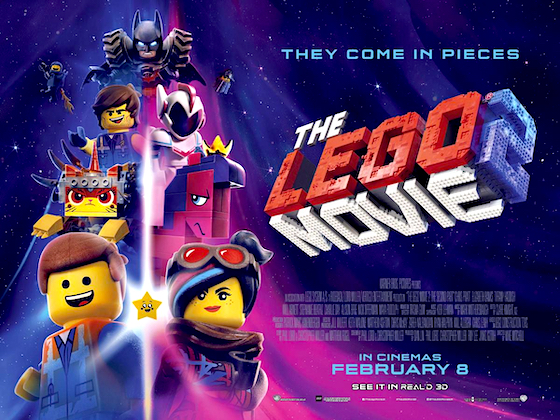
    The LEGO Movie 2:
    The Second Part

    (2019)

    Mike Mitchell | 107 mins | Blu-ray (3D) | 2.40:1 | USA, Denmark, Norway & Australia / English | U / PG

    The LEGO Movie 2

    After the surprise success of The LEGO Movie, naturally a sequel had to follow. Unfortunately, it’s altogether less surprising, because it’s that old fashioned sequel thing: a less-good do-over of the first movie.

    The Second Part feels less focused than its predecessor. It still has a positive message (about not needing to grow up, and about playing together, or something), but it takes a while to get to it, rather than baking it into the entire experience. Maybe that’s intellectualising things a bit — this is a family-friendly adventure-comedy starring toys, after all. But still, the overall journey doesn’t feel as exciting or fun. There are fun little bits on the way, but, moment to moment, it lacks the spark of the first one.

    For a specific example, take the breakout hit of the first film, the irritating song Everything Is Awesome. That angle has been doubled down on, with multiple attempts at emulating the “irritating but kinda loveable” song formula; but while these numbers are annoying while they last, they don’t have the irrepressible catchiness of the first film’s signature achievement — a mixed blessing, to be sure (at least they won’t be stuck in your head afterwards). The end credits are accompanied by a song that jokes about the credits being the best part… but, in this case, the credits kinda are the best part.

    3 out of 5

    The LEGO Movie 2: The Second Part was #33 in my 100 Films in a Year Challenge 2020.


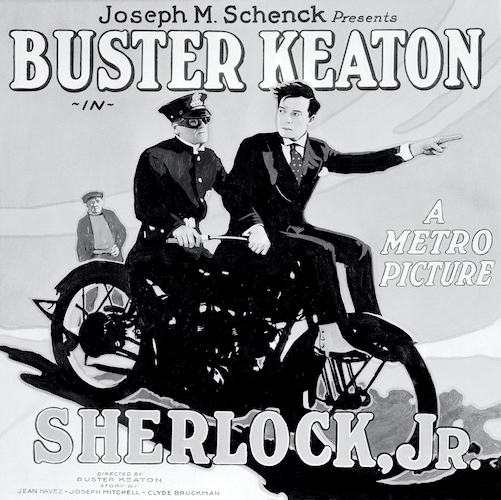
    Sherlock Jr.

    (1924)

    Buster Keaton | 45 mins | Blu-ray | 1.33:1 | USA / silent | U

    Sherlock Jr

    Apparently there are ever-raging arguments within the silent film fan community about who was the best comedian of the era. Charlie Chaplin’s got the most widespread recognition, but Buster Keaton and Harold Lloyd have their advocates, of course, and I guess there are probably people shouting in favour of smaller names too. I didn’t think I’d ever pick a ‘side’ in these debates — I’m certainly not about to go seeking them out and wading in — and, fundamentally, I do hold with the notion that the greats are all great and so why not appreciate them all? — but, from what I’ve seen thus far, I’m finding Keaton’s work more consistently enjoyable than Chaplin’s. Sherlock Jr. is my favourite of his that I’ve seen so far.

    Keaton plays a film projectionist who’s studying to be a detective on the side. When he’s framed for the theft of a watch, his apparent guilt doesn’t give him much chance to put his skills to the test. But when he falls asleep during a movie, he steps inside it and becomes the world’s greatest detective. And when I say “steps inside”, I mean it in the most literal sense possible: the projectionist walks through the screen and into the movie, and is suddenly subject to its whims — for example, he’s confounded whenever it cuts to a new location. The sequence is both thoroughly entertaining and technically faultless — and I say that viewing it nearly 100 years after it was made, after all the advances in technique and effects we’ve had in that time. Reportedly, the film’s cameraman, Byron Houck, went as far as using surveying equipment to ensure the camera was positioned correctly so the transitions were seamless. The effort paid off.

    The same is true in several other incredible sequences, like a billiards game filled with trick shots, which Keaton rehearsed for four months with a pool expert and then took five days to film. Or a motorbike chase with more I-can’t-believe-he-just-did-that death-defying stunts than one of Tom Cruise’s impossible missions. The technical skill is faultless and, even if you’re not wowed by how they pulled it off, the sequences are immensely entertaining in their own right. Maybe it’s just personal taste, but this is why I have a preference for Keaton: his skits are more ingenious, better paced, and backed up with impressive stunt work. When you mix those daredevil antics with genuine movie magic, as he does here, you get a majestic, unforgettable farce.

    5 out of 5

    Sherlock Jr. was #102 in my 100 Films in a Year Challenge 2019. It was viewed as part of What Do You Mean You Haven’t Seen…? 2019. It placed 3rd on my list of The Best Films I Saw in 2019.


  • 2022 | Weeks 1–3

    Here we go — finally, and somewhat later than anticipated (it’s been a slow start to the year, viewing-wise) — the new review format for 2022!

    …which you’ll have already seen in Archive 5, of course; and is fundamentally similar to what I was doing before in roundups and what-have-you; and which I’ve already ‘broken’, because my review of Flight of the Navigator came out so long that I posted it alone.

    But still, the intention is this is now my regular review format, popping up every week or two (or three) to review everything in a more timely fashion than I have for many, many years. We’ll see how it goes — I feel like I need to relearn how to write short pieces, because longer reviews feel like they should get their own posts, and that’s happened to pieces intended for every one of these roundups so far this year.


    Anyway — to kick things off for 2022, a film with a broadly appropriate title. Because, despite (deliberately misleading) hints to the contrary, I’m carrying on. Get it? Carrying on watching. And “spying” is a synonym of “watching”, right? (Look, there aren’t any Carry On films with more apposite titles, okay?)

    These weeks’ films are…

  • Carry On Spying (1964)
  • Penny Serenade (1941)
  • The Navigator (1924)
  • In the Line of Fire (1993)
  • Barbie as The Princess and the Pauper (2004)
  • Free Guy (2021)


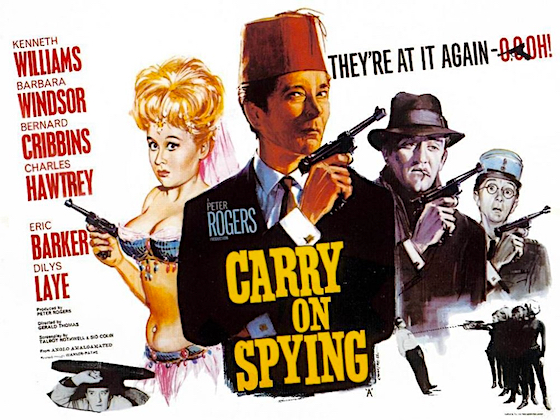
    Carry On Spying

    (1964)

    Gerald Thomas | 84 mins | digital (SD) | 16:9 | UK / English | U

    Carry On Spying

    Believe it or not, I’ve never actually seen a Carry On film before. Maybe that’s not so surprising these days. They were once such a part of British culture that they produced 30 of the things, but I think they were seen as “a bit old fashioned” even before I was born, and by 2022’s standards… oof. But, lest you get the wrong end of the stick (oo-er, etc), this isn’t me intending to finally dive into all of them. Rather, as well as its timely title, I chose to watch Carry On Spying primarily because it’s a James Bond spoof — the first, I believe, seeing as it was released in July 1964, when the Bond series only encompassed Dr. No and From Russia with Love (Goldfinger would follow a couple of months later).

    With Bond not yet even properly into its initial phenomenon phase (the first two films were hits, but it was the next two that skyrocketed its popularity), you might think Spying came too soon, and would be disadvantaged by being produced before the famous Bond formula was fully in place. Instead, it sets its spoofing sights a little wider, including an extended riff on The Third Man. I couldn’t tell you everything it’s drawing on, but its third-act villain’s lair — all sleek metal corridors and little road-train thingies and jump-suited identikit henchpeople — appears to be a take-off of You Only Live Twice, some three years before that film even came out. So I can only presume Spying’s point of reference there is something else, which I can’t quite remember; some other spy fiction that was already doing stuff the Bond franchise would still be pulling off years later. That doesn’t reflect too positively on YOLT, when you think of it, although Bond’s cultural dominance and longevity has come to ensure it’s the one that’s remembered for pioneering all this stuff.

    I don’t know how many Carry On films were genre spoofs, but the series’ reputation is more for smut and innuendo. There’s pleasantly little of that here — some, for sure, mostly based around Barbara Windsor (of course) as a trainee agent; but while it’s all fundamentally juvenile, it’s not as ceaselessly ribald as I was expecting. Satisfyingly, it remains primarily focused on its chosen genre. In that respect, I’ve definitely seen worse spoofs.

    3 out of 5

    Carry On Spying is the 1st film in my 100 Films in a Year Challenge 2022.


    Penny Serenade

    (1941)

    George Stevens | 120 mins | digital (HD) | 4:3 | USA / English | U

    Penny Serenade

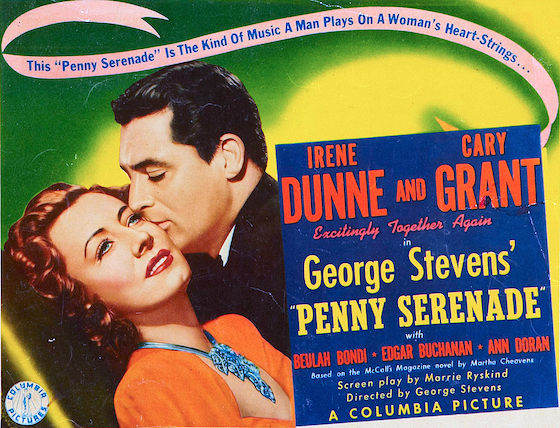
    This is the third and final film to pair up stars Irene Dunne and Cary Grant as a married couple (I’ve watched all their collaborations within the past couple of years, but not posted reviews of the first two yet. I thought it was within the last year, but turns out I watched my first in May 2020. These strange days have really messed with my sense of the passage of time!) But where their first two films were screwball romcoms, this is undoubtedly a melodrama, following a couple as they meet, marry, and attempt to start a family.

    Dunne and Grant both make a fair fist of the serious stuff — Grant, in particular, gives an uncommonly sensitive performance at times — although they can’t resist slipping back into a spot of almost-slapstick given half a chance, with various individual sequences playing more like one of their comedies. Those scenes stand at odds with the film’s overall narrative and tone, which goes for full-on weepy. Indeed, if anything, I thought it was overdone, in particular an ending that throws in sudden tragedy followed so quickly by a pat happy ending that it feels almost distasteful.

    The film’s hook is that it begins with Dunne planning to leave, before she discovers a book of records that, as she plays them, take her back through their relationship. Different songs provoking specific memories is a neat narrative device on paper, but doesn’t really come across on screen. Aside from the first track, and maybe a later burst of Happy Birthday (although that could be almost any birthday, surely), the songs don’t seem to have any special relevance to the memories they supposedly call forth. It doesn’t help that, to modern ears, they all sound kinda samey. Plus, that the songs lead everything to unfurl in chronological order, with every major beat of their life story accounted for, is certainly convenient.

    If you can look past such artifice, and just want to revel in an old-fashioned bit of heart-tugging, Penny Serenade is fit to make you shed a tear. Personally, I’d rather the headline duo had given us another bout of screwball tomfoolery.

    3 out of 5

    Penny Serenade is the 3rd film in my 100 Films in a Year Challenge 2022.


    The Navigator

    (1924)

    Donald Crisp & Buster Keaton | 66 mins | Blu-ray | 1.33:1 | USA / silent | U

    The Navigator

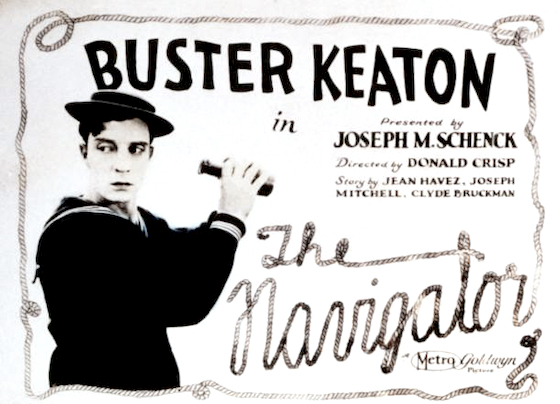
    This is my fourth Buster Keaton feature now (I’ve only previously reviewed The General, but Sherlock Jr made it into my 2019 top 3), and he’s established himself as my favourite of the major silent comedians (I rarely enjoy Chaplin’s films as much as I feel I should; and, in fairness to Harold Lloyd, I’ve only seen one of his so far, which I liked a lot). The Navigator was the biggest hit of his career, though is probably my least favourite of his I’ve seen so far — though I don’t want to damn it with false criticism, because it’s still a brisk and entertaining comedy.

    Keaton stars as a spoiled rich kid whose marriage proposal is rejected. He’d already booked the honeymoon tickets, so sets off by himself; but, due to several points of confusion, he ends up adrift at sea on a decommissioned ship, empty but for one other passenger: his would-be fiancée (Kathryn McGuire). It’s up to this pair of brats to get along and survive while they hope for rescue. (Rescue does not come quickly. Considering McGuire’s father is a successful shipping magnate who’s aware of what’s happened, you’d think he’d send a vessel after them; but then, he might have his own problems, owing to a bunch of foreign spies who… look, it’s best not to overthink the logistics and plausibility of the plot.)

    Although Keaton gets the lion’s share of the gags, as well he might, for a stretch in the middle he and McGuire form an effective double act. The two rich kids being hilariously useless at household basics, like making coffee or opening a tin of food, is well observed; a flash-forward to their automated solutions is also fun. While Keaton still gets to show off by himself — particularly in an elaborate underwater diving sequence, naturally saved for the final act — McGuire makes the most of the material she’s given.

    The only outright demerit to the film is that the finale hasn’t aged particularly well: the ship finally drifts near land, but it’s an island with a village-full of black natives, at which McGuire immediately exclaims “cannibals!” That she’s sort of proven right when they start attacking the ship is… well, maybe not even worse, but at least just as bad. Still, by 1920s standards, maybe we can take comfort in the fact that it’s only casual racism…

    More than that, the reason I say it’s my least favourite Keaton so far is simply that it doesn’t have as many comedic highs as his very best work. Nonetheless, his genius regularly shines through in moments and even whole sequences, and there are a couple of individual gags that are all-timers.

    4 out of 5

    The Navigator is the 4th film in my 100 Films in a Year Challenge 2022.


    In the Line of Fire

    (1993)

    Wolfgang Petersen | 129 mins | digital (HD) | 2.39:1 | USA / English | 15 / R

    In the Line of Fire

    Clint Eastwood is a Secret Service agent who failed to stop the JFK assassination, now taunted by John Malkovich’s mysterious wannabe-assassin and his threats to kill the current President. It’s a fundamentally strong idea for a thriller, and works especially well by having the villain constantly phoning the hero for little chats. Malkovich’s always makes for a first-rate antagonist, and his slightly loony personality clashes well with Eastwood’s stoic, dry-witted, old-fashioned tough guy. There are a couple of chase scenes and shoot-outs here and there, but, rather than any elaborate physical action, it’s the verbal sparring that represents the film’s highlights.

    On the downside, the pace is a little on the slow side (perhaps matched to the “too old for this shit” age of Eastwood’s hero — in real life, he’d be a whole decade past the mandatory retirement age) and there are one too many clichés as important plot points (don’t get too attached to the partner who’s always talking about his wife and kids). Plus, there’s a wholly unnecessary romance between 62-year-old Clint and 39-year-old Rene Russo — the film doesn’t need it, even if there wasn’t that age gap. It leads to an (almost) sex scene that’s worthy of the Naked Gun films, which is amusing but tonally misplaced.

    They used to make this kind of political thriller on the regular back in the ’90s, one of those bread-and-butter genres for grownups that have fallen by the wayside in favour of hyper-budgeted kids’-movie spectacle that men of allegedly adult age flock to nowadays. In the Line of Fire may not truly stand out among its brethren of the era, but I do wish they still made ’em like this.

    4 out of 5

    In the Line of Fire is the 6th film in my 100 Films in a Year Challenge 2022.


    Barbie as
    The Princess and the Pauper

    (2004)

    William Lau | 85 mins | digital (SD) | 16:9 | USA & Canada / English | U

    Barbie as The Princess and the Pauper

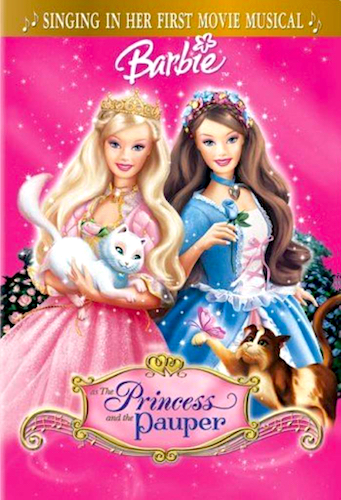
    One of the many film lists I have my eye on completing is Letterboxd 100: Animation, which lists the highest-rated animated feature films on the site (with a few caveats). There are over 40 titles left that I’ve not seen, and I could’ve chosen to watch almost any of them… but I chose the Barbie one. Well, not the Barbie one, because there are actually two Barbie titles on the list. And that’s not some temporary fluke: they’ve been on there for quite a while now. This merited investigation.

    As you’ve no doubt gathered from the title, this particular Barbie film is a reimagining of Mark Twain’s The Prince and the Pauper. A fairytale-esque story, about a princess, done as a musical? Yep, this is very much a wannabe Disney, but without the production values of that major studio: the computer animation here looks more like a PS2 cutscene. But hiding beneath the cheap animation is a halfway decent musical fairytale. Take the second musical number, How Can I Refuse, for example: it’s every inch in the mould of a “Disney villain’s song”, but is better than some genuine examples, and comes complete with a dance routine by the antagonist and his two henchman. This film has ambition, I’ll give it that.

    Other songs vary in quality. When the eponymous duo first meet, there’s an unintentionally hilarious number in which they sing about how similar they are, the indentured servant and the pampered royal. If you say so, girls. A later track is a typical “you be you” song, but sung to a pet cat who behaves like a dog. That’s a level of barminess I can get on board with.

    I would never have dreamed of watching this if it weren’t on the Letterboxd animation list. Now, I wouldn’t exactly say I’m glad I watched it, but I enjoyed it more than I thought I would — even if sometimes that was due to laughing at it rather than with it.

    3 out of 5

    Barbie as The Princess and the Pauper is the 7th film in my 100 Films Challenge 2022.


    Free Guy

    (2021)

    Shawn Levy | 115 mins | digital (HD) | 2.39:1 | USA / English | 12 / PG-13

    Free Guy

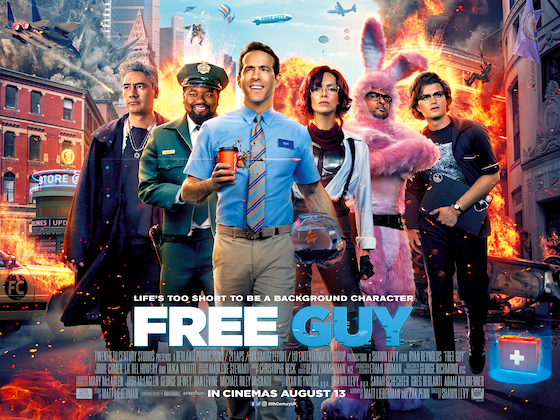
    Ryan Reynolds plays his role again as Guy, a bank worker in city riddled with crime and superheroics. But, it turns out, Guy isn’t real — he’s an NPC in a computer game, programmed to do the same thing over and over and basically be ignored by the real-world players. Until, that is, he spots the woman of his dreams (Jodie Comer) and his programming breaks as Guy becomes self-aware.

    The basic concept sounds like a fun, fresh, and timely idea, right? Video games have never been more popular, AI is ever-improving, and there’s room for both gags and action in the core idea — that’s the winning Marvel formula, right there. Unfortunately, the execution is as if someone found a way to make a new movie by collaging others. Free Guy is just The LEGO Movie + The Truman Show + Wreck-It Ralph + Ready Player One + the PG-13 version of Deadpool 2 — not put in a blender, but cut up and stuck back together side-by-side, with snippets of Groundhog Day, Fortnite, and multiple Disney-owned properties scattered in for good measure.

    That last aspect, the Disney references, has been singled out for particular derision on social media. The film was initially produced by 20th Century Fox, but ended up a Disney title after the buyout, which allows a bunch of stuff they own to pop up in the movie. I know we’re supposed to find this infinitely depressing — a sad reminder that Disney are on course to own all culture, and that’s a bad thing — and it is bad, of course… but the bit with Captain America’s shield still made me laugh. Sorry, not sorry. Yeah, you can be miserable about this stuff, because obviously the total homogenisation of all American media under The Walt Disney Company is not worth that a couple of meta gags; but the homogenisation of all American media under The Walt Disney Company is happening anyway, so we may as well enjoy the gags we get along the way.

    Whether you have that kind of attitude or not will probably dictate how much you enjoy Free Guy. Its originality is surface deep, at best, and at every second it will call to mind some other film that already did the same thing. But, allowing for that, it’s still a fairly entertaining couple of hours of action-comedy.

    3 out of 5

    Free Guy is the 8th film in my 100 Films in a Year Challenge 2022.


  • The Best & Worst of 2019

    As it’s January 10th, what better date to post my top 10 from last year’s viewing? (Yes, I know: “an earlier one.”)

    As well as my favourite films I saw during 2019, this final review-of-the-year post also includes my least favourite films, as well as a list of 2019’s most noteworthy releases that I missed.

    Before we begin, a quick reminder that these lists are not selected from films released in 2019, but from all 151 movies I saw for the first time during 2019.


    The Five Worst Films I Saw For the First Time in 2019

    “Worst of” lists are very unpopular on Twitter nowadays (there was a whole to-do about them when the pro ones started popping up last month). I do kind of agree that they’re of dubious value, but it remains an unavoidable fact that some films are poor or disappointing and therefore, as part of an overall review of the year, it seems only fair to remember the weaker side of it too. (Especially as I’ve been so tardy with reviews this year, and therefore haven’t shared my negative opinion of all of these elsewise.)

    So, in alphabetical order…
    Cosmopolis
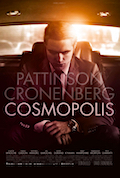
    With Robert Pattinson being cast as Batman, there was a lot of commentary about how he’d done so much good work since Twilight — and I realised I hadn’t seen any of it. Someone described this David Cronenberg film as basically being a Bruce Wayne movie, so that seemed as good a place to start. Sadly, it proved nothing about Pattinson’s acting ability, nor Cronenberg’s enduring ability to make good movies. I found it confusing, cheap-looking, and boring.
    [Full review]

    Happy New Year, Colin Burstead
    Talking of boring, here’s the most recent work from director Ben Wheatley. I’ve had mixed feelings about his previous films, but they were all at least interesting in some way. Colin Burstead is not. In the review I’ve written but never got round to posting, I describe it as “like an art house EastEnders” and say “it’s really slow and frequently abstruse.” Over a year after it first aired it’s still available on iPlayer, but I wouldn’t recommend you seek it out. [Full review]
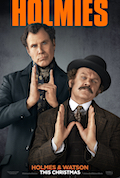
    Holmes & Watson
    I don’t rank these, but if I did Holmes & Watson would come last. A movie so shockingly inept it’s a wonder that it’s a studio movie made by seasoned professionals — I’m no fan of Will Ferrell, but you’d think at this point he’d be in movies that are at least competently produced. Weak filmmaking wouldn’t really matter if it was funny, because that’s the sole and defining purpose of a comedy, but there are no laughs here either. A total disaster. [Full review]

    The Saint
    Made as a pilot for a TV series, then retrofitted into being a movie after that failed to get picked up, it might seem like I’m kicking this when it’s down to name it a “bad movie”. The thing is, it would’ve been a bad TV show too. Its biggest problem is that, stylistically, it feels 25 years older than it is — like mid-’90s syndication filler, rather than the slick, contemporary, spy-actioner I think it wanted to be. The Saint is an IP with potential, but this does not utilise it. [Full review]

    Star Wars: The Rise of Skywalker
    Okay, Episode IX probably isn’t one of the five worst films I saw in 2019 (I gave it 3 stars after all, though I was being generous), but it was certainly the most disappointing. Maybe I shouldn’t’ve had hope, but I enjoyed both Episodes VII and VIII, so I thought there was a reasonable chance they could stick the landing. I was wrong. And it makes the preceding Sequel Trilogy films lesser with it, because it exposes the lack of overarching point to any of it. [Full review]



    The 15 Best Films I Saw For the First Time in 2019

    Where others may do a top ten, or twenty, or fifty, nowadays I do a top 10%. This year I watched 151 films, so my ‘top ten’ has 15 films.

    Although this list is selected from all the movies I watched for the first time in 2019, I did watch 34 films that had their UK release in 2019… plus four that will have their UK release in 2020, which is a first. So I’ve lumped those in with the 2019 lot and noted their ‘2019 rank’ in case you’re interested.

    Moviemakers like to make movies about people who set out by themselves to make movies — think Son of Rambow, Be Kind Rewind, or Me and Earl and the Dying Girl. Brigsby Bear follows in their tonal vein, as a quirky story about a young man freed from a lifetime of imprisonment who’s determined to complete the story of the TV show his captors used to make just for him. Think Room written by Charlie Kaufman and directed by Michel Gondry. [Full review.]

    A very much overlooked, nigh-on forgotten minor Western, which I’m sure I never would’ve seen were it not for Quentin Tarantino including it in his pre-Once Upon a Time in Hollywood movie marathon (as an example of the kind of Western programmers that film’s actor hero would’ve starred in). But I’m glad he brought it to my attention, because I found it be a well-told, well-performed study of toxic masculinity and parental influence, with a splash of gun control rhetoric to boot. This may’ve been made in 1958, but it has a heckuva lot of accurate stuff to say about our society six decades later. [Full review.]

    This is the kind of movie I’m not sure I’ll ever watch again, because living through its terror once was enough. I watched it back in February but there are images that still pop into my head to chill me. A masterful work of horror. [Full review.]

    12
    The Report

    2019 #4 This is a movie not to everyone’s taste, as some middle-of-the-road reviews, and Amazon’s lack of backing for it in awards season, attest. It’s easy to dismiss it as a filmed Wikipedia article, because it’s obsessively accurate and methodical in the way it lays out the facts of its case — about the CIA’s ineffective use of torture post-9/11 — but, in fact, that fits both the style of its lead character-cum-hero, and the purpose of its existence, which I think is to help expose the truth more widely. After all, we know what went on, but who’s actually had to face any consequences for it? In apportioning blame, writer-director Scott Z. Burns is strikingly nonpartisan, refusing to let the Obama administration off the hook for their part. So it’s a shame it hasn’t connected more widely, because its message is important; and even besides that, it’s an absorbing thriller… about someone doing paperwork.

    I probably saw better films than Mandy during 2019, but I saw few that were as aesthetically striking — and certainly none with a header pic that could equal this shot of star Nic Cage. It’s a nightmarishly surreal journey of revenge, with plot points and visuals that can’t be described, they just have to be experienced. And oh my, what an experience. [Full review.]

    10
    Miss Pettigrew Lives for a Day

    This overlooked ’30s-set rom-com boasts a starry cast and a likeable bounce, and I guess that’s where many people’s assessment of it stops — if they’ve even bothered to assess it at all. But what really worked for me was the way it feels like an actual movie from its era, with the quick-talking wit of screwball comedies, the slight earnestness of a simpler age, and the confidence to throw in some more serious undercurrents without the fear it will ruin the fun. Instead, they elevate it. As a throwback to classic cinema, it’s delightful.

    2019 #3 On Letterboxd I simply stated this was “the most truthful movie about what it’s actually like to be a teenager I think I’ve ever seen,” and that just about sums up why its here. The milieu of its story is very Now — teenagers locked to their phones, living their lives through Instagram and YouTube — but look past the ultra-current specificity and there’s a universality in the experience of shy, insecure thirteen-year-old Kayla. Most of us have been there, and Eighth Grade captures just what it was like. (Before anyone asks/complains: this counts as a 2019 film because its UK release wasn’t until April ’19.) [Full review.]

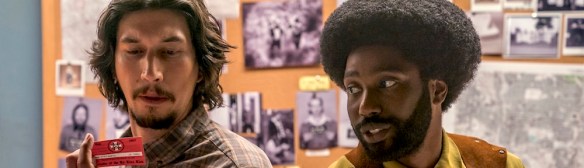
    The premise of Spike Lee’s detective movie sounds like a joke — “what if a black man joined the KKK?” — but it’s a true story. With that in mind, you may expect a deadly serious, heavy-going movie. Instead, Lee mixes in a lively humour that keeps the movie entertaining even as it hits you with serious points. And very timely ones, as the controversial (but, in my opinion, merited) closing moments make clear. [Full review.]

    2019 #2 Reading reviews, I didn’t have particularly high hopes for this French romantic comedy-drama — it looked like it might be nice, and that’s about all. A pleasant surprise, then, to find there’s so much more to it than just a pleasantly diverting couple of hours. The story of a man who attempts to relive the day he met the wife who no longer loves him, it’s sharply witty, surprisingly beautiful in places, and genuinely emotional by the end. Surely it’s destined for an inferior American remake. [Full review.]

    There are several true-story crime thrillers close-by on this top ten — if you watched them back-to-back with Searching, they might show it up a little bit, because it does get a little Movie Logic in its final act. But that’s worth letting slide because of the very particular way it tells its engrossing story. The entire movie takes place from the POV of a computer screen, as a desperate father tries to work out what’s happened to his missing teenage daughter. Pleasingly, the film doesn’t break its own rules, but uses the limitations to its advantage to create a new, timely way of viewing a narrative. And while the final act may be a bit grandiose compared to real life, its array of twists are satisfying. [Full review.]

    Director Bong Joon Ho is attracting a lot of attention this awards season (heck, this year) for his latest, Parasite, and made my top ten last year with his long-delayed-in-the-UK sci-fi parable Snowpiercer. This surprisingly-hard-to-come-by (someone do a good Western Blu-ray release, please!) film wasn’t his first, but was what initially garnered him some attention outside Korea. A true-story-inspired crime thriller, it invites comparisons to David Fincher’s Zodiac in the way it follows obsessed investigators as they try to uncover the truth behind an unsolved wave of murders. Zodiac is one of my favourite films, but Memories of Murder is strong enough to withstand the comparison. (Also, yes, it predates Fincher’s film. I’m not claiming one copied the other, they just approach the same genre from a similar headspace.) [Full review.]

    4
    Scott Pilgrim vs. the World

    If I’m honest, I was prepared to dislike Scott Pilgrim — I mean, there’s a reason it took me almost a decade to get round to it. It always looked Too Cool; kind of too hipster-ish, though I guess in a geeky way. (Well, “hipster” and “geek” have been more closely linked than ever this decade, haven’t they?) I remember distinctly when it went down a storm at Comic-Con and so everyone believed it was The Next Big Thing, only for it to flop hard at the box office (providing a much-needed course correction on everyone’s view of the power of Comic-Con). But here’s the thing: it’s directed by Edgar Wright, and I should have trusted that. And so the film is everything you’d expect from the director of Shaun of the Dead and Hot Fuzz and Baby Driver — deep-cut references (this time to video games), piles of humour, but also a dose of genuine emotion. Best of all is how it’s ceaselessly, fearlessly, creatively inventive with its cinematic tricks. No other film on this list is so overtly Directed, but in a good way.

    Sherlock Jr. is almost 100 years old now, but it still plays as fresh as a daisy. That’s the wonder of Buster Keaton, who mixes daredevil stunts with genuine movie magic to produce an unforgettable farce with more laughs per minute than [insert your comedian of choice here] and more I-can’t-believe-he-just-did-that stunts than one of Tom Cruise’s impossible missions. They don’t make ’em like this anymore. Heck, they probably wouldn’t let ’em. [Full review.]

    2
    Rififi

    This methodical French crime thriller is famed for its centrepiece — a half-hour heist that takes place in virtual silence — and that is indeed an unforgettably effective, edge-of-your-seat piece of cinema. But the film around it is so good, too: the events and plans that lead up to the heist; and the fallout of what occurs after. If you want to be a pedant then film noir “can’t be made outside America” — but even if that’s true, well, tough, because this is noir at its absolute best.

    2019 #1 If my end-of-year #1s had a reputation, it would probably be for choosing recent movies. Every year I theoretically have the entirety of film history to choose from, but only once have I given my #1 slot to a film that was more than 18 months old. But this year takes that to extremes: I’ve given #1 to a film that isn’t even out yet (in the UK). Never mind Skyfall or Blade Runner 2049 only being 2 months old when I picked them — here, Portrait of Lady on Fire is currently -2 months old (its UK release is scheduled for 28th February). Still, it’s screened at plenty of festivals and had a few international releases, and received plenty of acclaim — well deserved, I think (obviously). It’s the kind of film that casts a spell, with its remote setting that isolates us with its characters, absorbing us into this vital moment in their lives; its thoroughly gorgeous photography, which is appropriately painterly; and a very particular pace, which some would dismiss as “slow” but I thought was just right. It also has a healthy, perhaps surprising dash of Gothic in how its narrative plays out, which particularly appealed to me. Basically, it’s an all-round stunning work. [Full review.]


    As usual, I’d just like to highlight a few other films.

    I’m always loathe to mention “films that almost made my list”, because that feels like cheating (I may as well just make the list longer and include them). However, because I only included four films released in 2019, I thought I’d flag up a few more of my favourites from the year itself. These aren’t #16–19, then, but they are 2019’s #5–8, because they’re the four 2019 releases that came closest to getting in. But I’ll leave their exact ranking to your imagination and just list them alphabetically: Deadwood: The Movie, Jojo Rabbit, Once Upon a Time in Hollywood, and The Personal History of David Copperfield. Of course, there were dozens of acclaimed and/or popular 2019 films that I didn’t see, so take this ranking with a large pinch of salt — if I revisited yearly rankings after I’d caught up on more movies, they’d change entirely.

    Another honorary mention I want to make is more for a person than a film: Thomasin McKenzie, who almost single handedly earnt Leave No Trace a place in my top 15. I mean that as no disservice to everyone else involved — their combined work put it in contention, but it was McKenzie’s superb performance that almost tipped it in. (So, I guess that is #16.) And the other reason I’m mentioning her rather rather than just the film is because she was also excellent in Jojo Rabbit — easy to overlook among that film’s showy cast, but a pivotal and well-played part nonetheless. She’s definitely one to watch.

    Now, let’s recap the 12 films that won Favourite Film of the Month at the Arbies, some of which have already been mentioned in this post and some of which haven’t. In chronological order (with links to the relevant monthly update), they were The Player, Memories of Murder, Isle of Dogs, Searching, The Meg, Deadwood: The Movie, Sherlock Jr., Rififi, The Red Shoes, For Sama, La Belle Époque, and Eighth Grade.

    Finally, I never end this without mentioning all the films that earned themselves 5-star ratings throughout the year — especially as I haven’t reviewed most of them yet, so they merit their moment in the spotlight. During 2019 there were 25. 13 made it into my best list, so rather than name them again I’ll let you have fun guessing which were the two to only get 4-stars (hint: only one of them is in the actual top 10; and the other has a review, so you can easily find it out). The remaining twelve were Les diaboliques, The Favourite, For Sama, Isle of Dogs, Jojo Rabbit, The Killer, Once Upon a Time in Hollywood, The Player, The Red Shoes, Roma, Rope, and Waltz with Bashir.. Finally, I also gave full marks to Monty Python and the Holy Grail (which will be the subject of a “Guide To” at some point) and three short films, Pleased to Eat You!, Hey You, and Facing It (all reviewed in this roundup).


    I watched 34 films from 2019 during 2019, which means there are plenty of noteworthy releases I didn’t see — so here’s an alphabetical list of 50 I missed. (Why it’s 50, I’m not quite sure; but I’ve been doing it for 13 years, I’m not changing it now.) They’ve been chosen for a variety of reasons, from box office success to critical acclaim via simple notoriety; plus I’ve made an attempt to include a spread of styles and genres, successes and failures.

    As usual, I’ve followed IMDb’s dating in my selection process, which means there are movies listed here that haven’t actually come out in the UK yet. And some films have likely fallen through the cracks because they’re listed as 2018 but I wasn’t aware of them in time for last year’s list (though I’ve made one exception in that regard). But there are always more films worth noting than can be included, anyway. I mean, this year my starting list was 119 films long (maybe I should increase how many I include…)

    1917
    Doctor Sleep
    It: Chapter Two
    Le Mans '66
    Parasite
    Spider-Man: Far from Home
    Aladdin
    Godzilla: King of the Monsters
    Joker
    The Lighthouse
    Us
    X-Men: Dark Phoenix
    1917
    Ad Astra
    Aladdin
    Alita: Battle Angel
    Apollo 11
    Bait
    A Beautiful Day in the Neighborhood
    Booksmart
    Cats
    Doctor Sleep
    Dolemite is My Name
    The Farewell
    Fast & Furious: Hobbs & Shaw
    Frozen II
    Gemini Man
    Godzilla: King of the Monsters
    Hellboy
    How to Train Your Dragon: The Hidden World
    Hustlers
    It: Chapter Two
    Joker
    Jumanji: The Next Level
    The Kid Who Would Be King
    Klaus
    Knives Out
    Last Christmas
    Le Mans ’66
    The Lego Movie 2: The Second Part
    The Lighthouse
    Little Women
    Marriage Story
    Men in Black: International
    Midsommar
    Parasite
    The Peanut Butter Falcon
    Pokémon: Detective Pikachu
    Rambo: Last Blood
    Rocketman
    A Shaun the Sheep Movie: Farmageddon
    Shazam!
    The Souvenir
    Spider-Man: Far from Home
    Terminator: Dark Fate
    The Two Popes
    Us
    The Wandering Earth
    Wild Rose
    X-Men: Dark Phoenix
    Yesterday
    Zombieland: Double Tap


    Whew, another year over!

    Time to do it all over again…

    The Eleventy-First Monthly Review of July 2019

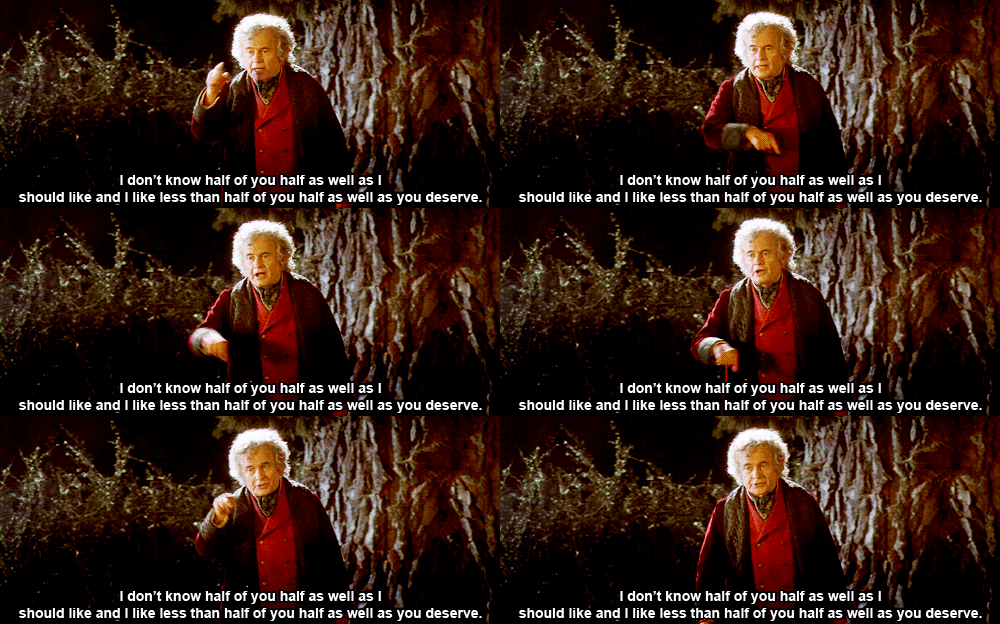
    I’ve been writing 100 Films for 151 months now, but I only instituted these monthly progress reports in May 2010 — and that makes this the 111th one! I think that’s worthy of a Hobbity celebration…

    I don't know half of you half as well as I should like, and I like less than half of you half as well as you deserve.

    Coincidentally, it’s also the 50th month of these “new look” monthly updates (the ones with the funny titles and all the formal sections), which means it’s also the 50th iteration of my Arbie Awards. You can see how I’ve honoured that special occasion when you reach the relevant section.

    But before that, there’s this…


    #99 Zatoichi Meets the One-Armed Swordsman (1971), aka Shin Zatôichi: Yabure! Tôjinken
    #100 The Killer (1989), aka Dip huet seung hung
    #101 Toy Story 4 (2019)
    #102 Sherlock Jr. (1924)
    #103 The Lion King (2019)
    The Killer
    .


    • So, I watched just five feature films in July.
    • That continues my new fewer-than-10-films-per-month streak. Once upon a time such numbers were my norm (from 2008-2013, 58% of months had 9 or fewer films), but for the past few years it, er, really wasn’t (in 2014-2018, 95% of months had 10 or more films).
    • My longest previous fewer-than-ten streak was 7 months, from June to December 2011. If 2019 continues the way it’s going, it could replicate that exactly. But, equally, a lot can change: at the end of July 2016 I was at #127 and went on to finish the year with 195, and in July 2017 I was at #107 and ended on 174; but July 2015 was lower than both of those, ending at #102, and I went on to reach 200. So while I’ll be very surprised if 2019 even comes close to last year’s 261, never say never.
    • In terms of averages, it’s distinctly less heartening. It takes the average for July down from 9.9 to 9.5, leaving it as the only month with an average lower than 10. It also brings the 2019-to-date average down from 16.3 to 14.7, and the rolling average of the last 12 months down from 17.8 to 15.9.
    • Of of the five films I did watch, one was #100 — later than I’d anticipated, because my underwhelming June tally didn’t get me there, but still the 3rd earliest #100 ever (behind 2018 (10th May) and 2016 (28th May), and ahead of 2017 (15th July)).
    • It was a double catch-up for last month, too: I missed my should-be-monthly Blindspot film in June, so made a selection from that list to be 2019’s illustrious #100. My pick was John Woo’s career-defining heroic bloodshot classic The Killer. Still holds up today, for my money. It’d be nice if we could get a quality Blu-ray release of it, though.
    • And this month’s WDYMYHS film was Buster Keaton’s slapstick classic Sherlock Jr. At 45 minutes, it’s just long enough to qualify as a feature rather than a short. As well as the comedy, it has madcap stunts Tom Cruise would be proud of, and technical effects that still hold up almost 100 years later.
    • Finally, from last month’s “failures” I watched only Toy Story 4. Well, one is better than none…


    The 50th Monthly Arbitrary Awards

    It’s the 50th Arbie Awards! In honour of that milestone, I’m… not doing anything special whatsoever. So let’s get on with this:

    Favourite Film of the Month
    Not much to choose from, though I did really enjoy almost all of the limited selection of films I did watch. The winner, though, is an action movie… and also a comedy: Buster Keaton’s Sherlock Jr., which (as I said above) is not only very funny but also technically audacious and full of daredevil stunts.

    Least Favourite Film of the Month
    This is an easy pick. I didn’t hate it, but I was certainly left underwhelmed by Jon Favreau’s too-faithful live-action animated remake of animation The Lion King.

    Song That Should’ve Been Retitled of the Month
    Can You Feel the Love Tonight This Afternoon?

    Joke I Stole from Letterboxd of the Month
    See above + here.

    The Audience Award for Most-Viewed New Post of the Month
    It was a relatively meagre month for new posts. Well, in fact, there were 10, and my average for the first six months of 2019 was 13, so maybe not so relatively low after all. Whatever, none of those new posts challenged archival ones for popularity: this month’s victor may’ve been a Netflix new release (outside the US) but it only came 39th overall. Perhaps Shaft isn’t the man after all.


    I didn’t rewatch a single film last month, which means I’ve got a mountain to climb to get to my goal of 50 rewatches this year — and July is barely helping…

    #21 Die Another Day (2002)

    To stay on target I should be on about #28 by this point. Oh dear. And the one I did watch was a fluke: I happened across it on TV the other day and ended up sucked in. So, okay, I didn’t really watch it — certainly not all of it — but I did see a fair bit of it; probably a comparable amount to when I caught Skyfall on TV last year, and I counted that, so here it is. I’m still intending to re-watch all of Bond properly at some point (or at least pick up where I left off, which was with OHMSS); but then I’ve been meaning to do that ever since the Bond 50 Blu-ray set came out in 2012…


    I made a couple of trips to the cinema this month, but I still missed some big titles — primarily, Spider-Man: Far from Home. There was also Richard Curtis/Danny Boyle/Beatles comedy Yesterday (which actually came out in June, but I didn’t mention it last month), and smaller releases (which therefore weren’t necessarily playing near me or at accessible times) like Midsommar and The Dead Don’t Die. (If you’re a US-based reader wondering why I haven’t mentioned Quentin Tarantino’s successful new film, it’s not out here for another two weeks.)

    Last month I noted that some cinema misses from February had now made it to disc, where I’d missed them again. That’s also true this month, with the release of Alita: Battle Angel. The same was true of Dumbo, though that was from my April failures — the fact it and Alita have now reached disc at about the same time shows something about the vagaries of release windows, I guess. Finally on disc, a rewatch candidate: Captain Marvel (not that I’ve posted a review from when I saw it in the cinema yet).

    The noisiest releases on streaming this month were TV series, but a couple of Amazon co-productions came to Prime Video: Mike Leigh’s Peterloo, and Beautiful Boy, with a BAFTA-nominated performance from Timothée Chalamet. As for Netflix, they offered doc The Great Hack, about the Cambridge Analytica scandal, which is the kind of thing that’s destined to sit on my watch list for ever and a day. They also threw up some stuff I missed from last year in the form of Paul Feig’s black-comedy mystery A Simple Favour and acclaimed comedy-drama Blindspotting.


    So, in conclusion, July’s prospects were marred by my being away on holiday for almost half the month. Perhaps that means August will see things perk up again…

    The General (1926)

    2015 #29
    Buster Keaton & Clyde Bruckman | 77 mins | DVD | 4:3 | USA / silent (English) | U

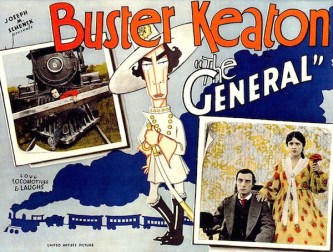
    The GeneralPoorly reviewed and a box office flop on its release, Buster Keaton’s The General has undergone a stark re-evaluation since: the United States National Film Registry deemed it so “culturally, historically, or aesthetically significant” that it was added to the registry in its first year, alongside the likes of Citizen Kane, The Wizard of Oz and Star Wars; these days, it rates on both public-voted popular lists (the IMDb Top 250 at #133) and critics’ polls (34th on Sight & Sound’s 2012 poll). Does it live up to such a reputation?

    Set at the outbreak of the American Civil War, Keaton plays a Southern train engineer who is refused permission to sign up for the army. When agents of the North hijack a train, he sets out to prove himself by giving chase. Hilarity ensues.

    Believe it or not, The General is based on a real incident from the war… which was considerably grimmer than the farce presented here. Like the film, however, the South did win… except in real life the South were the bad guys (right?), so that’s no good. Anyway, such things shouldn’t trouble us here — this is a comedy, not a history lesson. That said, I must confess I didn’t laugh all that much — although some of it is quite funny — but, in spite of that, I rather loved it. Whatever the intention, it worked for me as a kind of comedic action-adventure (a genre we more often associate with more modern eras, I’d wager), rather than as an out-and-out comedy. Some of it is quite genuinely tense rather than purely amusing.

    The GeneralIt was reportedly a very expensive film, and it looks it: there are tonnes of extras, not to mention elaborate choreography… of trains! Who knew old steam trains were so agile? There’s impressive physicality on display from Keaton, but the well-timed movements of those big old locomotives are quite extraordinary, especially for the era (I mean, for the past couple of decades you’ve been able to do pretty much anything thanks to a spot of computer-controlled what-have-you. Not much of that going on in the 1920s.)

    Sometimes watching Classic Movies is almost a chore of noteworthiness or “good for its time” import; other times, they still offer pure enjoyment, however many decades later. I’m not sure a silent comedy is ever going to curry favour with all modern viewers, but The General is one that still has the power to transcend the (perceived) limitations of its era.

    5 out of 5

    The General was viewed as part of my What Do You Mean You Haven’t Seen…? 2015 project, which you can read more about here.

    February 2015

    We’re 16.16% of the way through 2015. I watched 16 films in January. But did I also watch 16 films in February?


    The Grand Budapest HotelFebruary’s films

    #17 The Black Cauldron (1985)
    #18 Gone Girl (2014)
    #19 Song of the Thin Man (1947)
    #20 The Grand Budapest Hotel (2014)
    #21 Byzantium (2012)
    #22 The Last Days on Mars (2013)
    #23 Runner Runner (2013)
    Byzantium#24 Tropic Thunder: Director’s Cut (2008)
    #25 Time Lapse (2014)
    #26 What We Did on Our Holiday (2014)
    #26a 2001: A Space Odyssey (1968)
    #26b Toy Story That Time Forgot (2014)
    #27 Boyhood (2014)
    #28 Big Hero 6 (2014)
    #28a Feast (2014)
    #29 The General (1926)


    Viewing Notes

    • Answer: no… and yes. That’s 13 counted films, but 16 with the shorts and 2001. More on this in my analysis.
    • My viewing and reviewing of the Thin Man films were both completed this month. You can read about the entire series here.
    • It was the Oscars this month, as I expect you noticed, which is partly why there are reviews of undeserving-loser Boyhood and undeserving-winner Big Hero 6. See also: many previous Best Picture winners among February’s archive reposts, below.


    What Do You Mean You Haven’t Seen…?

    Jumping in at the last minute, then, February’s WDYMYHS film is both the oldest and shortest on this year’s list — Buster Keaton’s silent American Civil War-set comedy The General. I have to say, I didn’t actually laugh all that much, but did really enjoy it. That’ll take some working out in my eventual review…


    Analysis

    As noted above, reaching #29 means I’ve watched 13 new-to-me films in February, not to mention two shorts and a re-view for 2001: A Space Odyssey. And I shan’t mention those, so moving on…
    That figure surpasses both the previous February average (9.1) and last year’s monthly average (11.3). It equals 2010, 2011 and 2012 for the most films I’ve watched in a February; but, thanks to January, it’s also the furthest I’ve ever reached by the end of February.

    Although it’s slightly down from January’s 16 new films (though if you do count the shorts and 2001, it equals it), it still passes my goal for reaching a minimum of 10 films each month in 2015. If I keep that up, I’d finish the year on #129 at the lowest, which would tie with 2007 for my second-best year ever. Even better, if I keep up my current monthly average of 14.5, I’d finish the year by reaching an extraordinary (for me…) #174!

    Of course, the same sum done at the end of January had me reaching #192, so we’re a long way off having an accurate prediction yet.


    This month’s archive reviews

    If I’m going to get through all of these by the end of the year, I need to keep the pace up — and so there were another 26 archive reviews reposted in the past month…


    Next month on 100 Films in a Year…

    A quarter of the way through the year!

    Of course, I’m already past my quarter-way point, so there’s a singular lack of tension there, isn’t there.