
Bryan Singer | 134 mins | cinema | 2.39:1 | UK & USA / English | 12A / PG-13
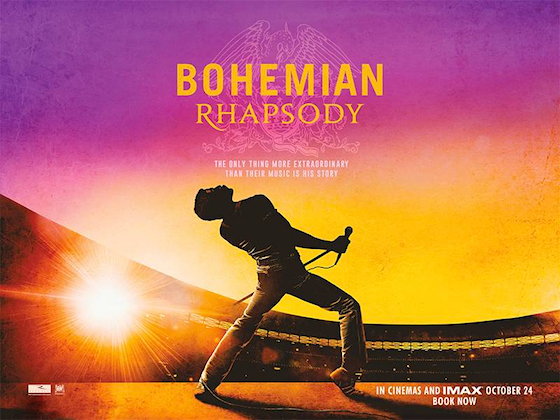
“Is this the real life? Is this just fantasy?”
So go the opening lines to the song Bohemian Rhapsody (Bo Rhap to its friends), Queen’s six-minute prog-rock suite that is one of the best-selling and most-acclaimed songs of all time. And those lines could hardly be more relevant to the film that’s borrowed its title, given that much of the discourse about the film has revolved around the issue of its truthfulness. This (in part) has led to a huge divide in the opinions of critics and audiences: whereas the former gave it a Rotten Tomatoes rating of just 55% when it released (it’s since climbed up to 61%), audiences have driven it to be the #1 film at the worldwide box office and placed it on the IMDb Top 250, where it’s actually rising up the chart (it was at #136 after I saw it last Thursday, but is at #126 as of writing). Well, there’s a scene in the film where Bohemian Rhapsody debuts on the radio, and as it plays the screen gradually fills with quotes from contemporary reviews, all of them mercilessly slagging it off — the irony, obviously, being that we all know what a ginormous hit the song would become. Some things never change, eh?
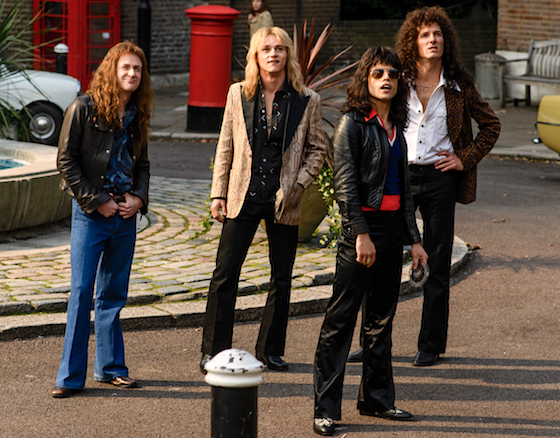
Bohemian Rhapsody: The Movie is, of course, a biopic of performer extraordinaire Freddie Mercury and the band he fronted, Queen. The film begins in 1970, introducing us to Farrokh Bulsara (Rami Malek) — Heathrow baggage handler by day, wannabe party animal by night, who prefers to go by the name Freddie. He’s been following the fortunes of student band Smile, and when their lead singer quits he offers his services to the remaining members, guitarist Brian May (Gwilym Lee) and drummer Roger Taylor (Ben Hardy); and with the addition of bassist John Deacon (Joe Mazzello), the line-up is complete. As he begins a relationship with shopgirl Mary Austin (Lucy Boynton), Freddie’s confidence as a performer grows: he changes his surname to Mercury and coerces the band into recording an album, where their unusual style gets them noticed by a record label and… well, you can imagine where it goes from there.
And that’s another problem that critics have had with the movie: you can imagine where it goes from there not just because you know Queen are an incredibly popular and successful band, but because you’ve seen this story a dozen times before in any other music biopic you care to name. Many critics have favoured naming Walk Hard, a spoof of the genre, wondering how audiences can accept such familiar tricks after they’ve already been spoofed. Well, consider this: 2½-week-old Bo Rhap already has more IMDb ratings than 11-year-old Walk Hard.
Look, I’m trying not to gloat, but here’s a thing: I’ve been a fan of Queen’s music for as long as I can remember. I grew up listening to their first Greatest Hits album a lot. I’d wager a lot of British people have a similar affiliation, considering that’s the best-selling album of all time here. Heck, it’s only really Americans that should’ve been caught by surprise by the film’s success: it’s my understanding that Queen have always been something of a niche, cult group there, whereas in the rest of the world they’re pretty damn huge (some estimates put them among the top ten best-selling music artists of all time). As the aforementioned Bo Rhap reviews scene suggests, audiences have often been ahead of the critical curve when it comes to appreciating the band’s genius, and maybe it’s the same with their biopic.
That said, a lot of the film is made up of quite run-of-the-mill music biopic material. I don’t think it merits the level of vitriol some critics have hit, because it’s not executed badly, it’s just nothing particularly unusual either. But the film does have one big advantage: it’s about Queen. Some of their magic can’t help but rub off. We’re not watching any old band playing any old songs — it’s Freddie Mercury and Queen, creating Bohemian Rhapsody, We Will Rock You, Another One Bites the Dust; performing Killer Queen, Fat Bottomed Girls, Love of My Life, I Want to Break Free, Radio Ga Ga, We Are the Champions… The film itself may be not be a classic-in-waiting, but with these people, those songs, and the performances of both, fans of Queen’s music surely can’t help but be entertained. And when their fans number, well, most people, that’s when you get a crowd-pleasing #1-in-the-world box office hit.

Much of the film toddles along nicely, mixing some predictable plotting with other bits that really work. It does a good job of little things that make the band feel like a group of friends — the scenes where they’re conceiving songs, collaborating, teasing each other; just little touches that sell the atmosphere of mates working together. Any scene where they’re called on to perform on stage has all the strutting majesty of the real band (I’ll come to the biggest instance of that later). Inhabiting those roles, the actors playing Queen are superb. It’s never easy playing an icon, but Malek excels as Freddie, and an Oscar nomination may well be on the cards. In the less showy roles, Gwilym Lee and Ben Hardy are both likeable as the thoroughly decent Brian and more hotheaded Roger, respectively, though Joe Mazzello has less to do as quiet John Deacon, often just pulling silly faces in the background.
I also think the film makes a fair fist of depicting Freddie’s love life. We’ve had a fair few high-profile gay movies recently (Moonlight, Call Me by Your Name, Love Simon), and compared to those Bo Rhap clearly didn’t foreground his homosexuality as much as some viewers would like. Each to their own, but I reckon the film splits itself about 50/50 between Freddie’s personal life and the band’s story, and I don’t think it shies away from his gayness (albeit in a PG-13 way — no beach stroking or peach abusing here).
Even more of an elephant in the room has been the film’s directorial situation: planned and part-directed by Bryan Singer, he was eventually fired from production, with the rest of the shoot (reported to be about a third) and post-production completed by Dexter Fletcher. Singer gets the sole credit because the Director’s Guild of America specifies that only one director may be credited (that’s a whole kettle of fish we’ll leave for another day) and there seems little doubt Singer contributed more on balance than Fletcher, especially as Fletcher has said his job was to complete the work that had already been started. Bearing this situation in mind, it’s particularly interesting that, while much of the film is shot quite matter-of-factly, there are occasional bold directorial flourishes that make you query: who was responsible? Did Fletcher tart things up? Were they Singer’s idea (and so should there have been more)? Unless we ever get a breakdown of who did what, I guess we’ll never know.

One thing that did intrigue me slightly is that the film isn’t in 3D. That format’s mainly reserved for post-converted blockbusters now, sure, but both Singer and Queen guitarist (and a producer of the film) Brian May are fans of stereography: Singer actually shot his last two X-Mens in 3D (as opposed to just post-converting, as most do nowadays), while May is something of an authority on the subject, even having designed a viewer for 3D photos and published several books (including one of his 3D photos of Queen). So, basically, I’m passingly surprised they didn’t choose to shoot in 3D. Maybe they asked and the studio just wouldn’t pony up the cost. Who knows. It doesn’t really matter… though, actually, I think the finale could’ve looked fantastic in three dimensions.
Ah, the finale. Earlier, I said the film begins in 1970 — that’s not quite true. It actually begins with a flash-forward to Live Aid, the 1985 charity concert that included a famous set by Queen, and which the rest of the film eventually leads us back to. It’s a natural place to choose to conclude the movie: it was a huge triumph for the band, their set regarded by many as among the greatest rock concerts of all time, and certainly a happier endpoint than Freddie’s death a few years later — it seems more fitting to end with him on top of the world than sadly fading away. But even knowing all these facts doesn’t prepare you for the power of what’s actually on screen. It’s truly an incredible set piece, especially when experienced on a huge screen with a thumping surround sound setup. It literally made my hair stand on end and almost brought tears to my eyes. The version in the film isn’t actually the whole set that was played, but they did film it all and it’s being cut together as a Blu-ray extra. I can’t wait. Even as it stands, though, it’s a barnstorming conclusion to the movie; a sequence of such power it justifies the film’s very existence.

And so we come to the rub: the rating. Can you give a film full marks for pulling off one key 20-minute sequence so exceptionally? Well, that’s sort of what I was just saying: by itself, the Live Aid scene is enough to tempt me to give the whole film full marks, I thought it was that good. But the rest of the movie isn’t at the same level — it ticks along decently and I enjoyed it all, don’t get me wrong, but it doesn’t really transcend its genre or subject matter. So, it’s a 4… but Live Aid may yet earn the film a spot on my best-of-year list nonetheless.




 Score:




 The same summer that Christopher Nolan revitalised the Dark Knight with the critically acclaimed and commercially successful
  All of that was ten years ago now, since when plans for a sequel have been abandoned, the character has had
  often for good reason, but (a) sometimes a new telling is the right way to go, and (b) if you’re going to pick up a character mid-life, you still need to treat it as a new and standalone story if its immediate predecessor was released decades ago.
 that actually takes up the first half-hour-or-so. I can imagine an edit of the movie that begins on that plane: just a bunch of journalists observing the press demonstration of the new shuttle technology, when suddenly, inexplicably, it fails — they’re all going to die — then Superman turns up completely out of nowhere and saves them. Then you have the credits, which are immediately followed by Lex’s whole journey to the Fortress of Solitude, and only then do you get in to the stuff with Superman only having just returned, wondering what his places is now, and so on. Maybe lose the scene of him basically stalking Lois’ new family, though.
 The final thing this all makes me think of is the forthcoming Marvel Spidey movie,
 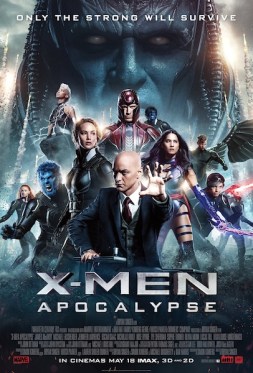 Despite fathering the modern superhero movie genre, the X-Men series always seems to punch under its weight at the box office (a point the recent
  That’s only the half of it, though. This is an X-Men movie, which not only means there’s an ensemble cast, but that it’s dedicated to constantly adding new members to it. This time around, we’re re-introduced to the ‘original’ team as teenagers: Scott Summers (Tye Sheridan) is the viewer’s “way in” to Xavier’s school after he suddenly starts shooting laser beams from his eyes; there he meets Jean Grey (Sophie Turner), a powerful telepath the other students are scared of because sometimes her dreams shake the school at night; Mystique rescues blue-skinned German teleporter Nightcrawler (Kodi Smit-McPhee) from a cage fight in Berlin, where he was up against Angel (Ben Hardy), who becomes one of Apocalypse’s Four Horsemen, alongside weather controlling street kid Storm (Alexandra Shipp) and Psylocke (Olivia Munn), who can create blades of energy with her hands. And there’s also Jubilee (Lana Condor), who has bugger all to do. Jubilee was a major character in the animated series, and the filmmakers seem obsessed with getting her into the movies (she had cameos in the first trilogy) without ever actually giving her anything to do.
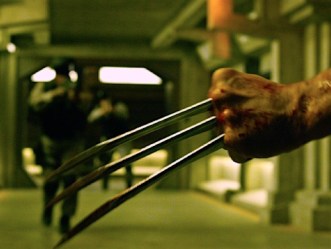 It doesn’t help that they feel the need to shoehorn a Wolverine cameo in there, an underwhelming action sequence that becomes a massive aside from the main storyline. It feels like setup for something more next time, but Hugh Jackman has stated
 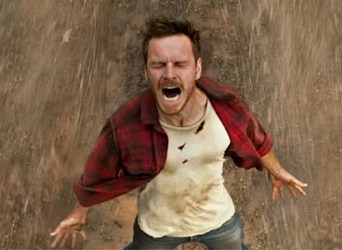 Another element lost in the mix is the real-world resonance contained in the best X-films. There’s a lot of to be said for the spectacle that’s present in all the movies, but Days of Future Past (for the most recent example) anchored it in the human conflicts between the heroes, and in their relation to the rest of the world. Apocalypse nods in that direction, with Mystique invoking Magneto’s metaphorical family to get him to stop destroying the world, but it’s not as well integrated, not as effective as previous outings. Said destruction is on a massive scale, but it’s too massive — the film doesn’t sell it; it’s just another city being destroyed somehow, emotionless computer-generated effects that are overfamiliar in these megablockbusters now (and not helped when you’ve seen similar sights two or three times right before the film in trailers for the likes of
  In fact, the film as a whole feels a draft or two away from being truly ready. Some of the dialogue clunks hard, especially when characters speak in exposition to one another. The plot needs streamlining and focusing, especially early on, and some events need appropriate weight added to them. Other things just need smoothing out — that trip to the mall happens Just Because, with no real sense of why the characters are doing it (other than some handwaving dialogue about needing to get out of the school for a change), and, as I said, in the final cut only leads to one single joke. Yet for all that, some things do work beautifully: Storm’s hero-worship of Mystique comes up almost in passing early in the film, establishing/emphasising Mystique’s place in the mutant world now; but then it becomes a key point in the climax without the need for any explanatory dialogue, as Storm wordlessly realises that her hero is fighting on the other side. It is, in a way, the best bit of the movie.
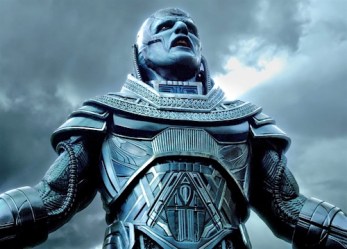 Despite being a negative nelly for much of this review (like so many others, which has given it a lowly
 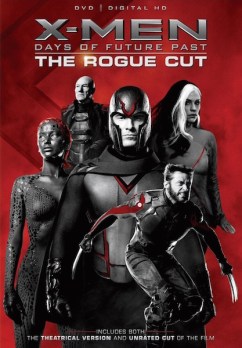 One of the big stories in the run-up to this fifth X-Men film’s release last year (my previous review is
 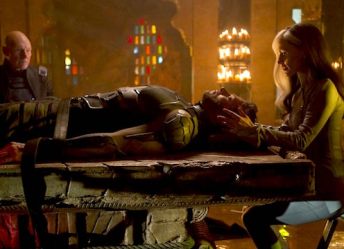 (though the theatrical cut only has 40 chapters, so I’m not entirely sure how that pans out). Most must be teeny extensions, however, and I look forward to
 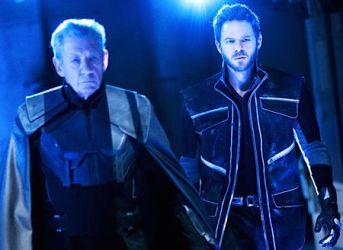 The Rogue Cut is worth seeing for anyone who enjoyed the theatrical version — and, in terms of a copy to own, the Blu-ray comes with both cuts and more special features (though it loses all the extras from the first release, including a few more deleted scenes) — but, unless you’re a huge fan of Rogue or Iceman, it’s not essential.
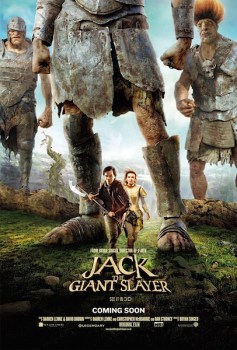 The influence of Peter Jackson’s
 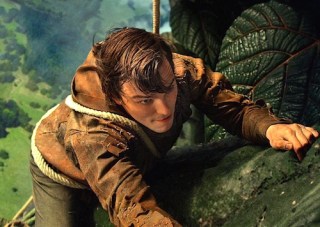 A computer-animated prologue wants to be the one from
  overacted characters, and bright-and-cheerful CGI are more or less acceptable, in a “it’s no classic but it’ll pass two hours just fine” kind of way. Produced on those kinds of terms, this might have passed muster for some. Might.
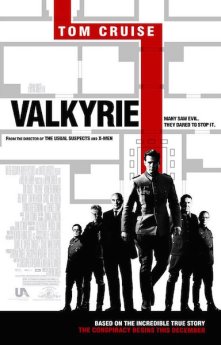 After abandoning the X-Men franchise for a
 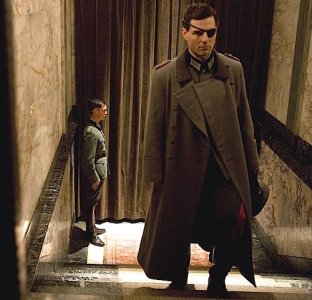 One of the stated aims of the conspiracy is to show the rest of the world that not everyone in Germany believed in what Hitler and his inner circle were doing. It may have taken us a long time to realise that, for fairly understandable reasons, but quality films like this help get the message out. Singer has crafted a proper thriller here, replete with scenes of edge-of-your-seat tension. Many a filmmaker can’t manage that with a fictional storyline, never mind one where we know exactly how it turns out.
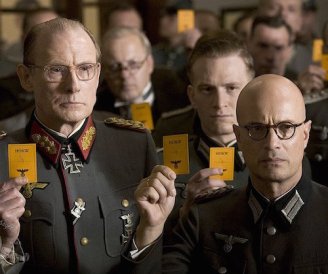 but nor is he in simplistic action hero mode.
 I think I’ve previously discussed my life-long love of the X-Men franchise, so I shan’t go into detail again, but suffice to say Days of Future Past has been one of my most-anticipated movies ever since the title (which is that of a classic and influential story from the comics) was announced. Thank goodness, then, that the final result doesn’t disappoint.
 Beyond that, there’s the characters: the younger versions are having to deal with the fall-out from
  Not everyone gets to shine in a cast this big, although pretty much everyone gets a moment. The future-set cast have the least to do, people like Halle Berry turning up to do little more than show their face, though Stewart and McKellen get a moment or two worthy of their talents. After he was the focus of the last film, Fassbender is slightly shortchanged here; but after McAvoy gave him essential support in First Class, Fassbender plays the same service here, informing Charles’ journey. Of the new additions, Evan Peters as Quicksilver (that’s the one who’ll also be played by Aaron Taylor-Johnson in
  Later, there’s the aforementioned ‘slow-mo’ sequence, and the grand climax, which offers more “fly something big around” antics a la First Class’ submarine, only considerably grander. Yet for all the spectacle, the final moments once again come down to character: what is Magneto prepared to do? What is Mystique prepared to do? Will anyone listen to Charles? And so on. Even the much-vaunted Marvel Studios movies tend to base their climaxes in slabs of ‘epic’ CGI crashing into each other; Days of Future Past does that for a bit, then brings the characters back into focus for the real final beats.
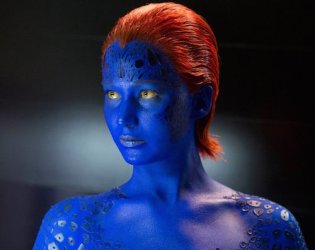 (Jennifer Lawrence being the third pillar of the past triumvirate, as they’ve already focused on Xavier and Magneto). While Days of Future Past does wrap up the majority of its threads (the open-ended ones are answered by previous films, if you want them to be), there’s plenty there to play with in the next film (and, perhaps, ones beyond that) if they want to… which they do.
 100Films.co.uk