
David Bowers & Sam Fell | 81 mins | DVD | U / PG
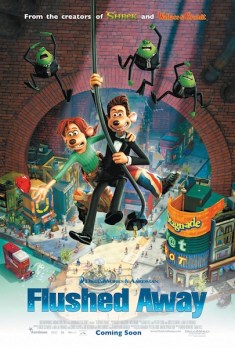 Aardman Animations, the Bristol-based company most famous for Wallace & Gromit and Creature Comforts, branch out into CGI for the first time with this tale of rats trying to save the sewers of London. CGI rats? Yes, thoughts of Ratatouille are inevitable. Can Aardman beat Pixar at their own game? You might be surprised…
The primary reason for comparison here, as mentioned, are the rats. Despite Pixar’s stated intention to redeem rats in the eyes of viewers — to turn them from vermin into loveable little fluffy things, essentially — I felt the same about bloody rodents at the end of Ratatouille as I did at the start. Here, however, they’re Disneyfied (oh the irony) — where Pixar had cartooned versions of the real thing, Aardman have given them a human shape. It’s surely this disjunction from reality that makes them more likeable, but it does mean there’s never that distracting “but they’re vermin” impulse. They’re humanisation is helped by the performances of a star-studded cast, including Hugh Jackman and Kate Winslet amongst the ratty voices. Ian McKellen is a fabulously dastardly villain, ably supported by a pair of comedy henchman… and Jean Reno as a French frog. Yep, the humour is that British.
One thing Pixar unquestionably still excel at is the actual animation, however. Ratatouille is gorgeous to watch and will take some effort to beat; Flushed Away, on the other hand, doesn’t really come close to Pixar’s earlier efforts, never mind Ratatouille’s artistry. It’s mostly passable, especially once the action migrates to the mini-London in the sewers, but at other times it looks little better than a computer game. The second biggest mistake (I’ll get to the worst in a minute) is opening the film in a pristine up-market house — presumably it was an artistic choice to have it so tidy and clean, but this has the unfortunate side effect of highlighting the animation’s plainness right from the start. Once the story moves underground the level of detail improves, but it takes a little while to get there.
A bigger error was made with the lip-synching, however, and obviously this dogs the film throughout. Aardman consciously designed the characters’ mouth movements to imitate the clay animation the company usually employs (Flushed Away is CG because of the volume of water featured, an element too complex to achieve in stop motion). Instead of invoking that stop motion feel it just looks cheap and underdone — such jerkiness is easily ignored as part of the technique when viewing clay animation, but there’s no need or excuse for it in CGI. Ultimately it looks like the animators were lazy or the rendering has skipped frames, and is frequently distracting.
It’s possible to put the disappointing quality of the animation aside though, because the script’s a good’un. Like the animation it doesn’t really get going until we’re flushed into the sewers, but once there it’s pleasantly witty, full of good one-liners and clever visual gags. The latter includes a good line in intertextuality, with entertaining and easily-noticed references to Finding Nemo, X-Men and others, including numerous nods to Wallace & Gromit. They don’t dominate, but their variety makes for a nice bit of I-spy for both kids and adults of varying degrees of film-buffery.
Despite the inevitable comparisons, Flushed Away is really a very different beast to Ratatouille. Pixar’s effort is, for want of a better word, artistic; Flushed Away is simply a family-orientated slice of adventure-comedy… rather of the kind you might expect Pixar to produce. Aardman’s initial CG effort is not better or worse than ‘the other CG rat flick’, but it is perhaps more like what you — or, at least, kids — would expect. With a starry cast, strong script and good sense of visual comedy, Flushed Away manages to overcome its lower production values to create an above-average piece of entertainment. And that’s, as Wallace would say, cracking.

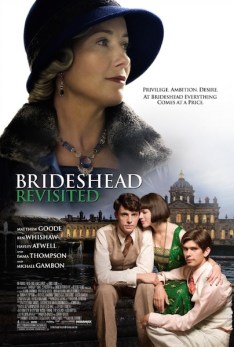 I’ve not seen the miniseries and I’ve not read the book, but I do know that both are considerably longer than Jarrold’s two-and-a-quarter hours film. So why does it feel so slow? Perhaps it’s the pair of opening flashforwards (easier to refer to them as that than to the majority of the film as one great big flashback), an overused technique these days that here serves no purpose whatsoever: there’s no additional insight on events that follow (or, rather, precede) by placing these snippets at the start, and there’s no new perspective on the snippets when we reach them chronologically (except that, second time round, we actually know who the characters are). It’s the most niggling fault in a film that, like my just-reviewed
 I can’t help but wonder if, back in 1985, there was any audience confusion between A Room with a View and
  Period drama focusing on the friendship between Queen Victoria and her Highland servant John Brown, alongside political threats faced by the British monarchy in the 1860s.
 Julie Walters makes her big screen debut opposite Michael Caine in this British comedy drama about a 26-year-old University student and her disenchanted drink-sodden tutor, adapted by Willy Russell from his own play and directed by the man behind
 2007 #32
 100Films.co.uk