
Steven Caple Jr. | 130 mins | Blu-ray (UHD) | 2.40:1 | USA / English & Russian | 12 / PG-13

Creed II is, as its title suggests, a sequel. But it’s even more than that — it’s like a sequel squared; perhaps even a sequel cubed. How so? Well, it is, of course, a direct continuation of Ryan Coogler’s Creed, a boxing drama which itself served as a follow-up of the Rocky films. But, as if being a sequel to a follow-up wasn’t enough, Creed II is also directly connected to the plot of Rocky IV. That makes for a funny old combination of influences: whereas Creed was arguably the most grounded and realistic Rocky movie since the first (and, with it, one of the series’ very best instalments), Rocky IV is undoubtedly the most cartoonish and ridiculous entry in the canon (although it was also the most financially successful and has a certain cheesy charm). Can Creed II reconcile the tonal disparity between its two primary forebears?
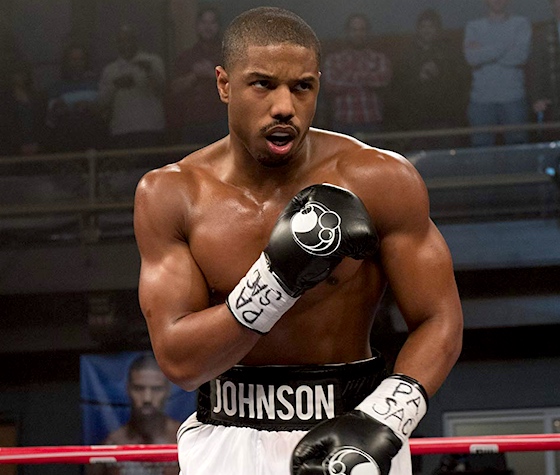
For those not up on their Rocky continuity, Russian boxer Ivan Drago (Dolph Lundgren) killed Rocky’s mate Apollo Creed during a match in the ’80s (as seen in Rocky IV). Now, Drago’s son Viktor (Florian Munteanu) is a boxer too, and with Creed’s son Adonis (Michael B. Jordan) newly crowned as the world heavyweight champion, Drago Sr arranges for Drago Jr to challenge Creed Jr — who, against the advice of Rocky (Sylvester Stallone), accepts. But with the distraction of a pregnant fiancée (Tessa Thompson) and without Rocky to train him, is Adonis actually ready to take on a Drago?
The film’s title is, obviously, meant to be read “Creed 2” because it’s a follow-up to “Creed 1”, but if you chose to read it as “Creed the 2nd” it wouldn’t be inappropriate to the movie’s themes. This is a movie all about parents and children, what they owe to each other, and how they live up to that — or fail to. It’s a meaty subject to chew on, and credited screenwriters Juel Taylor and Sylvester Stallone (there’s also a story credit for Sascha Penn and Cheo Hodari Coker) examine it from almost every conceivable angle. As Ivan pushes Viktor to vicariously reclaim their reputation, Adonis struggles with the legacy of a father he never knew, as well as the dilemma of becoming a father himself, to a daughter who may be born disabled (due to possibly inheriting her mother’s hearing condition). And while there’s a lot of father/son stuff — as you’d probably expect in a film about such a stereotypically-manly sport — the film doesn’t neglect the role of mothers either, with both Viktor’s and Adonis’s having key parts to play in how things unfold.

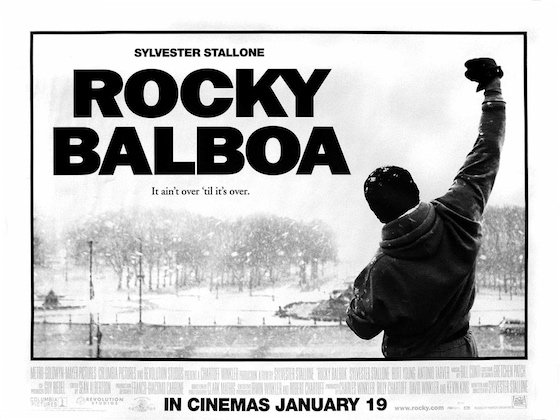
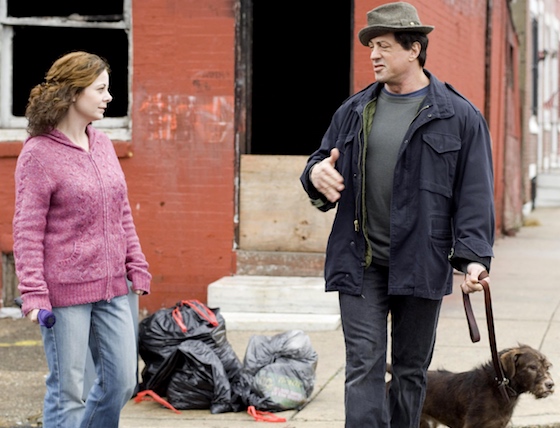
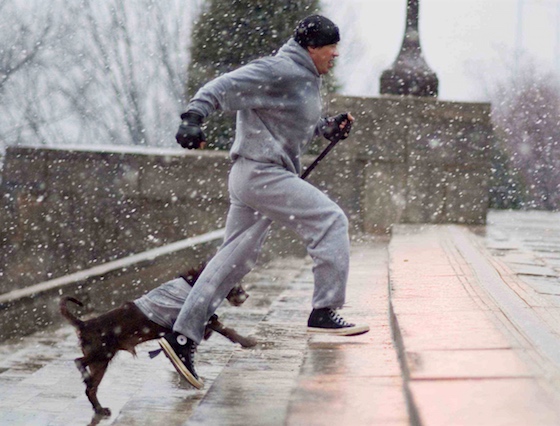
One aspect of that is that the film does a lot to humanise the Dragos. In Rocky IV, they were just nasty foreigners — that film is, fundamentally, anti-Russian pro-US Cold War propaganda. Here, they’re presented as people who have problems and issues of their own. I remember Stallone talking before about how it’s always more interesting if the opponent isn’t just a Villain, but is a real character with their own arc (this was in the audio commentary for Rocky Balboa, for which Stallone injected some autobiographical material into the opponent’s storyline). That’s obviously something he failed to achieve in IV, but it’s reestablished here and, well, he’s right. It’s not like it confuses the drama of the fight — there’s no question that Creed is our hero and the one we want to see triumphant — but by giving depth to the Drago’s, showing why the fight really matters to them too, it rounds out the story; and, in this case, provides additional perspectives on the parent/child themes.
It’s the way these films have something thematic to say that helps elevate them above mere punch-’em-ups. But it works as a sport/action movie too, finding some new twists within the familiar plot beats. I mean, when the Creed-Drago match comes before the film’s even reached the hour mark, you already have a fair idea how it’s gonna go. Without giving away specifics, what they’ve come up with leaves the contest as unfinished business, which is better motivation for the inevitable rematch than a simple “the hero lost the first time so he has to have a re-do so he can win”. This thinking extends to the final bout, too: it’s the first time in the series since Rocky III that the climactic fight doesn’t go all the way to the final round. It’s a nice change to dodge that predictability. Of course, these are really just variations on a theme — they’re still boxing matches; the options on the table are still “hero wins” or “hero loses” — but, as with many genre pieces, the devil is in the detail, and Creed II has good details.
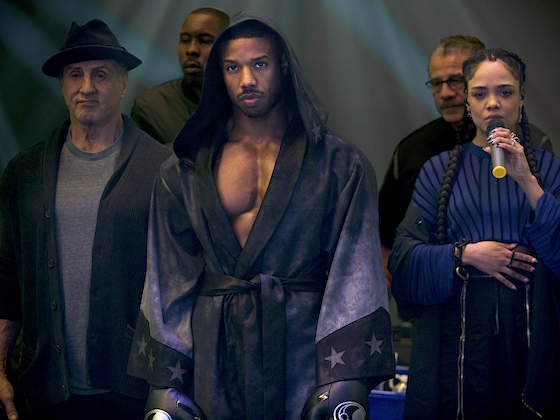
Although this is primarily the second Creed film, there’s no doubt that it’s a little bit Rocky VIII, too. Stallone keeps saying he’s done with Rocky, then comes back for one more, but this really feels like it could serve as an ending. Well, so did the previous two films, but the idea of a grudge match between the sons of Apollo and Drago is an obvious one that I’m not surprised Hollywood came up with. It factors in and closes off so much of the series’ legacy that it’s difficult to see what would be of similar import to justify a second sequel. They could always do one “just because”, of course — there’s always a way; always more to a character’s life — but whereas the very existence of Creed suggested the potential for a sequel featuring Drago, now there’s no story left begging to be told. Nonetheless, Creed III has been announced. Whether Stallone is tempted back or sticks to his guns and lets the series move on without him, only time will tell.
In the meantime, Creed II is a worthy addition to this storied franchise. If it can’t go the distance against some of the earlier entries, that’s through no fault of its own — the best Rocky/Creed films are all-timers; or, as they say in sporting circles, GOATs.

Creed II is available on Amazon Prime Video in the UK from today.








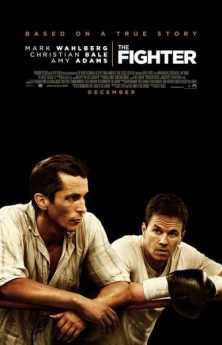 Oscar-winning true-story drama that relates the early career of boxer Micky Ward (Mark Wahlberg), a coulda-been-a-contender type held back by the training of his half-brother, ex-boxer turned drug addict Dicky (Christian Bale), and the management of his controlling mother (Melissa Leo), not to mention the cadre of harpy-ish sisters. Micky gains some confidence after entering a relationship with barmaid Charlene (Amy Adams), who’s prepared to stand up to his family. He breaks away from them and gets better opportunities, but soon realises that to win he’ll need to combine the best of both worlds.
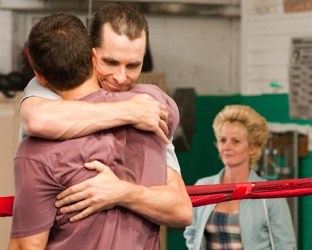 Although this is technically Ward’s story, it’s as much about his older half-brother, washed-up fighter turned part-time trainer and full-time crack addict Dicky Eklund. It’s another of Christian Bale’s extreme weight gain/loss roles (in this case, loss), but there’s more to it than such physical exertion. Bale inhabits the character, and a brief clip of the real Dicky during the credits suggests he’s done so very accurately. His performance is mesmeric and definitely worthy of that Oscar. For the rest of the cast, Amy Adams holds attention equally in a less showy role, and even Marky Mark isn’t half bad. Melissa Leo also won an Oscar for her performance, which I forgot until I read so after — it was the one she controversially funded her own ad campaign for. I guess that paid off.
 The Fighter isn’t without its faults, though. There’s a certain element of cliché to the story arc — whether that’s just fact emulating fiction, or the screenwriters imposing familiar shapes on to what really happened, I don’t know. It could also stand to lose a few minutes here and there, especially when it goes round in circles about whether Micky should be trusting his family or not. And talking of movie clichés and comparisons to other films about fighting, watching it in close proximity to
 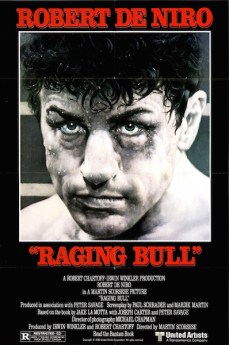 It would be boring if we all liked the same stuff, wouldn’t it? I’m sure there’s at least one ‘universally’-loved classic that we each dislike. Heck, tends to be every ‘universally’-loved classic has at least one Proper Critic that dislikes it. The flip side of this is that, in my opinion, if you don’t like something that everyone else does, there’s a fair chance it’s you who’s missing something. That’s a rule I apply to others, naturally, but I also try to bear it in mind myself (and, at the risk of sounding terribly arrogant, I think a few more people could do with thinking the same).
 The aforementioned fights, on the other hand, are full-on Cinema, and glorious for it. The make-up is also very good. Relatedly, De Niro’s physical transformation, from lithe boxer to washed-up fatso, is remarkable. Decades before the likes of Christian Bale and his
 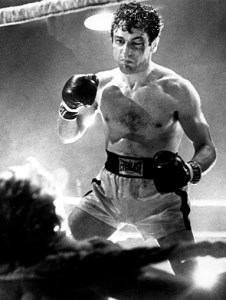 Based on where we find him at the end, I guess LaMotta would appreciate a Shakespeare quotation. For all the film’s “greatest of all time” acclaimedness, this is the one that came to my mind:
 Once upon a time, Real Steel would have been rated PG, been aimed at 7- to 10-year-old boys, and would probably have been quite the success. In the current Hollywood moviemaking climate, however, it’s rated PG-13, consequently aimed at teenage boys and grown men who still have the tastes of teenage boys, and seems to be regularly slated in online comment sections.
 Some things are also distinctly unresolved: just why was Evil Lady prepared to pay $200,000 for a no-hope junkyard robot? I figured there was going to be some Nasty Secret to come out, especially as there’d been hints of the robot having extra abilities… but no. And what was up with the kid being 11 but Jackman always thinking he was 9? Figured that was going somewhere too. There’s talk now of a sequel — I hope such random bits weren’t intended as elaborate seeding for a follow-up, because that’s just irritating. That said, it would be nice if whoever’s in charge spotted those things and built on them in the sequel’s story.
 Real Steel is a good family movie, masquerading as a teenage-focused robot action blockbuster thanks to its 12 and PG-13 certificates. The true best audience for it will be those around the same age as the central kid: they won’t find him as annoying as older viewers will, and the whole robot fighting thing will just seem exciting.
 100Films.co.uk