
Ben Wheatley | 91 mins | Blu-ray | 2.39:1 | UK & France / English | 15 / R

The latest film from director Ben Wheatley (he of Kill List, Sightseers, A Field in England, High-Rise, and the rest) is by far his most accessible movie yet. Set in Boston in the ’70s, it sees two IRA fellas (Cillian Murphy and Michael Smiley) arranging through a pair of black market brokers (Brie Larson and Armie Hammer) to purchase guns from some arms dealers (Sharlto Copley and Babou Ceesay), with each side bringing along a couple of chaps to carry boxes (Sam Riley, Jack Reynor, Noah Taylor, and Enzo Cilenti). But things go sideways when a couple of those minor participants have a falling out, leading to a protracted shoot-out. “Protracted” as in “two-thirds of the movie”.
If an hour-long gunfight doesn’t sound like your cup of tea, maybe Free Fire isn’t the movie for you. Conversely, this isn’t a Jason Statham flick: instead of an hour of highly-choreographed gunplay, most of the participants get injured early on and end up seeking cover around the rubble-strewn floor of an abandoned factory, occasionally taking potshots at each other. Most action movies are defined by their characters sprinting about — in this one, they crawl. The screenplay was partly inspired by FBI ballistics reports from real gunfights, so there’s actually some veracity to how things go down.
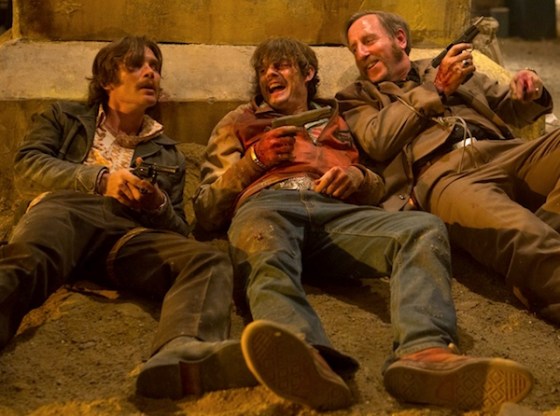
So, on the one hand, it has a definite grit and reality. Bullet wounds actually hurt, leaving characters dragging themselves around in the dirt. Although there are occasional bullet-flying free-for-alls, just as often every shot counts. Similarly, their guns run out of bullets — frequently. Sometimes, permanently. On the other hand, however, it’s a bit like something Quentin Tarantino or Guy Ritchie might once have made, although thankfully without slavishly duplicating either of their overfamiliar styles. Without being an out-and-out comedy, it’s often pretty funny, thanks to the ludicrous situation and outrageous characters — all while remaining just this side of plausible, that is.
Unfortunately, the thin premise means it lags a bit in the middle. It feels in need of a clearer overall purpose and one or two more ideas. A better sense of space would help, too. We know who’s shooting at who, but for a long time we don’t really know where they all are in relation to each other. That’s not a deliberate choice to evoke the confusion of a gunfight or something — the characters all seem to know where they need to point their weapons. It’s a lack of filmmaking clarity, exposed in the Blu-ray’s behind-the-scenes featurette when it’s revealed how meticulously and thoroughly the whole thing was mapped out — it’s a real shame that doesn’t translate on screen.
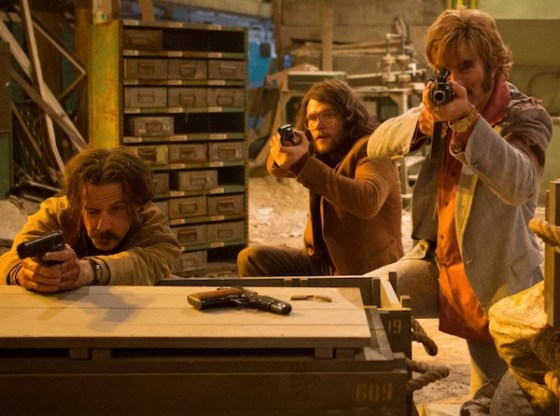
These are flaws that hold Free Fire back from perfection, mind. It’s still a fitfully funny, sporadically tense, gleefully violent hour-long shoot-out. And events occur in real-time, too, which I always have a soft spot for. When all is eventually said and done, I doubt critics and scholars are going to hold it up as a key film of Wheatley’s career, but I’d wager it’s the one most people will get the most enjoyment from.

Free Fire is released on DVD and Blu-ray in the UK today.
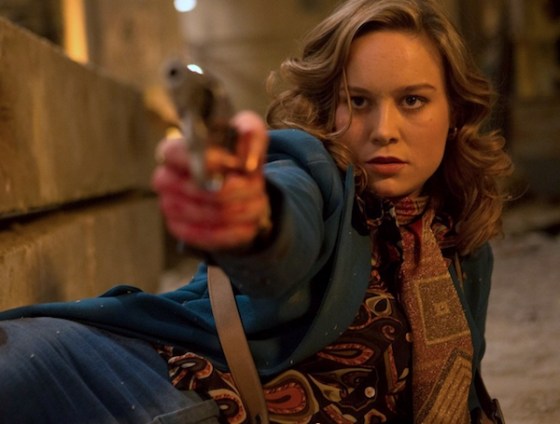
She isn’t pictured in the review, so here’s a bonus one of Brie Larson being badass:
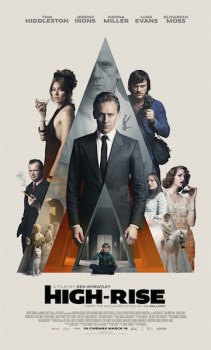 I was looking forward to this sci-fi-ish ’70s social satire, but, having let it percolate for a few months, I still have no real grasp of what it was about. I mean, it’s obviously about society, but what its point about society is… I have no idea.
 I appear to be coming at director Ben Wheatley’s films in reverse order (having covered
 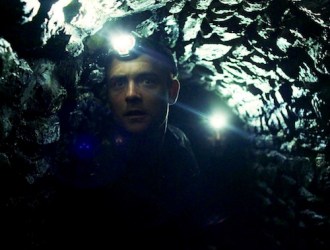 Kill List mixes in its genre elements — and they’re elements from a couple of different genres at that — so gradually that, as I said, it’s hard to discuss them without spoiling the film. (Much like the film itself, this review is getting progressively more revealing, so jump off when you’ve had enough.) It’s kind of a compilation of traditional British movie genres: we begin with kitchen sink, then discover we’re actually watching a crime film, before the final act swerves (though not without foreshadowing) into folk horror. The skill of Wheatley, and his co-writer Amy Jump, is in not making these transitions too implausible. That’s not to say they’re not surprising, but the doom-laden music, inexplicable proclamations by some characters, and a couple of very strange events should all clue the viewer in to the film not being a common-or-garden hitman flick.
 The final act is naturally where the film reveals its overarching purpose… or rather doesn’t reveal, because there are a shortage of answers here. It’s a lot more straightforward than A Field in England, but it still offers few (or, some would say, no) explanations for what’s occurred. According to Wheatley, the screenplay was more explicit about what was happening and why, and so was some of what they shot, but he cut back on the exposition to leave it up to audience interpretation. This isn’t a film to passively watch and have everything explained, but even viewers prepared to do a little work for themselves may find it frustrating.
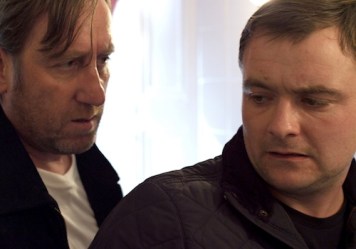 Memorable sequences keep it ticking over throughout — and so they should: taking inspiration from the likes of Kubrick and Stephen King, Wheatley started from specific images and worked backwards to a plot. Here, I think that method has been effective. The abstruse ending won’t be to everyone’s taste, but the journey there is worth experiencing.
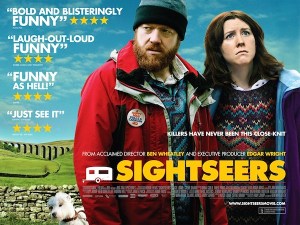 “He’s not a person Tina, he’s a Daily Mail reader.”
 100Films.co.uk