
Last month, I said this month would hopefully feature Stranger Things 3, Veronica Mars season 4, and The Boys season 1. It doesn’t. Not any of them. But I’m not short of other things to write about…

Years and Years
 The writer most popularly known for reviving Doctor Who, Russell T Davies, returns to science fiction for the first time in almost a decade with this acclaimed miniseries. This is a very different kind of sci-fi, though — no space invaders or malicious AI or mad scientists here. No, this story begins in 2019 as we know it and then moves across the next 15 years to explore just where we’re headed, in a realistic and grounded way. It focuses on a normal family from Manchester — four siblings, their grandmother, and assorted spouses and children — and how the changes in society and technology affect them. It’s a story of the ordinary people; the folks who don’t shape history, history happens around and to them.
Cannily, it dodges the Brexit bullet — there are implications it went ahead, but it doesn’t have any bearing on the story: these big changes are happening everywhere anyway, whether Britain leaves the EU or not. What it is aware of is how much society and technology are now intertwined. In the first episode, a teenager comes out to her parents as trans — not trans gender, but transhuman. She wants to ditch the limitations of flesh and live forever as data. Some people will scoff at that, but the way it’s presented and plays out over the next five episodes is highly plausible. RTD tackles a whole host of societal issues in a similar way — immigration, the gig economy, nationalism, etc — all mixed together in a way that reflects real life. After all, we’re never just dealing with or worried about one thing at a time, especially nowadays.
As someone who grew up in the ’90s and ’00s, learning about the Cold War as an historical event, I sometimes wondered how people lived their day-to-day lives with the constant threat of nuclear annihilation. Except that’s not what it was actually like, was it? It may’ve been there, in the background, ebbing and spiking depending on the political factors of the day, but people just got on with their everyday lives while that played out on the news. It’s the same nowadays, isn’t it? There’s so much crap going on in the world, and most of it we just see on the news — unless it happens to butt into our own lives for whatever reason. And Years and Years is that same thing, but projected into future events; and not fantastical things, like a mission to Mars or an AI breakthrough, but a very plausible extrapolation of where we’re headed.
Personally, I thought it was a work of borderline genius. RTD has always had a way with characters — of quickly shading in believable individuals, their families and lives; of writing scenes that sing with dialogue and interactions that seem plucked straight from real life — and here that’s married with an imaginative vision of the near future, the two working in harmony to create a drama that’s also a warning about what we’re getting ourselves into… although it’s also an admonishment, showing us what we’ve got ourselves into and wondering if it’s too late to stop it. But there’s a dash of hope in there, too; just a sliver of “maybe it’ll be mostly OK in the end.” Fingers crossed.
Peaky Blinders Series 4
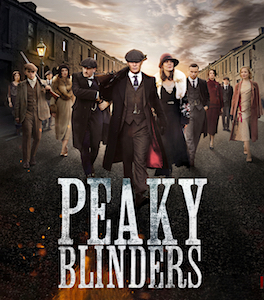 Birmingham’s premier gangsters return with a storyline that forces them to reckon with their past actions. So it’s unfortunate that this is a show that can’t be doing with recaps at the start of episodes. I spent most of the first instalment trying to remember the events of previous series and how they’d led to where things were, which is an unwelcome distraction that could be easily solved with a simple “previously on” at the opening. I don’t know why Netflix hate them so much (well, I do — it’s the assumption you’ll just binge-watch everything, and if you don’t then they want you to feel you have to; and we’re all just buying into what we’re told to do, which is half the problem (funnily enough, that’s a lot of what Years & Years was all about…)
Anyway, once things get up and running, and you can get your head around what’s going on enough to be going on with, this is another thrilling story of ’20s criminality. Adrien Brody pops in as a series-long guest star, a Mafia enforcer from New York who has a vendetta against the Blinders because they killed his dad, and now he’s brought his American muscle to wipe them out. With bigger forces out to gobble them up, the Blinders must rely once again on a mix of their wits and straightforward firepower. The show itself is the same, blending together tricksy plotting (Tommy Shelby may always have a plan, but we’re not always privy to it until after the fact) and impressively staged action scenes (there’s an extended shoot-out at the start of episode five that must’ve eaten up a lot of the budget; and if it didn’t, they’ve done a good job making it look like it did). In fact, the series as a whole looks stunning — style drips off the screen, whether it be the slow-mo hero walks or the pulsating rock soundtrack.
For my money, the plot was a little smaller-scale than previous seasons, despite involving ever-bigger outside forces, which made it feel almost like an extended movie rather than a dense season of television. But don’t take that criticism too much to heart — previous seasons may’ve been even better in my personal estimation, but this is still top-drawer drama.
Unforgotten Series 3
 Where the other shows reviewed this month are big, brassy productions told on a mythic scale, Unforgotten is almost the opposite, and yet it tackles themes no less grand. But it’s a quiet, understated drama, as London detectives Nicola Walker and Sanjeev Bhaskar (along with their team) investigate a cold-case murder, in the process having to tackle the fallout that time has wrought on the victims left behind.
This time, the skeleton of a teenage girl is found under a motorway, and it turns out to be a girl who disappeared on December 31st, 1999, and was a huge story at the time, which naturally leaves our little team under intense media scrutiny. (It’s somewhat amusing seeing this ITV-produced show get to use real ITV News presenters and graphics while the hero characters are slagging off the attitudes and methods of the media.) Unforgotten has the usual murder mystery array of suspects for us to theorise about, but what it also does well is portray the terrible sadness of such crimes. Reveals in the final episode push the storyline in a slightly different direction which allow it to pull focus in a different direction, too, although I’m not sure it really has the time or space to dig into that aspect.
Like Peaky Blinders, I don’t think this was the very best series of the programme (series two was harder hitting and even more emotionally complex), but it’s still more or less on form. It wears its heart on its sleeve, trying to treat these victims and suspects not just as pawns in an elaborate guessing game, but as real people whose lives have been torn apart. That makes it one of the better cop shows on TV, I think.
Things to Catch Up On
 This month, I have mostly been missing Wu Assassins on Netflix, starring Iko “The Raid” Uwais. The trailers look perhaps a bit cheesy, but also promise regular doses of Uwais’ incredible combat skills, so that’ll do me. Elsewhere, Preacher has embarked on its fourth and final season. Considering I’ve not seen most of season two and none of season three, that’s a bigger catchup project. And talking of stuff I’ve not seen, I never got round to Mindhunter season one, even though David Fincher directed some of it, and now there’s a second season, which he’s also partly directed. Considering it’s been five years since his last movie, I do kinda need that Fincher fix…
Next month… take your pick for what I’ll’ve watched and what I’ll’ve missed out of Peaky Blinders season 5 (starts tonight), Dad’s Army: The Lost Episodes (starts tonight), Sanditon (starts tonight), The Great British Bake Off (starts on Tuesday), Carnival Row (out on Friday), and The Dark Crystal: Age of Resistance (out on Friday). Bear in mind: I’ve only just finished one season of Peaky Blinders, and I didn’t much like The Dark Crystal. (Why do I feel like that means it’ll be the only one of these I end up actually watching…)
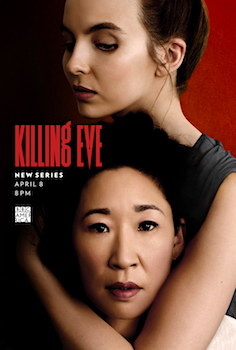 Adapted (loosely, I understand) from a series of novellas, BBC America’s Killing Eve is a spy thriller with a difference. Quite a few differences, really. That’s no doubt part of why it’s been such a success. Its US ratings aren’t huge, but it seemed to be talked about all over Twitter when it was airing there, and it went on to win some awards. When it finally made it to UK screens some five months after its US premiere, UK viewers went even bigger for it (it gets more than ten times as many viewers here as in the US, according to the figures I found), and it scooped up even more awards.
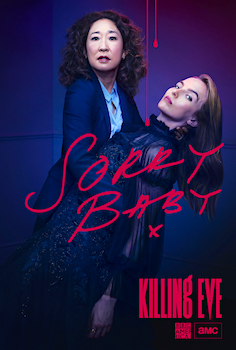 The second season is still airing in the UK (people who didn’t even notice that five-month wait for season one got ever so het up when the US got the second run two months before the UK), so no spoilers here. Season two brings with it a new showrunner, and it does seem to lack some of that special spark in the writing, although to emphasise that as a criticism would be unfair: it’s still a lot of fun, and the cast know how to get the most out of the material. With Villanelle on the back foot and Eve diverted onto another serial killer case (a subplot which peters out long before it’s been used for maximum drama, sadly), there’s a different dynamic to the early part of the season. Later on (in the episodes that’ll air next month over here) things come together in new and surprising ways, which is more rewarding. It lacks the striking freshness of the first season, but it still has its moments. And, of course, it leaves things in an intriguing place for the already-confirmed third season.
 I’m not sure there are many people like Stephen Poliakoff working in TV nowadays — people who are seemingly given free rein to author standalone miniseries exactly how they want. I’m sure it’s more complicated behind-the-scenes than it looks from the outside, but it appears like Poliakoff’s reputation is solid enough that he’s allowed to write and direct with his own particular voice for entire six-episode stories. Honestly, I’ve skipped his last few, because I haven’t always found his work wholly engaging, but this espionage-tinged series sounded more up my street. Like Killing Eve, it’s an idiosyncratic take on the spy genre; though whereas that’s quirkily comical, Summer of Rockets is more rooted in period family drama.
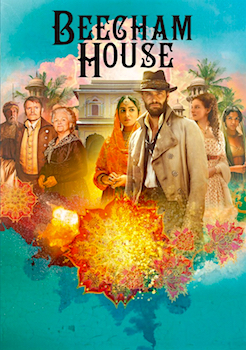 It’s been a few years since Downton Abbey ended now, so it makes sense ITV continue to search for a replica of its success. I think Victoria ticked that box for a while, until its ratings sloped off against Poldark… and so now we have Beecham House, which mixes a bit of Poldark into the familiar period soap opera mix. There’s also some pedigree behind the camera: the series is co-created, -written and -directed by Gurinder Chadha of Bend It Like Beckham fame. I think it’s meant to be vaguely educational, too, as it’s set in a period of Indian history a bit earlier than we’re familiar with from other British Raj dramas.
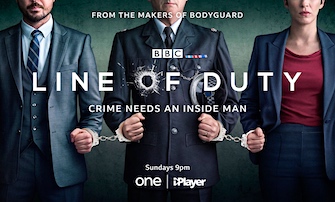 Every series Line of Duty introduces us to a new case of possible police corruption for the dedicated boys and girls of AC-12 to expose, and every series it turns out to tie into the overarching tale of deep-rooted links between organised crime and a never-ending parade of bent coppers. But could they finally be getting to nub of it all? They’ve got a solid lead… and so, it seems, does their newest case: an undercover officer who seems to have gone native, but might actually be onto the top man behind it all. The real problem is, he suspects it’s good ol’ Ted Hastings, the head of AC-12 himself. Well, who better to run police corruption than the guy in charge of investigating corruption? And it forces his underlings to ask: are his borderline-illegal actions just bold moves to get the job done, or is he trying to cover for something?
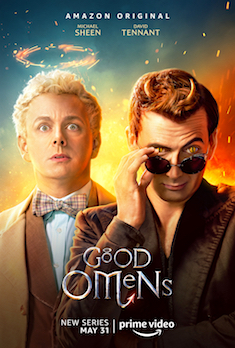 This month, I have mostly been missing stuff left, right and centre due to my house move. Sorry to bring that up again, but it’s really upended my viewing schedule. Headliners include the Amazon/BBC adaptation of Good Omens — it’s one of my favourite novels, it’s adapted by one of the original authors, and it stars some of my favourite actors, so I’ve been very much looking forward to it; but because of all that I want to be able to sit down and watch it properly, and I’ve just not found the time yet. Another is the final outing for the MCU on Netflix, Jessica Jones season 3, which is perhaps blighted by the fact it’s 13 episodes long — that wasn’t a lot once upon a time, but as things trend down to 10 or 8 or even the good old UK standard of 6, it feels like more of a commitment. Other things that have been similarly afflicted include the feature-length Game of Thrones making-of, The Last Watch; film-to-TV sitcom adaptation What We Do in the Shadows (and
  100Films.co.uk