
Michael Crichton | 89 mins | streaming (HD) | 2.35:1 | USA / English | 15 / PG
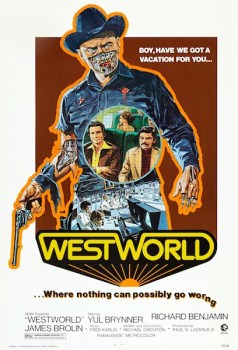 When writer-director Michael Crichton hit upon the notion of a theme park where the future-science star attractions broke free of their shackles and endangered the lives of the guests, it was so good it served him twice: he replaced the initial murderous AI-powered robot cowboys with rampaging genetically-engineered dinosaurs and sparked a multimedia franchise of enduring popularity. His first attempt hardly faded into obscurity, mind, bedding in as a minor sci-fi classic that HBO has now seen fit to reboot as a TV series, which premiered on Sunday in the US and debuts in the UK tonight. I think this new version may be most welcome, because Westworld has a great concept but, when it comes to the original film, that’s almost all it has.
Set in the near future, the film follows two friends (Richard Benjamin and James Brolin) as they visit an amusement park where you can live for a time in thorough recreations of either ancient Rome, medieval Europe, or the old West. It’s an immersive experience where you’re kitted out with era-appropriate clothing, stay in authentic lodgings, and the staff really believe it all — because they’re robots who’ve been programmed to do so, distinguishable from humans only by their imperfect hands. The film follow the chums through this process and the fun they have pretending to be gunslingers, though one of the robots (Yul Brynner, done up as the spit of his character from The Magnificent Seven) seems repeatedly antagonistic towards them, and, behind-the-scenes, the repair staff are baffled by some robots’ out-of-character actions.
Westworld doesn’t even reach the 90-minute mark, but even then there isn’t quite enough story to fill the running time. There’s a big dose of wish fulfilment in seeing Benjamin and Brolin getting to just enjoy the park — wouldn’t it be cool if this was real? Wouldn’t you want to go there? Though the price tag would put most people off: it’s $1,000 a day, which, factoring in inflation from 1973, means a two-week stay would now cost a little 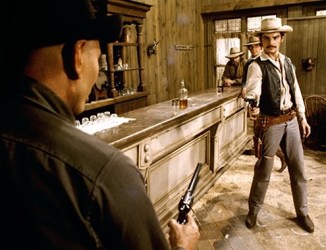 under $76,000, or about £58,200. The potential threat of the robots malfunctioning is built up gradually here and there, in asides from what our ostensible heroes are up to, and isn’t explained. There are nods to the fact the human staff don’t actually know how the robots work, but why should that be? Some of them were apparently designed by other robots, but how did the designing robots come about? Rather than explore any of its science fiction themes, the film just uses the basic idea to have the robots go on a killing spree right at the climax. This is something Crichton definitely turned around for Jurassic Park, where how it was done is explained and debated… and then the creations go on a rampage. Best of both worlds, that.
So this is where there’s space for HBO’s new version. I haven’t read too much about it (avoiding spoilers ‘n’ that), but given the long-form needs of TV I’m presuming it’s going to dig into the science a bit more. Co-creator Jonathan Nolan has already demonstrated an interest in the whys and wherefores of artificial intelligence through his last TV series, Person of Interest (which I’ve discussed in several of my monthly TV overviews), so I’m presuming it’s going to take Crichton’s broad idea but then be a little bit Ex Machina: The Series as well. Sounds good to me. Maybe this will be a reboot that pays off, because while the original film does offer Crichton’s superb concept, plus a few straightforward action/suspense thrills, it’s too slight to really deliver on the inherent promise.

The new Westworld starts on Sky Atlantic at 9pm.
 British Academy Film Awards 2016
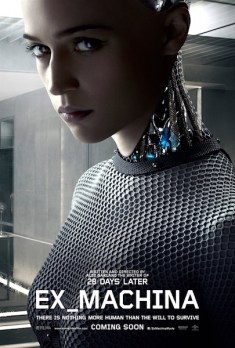 A British sci-fi movie from a first-time director will tomorrow take a place at the table (well, in the auditorium) alongside 2015’s biggest awards contenders, as it vies for multiple gongs at this year’s BAFTAs — and it stands a very plausible chance of walking away with several of them, too. I hope it does, because, after a year that brought us awards-quality sci-fi bombast (
 In truth, it’s not the most thorough deconstruction of what it means to be human and whether artificial intelligence can have that right, but it does touch on these issues and, in so doing, leaves them open for the viewer to mull over for themselves, or debate with friends, or however else one likes to consider their movies post-viewing (like, I dunno, writing about them on the internet or something).
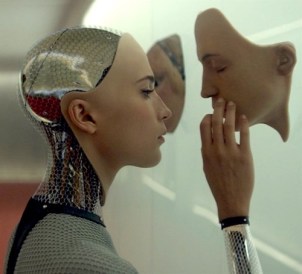 And his dance scene is surely one of 2015’s highlights (there’s an extended version hidden on the US Blu-ray, which is a treat). Garnering the most praise (and awards) is Alicia Vikander’s take on an AI. It’s a tricky role to tackle, because she’s not just a robot — that would defeat the point of Nathan’s exercise — but nor is she fully human. It’s a tightrope of a role, a fine line to walk, and Vikander negotiates it with aplomb. To say too much more would be to spoil it.
 Those after a dissertation-like hard-science deconstruction of the meaning and possibilities of AI will likely find Ex Machina slightly lacking, as will anyone after the crash-bang thrills most mainstream sci-fi provides. Viewers prepared for a decently thought-provoking dramatic thriller about near-future tech, however, should be both engrossed, and grateful that movies like this are (for the time being) still getting made.
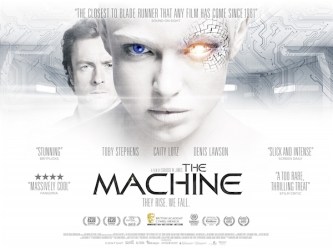 In a near future where Britain is part of a Cold War against China, a scientist (Toby Stephens) has been trying and failing to perfect artificial intelligence at a government research facility. When he hires a new associate (
 This may explain why the performances are a mixed bag. Toby Stephens can’t seem to find much to work with in his lead role, despite supposedly having a couple of emotional arcs. Lawson sleepwalks through his turn as a shady government higher-up. Lotz is unremarkable as a human, but fantastic as the AI-driven machine. Her performance as the latter is the primary reason to consider watching the film.
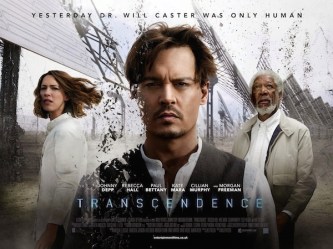 Christopher Nolan’s regular director of photography (he’s lensed seven Nolan films, from
 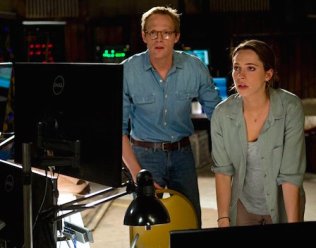 Another element that’s probably too challenging for some is where our allegiances are meant to lie. (Some spoilers follow in this paragraph.) At the start, it’s clear Depp & friends are the heroes and the murderous anti-tech terrorists are the villains. As events unfurl, however, artificial-Will perhaps goes too far, Bettany teams up with the terrorists, and eventually so do the government and Will’s other friends. There is no comeuppance for some characters who are initially begging for it; a good one self-sacrifices somewhat heroically. This doesn’t fit the usual Hollywood mould at all (well, the last bit does, sometimes), no doubt to some’s annoyance. The number of people who clamour for any sliver of originality or texture to their blockbusters, but then are unhappy when they actually get it…
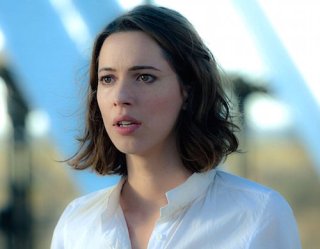 robbing the entire film of tension and nullifying any sense of surprise, and the movie doesn’t compensate with, say, a feeling of crushing inevitability. The climax in particular becomes a drawn-out exercise in connect the dots: we’ve been shown how this all ends up, now we’re just seeing the minutiae of how it got there. There’s no twist or reveal to speak of, just a wait for it to marry up with what we already know.
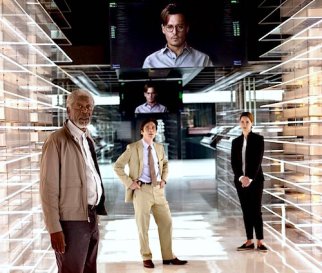 I guess that’s probably the explanation for Transcendence’s poor reception, in the end: it’s too blockbuster-y for viewers who’d like a dramatic exploration of its central moral and scientific issues, but too lacking in action sequences for those who misguidedly expected an SF-action-thriller. I maintain it’s not slow-paced, especially if you think it’s going to be, but nor does it generate doses of adrenaline on a committee-approved schedule. It’s not all it could have been, but if all you’ve heard is the mainstream drubbing, it’s probably better than you expect.
 100Films.co.uk