
Bill Condon | 128 mins | streaming (HD) | 2.35:1 | UK & Belgium / English | 15 / R
 It’s The Julian Assange Movie, in which Benedict Cumberbatch dons a lanky white wig and an Australian accent to portray one of the most significant figures of our times, whether you like it or not.
The story is told from the perspective of Daniel Berg, played by Daniel Brühl, who first encounters Assange in Germany and is somewhat captivated by him. Daniel helps Assange to really launch WikiLeaks, and is by his side through their early fame-garnering exposés. He functions a little as Assange’s moral compass, too, especially when they receive some stolen US military files relating to their controversial Middle Eastern exploits…
Cumberbatch’s performance is the showstopper here, and it’s been justly praised. It can seem a little over the top and affected, but then people who actually knew Assange say it’s bang on, so I think we have to take it that’s what he’s like rather than it being Cumberbatch overplaying. I largely rate him as an actor anyway, so he earns the benefit of the doubt. Brühl excels in the less showy role, however — much like he did in Rush, in fact, though even that role had its share of affectations to work with, which this part does not.
Daniel is torn between ‘saving the world’ and a love interest, played by Alicia Vikander, who is everywhere right now but I think this is the first time I’ve actually seen her in something. There’s nothing remarkable about her part,  so I can’t really judge her. The same goes for the rest of the cast, where a wide array of starry and/or acclaimed names (Peter Capaldi, Laura Linney, Anthony Mackie, Alexander Siddig, Dan Stevens, David Thewlis, Stanley Tucci, Carice van Houten (who’s big in Belgium, it would seem)) don’t falter, but nonetheless struggle to make a mark when none are awarded anything meaty to do.
The rest of the film is unfortunately hit or miss. It begins with an absolutely fantastic two-and-a-half-minute title sequence that covers the whole history of human mass communication, from hieroglyphs to the internet and everything in between. It’s succinct, thorough, and excellent, probably the best thing about the entire movie. Elsewise, Bill Condon’s direction is a little rote. At times he seems to want to be clever and cutting edge, with on-screen tech and the visual representation of WikiLeak’s virtual office space, but it’s inconsistent, a grab-bag of tricks without a guiding principle. The rest of the movie is shot plainly. Not badly, just plainly; normally; almost old-fashioned-ly. Its directorial style doesn’t match the material. For contrast, look to David Fincher’s The Social Network, which also told the story of cutting-edge ever-so-now tech developments, but did so with filmmaking that could be described in similar terms.
Every once in a while the film interjects a US-set subplot that seems to go nowhere. The posters and trailers imply these American officials were people hunting Assange; instead, they’re relatively minor cogs in the political wheel who get caught out by what he does.  They don’t seem to have any particular significance in themselves — they’re not famous, nor more wronged than anyone else — so maybe they’re just meant to be emblematic? As in, Laura Linney’s character is there to be representative of Assange’s effect, not the only person it happened to. Or was she the only person fired, and that’s the point? The film doesn’t make it clear.
In terms of understanding, it’s also very much a movie of Now. It assumes you know an awful lot of real-world context — essentially, the history of the last decade or two. Before too long, it’ll be a tough film for new viewers to follow or engage with without some kind of degree. Not everything should be made with an eye to its longevity, but one wonders how successful The Fifth Estate is in and of itself. It’s almost fiction-filmmaking as journalism: it’s about something that just happened — in some respects, is still happening — rather than an attempt to look back and explain those happenings in a historical context.
Indeed, one wonders how enlightening the film is in any respect. Assange is clearly a difficult person to get to know, by turns crusading hero and egotistical wannabe. That’s how the film depicts him, and if that’s accurate to life, well, that’s not the film’s fault — what’s wrong with having a primary character who isn’t a hero? Anyway, that’s the role Daniel is there to fulfil —  he’s the honourable one; the one who’s actually invested in the site’s supposed values. But then the film is partly based on his book, so he would be the good guy.
In the end, this is an immensely complex story, with many different and contradictory sides to tell, and the film isn’t up to the task of covering them all. Great performances, though.

This review is part of the 100 Films Advent Calendar 2015. Read more here.
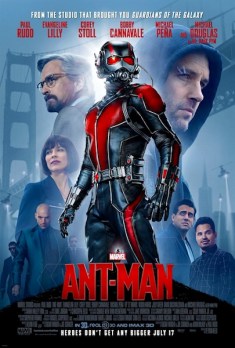 The final film in ‘Phase Two’ of the Marvel Cinematic Universe is perhaps the most fun Marvel movie since
 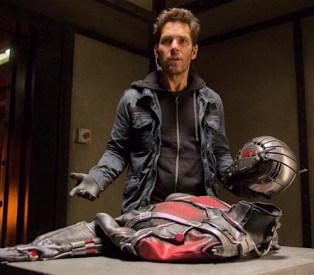 Nonetheless, some have criticised the film for not being especially original. I mean, originality’s good ‘n’ all, but c’mon, what do you expect when you sit down to a superhero movie from the primary purveyor of superhero movies? Ant-Man may blend elements from a few other genres into the superhero mix, but, yeah, it’s a superhero movie that, at times, plays like a superhero movie — just like everything else Marvel Studios has produced (with the possible exception of
  It remains tough to talk about Ant-Man without referencing The Edgar Wright Situation. I mean, you could ignore it, but then it becomes the elephant in the room. If you somehow missed it: writer-director Edgar Wright pitched Ant-Man to Marvel as a movie before Marvel Studios even existed, back in 2003, and had been developing it on and off ever since. The ideas he brought to the table — an action-adventure-comedy style, being a special effects extravaganza but with a lighthearted tone — influenced how the studio approached Iron Man and, consequently, the whole MCU. Nonetheless, Ant-Man wound up positioned as the 12th film in the studio’s slate, finally going into production after a decade of prep. Wright had a script almost finalised, he’d cast the film, a release date was set… and then he left due to “creative differences”. And the internet was on his side because Edgar Wright has made
 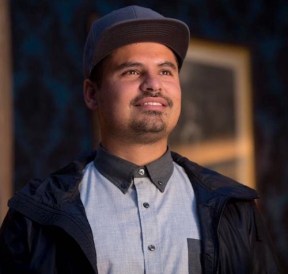 After Wright left, the screenplay was rewritten by a host of scribes (far more than the two extra writers ultimately credited). Other things they’re responsible for include bulking up the supporting characters, especially Hope, which works pretty well, and Lang’s friend Luis (Michael Peña), which we should all be thankful for: Peña’s Luis is one of the best things in the movie, an enthusiastic motormouth who’s consistently entertaining whenever he’s on screen. He’s the standout from an ensemble that is generally strong, with Rudd proving a likeable lead and Douglas committing to the material in a way you wouldn’t necessarily expect an older actor to with ‘just a comic book movie’.
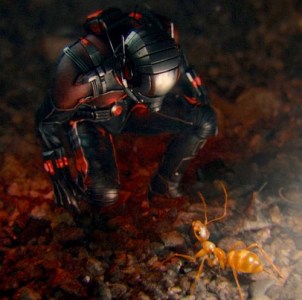 That doesn’t mean it’s a story that doesn’t have stakes, they’re just different stakes. It’s a refreshing change of pace at this point. It’s also pretty much standalone, with nice nods to the shared universe but without being dependent on other films (either before or to come) for its story. Guardians of the Galaxy did that too, but how many other recent Marvel movies is it true of? Even the highly-praised
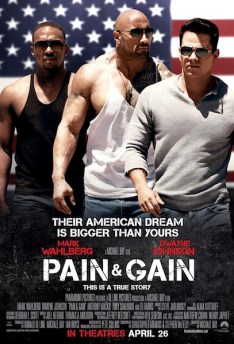 For his first non-sci-fi movie in a decade, divisive action director Michael Bay channels Tarantino (kinda) for this based-on-a-true-story crime comedy. Dwayne “The Rock” Johnson, Mark “Marky Mark” Wahlberg and Anthony “
 Bay is aided by leads who are surprisingly adept at comedy. Johnson is the best thing in it, consistently hilarious as his conscience battles former addictions and newfound religious convictions. I noted down some of his best lines to quote in the review, but they lose something without his delivery.
 After he’s become so sidetracked making the
  Sometimes, films are so maligned that you feel you just have to see for yourself. Or I do, anyway. Crime thriller Runner Runner, with its
 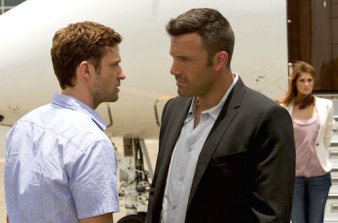 Brian Koppelman and David Levien’s screenplay is packed full of dreadful dialogue, which isn’t helped by phoned-in performances from all the principle cast, in particular Affleck. I guess he needed a payday between his Oscar-winning directorial efforts. I’ve seen some assert that the dialogue and delivery are meant to be mannered and stylised, but I just don’t buy it. Unless the style was meant to be “cable TV cheapie”, anyway. The Puerto Rican filming locations are quite prettily shot by DP Mauro Fiore, at least, but that’s scant consolation when everything else is so woeful.
 100Films.co.uk