
Roar Uthaug | 118 mins | download (HD+3D) | 2.39:1 | UK & USA / English & Cantonese | 12 / PG-13

In this gritty(-ish) reboot of the videogame-turned-movie franchise (inspired by a similar reboot they did in the games), Lara Croft loses her most famous twin assets — her dual pistols (also, her giant boobs) — instead replacing them with a bow & arrow (and muscles, respectively) for an adventure that sees her travelling to a secret island where her father disappeared seven years earlier while in search of an ancient curse surrounding a long-lost tomb. Well, natch — clue’s in the title.
“Movie based on a game” used to be synonymous with “shit”, and to an extent that reputation persists — it takes time to turn such widespread prejudices around — but there have been a few in recent years to buck the trend, like trashy-but-fun Rampage and (apparently) Angry Birds 2. For my money, Tomb Raider is part of that movement. For one thing, it manages to actually feel like the games (or, at least, what I presume the games are like — I’ve never really played any of them), which is a noteworthy point for a genre that sometimes spectacularly failed to understand its source material. Tomb Raider successfully recreates the running, jumping, shooting, puzzle-solving action of its inspiration without too overtly abandoning real-life logic for video game logic. Well, I say “real-life logic” — it’s actually “action/adventure movie logic”, but I think that’s allowed in an action/adventure movie.
As an entry in that genre, it’s fun enough. It’s not going to compete for greatest-of-all-time status with its urtext, the Indiana Jones films, nor does it quite challenge the heights of more-overt homages like The Mummy, but it’s not a bad couple of hours’ entertainment in their mould. On the downside, the amount of preamble the plot goes through before taking us to the island is a tad unnecessary, mainly because there are a couple of early set pieces that feel forced to make sure there’s some action in the first act. I can understand having one or two (as much as anything, it establishes that Lara isn’t completely unskilled in combat and physical endurance), but it feels like padding. Besides, we’ve come for an Indiana Jones-esque affair — a bicycle race around grey London isn’t quite the right tone.
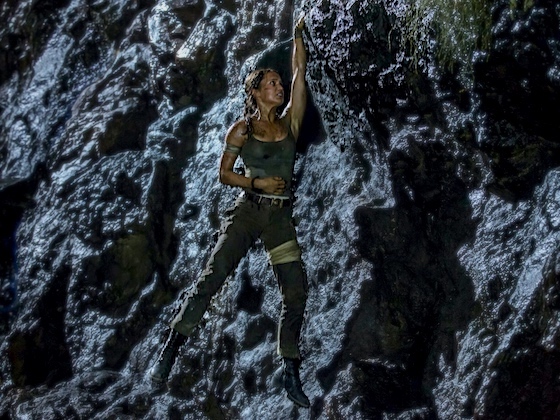
Alicia Vikander is more than capable in the lead role, both as an actress and a physical performer — she’s clearly developed the physique for the part, and apparently did her own stunts. Unfortunately, her accent is a little all over the place, a blend of English and Swedish (rather similar to Rebecca Ferguson’s) with occasional flecks of Irish. It’s kind of charming in itself, and I guess it just passes as “English” to Americans, but it’s too distractingly ‘off’ to truly pass as the upper-crust English girl Lara is meant to be. She’s surrounded by a supporting cast of reliable performers — Walton Goggins (surprisingly understated as the villain), Dominic West, Kristin Scott Thomas, Derek Jacobi, Nick Frost (just a cameo) — but none leave a particularly large mark.
A quick word on the 3D, which is fairly enjoyable. I’d heard bad things, but it’s not awful, just unexceptionally adequate — a bit like the film itself, I guess. It adds somewhat to the “hanging over a chasm” shots (of which there are more than a handful), if nothing else.
The film ends with a massive sequel tease, which I thought was fairly well handled. I’ve often criticised movies that exist purely to setup sequels/trilogies/franchises, and there are clearly parts of Tomb Raider that have been designed to do that, but it’s managed well enough to not really intrude until the final scenes. That said, it’s an odd kind of tease, suggesting more “corporate espionage” than “tomb raiding”. Unlike so many sequel teases nowadays, this one will actually be acted upon: after some umming and ahhing (the film wasn’t a huge box office hit, but did respectably outside the US, particularly in lucrative markets like China and the UK), it’s going ahead… with Ben Wheatley directing! Colour me surprised. (It was scheduled for release in March 2021, but the shoot was meant to begin in April 2020 and, surprise surprise, got cancelled, so who knows.)

A lot of this review has wound up couched in disclaimers but, fundamentally, I enjoyed Tomb Raider. It may not have a surfeit of original ideas, but once it gets going it offers up solid levels of excitement — highlights include a protracted boat crash in a storm, Lara negotiating a plane teetering on a cliff edge, and the titular raiding of a tomb, which occupies the third act. If Wheatley can supplement that with a dash of his trademark oddness, the sequel might well be worth looking forward to.

The UK TV premiere of Tomb Raider is on ITV tonight at 7:50pm.
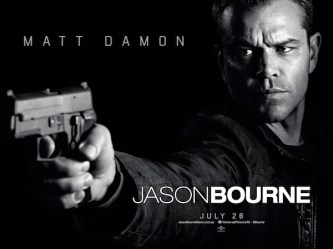 Much like the Bond films to which they’re so often compared, the Bourne movies have their devotees while only fitfully pleasing the critical establishment. This fifth movie — which is notable for marking the return of star Matt Damon and director Paul Greengrass after the semi-reboot of
 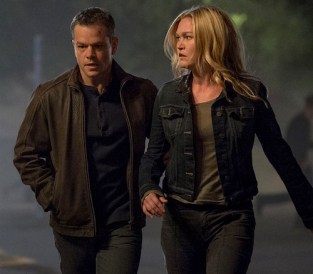 Action sequences ensue, shot with all the ShakyCam you’d expect from Greengrass. By now I imagine you have your own view on whether his style works or not. Personally, I think it’s considerably less bamboozling than when it made its debut in
 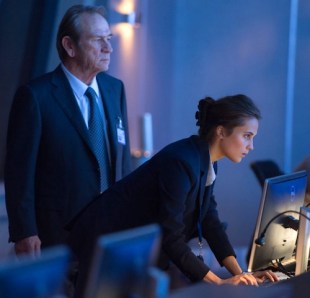 Frankly, Jason Bourne is at pains to mix in hyper-current iconography; the reasoning for Damon and Greengrass’ return now being that the world has changed and how does Bourne fit into that? So as well as social media and Greek riots we’ve got references to and riffs on hacking, Edward Snowden, government surveillance of its own citizens, the prevalence of Facebook/Twitter-esque tech companies, and so on. Sadly, I’m not sure the film’s actually got anything to say about any of these things. Greengrass and his co-writer, editor Christopher Rouse, have appropriated all these zeitgeisty concepts to make the film feel very Now, but that surface sheen is more or less where it ends. I mean, there’s a whole subplot starring Riz Ahmed as the Zuckerberg-like CEO of a social media company that I didn’t even mention in my plot summary because it’s kind of an aside. It’s kind of ironic, really, that it always seemed as if Greengrass’ more natural stomping ground was his documentary-ish real-world-exposé type movies, with his contributions to the Bourne series an unusual sideline; yet when he finally marries the two halves of his filmmaking career, it’s the action rather than current-affairs commentary that takes precedence.
 The end result is that Jason Bourne does thrill as an action movie, which seems to have been the primary goal of its makers, at the end of the day. As an action-thriller, however, the rinsed-and-repeated plot is a slightly faded imitation of former successes; a through-the-motions way to provide those impressively staged chases and punch-ups. It’s not the definitive Bourne movie one might’ve expected from the returning star/director combo (why else come back if not to perfect, or at least add to, the formula?), but instead means the film ends on an odd note: even though it wasn’t a wholly satisfying experience, and even though it doesn’t end with questions still blatantly hanging (as every Bourne movie bar Ultimatum has done), I want Damon and Greengrass to come back and do it all again, please. Only do it properly next time, yeah guys?
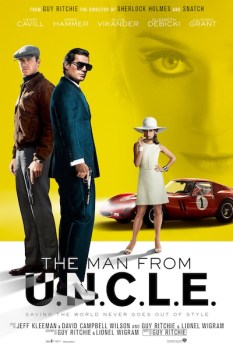 Guy Ritchie is a self-confessed non-fan of the classic ’60s spy-fi series
  British Academy Film Awards 2016
 A British sci-fi movie from a first-time director will tomorrow take a place at the table (well, in the auditorium) alongside 2015’s biggest awards contenders, as it vies for multiple gongs at this year’s BAFTAs — and it stands a very plausible chance of walking away with several of them, too. I hope it does, because, after a year that brought us awards-quality sci-fi bombast (
 In truth, it’s not the most thorough deconstruction of what it means to be human and whether artificial intelligence can have that right, but it does touch on these issues and, in so doing, leaves them open for the viewer to mull over for themselves, or debate with friends, or however else one likes to consider their movies post-viewing (like, I dunno, writing about them on the internet or something).
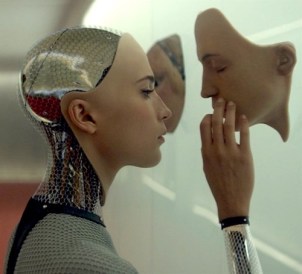 And his dance scene is surely one of 2015’s highlights (there’s an extended version hidden on the US Blu-ray, which is a treat). Garnering the most praise (and awards) is Alicia Vikander’s take on an AI. It’s a tricky role to tackle, because she’s not just a robot — that would defeat the point of Nathan’s exercise — but nor is she fully human. It’s a tightrope of a role, a fine line to walk, and Vikander negotiates it with aplomb. To say too much more would be to spoil it.
 Those after a dissertation-like hard-science deconstruction of the meaning and possibilities of AI will likely find Ex Machina slightly lacking, as will anyone after the crash-bang thrills most mainstream sci-fi provides. Viewers prepared for a decently thought-provoking dramatic thriller about near-future tech, however, should be both engrossed, and grateful that movies like this are (for the time being) still getting made.
 It’s The Julian Assange Movie, in which Benedict Cumberbatch dons a lanky white wig and an Australian accent to portray one of the most significant figures of our times, whether you like it or not.
 so I can’t really judge her. The same goes for the rest of the cast, where a wide array of starry and/or acclaimed names (Peter Capaldi, Laura Linney, Anthony Mackie, Alexander Siddig, Dan Stevens, David Thewlis, Stanley Tucci, Carice van Houten (who’s big in Belgium,
  They don’t seem to have any particular significance in themselves — they’re not famous, nor more wronged than anyone else — so maybe they’re just meant to be emblematic? As in, Laura Linney’s character is there to be representative of Assange’s effect, not the only person it happened to. Or was she the only person fired, and that’s the point? The film doesn’t make it clear.
 he’s the honourable one; the one who’s actually invested in the site’s supposed values. But then the film is partly based on his book, so he would be the good guy.
 100Films.co.uk