
Tom Ford | 117 mins | streaming (HD) | 2.35:1 | USA / English | 15 / R
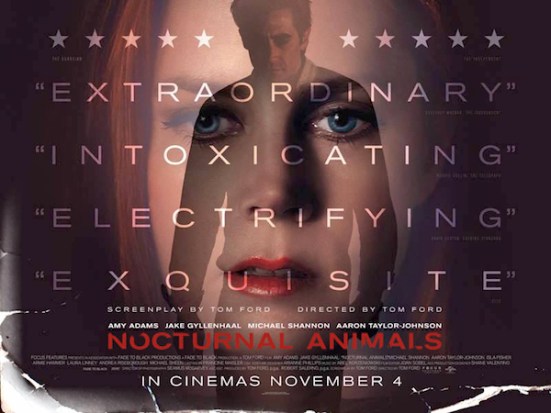
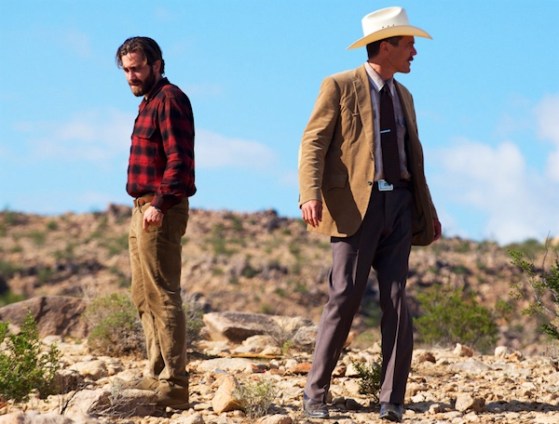
In her second Oscar-worthy role of 2016 that didn’t even get nominated, Amy Adams plays rich art gallery owner Susan, who out of the blue receives a package from her ex-lover Edward (Jake Gyllenhaal) containing an advance copy of his debut novel, which he’s dedicated to her. With the weekend alone to herself, Susan reads the novel — in which the family of Tony (Gyllenhaal again), wife Laura (Isla Fisher) and their daughter India (Ellie Bamber) are terrorised by a gang led by Ray (Aaron Taylor-Johnson), before copper Bobby Andes (Michael Shannon) helps them seek justice/revenge — in the process reliving memories of her tumultuous former relationship.
At first the plot of Edward’s novel seems more interesting than the framing narrative that contains it — after all, you’re pitching a tense thriller against a woman reading a book while she remembers falling for a guy. But as it becomes clear that the novel is just a pulpy thriller, and as the flashbacks to Susan and Edward’s history reveal a mystery of their own, the balance begins to shift. The question is not really “why is the book dedicated to Susan”, because she clearly knows that from very early on. Instead, the quandary for the viewer is: what exactly did she do that merits this lurid tale being her… what? Punishment, maybe?
Although the story is black as night, it’s a beautifully constructed film — as you might expect from someone with a background in design like writer-director Tom Ford. It’s not just the visually appealing work of cinematographer Seamus McGarvey or the film’s various designers that is so striking, though. The three narrative strands are expertly handled. There’s never any doubt about which is which, even when Ford at times intercuts between all three in one sequence, but he hasn’t resorted to simplistic tricks (like vastly different colour grading, say) to pull that off. It’s subtler, and more effective, than that.
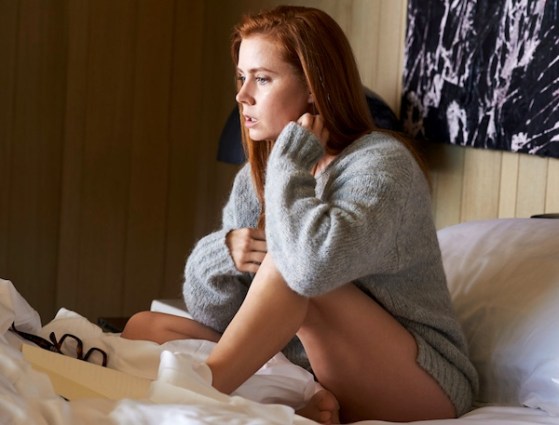
To guide the characters through his sombre narratives, Ford has put together a helluva cast. Of course there’s the primaries — Adams, Gyllenhaal, Shannon, and Taylor-Johnson are all superb — but turning up for just a scene or two are the likes of Isla Fisher, Armie Hammer, Laura Linney, Michael Sheen, Andrea Riseborough, and Jena Malone, any of whom could be leads in their own right. It does make it slightly disconcerting when you assume someone that recognisable will turn up again later and then they don’t, but I suppose that just sits with the generally unsettling tone of the film.
Taking its artfulness to heart, some people have dismissed the film as being no more than an artily-dressed-up simplistic revenge story. Personally, I think the point of the story-within-the-story is to be simplistic. I don’t think Edward is meant to be a very good writer, and that’s why he’s produced a very pulpy novel. What matters is the effect this bluntly allegorical piece of trash storytelling has on the person it’s primarily aimed at — i.e. Susan. And there’s still ambiguity for the audience in just what Susan is interpreting from the novel. I mean, Edward is Tony, that’s obvious; and maybe he’s Bobby, too; and Susan must be Laura… but who is Ray? Is Ray just the concept of what happened between them made flesh? Or maybe Susan is actually Ray? Or perhaps Edward is Ray too? Or perhaps it’s something else entirely, I don’t know.
Equally ambiguous is the ending to the present-day framing narrative, but I’m not sure I have much to add to that other than what you can easily find online, so no spoilers here. Other than to say I think the main plot points are all solved (the story-within-the-story wraps up, and how it mirrors the characters’ history has been revealed), but there are some open-ended points that the viewer can choose how to read as they see fit.
Nocturnal Animals has been a pretty divisive film. Lots of people compare it to last year’s even more controversial The Neon Demon, in one way or another — I’ve seen both “at least it’s better than…” and “it would make a good double bill with…” Well, I really ought to get round to that, then, because I admired Nocturnal Animals very much. It’s a beautiful movie about ugly deeds and ugly thoughts.

Nocturnal Animals is available on Sky Cinema from today.
 It feels kind of pointless reviewing Avengers: Age of Ultron, the written-and-directed-by Joss Whedon (and, infamously, reshaped-in-the-edit-by committee) follow-up to 2012’s “third most successful film of all time” mega-hit
 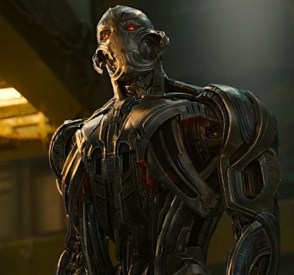 Even though the first half of that is still three years away, we’re still very much on the road to it. Heck, we have been practically since the MCU began, thanks to those frickin’ stones (if you don’t know already, don’t expect me to explain it to you), but now it’s overt as well as laid in fan-friendly easter eggs. The titular threat may rise and be put down within the confines of Age of Ultron’s near-two-and-a-half-hour running time, but no such kindness is afforded to the myriad subplots.
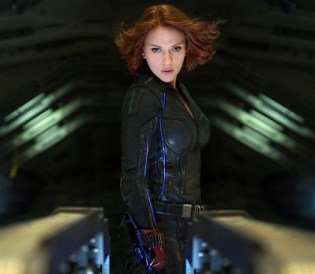 (not just obvious stuff like the Hulk, but digital set extensions, fake location work, even modifying Stark’s normal Audi on a normal road because it was a future model that wasn’t physically built when filming) that stuff they genuinely did for real looks computer generated too. All that time, all that effort, all that epic logistical nightmare stuff like shutting down a capital city’s major roads for several days… and everyone’s going to assume some tech guys did it in an office, because that’s what it looks like. If you’re going to go to so much trouble to do it for real, make sure it still looks real by the time you get to the final cut. I’ll give you one specific example: Black Widow weaving through traffic on a motorbike in Seoul. I thought it was one of the film’s less-polished effects shots. Nope — done for real, and at great difficulty because it’s tough to pull off a fast-moving bike speeding through fast-moving cars. What a waste of effort!
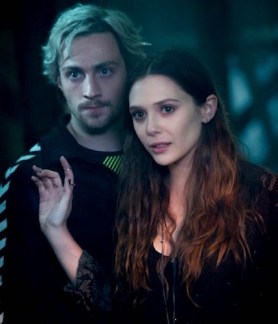 The really daft thing is, Whedon specifically added Scarlet Witch and Quicksilver… wait, are Marvel allowed to call them that? I forget. Anyway, Whedon added the Maximoff twins because, as he said himself, “their powers are very visually interesting. One of the problems I had on the first one was everybody basically had punchy powers.” I know Hawkeye’s power is more shoot-y than punchy, and we all know
  At the end of the day, what does it matter? Age of Ultron isn’t so remarkably good — nor did it go down so remarkably poorly — that it deserves a reevaluation someday. It just is what it is: an overstuffed superhero epic, which has too much to do to be able to compete with its comparatively-simple contributing films on quality grounds, but is entertaining enough as fast-food cinema. Blockbusterdom certainly has worse experiences to offer.
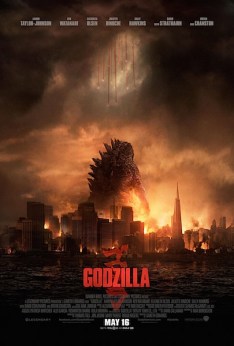 The second attempt at a US re-imagining of Godzilla received mixed reviews last summer, though there can be little doubt that it’s much more successful than the first,
  He’s denying us shots of it not to punish the viewer or to trick us, but literally to tease us, to build excitement and suspense and desire for the final battle. Too many people aren’t used to this — modern blockbusters have trained them for non-stop show-us-all-you’ve-got action from start to finish — and that’s a shame, and their loss, because Edwards’ method is superior to, and ultimately more entertaining than, 95% of other similar blockbusters.
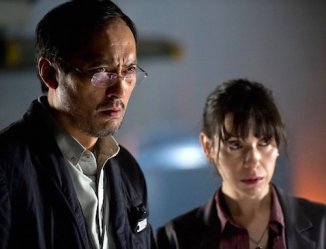 that simply aren’t present in the functional dialogue they have to work with, simply in the way they stand, the way they look at things… It’s not the focus of the film, it’ll pass many people by (indeed, it has), but I think there are some fine performances here. Not awards-winning ones, obviously, but in the hands of lesser actors, they would’ve been so much poorer.
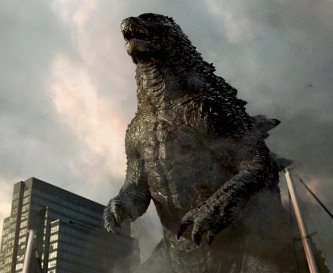 later, he slips quietly into the bay). Maybe, maybe not, but they always look big — more importantly, they feel big. There are various reasons for this, including Edwards’ shot choices: we often see them from a human perspective on the ground; when we do see wider shots, they’re from suitably far away, or high up, like a helicopter shot (if it were real…) Too many directors shoot their giant monsters with angles and perspectives as if they’re human-sized, which makes them come across as human-sized even when there’s a building next to them, never mind when they’re in places without reference points (coughatsea,PacifcRimcough). Edwards never does this, and it pays off. More than once I regretted that I can never be bothered to go to the cinema any more, because I bet this looked stunning on the big screen (I know I’m certainly
  most present big-budget summer tentpoles. That it got a little lost and under-appreciated in a summer of mega-hits is a real shame — it may not quite match summer 2014’s high points of
  100Films.co.uk