
J. Lee Thompson | 125 mins | download (HD) | 2.35:1 | UK / English | U
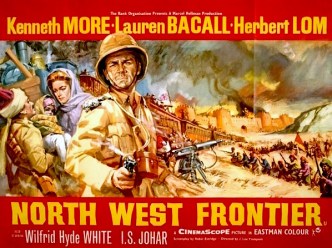 British Army Captain Scott (Kenneth More) is charged with getting an Indian child prince and his American governess (Lauren Bacall) to safety as rebels attempt to murder him. With the palace under siege, their only hope is a barely-ready rust-bucket train engine, a single passenger carriage, and a long journey through enemy territory joined by a motley group of diplomats and hangers-on who’ve bargained their way on to this last train.
North West Frontier has been on BBC Two a couple of times in the last year or two (seven times in the last four years, to be precise), and on one of those showings I caught a few seconds and thought it looked fabulously shot — I confess, that’s the only reason I’d got hold of a copy. I’m so glad I did though, because it’s excellent stuff — a rollicking, action-packed, old-fashioned (in the good sense) adventure, full of peril, derring-do, chases and shoot-outs. In between all that there’s some great character stuff too. Judging from online reaction, some viewers seem to find these bits boring longueurs, but I thought they helped manage the pace and added to the whole feel.
In particular, it’s during those segments where you get to see that every cast member is excellent. More is surprisingly dashing as the heroic leader of this ragtag bunch on their ramshackle locomotive. Bacall is as feisty as you’d expect as the strong-willed, outspoken governess, creating an easy and perhaps-surprisingly plausible chemistry with More. For the rest of the cast, Herbert Lom seems to be channelling a little Peter Lorre as a critical Dutch journalist, Wilfrid Hyde-White is the perfect older English gent, I.S. Johar is fun as the train’s Indian driver, Ursula Jeans is redoubtable as the English lady forced to escape  on the train by her governor husband, and Eugene Deckers is an arms dealer, who consequently no one likes but who remains unashamed of his trade. Through this prism there’s some discussion of the merits or otherwise of the British Empire and Indian independence, which some will judge to be extolling old-fashioned values, and others will take as little more than a (probably unnecessary) hat-tip in the direction of real politics.
And as for the reason I watched, success: it’s beautifully shot, in widescreen Eastmancolor by Geoffrey Unsworth, showing off stunning scenery lensed in India and Spain (with studio sequences shot at Pinewood, naturally). It may not be famed as a big-budget epic, but there’s nonetheless an impressively grand scale, with wide-open scenery, some extravagant locales, and hundreds of extras to fill out a few sweeping battle charges. They also come into play in one of the film’s most striking sequences, set at the scene of a horrid massacre, where a spread of blood-soaked bodies surely stretch the film’s U certificate. I’ve seen this part of the film described as unnecessarily dallied upon, but I think director J. Lee Thompson is more conveying the atrocity of such a tragic event.
In the US, the film was retitled Flame Over India (and Bacall was given top billing, as opposed to More in the UK), while in Australia it was named Empress of India, after the central train. That’s the best title, in my opinion. Flame Over India is pretty meaningless (Bacall didn’t like it either) and North West Frontier is a bit generic and bland, but Empress of India indicates the country and has meaning… though as it’s not about an Empress you could argue it’s misleading and sounds too romantic.
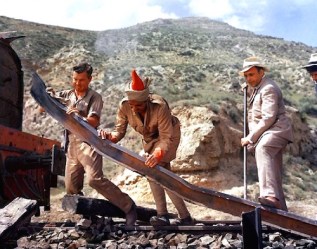 North West Frontier, on the other hand, sounds like a Western — which was perhaps the intention: the film’s structure and story style is fundamentally a fit for that genre, albeit British-made and geographically relocated. The storyline immediately brings to mind John Ford’s Stagecoach: a gaggle of mismatched strangers are thrown together as they cross hostile territory, interspersing conversations and arguments with adventurous survival challenges. In a review I otherwise pretty thoroughly disagree with, Glenn Erickson at DVD Talk makes the same comparison and offers this insightful point: “It may be a blatant reworking of Stagecoach as the original story was co-written by John Wayne’s son Patrick Wayne and Maureen O’Hara’s husband Will Price. The final screenplay [by Robin Estridge] was adapted from a script by screenwriter Frank S. Nugent, the writer of eleven Ford films.” Sounds pretty likely, doesn’t it?
North West Frontier is a film I would certainly have overlooked were it not for some whim of fate. Thank goodness for coincidence and chance, then, because it’s a cracking adventure; one made, I think, with pure entertainment in mind. I rather loved it.

North West Frontier placed 15th on my list of The 20 Best Films I Saw For the First Time in 2015, which can be read in full here.
This review is part of The Lauren Bacall Blogathon. Be sure to check out the many other fantastic contributions collated by host In the Good Old Days of Classic Hollywood.
 Four years ago, DreamWorks’
  Tonally, DeBlois has been productively inspired by
  If there’s a flaw, it’s in some of the new characters. The primary villain is underused, introduced too late in the game to become a palpable threat. More time spent building him up, seeing his evil on screen rather than just being told about it, would’ve been appreciated. So too for the mysterious vigilante dragon-rider, who turns out to have a very significant role. The deleted scenes include a prologue that would have introduced the character at the start, which would have better established the mystery and import of their role. It’s clear why it was deleted (to focus on Berk and keep the initial tone light), but I still think it would’ve worked better in the film. In the final cut, the vigilante is mentioned all of once, then turns up and is unmasked about two minutes later. Really, though, these are niggles — even for them, the cumulative consistency is certainly better than, say, its Oscar conquerer
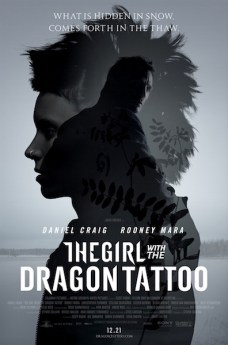 Stieg Larsson’s much-hyped novel comes to the screen for the second time in David Fincher’s much-hyped English-language re-adaptation. Somewhere between the pre-release build-up (do you remember the fuss over the trailer’s release? And all those magazine covers and articles?) and now, something clearly went awry: its UK TV premiere back in March was buried mid-week on ITV2.
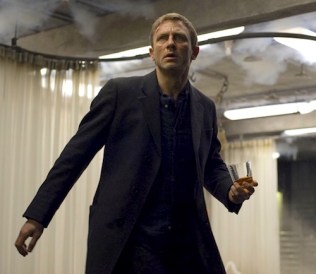 There are certainly changes, but nothing especially major. For example, the ending has been tweaked — not “completely changed”, as some reports had it, but just streamlined slightly. Some will struggle to even remember the difference if their experience of a previous version was long enough ago. Die hard fans, however, seem to regard it as a massive re-visioning of events. It isn’t.
 in particular, it’s beautifully shot, and there’s a vein of interest to be mined in discussing the fact it was consciously made using a five-act (as opposed to the usual three-act) structure (but not here today, sorry) — it feels unable to innovate or hone the genre in quite the way Se7en or
 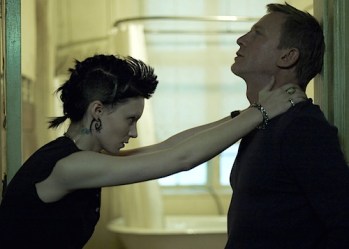 So my rating may come as a bit of a surprise given the focus of this review, which is primarily my fault for finding it so tough to shrug off all those contexts and comparisons. But hey, that’s something the film itself struggles with in many people’s eyes, too. If the viewer can divorce it from those ties, however, I think it’s still an exceptionally good thriller.
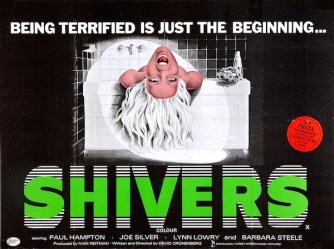 The first commercial (i.e. non-student) feature by horror maestro-to-be David Cronenberg, Shivers depicts the sexually-charged chaos that erupts after the spread of a man-made sexually-transmitted parasite in an isolated hyper-modern tower block.
 Director Steven Soderbergh takes the methodology he used to depict the drug trade in
 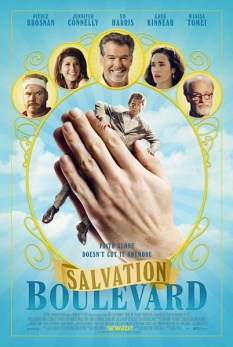 Reuniting Pierce Brosnan and Greg Kinnear, stars of comedy-thriller
  This is not the Salvation Boulevard that has ended up on film. I tried to hunt down an explanation for why co-writer/director George Ratliff had deviated so, but the best I could unearth was
  I shouldn’t have expected much given the poor reviews, but I like the cast (which also includes Ciarán Hinds and Marisa Tomei), I really enjoyed The Matador, and the trailer was suitably promising, all of which encouraged me to seek it out. I wouldn’t say Salvation Boulevard was an entire waste of time, but I couldn’t help but feel there was potential for a funnier, more cutting movie hidden in the material. Shame.
 Ten years after the events of
  Let’s start with some other reviewers’ problems. An oft-cited one is the initial moral repugnance of the characters, but is it a valid criticism to say a movie about a bunch of macho dicks presents its characters as macho dicks? Because let’s not be kidding ourselves, the American military is not full of Guardian-reading lefties; it’s full of vulgar, unreconstructed young Blokes… like these fellas. Now, I’m sure I’m generalising — I’m sure they can’t all be like this — but I can believe plenty of them are. No doubt elements of their behaviour are more “macho fantasy” than reality (a hookers and coke party the night before shipping out?), but the fundamentals of their attitude are plausible.
 And just as it looks like we’re about to get a truthful, if obvious, moment where the characters admit that, no, this war is utterly pointless and has absolutely nothing to do with America or keeping Americans safe, the first guy answers, “yes, I do.” Really? Really?! At that moment it just feels queasily like right-wing propaganda, especially as the two characters in question have been positioned as our de facto heroes.
 Later, in the war zone, there are more horrific situations and imagery that will certainly test your perspective. For example, the guys come across a school bus that was caught in an attack on some monsters. The bus is full of dead children, but our guys need to search it for water nonetheless. Is this unflinching in its realism of the brutality of war, or a step too far and just sick? Perhaps the sci-fi context again undermines the movie, because you can’t apply the “this is really happening” argument when there are giant monsters involved. But if the giant monsters are a MacGuffin to reflect real, current conflicts, then does this become something that is happening? Perhaps it’s a circular argument.
 Dark Continent is the debut feature of director (and, here, co-writer) Tom Green, who previously helmed half-a-dozen episodes of E4’s excellent “superheroes with ASBOs” drama
  I do think Dark Continent is better than most reviews give it credit for, but it’s not exactly a movie of the greatest or most original insight, and — their added visual interest aside — it didn’t need to be a Monsters movie. Indeed, if it had just been a straight Middle East war movie, perhaps some critics would’ve been kinder, because at least they would’ve known what they were getting. If you liked the first film then there’s absolutely no guarantee you’ll enjoy this — it’s not the same kind of film at all — but the worst sequel of the decade? Not even close.
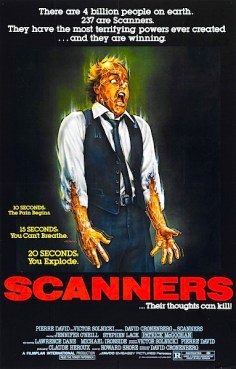 If you’re versed in sci-fi/fantasy cinema, you’ve heard of Scanners even if you haven’t seen it: it’s the one with the (in)famous exploding head. That moment is distinctly less shocking for those of us coming to the film as a new viewer at this point: gore perpetuates genre cinema nowadays, so it’s less striking,
 emotional journey or something is the core of the film. As if to make up for it, McGoohan is of course excellent, acting everyone else off the screen, while Ironside makes for an excellent villain, naturally. Some say that the final psychic battle, between Lack and Ironside, is underwhelming, but I thought it was excellently realised, a tense and effective struggle. Such brilliant effects and sequences are scattered throughout the film.
 Paul Thomas Anderson — the fêted writer-director of
 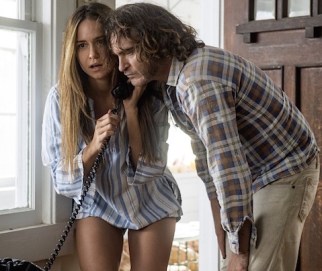 Anderson chooses to realise the movie mostly in long, unbroken takes, which not only lets the photography shine, but also allows his cast free rein to construct their own performances. I’m not sure how much that pays off, but it’s certainly not a hindrance. Turns from the likes of Josh Brolin and Martin Short border on the memorable, though your mileage will vary on if anyone truly achieves it, with the possible exception of Katherine Waterston, who surely deserves more — and more prominent — roles. Other recognisable faces (Jena Malone, Eric Roberts, Reese Witherspoon) are wasted in one- or two-scene appearances, which I suppose we could kindly call cameos.
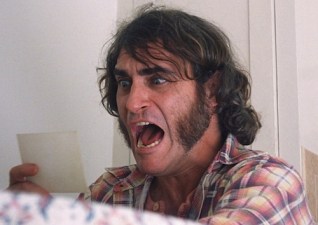 I am in neither of those groups, however. The aforementioned fleeting aspects of quality weren’t enough to swing it for me either. Sadly, I’ll be chalking this up alongside
 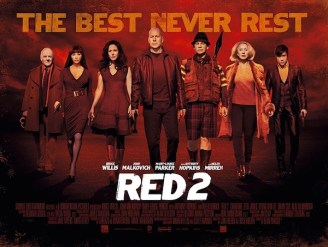 The “retired, extremely dangerous” agents return for more of the same.
 100Films.co.uk