Caesar Must Die (2012)

aka Cesare deve morire

2016 #77
Paolo & Vittorio Taviani | 74 mins | streaming | 1.85:1 | Italy / Italian | 12

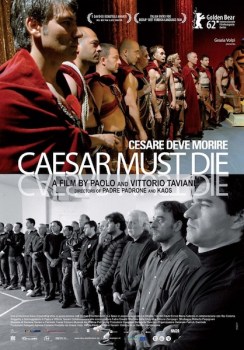
Caesar Must DieOn the surface, this is a documentary about the inmates of Rome’s high-security Rebibbia prison — many of them with mafia connections — putting on a performance of Shakespeare’s Julius Caesar. However, it becomes clear fairly quickly that it’s all been staged, which is only more apparent when you learn some behind-the-scenes details (at least one prisoner had been released years earlier and returned to participate in this project).

The question becomes: is that a problem? Because while it isn’t a documentary, it also is a documentary. These are real prisoners putting on a real performance, as they do every year (indeed, it was a previous production that inspired this film’s existence). Even if what we’re watching isn’t literal documentary footage, it’s surely been inspired by real experiences and conflicts, then re-worked into movie form. So it blurs the line between fact and fiction, which is also thematically appropriate: these criminals, some of them murderers, are now playing the parts of murderers in a fiction, and seeing reflections of their own lives in Shakespeare’s centuries-old text.

I don’t know if this gives us any particular insight into the minds of mobsters, or if the mobsters’ experiences bring a new perspective to Shakespeare, but it seems clear that being involved in the project has given new insight and perspective to the prisoners’ lives. For us as viewers, perhaps that suggestion about the power of art to improve anyone’s life — or to provide an escape or solace when in grim situations — is illumination enough.

4 out of 5

Lost River (2014)

2016 #79
Ryan Gosling | 95 mins | streaming (HD) | 2.35:1 | USA / English | 15 / R

Lost RiverThe directorial debut of uber-hearththrob movie star Ryan Gosling is not what you might expect someone of that particular adulation to produce. It’s not just that it has a dark heart, but that it’s slow, opaque, perverted, and not easily summarisable.

To try nonetheless: Bones (Iain De Caestecker) lives in a possibly-near-future rundown Detroit, where his mother (Christina Hendricks) is struggling to repay the loan so they can keep their house. A meeting with the bank manager (Ben Mendelsohn) leads to him offering her a job at a mysterious nightclub. Meanwhile, Bones salvages copper for cash, which brings him into the orbit of vicious criminal Bully (Matt Smith). Escaping Bully’s clutches, Bones discovers an old road that leads under a lake. He learns from his neighbour, Rat (Saoirse Ronan), that there’s a town under there, which may hold the key to breaking the curse hanging over their town…

If it’s not obvious, there’s definitely some magical realism going on in Lost River. Adult fairytale would be another term for it; there are slices of some form of Gothic, too. To put it another way, it’s definitely Lynchian. Other directors may have been an influence on Gosling as well, but it specifically brought Blue Velvet to mind for me, without in any palpable way being a clone of that movie. Nonetheless, it also engages with some very real present-day issues, like the recession, albeit in an elliptical fashion (despite the plot being about someone under threat of losing their house). Perhaps this is just a convenient way to touch of themes of family, home, and what home means (i.e. more than just a house), as well as the importance or otherwise of escaping that home, or somehow reconstituting it.

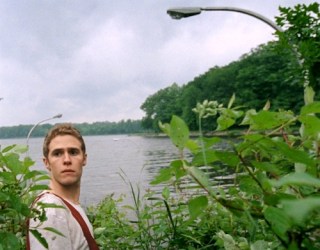
Lake lightsIt comes to a very cathartic ending, on multiple levels. I almost didn’t realise I needed that catharsis at the end — I knew I wanted certain characters to get their comeuppance, but the load that seems to lift at the end, with all the different climaxes combined, including parts that might not seem ‘good’… well, it’s almost like Rat is right about Bones’ actions lifting a bad spell.

On a technical level the film is superb, combining fantastic cinematography with evocative costumes, expressive sets, and an effective score. Some of the imagery is the visual equivalent of ambient mood music, as is some of the score (er, literally). That occasionally comes across as self-consciously Arty, therefore, but in the right mood or mindset it works. There are several strong performances as well: Christina Hendricks does understated desperation; Matt Smith is a credible schoolyard bully writ large; Ben Mendelsohn exudes menace as a nightclub-owner-cum-devil-incarnate; and Saoirse Ronan is marvellous in everything.

By giving it a 4, I’m maybe being a tad generous; certainly it’s poor consumer advice, because this is a “not for everyone” film. But if I gave it a 3, I’d be underselling how much I eventually liked it. It’s certainly flawed — slow, slight, maybe pretentious, and Arty. But it also takes us to an intriguing world, toys with some interesting ideas, conveys a few memorable moments, and stuns with consistently arresting visuals. I’ll take that mix over “blandly fine” any day.

4 out of 5

Se7en (1995)

100 Films’ 100 Favourites #81

Seven deadly sins. Seven ways to die.

Also Known As: Seven

Country: USA
Language: English
Runtime: 127 minutes
BBFC: 18
MPAA: R

Original Release: 22nd September 1995 (USA)
UK Release: 5th January 1996
First Seen: TV, 12th June 2001 (probably)

Stars
Morgan Freeman (The Shawshank Redemption, Million Dollar Baby)
Brad Pitt (Legends of the Fall, The Curious Case of Benjamin Button)
Kevin Spacey (The Usual Suspects, American Beauty)
Gwyneth Paltrow (Sliding Doors, Shakespeare in Love)

Director
David Fincher (Fight Club, Zodiac)

Screenwriter
Andrew Kevin Walker (8MM, Sleepy Hollow)

The Story
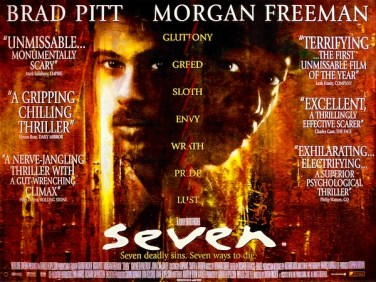
In an unnamed city, two homicide detectives investigate a series of grim murders inspired by the seven deadly sins.

Our Heroes
William Somerset is a detective who works calmly and methodically, and cares more than most. Serving out the last few days before his retirement, he lands a helluva final case. His new partner is David Mills, a hotheaded but idealistic new transfer who’s keen to prove himself. Despite their chalk-and-cheese temperaments, or perhaps because of them, the pair may be ideally suited to catch the elusive killer.

Our Villain
John Doe, a proper psychopath, and on a mission too. I say the detectives are ideally suited to catch him, but, well (major, major spoilers…) they technically don’t and he essentially wins.

Best Supporting Character
R. Lee Ermey’s police captain, purely for the moment when he answers a phone. I love that bit of humour far more than it probably warrants.

Memorable Quote
“What was in the box? What’s in the box? What’s in the fucking box?!” — Mills

Memorable Scene
The climax — just Somerset, Mills, and John Doe, alone in the middle of nowhere… and then a deliveryman shows up. “John Doe has the upper hand!”

Technical Wizardry
The film’s visual style really helps to sell the tone — dark, foreboding, grim. This is in part because it’s always raining, a decision made to increase the sense of dread, and because of Darius Khondji’s cinematography, which employed bleach bypass (see also: Minority Report), a process that serves to deepen shadows. Additionally, for the film’s Platinum Series DVD release it was rescanned from the original negative, meaning the whole film had to have its colour grading re-done. Some of the changes were quite extensive (as detailed in the DVD/Blu-ray’s special features, if you’re interested).

Truly Special Effect
A serial killer thriller might not sound like a special effect showcase, but John Doe’s extreme methods lead to some pretty unusual and gruesome corpses — rendered with suitably sickening prosthetics, of course. ‘Sloth’ is particularly harrowing, though ‘lust’ is so bad it’s left almost entirely to our imagination — though, again, someone had to design and build the… instrument.

Making of
John Doe’s shelves of handwritten notebooks were real and created especially for the film. They took two months to create at a cost of $15,000.

Next time…
Screenwriter Andrew Kevin Walker originally thought of 8MM as a sequel, and David Fincher was interested, but it didn’t happen and we wound up with the only-half-decent Nicolas Cage-starring Joel Schumacher-directed version instead.

Awards
1 Oscar nomination (Editing)
1 BAFTA nomination (Original Screenplay)
2 Saturn Awards (Writing, Make-Up)
5 Saturn nominations (Action/Adventure Film, Actor (Morgan Freeman), Supporting Actress (Gwyneth Paltrow), Director, Music)
Places with more taste (i.e. where it won Best Film): Empire Awards, Fantasporto International Fantasy Film Awards, MTV Movie Awards; plus Best Foreign Language Film at Blue Ribbon Awards, Hochi Film Awards, Sant Jordi Awards (Audience Award)

What the Critics Said
“designer unpleasantness is a hallmark of our era, and this movie may be more concerned with wallowing in it than with illuminating what it means politically. Yet the filmmakers stick to their vision with such dedication and persistence that something indelible comes across — something ethically and artistically superior to The Silence of the Lambs that refuses to exploit suffering for fun or entertainment and leaves you wondering about the world we’re living in.” — Jonathan Rosenbaum, Chicago Reader

Score: 80%

What the Public Say
“The rain never ends. There is seldom any sunlight, or any warmth. The city feels like a city of the damned, as if its denizens are souls trapped in some circle of hell from which there is no escape. A feeling of dread pervades everything; there is never any inclination that anything remotely like justice or hope or salvation is even possible here. […] it’s all style and atmosphere but… to criticise the film for that, almost feels like missing the point — it’s so integral to the piece, the atmosphere is actually one of the film’s characters” — the ghost of 82

Elsewhere on 100 Films
I reviewed Se7en quite thoroughly (and, if I do say so myself, quite well) as part of a retrospective on Fincher’s films back in 2011, concluding that “some would claim that Se7en is no more than a standard murder thriller with a stock mismatched pair of detectives. In some respects they’re right, but in enough respects they’re wrong. There’s a killer high concept behind the crimes, but it’s really the execution of the film that makes it so much more. It’s in the performances, the way those stock characters are written, their subplots, the story’s pace, the cinematography, the music, individual sequences like Somerset in the library or the climax that rise not only to the top of the genre but to the top of the very medium of film itself.”

Verdict

When asked, I normally say Se7en is my favourite movie. That’s partly pre-picked just to prevent any such conversations turning into a dreary slog where I um and ah through hundreds of options, but naturally there’s some truth in it. On the surface it’s merely a police procedural, but it’s the way it handles that material that elevates it. It’s a dark film about terrible deeds, which both suits its subject matter (murder isn’t really just a fun little mystery to solve, is it?) and presents a worldview that makes us consider who’s really right and who’s really mad — John Doe is clearly an evil psychopath, but does he have a point? It’s also made with supreme artistry by director David Fincher and his team — I’ve already mentioned DP Darius Khondji, but it’s also superbly edited by Richard Francis-Bruce. And I’d argue it has one of the greatest climaxes ever filmed. There are more easily enjoyable movies in my 100 Favourites, but there are none that are any better made, nor any that better expose the dark heart of humanity.

#82 will be… a big damn movie.

Cop Car (2015)

2016 #102
Jon Watts | 84 mins | streaming (HD) | 2.39:1 | USA / English | 15 / R

Cop CarThe director of minor horror Clown and (more significantly to the history of cinema, maybe) next year’s Spider-Man: Homecoming, Jon Watts drew the attention that landed him the latter job with this festival-hit thriller.

Two runaway boys (James Freedson-Jackson, Hays Wellford) come across an abandoned police cruiser and take it for a joyride. Unfortunately for them, it belongs to corrupt officer Kevin Bacon, who’s left something in the boot he desperately wants back…

Freedson-Jackson and Wellford are strikingly naturalistic, while Bacon hits a difficult mix of menacing and pathetically incompetent. A darkly comic tone helps create an arresting little thriller.

4 out of 5

The UK TV premiere of Clown is on the Horror Channel tonight at 10:45pm.

The Salvation (2014)

2016 #141
Kristian Levring | 88 mins | streaming (HD) | 2.35:1 | Denmark, UK & South Africa / English, Danish & Spanish | 15 / R

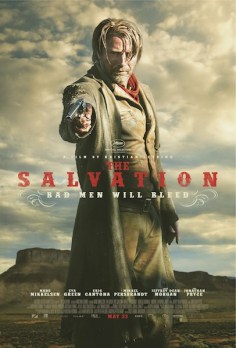
The SalvationThe spirit of the Spaghetti Western is kept alive in this Euro-minded South Africa-shot revenge Western.

Danish settler Mads Mikkelsen finally brings his wife and son out to America, only for tragedy to strike, which pits him and his brother against a gang who are extorting the nearby town.

Thematically thin, familiarly plotted, and with visuals that occasionally belie low-budget roots, The Salvation somehow succeeds through a combination of filmmaking skill, a whip-fast running time, and a quality cast (Eva Green, Jeffrey Dean Morgan, Jonathan Pryce, Douglas Henshall, and, er, Eric Cantona) who elevate the material just by turning up.

4 out of 5

Deep Blue Sea (1999)

2016 #138
Renny Harlin | 101 mins | streaming (HD) | 2.35:1 | USA / English | 15 / R

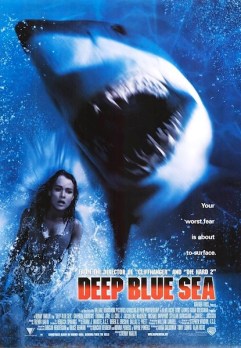
Deep Blue SeaDeep Blue Sea is Terence Davies’ adaptation of Terence Rattigan’s play about the wife of a judge getting caught in a self-destructive love affair with an RAF pilot.

No, wait, sorry — that’s The Deep Blue Sea. The non-definitive-article version is a sci-fi action-thriller about a research facility that’s created hyper-intelligent sharks which escape and try to kill the scientists. So pretty similar movies then, really. This one was thoroughly slated on its initial release, so I spent a good long while completely ignoring it, but at some point in the last few years it seems to have become a guilty pleasure favourite for many. Does it merit this reappraisal?

There is definitely a level of “so bad it’s good” about it. It’s definitely not a good movie in the traditional sense, but it is fun; and unlike, say, Armageddon, it’s clearly not taking itself too seriously. Nicely, it gets by without the constant winks-and-nods at the audience you get in today’s deliberately-trashy genre movies, which is, bizarrely, a more mature way to handle this kind of material.

Plus, it’s from that tipping point in modern film history between practical effects and CGI, so there are some nice stunts and life-size animatronic sharks, but also some weak computer graphics. That said, because director Renny Harlin limits the CG to underwater sequences, some of the sins are covered. Or put another way: it’s not great, but it still looks better than Sharknado. (That might seem like damning with faint praise, but this is 1999 we’re talking about — still two years before The Mummy Returns and its CG The Rock abomination that someone thought was OK to release in a big-budget summer tentpole.)I'm sure he just want to be friends

Ultimately, it’s a hard movie to rate. On the one hand, it’s not particularly good; on the other, with a mix of not taking itself too seriously and a few so-bad-it’s-good moments, it becomes a fun watch. I err towards generosity because, while it’s not a ‘quality’ movie, it is an enjoyable way to spend a couple of hours.

3 out of 5

Schindler’s List (1993)

100 Films’ 100 Favourites #80

“Whoever saves one life,
saves the world entire.”

Country: USA
Language: English, Hebrew, German & Polish
Runtime: 195 minutes
BBFC: 15
MPAA: R

Original Release: 15th December 1993 (USA)
UK Release: 18th February 1994
First Seen: VHS, c.2001

Stars
Liam Neeson (Darkman, Star Wars: Episode I – The Phantom Menace)
Ben Kingsley (Gandhi, Iron Man 3)
Ralph Fiennes (The English Patient, The Grand Budapest Hotel)

Director
Steven Spielberg (Amistad, Lincoln)

Screenwriter
Steven Zaillian (Awakenings, Moneyball)

Based on
Schindler’s Ark, a Booker Prize-winning novel (released in America as Schindler’s List) by Thomas Keneally.

The Story
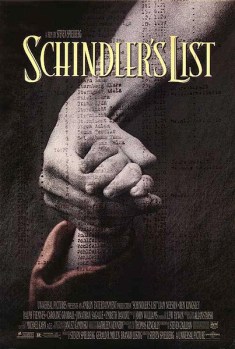
In occupied Poland in the early days of World War 2, German businessman Oskar Schindler opens a factory supplying the German military, staffed by Jewish workers. As the Nazis begin to close the ghettos and ship Jews to concentration camps, Schindler uses his connections and profits to surreptitiously save as many as he can.

Our Hero
Oskar Schindler is a self-interested businessman, womaniser, and member of the Nazi Party. Initially employing Jews merely for financial reasons (they’re cheaper than Polish workers), his innate humanity begins to come to the fore.

Our Villain
Nazis! But in particular Amon Goeth, the sadistic commander of the Paszów labour camp, who’s fond of executing Jews at random, amongst other horrors. Nonetheless, Schindler has to deal with him to ensure the (relative) safety of his workforce.

Best Supporting Character
Schindler’s contact on the local Jewish Council, Itzhak Stern, who becomes essential to making his business a success, and facilitating his operation to save the workers.

Memorable Quote
“I could have got more out. I could have got more. I don’t know. If I’d just… I could have got more.” — Oskar Schindler

Memorable Scene
During the destruction of the ghetto, Schindler sees a little girl in a red coat (the one splash of colour in the body of the film), wandering alone through the devastation. Later, as the Nazis burn piles of the dead, corpses are ferried to the pyres on small wagons. On one, Schindler sees a small body in a red coat… (There’s a good piece on the psychology of why these scenes are so effective here.)

Technical Wizardry
Spielberg chose to shoot in black-and-white to match actual documentary footage of the era, which was how he ‘saw’ the events. It was also shot without storyboards, Steadicams, cranes, or zoom lenses, and about 40% was filmed using handheld cameras, to emphasise a documentary feel. For a similar level of realism, Spielberg originally intended to make the film entirely in German and Polish with English subtitles, but changed his mind because he thought he wouldn’t be able to accurately direct performances in foreign languages.

Making of
Acting as producer, Spielberg initially tried to attract another director because he felt he wasn’t capable of doing the story justice. Martin Scorsese turned it down because he felt it should be done by a Jewish director, and Roman Polanski rejected it because it was too personal (he lived in the Krakow ghetto, only escaping on the day of its liquidation, and his mother died at Auschwitz). Finally, there was Billy Wilder — depending which version you believe, he either wanted to direct but Spielberg was already prepping the shoot, or he actually convinced Spielberg to direct it. Ultimately, Spielberg waited ten years between acquiring the rights and making the film, when he finally felt capable of tackling it.

Awards
7 Oscars (Picture, Director, Adapted Screenplay, Cinematography, Editing, Score, Art Direction-Set Decoration)
5 Oscar nominations (Actor (Liam Neeson), Supporting Actor (Ralph Fiennes), Costume Design, Sound, Makeup)
7 BAFTAs (Film, Supporting Actor (Ralph Fiennes), Director, Adapted Screenplay, Cinematography, Editing, Score)
6 BAFTA nominations (Actor (Liam Neeson), Supporting Actor (Ben Kingsley), Costume Design, Make Up Artist, Production Design, Sound)

What the Critics Said
“If E.T. The Extraterrestrial is Steven Spielberg’s fantasy masterpiece, and Jurassic Park is his commercial masterpiece, then Schindler’s List is certainly his artistic masterpiece. It’s an extraordinary work of vision and passion that raises even the gifted Spielberg to a new level of artistry. And like all great works, it elevates everyone who views it.” — Dennis King, Tulsa World

Score: 96%

What the Public Say
“It’s very, very hard-going and not an easy film to watch, but its importance is unparalleled. You sit there for three hours feeling uncomfortable – because these monstrosities really happened, because we live in a world where people are capable of these acts of inhumanity – and you still can’t even begin to imagine what it must have really been like, to live through that, to see your family and friends shot dead in the street or transported away en masse to the gas chambers. And yet, despite all that, you end the film feeling inspired. Someone made a difference.” — Millicent Murdoch, Millie’s Movie Reviews

Verdict

Schindler’s List wasn’t Spielberg’s first ‘serious’ film, but I think it shows a marked increase in quality over his good-but-flawed previous efforts, The Color Purple and Empire of the Sun. Liam Neeson gives a commanding performance as the imperfect hero, while Ralph Fiennes finds what little humanity there is in Goeth (and there isn’t much) to pull him short of being an Evil Nazi caricature. The stark black-and-white cinematography acknowledges the incomprehensibly horrific events, while Spielberg’s divisive penchant for sentimentality seems well-matched to the tale, offering a measure of hope from humanity’s darkest days.

What’s in #81? What’s in #81?

Armageddon (1998)

2016 #133
Michael Bay | 145 mins | streaming (HD) | 2.35:1 | USA / English | 12 / PG-13

ArmageddonSometimes you have to wait to see a film because it’s not accessible for some reason (no one’s put it out yet, or it’s out of print and costs a fortune, or whatever). Other times… maybe it’s just me, but there are some films that I wait years to watch for no particular reason. Not wait in the sense of “drumming my fingers waiting for the chance”, but in the sense that I’ll get to it someday, it’s just not a priority, for whatever reason. And then one day, with nothing apparently having changed, the time comes when it’s that movie’s turn.

So it was for me with Armageddon, Michael Bay’s 1998 sci-fi disaster epic. It’s a film I’ve been aware of since it came out (how could you not be?) but never cared enough to actually watch, other than a general feeling I’d get round to it one day because (a) it’s the kind of movie everyone else has seen, and (b) when Michael Bay’s good, he is good (at what he does), so it’s at least worth a look. It’s a pretty readily available film — the kind of thing I regularly see in TV listings or on streaming services and consider watching and end up deciding “nah, not today” — so quite what made me finally watch it now — what made me see it in a list and go “actually, yes, today” — I’m not sure. Such are the mysteries of life. Or of my brain, at any rate.

For the few people who haven’t seen it, then, it’s about a giant asteroid heading towards Earth, where its impact will cause an extinction-level event, and NASA deciding the only way to stop it is to send up a couple of spaceships to land on the asteroid, drop nukes inside, and blow it up (it’s a Michael Bay movie, of course the solution is “blow it up”). To learn about the kind of deep drilling this would require, they bring in the best driller around, Bruce Willis, to train the astronauts. But drilling isn’t something you can learn in a couple of weeks — unlike “how to be an astronaut”, apparently, because it’s decided it will be easier to train drillers to be astronauts than train astronauts to use a drill.

At least they know which way space isIf you’re a reader from outside the UK, I guess you’ve probably not heard of Tim Peake. He’s (quite rightly) been big news here for the last year or so because he was our first (official) astronaut. That it’s taken until now for there to be a British astronaut seems remarkable, but there you go. I guess we always let other people do the initial exploring, then come along later to own the place — I mean, that Columbus fella was Italian, and is Italian the official language of America? No it is not. Anyway, Peake is a qualified helicopter pilot and instructor, has a degree in Flight Dynamics and Evaluation, was selected to be an astronaut in a process that involved academic tests, fitness assessments, and several interviews, and then received six years of training, including a mission as an aquanaut, before he went into space. But no, you can totally train a group of drillers to do that in a fortnight.

Many Hollywood blockbusters have ludicrous concepts, but Armageddon feels designed to plow new furrows of ridiculousness. Apparently NASA show the film to new managers and ask them to spot the errors. There are at least 168. It only takes a few minutes before it’s already so OTT that it seems like a spoof of Bay — I mean, the title card explodes for crying out loud. When the president makes a speech just before the launch, the quaint shots of the world listening in make it look like the film’s set in the 1950s. Despite being a full two-and-a-half hours long, Bay manages to make the whole film feel like a plot-summarising montage. The average shot length must be Moulin Rouge-level crazy, though where that film weighs super-fast-cut scenes against more measured ones, I think Armageddon is out-of-control-freight-train fast for every last second. Bay is so impatient, the credits start rolling before the film has even finished! And why the fuck does the drilling vehicle have a fucking great machine gun on it?!

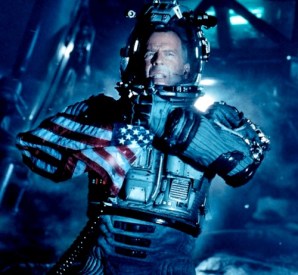
Bruce Willis flashesApparently Michael Bay thinks it’s his worst film. In 2013, he said, “I will apologise for Armageddon, because we had to do the whole movie in 16 weeks. It was a massive undertaking. That was not fair to the movie. I would redo the entire third act if I could.” The problems stretch further than that, Michael.

Believe it or not, it’s not all bad. The bit where Bruce Willis’ life flashes before his eyes is actually really good — ten seconds of artistic moviemaking in a 150-minute movie! Visually it looks great throughout, meaning DoP John Schwartzman is possibly the only person who comes out of the whole thing entirely unscathed. The special effects are excellent for 1998. I thought Independence Day’s were still effective when I re-watched it earlier this year, but Armageddon’s feel much less dated, and it was only made two years later. As an effects showcase, it absolutely still holds up today. That said, the top of the Chrysler building falling off, complete with plummeting screaming people, is considerably less palatable since 9/11. And just a minute later there’s a shot of the World Trade Center with burning holes in it. It’s a wonder it hasn’t been re-edited to remove those shots, especially as it’s a Disney-owned movie and they have a history of self-censoring stuff that is no longer considered acceptable.

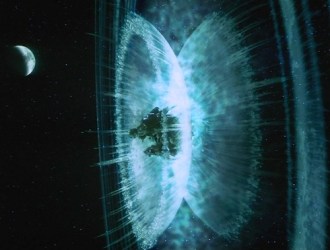
Armageddon was, famously, released the same year as Deep Impact, which I watched many years ago but remember as a character-driven drama about an asteroid threatening the end of the world. Armageddon’s action-packed bluster was more successful at the box office, of course, but Deep Impact was the more mature movie. SPACE EXPLOSION!Maybe I’m wrong — it has a lower rating on IMDb. But then, that is IMDb. I should probably watch it again, but even without doing that I feel pretty confident saying it’s the better film.

If Michael Bay knew he was making a comedy, Armageddon might be a great movie. But he didn’t. While it’s definitely bad, I did kind of enjoy it… but mainly to laugh at. Make of that what you will.

2 out of 5

Saving Private Ryan (1998)

100 Films’ 100 Favourites #79

The mission is a man.

Country: USA
Language: English, French, German & Czech
Runtime: 170 minutes
BBFC: 15
MPAA: R

Original Release: 24th July 1998 (USA)
UK Release: 11th September 1998
First Seen: TV, c.2001

Stars
Tom Hanks (Big, Cast Away)
Edward Burns (She’s the One, 15 Minutes)
Matt Damon (Good Will Hunting, Jason Bourne)
Tom Sizemore (Natural Born Killers, Black Hawk Down)
(The lead cast includes since-famous people like Vin Diesel, Barry Pepper, and Giovanni Ribisi, and the supporting cast even more recognisable faces, but, still, Edward Burns is second billed.)

Director
Steven Spielberg (Empire of the Sun, War Horse)

Screenwriter
Robert Rodat (Fly Away Home, The Patriot)

The Story
In the immediate aftermath of D-Day, a group of soldiers are tasked to locate and rescue just one man: Private Ryan, whose three brothers have been killed in action, earning him a free pass home. As the squad trek across France, mindful of the waste of resources, they encounter first-hand the early days of the Allied invasion of Europe.

Our Heroes
Just a regular bunch of soldiers, co-opted into a PR mission that isn’t that easy. They’re commanded by Captain Miller, their respected leader with a secretive past… a past which is actually thoroughly mundane, and just highlights the bizarre, heightened world of the war.

Our Villains
Nazis!

Best Supporting Character
Matt Damon was cast as the eponymous soldier because Spielberg wanted an unknown with an all-American look. Unfortunately for that plan, before Private Ryan came out Damon won an Oscar for Good Will Hunting and became famous overnight. It certainly changes the effect to have the team rescuing Movie Star Matt Damon rather than Some Unknown Actor, but, on the bright side, he’s good.

Memorable Quote
Reiben: “Hey, so, Captain, what about you? I mean, you don’t gripe at all?”
Miller: “I don’t gripe to you, Reiben. I’m a captain. There’s a chain of command. Gripes go up, not down. Always up. You gripe to me, I gripe to my superior officer, so on, so on, and so on. I don’t gripe to you. I don’t gripe in front of you. You should know that as a Ranger.”
Reiben: “I’m sorry, sir, but uh… let’s say you weren’t a captain, or maybe I was a major. What would you say then?”
Miller: “Well, in that case, I’d say, ‘This is an excellent mission, sir, with an extremely valuable objective, sir, worthy of my best efforts, sir. Moreover, I feel heartfelt sorrow for the mother of Private James Ryan and am willing to lay down my life and the lives of my men — especially you, Reiben — to ease her suffering.’”

Memorable Scene
The opening half-hour, which recreates the Normandy landings in shocking, brutal detail, and is supposedly very true to the actual experience. Surely the definitive modern combat sequence from any war movie.

Technical Wizardry
The heavily desaturated cinematography by Janusz Kaminski instantly lends the film a grim veracity, very appropriate to its tone. Such extreme colour palettes are commonplace nowadays, mainly thanks to digital grading, but when Private Ryan came to US TV providers had to deal with numerous complaints from viewers who thought there was a problem with their signal — which the broadcasters fixed by just upping the saturation of the film, of course.

Truly Special Effect
The involvement of ILM was downplayed so that the film didn’t come across as “an effects movie”, but they still had a key role — for instance, providing most of the bullet hits throughout the D-Day sequence. Not remarkable effects work in itself, maybe, but it’s appropriately invisible.

Making of
The D-Day sequence alone cost $11 million. It was filmed over four weeks (almost half the entire shoot), gradually moving up the beach to film the whole thing in chronological order. Spielberg personally operated the camera for many shots, none of which were storyboarded. The shoot involved up to 1,000 extras, 20 to 30 of whom were amputees fitted with prosthetic limbs to simulate them being blown off. Reportedly, many veterans have congratulated Spielberg on the sequence’s accuracy, including actor James Doohan, aka Star Trek’s Scotty, who participated in the Normandy landings.

Next time…
HBO’s Band of Brothers is basically Saving Private Ryan: The Series, taking the film’s visual style to tell the true story of a company of soldiers from their training, through the invasions of France and Germany, and right up to the end of the war. Often topping lists as the greatest TV series ever made, it certainly belongs in consideration.

Awards
5 Oscars (Director, Cinematography, Editing, Sound, Sound Effects Editing)
6 Oscar nominations (Picture, Actor (Tom Hanks), Original Screenplay, Score, Art Direction-Set Decoration, Makeup)
2 BAFTAs (Sound, Special Effects)
8 BAFTA nominations (Film, Actor (Tom Hanks), Director, Music, Cinematography, Editing, Production Design, Make Up/Hair)
1 Saturn Award (Action/Adventure/Thriller Film)
1 Saturn nomination (Special Effects)
3 MTV Movie Awards nominations (including Action Sequence for the Normandy landings. It lost to Armageddon.)

What the Critics Said
“hands-down the best film of 1998. Spielberg has clearly stated in recent interviews that he made the film as a monument to the brave men who fought and died in that terrible war (and on D-Day, in particular), but he’s also done something morally heroic in the process. Private Ryan clearly illustrates, once and for all, that war — the real, appalling thing, not the flag-waving glorification that you usually see at the movies — is hell on earth. Spielberg accomplishes these goals with a technical virtuosity that no other director, arguably in the history of the cinema, can even approach. […] He’s a director whose work has grown right before our eyes from that of a precocious whiz-kid to the complex, humanistic statements of a true artist. Whether or not you always appreciate how he utilizes his skills, the man is an undeniable genius.” — Paul Tatara, CNN

Score: 92%

What the Public Say
“the opening 25 minutes of Saving Private Ryan – where [Spielberg] thrusts us into the 1944 D-Day landings of Omaha Beach – is arguably his most impressive and certainly his most visceral work. It’s absolutely exhausting in its construction and sense of realism and the realisation soon sets in, that this cinematic auteur is not about to pull any punches in portraying a time in history that’s very close to his heart. The opening is so commanding that some have criticised the film for not living up this grand and devastating scale but Spielberg has many more up his sleeve. He’s just not able to deliver them too close together – otherwise, the film would be absolutely shattering and very difficult to get through. To bridge the gap between breathtaking battles scenes the film falls into a rather conventional storyline about men on a mission but its only purpose is to keep the film flowing and allows Spielberg the ability to make the brutality of war more personal.” — Mark Walker, Marked Movies

Verdict

Is Saving Private Ryan the greatest war movie ever made? Maybe. The relatively simple story allows it to explore the mindset of the soldiers making the first forays into Europe after D-Day, both their camaraderie as a group of men and the actions they took to function through the experience. It’s certainly the most influential World War 2 movie of modern times — nearly 20 years later, its desaturated colour palette remains de rigueur for films set in the war. So too its realistic depiction of combat, which is more plausible than some of the Boy’s Own adventures that came before, though not so ridiculously gruelling as some that have come in its wake. Personally, the only superior WW2 ‘film’ I can think of is Band of Brothers, and considering that has ten hours to explore its characters and situations, it’s not really a fair comparison.

#80 will be… a very different Spielberg/WW2 story.

Pride (2014)

2016 #131
Matthew Marchus | 115 mins | streaming (HD) | 2.35:1 | UK & France / English | 15 / R

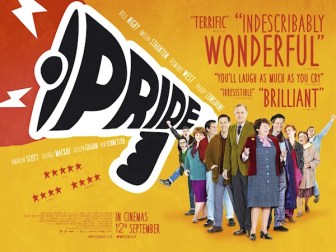
PrideI don’t know if the true story behind Pride was big news back when it all actually happened in 1984, but I hadn’t heard of it until the film came along. For those who’ve still missed it, it’s about a group of gay activists deciding to form a group, LGSM, to support the striking Welsh miners — two groups who were poorly treated in one way or another by ’80s Britain.

That sets up the obvious potential for culture-clash comedy — “what will those parochial little Welsh villagers make of The Gays? Hilarity ensues!” Fortunately Pride doesn’t indulge in these easy targets for too long, preferring instead to show how the two groups embraced each other’s support. There is amusement value in the meeting of such different social groups, but it’s handled in a relatively realistic way. The film also doesn’t ignore the prejudice that obviously arose in some quarters, and on both sides (there were some in the gay community who thought there were more important fights to fight), but the overall theme is of acceptance and cooperation.

The whole thing is eased along considerably by a top-drawer cast of mostly-British thesps. That “mostly” is essential thanks to American Ben Schnetzer as LGSM founder Mark Ashton, who sports a flawless (to my ear) Irish accent as he confidently swaggers through life, which masks inner uncertainty that comes to the fore in later developments. Joe Gilgun is his bespectacled and practically-minded ‘sidekick’, a complete 180 from his recent kerazy turn in Preacher. Perhaps most remarkable is Dominic West as a veteran homosexual, Welsh girls just wanna have funwhose dancing display has to be seen to be believed. Bill Nighy and Paddy Considine are understated as quiet, hesitant characters who have inner steel, and Jessica Gunning makes a similar impact as a housewife who is completely emboldened by the activism.

I don’t like just listing actors, but it would be a disservice not to mention Faye Marsay, Andrew Scott, Imelda Staunton… I could go on. Screenwriter Stephen Beresford finds meaningful stories and character arcs for each of these, while director Matthew Warchus controls the story so that it never devolves into a collection of subplots. I haven’t even mentioned the ostensible main character: George MacKay as a young man taking his first tentative steps into the gay world, an audience cipher character who still gets quality moments sometimes denied to a character fulfilling that plot function.

For what could have been a superficial Brit-com, Pride instead delivers a more truthful and thought-provoking movie, but one that isn’t heavy-handed or worthy, instead remaining amusing, emotionally affecting, and enjoyable. It takes a true story that I guess has become something of a footnote and suggests why it’s the ‘little’ stories that are sometimes the most important.

4 out of 5