Dune: Part One (2021)

aka Dune

Denis Villeneuve | 155 mins | cinema | 2.39:1 | USA & Canada / English | 12A / PG-13

Dune: Part One

Trying to write about a film like Dune in a critical context over two years after it was released feels a bit… pointless. I mean, the film was a hit (albeit by mid-pandemic standards); and if you did miss it first time round, the hype around the sequel has surely already piqued your interest and/or left you cold, in which case what I say isn’t likely to be a deciding factor. Of course, yay/nay recommendations are not the only reason for critical writing — far from it — but, if you’re looking to do more than that, you better have something to say. So I confess here and now, for the sake of any readers looking for that kind of article, that I don’t think I have a unique or revelatory or even particularly insightful take on Dune — or Dune: Part One, as I’ve insisted on calling it ever since the wonderful surprise of seeing its opening title card (and sites like IMDb have finally got on board with too). All I can offer is how the film struck me personally, from my particular perspective; which is not nothing, but is what it is.

So what is my perspective? Well, I’m far from a newbie to the world of Arrakis, though I can’t now remember in what order I first encountered the various texts related to it that I’ve experienced. So, going chronologically, I have read Frank Herbert’s original novel. Famously, it’s a doorstop of a tome, so I must have been relatively young because, for whatever reason, I’ve struggled to get through long books for the past couple of decades (I’ve tried Lord of the Rings two or three times and never got much further than Tom Bombadil; I started Shogun over four years ago and my bookmark still sits about halfway through it — and I did enjoy both of those! I just don’t have the staying power to get to the end). But I can’t have been that young, given the book’s subject matter and style, and the fact I enjoyed it. Indeed, I’d go so far as to say it’s one of my favourite novels. I’ve never read the sequels. I’ve long intended to (see: previous comments about lack of staying power when reading).

I’ve also seen the 1984 David Lynch film, naturally — an interesting but fundamentally flawed endeavour — and the 2000 miniseries (and its 2003 sequel), which I remember being widely acclaimed — and I would have agreed with that sentiment — but it does look rather dated now, and so I’m somewhat wary of rewatching it (though I recently bought an expensive Blu-ray edition imported from Australia, so I certainly intend to at some point). The point of listing all that is this: I do not approach Dune free of expectation. Quite the opposite. And yet, I also didn’t have a specific vision in mind. And when you’ve got a director like Denis Villeneuve in charge — a director with a very definite and particular style — you know you’re going to get his interpretation of the material, so the more open-minded and receptive you are to that, the better. I mean, unless you’re on his exact wavelength, your imaginings are not likely to be the same as his, especially if you’ve allowed them to be shaped by one of the previous films, or even the concepts from unmade versions, like the one so interestingly documented in Jodorowsky’s Dune.
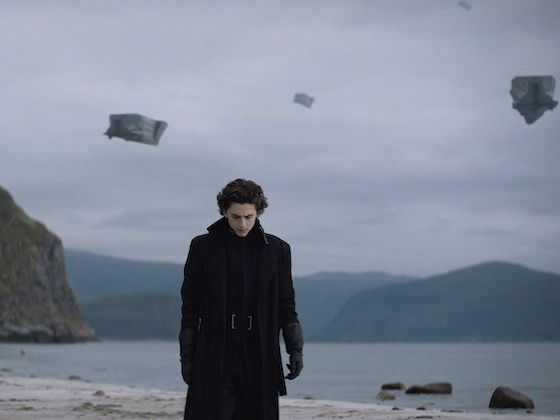
Moody Messiah

All of this a very long-winded and self-centred way of arriving at my point that, on first viewing, Villeneuve’s Dune took some adjusting to, because it wasn’t quite… right. Having said I went in with no expectations, clearly I had some, buried somewhere in my mind. And yet, the film also felt like exactly what one should have expected from Villeneuve if you’d seen his previous work, not least the sci-fi film he made immediately before this, Blade Runner 2049. The worlds of Blade Runner and Dune are very different, but, as filtered through the mind of Denis Villeneuve, there are distinct aesthetic similarities, most apparent in the brutalist influence in much of the world design. That starkness is quite at odds with the fanciful, sometimes even downright weird, takes on the material that came from the minds of creatives like David Lynch and Alejandro Jodorowsky; or even the miniseries, which, while I little more staid and constrained by a TV budget, is seemingly as influenced by fantasy TV of the period as by its science-fiction stablemates. With most previous visualisations of Dune leaning into such fantastical choices, Villeneuve’s (for want of a better word) realist take was, initially, a shock to the system.

That’s a slightly disorientating feeling to be dealing with when watching a film for the first time. Thanks to the story and characters and scenes being so familiar, the mind is freed up to focus more on the surrounding decisions. Even when trying to be open-minded about them, there’s then some kind of disjunct between things that are very recognisable being presented in a very unrecognisable way. There’s also a kind of tug-of-war going on between the feeling that Villeneuve has been allowed to interpret the text exactly as he sees fit, and that’s a good thing because we’re getting his vision across the project, and the sense that it’s something of a shame to miss out on the craziness present in previous interpretations. After all, Dune is set 20,000 years in the future (you may recall it’s set in the year 10,191, but that’s not AD, it’s numbered from an in-universe event — look, let’s not get into the backstory here; but when you see articles mindlessly parrot “Dune is set 20,000 years in the future in the year 10,191”, know that the article writer is mindless because they haven’t bothered to query the maths, not because they’ve done the maths dramatically wrong) — think how different technology has made our world from three or four thousand years ago, so how much wilder and weirder could things get if you multiply that by a factor of five or six? None of which is to say Villeneuve’s choices are wrong, or even that I don’t like them, but they took some getting used to. On my recent second viewing, with the benefit of awareness of what I was about to see, I was able to enjoy the overall experience much more; it settled the qualms I had from my initial viewing and made it easier for me to appreciate the magnificence of the achievement.
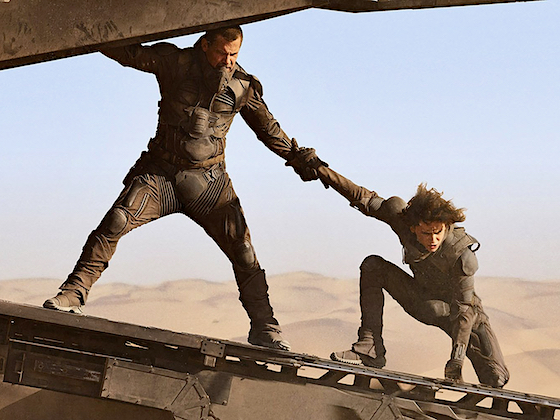
Desert power

Another point of contention (if we can go as far as calling it that) was where the film broke off. I’ve read some retrospective reviews recently that expressed their disappointment when the film suddenly ended mid-story, which I guess goes to show how not all marketing and information reaches all people — I thought it was well-known that this was to be Part One, and that a followup conclusion was dependent on its box office success (hence my pleasant surprise when the film so brazenly declared it was just Part One on its opening title card, not even saving that fact for a ‘surprise’ reveal on a closing title card, a la It), but there were definitely people who went in not knowing that and found it frustrating. Should it have been made even clearer? Should the film have formally been titled Part One in its marketing? Well, the reaction to various “Part Ones” released this year (like Mission: Impossible – Dead Reckoning, Fast X, and Across the Spider-Verse) suggests that audiences don’t really like only getting “Part One” ever; but, conversely, their acceptance of it depends on how it’s handled — how satisfying the movie leading up to the break is, and how the moment it stops is handled. But this is a whole side debate that I’ve stumbled into without adequate preparation (I’ve not even seen two of the three films I just mentioned), so I’m going to swiftly redirect us to Dune.

Where Dune: Part One ends is, frankly, where I always thought it would. Other fans were more surprised by its choice, so perhaps it’s just too long since I’ve read the novel or watched another version and I just couldn’t remember a better break-point at approximately the halfway mark. The screenwriters could, though, because apparently the film originally carried on a little further in the story, before the endpoint was moved in the edit. It’s not the most dramatic place to pause the story or end a film — it doesn’t come after some big action sequence or major plot twist, nor on a cliffhanger of any kind — but I think it largely works. It reminded me of The Fellowship of the Ring, possibly the greatest “Part One” film of all time, in that in no way whatsoever does it feel like the end of the story — we’re definitely only in the middle somewhere, and there’s clearly a whole lot more to come — but it feels like a solid place to pause; like we’ve experienced the whole of a part, if that makes sense.

There was some minor brouhaha the other day during the press for Part Two when someone asked Villeneuve about telling the story over two films — I didn’t pay it too much heed and it didn’t really blow up, so I forget the precise question and answer — but, as many pointed out, adapting Dune in a single film has been attempted before and famously didn’t work out, so doing it in two on this re-attempt shouldn’t really come as a surprise. Certainly, as a fan, I’d rather a two-part adaptation that gives the story the necessary screen time, even if that means a somewhat limp end to Part One, rather than have the whole book in a rushed three-hour single shot. And if early reviews of Part Two are to be believed, it’s paid off overall.
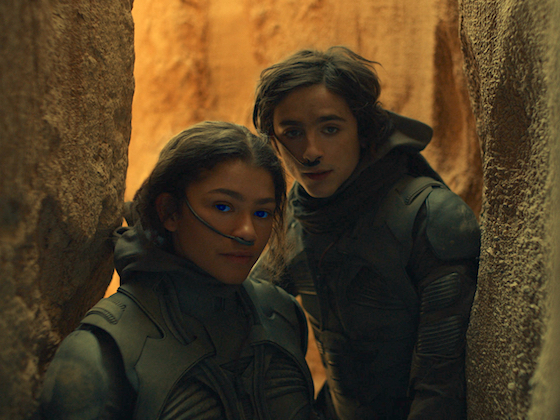
Visions of the future

But more on that ‘next time’, when I see Part Two myself and offer my verdict — hopefully in a more timely fashion than this, rather than waiting several years until the hoped-for Dune: Part Three, aka Dune Messiah (I’m not sure which title I’d rather they go with if/when it happens…)

5 out of 5

Dune: Part One was #176 in my 100 Films in a Year Challenge 2021. It placed 5th on my list of The Best Films I Saw in 2021.

Dune: Part Two is in cinemas worldwide from tomorrow and will be reviewed in due course.
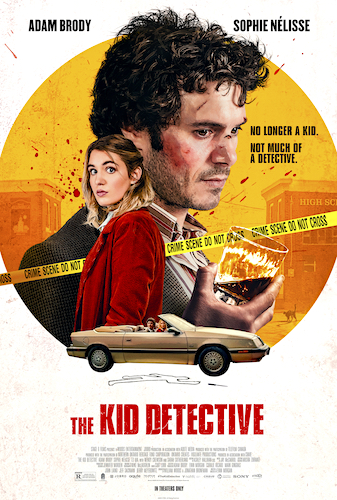
The Kid Detective (2020)

Evan Morgan | 96 mins | digital (HD) | 2.39:1 | Canada / English | 15 / R

The Kid Detective

Sometimes a movie (or a book, or a series, or whatever) comes along with a premise that you wonder why someone hasn’t thought of sooner (with the inevitable caveat that, sometimes, someone has and you’re just not aware of it). The Kid Detective is one of those occasions (or was for me, at any rate) — what would a ‘kid detective’ (you know, like the Hardy Boys or the Famous Five or whatever) be like when they grew up?

There’s a few different ways you could spin a setup like that, and here writer-director Evan Morgan takes a fairly realist approach: the “kid detective” in question, Abe Applebaum, was a quirky story for the local paper when he was a child, investigating “mysteries” of the schoolyard variety; but when a real crime takes place and he (unsurprisingly) fails to solve it, that’s the end of the fun and games. Nonetheless, as a 32-year-old adult (played by Adam Brody), Abe has tried to keep his childhood fantasy going, running a real detective agency. Except there’s not much to actually investigate in a small town, and the fact he’s never grown up leads to derision from all around, rendering him a miserable washed-up has-been. So when a high schooler (Sophie Nélisse) asks him to investigate the murder of her boyfriend, Abe sees a chance to finally prove himself.

When I say “a premise you wonder why someone hasn’t thought of sooner”, I suppose what I also implicitly mean is “something I am interested in”; something that scratches an itch I didn’t even know I had. Of course, that automatically creates expectations — even if you can’t state them exactly, you now have a notion of what you want out of this thing; of the itch that needs to be scratched. Fortunately, The Kid Detective was everything I expected it to be and more. It’s a successfully amusing extrapolation of its premise. It kind of has to be a comedy, because the basic idea is too silly to take seriously in the ‘real world’, and it manages that without tipping over into farce. But, somewhat remarkably, it’s also a solid mystery in its own right, with a surprisingly moving conclusion. It’s a balancing act that shows the validity of comedy-drama (aka dramedy) as a tone. It’s a mode that’s sometimes dismissed as “not funny enough to be a comedy, not affecting enough to be a drama”, but when it works, it’s arguably more like real life than either of those extremes.

Drink driving

It also doesn’t mean the film has to play broad. Take Brody’s performance, for example: he balances the sardonic humour and introspection just right, rendering Abe believable as someone who is actually pretty darn clever but has lost his way and self-belief. Or there’s the ‘big denouement’, which is just two characters sat at a table talking. It’s both relatively understated and means the finale arrived at a point where I (at least) wasn’t quite expecting it, making it all the more effective and powerful. With hindsight, maybe I should have seen where it was going, and so maybe you could argue the film suckered me. But, you know what, I’m glad it did. It’s nice to be surprised by a mystery’s resolution. It happens too rarely as you get older and become narrative-savvy and everything’s predictable. One moment even gave me goosebumps, and you’ve got to love anything that can elicit such a physical reaction.

Clearly, I was the target audience for this. I couldn’t have told you I wanted it, but when I heard about it I was eager to see it. As I said, that has both pros and cons: to the former, I’m ready to be won over; to the latter, raised expectations can lead to disappointment. Fortunately, The Kid Detective aces it and I loved it.

5 out of 5

The UK TV premiere of The Kid Detective is on Film4 tonight at 9pm, and available to stream on Channel 4’s catchup service for 30 days afterwards.

It was #147 in my 100 Films in a Year Challenge 2021, and placed 4th on my list of The Best Films I Saw in 2021.

2024 | Week 3

I’ve already covered Barbie, so here are the other films I watched during Week 3…

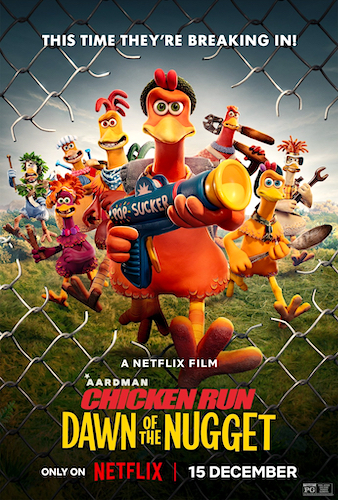
  • Chicken Run: Dawn of the Nugget (2023)
  • The Best of the Martial Arts Films (1990)


    Chicken Run:
    Dawn of the Nugget

    (2023)

    Sam Fell | 98 mins | digital (HD) | 2.00:1 | UK, USA & France / English | PG / PG

    Chicken Run: Dawn of the Nugget

    I wasn’t a massive fan of the original Chicken Run (it’s not bad, but it pales in comparison to some of Aardman’s other works, not least any of the main Wallace & Gromit films), so I approached this belated sequel more with trepidation than excitement. You could interpret a near-quarter-century wait as indicative of holding off until someone had a genuinely good idea; or you could see it as a shameless effort to generate a hit by tickling childhood nostalgia through a return to a cult-ish favourite. Behind-the-scenes stories of unnecessary cast changes (the primary offender: apparently 55-year-old Julia Sawalha is now too aged (for a voice role as a hen?) so they recast her with 51-year-old Thandiwe Newton) did nothing to bring confidence.

    Anyway, setting all that aside, the end result is… adequate. I’d probably have said the same of the first one, so maybe that’s no surprise. But even that felt like it had some moments that stood out, whereas this is just unrelentingly fine. The plot concerns the chickens having to break in to a farm — yes, it’s taken 25 years to have the genius idea of “what if we just reversed the story?” The immediate point of reference for break-in-type movies nowadays is the Mission: Impossible franchise, which features a noteworthy heist a least once per film. And so Dawn of the Nugget references M:I, and the gag goes thus: “It’s an impossible mission.” “Uh, shouldn’t it be the other way around?” That level of underscored bluntness is about the level all the humour operates at: unsubtle, unsophisticated, unvaried, and uninspired.

    The arguable exception in terms of quality is the animation itself. That it’s done well almost goes without saying — Aardman remain one of the masters of stop-motion (Laika having challenged them in recent years) — but, on the other hand, there’s nothing to wow you. It’s more than competent, slick and expressive and so on, but there’s no imagery you’ll take away; no shot or sequence that would make you reach for adjectives like “beautiful” or “stunning”.

    Aardman’s next major effort (it’s a bit unclear if it’s a feature or a short, as it’s going direct to the BBC in the UK) is a return to Wallace & Gromit, planned for later this year (no doubt a Christmastime treat, as usual). As I said, I prefer that duo, so I’m always excited to see them back on the screen. I just hope that belated sequel (almost 20 years since their feature film and 16 since their last short) doesn’t feel this… unnecessary.

    3 out of 5

    Chicken Run: Dawn of the Nugget is the 5th film in my 100 Films in a Year Challenge 2024.


    The Best of the Martial Arts Films

    (1990)

    aka The Deadliest Art

    Sandra Weintraub | 91 mins | Blu-ray | 16:9 | USA & Hong Kong / English | 18

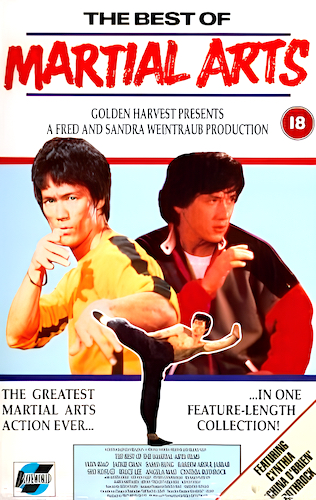
    The Best of Martial Arts UK VHS cover

    Originally released on VHS (back when martial arts films weren’t necessarily easy to come by for consumers, so I’m told), this hour-and-a-half selection of fight scenes is now available remastered / reconstructed in HD, with all the film clips also in their original aspect ratios, included on Eureka’s When Taekwondo Strikes Blu-ray. Hurrah!

    It is, primarily, a showcase for fight scenes. Whole uninterrupted sequences are shared, which is at least the right way to do it if that’s what you’re doing; unlike modern TV clip-show compilations, which seem to feel the need to cut the scenes to shreds and intersperse them with inane talking heads. There are a few interviews included here too, but rather than early-career comedians who’ll discuss anything for a paycheque, the interviewees include stars Sammo Hung, Jackie Chan, Cynthia Rothrock, and, er, Keith Cooke; plus Robert Clouse, director of Enter the Dragon.

    “Best Of” is more a titling convention than a fact, considering the film was co-funded by Golden Harvest and so only has access to their back catalogue, thus skipping entirely the output of the legendary Shaw Brothers studio. But then, what else would you expect them to call it — Some Pretty Good Bits of the Martial Arts Films We Had the Rights to Include? Of course, however you look it, 90 minutes of fight scenes is a pretty hollow experience — there’s no narrative; even the interviews offer mostly behind-the-scenes anecdotes rather than, say, a “history of the genre” approach. But if that’s all you expect, you get your money’s worth, because there are some stunners in here.

    Mind you, as well as being mostly limited to one studio, it’s also limited by time: having been made in 1990, there’s no Jet Li, no Donnie Yen; Van Damme is mentioned as a “rising star”… You could do the whole film over again — several times — if you were able to encompass a wider spread of studios and stars. But nowadays there’s no need: we can just head to YouTube for our out-of-context fight scene fulfilment… so long as you know what you’re looking for, anyway. That will always be the value of a curated experience.

    3 out of 5

    The Best of the Martial Arts Films is the 6th film in my 100 Films in a Year Challenge 2024.


  • Barbie (2023)

    Greta Gerwig | 114 mins | Blu-ray (UHD) | 2.00:1 | USA & UK / English | 12 / PG-13

    Barbie

    Once upon a time, a movie based on a children’s toy would’ve been IP slop; or, at best, surprisingly entertaining IP slop. Heck, there are dozens of direct-to-video animated Barbie movies that prove exactly that: they look cheap; they’re there to generate money from little girls (primarily) demanding to see the video of the toy they like; but some of them aren’t actually all that bad.

    But that was a couple of decades ago. Now, the majority of our mainstream movie culture is based around originally-for-kids IP that people who have reached adult ages still apparently obsess over. And when it comes to “movies based on toys” specifically, we can look back to The LEGO Movie (released a whole decade ago this month) for a work that transcended what it “should have been” (an expensive 90-minute toy commercial) to become something genuinely entertaining; that used its IP in creative and fun and, yes, even meaningful ways. It’s those footsteps that the Barbie movie seeks to walk in.

    And, thanks to some savvy behind-the-scenes choices, it succeeds! Heck, it almost succeeds too well. This is definitely a movie primarily aimed at adults, with enough silliness and bright colours on the side to not alienate kids too much. Though by “kids” I mean “teenagers”. Sure, the 12A and PG-13 ratings are permissive enough to take your six-your-old who actually plays with Barbies, but they’re going to be left floundering — or, worse, bored — as the film debates feminism, the patriarchy, and gender roles in general. This is a film about where Barbie, the toy, sits in our culture; what it represents, and what it should represent, and how successful or not it is at doing that. It’s not an essay film — those themes are smartly addressed along the way as part of a storyline about Barbie-the-toy crossing over into our real world, for various reasons — but nor is it a bright-and-colourful bit of fluff to entertain small kids. Maybe it could have been — that’s what Pixar used to excel at — but it’s not the route the filmmakers chose to go down.

    Pretty as a picture

    As for the meat of what the film has to say and how it says it… oy, I’m not sure I want to get into that discourse. It’s just asking to have annoying people jump up in your replies. Nonetheless, it’s quite bold for an IP title like this to criticise the patriarchy by inverting it and making a matriarchy the oppressive state; but without feeding into right-wing numpties by saying “see, women would be just as bad!”. People say the film is about feminism, which is true, but it’s specifically about what I’d consider the true meaning of feminism — which is really about genuine equality — rather than what reactionaries imagine it is, i.e. “women are best and should be in control”. It could also have hit that note in a shallow, almost accidental way; for example, if it had been a parade of “aren’t men stupid and annoying?” jokes. Put another way, the film cares as much about the Kens and their right to be individuals as it does the Barbies and their right to be powerful. (I said I didn’t want to write anything particularly ‘risky’ and look what I’ve gone and done…)

    Also, thanks to my personal predilections, I particularly enjoyed how the film deconstructed itself; or, rather, the fact it was aware that it’s content based on product and engaged with that to some extent. It sits alongside other recent works like The Matrix Resurrections and Return to Monkey Island as works of art that have an awareness of where they sit in culture and why they exist, and are prepared to engage with that, to deconstruct it and analyse it, in quite an overt and meta fashion within the works themselves. Personally, that’s something I’ve wanted and dreamt of seeing, but never expected to get from studio IP — such self-awareness is kinda frowned upon when it’s saying “I exist for no artistic reason, purely to make more money for the studio”, as The Matrix 4 did most explicitly. What’s great about all three of these works is that they go beyond that obvious point, too.

    In something of an about turn, others have criticised the film for not being subtle in the way it handles these issues. My friends, you’re watching a movie based on a toy, aimed at as wide an audience as possible. This isn’t an abstruse Palme d’Or contender — it’s a film that can hit your everyman round the face with a bright-pink hammer three times over and they still might miss the point. Sometimes, it’s the right choice to be, if not “on the nose”, then certainly overt. It’s ok for a story to have a point, and for that point to be clear.

    Tarantino's favourite scene

    The other point of discourse the film has fired up came after the Oscar nominations, when co-writer/director Greta Gerwig and star/producer Margot Robbie were… nominated, actually, but not in the categories some people felt they should be nominated in. Although, if they’d swapped the nominations around, I expect they’d be annoyed the other way too. So, Gerwig gets a screenplay nod (which she might win, I guess?) but not a directing one (which she wouldn’t have, let’s face it), and Robbie is nominated for producing the film (a definite achievement — she’s spoken a lot in interviews about the efforts that went into making the film they wanted to make, and convincing the studio and toy manufacturers to go along with it) but not for acting (which she probably wouldn’t have won anyway). I don’t mean neither would have been deserving of the other nomination, but the directing gong seems almost sewn up for Christopher Nolan (for various reasons), and actress is a two-horse race between others. Besides, the real achievement is that the film exists as it is, with the content that it has — that’s a feat of writing and producing, not acting or, truly, directing (sure, in many other movies the director is king queen, but you get the distinct impression Barbie was significantly powered by Robbie; and when one person is both (co-)writer and director, surely a lot of their conceptual energy is injected at the writing stage).

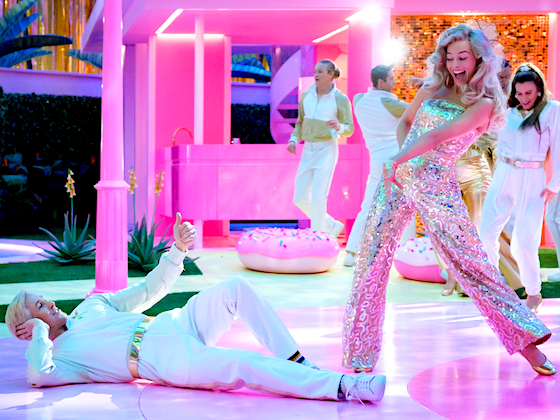
    Competitors aside, the quality of work can always be argued on its own merits. Gerwig’s direction is pacey and bright and fun, but is it as good as what she did in Lady Bird or Little Women? Which is to say, it fits the material well enough, but is it really special enough for an awards win? And also, who the fuck cares? Awards are kinda arbitrary. She did a good job. When it comes to Robbie’s performance, complaints have focused on the fact Ryan Gosling is nominated. Well, he’s in a different category — the fact he gave one of the five best supporting actor performances in 2023 has no bearing whatsoever on whether Robbie gave one of the five best, er, actressing performances of 2023. But yeah, Gosling does almost steal the film out from under Robbie, because he’s consistently hilarious with just enough introspection to add some character. That’s certainly the initial impression, I think. But Robbie is the film’s emotional core (yes, the movie about the plastic doll has emotions), which ultimately allows her to hang on to her own movie. That’s not something to underestimate: a lesser performer could have been overshadowed. Instead, they’re both excellent, particularly when they’re sharing a scene.

    Barbie and Ken

    By rights, a Barbie movie should’ve been something inoffensively plasticky for little girls, possibly with some trite “you can do anything you want” message in between all the different outfits designed to sell more toys. Instead, Gerwig and Robbie have gone deeper and further in every respect — taking that “you can do anything”-type aphorism and dissecting it to find how true it is, or isn’t, and why. But they’ve wrapped that up in a movie that doesn’t forget to celebrate the thing it’s about, both by acknowledging Barbie’s good intentions and with piles of references to its history (what we’d call fan service if this was a a boys’ IP with tonnes of Lore or whatever). And, perhaps most importantly for a movie that, remember, is based on a toy — a thing that’s supposed to bring joy and fun and entertainment — they’ve made something full of fun and joy and entertainment.

    4 out of 5

    Barbie is the 4th film in my 100 Films in a Year Challenge 2024. It placed 9th on my list of The Best Films I Saw in 2024.

    Archive 5, Vol.8

    I have a(n insanely huge) backlog of 533 unreviewed feature films from my 2018 to 2023 viewing (not to mention the 77 shorts, but they’re a problem for another day). This is where I give those films their day, five at a time, selected by a random number generator.

    Today, it’s killers galore with Korean zombies, comical hitmen, rampaging security robots, and plain ol’ murderers. Plus, dying of boredom in Saturday detention.

    This week’s Archive 5 are…

  • One Cut of the Dead (2017)
  • The Breakfast Club (1985)
  • Chopping Mall (1986)
  • Dead Man’s Folly (1986)
  • Wild Target (2010)


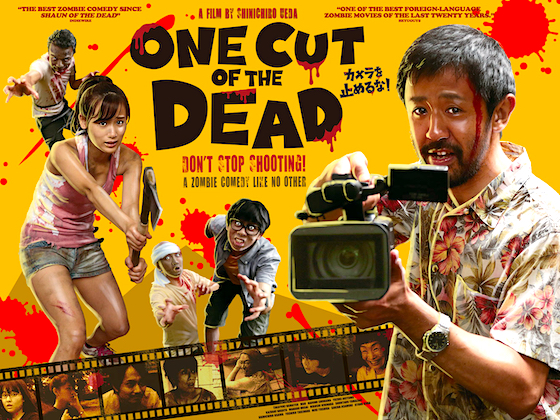
    One Cut of the Dead

    (2017)

    aka Kamera o tomeru na!

    Shinichiro Ueda | 96 mins | Blu-ray | 16:9 | Japan / Japanese | 15

    One Cut of the Dead

    You know, it’s not just my reviews that are tardy: I bought this because it was hyped up, both as “good” and as “see it knowing as little as possible”, and it went on my “must watch soon” pile… where it sat for 14 months. And that’s far from the most egregious example of “ooh, I must get round to that” equally a long, long delay.

    Now, it’s taken me another 46 months to write this review. Eesh. On the bright side, perhaps I shouldn’t be so worried about spoilers anymore. I mean, if you’ve not seen it by now, whose fault is that? And it definitely is the kind of film where the less you know the better, because it’s going to pull the rug out from under you. Of course, even knowing that means you’re on the lookout for what’s going to happen; and the film gives you a helping hand, because right from the off there are nods to the conceit. Still, I’ll try to be fairly vague.

    It’s a film of three parts. The first is, with hindsight, an establisher; setup and groundwork for what comes next. Alternatively, some genre fans will take that as the purpose of the movie, and what follows as extraneous. Then there’s a long, slow middle section. Again, no direct spoilers, but we know where this part of the narrative ends up, so it feels like it’s over-expounding stuff (we don’t need as much backstory as we get) and consequently goes on a bit. Halfway through, I began to wonder what all the fuss was about. I worried that I’d left it too long to see it and let the hype get the better of me.

    But, ultimately, it’s all setup for the final half-hour, and it pays off in hilarity. The middle could still do with a trim, but it’s worth sticking with for the payoff.

    4 out of 5

    One Cut of the Dead was #54 in my 100 Films in a Year Challenge 2020.


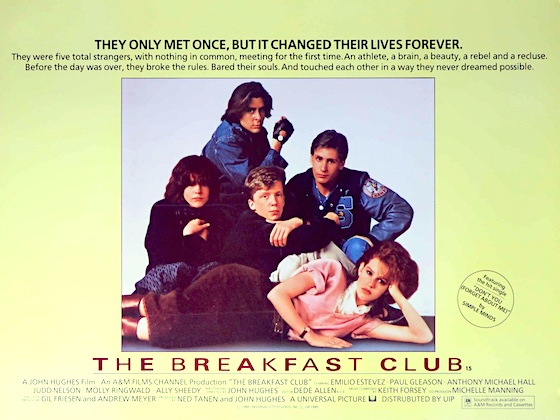
    The Breakfast Club

    (1985)

    John Hughes | 97 mins | Blu-ray | 1.85:1 | USA / English | 15 / R

    The Breakfast Club

    Is The Breakfast Club the definitive ’80s high school movie? It’s got to be on the shortlist, right? Personally, I preferred Heathers, or, if you want to stay within the John Hughes universe, Ferris Bueller, but that doesn’t mean this is without its qualities.

    If you’re unfamiliar, it’s about a gaggle of misfits in Saturday detention. Over the course of the day, the unlikely group form a bond — well, there’s a surprise. One thing I did like about that: even after they’ve become ‘friends’, the slightest thing can still set off their animosity to one another. They’ve not really changed and it’s a fragile allegiance. The stuff about how they’d never talk to each other in real life after this rings true. So, I don’t want to come down too heavily in the region of the idea that the film might be clichéd. I’ve read other modern reviews criticise it for that, and you have to wonder: when you’re writing about a popular movie 35 years after it came out, was the film clichéd or did it create the clichés? That said, my favourite observation in this sphere was: “if this is cliché, then life is too.” Oh boy is that a sentiment I agree with about so many fictions that are deemed “cliché”.

    That said, I guess we’re beyond the film’s era of influence now. I mean, if you made something like this today, it would probably be an arthouse-aimed indie production (in fairness, the original is also an indie), probably produced for a similar (or lower) budget than it was almost 40 years ago; and it would be adored and analysed by 30- and 40-something-year-old cineastes while actual teenagers were at the multiplex watching MCU XXIV. (You can tell I wrote these notes four years ago, because I would not now suggest the latest MCU release as a default popular success.)

    On the other hand, I know we all look down on remakes, but if you’re going to remake any popular film, this is the kind of thing that would withstand it. It’s so much about its era that if you took the basic concept and remixed it for the 2020s, there are a several interesting avenues to be explored. I’m sure cliques still exist in American high schools (based on media depictions, they never seem to go away), so you’d still get the contrasting personalities; and you could shift the sexual dynamics, the way different groups view each other, and sort out the ending (the way certain characters are ‘fixed’ is very of its time, and not in a good way); and put a modern spin on it all, of course, with some race and LGBT points. You know, make it “woke”, as dickheads say. That would be a pretty different film, but that’s entirely the point: if you’re going to remake something, make it different, make it new. (To be clear, I’m not criticising the original film for not including those elements — it’s a product of its time and it’s not choosing to be about those things, which is entirely valid.)

    I appreciate I’ve talked more about what the film could be today than what it is. Oops. But, look, this is the kind of film where I can’t remember any of the characters’ names — if I wanted to talk in specifics, I’d have to refer to them by their actors (or do a bit of googling, of course). That’s another way of saying I did like it, but it’s not a film that’s stuck with me in the way it has for its many fans.

    4 out of 5

    The Breakfast Club was #56 in my 100 Films in a Year Challenge 2020. It was viewed as an additional film in my Blindspot 2020 project, after I failed to watch it for Blindspot 2019.


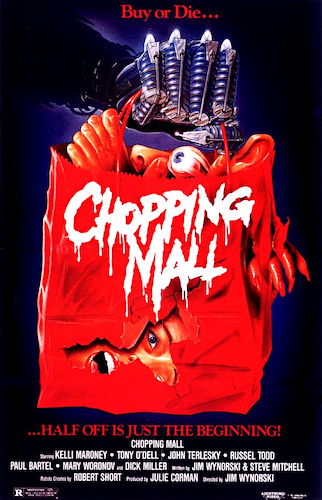
    Chopping Mall

    (1986)

    Jim Wynorski | 76 mins | digital (HD) | 16:9 | USA / English | 18 / R

    Chopping Mall

    Blood, boobs, and berserk ’bots are the order of the day in this campy sci-fi actioner.

    That’s right: “sci-fi actioner”. I don’t know where I’d heard about this, or if I’d just made inferences from the title and poster, but I’d assumed it was a regular slasher whose USP was simply “it’s set in a shopping mall”. But nope, it’s actually about security robots who go barmy and start killing a bunch of young people who’d locked themselves in a mall overnight. According to IMDb, it was originally released as Killbots — a more to-the-point title — but it performed poorly, and the producers’ reasoning was the title had made audiences think it was a Transformers-like kids movie (if anyone did take their kids to see it, boy, were they in for a surprise!) So, after cutting over quarter-of-an-hour, they re-released it with the more-clearly-exploitation-y title and… well, I don’t know if it as a major success or anything, but I guess it performed better and that’s the version that has endured.

    I don’t know what was in those deleted 15 minutes, but presumably nothing of great import. Indeed, the short running time is a blessing: it gets on with things at the start, and doesn’t try to drag them out later. It knows what we’ve come to a movie like this for, and it delivers that with admirable efficiency. What’s left is so barmy and schlocky that it’s kinda fun, even if most of it doesn’t make a lick of sense. Even allowing for the implausible setup (lightning sends robot security guards berserk), there’s little to no logic in what follows (the robots have turned murderous? Fine, but why are they such shit shots? And why, when they have an easy shot, do they suddenly stop shooting? And so on).

    Chopping Mall is no lost gem, although it may make you nostalgic for an era when they actually made stuff like this. Would the world be a better place if people were still churning out low-budget schedule-fillers full of gratuitous-but-clearly-fake violence and unnecessary-but-welcome nudity? I don’t know, but I doubt it could be any worse. At least it might’ve desensitised younger generations enough that we wouldn’t have to suffer endless rounds of “sex scenes are bad, actually” discourse on Twitter…

    3 out of 5

    Chopping Mall was the 13th new film I watched in 2023.


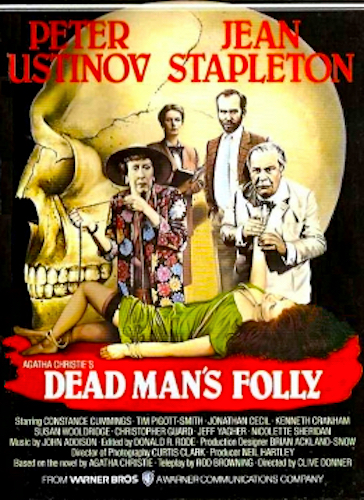
    Dead Man’s Folly

    (1986)

    Clive Donner | 94 mins | digital (SD) | 4:3 | USA / English | PG

    Dead Man's Folly

    This second of three TV movies starring Peter Ustinov as Poirot marks the fourth of his six appearance as the character overall, and it might be the low point of the generally-underwhelming bunch. Ustinov was no doubt a quality performer, and I know his version of Poirot has its fans, but, for me, he remains a lesser interpreter of the Belgian sleuth.

    This particular film does nothing to outweigh his shortcomings. I don’t know if it’s the fault of the original story, this adaptation, or just me, but I didn’t feel there was enough provided for the the viewer to join in with the whodunnit guessing game, which I think is half the fun of a murder mystery. Events just unfurled until, eventually, Poirot explained it all. Add to that a portrayal of Poirot’s sometime-sidekick Hastings by Jonathan Cecil that verges on the lascivious, and production elements (costuming, hairdos, music) that are painfully ’80s, and the recipe is all-round distasteful.

    2 out of 5

    Dead Man’s Folly was #154 in my 100 Films in a Year Challenge 2021.


    Wild Target

    (2010)

    Jonathan Lynn | 98 mins | digital (HD) | 2.35:1 | UK & France / English & French | 12 / PG-13

    Wild Target

    In this remake of French comedy-thriller Cible émouvante, Bill Nighy plays an ageing hitman who falls for his latest target, pretty young thief Emily Blunt. Romance blossoms, in what must be one of the most implausible storylines ever committed to film. That’s partly because of the 33-year age gap between 26-year-old Blunt and 59-year-old Nighy (who, frankly, seems even older — the age gap may be roughly father/daughter, but she feels more like his granddaughter), but also because the movie does little to overcome this blatant shortcoming. If it wants us to buy it, it needs to sell it, but instead it half-arses it. When you learn that Helena Bonham-Carter was originally cast in Blunt’s role (but had to pull out due to commitments to Alice in Wonderland), it all begins to make sense: you can imagine a relationship between her and Nighy working on screen, and presumably they didn’t bother to retool the screenplay in between actor changes.

    All of which says, the film just about survives because there’s enough else going on. The hitman and thief wind up on the run from the people who want her dead, with a young apprentice (Rupert Grint) in tow, and the ensuing farcical hijinks are all daft fun, with the great cast (which also includes Martin Freeman, Eileen Atkins, and Rupert Everett, among others) clearly having a good time. Sometimes that’s off-putting, but here it’s infectious.

    4 out of 5

    Wild Target was #59 in my 100 Films in a Year Challenge 2021.


  • The Return of Archive 5

    Hey, look what else is back! Almost a whole year on from the last instalment in the series, I’ve finally managed to rustle up a new Archive 5. Although, that previous post was also a comeback after a long time off, so I probably shouldn’t celebrate until I mange two in a row.

    Being another year on, the pool of possible reviews has increased — quite significantly, as I’ve so far covered hardly anything from my 2023 viewing. But today’s five were chosen (but not written up, otherwise I’d’ve posted it) back when Vol.6 was published, so they were selected (at random) from the backlog of then-443 unreviewed feature films from my 2018 to 2022 viewing.

    This week’s hideously delayed Archive 5 are…

  • The Mummy (1932)
  • So Dark the Night (1946)
  • The Adventures of Ichabod and Mr. Toad (1949)
  • A Brief History of Time Travel (2018)
  • Misery (1990)


    The Mummy

    (1932)

    Karl Freund | 73 mins | Blu-ray | 1.33:1 | United States / English | PG

    The Mummy

    The third classic Universal Monster film, following Dracula and Frankenstein, The Mummy ditches literary adaptation for a horror based in then-contemporary fears. Nowadays, the notion of digging up of mummies is an Old Thing, but in 1932 they were just a decade on from the discovery of Tutankhamen’s tomb, and it was only in that year that it was finally fully excavated, so that kind of thing — and, of course, the attached curses — were still fresh in the public imagination.

    In the wake of Frankenstein, The Old Dark House, and The Mask of Fu Manchu, Boris Karloff was now the horror star in Hollywood, and so The Mummy was conceived as a starring role for him. Perhaps that explains why, plot wise, it’s a remix of Universal’s take on Dracula: the villain is after the girl, using supernatural tricks to lure her; the dashing young man is in love with her; there’s even a Van Helsing-esque figure with the knowledge to stop the monster. But originality is not the be-all-and-end-all — overall, I much preferred this to Dracula. Karloff is superb as the antagonist; Zita Johann (and her array of skimpy outfits) makes for an appealing (and, perhaps in spite of said clothing, competent) female lead; and there’s some intensely atmospheric direction from Karl Freund. His name may not seem as familiar as Dracula’s Tod Browning or Frankenstein’s James Whale, but he was already an acclaimed cinematographer, who’d shot the likes of Metropolis and, er, Dracula.

    The Mummy presented considerably less bandaged-wrapped foot-dragging living-corpse action than I expected. I guess those clichés come from the sequels (reportedly, their stories are entirely unconnected to this one) or another studio’s efforts (Hammer, perhaps). Instead, it’s quite simply one of my absolute favourites from the initial wave of Universal’s classic monster movies.

    4 out of 5

    The Mummy was #122 in my 100 Films in a Year Challenge 2021.


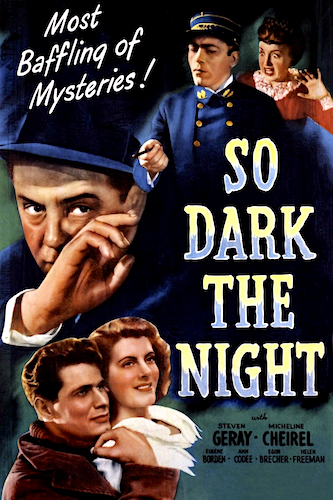
    So Dark the Night

    (1946)

    Joseph H. Lewis | 70 mins | Blu-ray | 1.37:1 | USA / English | PG

    So Dark the Night

    How many serial killer mysteries have you seen that spend their first half being bucolic romances? I can’t think of any others than So Dark the Night. The title and setup don’t prepare you for it, but the first half-hour is more of a genteel country romcom, with only the slightest hint there might be darker turns to come. Half-an-hour isn’t long generally, but it’s almost halfway through a film this short — and that’s when things take an abrupt turn for the murderous.

    The short running time probably works against the film, on the whole. For example, it makes it easy to miss that there are several interesting supporting characters or facets to main characters. Love interest Nanette is sort of depicted as an innocent ingénue, but we first meet her ogling the expensiveness of Henri’s car, and then she and her mother conspire for her to meet Henri and try to elicit a romantic connection, even though she’s already got a long-standing engagement. That’s not exactly upstanding and sweet behaviour, is it? Then there’s the widowed maid, who’s so lonely and desperate to escape that even after she suspects the killer, she pleads to be taken with him.

    Along with a few other factors that are rather spoilersome, this is a film that takes the usual shape of the whodunnit and subverts it to disquieting effect. It’s a film that, on the surface, looks nothing like a noir — it’s set in a pretty French village (created with surprising authenticity on Columbia’s backlot) — but exposes that the darkness and violence of the human condition can exist anywhere. I say “on the surface” because the film’s photography is great, with many interesting shot and lightning choices peppered about, without overwhelming proceedings with unnecessary flourishes.

    4 out of 5

    So Dark the Night was #57 in my 100 Films in a Year Challenge 2020.


    The Adventures of
    Ichabod and Mr. Toad

    (1949)

    James Algar, Clyde Geronimi & Jack Kinney | 69 mins | digital (HD) | 4:3 | USA / English | U / G

    The Adventures of Ichabod and Mr. Toad

    Disney’s canon of animated films goes through a weird blip between Bambi in 1942 and Cinderella in 1950. That’s when the six so-called “package films” were released, bundling together short films into themed features. They’re almost a footnote in the Disney animated canon — I mean, before them you’ve got Snow White, Pinocchio, Fantasia, Dumbo, and Bambi, and after you’ve got Cinderella, Alice in Wonderland, Peter Pan, Lady and the Tramp, Sleeping Beauty, and so on… and on… But it’s not a period of hidden gems: these are films mostly only worth bothering with if you’re a completist. This final one is, perhaps, the exception. At any rate, it’s easily the best of the package films.

    Whereas the others contained multiple short features, here there are just two: adaptations of The Wind in the Willows and The Legend of Sleepy Hollow. There’s barely any faffing about with linking segments, either: a quick intro from Basil Rathbone (who narrates Willows), and an equally speedy transition from Bing Crosby (who narrates Sleepy Hollow), and that’s it. And that’s all it needs, instead spending time and resources on the stories themselves.

    I’ve never been a huge fan of The Wind in the Willows, but this is a fast-paced and fun version, with a particularly entertaining ‘action sequence’ in Toad Hall as the good guys and weasels run around trying to keep hold of the property deed. Then, The Legend of Sleepy Hollow recasts the famous horror story as… a small-town romantic farce. No, seriously. It’s fine if a little dull, but picks up considerably when it reaches Halloween and we get a song about the headless horseman, a highly atmospheric sequence in spooky woods, and an exciting/comical chase between Ichabod and the horseman. It takes a while to get there, but it’s worth it.

    3 out of 5

    The Adventures of Ichabod and Mr. Toad was #176 in my 100 Films in a Year Challenge 2020.


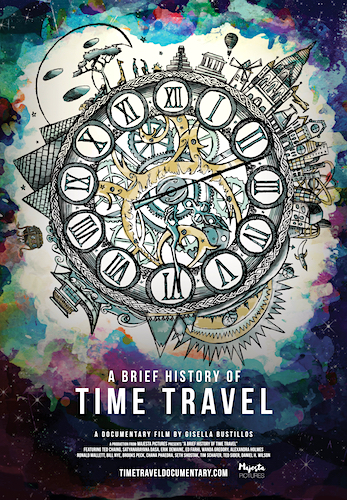
    A Brief History of Time Travel

    (2018)

    Gisella Bustillos | 69 mins | digital (HD) | 16:9 | USA / English

    A Brief History of Time Travel

    It’s a decade this year since I backed this documentary on Kickstarter — how’s that for time travel for you? I mean, technically, “normal and linear”, but also: time flies. It doesn’t feel like Kickstarter’s even been around that long. What the hell is going on with our perception of time (for example, the increasingly widespread observation on social media that everyone’s perception of how long ago things were is stuck somewhere in the early- to mid-2000s) would be an interesting topic for a documentary.

    But anyway, that’s not what this is. This is a wide-ranging overview of the concept of time travel, taking in fiction, science (both real and theoretical), and religion, as well as how those things interrelate and influence each other. It’s probably most interested in the science side, using other angles to illustrate rather than be examined in their own right. For example, it details the significance of H.G. Wells’s The Time Machine (the first story to involve time travel into the future, and one of the first where the travel was achieved via a man-made machine rather than some form of magic), but that’s about the last fictional story it describes. There are clips from Doctor Who and Back to the Future, but no discussion of their influence, nor of the kinds of time travel they present.

    At its best, the film draws interesting links and parallels between the different spheres it’s encompassing. This is at its most poignant when we meet a physicist who got into the field because his father died when he was young and time travel stories offered the idea that he might be able to revisit his dad, which developed into him learning the real science and becoming a physicist. Now, he believes he has a workable theory for how information could be sent into the past. I have no idea if that stands up to scrutiny, mind — the film doesn’t vet it with other interviewees’ opinions.

    Considering it only runs a little over an hour, it’s unsurprising that there’s not room to cover everything in depth. Nonetheless, it’s so blatantly leaving significant amounts of material untouched that you can’t help but feel disappointed. To be kind, it’s a reasonable primer for the uninitiated, with interesting bits of info dropped here and there, but almost every topic covered would merit a deeper, dedicated examination.

    3 out of 5

    A Brief History of Time Travel was #123 in my 100 Films in a Year Challenge 2021.


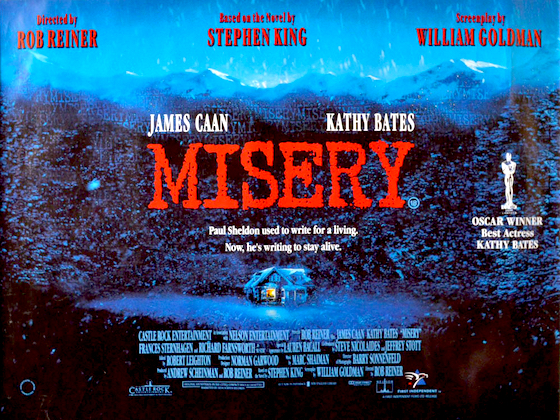
    Misery

    (1990)

    Rob Reiner | 107 mins | digital (HD) | 1.85:1 | USA / English | 15 / R

    Misery

    I feel like Misery is one of those movies that was once very well known in general pop culture, but has since slipped back, if not into obscurity then certainly into a lesser-known status, remembered only when mentioned by people who were there or as one in a list of Stephen King adaptations, that sort of thing. And that also feels fair enough, because it’s very much a movie that’s pretty good but not exceptional. The author whose work it’s taken from, the filmmaker who’s adapted it, and the main players on screen have all been responsible for or involved in even better and more enduring works of cinema, so of course this has become an “and also” note in their careers.

    Perhaps transcending that — and, certainly, by far the most famous thing about Misery — is the ankle-bashing scene, which unfortunately means you spend most of the film waiting for it to turn up, and when it does it’s rather unaffecting. That’s time and infamy for you. The former: it’s not as gruesome as it would be if shot today. The latter: I’d already seen the clip a dozen times. I can see how it was striking on the film’s original release, but familiarity has really blunted it.

    Fortunately, there’s more to the film than one shocking act of violence. Kathy Bates is excellent as Annie Wilkes, making her wild mood swings terrifyingly plausible. Her Oscar was well earned. Then there’s the subplot with the local sheriff and his unceasing investigation, which also introduces a welcome note of comedy via his interactions with his deputy (who’s his wife) and some of the other townsfolk. He’s brought to life with immense likability by Richard Farnsworth, and I’d’ve happily watched a whole movie based around him. On the whole, the film has a somewhat underwhelming “TV movie” feel to its visual (lack of) style, but there are some nicely done bits: the scene where Annie’s coming home while Paul tries to cover up that he’s been out and about; the final fight, which is just the right mix of tense, scrappy, and believably comical.

    4 out of 5

    Misery was #230 in my 100 Films in a Year Challenge 2020.


  • 2024 | Week 2

    Hey, look, it’s an actual reviews post! Well I never! Wonders will never cease! Etc.

    Yeah — I thought, “new year, new start”, and so here I am with short reviews of the first three films I watched in 2024. I was going to call this “Weeks 1–2”, even though they’re all from Week 2, because beginning the year with a post titled “Week 2” just felt wrong. But then I figured I’d begun the year already with my various other posts, so in some respects Week 2 feels natural and right. I could’ve waited for “Weeks 2–3” (there are only three films reviewed herein, after all), but I wanted to set out the stall of “look, reviews are back!” Whether they’ll stay back… I mean, they didn’t in 2023… But we live in hope.

    Anyway, onwards to:

  • Lift (2024)
  • Only Yesterday (1991), aka Omohide poro poro
  • Jackass Forever (2022)


    Lift

    (2024)

    F. Gary Gray | 104 mins | digital (UHD) | 2.40:1 | USA / English | 12 / PG-13

    Lift

    Netflix’s latest original is a high-concept heist thriller, in which a gang of art thieves are recruited by Interpol to steal a terrorist’s gold bullion fortune from a passenger flight in mid-air.

    I love a good heist movie, and Lift is certainly a heist movie. The joy of the genre, at least for me, is in the almost magic trick-esque way in which our gang pull off the score — doubly so when it’s eventually revealed in a third-act twist that what we thought was going on wasn’t going on at all. Unfortunately, that means someone — the writer, director, whoever’s in charge — needs to have a big, clever idea, and those are hard to come by. Lift‘s heist isn’t bad, it’s just nothing special. On the bright side, it ticks the box of having that last-minute reveal. Again, it’s not a particularly innovative subversion (if you were tasked with guessing it, it would probably be your first idea), but at least it’s there.

    Another common aspect of the subgenre is snappy, funny dialogue. Not so here, I’m afraid. Indeed, the dialogue is unrelentingly mediocre, and never more so than when it tries to be funny. Characters’ emotional arcs are built via Screenwriting 101 backstory dumps. You know: “How did you learn that?” “Well, when I was a kid, this very specific thing happened that taught me exactly that.” Perhaps belying a lack of confidence in the screenplay (or perhaps just Netflix realising they don’t need to spend as much as they have in the past), the film doesn’t look particularly expensive either, with middle-of-the-road CGI. Like everything else, it’s not bad, but you’re never going to imagine they went down the Mission: Impossible / Christopher Nolan route of staging it for real.

    The cast is headed by Kevin Hart, doing his best to channel whatever he’s learnt from previous co-stars and be a charming leading man type. I’ve seen worse, but it’s not a natural fit. The Interpol agent / love interest at his side is Gugu Mbatha-Raw, who you can feel is doing her best to inject some verve into proceedings. Some of the supporting roles hint at where the budget may actually have gone. Why else would Jean Reno drop in as a villain who’s mostly just on the end of a phone? Or Sam Worthington pop by as a senior Interpol agent who’s not even interesting enough to turn out to be a secret baddie? Plus most of the henchmen are faces you might recognise from British TV, like Torchwood’s Burn Gorman and Peaky Blinders’ Paul Anderson, who you’d think would be getting better offers than Henchman #2 at this point.

    If this review sounds full of faint praise… yeah, that’s about right. Lift is nothing special, but if a gang of crooks pulling off a seemingly-impossible score is your bag, then it’s passably entertaining fare for an undemanding Friday or Saturday night.

    3 out of 5

    Lift is the 1st film in my 100 Films in a Year Challenge 2024.


    Only Yesterday

    (1991)

    aka Omohide poro poro

    Isao Takahata | 119 mins | digital (HD) | 1.85:1 | Japan / Japanese | PG / PG

    Only Yesterday

    The fifth feature animation from Studio Ghibli’s other director, Only Yesterday introduces us to 27-year-old Tokyoite Taeko as she prepares to take a short summer holiday working on a farm in the countryside, which brings up memories of her ten-year-old self. The latter were the subject of the original manga the film is based on, with Takahata adding the storyline of the older Taeko reflecting on her childhood as a way of tying the stories together into a cohesive narrative.

    I didn’t know that piece of trivia going in, but I sensed something along those lines, because I generally dislike movies that play as “nostalgic vignettes from the author’s childhood”, and this is no exception. The ‘present day’ stuff, on the other hand, is very good, with beautiful moments in and about nature, and superb character beats related to what Taeko really wants and what she’s really like. (“Ever since I was little, I just pretend to be nice,” she says at one point, a sentiment I certainly felt I could agree with. Mind you, it’s in moments like this that the film’s dual timelines pay off, contrasting how younger Taeko behaved and how she has and hasn’t changed.

    Only Yesterday is sort of a film of two simultaneous halves, then. Not that I would lose the childhood bits entirely, but I would prefer a version of the film that pared them back considerably, only retaining the material that really enlightens the older Taeko’s storyline. As it stands, the bits I didn’t care for were quite tedious, but the bits I liked were captivating.

    4 out of 5

    Only Yesterday is the 2nd film in my 100 Films in a Year Challenge 2024. It was viewed as part of Blindspot 2024.


    Jackass Forever

    (2022)

    Jeff Tremaine | 96 mins | digital (HD) | 16:9 | USA / English | 18 / R

    Jackass Forever

    A decade and change after their last outing, the Jackass crew are back (minus some members, for various reasons, and plus some new ones; the latter distinctly upping the diversity quotient), doing the same crazy and dangerous shit they always did. Why? I think most of them are asking themselves the same thing. There was a definite sense in the last film that they were getting too old for this and it was time to call it a day, so what inspired them to come back to it — even older, even more prone to injury, with even longer recovery times — I don’t know.

    It certainly wasn’t fresh ideas. Despite all that time away to think up new stunts, nothing here feels particularly innovative or freshly imagined. Maybe that’s a highfalutin’ thing to analyse about a franchise that has always been just about doing dumb stunts, but some of them have been memorable, even to the extent of transcending the series itself (surely you’ve heard about the paper cuts, even if you haven’t seen it?) Forever is just variations on a theme; sometimes literally, as they expressly revisit old stunts in slightly different ways, like testing an athletic cup against various fast-and-hard objects, or pitting ringleader Johnny Knoxville against a bull — a stunt that ends rather seriously. Maybe if the film had taken that as a cue to say something about mortality or ageing… but that wouldn’t be so much fun, would it?

    So, it is what it is, which is it what it always has been: a bunch of silliness, usually resulting in pain and injury for the cast, and sometimes in laughter for the audience. It’s not the best Jackass film, but it’s not so significantly inferior as to warrant a lower rating. If you were a fan back in the day, you might appreciate the value of hanging out with old favourites for one last rodeo. And if you’re watching the films afresh, presuming you enjoyed them enough to get through the first three, you may as well watch the fourth too.

    3 out of 5

    Jackass Forever is the 3rd film in my 100 Films in a Year Challenge 2024.


  • The Best of 2023

    My review of the year reaches its end in the way it always does: with the best films I watched for the first time in 2023, plus a few honourable mentions, and a list of notable new releases I missed.

    For almost a decade now, my annual “top ten” has actually been my “top 10%”, the final total of entries taking its cue from how many first-time watches there were that year. Well, this year there were 103, and 10% of 103 is 10.3, which rounds down to 10 — so, for the first time since 2014, my top ten is actually a top ten. Huh.


    The Ten Best Films I Watched for the First Time in 2023

    As alluded to in the previous paragraph (but I’ll spell it out again), all the movies I watched for the first time in 2023 are eligible for this list, not just brand-new releases. In the past I’ve also provided a yearly rank for the films that were released during the previous year, but in 2023 I only saw 17 such films, and less than half of them were what you’d call “major” releases. More to the point, only one of them appears in my top ten, so there’s not much point providing a “2023 ranking”.

    So, let’s crack on…

    10

    Confess, Fletch


    Once played by Chevy Chase in a couple of ’80s films I’ve never seen, here Jon Hamm takes over the role of Fletch, a journalist who seems to have a habit of getting embroiled in mysteries. Hamm is one of those guys that Classic Hollywood loved but we don’t see enough of anymore: typically handsome fellas who can also be hilariously funny. That makes him perfect to lead this comedy thriller, which manages to be consistently bouncy fun while also unspooling a pretty decent mystery storyline. We deserve a whole pile of sequels, but I suspect we won’t get any. I guess I’ll have to see if those two earlier flicks measure up, or maybe even read the books.

    9

    Night and the City


    The basic plot — small-time hustler with big ambitions gets in over his head — feels familiar from many a noir, but the devil’s in the details, which here include an absolutely superb performance from Richard Widmark as wannabe-somebody Fabian and first-rate direction by Jules Dassin, plus a post-war London setting that brings a different flavour than the genre’s usual LA/NY locales. Fabian may have only been “so close” to greatness, but Dassin certainly achieved it.

    8

    Elevator to the Gallows


    Louis Malle’s debut tells a film noir narrative with a dose of French Nouvelle Vague style, which results in an unpredictable thriller with a kind of tragic beauty and casual existentialism you don’t often get from the genre’s hard-boiled American counterparts.

    7

    The Killers


    The first screen adaptation of Ernest Hemingway’s short story covers the original work in its opening sequence — and what a sequence it is — before spinning off into an entirely original narrative to explain the backstory to that opening. Following an insurance investigator as he pieces together one man’s life, it’s like noir’s answer to Citizen Kane; and, at its best, that’s a comparison it stands up to. Burt Lancaster’s swagger belies this being his screen debut; screenwriter Anthony Veiller juggles a nonlinear storyline to revealing effect; and director Robert Siodmak gets to show off with scenes like a single-take heist — and that opening, of course, which was so good, the two hitmen characters who briefly star in it earnt their own (radio) spin-off.

    6

    In a Lonely Place


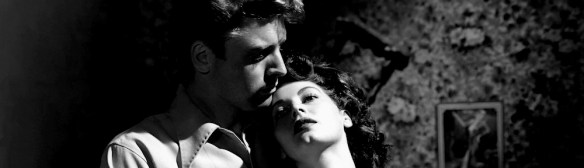
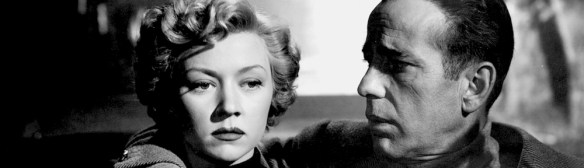
    One of the great things about film noir being a trend that was observed retrospectively, as opposed to a genre that had been codified and its makers were aware of, is that you can come across well-established and widely-agreed noir films that don’t feel much like anything you’d expect of the ‘genre’. That’s true of these next three entries in my top ten (yes, from #9 to #4 is a straight run of noir). In a Lonely Place starts out like a Hollywood-insider screwball comedy, with wry observations of the industry and amusing rat-a-tat dialogue. But then there’s a murder — suddenly, oh so noir. But kinda not really, because what follows is more of a character study. To say too much would be spoilersome, other than to add that Humphrey Bogart’s performance starts out as fairly standard fare for the star, but develops into something incredible.

    5

    Mildred Pierce


    Even more so than In a Lonely Place, here’s a noir that’s almost (almost) one in technicality only. James M. Cain’s novel about a housewife struggling to make her way, while contending with a self-absorbed and demanding daughter, has been described as a psychological thriller, but plays on screen as a familial melodrama — except screenwriter Ranald MacDougall’s adaptation adds a murder investigation framing device, sliding it sideways into noir. The end result runs all three simultaneously, to magnificent effect.

    4

    Sweet Smell of Success


    At first blush, this might not look like your typical noir: it’s centred on a grifting New York talent agent (Tony Curtis, in what feels like the role he was born to play) and an influential newspaper columnist (Burt Lancaster, also excellent), the former desperate for the attention of the latter to promote his clients. Hardly the world of private dicks and gangsters and femme fatales that you’d expect of the genre. But, really, noir is about the dark side of the American dream, and that can play out as well in the cutthroat world of Broadway as anywhere. Like every great dystopia, it’s made to seem so appealing you want to be part of it, even as we’re shown that to actually live it would be horrid.

    3

    Oppenheimer


    There’s been a sense from some quarters that Oppenheimer represents writer-director Christopher Nolan finally realising his potential as a Serious Filmmaker, making this clearly his best film. I don’t know about that (I love Bond-type films at least as much as Nolan himself, so my taste still errs toward The Dark Knight and Inception and maybe even Tenet, and we can’t disregard The Prestige or Interstellar either), but there’s no doubting this is his most “mature” work to date. It is, to be clear, a stunning achievement — a three-hour partially-black-and-white character-driven drama, mostly told through scenes of men (and occasionally women) sitting in rooms talking, that is gripping throughout. But even that description is reductive, because there’s so much more going on in the way Nolan tells this story — the juggling of time; the use of montage. He’s always done that kind of thing to an extent (Memento, Inception, and Dunkirk foreground it), but here it feels less formalised, more intuitive, and that pays dividends.

    2

    Everything Everywhere All at Once


    It took me a long time to get round to this, meaning it had been through multiple praise/backlash cycles, so I approached it with an odd mix of hype and trepidation. As it turned out, it’s very much My Kinda Thing: science fiction with big ideas; character drama with big emotions; action with a sense of fun; all cut with enough comedy and bizarreness to take the edge off any earnestness, but without undermining the heart. And when I say “bizarreness”, I truly mean it — it’s not just “ooh, a little quirky”, but tossed through with crazy, random concepts. I’m sure some people find that kind of thing off-putting, but for me, it just makes it all that much more fun.


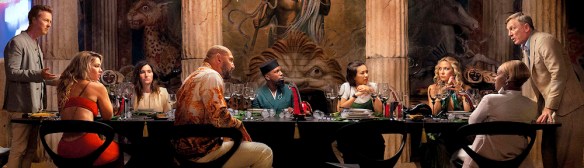
    If Knives Out felt zeitgeisty in its pillorying of rich people, Glass Onion is full-on prophetic: the character the plot revolves around is a thinly-veiled spot-on parody of idiot-billionaire Elon Musk, but the film was only released as the depths of his stupidity were beginning to be publicly exposed. His disastrous reign at Twitter X has only further clarified the parallels. If Glass Onion has a problem, that may be it: its cast of influencers and wannabes are sometimes more caricatures than characters. Or maybe that’s just the fault of the vapidity of the modern world. Either way, it offers a murder mystery narrative full of clever reveals and reversals, rewarding both if you try to second-guess it (good luck) or just allow yourself to be swept along. [Full review.]


    As usual, getting the 103 new films I watched in 2023 down to a top ten proved a challenge. Indeed, as the statistics ultimately revealed, this was a year of high quality, so it follows naturally that it would be hard to narrow it down to just a small number of favourites. Now, while I always include some “honourable mentions” at this point in my “best of” post, I don’t normally just list films that almost made it in to my top ten. I figure if I’m going to do that, I may as well just expand the list. But I’m making something of an exception this year, simply because the final list ended up so dominated by noir that I watched for WDYMYHS. Maybe that was inevitable when I put specific effort into watching a pile of highly-acclaimed movies from a genre I love, but it also feels kinda unfair.

    So, other films that made it as far as my “top 20” list, but didn’t quite go all the way, included (in alphabetical order) The Bird with the Crystal Plumage, Cléo from 5 to 7, John Wick: Chapter 4, Mission: Impossible – Dead Reckoning Part One, The Pied Piper, Remember the Night, Roald Dahl’s Matilda the Musical, and Shiva Baby. There were also a couple more noirs that didn’t quite make it: Nightmare Alley and Scarlet Street. All great films, but there’s only so much room.

    Indeed, if my top ten was based on films’ best individual sequences rather than, y’know, the entire movie, there are some “almost made it”s that would actually top the chart — films like Roald Dahl’s Matilda the Musical (for Revolting Children, a proper anthem of a song by Tim Minchin that Matthew Warchus directs the hell out of) and Mission: Impossible – Dead Reckoning Part One (for the whole train climax… or the Rome car chase… or even just the absolutely perfect cut into the opening titles) and John Wick: Chapter Four (for… oh God, I can’t even decide: it’s wall-to-wall extravagantly fantastic action set pieces). Some films from the actual top ten would feature in such a list too, like the opening diner sequence from The Killers, or the finale of Oppenheimer (so good, even the Linkin Park meme version is a banger).

    Moving away from the top ten itself, let’s recap the 12 films that won the Arbie for my Favourite Film of the Month — some of which have already been mentioned in this post, but some of which haven’t. In chronological order (with links to the relevant awards), they were Glass Onion, Ace in the Hole (another great noir!), Everything Everywhere All at Once, Scarlet Street, The Shiver of the Vampires, In a Lonely Place, Night and the City, All the Old Knives, The Pied Piper, Alien Love Triangle, The Killers, and Mildred Pierce.

    Finally, as always, a mention for the 17 films that earned a 5-star rating this year. All ten of my top ten made the grade this year, but the other seven were (again, in alphabetical order) Ace in the Hole, The Banshees of Inisherin, Cléo from 5 to 7, John Wick: Chapter 4, The Pied Piper, Roald Dahl’s Matilda the Musical, and Scarlet Street.


    With the caveat that I’ve inevitably forgotten or misjudged something really noteworthy, here’s an alphabetical list of 50 films designated as being from 2023 that I haven’t yet seen. They’ve been chosen for a variety of reasons, from box office success to critical acclaim via simple notoriety, representing a spread of styles and genres, successes and failures.

    Asteroid City
    Cocaine Bear
    Godzilla Minus One
    The Killer
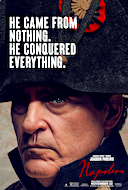
    Napoleon
    Scream VI
    Barbie
    Dungeons & Dragons: Honour Among Thieves
    The Hunger Games: The Ballad of Songbirds & Snakes
    Knock at the Cabin
    Poor Things
    Spider-Man: Across the Spider-Verse
    Anatomy of a Fall
    Ant-Man and the Wasp: Quantumania
    Aquaman and the Lost Kingdom
    Are You There God? It’s Me, Margaret.
    Asteroid City
    Barbie
    Bottoms
    The Boy and the Heron
    Chicken Run: Dawn of the Nugget
    Cocaine Bear
    The Creator
    Creed III
    Dungeons & Dragons: Honour Among Thieves
    Elemental
    Evil Dead Rise
    The Exorcist: Believer
    Expend4bles
    Extraction 2
    Fast X
    Ferrari
    Five Nights at Freddy’s
    The Flash
    Godzilla Minus One
    Guardians of the Galaxy Vol. 3
    Hunger Games: Ballad of Songbirds & Snakes
    The Killer
    Killers of the Flower Moon
    Knock at the Cabin
    The Last Voyage of the Demeter
    The Little Mermaid
    Maestro
    The Marvels
    May December
    Meg 2: The Trench
    Napoleon
    No Hard Feelings
    Past Lives
    Plane
    Poor Things
    Rebel Moon – Part One: A Child of Fire
    Saltburn
    Saw X
    Scream VI
    Silent Night
    Spider-Man: Across the Spider-Verse
    The Super Mario Bros. Movie
    Teenage Mutant Ninja Turtles: Mutant Mayhem
    The Three Musketeers: D’Artagnan
    Wish
    Wonka


    So, that’s it for 2023. All wrapped up within the first week, same as last year. I feel like I’ve got this down to some kind of science. (Oops — fate: tempted. Next year I’ll probably wind up having to post this stuff throughout the whole of January.)

    And with a new week — the second of the year, already — beginning tomorrow, I feel like there’s no time to waste: onwards to 2024!

    Silent Shorts Summary

    As well as all the unreviewed feature films in my ridiculously-large backlog (see the Archive 5 series for more on that), there are also a load of short films from the past few years that I haven’t reviewed.

    Today, I’m taking a step towards putting that right, by bundling together all the silent shorts I watched between 2020 and today. In original chronological order, they are…

  • Sherlock Holmes Baffled (1900)
  • The One-Man Band (1900)
  • The Infernal Cauldron (1903)
  • Life of an American Fireman (1903)
  • The Consequences of Feminism (1906)
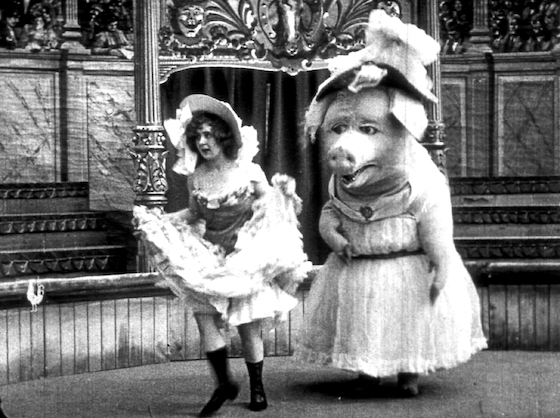
  • The Dancing Pig (1907)
  • Frankenstein (1910)
  • What! No Spinach? (1926)


    Sherlock Holmes Baffled

    (1900)

    Arthur Marvin | 1 min | digital (SD) | 4:3 | USA / silent

    Sherlock Holmes Baffled

    This is noteworthy for being the first film to star Arthur Conan Doyle’s immensely popular sleuth, but it’s an “in name only” appearance by the Great Detective. In fact, he’s not named on screen, so maybe “in costume only” (a dressing gown and pipe) would be more accurate. The actual film is nothing to write home about, either: it’s a 30-second skit, built around showing off then-cutting-edge filmmaking tricks, i.e. using editing to allow a burglar to disappear and reappear out of thin air. No wonder Holmes is baffled.

    It’s only really of interest as a curio to fans of early cinema or Sherlock Holmes on screen, even if the latter is only invoked as a hook to attract viewers. Although, I feel like the fact the first Sherlock Holmes film was basically a spoof is somehow significant…

    2 out of 5


    The One-Man Band

    (1900)

    aka L’Homme orchestre

    Georges Méliès | 2 mins | digital (SD) | 4:3 | France / silent

    The One-Man Band

    Using the magic of cinema to take the title literally, in this short director Georges Méliès clones himself seven times over to create a musical septet (plus conductor).

    Even having the idea to do this kind of visual stunt for the first time is obviously impressive — there’s no doubt that Méliès was an extraordinary innovator — but pulling it off with such technical competency… that could be tricky today, never mind in 1900, when you couldn’t check your footage lined up, nor just do another take if it didn’t, never mind the array of computer tricks (split screen, time ramping, reframing, etc) that could be deployed to make it work nowadays. Here, Méliès was doing multiple exposures on the same strip of film; the original negative — imagine if you messed up on the seventh go-round!

    And even with all that, it’s not just an exercise in technique; not just a technical demonstration for those interested in the possibilities of motion pictures. You can set all that aside and still find an entertaining and amusing short — with a couple of extra gags thrown in at the end for good measure. Genius.

    4 out of 5


    The Infernal Cauldron

    (1903)

    aka Le chaudron infernal

    Georges Méliès | 2 mins | digital (SD) | 4:3 | France / silent

    The Infernal Cauldron

    A few years later, and Méliès’s work is looking more extravagant — there are sets! Costumes! Props! Colour! Hand-coloured, of course, and the result is glorious. The colours are not only incredibly stable (you’d expect some flicker or judder on static elements from frame to frame, but nope), but they really add to the atmosphere. The sickly green demons and burning red & orange flames really leap off the screen, making the unreality of it that bit more tangible. This would be so much less effective in pure black-and-white. It’s less like a flickering clearly-fake old film, more like a nightmare. You can kinda see how people at the time might’ve believed stuff like this was real. I mean, how else do you explain those ghosts, hmm? (Okay, obviously they’re a double-exposure effect; but it holds up well. Certainly better than the cardboard-cut-out props.)

    Intriguingly, there’s a 3D version of the film — a real, authentic one! To quote wholesale from Wikipedia: “In order to combat piracy, Méliès … began producing two negatives of each film he made: one for domestic markets, and one for foreign release. To produce the two separate negatives, Méliès built a special camera that used two lenses and two reels of film simultaneously. In the 2000s, researchers at the French film company Lobster Films noticed that Méliès’s two-lens system was in effect an unintentional, but fully functional, stereo film camera, and therefore that 3D versions of Méliès films could be made simply by combining the domestic and foreign prints of the film. Serge Bromberg, the founder of Lobster Films, presented 3D versions of The Infernal Cauldron and another 1903 Méliès film, The Oracle of Delphi, in January 2010 at the Cinémathèque Française. According to film critic Kristin Thompson, ‘the effect of 3D was delightful … the films as synchronized by Lobster looked exactly as if Méliès had designed them for 3D.'” They were screened again in 2011 and, at least as far as Wikipedia can explain, that was the end of it. To which I say: argh! I really want to see them! A 3D Blu-ray release would be lovely; but, as these screenings happened over a decade ago, I can’t say I’m holding out much hope…

    4 out of 5


    Life of an American Fireman

    (1903)

    Edwin S. Porter | 6 mins | digital (SD) | 4:3 | USA / silent

    Life of an American Fireman

    Although fundamentally a remake (or ripoff, depending how you look at it) of the earlier British film Fire!, Life of an American Fireman has found a place in film history (it even merited coverage in Mark Cousins’s The Story of Film: An Odyssey) for two reasons: firstly, for pioneering the technique of cross-cutting, a major and significant development in film editing; secondly, for not actually having done that at all.

    “Huh?”, you may well exclaim. Well, although for a long time the short was admired for its innovation, research by the Library of Congress eventually revealed that the film was re-edited sometime after its release (possibly in the 1930s or ’40s), and the original version actually played the action out twice, without the all-important cutting back and forth. Viewed in that original version, I’d argue to a modern audience it’s more confusing having the same sequence twice back to back — nowadays we expect intercutting of action, so it’s initially disorientating when the film cuts to outside the house and starts the same sequence of events over again. Perhaps more importantly, watching it twice over feels redundant: the second version adds no new information; and, being outside the house, thus distanced from the threat of encroaching fire, it’s less dramatic than the inside sequence. And that’s not to mention that the timeline doesn’t add up: the fireman is in and out of the window much more quickly during the inside version than the outside version.

    Despite all that, this does remain one of the earliest American narrative films, bringing together various innovations that had occurred in the early years of film — primarily, constructing a continuous narrative across multiple shots and scenes. It just wasn’t the first film to do, well, anything.

    3 out of 5


    The Consequences of Feminism

    (1906)

    aka Les Résultats du féminisme

    Alice Guy | 7 mins | digital (SD) | 4:3 | France / silent

    The Consequences of Feminism

    Imagine a crazy world where men did housework and looked after the children, while women lazed around drinking, smoking, and cajoling innocent young men into the bedroom. What larks! But such horrors might come to pass if we let those pesky women have their way.

    Such once-implausible things are depicted in Alice Guy’s 1906 short. Consequently, this is the kind of film that might be described as “of it’s era” — although, said era probably extended another six or seven decades. I can’t cite any specific examples, but I feel like “wouldn’t it be hilarious if men behaved like women?” sketches were still being done in the ’60s and ’70s, if not even more recently. So, it’s less that it’s dated, more that it shows Guy was ahead of her time. I mean, the film dates from before women even had the vote, yet she has the chutzpah to imagine men taking on women’s roles and women enjoying leisure time. Scandalous!

    Considering the short was made by a pioneering female filmmaker, we can but assume it’s all satirical; that its very point is “the consequences of feminism” would not, in fact, be the ridiculous role-reversal presented here. But, in that context, the ending is quite interesting: the men force the women out of the bar and raise a toast. Are we supposed to read that as the natural order being restored? More likely, it’s meant to signify these men achieving equality with women; that Guy’s point is, “if men were in women’s situation, they’d want to change it, too.”

    4 out of 5


    The Dancing Pig

    (1907)

    aka Le cochon danseur

    4 mins | digital (HD) | 4:3 | France / silent

    The Dancing Pig

    Apparently this had fallen into obscurity for a century or so, when it was revived as an internet meme because of “its creepy atmosphere”. Certainly, stills from the final scene (a closeup of the pig’s head, with vicious teeth and an oscillating tongue) look weird and freaky; and I guess if you slapped an ominous horror-movie-esque score across the whole short then it would become freakish in its entirety. But it was originally a vaudeville act, and with the jaunty score that usually accompanies it, it remains just that: a couple of minutes of daftness.

    As such, I can hardly recommend it. It’s a curio of a past era, and while there’s undoubtedly value in preserving such things for historical interest, that’s still all it is.

    2 out of 5


    Frankenstein

    (1910)

    J. Searle Dawley | 13 mins | digital (HD) | 4:3 | USA / silent

    Frankenstein

    The first screen adaptation of Mary Shelley’s novel is such a thorough retelling in just 12 minutes, it almost makes you wonder what takes other versions so long. But what it gains in brevity, it loses somewhat in filmmaking craft: every scene is shown only in a theatrical static wide shot. It’s not entirely without interest, though: one setting places a full-height mirror screen right to enlarge the set by showing us what’s behind the camera to the left, and it’s surprisingly effective, especially when it’s used for a bit of fun cinematic trickery.

    The film’s big set piece is the creation of the Monster; not from stitched-together body parts, as is usually the case, but some kind of ‘magic potion’ that makes it emerge from a cauldron, growing and forming before our eyes. The effect was achieved by burning a puppet and then reversing the film, but, rather than presenting an unbroken take, instead the film cuts back and forth to Frankenstein observing and, frankly, skips over what I imagine were the most effective bits. For example, we see the vague outline of a human figure emerge, then cut to Frankenstein, then cut back to see it fully-formed. Would it not have been better to see the Monster’s features ‘melt’ into being amongst the flames? Oh well.

    Frankenstein was thought lost for decades, until a single print was found in the ’70s. Imperfect it may be, but it remains a significant milestone in the history of horror cinema.

    3 out of 5


    What! No Spinach?

    (1926)

    Harry Sweet | 19 mins | Blu-ray | 1.33 | USA / silent

    What! No Spinach?

    Included as a special feature on the Masters of Cinema Blu-ray of Buster Keaton’s Seven Chances, this little-seen* comedy short, directed by and starring Harry Sweet, “riffs on a number of elements from Seven Chances”, to quote MoC’s blurb. I’d say it’s less a riff on Seven Chances, more a brazen rip-off. It has moments of amusing physical comedy, but it lacks Keaton’s originality or heart. At least it’s brief, although that doesn’t mean it feels whole: rather than ending, per se, Sweet seems to run out of ideas and the film just stops.

    Also, it has nothing to do with spinach.

    3 out of 5

    * I couldn’t find a single photo or image from this short online. That there now are some on certain movie databases is because I uploaded screen grabs I took for this review (even editing some into a ‘poster’ for the sake of TMDB/Letterboxd). ^


  • Black Girl (1966)

    aka La Noire de…

    Ousmane Sembène | 59 mins | Blu-ray | 1.33:1 | Senegal & France / French | 15

    Black Girl

    Let’s be upfront about this: I’m a middle-class Western white man who herein will be critiquing a film made by a black African filmmaker about the life of a black African character. I’m stating this baldly because I wouldn’t want anyone to think I wasn’t aware of the potential connotations and pitfalls of that situation, especially as I’m about to challenge (what seems to me to be) the accepted reading of the work in question. Spoilers follow.

    Believed to be the first feature film made by an indigenous black person from sub-Saharan Africa, Black Girl is the story of Diouana (Mbissine Thérèse Diop), a Senegalese women who is looking for work as a maid and finds employment babysitting the children of a French family. When they return to France, she is the only servant to travel with them; but the glamorous life on the Riviera that she’d imagined turns out to be one of drudgery, confined to the couple’s apartment, the children now nowhere to be seen.

    What little I’d read about Black Girl beforehand led me to expect something about modern slavery; the eponymous black girl being mistreated by her white employers in such a way that, even though it’s the 1960s, she’s still basically a slave. Most of what I’ve read since viewing has confirmed that as the standard reading of the film. I’m not going to dispute that that’s one aspect of what’s there, but only the sum total of it if we take Diouana’s reactions and narration at face value. I mean, life in France is clearly not all she was promised; but she was looking for work as a maid and, while that wasn’t what she was doing for the family initially, the tasks they’re now asking of her don’t seem that out of step with a maid’s duties. And she gets paid for doing them. There is a period when Diouana complains (in her internal monologue) that she’s not getting paid, but the film is a little unclear on timescale — when the husband eventually gives Diouana her wages, it feels like payday has finally arrived, rather than that she’s been denied them for an unfair period of time.

    Equally, there’s no denying that the wife is a demanding and demeaning bitch; and when they have some guests round for a meal, there’s the kind of casual racism that white people like to dismiss as “fun and games”, but is still degrading in its own way. So, I’m not saying Diouana is wrong to be upset with how things have turned out, but I do think the interpretation that she’s subjected to modern slavery — as opposed to just unfavourable employment — is taking things a little too far.

    White bitch

    The key to how I interpreted the film is to realise that Diouana is more than upset — she’s depressed. Taken as a portrait of Diouana’s failing mental health, the film makes much more sense to me. Stranded in France with no one but her employers — thus, no one she can talk to honestly — her thoughts spiral round and round in her head, sinking lower, like some kind of self-fulfilling negative prophecy. It also made me wonder if we should consider Diouana an unreliable narrator. Almost the whole film is presented from her perspective, much of it via her thoughts in voiceover. So, for example, we’re told a lot about how bad her employer is before we see any sign of it; and we’re told what she was promised about France, but we never see those promises being made. Could it be she was offered to go to France, which she interpreted it as “you’ll get to see France”, but her employer never actually promised that? We don’t see the offer being made; we only have Diouana’s word for what she was promised.

    Going back to my opening clarification, I appreciate that this kind of analysis might lead some to accuse me of unconscious racism — as a white person, thinking the black character might be lying and the white people are alright really, despite the evidence. But I’m not saying they are alright — they’re clearly not treating Diouana with as much humanity as she deserves — and I’m not saying she is lying, just that the film doesn’t give us hard evidence to confirm it; we only hear her memory of events. Even then, I wouldn’t say she was “lying”, just that she’d misinterpreted the situation.

    Personally, that’s the only way what unfolds makes sense to me: that Diouana is misunderstanding things due to being mentally unwell. This is most relevant in how the story ends, with Diuoana taking her own life as her only route of escape — but, also, it’s the first route she takes. She doesn’t try to speak to her employers and improve her situation. Okay, maybe they wouldn’t listen, or she thinks they wouldn’t — it’s understandable not to even try under those circumstances. But she also doesn’t ask to be sent home. There’s no reason to think they wouldn’t agree to that — they’re not actually imprisoning her. They might not be pleased about it — they’ve brought her with them to do a job she was employed to do, after all — but that doesn’t mean they wouldn’t agree. Even if she thought they were holding her captive, she doesn’t attempt to escape. Sure, she’s in a foreign country and doesn’t know who to turn to — escape might not be easy — but it’s an option that doesn’t seem to cross her mind.

    Just upset, or clinically depressed?

    No, instead of any of that, she turns straight to death. As I see it, that’s the ‘logic’ of someone who’s mentally ill. That’s not someone who is merely unhappy with their situation and decides it needs to change; that’s someone who is mentally unstable and makes a bad choice. If she was genuinely enslaved — if her life was abusive and miserable and there was genuinely no other way out— then you could make an argument that, in those circumstances, taking your own life is a viable choice for escape. But that’s not the situation she’s in. Her life is not nice — it’s certainly not what she was hoping it would be — but it’s… fine? Like, other people might be content with that setup, especially if it was only temporary (we don’t know how long they’ve been in France, but the implication is weeks or a couple of months, at most; and it comes up that they might just go back to Dakar soon anyway). But instead of waiting it out, or asking to change it, or asking to leave, or running away from it, Diouana goes directly to the most final option.

    Now, maybe I’m projecting a modern understanding of mental health onto the film; but the alternative (that we’re supposed to think Diouana is wholly in the right and her actions are reasonable given the circumstances) doesn’t add up for me. This also raises the question of authorial intent: was Sembène intending to explore mental health, or was he focused on racism and colonialism? I haven’t read any direct statements from him, but certainly most critics assume the latter. Normally I’m happy to write off authorial intent (“death of the author” ‘n’ all that), but I think authorship is particularly important in this case (being that it’s the first film by a black African director about the black African experience). To be honest, I don’t know for sure what he was intending — I haven’t seen any direct statements by Sembène — but the film as a whole is well-made, nicely shot and intelligently constructed (for example, using flashbacks for a nonlinear narrative), with characters who seem plausible rather than caricatures in aid of a political point. All of which is a roundabout way of saying that I think it stacks up as a psychologically-accurate depiction of someone in that situation, whether it was consciously made to be about mental health or not.

    4 out of 5

    Black Girl is the 7th film in my 100 Films in a Year Challenge 2023. It was viewed as part of Blindspot 2023.