
Charlotte Brändström | 89 mins | TV | 15
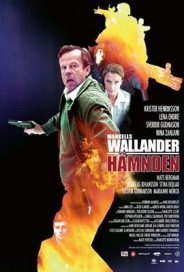 Krister Henriksson returns as the titular Swedish detective for a second — and final — series of feature-length investigations, though this time only this first has received a theatrical release (which means it’s likely the only one I’ll review, unless the series finale offers something that persuades me otherwise).
This Swedish series (there’s another, incidentally) is most often praised for its calmer, low-key, realist aesthetic, as opposed to the British adaptations’ tendency to turgidly-paced over-stylised over-emotion, but the handful of cinema-released entries tend away from this, no doubt in justification of their big-screen debuts. So rather than a thoughtful investigation into an ‘everyday’ murder, Wallander blazes back onto our screens with the explosive destruction of a power station, a bloody execution — no less than 17 shots fired — and the army rolling into town to handle the fall-out from an extended power cut. Epic, indeed.
What continues to mark Wallander out is the attention to character and detail it shows even while there are large-scale events going on all around. There’s clearly an effort to keep everything grounded and moderately realistic even as more bombs go off and more symbolic executions are, er, executed — the police still have to struggle with a waiting room packed with people wanting to complain about the odd abandoned car or just moan about the lack of power, for example.
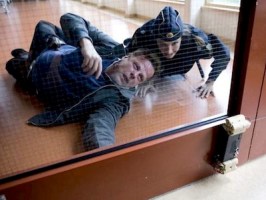 The climax is a case in point. There’s no grand shoot-out or serious race-against-time-for-the-last-bomb, just Wallander and the criminal having a calm chat. OK, so there’s a kidnapped government minister, a gun, snipers and a big vest-bomb, but these are set dressing to the conversation. It’s proof if proof were needed (it isn’t) of Henriksson’s controlled skill in this role. As great as Branagh could be, it’s hard to imagine his introspective interpretation of a weepy Wallander slotting into this scene without making it unpleasantly histrionic.
In the series’ first season (and, therefore, the first three theatrical releases), Wallander’s policewoman daughter, Linda, played an equally important role — indeed, in several episodes, including the first, she had a much larger presence than her father. Actress Johanna Sällström sadly took her own life in 2007 and the role is wisely not re-cast; a passing reference is made to the fact Wallander has a daughter, though where she is now isn’t mentioned. It’s easy for one to imagine a future for Linda in the wake of the shocking events of the previous episode, so perhaps the understated style of this Wallander is to leave viewers to their own conclusions.
However, the departure of Linda and death of fellow lead character Stefan leaves a hole to fill. It’s partly done by the return of Martinsson, not seen since Mastermind, 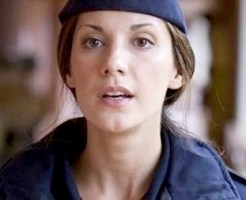 but also by adding two new recruits to Wallander’s team, Isabelle (Nina Zanjani) and Pontus (Sverrir Gudnason), and the introduction of prosecutor Katrina (Lena Endre). All are set up as key new characters for this run, though it’s clearly Only The Beginning here. Katrina is a little too blatantly a potential love interest for Wallander, while Isabelle and Pontus are… well, new characters. There’s little to say about them yet.
I suppose it’s this kind of thing that reminds one that The Revenge isn’t really a standalone Wallander movie, but the first episode of a 13-part series. Still, it can certainly be enjoyed in isolation, and it promises the new run will maintain the first’s high quality — perhaps even better it.

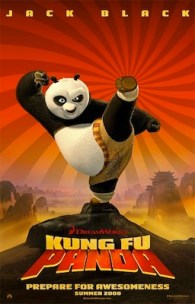 I nearly watched Kung Fu Panda on a plane once, but planes are rubbish places to watch films so I decided against it. (I watched
 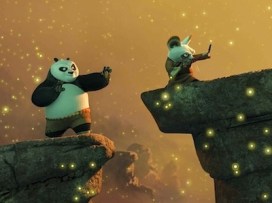 Panda features some beautiful animation — not a phrase you usually associate with CG ‘toons (though Pixar are pushing into this area with the likes of
  I think that — along with
  bring back the dead and let you see a teeny bit into the future, shortly before some baddies explode in puffs of green smoke and some more baddies are revealed to have full-on superpowers. Where did these come from? No idea. The film offers no explanation, be it mutant gene or radioactive exposure or plain old training, instead just assuming viewers will accept that this is the real world… oh, but some people have these cool powers.
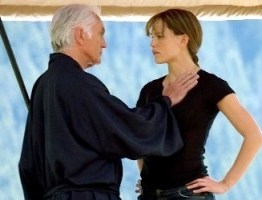 here there might at least be a reason to keep watching, but the weak action is just icing on the cake of the clichéd story and bland characters. Director Rob Bowman claims he made an R-rated film which he was forced to cut to PG-13, the implication being that neutered the whole thing. Maybe that’s where all the action went, though on the evidence of what’s left I’m not sure I believe him.
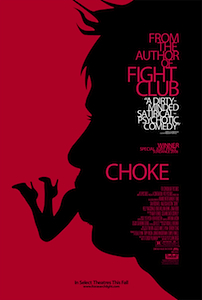 Choke is adapted from a novel by Chuck Palahniuk, the author of Fight Club, and you can tell.
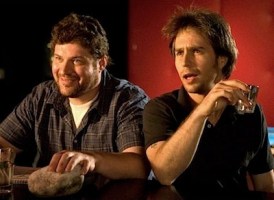 The cast are without fault. Sam Rockwell is brilliant as ever, continuing to build a body of work that suggests he’s been underrated. Perhaps there’s a similarity to some of his roles, but he has a sort of rough likability that can make one overlook that. I’ve still not seen
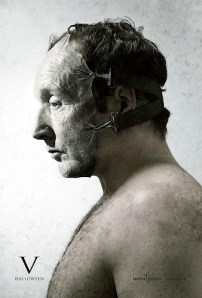 And so the never-ending Saw franchise trundles on to its fifth part. Indeed, Saw Part 5 might be a more apt moniker for this film: it picks up directly from the end of
  One of the franchise’s Big Things has always been the last-minute twist. Signalled by the Saw theme beginning to play and emphasised with an explosion of very brief flashbacks to earlier in the film, the twist shows us what we’ve missed all along and turns the story on its head. The
 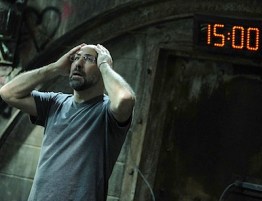 In fact, it’s this side of the film that holds a bigger and better twist than the highlighted arc plot one, though some viewers may miss its significance as it goes so unheralded. (Arguably this ease with which it might be missed says something about how significant it is; equally, perhaps I’m assuming a lack of intelligence on the part of Saw’s regular audience by implying they would miss it.)
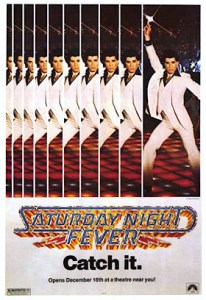 Saturday Night Fever couldn’t be more ’70s if it were made today as a period piece (if you can see how that isn’t a contradiction). From the posters on Tony’s walls, to the fashions, to how it’s shot, it seems to have been designed specifically to exude seventies-ness in a way few other things seem to. It feels natural, then, that some of its original elements have become shorthand definitions for the era: the Bee Gees music, the dancing, and in particular that pose.
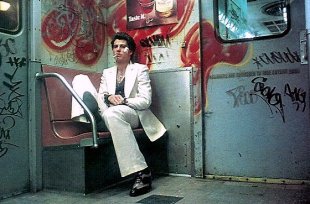 with dead-end jobs, late-night fights, turn-taking back-of-the-car sex, and other unsavoury pursuits. It’s no wonder Tony wants to escape.
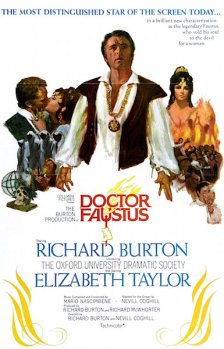 Despite the numerous film versions of the Faust story, this is the only one that adapts Christopher Marlowe’s A-level-favourite 1588 play. It’s a shame, then, that it’s heavily edited from the original text and, despite also being a filmed version of the Oxford University Dramatic Society’s 1966 stage production, has clearly been inappropriately chosen as a vehicle for then-couple Richard Burton and Elizabeth Taylor.
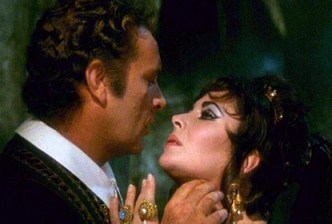 Elsewhere, Burton and Coghill’s vision of Faustus is stylistically reminiscent of a Gothic Hammer Horror, which is either wholly inappropriate or an ingenious genre mash-up — after all, such a genre-mashing trick has been pulled many a time with Shakespeare over the years. There are repulsively horrific corpses, a harem of naked ladies, an array of special effects, plus a medieval-styled gothic atmosphere to all the sets and costumes, though the scene where Faustus mucks about with the Pope feels more Carry On. Using inanimate objects in the roles of the Good and Evil Angels — respectively, a statue of Christ and a skull — is a small but inspired touch.
 perhaps just to heighten the presence of Helen by losing scenes she couldn’t have been shoehorned into; but in the process it both loses some of the best material and destroys any hope the film had of being a definitive filmed version of the play. Ultimately, such oversights proved to be the final straw for the film’s already-tenuous grip on a three-star rating.
 Million Dollar Baby currently places 143rd on the
 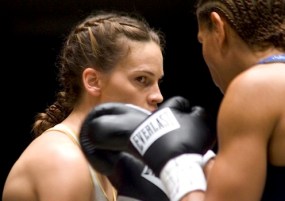 and it goes some way to make up for all the tedium that’s gone before. That it’s a grim and downbeat finale, however, serves an anti-boxing message I already get but does nothing to redeem the tale.
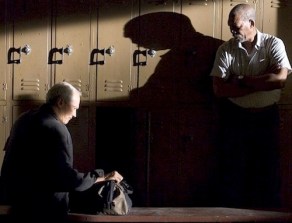 and Frankie’s lost his daughter, gets screwed over by his protégé, and ultimately loses Meg too. In no way is this a cheery depiction of boxing.
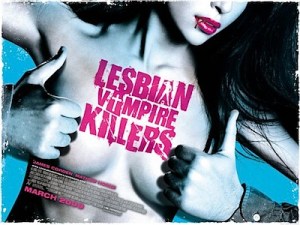 Pre-release hype pegged Lesbian Vampire Killers as the next
 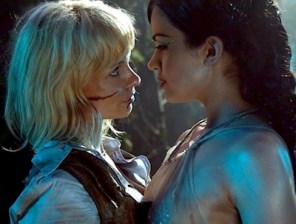 Unfortunately, even with corrected expectations, the film fails to deliver on its twin promises of raunch and horror. Aside from a couple of brief surgically-enhanced medieval boobs, a flash of knickers and the odd girl-on-girl kiss, the film’s sexy content is non-existent. Said Nuts audience would certainly get more from their weekly wank mag; this is mostly 12A-level. The horror, meanwhile, is reduced to well-signposted jump scares — and even then few enough to count on one hand — and the odd bit of comical decapitation/melting with holy water/axes in the head. To be fair, this is meant to be more comedy than horror, and in this sense a few such moments succeed passably.
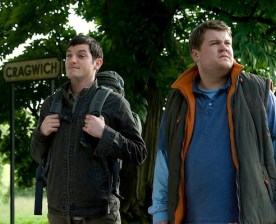 Indeed, consistency is not the film’s strong point. Everyone makes a big fuss about the vampires and how hard they are to kill, yet every one is dispatched with ease, the level of threat never allowed to even attempt an increase before there’s white goo splurting everywhere (that’s what happens when they die, incidentally, not someone’s reaction to the lesbianism). The climax is a mere extension of this, substituting a rising scale of action for running around avoiding the easy killing bit. Any good will amassed in the middle — and there may be a tiny bit — is dismissed in boredom.
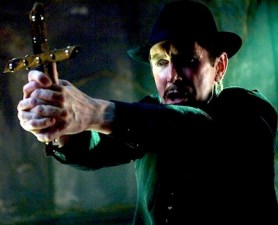 shot for the lowest-common-denominator lad’s-mag-buying audience, though quite what they made of the classic horror reference points that do remain is anyone’s guess. If we’re talking about expectations (and, clearly, I am), Lesbian Vampire Killers did somewhat defy mine — though as I was expecting it to be one of the worst comedies I’d ever seen, that might not be saying much.
 What About Bob is a comedy about mental health. As such, it feels primed for misunderstanding and inappropriateness. And it is indeed a little worrying early on: Bill Murray’s performance is, from the off, superbly believable, but it’s undercut by bad ‘this is a comedy’ music that suggests we’re meant to laugh at his impairments rather than feel sympathy. And maybe that’s what the screenplay, direction and performance were actually aiming at, but, personally, I don’t find laughing at the mentally disabled all that funny, even in a film nearly 20 years old. At one point, people clap as Bob gets off a bus he struggled to even get on — perhaps this is meant to indicate “thank God he got off!”, but I choose to take it as them celebrating his achievement, because, if not, it’s just attacking the disabled again.
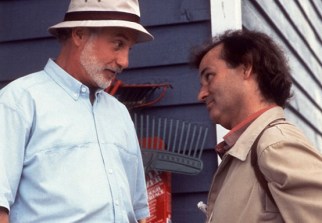 The film hinges entirely on Murray and Dreyfuss, and both are excellent in their respective roles. Murray portrays Bob’s mental health struggles early on in a way that would garner wider praise for accuracy if this were a drama, showing the potential he’s only unleashed in more recent years to play straight roles. But he’s equally good as the film becomes a clear-cut comedy: Bob doesn’t suddenly become a caricature, but is revealed as a good-natured, child-like, fun-loving person who, perhaps, just needs some care and love from others to help his conditions. Dreyfuss, meanwhile, is slickly believable as the uncaring fame-minded therapist, whose true nature — and problems — begin to unravel the more he’s confronted with Bob.
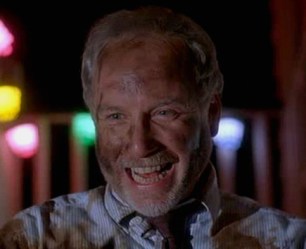 more about you as a person than it does about the film, the characters or the performances. It seems starkly obvious to me that Bob is the ‘good guy’, a nice but troubled chap who just wants to get by and have a good time, while Dr Marvin is a control freak with a raft of suppressed problems that are gradually unveiled throughout the film until they ultimately overwhelm him. He’s not a bad chap per se, but he is in the wrong.
