
Stevan Riley | 98 mins | download (HD) | 1.78:1 | UK / English | 12
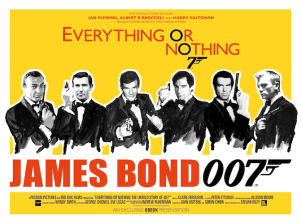 To mark the 50th anniversary of the James Bond film series last year, the producers commissioned this special documentary looking back at the entire phenomenon. If you missed it when it was shown exclusively at Odeon cinemas (in the UK; it was on TV in the US), it’s been out on DVD for a few weeks (in the UK; nothing in the US) and comes to Sky Movies Premiere from tomorrow (at 12:15pm and 10:30pm; continues twice a day thereafter). It’s sometimes called Everything or Nothing: The Untold Story of 007, not that you’ll see that title on screen or on the DVD cover; and not that it’s very accurate, actually, because many (perhaps all) of these stories have been told before. But I’ll come to that.
Overall, experienced documentary-maker Stevan Riley has put together an engaging work. Eschewing intrusive, dogmatic voiceover narration, Riley instead tells the story through interviews (both new talking-head pieces and archive-drawn audio), illustrative clips, behind-the-scenes photos and film snippets, and music. The latter elements are taken almost exclusively from the Bond franchise itself — one of the film’s early contentions is that the Bond novels were a mixture of autobiography and fantasy for creator Ian Fleming, so (as Riley has said in interviews) clips from the films seemed an appropriate way to cover his back story.
 Although ostensibly a history of the film series, Riley begins the story with Fleming’s wartime career and the birth of the Bond novels, then covers early attempts to get Bond on screen. Depth here means it actually takes quite a while to get to the entry of ‘Cubby’ Broccoli and Harry Saltzman, the producers who finally brought Bond to the big screen in the still-running series this documentary is meant to be about! Some have accused the film of being “the producers’ story”, as if that were a bad thing. It’s a behind-the-scenes tale, and with only a handful of people steering the series during its lifetime, naturally the throughline falls to them. Besides, cataloguing the changing roster of leading men is a story that’s readily and widely available, what with the on-screen action being (as it were) the ‘public face’ of the series.
With just over an hour-and-a-half to cover 60 years of history, the film’s biggest problem is length. There’s little time for nuance, instead offering a whistle-stop overview of the main events, highlighting key aspects here and there. Inevitably a lot of important things get short shrift — there’s hardly any detail on the birth of the iconic title sequences, for instance, or the series’ distinctive musical style. It’s both a blessing and a curse that detailed featurettes on elements such as these can be found on the series’ DVD and Blu-ray releases. A blessing, because the casual fan wishing to know more can look there for the detail they seek; a curse, because many fans will already have seen all of those featurettes (and they are numerous, including at least one dedicated thirty-minute-plus making-of per film) and find little new in Riley’s effort.
But there was never going to be time in a single feature to cover that much fine detail, so we must allow Riley some leeway. It’s also not his fault that Sean Connery refused to be interviewed, or that other key players are no longer with us and so can only be represented by occasionally familiar archive interviews,  plus second-hand recollections (sometimes, third-hand) of friends and relations. This is, perhaps, most keenly felt in the film’s discussion of Kevin McClory, the man who claimed he had some rights to make competing Bond films (Broccoli and Saltzman brought him in to the fold to make Thunderball, which he did own rights to and so being where his claims stemmed from; he was the man who later made Never Say Never Again, and continued to fight for filmmaking rights up until his death). Here he’s very much painted as the villain, not only as a constant thorn in the side of the series’ guardian-angel producers, but also it all but says he conned Fleming, and quite heavily implies the first Thunderball court cases contributed significantly (or even wholly) to Fleming’s death. Is that true? It might be. McClory isn’t here to defend himself, but then his friends and relatives who do pop up don’t seem to try too hard to justify him either.
The one section I would call a major disappointment is the coverage given to the Brosnan era. Dalton and Craig are equally brushed past, but the key tenants — why Dalton’s films floundered and how Craig, despite initial doubts, led a glorious rebirth — are covered. There’s surely much more to say about Brosnan, however. DVD was emerging as a dominant format around the time his Bond incumbency happened, meaning the special features on his films were put together as the movies came out. That’s great for on-the-ground as-it-happened making-of material, but naturally offers zero retrospective opinion, something all the previous films’ discs benefit from. Unfortunately, the Brosnan section here does little to redress the balance. You get the feeling there’s an awful lot going unsaid, particularly about Die Another Day and the way Brosnan was unceremoniously dropped in its wake. The fact the former leading man can’t even remember which way round Tomorrow Never Dies and The World is Not Enough happened suggests something too… but I’m not sure what, because it’s never explored.
 As a dyed-in-the-wool Bond fan, I was left wanting a bit more from Everything or Nothing; especially as someone who grew up during the Brosnan era, I feel there’s more to be told about that time. But for newer or casual fans, or those seeking a nostalgia-tinged flick through the highs (and the odd low) of the most enduring series in film history, it succeeds admirably. It’s just a shame they didn’t include it in the Bond 50 Blu-ray set — it would’ve been most welcome on the otherwise-pathetic bonus disc. But that’s a quibble for another day.

Everything or Nothing comes to Sky Movies Premiere from tomorrow, Friday 15th February, and plays twice daily until Thursday 21st February.
 Director Kenneth Branagh brings all his Shakespearean know-how to one of the most innately successful of Marvel’s recent superhero movies. Perhaps lacking the mass appeal of
  After a decade on screen, the fantasy series comes to an action-packed conclusion. Adapting the final novel’s second half, it’s mostly finale, to both
  Beginning in 1927, you could (and some have) accuse The Artist of being a remake of
  Besides which, it isn’t a real silent film, and not just because it uses sound on one or two occasions, to very specific effect. Made 80 years after the invention of sound revolutionised cinema over night, The Artist is a tribute and homage to that great era — it’s not trying to beat them at their own game. It’s certainly not the first ‘modern silent’ either, but it’s an appropriate one to have received the most widespread attention (
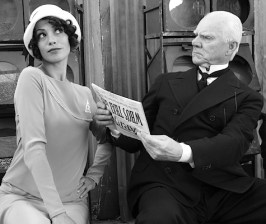 you’d believe they were a precisely-planned specially-constructed set, and unceremonious symbolism is created with former-star George being on the way down and Peppy being on the way up.
 or just faithfully following George around, he draws your attention. I might think that was just me (we’ve been over my love of terriers
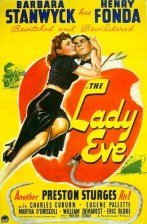 Screwball romantic comedy starring Barbara Stanwyck as a con woman who falls for her latest mark, ale heir Henry Fonda, until he discovers the truth and ditches her — and she vows revenge by conning him again. Packed with wit, Stanwyck shines as a slightly kooky, thoroughly daring con artist. Hers is the role with all the power, but Fonda’s gentler portrayal of her unconfident target is equally vital. It’s only let down by the ending, which rushes a conclusion in two minutes and didn’t seem to quite make sense. It doesn’t ruin the film, but it makes an unfortunate dent.
 I had heard Scre4m (Scream 4, if you prefer) was dreadful; a misguided, belated attempt to revive a once-popular franchise. Personally, I thought it was fun.
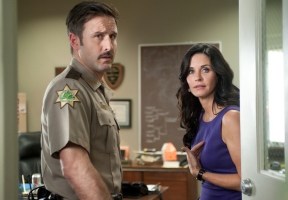 It also leads to quite a good extended bit where some characters reel off a list of recent remakes, which rather highlights just how far it’s gone now. There’s lots of examples of this fun ‘meta’ stuff for film fans; for real-world-stuff too, including references to Courtney Cox and David Arquette’s marriage, Emma Roberts being in the shadow of Julia Roberts, and so on.
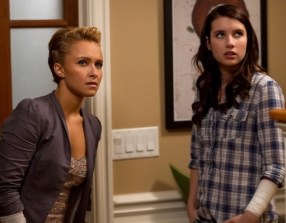 But, ultimately, all the discussion of horror movies and their rules is just window dressing: if there aren’t rules any more (which there don’t seem to be), it’s impossible for the characters to use them to survive, or for it to lend much self-reflexive weight to how the killer behaves. The only moment when it might be of use is when they predict the climax will occur at a party, and it turns out they’re having a party that very night! But then they go ahead with anyway. So much for that then.
 Though as the main development has been torture porn, and it criticises that explicitly from the very first scene, perhaps that’s still OK. In fact, they’re one step ahead again, with a nod to the most most-recent development (the
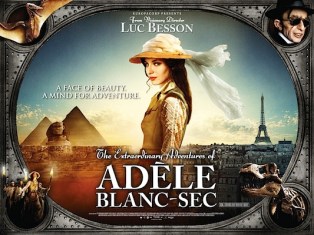 Based on the long-running bande dessinée (aka “comics”) by Jacques Tardi, The Extraordinary Adventures of Adèle Blanc-Sec is occasionally sold to English audiences with a handy quote
  And if that doesn’t put you off, the introduction-heavy opening minutes might, dense with introductions for disconnected characters and locations. Stick with it, it sorts itself out.
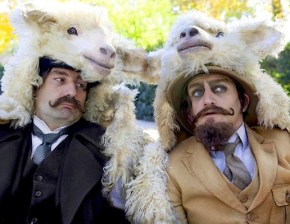 Director Luc Besson managed to build up something of a following with a regular output of films through the ’80s and ’90s, perhaps culminating artistically with the exceptional
 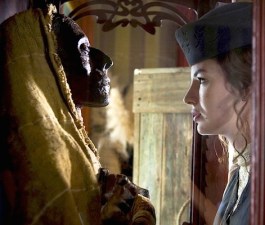 I suppose Adèle Blanc-Sec won’t be to everyone’s tastes. Comparisons to
  The two-part animated adaptation of Frank Miller’s comic, regularly voted among the top three stories ever told in the medium, concludes here. If you’ve not seen
 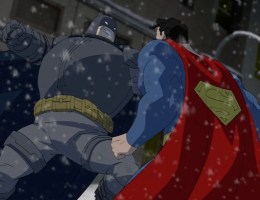 Nonetheless, a pair of big battles form the cruxes around which the story works: Batman vs the Joker, and Batman vs Superman. I won’t spoil the outcomes for those who’ve not read the book, but both are excellently realised on screen. Action can be tricky in comics — you’re stuck with a series of still images to convey fast-paced, often intricate movement. I also generally have the impression that action sequences are not 2D animation’s forte — too many frames need to be drawn, too many different angles to make it quick and exciting enough. The Dark Knight Returns is one of the exceptions, however, and the two big sequences in Part II — as well as a couple of smaller ones — outclass anything in Part I, which was good in the first place. I’d go so far as to say the Superman fight improves on the novel’s version, at least in a visceral sense — Miller delivers Batman’s internal monologue and a certain pleasing disregard of Supes, while Oliva wisely skips any kind of voice over and delivers the entire duel blow for blow. It’s a fantastic climax.
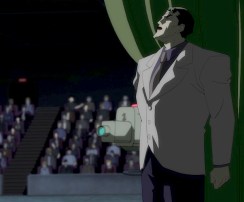 The story may provide some déjà vu for those only acquainted with live-action Batman, because Christopher Nolan borrowed liberally from Miller’s TDKR for his TDKR,
  There were many sceptics when DC first announced they were going to tackle such a sacred Bat-story, and not all were convinced by Part I. I don’t imagine Part II will change their minds, but for those of us who did enjoy the first animated interpretation of Miller’s seminal tale, this is even better. In fact, even without its first half, I’d say it joins the ranks of my very favourite Bat-films.
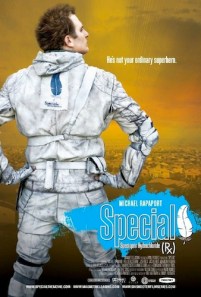 A lot of praise was slung
 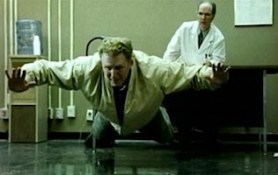 Those after a more genre-aware “real world superhero” movie would do better to stick with Kick-Ass or Super, but those who might embrace something a little different — especially something with an indie sensibility — would do well to take a look. Indeed, being a comic fan is certainly not a prerequisite for enjoyment here.
 From the makers of the successful Christmas TV shorts
  100Films.co.uk