2013 #27
Peter Jackson | 170 mins* | Blu-ray | 2.40:1 | USA & New Zealand / English | 12 / PG-13
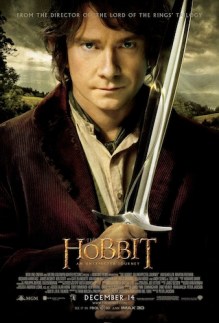 So here we are: nine years after his last tour of duty in Middle-earth, and after a Guillermo del Toro-shaped attempt at not having to serve again, Peter Jackson returns to the world of hobbits, dwarves, elves, orcs, and the rest, to tell the tale some have been clamouring for him to make since Fellowship of the Ring turned out to be a film of landscape-changing brilliance over a decade ago. Well, a version of that tale, anyway.
The Hobbit, as I’m sure you know, sees a younger Bilbo Baggins (Ian Holm in The Lord of the Rings and a prologue here; Martin Freeman for the bulk of the film) coerced by the wizard Gandalf (Sir Ian McKellen again, of course) into joining a party of dwarves setting out to reclaim their gold and/or homeland, stolen by the dragon Smaug (that’s Smowg, not Smorg). In this version, emphasis is firmly on “homeland” rather than “gold”, and there’s a bunch of other stuff drawn in from the masses of appendices and associated material that J.R.R. Tolkien wrote about Lord of the Rings. In the process, Jackson and co have mutated The Hobbit from a simple tale of adventure that happens to take place in the same universe as The Lord of the Rings and has some shared characters and locations, and turned it into a film (well, a trilogy) that is both standalone adventure and grand prequel to his already-made epic.
There’s endless discussion to be had about the choices Jackson and co-screenwriters del Toro, Fran Walsh, and Philippa Boyens have made in this transformation of a beloved novel (and there’ll be even more in future parts, I should imagine, when they start introducing new characters they’ve created themselves). I can sympathise with those who wanted a single-film, straightforward, faithful adaptation of the novel (I sincerely hope there’s a fan edit to adequately fulfil that desire once the trilogy is complete); but there’s also so much in Tolkien’s world, much of it with direct (if inessential) relevance to Lord of the Rings, that it might have seemed a shame to miss this opportunity to get it on screen. 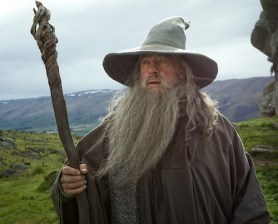 And, I have to say, as someone who hasn’t read the novel since primary school, I couldn’t spot the joins. I could take some guesses, but not many, and considering how long the film is I’m sure there must be quite a lot added.
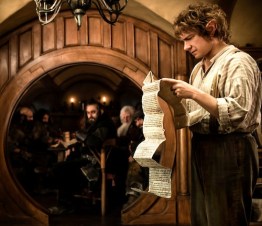
Putting aside questions of adaptation (others have already discussed that at great length and with much more authority than I), how does it survive as a film in its own right? The reviews have been mixed, but I would say it fares very well. It may lack the epic world-changing grandeur of Lord of the Rings, but as an epically-scaled action-adventure fantasy I found it to be most entertaining. It treads a tricky path mixing action, humour, world-building, politicking, legend, and plot, and some would assert some elements dominate more than they should, or are mishandled — I’ve heard the humour called too childish, the action too like a videogame, and so on. For me, the balance worked. It’s not perfect — it takes forty minutes for the cast to leave the opening location of Bag End, which is fine in a fan-pleasing extended edition but feels excessive in a theatrical cut — but it ticks enough boxes and hits enough bases to entertain. And at the end of the day, it is an entertainment.
I have to wonder if viewing at home affects one’s perception of The Hobbit’s length and pacing. For one thing, from a personal point of view, I saw all of the theatrical Lord of the Ringses in the cinema, and the Extended Editions only on DVD — coming to The Hobbit first on DVD, am I automatically associating it with the extended experience? Even as I write it, I think that’s a pretty spurious argument. More so, however, there’s all those factors of the home viewing experience that are often cited in its favour over the cinema: you can start when you want (no trailers!), pause for a snack or the loo or just the hell of it; and it’s also commensurate with, say, marathoning TV shows, where you might watch several hours in one go anyway. As it is, I didn’t pause The Hobbit once, watching it right through in one go as per the cinema — 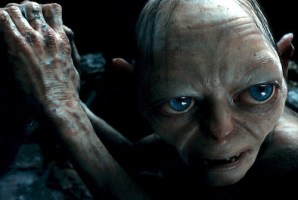 but I could have, and knowing you can do something makes all the difference. There’s also the little timer on the Blu-ray player, which means I can know that it took forty minutes to get out of Bag End rather than just thinking it feels like it. Does that somehow make it more palatable? Would I have been as bothered as others by the film’s length and pacing had I seen it in a cinema initially? It’s tough — nay, impossible — to say, because while there are those other subliminal factors, I also felt like I flat out enjoyed the film for itself, not just for my potential ability to escape it. But it is long and it is episodic, so maybe the association of watching individualistic episodes of TV back to back feeds into the acceptance of that? It’s a circular argument, so we’ll leave it there.
Besides issues of faithfulness and length, the film’s other big controversy (as if it didn’t have enough!) is the whole HFR argument, which seemed to plague all previews and early reviews. I can’t enter into that, but I can say it hasn’t filtered down to the Blu-ray experience — if it should look clearer and sharper and less motion-blurred-y, it doesn’t to any extent that stops it feeling like a Movie. The whole thing looks gorgeous, as you’d expect, though I won’t credit that to the cinematography lest Christopher Doyle comes round and gives me what for. In other technical fields, the make-up, models and CGI are all as up to snuff as you’d expect from this team. They’re probably exceptional, in fact, but hamstrung by the fact we expect them to be. If they’d fluffed something people would have noticed, but what could they do to stand out? Gollum may be better-realised than ever, but he was so good before that few will notice; other sequences, like the fighting rock giants, are awesome but perhaps get lost in the mix.
 Howard Shore returns to deliver another fantastic score. After he composed the iconic Fellowship theme for, um, Fellowship, I thought he could never muster anything else as monumental. And, in fairness, that theme is still the defining aspect of the series’ score (its absence here is at times felt, by me at least); but he produced another excellent motif for Two Towers (Rohan), and Return of the King (Minas Tirith), and once again here, this time related to the dwarves. Much like John Williams on the Star Wars prequels, Shore is charged with retrofitting his score to begin before but ultimately dovetail with the following/preceding trilogy, and I think he pulls it off (as much as a musical dilettante like me can spot such things). Locations and characters familiar from Lord of the Rings come with their musical cues intact, which blend seamlessly with the new material. I hadn’t bothered to pre-order the soundtrack CD, but I hopped online to get it as soon as the film finished.
The Hobbit film trilogy will long remain a controversial subject. It was always going to. The book is a light children’s adventure tale, while Jackson is making the film in the context of a successful blockbuster epic set in a dark/realistic fantasy world — he couldn’t have made it too whimsical and still had it gel with the existing films. Plus: if he’d done a straightforward adaptation in a single film, would it have felt underwhelming? Does it need a ramped-up sense of the epic in order to compete with its chronological sequel? For Tolkien fans, no; for a mainstream audience, perhaps it does. And for the latter it clearly worked, taking over a billion dollars worldwide, albeit aided by 3D ticket prices.
 Without the breadth and world-changing story of The Lord of the Rings, The Hobbit was always going to be a somewhat smaller experience. By emphasising the backstory of the dwarves’ stolen homeland and the hints of war-to-come that will ultimately lead in to Rings’ story, Jackson has made it considerably more epic — for good or ill. For me, the whole experience clicked. I don’t think it’s as good as Lord of the Rings, but it is the next best thing.
The Hobbit: An Unexpected Journey is available in the UK on DVD, Blu-ray and via on-demand services from Monday 8th April.
My review of the Extended Edition can now be read here.
* According to the BBFC, The Hobbit: An Unexpected Journey runs 32 seconds longer on disc than in cinemas. I’ve no idea why. ^
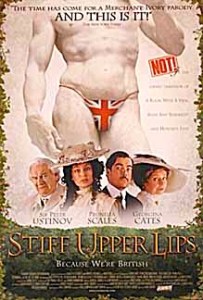 Spoof of British ‘Heritage’ films and TV series, particularly the work of Merchant Ivory. It was probably a bit belated: released in 1998, you’ll note most targets are from the ’80s. It only even made it to TV recently (I watched on Radio Times’ recommendation). Specific targets include Brideshead Revisited and A Room with a View, with individual sequences riffing off the likes of Chariots of Fire and Orlando.
 Kurt Russell gets embroiled in a fever dream of mystical Chinese tomfoolery in San Francisco’s Chinatown in this cult ’80s adventure from writer/director John Carpenter.
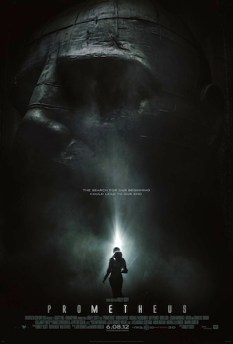 Ridley Scott’s not-an-
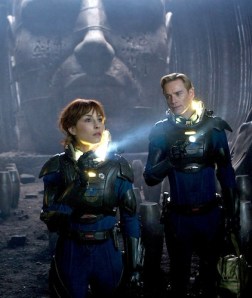 And then, to top it off, it doesn’t have a real ending! They may as well slap “to be continued” on screen, such is the obvious lack of conclusion. It’s immensely frustrating, only to be topped off with a “in case we don’t get the sequel” bit of connective tissue to the Alien series. Mysteries and unanswered questions aren’t a problem in and of themselves — there are plenty in Prometheus’ franchise forbears,
 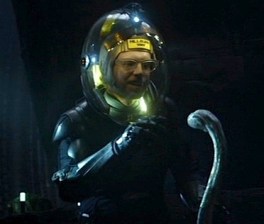 No character is fully developed. Some barely register, suggesting too big a cast, while others suffer from being plain stupid, or doing inexplicably stupid things, or just piss-poor acting. There’s some thing made about Shaw (Noomi Rapace) being religious or a true believer or something, but it’s not properly explained and doesn’t go anywhere. David (Michael Fassbender) and the way he’s treated by the other characters are both very interesting areas, and clearly of huge thematic resonance, but he acts inconsistently for no obvious reason, and despite the horrendous things he does to Shaw at one point, she just gets on with him again in the next scene, and… well, that’s far from being the film’s only plot hole or inconsistency.
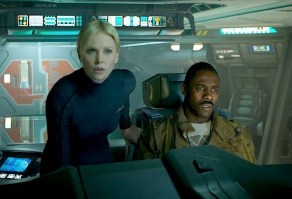 The daft thing is, I think a lot of people would’ve been happy if it had chosen to just go all-out as a schlocky alien horror movie. That’s what Alien is: an exceptionally well-made haunted house movie in space. There’s no shame in that (well, maybe in cinéaste circles, but pish.) But that’s not where Prometheus pitches itself. There’s too much other stuff for it to be just that; stuff that’s apparently aiming to be Profound. So when the horror does turn up, it doesn’t belong.
 Prometheus is a funny old beast, then. There’s lots of good stuff in there, but also lots of baffling decisions and confusing shifts of tone, emphasis, style… Considering it was made by an experienced master-filmmaker, who was presumably granted all the time, freedom and money he wanted to craft the film he desired, it’s baffling how it ended up feeling like such a hodge-podge. Many fans have blamed Lindelof, brought in late on to re-write the screenplay; but considering Scott ruined
  Most films have a reputation of one kind or another, even if it’s only in certain circles and you have to go searching to find it. I suppose Conan’s is best summed up by
  The guy doing the voiceover narration is godawful though, and there’s far too much of him. It’s never made clear why he’s the one telling the story either, unless I missed it.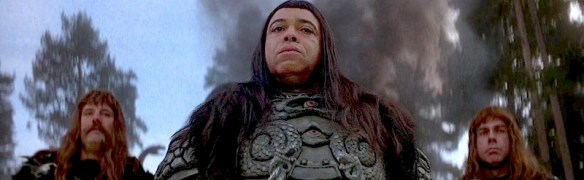
 Time flies: this is 13 years old! Originally a Jim Carrey vehicle (feels obvious once you know), Ben Stiller is the prospective son-in-law meeting Teri Polo’s parents (Robert De Niro, Blythe Danner) for the first time. Disaster ensues in a riot of unfortunate events targeting our hapless hero.
 John Cusack stars as literary giant (figuratively) Edgar Allan Poe in this wannabe-Victorian-
 That they didn’t tone it all down just a smidge to match, and so go for the box office-friendly PG-13, is a surprise in these days.
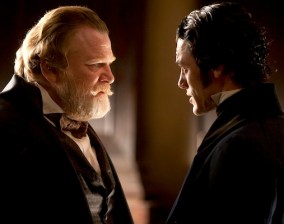 The rest of the cast are from Hollywood’s usual go-to for period tales: Brits; if not entirely then mostly so. (The film was shot in Hungary and Serbia, so I suppose our thesps have the additional advantage of being geographically favourable to Americans.) You know you’re getting a level of quality there, then, though for me Kevin R. McNally lets the side down (again). He’s only a supporting character and is fine most of the time, but there’s one bit when he’s talking to the lead detective and just rattles off his line… It’s not the world’s greatest speech, but you can hear there was meant to be more nuance and quiet in there.
 Se7en is probably my favourite film ever made, but criticisms that it’s quite a standard detective mystery are not invalid. It’s enlivened by Andrew Kevin Walker’s writing (great dialogue, engrossing structure, etc), some top-drawer performances (Freeman, Pitt, a loopy-calm Spacey), and, probably most of all, David Fincher’s inestimable touch. In making such a comparison it’s easy to see that The Raven lacks any of these, which renders it a solid period mystery, but no more.
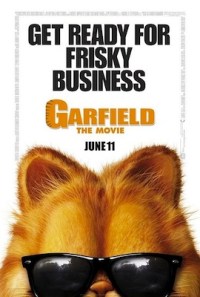 Bill Murray presumably needed some money, otherwise why else voice the titular food-loving sort-of-fourth-wall-breaking moggy in this juvenile adaptation of the long-running newspaper strip? Offering little in the way of laughs, the film’s main success is the cute (real) dog who co-stars as Garfield’s competriot, Odie. The real wonder is how they got him to interact with the CGI cat. Elsewhere, animals are live-action with CG mouths, giving an unsettled presentation of the film’s four-legged characters. Meanwhile, humans Breckin Meyer and Jennifer Love Hewitt engage in a charmless romantic subplot. Oddly, one for dog lovers (with fast-forward to hand) only.
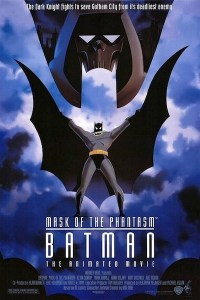 Batman movies have a habit of provoking strong reactions.
 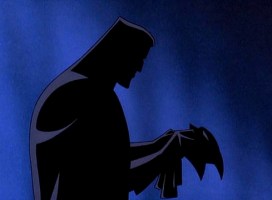 One of the main reasons the film succeeds is that look back at Bruce Wayne’s early days as a crime fighter. Batman’s origin is oft told — too oft, truth be told — but they thankfully don’t rehash it here. Instead, early in Batman’s career Bruce falls in love and finds happiness, causing him to question whether to continue down the path he’s already dedicated his life to. The scene where he talks to his parents’ grave, expressing his guilt at potentially finding happiness after so much mourning, is one of the most powerful, emotional moments in all of Batman’s many iterations.
 But instead of falling in some nasty halfway-house, Phantasm turns up trumps on all fronts.
 Shortly after I watched Tinker Tailor, it was announced that they (“they” in this instance being Working Title, I think) are planning a new film adaptation of Daphne du Maurier’s perennially popular novel Rebecca. This news was greeted (at least on the websites where I read it) with cries in the comments along the lines of, “you can’t remake Hitchcock!” Such is the power of
 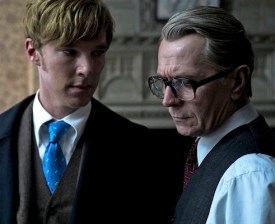 Yet, for all that, the film is excellent. It may not match the TV series in places, in my subjective opinion, but in its own right it shines. Gary Oldman does the impossible and offers a Smiley that is neither an imitation of Guinness’ nor a deliberate counterpoint, but stands apart as an equally proficient rendering of the character. The rest of the cast are equally up to task, with the exception of Kathy Burke, who stands out like a sore thumb in my opinion.
 Another noteworthy advantage of the film is that it’s gorgeously shot. The TV series actually has its own appeal in this area, with a realism that is quite pleasing. The film occasionally goes grander (look at the depiction of meeting rooms in The Circus for a major example — while the TV series goes for any old room in Whitehall, the film offers stonking soundproof ‘pods’), but it works in its own way.
 100Films.co.uk