
Mike Nichols | 120 mins | streaming (HD) | 1.85:1 | USA / English | 15 / R
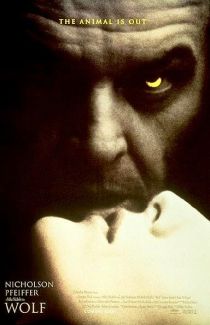 Without meaning to spoil anything, Wolf is rated R for “language and werewolf attacks”! I love the ludicrous specificity the MPAA indulge in sometimes. I know the BBFC’s famous “mild peril” is pretty useless, but at least they draw from an academic- and objective-sounding pool of phrases in their summaries, rather than throwing in ‘advice’ that is meaningless (there are perfectly PG werewolf attacks in other movies).
Anyway, Wolf. It’s about werewolves. But don’t go thinking this is like An American Werewolf in London or The Wolfman, and certainly don’t attach it to the modern Twilight-type werewolf saga — this is a supernatural movie For Adults. Not in the sense of there being excessive violence or sex or swearing or what have you, which you might think when I’ve used adults with a capital A and highlighted the R rating — though there is a dash of all those things — but, rather, because of the characters and their situations. For instance, the titular (were)wolf is not a muscle-ripped teenage boy, but a middle-aged literary agent played by Jack Nicholson. No one wants to see him running around in the woods topless, do they? (I understand that’s the primary appeal of the werewolves in Twilight. I’ve still not seen it.)
And it’s not just about horror movie stuff, either. When he gets bitten, Nicholson’s character thinks it was just by a regular wolf. He has it treated by a doctor, that kind of thing. But then he begins to exhibit more self assurance in the workplace. Rather than meekly accepting his new posting to the back of beyond, with his protege and supposed friend stealing his current job, or that his wife is having an affair, he fights both these things. Only later does he start getting all hairy and kill-y and visiting-mysterious-shaman-y.
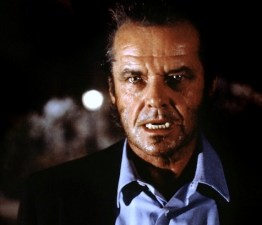 It’s those early sections where the film is at its best, when it tries to stay grounded in some form of realism. Any time it gets too Fantasy, it begins to get a tad silly. The climax in particular seems to come from a different film: Wolf abruptly moves from being an office politics drama with a fantasy edge, to a full-on manwolf-vs-manwolf brawl. As a straight dramatic director, Mike Nichols doesn’t seem to quite have the chops to pull off this fantasy/horror stuff without it beginning to look daft. That might not be entirely his fault, however, as reportedly the film was delayed by months to re-shoot the entire third act. Perhaps originally it had something more in-keeping? That said, he did want Michelle Pfeiffer to wear a red-hood sweatshirt during the finale! She refused, fearing it would harm the film’s credibility. She was right — it’s quite silly enough as it is.
Things do come to a head with nicely ambiguous ending, however. (Half-spoilers follow.) Rather than some pat “hero gets away with it in the end” conclusion, or even a “hero sacrifices self” moment, the primary ending is uncommon, followed by a coda that’s open to interpretation. Empire’s review reads it as a cliché, but I think that does it a disservice. It’s not enough to redeem the film, but I liked it.
One other aside I must mention is the budget: apparently it cost $70 million! How?! It would be a marvel for it to reach that figure today, never mind 20 years ago.  I can only presume there were hefty paydays for Nicholson and Pfeiffer, both megastars at the time, and possibly Christopher Plummer’s supporting role, maybe Nichols, and on scoring duties (obviously), Ennio Morricone. And maybe those re-shoots were really extensive. Or perhaps they spent it all on the nighttime aerial photography of Manhattan, which is gorgeous — that would’ve been worth it.
All told, Wolf is an unbalanced film. The first hour-ish feels quite fresh, mashing together two different genres to use one as an unusual prism with which to commentate on a particular world. When it morphs into more standard werewolf territory, however, it throws away what was a unique facet in lieu of some half-rate horror-action theatrics. Shame.

This review is part of the 100 Films Advent Calendar 2013. Read more here.
 After a decade locked away in motion-capture madness, Robert Zemeckis returned to the realms of the real with this Oscar-nominated drama. Its most high-profile nod was for Denzel Washington, starring as an airline pilot who miraculously crash lands his plane, but is revealed to have been high during the flight. Cue a film that attempts a grown-up account of addiction, but fumbles it, in the process missing the more interesting story of the crash investigation.
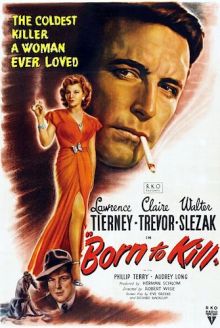 Director Robert Wise certainly had an eclectic career. Depending on your genre predilections, you may feel he’s best known for
 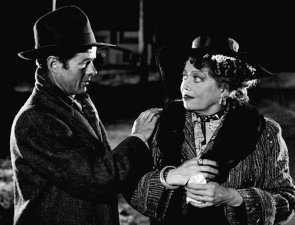 Even today, it’s quite a nasty little work, although tastes have evolved to the point where “discriminating people” are likely to be attracted to it — though not purely for the violence. You’d imagine that would pale by today’s standards, but even now the opening double homicide — presented pretty much in full on screen — is quite shocking, especially because it seems so horrendously plausible. Much movie violence is heightened, involving gangsters or spies or whatever, but here it’s a lover in a jealous rage killing two people in the kitchen of a regular house. Grim.
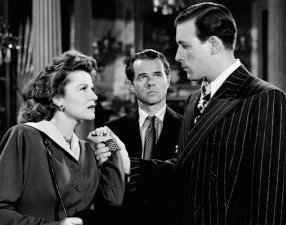 sometimes develop a cult following.
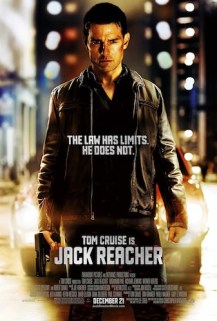 I don’t like Lee Child. I’ve never read one of his novels, but I’ve read and seen interviews with him, and always felt he comes across as intensely pompous and irritating. I disclose this up front because it leaves me predisposed to dislike Jack Reacher, the first (they hope) movie adaptation from Child’s series of novels starring ex-military policeman and now all-purpose vigilante Jack (you guessed it) Reacher.
 How much you consider the twists to be twisty will depend on which suspects your guesswork picks out, but in that regard it’s as strong as other similar genre examples.
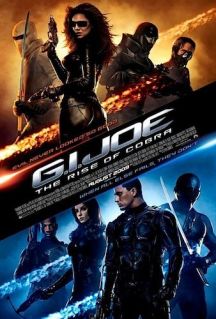 It’s tough to know where to begin slagging it off — there are too many options. How about the groundwork for any film: the screenplay. Never mind the storyline (a MacGuffin hunt designed to facilitate action sequences), but take a look at the dialogue — it’s all of the “oh hello, brother” / “you are finally home, my wife” / “I’ve not seen you for four years” level. After a while, you just have to accept it’s pushing so-bad-it’s-good; by the final act, I was laughing out loud at nearly every line.
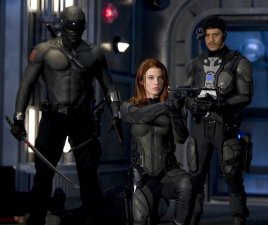 Almost as unintentionally hilarious is
 Once upon a time, Real Steel would have been rated PG, been aimed at 7- to 10-year-old boys, and would probably have been quite the success. In the current Hollywood moviemaking climate, however, it’s rated PG-13, consequently aimed at teenage boys and grown men who still have the tastes of teenage boys, and seems to be regularly slated in online comment sections.
 Some things are also distinctly unresolved: just why was Evil Lady prepared to pay $200,000 for a no-hope junkyard robot? I figured there was going to be some Nasty Secret to come out, especially as there’d been hints of the robot having extra abilities… but no. And what was up with the kid being 11 but Jackman always thinking he was 9? Figured that was going somewhere too. There’s talk now of a sequel — I hope such random bits weren’t intended as elaborate seeding for a follow-up, because that’s just irritating. That said, it would be nice if whoever’s in charge spotted those things and built on them in the sequel’s story.
 Real Steel is a good family movie, masquerading as a teenage-focused robot action blockbuster thanks to its 12 and PG-13 certificates. The true best audience for it will be those around the same age as the central kid: they won’t find him as annoying as older viewers will, and the whole robot fighting thing will just seem exciting.
 Some say this is the worst of the series, and I think I agree.
  Most action-thrillers are cast from the same mould; it’s the decoration which dictates whether the final product is a Steven Segal or a Jason Bourne.
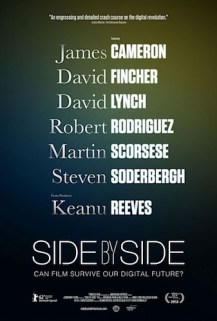 Side by Side is a documentary on camera technology. No, wait, come back! It’s much more interesting than that sounds.
 The significance of the debate is emphasised by the interviewees. Nearly every high-profile name who has at any time factored in the film vs. digital debate pops up, however briefly (renowned film advocate Christopher Nolan gets just a couple of comments; I think Peter Jackson is the only notable omission). Indeed, you can tell how significant the interviewees are just by looking at the poster — what more do you need to know? There are also others — producers, cinematographers, and so on — whose names you might not be familiar with, whose work you might not even know, but have insightful contributions to make. Presenter Keanu Reeves is not just a celebrity voiceover but also the primary (sole?) interviewer, and believe it or not he does a sterling job.
 In an ethnically diverse and equal future, white American Kirk and white Vulcan-American Spock are commanded by white American Pike and white American Marcus to lead their crew to capture a Starfleet-targeting terrorist: John Harrison, a white Englishman who may be more than meets the eye…
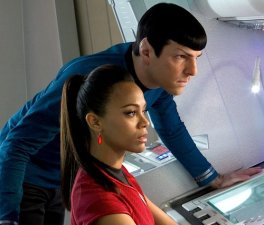 There’s still humour, mind; something which marked the first film out for a kind of geek controversy, as some felt it went too far. Because the original Star Trek TV series was dark and super-serious? An increased role for Simon Pegg’s Scotty provides most of the laughs, as everyone else is busy going Into Darkness. Unfortunately, despite the sporadic likability of several cast members, they don’t seem to have much to give. An inversion of a famous scene from a previous Trek movie ought to be tremendously moving, but doesn’t even stir.
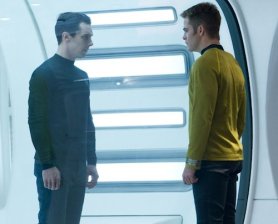 and I think the same process may have been used for some finished scenes. Which is a sarky way of saying that sometimes he phones it in. Take his first proper face-to-face with Kirk, when he’s in the Enterprise’s brig: he’s on Posh British Villain autopilot. There’s no menace, no tension; just words in our accent. It’s Cumberbatch’s Sherlock robbed of any of the charm, wit or intelligence.
 There are good bits — in fact, I’d say that’s a pretty apt description: good bits in amongst mediocrity. There’s an arty dialogue-free bit starring Noel Clarke that’s kind of good… and kind of self consciously “look, we done told a story with no speaking!” Shot on a mix of 35mm and IMAX, the film occasionally looks very nice. I imagine some sequences were visually stunning in IMAX, though Paramount haven’t done us the courtesy of preserving the ratio shifts on Blu-ray (unless you buy some German version, apparently). I felt there was considerably less lens flare this time out too; if it was still there in hefty doses then the film was obviously doing something right because I didn’t notice it.
 You probably remember that, just a few months after its release, a convention of Trekkies voted Into Darkness the worst Star Trek film ever made. That’s a bit much — for all its flaws, it’s still better than most of
  100Films.co.uk