The 100-Week Roundup XIX

Although I managed to get caught up on my reviews to the end of 2018 by the end of 2020, these 100-week catch-ups are still behind schedule — after all, 100 weeks is slightly less than two years, so I should be into February 2019 by now. But we are where we are, and so here’s the first batch from January 2019. At least the first one’s more appropriate now than it would’ve been in December…

  • Happy New Year, Colin Burstead (2018)
  • Cool Hand Luke (1967)
  • 1941 (1979)
  • Rambo (2008)


    Happy New Year, Colin Burstead
    (2018)

    2019 #1
    Ben Wheatley | 89 mins | digital (HD) | 2.39:1 | UK / English | 15

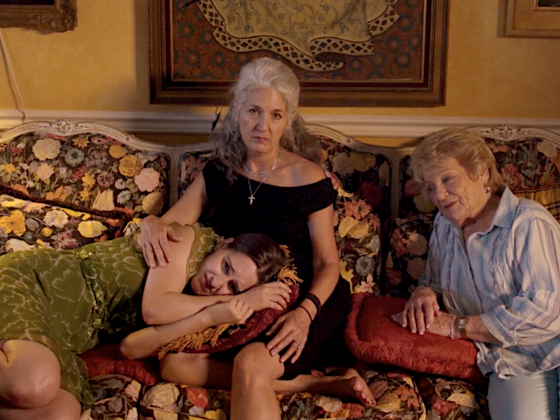
    Happy New Year, Colin Burstead

    Writer-director Ben Wheatley leaves behind the murderous themes that have characterised his feature output to instead portray a family drama that plays like an art house EastEnders. Put another way, it’s about an extended family spending most of their time arguing about things they have or haven’t done to each other, but it’s really slow and frequently abstruse.

    I guess Wheatley has his fans, and I know he has his detractors, but I find every one of his movies a crapshoot: sometimes I think they’re pretty great, sometimes interminable, sometimes floating somewhere in between. Colin Burstead is definitely at the negative end of the spectrum — way down that end, in fact. Unlike other Wheatley films I’ve not liked, this has little to commend it: none of the pretty cinematography or nods to social satire of High-Rise; none of the mood or editing trickery of A Field in England. The visuals are little better than a home movie; the editing is… random. And I mean that literally: sometimes shots from other scenes drop in for no apparent reason, never mind the senseless intercutting that goes on regularly.

    I guess Wheatley was going for some kind of Robert Altman thing, with all the characters and their own storylines and the way they’re intercut and the dialogue overlaps. But there’s no mastery of that form apparent here, and certainly no story worth applying it too. Even at under 90 minutes, it feels like it goes on forever. It’s that most damnable of things: boring.

    1 out of 5

    Happy New Year, Colin Burstead featured on my list of The Five Worst Films I Saw in 2018.

    Cool Hand Luke
    (1967)

    2019 #2
    Stuart Rosenberg | 122 mins | digital (HD) | 16:9 | USA / English | 15
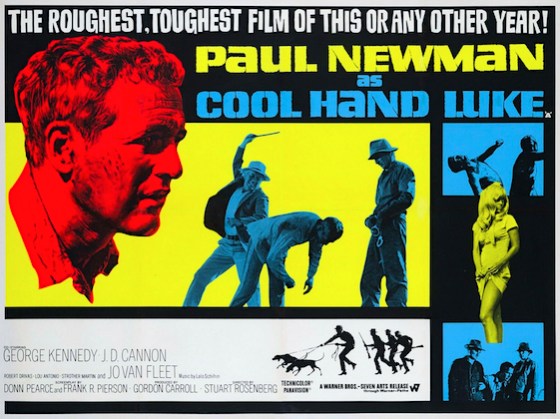
    Cool Hand Luke

    When petty criminal Luke Jackson is sentenced to two years in a Florida chain gang, he doesn’t play by the rules of either the sadistic warden or the resident heavy, Dragline. As he becomes a rebel hero to his fellow convicts and a thorn in the side of the prison officers, the latter actively work to crush Luke until he finally breaks… — adapted from IMDb

    The thing that most surprised me — or, at least, struck me — about Cool Hand Luke was how similar it felt to One Flew Over the Cuckoo’s Nest (of course, that film came out eight years after this one, so if there is a chain of influence it flows in the other direction). They’re about different kinds of institution, but the vibe of the piece — a new against-the-grain inmate riling up the others to provoke the oppressive authority figures who control them — is very similar. They also have a similar comedic/dramatic mix of tones for most of the runtime, before both ending with a calamitous finale.

    If Cool Hand Luke feels a bit less dark overall, it’s probably because its leading man is the immensely charming Paul Newman, versus Jack Nicholson in Cuckoo’s Nest — he’s charming in his own way, but it’s definitely a cockeyed kinda likeability, with an undercurrent that things might go bad at any moment. Not that Cool Hand Luke is lacking in threatening atmosphere, with the abusive ills of the chain gang system ever-present.

    4 out of 5

    Cool Hand Luke was viewed as part of What Do You Mean You Haven’t Seen…? 2019.

    1941
    (1979)

    2019 #4
    Steven Spielberg | 119 mins | Blu-ray | 2.35:1 | USA / English, Japanese & German | 12 / PG
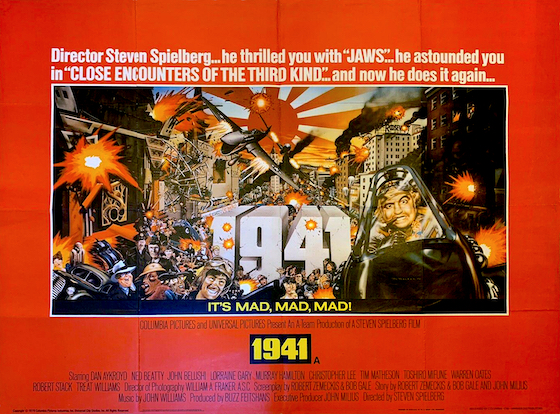
    1941

    From 1975 until the end of the ’80s, director Steven Spielberg had a truly extraordinary run of movies: Jaws, Close Encounters of the Third Kind, Raiders of the Lost Ark, E.T. the Extra-Terrestrial, Indiana Jones and the Temple of Doom, The Color Purple, Empire of the Sun, Indiana Jones and the last Crusade — every one of them an era-defining box office hit and/or a multi-Oscar-nominee. Except that list overlooks one dud: 1941. That’s how the majority see it, anyway, but it does have something of a cult following (and apparently “the Europeans love it”, or so Spielberg claims in an accompanying documentary).

    Personally, as is so often the case, I fall somewhere between these two stools. Spielberg signals his tonal intention from the off, beginning with an outright spoof of the famous opening to Jaws, the film that had made his name just a few years earlier. After that, 1941 unfolds almost like a sketch show, through a series of comedic vignettes; though it’s more like binge-watching a whole series of a sketch show, because there’s also a series of running plot lines. And just like a sketch show, the quality varies wildly from bit to bit. I felt like it took a long time to really get going, and then it felt like it was going on forever, but I actually warmed to its barminess in the end. Even if it’s weak overall, there are some very good sequences — the dance competition-cum-chase is a particular highlight. There’s a ton of special effects at the climax which look spectacular, too — you can always rely on Spielberg to pull off a good-looking, technically-excellent movie.

    In later years, Spielberg has admitted his hubris and arrogance (coming off the massive double success of Jaws and Close Encounters) hindered the film, which he thinks should’ve been funnier. Nonetheless, he’s still proud of it — indeed, when he was given the chance to restore his original two-and-a-half-hour director’s cut (Columbia and Universal had cut the original release against his wishes, fearing for its commercial potential), he took that opportunity. Some day, I’ll have to give the longer cut a go. I presume it can’t be any more consistent, but maybe there are some extra laughs…

    3 out of 5

    Rambo
    (2008)

    2019 #5
    Sylvester Stallone | 92 mins | Blu-ray | 2.35:1 | USA & Germany / English, Burmese & Thai | 18 / R
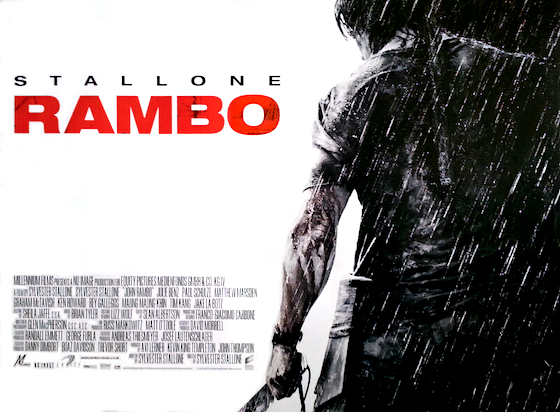
    Rambo

    In Thailand, John Rambo joins a group of mercenaries to venture into war-torn Burma and rescue a group of Christian aid workers who were kidnapped by a ruthless local infantry unit.IMDb

    Despite the blunt title, Rambo is not a reboot of the Rambo series. Nor is it quite a Jason Bourne-style “let’s just use his name this time”, because there’s already kinda been a film called Rambo — it was the second one. And, of course, people tend to just call the first one Rambo, despite that not being its title at all. So maybe let’s not get hung up on the naming of Rambo movies (though if anyone ever says “I really enjoyed that one movie, Rambo,” you’re probably going to have to ask for clarification).

    Despite being an OTT action series, Rambo has a habit of getting involved in real-life conflicts: the first one spun out of Vietnam; the second was concerned with an issue from that conflict’s fallout; and the third saw him stick his oar into Afghanistan. Using real-world geopolitics as an excuse for a brutal action movie is the kind of thing some people will always find distasteful, but at least Rambo seems to have its heart more in the right place than First Blood Part II or Rambo III did. In fact, the film was banned by the rulers in Burma, but was widely bootlegged by resistance fighters, who loved it and adopted phrases from it as mantras. So you can say it was distasteful to the real political situation if you like, but the people actually embroiled in it clearly felt differently. And David Morrell, the author of the original First Blood novel (who has proven quite happy to criticise a Rambo movie), was “pleased” with this one: “the level of violence might not be for everyone, but it has a serious intent. This is the first time that the tone of my novel First Blood has been used in any of the movies. It’s spot-on in terms of how I imagined the character — angry, burned-out, and filled with self-disgust because Rambo hates what he is and yet knows it’s the only thing he does well.”

    Big fucking gun

    Oh yes, “the violence may not be for everyone”, because, oh boy, it really is brutal! Blood and body parts explode all over the damn place. But the film invests a lot of effort in making sure you know these bad guys really, really deserve it — mainly by showing them to be brutal bastards themselves, committing nasty war crimes in the film’s first half. At one point during the bloodbath climax, they employ artillery so heavy it takes off heads with a single shot. That’s used to kill every bad guy on a gunboat… and then they blow the boat up with a rocket launcher, for good measure. It’s not quite as ridiculous as that time Rambo used an explosive-tipped arrow to kill one man, but it’s getting there.

    A couple of years after the film’s release, Stallone put together a Director’s Cut that reportedly pulls back on some of the violence and adds more character-centric scenes. I don’t know if that would make the film better — I feel like the balance is pretty good right now. Maybe a little heavy on the brutality, sure, but I can’t see how a movie like this needs much more character stuff than it already has. It’s really well paced as it stands: it manages to not feel in a rush, while also not feeling slow; and once the men are properly on their mission, it’s almost relentless without being breathless. It makes for a very smooth, fast 90 minutes.


    4 out of 5

  • The Best of 2020

    And so, we reach the end of 2020.

    I don’t know about you, but this feels like a, “what, already?!” moment to me. Putting my year-in-review posts together used to seem to take ages, but this year it feels like I’ve barely begun and now it’s over. But that’s enough about my subjective perception of time — let’s talk about movies in 2020, like Tenet, which is partly about… um, never mind.

    This final year-in-review post does what it says on the tin: it’s a list of my favourite films that I saw in 2020 (normally my least-favourites would be here too, but I did those already). A note for newcomers and/or reminder to the forgetful: rather than just 2020 releases, I select my list from all 264 movies I saw for the first time during 2020. That’s partly because there are tonnes of new releases that I never see in time — which is also why this post contains a list of 50 significant films I missed.

    Compiling this year’s lists has taken a lot of thinking, rearranging, cutting, reflecting, re-adding, re-rearranging, and a certain amount of “oh, that’ll do, what does it matter anyway” to actually get them out the door. Here’s what I ended up with…


    The 26 Best Films I Saw For the First Time in 2020

    Since 2016, I’ve replaced the usual “top ten” with a “top 10%”. As I watched 264 films in 2020, that means this year’s list has 26 films. (If you think that’s too many, feel free to scroll down and start from wherever you like.)

    Although all the movies I watched for the first time in 2020 are eligible, I did watch 57 films that had their UK release in 2020, so I’ve noted the ‘2020 rank’ of the eight that made it in. (I also saw a couple of 2020-UK-release films at FilmBath Festival in 2019. As they were already ranked as 2019, I’ve not factored them in here.)

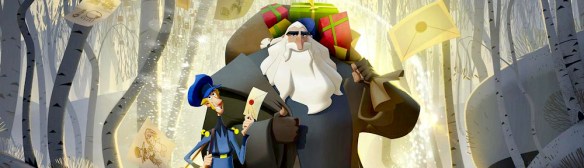
    26 Klaus

    The animation is absolutely gorgeous in this Oscar-nominated BAFTA-winning Netflix original about a disaffected postman who helps originate the legend of Santa.

    25 The Looking Glass War
    The mundanity of real-life espionage; conflicted morals; the futility of the whole thing — this John le Carré adaptation is full of all the things that made his work so great.

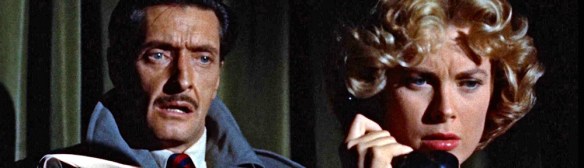
    24 Dial M for Murder

    As intelligent and tense a thriller as you’d expect from Hitchcock; so good it even manages to make you overlook its obvious stage-bound roots. Superb in 3D, too.

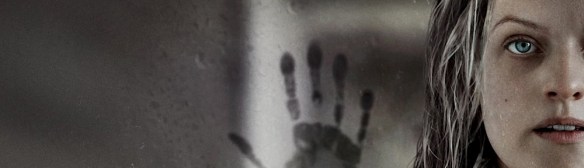
    23 The Invisible Man
    2020 #8 This #MeToo-era reimagining of the HG Wells / Universal Horror classic could hardly be more timely. But even leaving that aside, it’s a chilling exercise in ratcheting tension.

    From its astounding opening to its hard-hitting final act, Last Black Man is an astonishing cinematic experience about the stories we tell ourselves about ourselves. [Full review.]

    A space ship full of colonists is sent irretrievably off course in this Scandi sci-fi that’s driven by big ideas about human behaviour in extremis. [Full review.]
    William Holden and Audrey Hepburn are clearly having a whale of a time in this marvellously cine-literate ’60s romp about a struggling screenwriter. [Full review.]
    19 Philomena
    Judi Dench is extraordinary and Steve Coogan is a revelation in this intensely affecting drama about a wronged woman searching for her son who was taken decades earlier.

    18 Fanny and Alexander

    Ingmar Bergman described this as “the sum total of [his] life as a filmmaker”. Blending familial drama with a dash of magical realism and the supernatural, it’s a masterful work.

    17 Belladonna of Sadness
    Delicate watercolour artwork and medieval folklore smash against a storyline fuelled by rape and a penis-shaped devil in this astonishing animation full of psychedelic imagery and experimental music. I’ve never seen anything quite like it.

    2020 #7 It’s “Agatha Christie meets the Coen brothers in a nudist camp” as the eponymous handyman searches for his missing hammer in a world full of wobbly bits, where anyone might’ve taken it. [Full review.]

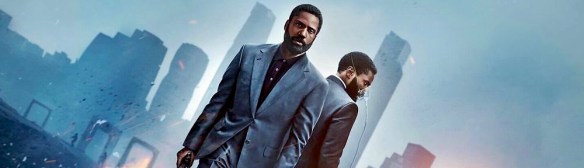
    15 Tenet
    2020 #6 If you let go of the need to fully understand the mechanics of the film’s time-reversal conceit, Christopher Nolan’s latest is an audacious and exciting spy thriller. It’s a shame real-world arguments have come to overshadow what is actually a suitably thrilling spectacle.

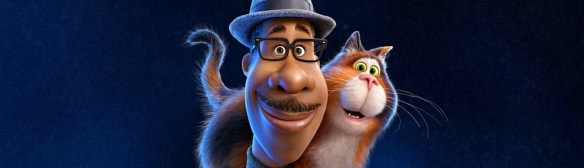
    14 Soul

    2020 #5 Pixar have often been praised for making films for grown-ups. That’s not something I’d wholly agree with, until now. Not as cutesy as the rest of their output (largely), Soul asks big questions about what makes us who we are. All wrapped up in a buddy-quest storyline, of course.

    Rian Johnson’s tribute to whodunnits a la Agatha Christie pulls off something that genre can’t always manage: rewatchability. It barely matters who actually dunnit when it’s this much fun spending time with the outrageous suspects and Daniel Craig’s implausibly-accented detective. [Full review.]

    12 The Old Dark House

    As amusing as a droll comedy and as atmospheric as a creepy old-school horror, James “director of Frankenstein” Whale’s genre classic is just a lot of fun.

    If this anime were live-action, it would be an action-adventure blockbuster. It’s got it all: thrills, humour, emotion, wonder… That makes it so accessible, it would be a perfect starting point for any Westerner new to anime. [Full review.]

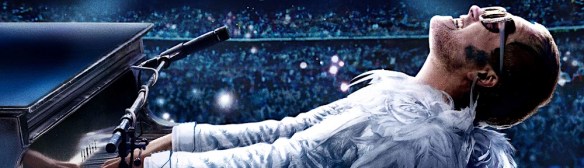
    Taron Egerton stars as Elton John for this unusual biopic of the singer. Part traditional musician biopic, part jukebox musical, director Dexter Fletcher remixes John’s music into some imaginatively staged sequences, while Egerton and his supporting cast (in particular Jamie Bell) give thoughtful, nuanced performances. The cumulative effect is a movie that is highly enjoyable but not without depth. [Full review.]

    9
    The Lady Vanishes

    Alfred Hitchcock is probably most renowned for his Hollywood movies (Pyscho, Vertigo, Rear Window, etc), but we shouldn’t forget his British output — these are the films that got him Hollywood’s attention, after all. The director’s second appearance on this year’s list is one of the last films he made before that jump across the pond. It’s a mystery thriller about an old lady who somehow disappears from a moving train, and a couple of youngsters who try to find out how and why. It’s witty, it’s clever, and it’s exciting — all the things for which Hitch is best known.

    8
    Judgment at Nuremberg

    This fictionalised account of the military tribunals that took place following the Second World War sets its sights not on the trials of major Nazi leaders, but on the subsequent trials that assessed the guilt of people further down the chain — here, four judges and prosecutors who helped facilitate the Nazi’s crimes. For such weighty material, this is an appropriately weighty film — a long, complex, methodical, harrowing account. Boldly directed by Stanley Kramer, and with an incredible cast all giving first-rate performances, this remains a powerful, brilliant film.

    7
    Tim’s Vermeer

    Computer graphics pioneer and inventor Tim Jenison is an art enthusiast, fascinated by the work of Dutch master Johannes Vermeer, in whose work his engineer’s brain sees a near-impossible photographic accuracy. So, he sets out to prove and expound upon existing theories that Vermeer painted with the aid of some kind of optical device. What unfolds is an astonishing story of obsession, dedication, and art historiography, which challenges your idea of where the line lies between art and technology.

    2020 #4 Sam Mendes’s single-take(-kinda) World War One adventure ended up losing many of the big prizes to Parasite last awards season (FYI, they both count as 2020 films here due to UK release dates in January and February, respectively). But that doesn’t mean it’s any less of an extraordinary experience. I love a long single take (fake or not), and I love stories that unfold in real-time, and I feel World War One has been under-represented on screen — so when Mendes takes all of those things and executes them brilliantly (having Roger Deakins on cinematography helps), you get a film that’s right up my street. [Full review.]

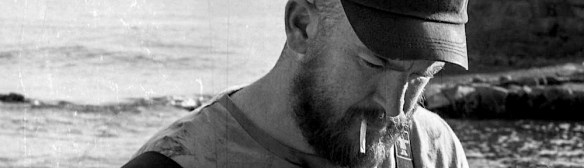
    If 1917 uses all the skills of modern tech to craft an almost old-fashioned epic, Bait is practically the polar opposite: old-school techniques (a wind-up camera; hand-developed 16mm film; post-sync sound) to tell a very modern story (broadly, about the economic plight of Cornish fishermen). It could be pretentiously arthouse or an insufferable polemic, but it’s neither. Instead, the story is told with genuine heart, drama, and humour, and the handmade aesthetic adds an appreciable, beautiful texture. [Full review.]

    4
    Parasite

    2020 #3 If you use Letterboxd, the latest film from acclaimed South Korean director Bong Joon Ho comes with a heavy millstone round its neck: according to that site’s users, it’s the greatest film ever made. Like Citizen Kane before it, such a label can be a distraction, and makes some people want to push back against it (is that why I’ve only ranked it at #4? You decide). “Best film ever” or not, the first non-English-language film to win the Best Picture Oscar is a timely deconstruction of class systems — just who are the eponymous parasites, actually? Even aside from big societal questions, it’s a thrilling piece of filmmaking; tense, exciting, and surprising.

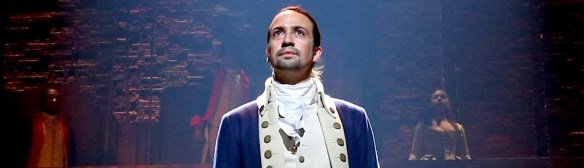
    2020 #2 Can a filmed stage production be the year’s best film? Um… Well, that’s a major reason why Hamilton is in 3rd place for my 2020 viewing and 2nd place for 2020 releases: it’s not really a film, right? Well, it’s definitely some kind of historical record — not of the life of Alexander Hamilton, but of a theatre production that took the world by storm. Here we get to witness the original Broadway cast in the show’s original staging, allowing us all the chance to witness a genuine cultural phenomenon first-hand. But this is not merely a couple of cameras plonked into the audience for the sake of posterity: director Thomas Kail users multiple cinematic techniques to make a film that truly feels like a film. Yes, it’s still theatrical, but it feels like this is how this story is meant to be (cf. something like Dogville: also very theatrical; also definitely a film). Theatres will reopen and we’ll be able to see Hamilton in the flesh again; and someday they’ll inevitably make a ‘real’ movie adaptation; and even still, this film will stand as a legitimate, magnificent experience in its own right. [Full review.]

    2020 #1 Writer-director Eliza Hittman’s story of a Pennsylvanian teenager forced to travel to New York for an abortion is told with documentary-like subtlety and understatement, but the result is incredibly moving and powerful. Without ever explicitly stating it, the film is an eloquent condemnation of US systems that force poor and struggling individuals to jump through hoops to access care that those of us in the rest of the developed world might consider basic rights. It’s a potent reminder that, for all its claims of being a highly-developed world-leader, for many of its citizens the US is as regressive, prejudiced, and unequal as the ‘Third World’ countries it so often seeks to demonise. [Full review.]

    1
    Do the Right Thing

    If there’s one feature that links many films on this year’s list, it’s timeliness: films that connect with some of the big sociopolitical issues of our day. Do the Right Thing was made over 30 years ago, but in its subject matter — a stiflingly hot day in a Brooklyn neighbourhood causes tensions to boil over into white-on-black violence — it could scarcely be more 2020. But this is not about “which film best encapsulates the year”, and so Spike Lee’s film tops my list because of all its other qualities, too. It’s a portrait of a place; a day-in-the-life hangout movie, where we follow myriad characters as they go about their business; 90-or-so minutes in which we get to understand the neighbourhood, to know its inhabitants… before the powder keg explodes and everything changes. Except, as we now know, nothing’s really changed at all.


    As usual, I’d just like to highlight a few other films.

    First, the cinematic masterpiece that is Love on a Leash. If you’re unfamiliar with this feat of cinematic excellence, may I recommend my review. It’s not exactly #27, because at various points while curating my list I had it in the top ten, the top twenty, in 26th place… but, eventually, not in the list at all. As I discussed in my review, it’s a film that’s hard to categorise: it’s simultaneously a one-star disaster and a five-star artistic experience. It’s an object lesson in why criticism of art can never be objective, because it’s unquestionable that it’s terribly made in every respect, and yet it’s nonstop entertaining, even thought-provoking, and certainly unique. (Of course, some people would say it’s objectively bad. Those people are wrong.)

    I’m someone who believes “best” and “favourite” can be different things: in 2020, I saw some movies I would acknowledge as great but that didn’t make the Top 26 because they didn’t really entertain me; equally, some films got in that are indeed great but I may never rewatch, whereas I left out simpler fare that I’m sure I’ll revisit. In a ranking of the “best” films I saw this year, no way does Love on a Leash get close; but in terms of my “favourite” films, it might’ve been pretty damn high. My final Top 26 falls somewhere between those two stools, but does carry the “best of” name, and so it felt insulting to any other film in the list (or, indeed, to those that tried but failed to squeeze in) to rank Love on a Leash above them. So here it is instead: first among my “honourable mentions”, with two solid paragraphs dedicated to it — more than any film in the actual list. So who’s the real winner, eh?

    Next, let’s recap the 12 films that won Favourite Film of the Month at the Arbies, some of which have already been mentioned and some of which haven’t. In chronological order, with links to the relevant awards, they were Laputa: Castle in the Sky, All Quiet on the Western Front, The Lady Vanishes, Aniara, Belladonna of Sadness, Paris When It Sizzles, Hamilton, Bad Boys for Life, Fanny and Alexander, Tim’s Vermeer, An American Werewolf in London, and Klaus.

    Finally, I always list every film that earned a 5-star rating this year. It’s especially pertinent this year, given how few reviews I’ve actually posted; although, as I noted in my stats post, it’s possible some of these ratings will be revised when I come to write a full review. But, for now, the 39 films with full marks are 1917, All About Eve, All Quiet on the Western Front, An American Werewolf in London, Anand, Aniara, Bait, Belladonna of Sadness, Dial M for Murder, Do the Right Thing, E.T. the Extra-Terrestrial, Fanny and Alexander, The French Connection, Hamilton, Harakiri, I Am a Fugitive from a Chain Gang, In the Mood for Love, The Invisible Guest, Judgment at Nuremberg, Knives Out, Lady Bird, The Lady Vanishes, Laputa: Castle in the Sky, The Last Black Man in San Francisco, Little Women, The Looking Glass War, Love on a Leash, The Lunchbox, A Man for All Seasons, Man on Wire, Marriage Story, Never Rarely Sometimes Always, Parasite, Paris When It Sizzles, Philomena, Rocketman, Safety Last!, Soul, and Tim’s Vermeer. Plus, this year I also gave five stars to Mission: Impossible – Fallout in 3D, and (earmarked for the ‘Guide To’ treatment at some point) Tim Burton’s Batman and Monty Python’s Life of Brian. There were also several short films that merited the accolade, namely Flush Lou, The Last Video Store, The Monkeys on Our Backs, and The Starey Bampire.


    It may have felt like 2020 was a year bereft of movies, as blockbuster after blockbuster got kicked into 2021, but plenty of stuff still came out — both major releases that took the streaming plunge, and smaller titles that probably wouldn’t’ve seen huge theatrical box office anyway; not to mention stuff that’s going to count as 2020 due to festival screenings but won’t really be released anywhere until 2021; and, of course, all the streamers’ own original movies.

    Even though I did watch 57 movies that had a UK release in 2020, there were a considerable number I missed. So, as always, here’s an alphabetical list of 50 films from 2020 that I’ve not yet seen. (I normally use IMDb’s dating to decide what’s eligible for inclusion, but I’ve allowed a handful that are listed as 2019 only because of festival screenings.) These have been chosen for a variety of reasons, from box office success to critical acclaim via simple notoriety. There are many more I want to see that I could have included, but I always attempt to feature a spread of styles and genres, successes and failures.

    Another Round
    Da 5 Bloods
    The Hunt
    The New Mutants
    Promising Young Woman
    WolfWalkers
    Bill & Ted Face the Music
    The Eight Hundred
    I'm Thinking of Ending Things
    Nomadland
    Rebecca
    Wonder Woman 1984
    An American Pickle
    Ammonite
    Another Round
    Artemis Fowl
    Bill & Ted Face the Music
    The Call of the Wild
    Da 5 Bloods
    David Byrne’s American Utopia
    The Devil All the Time
    Dolittle
    The Eight Hundred
    The Father
    The Gentlemen
    The Half of It
    Happiest Season
    Hillbilly Elegy
    Host
    The Hunt
    I’m Thinking of Ending Things
    Kajillionaire
    The King of Staten Island
    Ma Rainey’s Black Bottom
    Mank
    The Midnight Sky
    Military Wives
    Minari
    Miss Juneteenth
    Mulan
    My Spy
    The New Mutants
    News of the World
    Nomadland
    One Night in Miami…
    Onward
    Peninsula
    Possessor
    Promising Young Woman
    Rebecca
    Saint Maud
    Scoob!
    The Secret Garden
    Shirley
    The Social Dilemma
    Sonic the Hedgehog
    Supernova
    The Trial of the Chicago 7
    True History of the Kelly Gang
    The Witches
    WolfWalkers
    Wonder Woman 1984


    And that is 2020 over and done with — hurrah!

    Ignoring for a moment all the news that’s currently telling us how 2021 will be just as bad, if not worse, one thing to look forward to is that it’s my 15th year writing this blog. 15 years! I feel old… The actual date of the blog’s 15th birthday is at the end of February 2022, so I’ve got a little time yet to prepare some kind of celebration.

    In the meantime, let’s watch some more films…

    Death to 2020 (2020)

    2020 #264
    Al Campbell & Alice Mathias | 71 mins | digital (UHD) | 2:1 | USA & UK / English | 15

    Death to 2020

    As if the line between film and TV wasn’t becoming blurred enough already, 2020 has torn it to shreds. It’s now basically up to streamers whether they brand something as “a film” or a “special” or whatever (some individual websites might insist on labelling any Netflix original movie as “TV”, but I’m not sure anyone’s listening). This feature-length one-off from the makers of Black Mirror is, officially, “a Netflix Original Comedy Event” — so it’s a TV special, really, isn’t it? I probably shouldn’t be counting it as a film. Oh, but who cares?

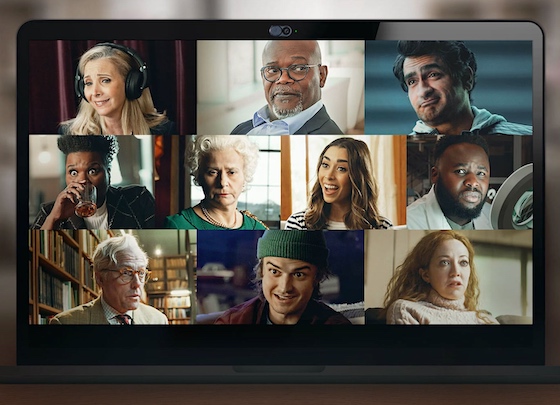
    Despite the lack of familiar title format, Death to 2020 very much follows in the footsteps of the Wipe series of year-in-reviews specials Charlie Brooker used to make for the BBC. It’s both documentary and mockumentary: it recaps the real-life events of the year, with minimal diversion into satirical fantasy, but archly commented on by an array of actors portraying fake experts. The Netflix budget means some properly big names are involved: Samuel L. Jackson, Hugh Grant, Lisa Kudrow… the list goes on. The prime absentee is Brooker himself, only piping up occasionally as an offscreen interviewer.

    Perhaps unsurprisingly, it focuses on the major events of the year from a UK/US perspective — other countries (like Australia, China, and… um… I think that’s it) only enter the equation when events there affect everyone else (like, y’know, starting a global pandemic). That makes sense given who made it, but maybe less so for Netflix as a global company. But then, not everything needs to appeal to everyone. I’m sure if they had a French satirist on the books, they’d be producing a Franco-centric special.

    A cast of dozens!

    It’s to Death to 2020’s disadvantage that, this year, we’ve all been paying more attention to the news than ever. That might seem like a benefit — a knowledgeable, informed audience means you can cut straight to the jokes with minimal prompting — but I think instead it means we’ve already heard most of the humour. We’ve spent all year making these gags ourselves, trying to alleviate the doom-laden (inter)national mood. The other, related, problem lies in trying to appeal to an international audience. In trying to keep things accessible for both sides of the pond, Brooker and co avoid getting into the weeds of local politics. Brexit is briefly mentioned rather than deconstructed; US politics is limited to the election. Specificities of lockdown life are dodged almost entirely. Trying to stick to broad, globally-familiar topics seems to keep the humour similarly generalised.

    Nonetheless, it starts out quite funny, even if they’re mostly riffs we’ve heard before. But around the time it hits the killing of George Floyd, the jokes dry up. If you’re not a racist dickhead, there’s little funny about the organisations that supposedly protect us instead arbitrarily murdering people. Death to 2020 knows this and picks its targets carefully, but it seems to kill the humour nonetheless — the jokes continue, but the humour in them dries up.

    It turns out the biggest problem isn’t unoriginality or too broad a target audience, but rather that 2020 was such a shitshow that it’s just no fun to be reminded of it, even in an intentionally comedic context. It doesn’t help that we’re facing a 2021 that promises at least several months of being equally as bad. Maybe one day we’ll be able to look back on all this and laugh, but just as likely we’ll prefer to forget.

    2 out of 5

    Happy New Year, dear readers! It can’t actually be any worse… right?

    The 100-Week Roundup XVIII

    Here we are, then: the final reviews from December 2018, which are also therefore the final reviews from 2018 (er, aside from that one I’m keeping for another time).

    Also worthy of note: buried in the middle of this selection is the 2,000th feature film review I’ve published on this blog. It was way back in August 2019, 16 months ago, that I reached 2,000 films listed for review, so it’s taken me quite a while to catch up.

    So, reviews number 1999, 2000, and 2001 are…

  • Torment (1944)
  • Music in Darkness (1948)
  • Hachi: A Dog’s Tale (2009)


    Torment
    (1944)

    aka Hets

    2018 #249
    Alf Sjöberg | 97 mins | DVD | 4:3 | Sweden / Swedish | 12

    Torment

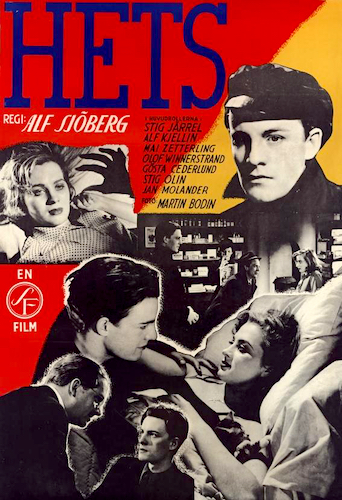
    Torment won a prize at Cannes and was nominated at Venice, but it’s most noteworthy for being the first film in the career of Ingmar Bergman: he was the screenwriter, and also served as assistant director — in which capacity he directed the film’s very final scene, meaning this film technically contains his first work as a director.

    Initially it seems like just a classroom drama — students vs a demanding teacher — but it takes a very different turn once one of the boys becomes involved with a girl of ill repute. She’s being tormented by a sadistic stalker — guess who that might turn out to be.

    With its realistic location photography and attitudes about schoolboys (disrespectful of schoolmasters; smoking; talking about getting girls pregnant; expressing opinions like “all women are tramps, and if they’re not they want to be”; and a lead female character who demonstrates they might be right), Torment feels more like a film from the ’60s film than the ’40s. But perhaps that’s just because it took Puritan America a while to catch up.

    The film is also critical of the strictures and pressures of the education system, which is still an accurate observation over seven decades later. In particular, a speech by a doctor about how schoolboys are overworked, and so they’re justified in trying to dodge some of that work, could be repeated word for word in a modern setting. There’s another scene where a kindly teacher berates a harsh one about his methods that, hopefully, we’ve moved slightly past, although I imagine every school still has teachers that are thought of as bastard taskmasters.

    Outside of its social views, the film does seem more of its time in its shot choices and production style, though not in a bad way — there’s some very effective stuff, like a bit of misdirection into a dream sequence, or its use of shadows. There’s one moment on a staircase that’s worthy of a horror movie — it’s almost a jump scare — and a chilling sequence follows which, again, feels like it’s from a different genre entirely.

    I liked a lot of Torment, not least the way it went beyond a tragic plot twist to explore the fallout in a fairly realistic manner — the lack of justice, the lack of revenge — but, unfortunately, the ending didn’t quite land for me. There’s a kind of justice for one character, but another ends up seemingly positive and optimistic, getting over events a mite too quickly. That said, it’s a quality production overall. It’s a shame it seems destined to relegation as a minor work (it’s not even in Criterion’s “comprehensive” Bergman box set), because I think it merits a wider rediscovery.

    4 out of 5

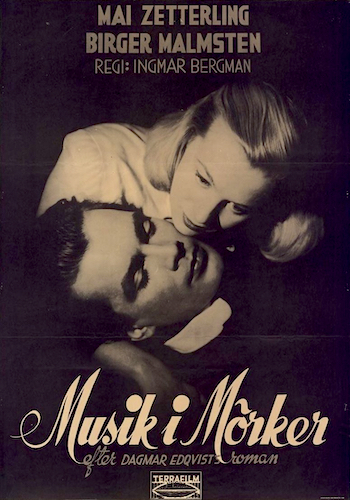
    Music in Darkness
    (1948)

    aka Musik i mörker / Night is My Future

    2018 #255
    Ingmar Bergman | 84 mins | DVD | 4:3 | Sweden / Swedish | PG

    Music in Darkness

    This is an early film by Ingmar Bergman — his fourth as director, from an era when someone’s fourth movie was an early one rather than their second or third studio blockbuster. That said, what Music in Darkness most feels like is a Hollywood romantic drama of the era, albeit with a couple of artistic flourishes and a flash of nudity, just so you know it’s definitely European.

    The film begins when master pianist Bengt Vyldeke suffers an accident that leaves him blind. Not a terrible inciting incident on paper, but on screen it’s so implausible it’s like a spoof: he’s injured while trying to save a puppy on a military shooting range. Where did that puppy come from?! Then there’s a kinda-experimental dream sequence, before we’re finally off to the races with a fairly standard romantic melodrama.

    Bengt may‘ve saved the life of a puppy, but he turns out to be a bit of a git. At first it seems his grumpiness stems from despair at his new situation, but then he begins to soften as he spends time with Ingrid, a maid who’s helping him. Sweet-natured, romantically-minded Ingrid is played by the ‘loose woman’ from Torment, Mai Zetterling; a remarkably different kind of role. So far, all so standard. But maybe Bengt saw Torment before he was blinded, because he starts calling Ingrid a wench and a last-resort marriage prospect behind her back. Yeah, maybe he’s not such a reformed character after all.

    Anyway, more tribulations follow, but eventually they overcome what was separating them to get together — hooray, and all that. But that’s not the end: next, there’s some minor palaver over getting married, the organising of the wedding, etc… but then that’s solved and they leave together, newlyweds… the end. All of which seems thoroughly extraneous — the story ends when they (suddenly, out of nowhere, without either really saying anything to the other) finally get together, not after some faffing about with wedding planning.

    Perhaps this is the European sensibility again, lacking the strict formal awareness of a Hollywood studio production. I don’t make that comparison as a criticism, incidentally. Like many a solid studio programmer, Music in Darkness is perfectly fine for what it is; but little about it truly stands out, either.

    3 out of 5

    Hachi: A Dog’s Tale
    (2009)

    2018 #259
    Lasse Hallström | 89 mins | TV (HD) | 1.85:1 | USA & UK / English & Japanese | U / G

    Hachi: A Dog's Tale

    Inspired by the true story of Hachikō, a dog in 1920s Japan who every day would wait at the train station for his owner to return — and continued to do so for almost ten years after the owner died. The tale was made into a Japanese film in 1987, which clearly caught the attention of someone in Hollywood, with this remake relocating the action to modern-day USA.

    This is really a film for people who like dogs. Without the pooch, it would be a terribly twee Hallmark TV movie — any scene where Hachi is absent is excruciating. In other words, if you don’t care for dogs, give it a miss. For the rest of us, fortunately, the pup’s is in most of it. The story takes us on an emotional rollercoaster, its impact only emphasised by the fact it’s (fundamentally) a true story. Of course, the dog dies — he wouldn’t have stopped waiting at the train station if he didn’t, would he, because he’s a very good boy.

    Yeah, if you hadn’t already guessed, this is an unabashed tearjerker for any dog lover.

    4 out of 5

  • The 100-Week Roundup XVII

    Continuing my push to wrap up leftover reviews from 2018, here are three more to finish off that November

  • Danger: Diabolik (1968)
  • Boy (2010)
  • Dad’s Army (2016)


    Danger: Diabolik
    (1968)

    aka Diabolik

    2018 #243
    Mario Bava | 96 mins | TV (HD) | 16:9 | Italy & France / English | 12 / PG-13

    Danger: Diabolik

    This starts off like a normal-looking crime thriller, with cops transporting millions of dollars in fake money while the real cash goes in a decoy… but then the decoy is ambushed by supercriminal Diabolik using multi-coloured smoke, and suddenly everything takes an abrupt turn into trippy ‘60s-ness. After escaping with the loot, Diabolik and his girl risk some nasty paper cuts by rolling around in the cash naked… on a giant rotating circular bed. Ah, the ’60s. And that, really, is the best summation of Danger: Diabolik: it looks and feels just like a Euro-comic of the era. If you made it today, with the benefits of hindsight and every cultural touchstone under the sun, you could barely make it more “60s”. For example, there’s a long-ish sequence in a swinging nightclub for virtually no reason — exactly the sort of thing you’d expect from an Austin Powers movie.

    On the downside, the storyline is a bit episodic. It’s also clear that it was cheaply made in places, and yet other parts look great, like Diabolik’s underground lair set. Apparently director Mario Bava had a budget of $3 million but brought it in for just $400,000, which I guess explains that. But that inconsistency extends to the overall imagery and style of the film: some of it is striking and memorable, but even more is just… fine; adequate; could be taken from anything made by anyone.

    Ultimately, I like the idea of Diabolik a lot more than the actual execution, which didn’t seem nearly as wild and idiosyncratic as many of the positive reviews make out. When it works, it’s got a comic-book, campy, Saturday-morning-adventure-serial charm, with a mildly raunchy edge (there are skimpy outfits and some kissing, and a naked woman covered up by banknotes, but that’s your lot), and it certainly operates by its own crazy-fun logic rather than the rules of real life. But, even with that going on, it doesn’t all come together as thrillingly and entertainingly as it could or should. I can well imagine a right-minded kind of director remaking it and transforming it into something that really nailed those influences and made for a much more striking, exciting ride. Well, there’s a new version due in 2021, so we can but hope.

    3 out of 5

    Boy
    (2010)

    2018 #244
    Taika Waititi | 84 mins | TV (HD) | 1.85:1 | New Zealand / English | 15

    Boy

    The second film directed by Taika Waititi (after Eagle vs Shark) feels somewhat like a semi-autobiographical dry run for his later work. It’s a whimsical comedy that hides depths of very real drama, just like Hunt for the Wilderpeople or Jojo Rabbit, but it lacks their polish and refinement — it’s not as funny, and it doesn’t fully tap into what that drama ultimately means. It plays like a strong calling card: indicative of what the writer-director is capable of and intends to shoot for, but clearly not yet at their full potential. Mind you, the heights Waititi later reached are so high that this “not there yet” effort is still very good.

    4 out of 5

    Dad’s Army
    (2016)

    2018 #245
    Oliver Parker | 96 mins | TV (HD) | 2.35:1 | UK / English & German | PG

    Dad's Army

    1960s/70s World War II sitcom Dad’s Army is enduringly popular — repeats on BBC Two (one of the UK’s main TV networks, for those that don’t know) regularly garner viewing figures that eclipse new programming. So it’s no surprise that someone decided it would be a good idea to give it a big-screen reboot… and it’s equally as unsurprising that it was largely a failure. Making a successful sitcom is a large part down to luck. You don’t just need funny scripts, but also to cast it well so that the characters really come alive; and getting the lead bang-on isn’t enough: for a comedy to really work, everyone needs to be great in their own role and to blend perfectly as an ensemble. Capturing that “lightning in a bottle” factor once is hard enough, but to repeat it? Who do you think you are kidding, Mr Filmmaker?

    You can see how they tried. The premise is obviously solid gold, so that box is already ticked. Then the new cast is stuffed with names: Toby Jones, Bill Nighy, Michael Gambon, Tom Courtenay, Bill Paterson, Daniel Mays… If anything, they’re over-qualified for this kind of project. Indeed, if you stop and think about it, you do wonder: how many of them are comedians, really? And maybe that was the problem. If you were casting a biopic about the making of the show, this would be a top-drawer ensemble; but to recreate its comedic magic? That said, it’s not impossible: when they remade the series’ missing episodes with a new cast, it worked very well.

    So maybe the secret is the script, after all. It’s definitely a weak link here. The humour is so gentle, it’s not even bothering to be very funny. There are lots of double entendres, though to say they have more than one meaning is generous. There are plenty of nods and winks to the original in an attempt to keep fans happy, including trotting out all the familiar catchphrases, but usually they’re shoved in rather than occurring naturally in dialogue. The female characters largely fare better than the men, though perhaps that’s just because they’re more original creations. Some might argue such a shift is a necessary correction to the male-orientated series, but it also isn’t really the point. Worst of all, at times it feels like the film wants to be some kind of thriller. It even ends with a big action sequence shootout! I can’t think of much that’d be less Dad’s Army than that.

    2 out of 5

  • The 100-Week Roundup XVI

    Right: after a bit of a Christmas break, it’s time to get stuck back in to what I said I was going to do — specifically, wrap up my reviews from 2018 before the end of 2020.* So, that means I’ve got nine reviews to cram into the next 3 days, starting with this handful from November 2018

  • The Ballad of Buster Scruggs (2018)
  • The Tale of the Princess Kaguya (2013)
  • Redline (2009)


    The Ballad of Buster Scruggs
    (2018)

    2018 #238
    Joel & Ethan Coen | 133 mins | streaming (HD) | 1.85:1 | USA / English | 15 / R

    The Ballad of Buster Scruggs

    Nowadays, almost everyone who’s anyone has made a movie for Netflix; but, back in November 2018, the latest big-name directors to take the streaming plunge were cinephile favourites the Coen brothers. Their contribution was a Western full of whimsy and violence — Coens gotta Coen, I guess.

    The film is really a collection of shorts, coming in six segments: first, the one that also gives the feature its overall title, The Ballad of Buster Scruggs; followed by Near Algodones, Meal Ticket, All Gold Canyon (based on a story by Jack London), The Gal Who Got Rattled (inspired by a story by Stewart Edward White), and finishing up with The Mortal Remains. The connection between these disparate narratives? Um… And why is the whole collection named after the first one? Err…

    To expand on my ums and errs, in reverse order, I can see no reason at all why Buster Scruggs was chosen as the umbrella title. If anything, it’s misleading: you expect the character to come back somehow later on (he doesn’t). It’s not even that the segment is typical or representative of the other five that follow. Maybe they thought it was the most evocative moniker? Maybe they thought it was the best of the six? Personally, I’d’ve come up with something else.

    As for why these six tales are bundled together, I couldn’t tell you that, either. There’s little discernible connection between them, not even stylistically: the first is almost a musical cartoon, with a hyper-skilled gunslinger prone to warbling a tune and breaking the fourth wall — elements that don’t even vaguely factor into the next two shorts, the first of which is concerned with a kind of cosmic irony, the second with brutal reality (of the entertainment business — you could almost class it as an allegorical satire). The only common thread I could ascertain is that (spoiler alert!) they all end in death. Hardly a remarkable feature in a Western, though, is it?

    Comments that have stood out to me from other reviews include the likes of “Coen Brothers 101”, or “a great introduction to their world for the uninitiated”, and that “each vignette showcases their different different talents” — that’s not bad as a kind of summary. But also, “the whole isn’t more than the sum of its parts”, with which I’d agree — I’m not really sure what these six short films gain from being watched together (other than wider distribution and attention than shorts, even by renowned directors, normally achieve).

    4 out of 5

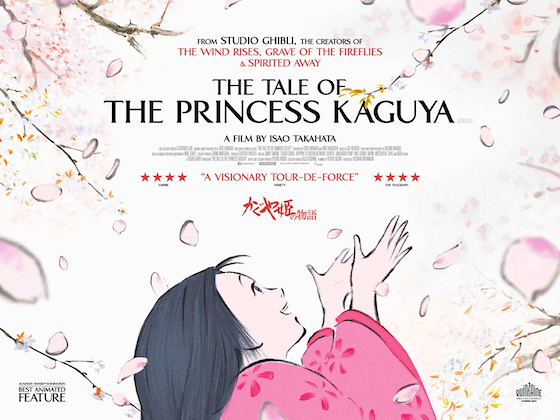
    The Tale of the Princess Kaguya
    (2013)

    aka Kaguyahime no monogatari

    2018 #239
    Isao Takahata | 131 mins | TV (HD) | 1.85:1 | Japan / English | U / PG

    The Tale of the Princess Kaguya

    This film from the other Ghibli director, Isao Takahata, is perhaps the studio’s biggest breakout success that wasn’t directed by its most famous name (i.e. Hayao Miyazaki). Based on a story from 10th-century Japanese folklore, it tells of a bamboo cutter who finds a tiny girl inside a bamboo shoot, who he takes to raise with his wife. The cutter also finds riches in the same bamboo grove and, as the girl quickly grows into a young lady, he sets about transforming her into a princess.

    The most obvious thing to say about Princess Kaguya is that it has beautiful animation — but it really does; a sketchy-but-precise, watercolour-ish style, quite unlike anything else we’re used to seeing from any kind of animation. But “ooh, isn’t it pretty?” won’t sustain a film with a running time of over two hours; and, indeed, I felt Kaguya was a bit overlong — not excessively slow (though it certainly isn’t a fast-paced tale), but a couple of bits do go round in circles over the same points. It’s clearly a parable, possibly about not controlling others, although I didn’t think the ending really married up to that. It does have a point about happiness in freedom vs the restrictions of class and so-called “good people”, although there’s also an element of romanticising peasant life, which is always an iffy position to take (it’s easy to long for simpler time and ways when you don’t have to actually struggle with them).

    Perhaps I’m just overthinking it. As a gorgeously-realised fairytale, Princess Kaguya is more than equal to the many (many) examples of the same from the Western animation canon.

    4 out of 5

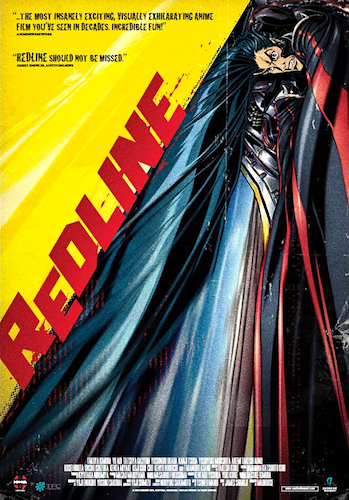
    Redline
    (2009)

    2018 #240
    Takeshi Koike | 98 mins | TV | 16:9 | Japan / English | 15

    Redline

    Redline stands in stark contrast to Kaguya‘s delicate lyricism. It’s a senseless cacophony of unfollowable action — visual diarrhoea.

    It’s billed as a sports movie, but there’s so much other crap going on that the fact it’s a race (or supposedly a race) is barely relevant. It’s not like you can actually follow who’s in the lead or who’s in competition or what tactics anyone’s using or any of the other things you’d expect from a proper sports film. There’s a meaningless flashback-driven romance subplot, just to make things more annoying, and some gratuitous nudity to boot. Well, pretty much everything about the film is gratuitous — the designs, the story, the villains… you name it, it’s OTT and/or uncalled for.

    Apparently it used over 100,000 hand-made drawings and no CGI whatsoever, so at least it looks good… in its own way. I wasn’t a huge fan of the overall style — it looks like an extreme 2000 AD strip brought to life (albeit one crossed with manga, natch) — but 3D CGI in otherwise-2D anime often sticks out like a sore thumb, so it avoids that pitfall, at least.

    2 out of 5

    * There’s actually one 2018 review that’s going to remain hanging, because it’s part of a trilogy I’ll bundle together someday. But if I can get the other nine reviews ticked off, I’ll be happy. ^

  • A Christmas 100-Week Roundup

    Breaking the precise order of 100-week reviews, here are a handful of Christmas films I watched back in December 2018. One of them has its UK network TV premiere today, so it seemed like a good time to share them.

  • The Christmas Chronicles (2018)
  • The Man Who Invented Christmas (2017)
  • A Christmas Carol (2018)


    The Christmas Chronicles
    (2018)

    2018 #248
    Clay Kaytis | 104 mins | digital (UHD) | 1.85:1 | USA / English | PG

    The Christmas Chronicles

    Netflix’s big-budget Christmas adventure got a sequel this year, which shows this first one must’ve been a hit (by whatever secret metric Netflix use nowadays) — and it’s well deserved, because The Christmas Chronicles is a lot of fun.

    The setup is two home-alone siblings set out to catch Santa on video (thank goodness they didn’t use that inciting incident to launch a found-footage Christmas movie), but things go awry and the pair end up having to help the man in red save Christmas.

    Like many a live-action American kids’ movie, The Christmas Chronicles is a bit cheesy to begin with, but it has an ace up its sleeve: Kurt Russell as Santa. Once he turns up, with a perfectly-pitched performances, the film really takes off — figuratively and literally, thanks to his flying sleigh. From there, the film develops a spot-on streak of irreverence. A chainsaw-wielding elf! Fist-bumping Santa! A jailhouse song performance! Santa snowboarding out of the sky! There are lots of funny little gags too — not big clever “jokes” per se, just well-played moments.

    Sure, there’s an element of comfort and cliché to the “sad kids who need to recapture Christmas spirit” stuff, but Russell’s cool Santa, and the tone he brings with him, enliven proceedings no end. The film manages to dodge the traps of being cloying or overly cheesy, without disappearing into a well of grim cynicism. It works so well that some of the final few minutes might just bring a little tear to the eye.

    Any criticisms (I had a whole paragraph about the kids’ limp family motto and its predictable use) just feel like nitpicking. This is designed to be a frothy, easy Christmas treat, and as that it would be perfectly adequate; but when you add Russell’s superb incarnation of Santa into the mix, it’s elevated to something very good indeed. A great movie? Not particularly. A great movie to watch at Christmas? Oh yes.

    4 out of 5

    (That is the UK poster I’ve used above, despite the fact it’s got the title of Harry Potter 1 wrong.)

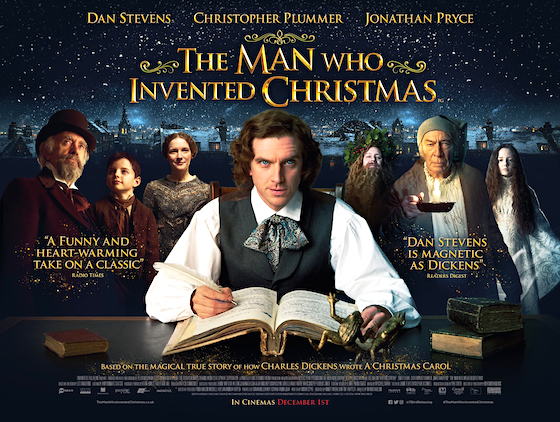
    The Man Who Invented Christmas
    (2017)

    2018 #258
    Bharat Nalluri | 104 mins | digital (HD) | 2.35:1 | Ireland & Canada / English | PG / PG

    The Man Who Invented Christmas

    “Charles Dickens writes A Christmas Carol” is the simplified plot of this film. Well, it’s not even that simplified: it’s the plot. In this telling, various parts of Dickens’s story are inspired by characters and situations he encounters in real life — how convenient. It’s all thoroughly far-fetched, of course, but not without a certain Christmas charm and amusement for those feeling forgiving in the festive season.

    Dickens is played by the dashing Dan Stevens. It’s another thing that seems like artifice — making the author young and handsome so he can be the main character in a movie — until you learn Dickens was actually only 31 when he wrote the book. And he’d already written works including Oliver Twist and Nicholas Nickleby by this point!

    But don’t dwell on that too much, because it’s liable to make your life feel crushingly inadequate; and this is a lightweight film — a bit of festive froth — designed to brighten your days with a bit of seasonal cheer, not darken them with realisations of your own shortcomings.

    3 out of 5

    The UK network TV premiere of The Man Who Invented Christmas is on Channel 4 today at 4:55pm.

    A Christmas Carol
    (2018)

    2018 #260
    Tom Cairns | 72 mins | digital (HD) | 16:9 | UK / English | PG

    A Christmas Carol

    Simon Callow has carved out a little niche playing Charles Dickens in various settings — the highest profile is probably in a 2005 episode of Doctor Who, but he was cast in that due to already being renowned for his recreations of Dickens’s public readings. This film is, effectively, one of those: based on Dickens’s own performance adaptation of A Christmas Carol, Callow reads the story and… that’s about it.

    A couple of things make it screen worthy. Director Tom Cairns stages proceedings in inventive and enlivening ways, using different rooms, lighting, props, and practical effects, some almost magical, plus music and sound effects mixed in a suitably evocative way, to lend an appropriate atmosphere to every scene and event. A lot of it is shot in long takes, which underline the impressiveness of both the staging (it’s often modified and varied within a single shot) and Callow’s performance, which is enhanced and complemented by Cairns’s work.

    And it is a performance, not just a reading. Callow inhabits all the characters, thereby bringing a sense of life to take the words beyond mere narration; but he executes it in a subtle-enough way that his turn doesn’t descend into some overripe actorly ‘showcase’. It’s very well judged. Indeed, it feels like the kind of thing that should become a staple of Christmas Eve evenings on the BBC.

    4 out of 5

  • The 100-Week Roundup XV

    I’ve fallen terribly behind with these 100-Week Roundups — I should be on to films from 2019 by now (because 100 weeks is c.23 months), but I still have 17 reviews from 2018 to go. I considered trying to cram more into each roundup, but that just takes longer to compile, so my aim is to post a more-than-average number of roundups in the next fortnight with the goal of at least completing 2018 before 2020 ends. We’ll see how that goes.

    For now, we’re in November 2018 and looking at…

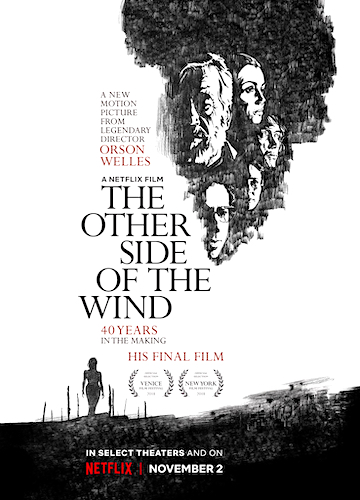
  • The Other Side of the Wind (2018)
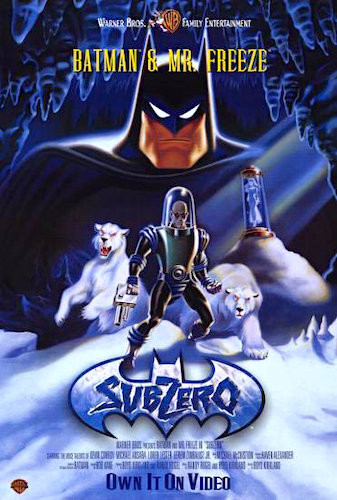
  • Batman & Mr. Freeze: SubZero (1998)
  • Paper Moon (1973)
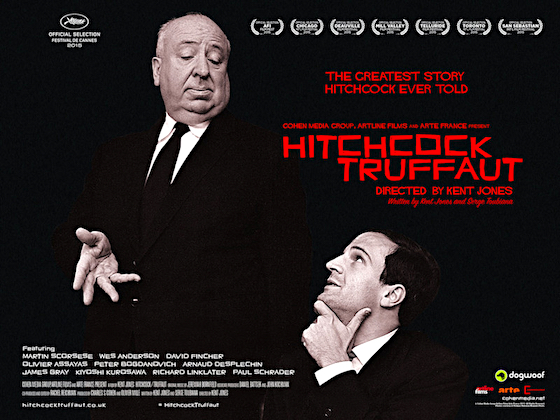
  • Hitchcock/Truffaut (2015)


    The Other Side of the Wind
    (2018)

    2018 #226
    Orson Welles | 122 mins | digital (UHD) | 1.37:1 + 1.85:1 | France, Iran & USA / English | 15 / R

    The Other Side of the Wind

    One of my draft intros for The Other Side of the Wind was to talk about how it feels like “a 2018 film” because it’s different; innovative; unique — modern. But then to note that, of course, it was all shot in the 1970s, but never completed for financial and legal reasons. That’s only partially true, though, because while it does feel modern in some ways, it still looks and feels very ’70s; and while it’s no doubt experimental and avant-garde, it’s in a very ’70s way. And the look of the film stock is very ’70s. It’s a strange, undoubtedly compromised movie — but so are many of the films Orson Welles managed to complete while he was alive, thanks to studio interference, so it’s hardly a sore thumb in that regard.

    The film tells the story of the final days of Jake Hannaford (John Huston), a film director working on his comeback movie (you’ve gotta think there’s some autobiography in here, then, right?) It’s a portrait of the man’s final hours, supposedly assembled from dozens of sources that were shooting him at the time — Welles prefiguring the ‘found footage’ genre by a decade or two. But this isn’t a horror movie… well, not in the traditional sense: in my notes I described it as “a frantically-cut display of pompous self-declared intellectuals pontificating about something and nothing in a battle of pretentiousness. That perhaps explains why, at a time when Netflix movies routinely ‘break out’, the flash of interest the film’s release provoked has not resulted in any kind of sustained wide admiration.

    Whatever your thoughts on the final film (and it’s clearly one for cineastes and completists rather than general audiences), it seems remarkable that it took so long for anyone to be willing to fund the completion of a film by The Great Orson Welles. But that’s actually a story unto itself, told in the accompanying documentary A Final Cut for Orson: 40 Years in the Making (which is hidden in the film’s “Trailers & More” section, but is definitely worth seeking out if you’re interested). Among the revelations there are that Welles shot almost 100 hours of footage, spread across 1,083 film elements, all of which had to be fully inventoried. Matching it up was a problem that would have been insurmountable even ten years ago; it’s only possible now thanks to digital techniques and algorithms — and, of course, a big chunk of change from Netflix. Welles had only cut together about 45 minutes, with the rest completed based on the style of those parts, his notes and letters, and recordings of some of his direction that was retained on the sound reels.

    Was the effort worth it? It’s certainly a fascinating project to see brought to some kind of fruition. In the end, I’m not sure what it all signified. The story is pretty straightforward, but it’s jumbled in amongst a lot of hyperactive editing, as well as a bizarre film-within-a-film. There are things here which still feel ahead of their time even now, and things that were certainly ahead of their time when shot in the early ’70s (even if other people have done them since), which is always exciting. Combine that with Welles’s status and this is unquestionably a fascinating, must-see movie for cinephiles.

    3 out of 5

    Batman & Mr. Freeze: SubZero
    (1998)

    2018 #227
    Boyd Kirkland | 67 mins | Blu-ray | 1.33:1 | USA / English | PG

    Batman & Mr. Freeze: SubZero

    It’s now so ingrained in Bat-canon that it’s easy to forget, but Batman: The Animated Series actually invented Mr Freeze’s backstory about his dead wife, etc. It was so successful that the episode (Heart of Ice) won an Emmy, the character was brought back to life in the comics (complete with this new backstory), and just a few years later it was used in Batman & Robin (which, considering how much that film was happy to ignore about other characters, e.g. Bane, just goes to show… something).

    So, with The Animated Series responsible for such a major revival of the character, it kinda makes sense they’d choose him to star in their second animated feature — although another version of events is he was chosen to tie-in with Batman & Robin, but then SubZero was pushed back after the live-action film was a critical flop. That makes sense, because while Heart of Ice is fantastic and influential, none of Freeze’s other Animated Series appearances have a great deal to offer. TV episode Deep Freeze is sci-fi B-movie gubbins featuring Freeze as a cog in the plot rather than its driving force; and, after all the effort to humanise him, in Cold Comfort he’s just a villain doing villainous things with incredibly thin motivation.

    SubZero is, at least, a step above those. It doesn’t withstand comparison to its predecessor movie, the genuine classic Mask of the Phantasm — that had entertainment value for kids, but was also a thoughtful, mature story about what drives Bruce Wayne to be Batman. SubZero, on the other hand, is just an action-adventure ride. It’s not bad for what it is (there’s a pretty great car chase halfway through, and the explosive climax aboard an abandoned oil derrick going up in flames is rather good), but no more than that. At least it finally provides a neat end to Freeze’s story… even if it is kinda hurried in a last-minute news report.

    3 out of 5

    Paper Moon
    (1973)

    2018 #235
    Peter Bogdanovich | 98 mins | TV (HD) | 1.85:1 | USA / English | PG / PG

    Paper Moon

    I do try to avoid this situation arising in a ‘review’, but I watched Paper Moon over two years ago and didn’t make any significant notes on it, so I’m afraid I can’t say much of my own opinion. What I can tell you is that I happened to spot it in the TV schedule and decided to watch it primarily to tick it off the IMDb Top 250, thinking it was a bit of an also-ran on that list (based on iCheckMovies, it’s not very widely regarded outside of IMDb; indeed, it’s not even on the Top 250 anymore). But that was serendipitous, because I wound up really enjoying it.

    Sticking with IMDb, here are some interesting points of trivia:

    “At 1 hour, 6 minutes, 58 seconds, Tatum O’Neal’s performance is the longest to ever win an Academy Award in a supporting acting category.” I guess category fraud isn’t a recent phenomena: O’Neal’s a lead — the lead, even — but I bet that supporting award was an easier win, especially as she was a child. Which also ties to this item: “some Hollywood insiders suspected that O’Neal’s performance was ‘manufactured’ by director Peter Bogdanovich. It was revealed that the director had gone to great lengths, sometimes requiring as many as 50 takes, to capture the ‘effortless’ natural quality for which Tatum was critically praised.” But I’ll add a big “hmm” to that point, because I think it’s very much a point of view thing. Every performance in a movie is “manufactured”, in the sense that multiple takes are done and the director and editor later make selections — is requiring 50 takes for a child actor to nail it any different than Kubrick or Fincher putting adult actors through 100 or more takes until they get what they want?

    On a more positive note, “Orson Welles, a close friend of Bogdanovich, did some uncredited consulting on the cinematography. It was Welles who suggested shooting black and white photography through a red filter, adding higher contrast to the images.” Good idea, Orson, because the film does look rather gorgeous.

    5 out of 5

    Hitchcock/Truffaut
    (2015)

    2018 #236
    Kent Jones | 77 mins | TV | 16:9 | France & USA / English, French & Japanese | 12 / PG-13

    Hitchcock/Truffaut

    In 1962, film directors Alfred Hitchcock and François Truffaut locked themselves away in Hollywood for a week to excavate the secrets behind the mise-en-scène in cinema. Based on the original recordings of this meeting — used to produce the mythical book Hitchcock/Truffaut — this film illustrates the greatest cinema lesson of all time… Hitchcock’s incredibly modern art is elucidated and explained by today’s leading filmmakers, who discuss how Truffaut’s book influenced their work. — adapted from IMDb

    This film version of Hitchcock/Truffaut is about so much at once. On balance, it’s mostly about analysing Hitchcock’s films; but it’s also about the interview itself; and the importance and impact of the book, both on the general critical perception of Hitchcock and how it influenced specific directors; but it’s also about how Hitchcock’s actual films have influenced those directors; and there’s also insights into directing from those directors; and also some bits on Truffaut’s films, and the differences between him and Hitchcock as filmmakers. Whew!

    It’s a funny film, really: it acknowledges the book’s influence, but doesn’t really dig into it; it analyses some of Hitch’s obsessions and films (most especially Vertigo and Psycho), but not comprehensively. Some have said it feels like a companion piece to the book; I’ve not read the book, but I can believe that — if the book were a movie, this would be a special feature on the DVD. Less kindly, you could call it a feature-length advert — certainly, I really want to get the book now. (I got it as a Christmas present not long after. I’ve not read it yet.)

    That said, here’s an iInteresting counterpoint from a Letterboxd review: “One of the things (just one) that makes the book so essential is that it’s a discussion of the craft of filmmaking from two (very different) filmmakers. In adding commentary from a wide variety of other directors, Jones highlights that element of the book while widening and updating its focus: it isn’t just a conversation between Hitchcock and Truffaut, but between those two men and David Fincher, and James Gray and Kyoshi Kurosawa and Arnaud Desplechin, etc. Rather than a mere supplement to the book, a video essay adding moving pictures to the book’s conversations, Jones’s film builds something new and on-going upon it.”

    I didn’t think Hitchcock/Truffaut (the film) was all it could be; and yet, thanks to the topics discussed and people interviewed, it’s still a must-see for any fan of Hitchcock, or just movies in general.

    4 out of 5

  • Some Beasts (2019)

    aka Algunas Bestias

    2020 #225
    Jorge Riquelme Serrano | 97 mins | digital (HD) | 2.35:1 | Chile / Spanish

    Some Beasts

    Sometimes, one thing can ruin an entire movie. Depending on how harsh a critic you are, I’d say that’s quite rare. Unless it’s threaded throughout the entire film (like, say, a terrible lead performance, or a consistently poor cinematography decision), a small constituent part would have to be truly horrendous to take the entire rest of the movie down with it. Some Beasts is one of those films. The problem arrives in the final 20 minutes, which makes it a massive plot spoiler. Out of some lingering respect for storytellers, I provide this spoiler warning; others would argue content of this nature doesn’t deserve such courtesy.

    Anyway, before I get to that: the film’s first hour-or-so. It’s about a family — mum, dad, teenage son and daughter, and their maternal grandparents — travelling to a small island near Chile that the mum & dad have just bought. They want to turn its ramshackle house into a luxury hotel, and they want her rich parents to stump up some money. They’re a snobby bunch — not horrendously so, but with that creeping sense that their grumpiness isn’t just a bad day, it’s a lifelong sense of entitlement. They’re accompanied by a guide, but after he’s accused of being inappropriate towards the daughter (which he wasn’t) and he’s groped (against his protestations) by the grandmother, the family wake up the next day to find he’s disappeared, stranding them on the island.

    Some Beasts is labelled as a thriller, but there’s not much thrilling about it. By the halfway point, people are literally sat around staring into space… On the surface, it’s just a family on a bad holiday; but there are obvious interpersonal tensions, which combine with some occasionally ominous music and unusual shot choices (like a series of straight-down bird’s eye views that open the film) to lend a mildly unsettling atmosphere. As the film goes on, their behaviour gets worse, but it’s in small increments on a long sliding scale.

    Abusers

    Later, they all play a board game. And we watch. In real time. And we join it halfway through, so you’re not going to know what the game is or how it’s played. Then the tensions explode and everybody’s arguing. The whole of this unfolds in one long static take, which is either an impressive bit of staging and acting or just directorial showing off, depending how you want to take it. I tend towards the latter, given what happens next.

    The final 20 minutes suddenly throw in a very sensitive and emotive subjective, presenting it in a deliberately provocative fashion. To be clear: the grandfather gets into bed with the teenage daughter and rapes her. Like the board game, this is presented in a couple of long static wide shots, meaning we witness more-or-less the whole thing. A raft of questions are posed. Is this the first time? The daughter seems awfully accepting of it. Not that she likes it, but is resigned; she barely protests. If not, when did it start? There’s only been the vaguest hints earlier in the film about the grandfather’s feelings. Who knows about it? Because there are some cutaways that suggest some of the other characters know what’s going on. And the next morning, it seems like they all know — so when did they find out? And what happens next? Because there’s no blazing row; no calm confrontation, either. They all sit around a bit more, looking shocked… then get in a boat and go home. The end. It’s like there’s not enough screen time to deal with the subject in sufficient detail, so the film doesn’t even try. Except, of course, that it’s the filmmaker who decides the running time and the pacing. There’s no “oops, I introduced a serious issue too late in the day and now I don’t have time to examine it properly!”

    Because the film doesn’t actually explore with the topic it’s raised, that means we’re left primarily with the manner of its presentation. That seems consciously designed as an assault on our sensibilities via a brazen depiction of something morally abhorrent. Rather than any meaningful engagement with the multitude of questions and issues it raises, it pokes at us for a reaction, being about as provocative as a child saying a rude word at an inappropriate moment — the scene, and its explicit detail, exists only to say, “look how edgy I am! Look how I’m prepared to show things that shouldn’t be shown!” I’ll be the first to argue that depicting something is not necessarily to endorse it (cf. the endless stupid debates about Scorsese’s oeuvre), but when the Bad Thing goes as unexamined and unpunished as it does here, one starts to wonder about the real intent of the filmmaker.

    Abused

    The first hour or so of Some Beasts is mostly uneventful; the final 20 minutes are offensively ill-judged. I don’t think you get to throw something that serious into your film, and shoot it so provocatively, without also tackling what it means. You can’t take something that so profoundly affects people who’ve suffered it and treat it in such an off-hand manner. Taboo subjects can and should be tackled in films, but you have to engage with them in thoughtful and meaningful ways, not use them as something shocking for the sake of being shocking. The ending is so egregious, it kicks aside what value there was in the earlier portion of the film. It actually made me feel kind of angry, which is not the kind of reaction I normally feel towards a film.

    Some Beasts is well made, in its way, but it’s a bad film.

    1 out of 5

    Some Beasts is screening on AMPLIFY! until Sunday. It featured on my list of The Worst Films I Saw in 2020.

    The IMDb New Filmmaker Award 2020

    Last night on AMPLIFY!, FilmBath presented the 9th annual IMDb New Filmmaker Award, in which a trio of industry judges choose the best short film by a new filmmaker (clue’s in the name). The winner gets £1,000 cash, £1,000 in gear hire for their next project, a natty trophy, and an IMDb pin badge (normally only given to IMDb employees). If you missed the evening, never fear: the whole 90-minute event is available to rewatch for free, worldwide, here.

    Why would you watch an awards show after it’s happened? Well, in this case, you get to hear the judges’ musings on what makes a good film — and when those judges are BAFTA-nominated director Coky Giedroyc (The Virgin Queen, How to Build a Girl), Oscar-nominated and BAFTA-winning producer Amanda Posey (An Education, Brooklyn), and the CEO of IMDb, Col Needham, those are opinions worth listening to. Even better, you get to watch the five nominated shorts in full, and they’re good a bunch.

    But don’t just take my word for it: take my, er, word for it, in the form of these reviews…

    If you do intend to watch the awards, fair warning: I’m going to ‘spoil’ who won.

    Under the Full Moon

    Taking the films in the order they were shown, first up is Under the Full Moon (2020, Ziyang Liu, UK, English, 9 mins, ★★★★☆), about a guy who has his phone pickpocketed and decides to confront the mugger. The most noteworthy aspect here is the whole short is achieved in a single unbroken eight-minute take. I love stuff done in single long takes; at this point it’s a bit of a cliché to enjoy such things — a real film nerd kind of obsession — but, sod it, it’s still cool. To do a thriller storyline like that — something which requires management of tension and suspense, and of information being revealed at the right time in the right way — is even more impressive. You might say, “well, that’s what theatre is — a drama performed in ‘one take’”, but theatre doesn’t have to factor in camerawork; making sure we’re seeing the right stuff at the right time, framed in the right ways. Under the Full Moon manages every different element almost perfectly, the only real flaw coming right near the end, when the camera fails to clearly capture a phone screen with an incoming call, so the director resorts to a subtitle to make sure we get this final ironic twist. And that’s the other thing: this isn’t just a technical stunt, or an exercise in escalating suspense, but a dramatic work with some neatly-drawn character parts and a sense of dramatic irony. Really strong work.

    The winner (told you I’d spoil it) was Flush Lou (2020, Madison Leonard, USA, English, 9 mins, ★★★★★), and I entirely agree. It’s a black comedy about the reaction of three women to the death of a man: his daughter (who narrates), his wife, and his mother. It’s got a quirkiness that could be inappropriate, but the tone is juggled just right that it remains hilarious rather than at all distasteful. It’s there in the performances, the shot choices, the editing — the piece really works as a whole to hit precisely the right note. It might call to mind the work of someone like Wes Anderson, but it’s far from a rip-off; it also reminded me of certain just-off-reality American-suburbia-skewering TV shows, like The Riches or Suburgatory (I’m sure there are some more mainstream examples that are eluding my reach right now). Also, it manages to pack eight chapters into its eight minutes, without ever feeling like that’s an unnecessary affectation; if anything, it helps clarify the structure, which is exactly the kind of thing chapters are good for. A huge success all round.

    Flush Lou

    At the other end of the seriousness spectrum was the winner of the audience vote, The Monkeys on Our Backs (2020, Hunter Williams, New Zealand, English, 8 mins, ★★★★★), a documentary about the mental health of farmers in New Zealand. I think we often have a very positive view of New Zealand — they seem like nice people; their government is doing awesomely well; they make great movies; they’re good at rugby; and so on. But the country has one of the highest suicide rates in the developed world, and mental health problems disproportionately affect those living and working in isolated rural communities. This is not only a succinct explanation of the problems, with real-life examples as well as expert opinions, but also talks about the solutions, what help is out there and how it’s working. Plus it’s a beautifully shot film (some outtakes in black & white at the beginning show the fundamental quality underlying the colour photography in the rest of the film), with lovely views of countryside life, as if to help remind you that the world is a wonderful place. A wholly different film to Flush Lou, but an equally deserving winner.

    The shortest of this year’s five is Players (2020, Ava Bounds, UK, English, 3 mins, ★★★★☆), but that’s not the most noteworthy thing about it. This is: it was made by a 14-year-old. But you’d never guess, because it has a competency and, more strikingly, a surrealism that belies someone much more experienced. Heck, the sound design most reminded me of David Lynch! And the comparison goes beyond the sound work, with an ending that calls to mind some of Lynch’s work where nature and technology clash. Subtitled “a clearly confused film”, I think that was somewhat how the judges felt about its mix of retro costumes and music, computer-generated vocals, and a sci-fi sting in the tail. It’s the kind of film that clearly doesn’t work for everyone — just another way it’s a natural successor to Lynch, then. A 14-year-old making a competition-worthy short film is incredible in itself, but that it also merits so many comparisons to David fucking Lynch? Remarkable.

    The Monkeys on Our Backs

    The final film was Home (2020, Hsieh Meng Han, UK, English, 10 mins, ★★★☆☆), in which a girl living with her mother in a single room in a dingy apartment block finds the communal toilet locked, but then hears music coming from a nearby ventilation grill. Climbing through, she finds herself in a brightly-lit world of opulence, with people in elegant clothes dancing to genteel music, and an array of luscious food on offer. She even makes a friend. But then uptight officiousness arrives in the form of a stuffy manager, who refuses to let her use the toilet. It’s like a modern socially-conscious take on Alice in Wonderland, though I’m not sure what point it was ultimately making — kindness is nice and everyone deserves to be allowed to use the toilet?

    If any of that tickles your fancy, don’t forget you can still watch the whole event, free, here.

    Disclosure: I’m working for AMPLIFY! as part of FilmBath. However, all opinions are my own, and I benefit in no way (financial or otherwise) from you following the links in this post or making purchases.